Our readers keep the lights on and my smoothie glass nicely filled. As an Amazon Associate, I earn from qualifying purchases.
Pressure treated wood is a weather-resistant material until the treatment dries out. Without a proper seal, the lumber absorbs moisture through its end grains, leading to warping, splitting, and gray oxidation within a single season. The right sealer locks out rain and UV rays while letting the wood breathe, preventing the structural decay that ruins a deck before its time.
I’m Mohammad Maruf — the founder and writer behind WellFizz. My research process involves combing through ASTM waterproofing standards, analyzing polymer and oil-based carrier technologies, and cross-referencing real-world coverage rates against manufacturer claims to find the sealers that actually hold a line against the elements.
This guide breaks down the key differences between film-forming acrylics, penetrating oils, and silicone-infused formulations so you can pick the right protection for your lumber. Finding the best deck sealer for pressure treated wood means matching the sealer type to your wood’s age, dryness level, and finish preference.
How To Choose The Best Deck Sealer For Pressure Treated Wood
Pressure treated lumber is impregnated with copper-based preservatives that resist rot, but those preservatives leave the wood surface damp and chemically alkaline for weeks. Applying a sealer too early locks in that moisture, causing adhesion failure and peeling. Timing matters as much as the formula itself.
Water-Based Acrylic vs. Oil-Based Penetrating Sealers
Acrylic sealers form a continuous film on the wood surface. They offer excellent UV resistance and are easy to clean up with soap and water, but they can crack, peel, or blister if the wood wasn’t bone dry at application. Oil-based formulas penetrate the wood fibers, building protection from within. They don’t peel or flake because there’s no surface film, but they emit stronger odors and require mineral spirits for cleanup.
Solids Content and Coverage Rate
A sealer’s solids percentage directly determines how much protective material remains on the wood after the carrier evaporates. Higher solids (typically 30–50% in quality sealers) mean thicker coating per coat and fewer total gallons needed. Coverage rates vary dramatically: thin, solvent-heavy sealers may claim 400 ft² per gallon while high-solids oil products cover 125–250 ft². Budget for two coats regardless of the label.
Clear vs. Semi-Transparent vs. Solid Finishes
Clear sealers preserve the natural look of pressure treated wood but offer the least UV protection, so the wood will gray faster underneath. Semi-transparent stains add subtle pigment that blocks UV rays while still showing wood grain. Solid stains hide the grain entirely and provide the longest protection, but they create a painted surface that will eventually peel if moisture gets trapped beneath.
Quick Comparison
On smaller screens, swipe sideways to see the full table.
| Model | Category | Best For | Key Spec | Amazon |
|---|---|---|---|---|
| Ready Seal Natural Light Oak | Oil-Based | Goof-proof application on fences and decks | 125 sq ft per gallon coverage | Amazon |
| DEFY Ultra Cedar Tone | Acrylic | Two-coat satin finish with UV protection | Zinc nano-technology UV inhibitors | Amazon |
| DEFY Extreme Composite Sealer | Clear Zinc | Waterproofing composite and bare wood | 2–4 hr dry time at 45°F | Amazon |
| KILZ Cedar Naturaltone | Acrylic | Budget-friendly color with fade resistance | 250–500 sq ft total coverage | Amazon |
| DeckWise Ipe Oil Natural | Oil-Based | Dense exotic hardwoods like Ipe and Cumaru | 250 sq ft per gallon coverage | Amazon |
| Thompson’s WaterSeal Chestnut | Semi-Transparent | Value-priced one-coat waterproofing | 150–400 sq ft per gallon coverage | Amazon |
| Roxil Wood Sealer Clear | Silicone | Clear natural finish on softwood timber | 200 sq ft per gallon (two coats) | Amazon |
In‑Depth Reviews
1. Ready Seal Exterior Wood Stain – Natural Light Oak
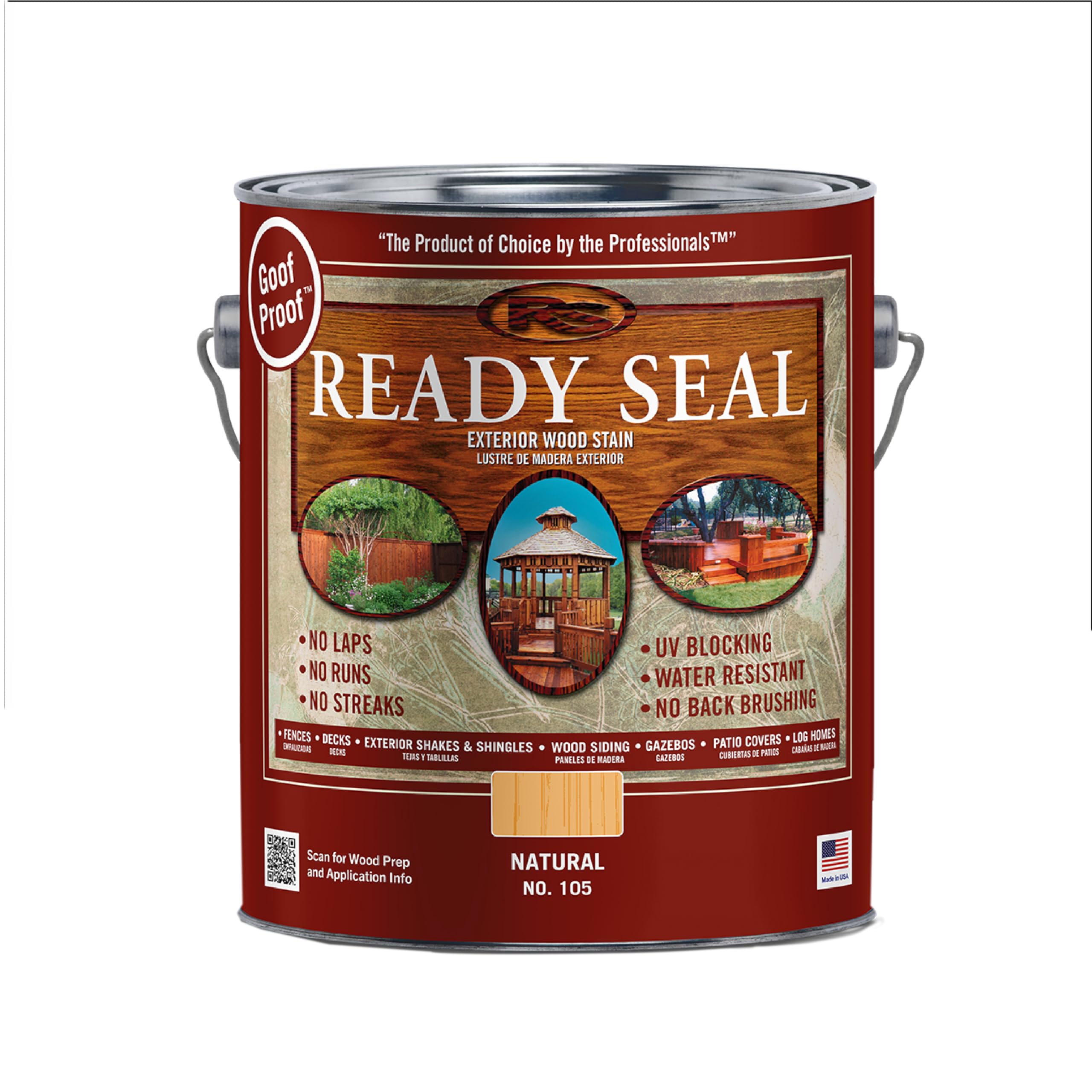
Ready Seal uses an oil-based carrier that penetrates deeply into pressure treated wood fibers instead of forming a surface film. The proprietary formula self-levels to eliminate lap marks, runs, and streaks even in direct sunlight — a major advantage for large deck surfaces where maintaining a wet edge is impractical.
Coverage is rated at 125 ft² per gallon, and users consistently report that two coats are necessary for full protection on weathered cedar and treated pine. The low-odor oil blend allows application in temperatures from 40°F to 100°F without compromising adhesion, and rain won’t damage the finish just minutes after application.
Users note that pigment settles in the can, so thorough stirring is essential before each use. The oil finish requires mineral spirits for cleanup and the color palette is limited to six shades, but the long reapplication cycle (4+ years reported on properly prepped wood) offsets the higher per-gallon cost compared to budget acrylics.
Why it’s great
- Self-leveling formula eliminates lap marks and streaks
- Can withstand rain minutes after application
- Penetrates deeply with no peeling or flaking
Good to know
- Oil-based formula requires mineral spirits for cleanup
- Limited color selection compared to acrylic stains
2. DEFY Ultra Semi-Transparent Wood Stain and Sealer – Cedar Tone

DEFY Ultra combines stain and sealer in a single acrylic formula infused with zinc nano-particles that absorb and scatter UV radiation before it degrades the wood lignin. The result is a semi-transparent satin finish that holds its color longer than traditional acrylics, with a silicone-siloxane additive that forces water to bead on the surface.
The product offers flexibility as a one-coat or two-coat system: one coat produces a flat, natural look while two coats deepen the color and create a richer sheen. Coverage for two coats on smooth wood runs around 100–150 ft² per gallon, and the sealer cleans up with soap and water while it’s still wet.
Some users experienced bubbling and peeling within months in mild winter climates, suggesting the wood surface must be completely dry and free of mill glaze before application. When applied correctly on properly aged pressure treated wood, however, the durability and color retention outperform entry-level acrylics by a wide margin.
Why it’s great
- Zinc nano-technology provides superior UV fade resistance
- Versatile one-coat or two-coat application system
- Water beads on surface with silicone-siloxane additive
Good to know
- Inconsistent durability reported on unprepared wood
- Requires completely dry surface to prevent adhesion failure
3. DEFY Extreme Composite Deck Sealer – Crystal Clear

This clear formulation is engineered specifically for composite decking but works equally well on bare pressure treated wood. The zinc nano-particles do double duty: they block UV radiation that causes graying and fading, and they create a microscopic barrier against moisture intrusion that prevents black staining on composite surfaces.
Application is straightforward with a sprayer, brush, or pad, and the sealer dries to the touch in 30 minutes to two hours at temperatures above 45°F. Coverage for two coats is rated at 100–150 ft² per gallon, and the water-based carrier cleans up with soap and water. The finish leaves a subtle sheen on wood and restores a rich, saturated color to faded composite.
Users caution that overspray hardens into a difficult-to-remove film on surrounding surfaces, and the sealer can remain slightly tacky in direct sunlight for a few days after application. Milky white residue may appear in water puddles on the surface but disappears once the area dries completely.
Why it’s great
- Zinc nano-particles prevent UV graying on composite and wood
- Fast dry time allows quick recoating same day
- Restores faded composite decking to near-new appearance
Good to know
- Overspray sets hard and is difficult to remove
- May leave temporary tackiness in direct sunlight
4. KILZ Waterproofing Semi-Transparent Wood Stain – Cedar Naturaltone

KILZ brings its 50-year reputation for primers and paints into the deck sealer category with a 100% acrylic formula that balances cost and performance. The semi-transparent Cedar Naturaltone color adds a warm reddish tint to pressure treated wood while the acrylic film blocks rain, snow, and UV damage for up to three years on decks and five years on fences.
Coverage is generous: the first coat covers 250–300 ft² per gallon, and the second coat pushes total coverage to 500–600 ft². The sealer dries in one to two hours between coats, and the fully cured surface can be washed after 72 hours. The water-based formula cleans up easily and emits minimal odor during application.
As a film-forming acrylic, the sealer will eventually peel if moisture gets trapped beneath the coating, which is more likely on newer pressure treated wood. Users with older, well-weathered wood report excellent results with single-coat coverage and impressive water beading after rainfall.
Why it’s great
- Industry-leading 3–5 year warranty on performance
- Generous coverage at 250–300 sq ft per first coat
- Trusted brand with consistent quality and easy water cleanup
Good to know
- Film-forming acrylic can peel if wood isn’t fully dry
- Color may vary from can to can across production batches
5. DeckWise Ipe Oil Hardwood Deck Semi-Transparent – Natural Finish

DeckWise Ipe Oil is engineered specifically for dense exotic hardwoods like Ipe, Tigerwood, and Cumaru, but its high-penetration oil carrier works effectively on pressure treated pine after the initial treatment has weathered. The formula uses natural oils that soak into even the tightest grain structures, providing a UV barrier that prevents the characteristic silver-gray oxidation that hardwoods develop in sunlight.
Coverage is listed at 250 ft² per gallon, though actual coverage decreases on rough-sawn or heavily weathered wood. Application is straightforward with a stain pad or brush, and the oil finish self-levels without leaving lap marks. The resulting finish is a warm brown tone that fades gradually over 12 months, requiring annual reapplication to maintain color depth.
This sealer is not intended for handrails due to its slick finish when wet — a marine-grade varnish is recommended for high-touch areas. Users also report that the product is a heavy semi-transparent stain rather than a clear oil, so expect a noticeable brown pigment that darkens the wood surface.
Why it’s great
- Deeply penetrates dense exotic and domestic hardwoods
- Self-leveling oil formula eliminates lap marks
- UV barrier prevents silver-gray oxidation on exposed wood
Good to know
- Requires annual reapplication for consistent color
- Not suitable for handrails — surface becomes slick when wet
6. Thompson’s WaterSeal Semi-Transparent Waterproofing Wood Stain – Chestnut Brown

Thompson’s WaterSeal is one of the most widely available deck sealers on the market, and this semi-transparent formulation in Chestnut Brown meets the ASTM D-4446 standard for wood waterproofing. The advanced polymers provide fade resistance against UV damage while creating a surface-level barrier that beads water on contact.
Coverage claims range from 150 to 400 ft² per gallon, but real-world application shows that a single coat absorbs heavily into dry, sanded pressure treated wood, requiring a second coat for even water repellency. The chestnut color has a redder tint than depicted on the packaging — users recommend checking in-person swatches before committing to a large surface.
The thin consistency dries quickly, which means maintaining a wet edge is critical to avoid visible overlap marks in hot, dry conditions. One gallon covers approximately 120 ft² with a single coat on sanded redwood or pine. For the entry-level price point, it delivers functional waterproofing but demands more coats than mid-range oil-based alternatives.
Why it’s great
- Meets ASTM D-4446 standard for waterproofing wood
- Fade-resistant polymers extend color life on sunny decks
- Can be applied to damp wood for flexible scheduling
Good to know
- Thin consistency requires careful wet-edge maintenance
- Chestnut color runs more red than packaging photos
7. Roxil Wood Sealer Liquid – Clear, 1 Gallon
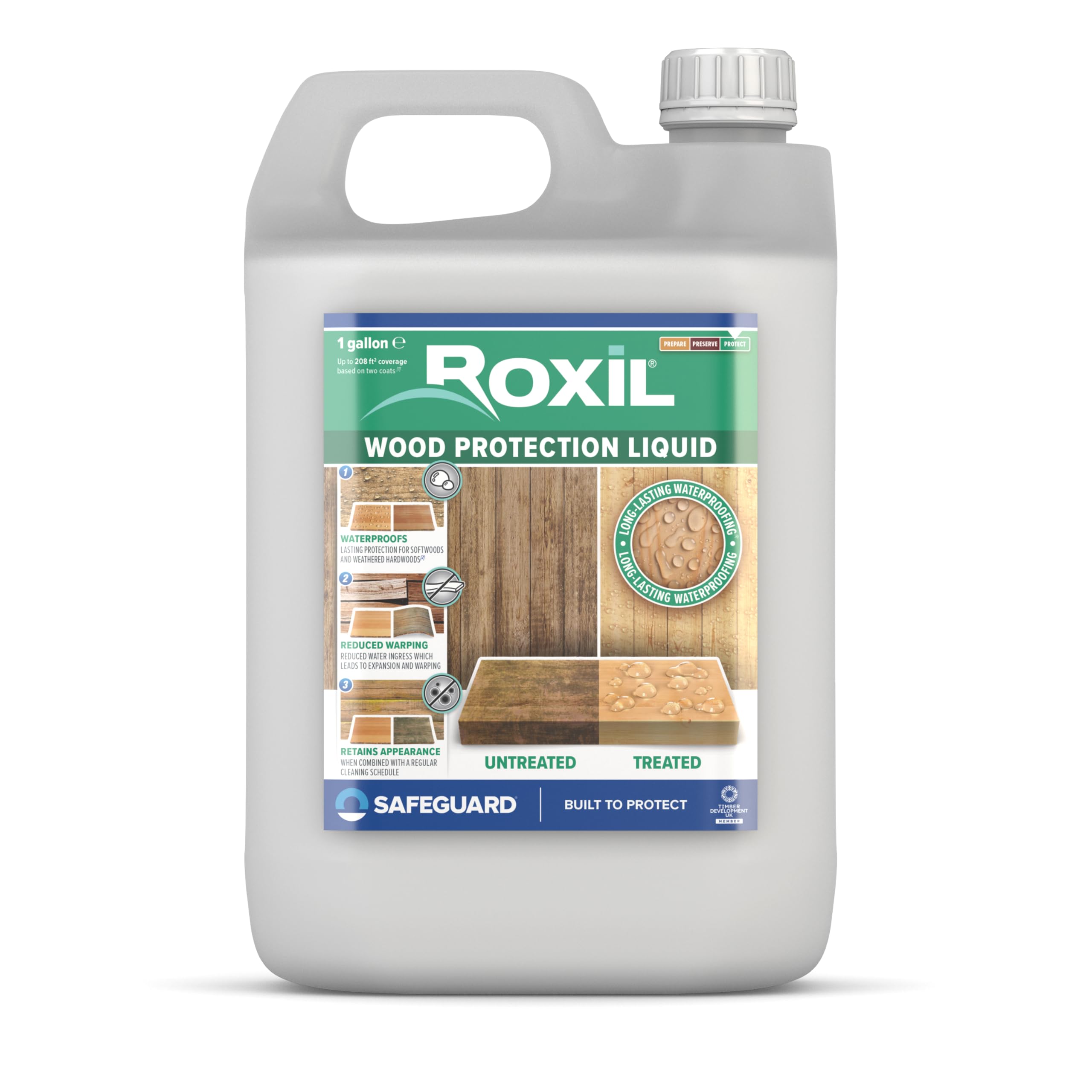
Roxil uses a silicone-based emulsion that penetrates the wood’s cell structure rather than forming a surface film, maintaining the natural color and grain of pressure treated lumber. The clear finish is ideal for projects where you want waterproof protection without altering the wood’s appearance, making it a strong choice for fences, sheds, and outdoor furniture.
Coverage is rated at 204 ft² per gallon for two coats, and the water-based formula can be applied with a brush or sprayer without strong fumes. The silicone carrier improves the wood’s dimensional stability by preventing moisture absorption that causes swelling and warping. Drying time is approximately 30 minutes between coats under normal conditions.
While the manufacturer claims a 10-year lifespan with two coats, real-world verification is still limited due to the product’s recent market entry. Users report excellent water beading after several rainstorms and sun exposure, but longer-term durability data is not yet available. The economical price point makes it a low-risk option for budget-conscious projects.
Why it’s great
- Silicone formula preserves natural wood appearance
- Reduces wood warping by improving dimensional stability
- Low odor and quick 30-minute dry time between coats
Good to know
- Long-term 10-year durability claim is unverified
- Limited color options — clear finish only
FAQ
How long should pressure treated wood dry before sealing?
Can I apply an oil-based sealer over an acrylic finish?
What is the difference between a deck stain and a deck sealer?
Final Thoughts: The Verdict
For most users, the best deck sealer for pressure treated wood winner is the Ready Seal Natural Light Oak because its self-leveling oil-based formula penetrates deeply, eliminates lap marks, and won’t peel or flake like film-forming acrylics. If you want a satin sheen with advanced UV protection, grab the DEFY Ultra Cedar Tone. And for a budget-friendly color option that meets the ASTM waterproofing standard, nothing beats the Thompson’s WaterSeal Chestnut Brown.

Mo Maruf
I created WellFizz to bridge the gap between vague wellness advice and actionable solutions. My mission is simple: to decode the research and give you practical tools you can actually use.
Beyond the data, I am a passionate traveler. I believe that stepping away from the screen to explore new environments is essential for mental clarity and physical vitality.