Our readers keep the lights on and my smoothie glass nicely filled. As an Amazon Associate, I earn from qualifying purchases.
A deck that looks tired, splintered, or faded doesn’t need replacing — it needs a resurfacer that bonds deep and holds its color through rain and sun. The right formula transforms cracked, weathered wood into a smooth, waterproof surface that looks fresh for seasons, not weeks.
I’m Mohammad Maruf — the founder and writer behind WellFizz. I’ve spent countless hours analyzing coverage rates, UV resistance, and adhesion properties to help you find a deck resurfacer that actually delivers on its promises.
After reviewing formulas from solid stains to cement-based underlayments, these selections for best deck resurfacer stand out for real-world durability and ease of application.
How To Choose The Best Deck Resurfacer
Not every stain or sealer qualifies as a true resurfacer. The difference comes down to film thickness, adhesion to aged wood, and the ability to fill small cracks and grain texture. A real resurfacer hides the old surface and creates a new, uniform layer that stands up to foot traffic and weather.
Solid vs. Semi-Transparent Finish
A solid finish hides the wood grain completely and covers stains, uneven color, and minor surface cracks. Semi-transparent options let the natural wood texture show but require a more uniform starting surface. For heavily weathered decks, solid formulas deliver the most dramatic transformation.
Coverage and Number of Coats
Coverage varies widely — from 100 to 400 square feet per gallon depending on wood porosity and application method. Most decks need at least two coats for even protection. Measure your deck’s square footage and multiply by two before buying to avoid mid-project shortages.
Base Type: Water vs. Oil
Water-based resurfacers clean up with soap and dry faster, making them better for quick projects or when weather is unpredictable. Oil-based formulas penetrate deeper into the wood and often provide longer-lasting water resistance, but they require solvents for cleanup and extend dry time between coats.
Quick Comparison
On smaller screens, swipe sideways to see the full table.
| Model | Category | Best For | Key Spec | Amazon |
|---|---|---|---|---|
| DEFY Extreme Composite Deck Sealer | Clear Sealer | Composite deck renewal | Zinc nano-technology | Amazon |
| DeckWise Ipe Oil Hardwood Deck Finish | Semi-Transparent | Exotic hardwood decks | 250 sq ft per gallon | Amazon |
| Thompson’s WaterSeal Solid Color Stain | Solid Stain | Faded or stained wood | 150-400 sq ft per gallon | Amazon |
| Old Masters Gel Stain Natural Oil-Based | Gel Stain | Vertical surfaces & details | Oil-based formula | Amazon |
| Ardex Feather Finish Cement Underlayment | Cement Coating | Concrete overlay & floor prep | Quick-set in 15 minutes | Amazon |
In‑Depth Reviews
1. DEFY Extreme Composite Deck Sealer

This sealer uses zinc nano-particles to block UV rays and prevent graying on composite decks that have lost their original color. It restores a rich, deepened tone without hiding the grain pattern, so the deck looks renewed rather than painted over. The clear formula works especially well on older Trex-style boards where oxidation has caused surface fading.
Application requires a generous wet coat — letting the liquid pool slightly in grooves ensures even penetration. It dries to the touch in about two hours, though foot traffic should wait a full day. Users report that water beads form on the surface after curing, indicating effective waterproofing for rain exposure.
The main consideration is overspray cleanup: once dry, it bonds tenaciously to surrounding surfaces, so masking off adjacent areas is essential. Annual reapplication may be needed for high-traffic zones, but the visual improvement after the first coat is dramatic enough to justify the effort.
Why it’s great
- Effectively reverses fading on composite decks up to 20 years old
- Creates visible water beading for strong moisture protection
Good to know
- Overspray is very difficult to remove once dry
- May leave slight tackiness in direct sun that fades slowly
2. DeckWise Ipe Oil Hardwood Deck Semi-Transparent Finish

Formulated specifically for dense tropical hardwoods like Ipe, Tigerwood, and Cumaru, this oil-based finish penetrates deeply where standard stains cannot. It delivers a semi-transparent brown tone that unifies the surface while still allowing the wood’s natural grain texture to show through. The finish does not sit on top like a film but soaks into the fibers for flexible, peel-resistant coverage.
Users report that the deck looks refreshed for about 12 months before fading becomes noticeable, and annual reapplication with a stain sponge brings back the original richness. Surface preparation — sanding with 80-grit paper — is critical for even absorption. Without proper prep, the oil can appear blotchy on areas with existing residue.
A key trade-off is that this finish makes handrails slick, so a marine-grade varnish is recommended for rail tops. The color is deeper than a clear oil, leaning toward a heavy brown stain that surprises some buyers expecting an invisible treatment. For exotic wood decks that deserve a premium look, this formula delivers uniform color in sun and shade.
Why it’s great
- Penetrates dense exotic hardwoods that repel standard stains
- Provides consistent, rich color without lap marks
Good to know
- Annual reapplication needed for best appearance
- Not recommended for handrails due to slickness
3. Thompson’s WaterSeal Solid Color Waterproofing Wood Stain

This solid color stain acts more like a thin paint than a traditional stain — it completely hides the wood grain while leaving the texture of the wood intact. It fills small cracks and covers stains from previous years, making it ideal for decks that have seen better days. The chestnut brown color provides uniform, bold coverage that resists fading through UV-blocking polymers.
Application is straightforward with a brush or roller, and the water-based formula cleans up with soap and water. It can go onto damp wood, though dry wood yields better adhesion. Coverage ranges from 150 to 400 square feet per gallon depending on porosity, so a typical deck needs two coats for consistent color depth.
Users note the thin consistency means it soaks in quickly but also splatters easily, so masking nearby surfaces saves cleanup time. The ASTM D-4446 waterproofing certification confirms it meets industry standards for preventing water damage. For budget-conscious homeowners looking to revitalize a tired wood deck without breaking the bank, this is a reliable, time-tested option.
Why it’s great
- Covers stains and cracks with a smooth, uniform color
- Meets ASTM D-4446 standard for waterproofing wood
Good to know
- Thin consistency can splatter on surrounding surfaces
- Requires two coats for full, even color
4. Old Masters Gel Stain Natural Oil-Based
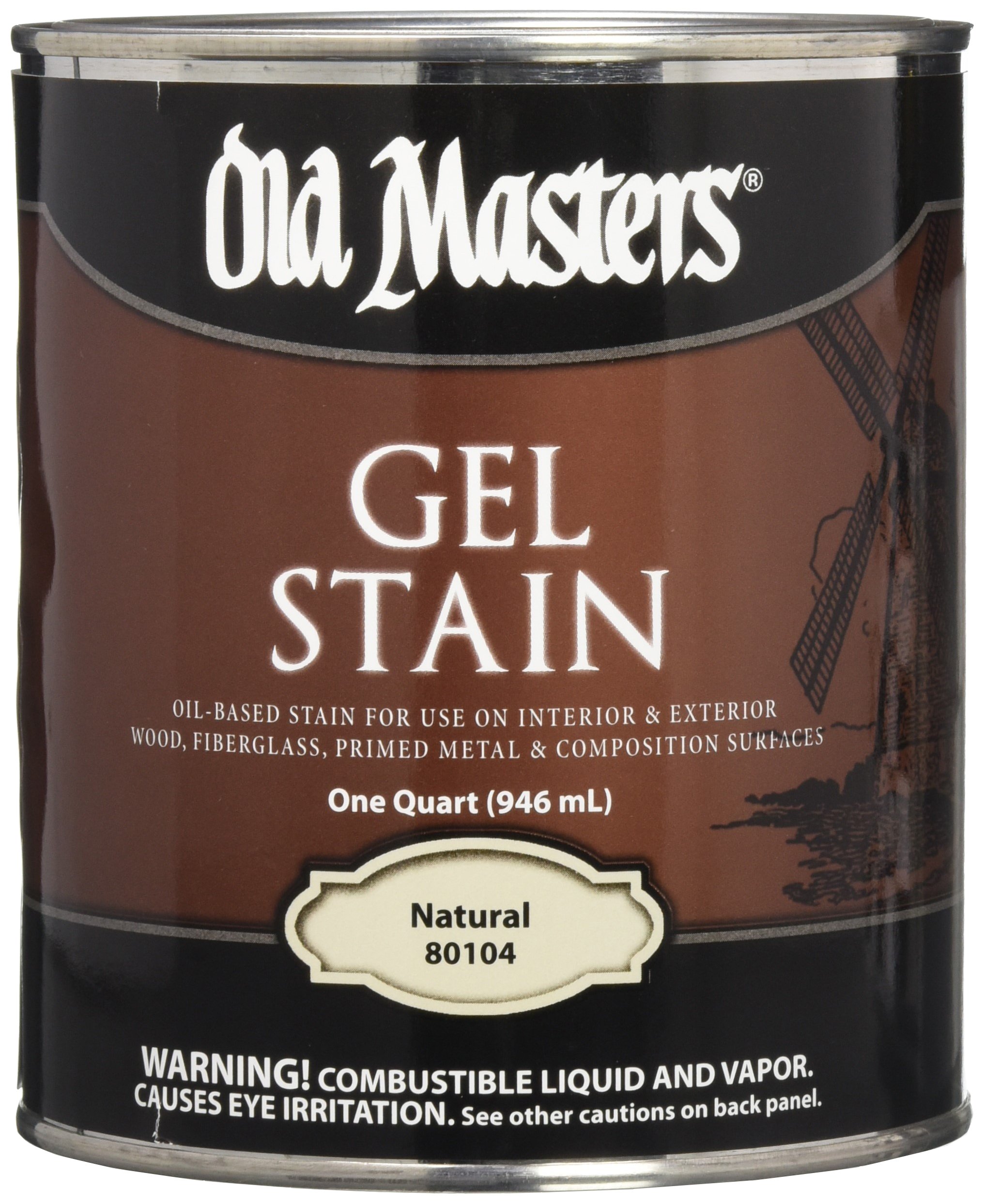
Unlike liquid stains that run on vertical surfaces, this gel formula stays where you put it, making it perfect for railings, balusters, and detailed trim work on decks. The natural color adds warmth without completely masking the wood grain, providing a semi-transparent look that balances coverage with texture. It works on wood, fiberglass, and primed metal, so it can unify mixed-material deck features.
Application with a cloth produces a lighter, more natural effect, while a brush delivers heavier color. The oil base provides deep penetration and a rich, timeless appearance that resists fading better than some water-based gels. It dries fast enough that recoating can happen within hours, though full curing takes longer in cooler conditions.
Users highlight its performance on fiberglass garage doors and interior cabinets, proving its versatility extends beyond traditional deck resurfacing. The quart size covers a large surface area thanks to the high-pigment concentration, making it economical for projects where you only need to refresh rail components rather than the entire deck floor.
Why it’s great
- Thick gel formula won’t drip on vertical surfaces
- Compatible with wood, fiberglass, and primed metal
Good to know
- Additional sealer may be needed for outdoor durability
- Sets quickly in direct sunlight, requiring fast work
5. Ardex Feather Finish Cement Underlayment

For homeowners with a concrete deck or patio surface that is cracked or uneven, this cement-based underlayment offers a different kind of resurfacing. Mixed with water to a peanut-butter-like consistency, it trowels onto concrete, plywood, or existing tile to create a smooth, durable base. It self-levels in thin applications and sets hard enough for tile or vinyl installation in as little as 15 minutes.
Users have adapted it beyond its intended subfloor use, resurfacing fireplace surrounds and countertops with a natural concrete finish. Multiple thin coats applied with a flat trowel produce a seamless, industrial look that seals and strengthens old surfaces. No primer or additive is needed — just water and the powder.
The grey color dries lighter than its wet appearance, so test a small area before committing to a full project. Full cure takes about 15 hours, but the initial set is rapid, so mixing only as much as you can apply in 10-15 minutes prevents waste. For a concrete or heavy-duty wood deck that needs structural renewal rather than just cosmetic color, this is a smart alternative.
Why it’s great
- Bonds to concrete, plywood, and masonry without primer
- Sets fast for tile or flooring installation in minutes
Good to know
- Not a traditional stain — suitable for hard surface renewal
- Rapid set time requires small batch mixing
FAQ
Can I apply deck resurfacer over old paint or stain?
How long should I wait between coats of deck resurfacer?
Does deck resurfacer fill cracks and splinters?
Final Thoughts: The Verdict
For most users, the best deck resurfacer winner is the DEFY Extreme Composite Deck Sealer because it revives faded composite decks with visible waterproofing and UV protection. If you want a rich, penetrating finish for exotic hardwood decks, grab the DeckWise Ipe Oil Hardwood Deck Finish. And for budget-friendly solid coverage that hides years of wear, nothing beats the Thompson’s WaterSeal Solid Color Waterproofing Wood Stain.

Mo Maruf
I created WellFizz to bridge the gap between vague wellness advice and actionable solutions. My mission is simple: to decode the research and give you practical tools you can actually use.
Beyond the data, I am a passionate traveler. I believe that stepping away from the screen to explore new environments is essential for mental clarity and physical vitality.