Our readers keep the lights on and my smoothie glass nicely filled. As an Amazon Associate, I earn from qualifying purchases.
A deck that looks gray, faded, or splintered doesn’t just ruin your backyard vibe — it signals that moisture, UV rays, and mildew are actively breaking down the wood fibers. The right restorer does more than add color; it penetrates, seals, and shields the grain against the weather cycle that turns a summer retreat into a weekend repair project.
I’m Mohammad Maruf — the founder and writer behind WellFizz. I’ve spent hundreds of hours dissecting outdoor wood chemistry, testing water beading and UV resistance claims, and cross-referencing real-world use data to find which formulas actually hold their ground through rain, snow, and sun.
Whether you’re bringing a pressure-washed cedar deck back to life or refreshing a weathered composite surface, this guide cuts through the marketing to reveal the best deck restorer for your specific wood type, climate, and budget.
How To Choose The Best Deck Restorer
Not all deck restorers are built for the same job. A product that works beautifully on pressure-treated pine may fail on dense tropical hardwood, and a clear sealer won’t revive a heavily weathered surface that needs pigment to hide years of UV damage. Focus on three decision points: finish type, base chemistry, and coverage.
Finish Type: Semi-Transparent vs. Solid Color vs. Clear
Semi-transparent stains tint the wood while letting the natural grain show through — ideal for decks that are structurally sound but have lost their original color. Solid-color (opaque) restorers completely hide the grain and are best for heavily worn, splotchy, or mismatched wood. Clear sealers preserve the bare-wood look and work on new or lightly aged surfaces, but they won’t cover discoloration.
Base Chemistry: Acrylic, Oil, or Silicone
Water-based acrylic formulas dry fast, clean up with soap and water, and resist UV fading — the standard for most DIY deck projects. Oil-based finishes penetrate deeply into dense hardwoods like Ipe or Cumaru, offering richer color but longer drying times. Silicone-based options create a powerful water barrier and maintain the wood’s natural appearance, though they can be trickier to recoat later.
Coverage Rate Per Gallon
A single gallon typically covers 100 to 400 square feet, depending on wood porosity, surface texture, and number of coats. Rough, weathered wood drinks up more product. Always budget for two coats — the first saturates the surface, the second locks in the protection. Under-buying is the most common mistake; leftover product can be stored for future touch-ups.
Quick Comparison
On smaller screens, swipe sideways to see the full table.
| Model | Category | Best For | Key Spec | Amazon |
|---|---|---|---|---|
| #1 Deck Premium Advanced Solid Color | Solid Opaque | Full coverage on worn decks | 100-150 sq ft/gal (2 coats) | Amazon |
| DEFY Extreme Composite Sealer (Clear) | Clear Sealer | Composite & natural wood protection | 100-150 sq ft/gal (2 coats) | Amazon |
| DeckWise Ipe Oil Hardwood Finish | Oil-Based | Dense exotic hardwoods | 250 sq ft/gal (1 coat) | Amazon |
| KILZ Waterproofing Semi-Transparent | Semi-Transparent | Balanced color & UV protection | 250-600 sq ft/gal (2 coats) | Amazon |
| DEFY Essential Semi-Transparent | Semi-Transparent | Budget-friendly rich color | 100-150 sq ft/gal (2 coats) | Amazon |
| Thompson’s WaterSeal Semi-Transparent | Semi-Transparent | Entry-level waterproofing | 150-400 sq ft/gal (1 coat) | Amazon |
| Roxil Wood Sealer Clear | Clear Silicone | Long-term natural look | 204 sq ft/gal (2 coats) | Amazon |
In‑Depth Reviews
1. #1 Deck Premium Advanced Solid Color Outdoor Wood Stain and Sealer in One – Light Walnut
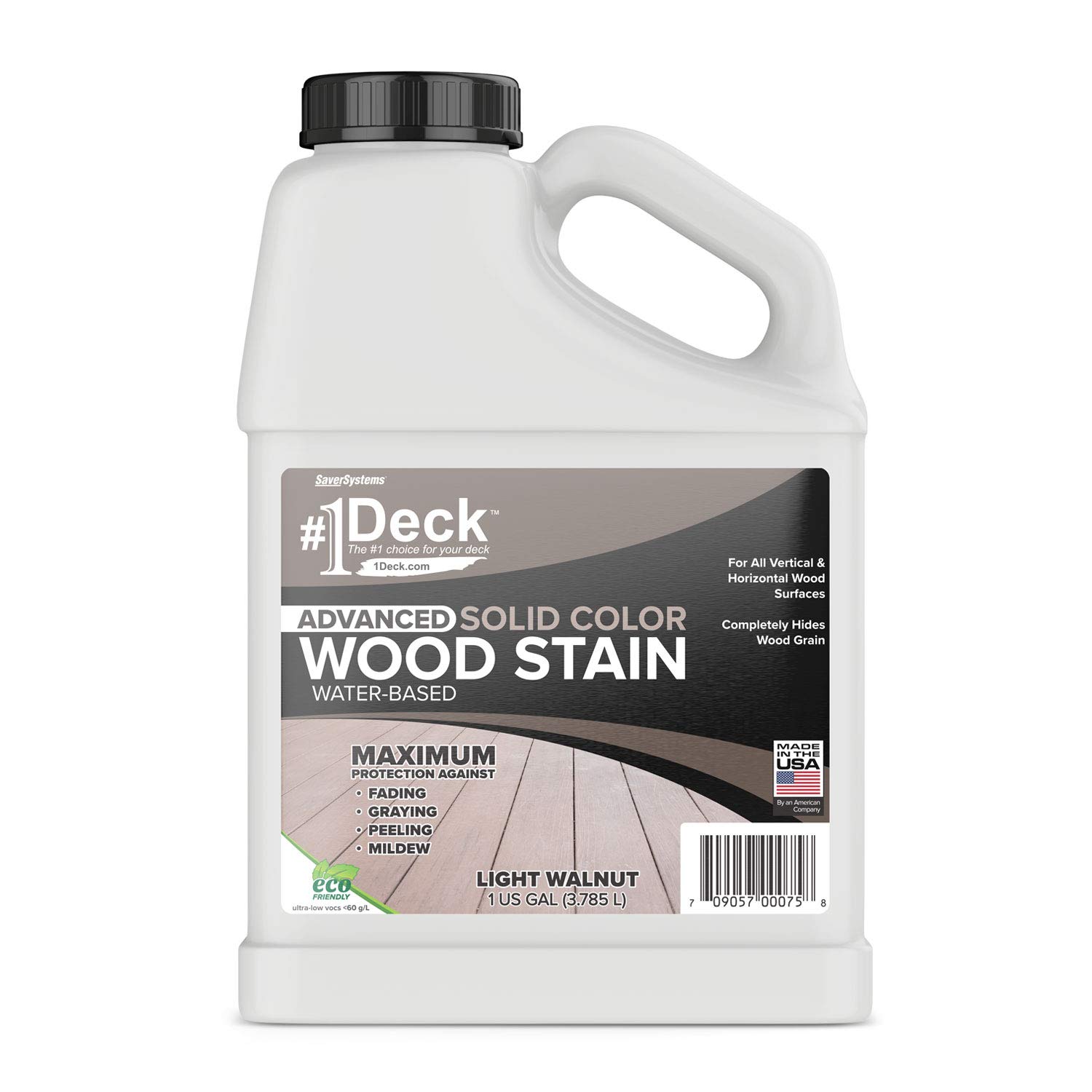
This dual-action formula delivers full opaque coverage that completely hides the wood grain — a lifesaver for decks that have uneven weathering, leftover stain patches, or grayed areas. The water-based acrylic chemistry keeps VOC levels low, and cleanup is quick with soap and water. It covers roughly 100-150 square feet per gallon with two coats, so plan your quantity accordingly.
Real-world feedback confirms it withstands unexpected downpours within hours of application, and the UV-blocking pigments prevent fading well into the second year. It’s available in six solid colors — Light Walnut tested here gives a smooth, natural matte finish that works across pressure-treated lumber, redwood, and cedar.
Because it penetrates deep into the wood pores rather than just sitting on the surface, the protective layer resists peeling and cracking through freeze-thaw cycles. The only trade-off is the limited per-gallon coverage, but the long-lasting performance justifies the extra gallon for larger projects.
Why it’s great
- Full opaque coverage hides severe weathering and patchy old stain
- Low odor and easy water cleanup
- Withstood rain four hours after application without damage
Good to know
- Coverage is on the lower side — you may need two gallons for a medium deck
- Only available in six solid colors, no semi-transparent option
2. DEFY Extreme Composite Deck Sealer – Crystal Clear

Specifically formulated for both composite and natural wood, this clear sealer uses zinc nano-particles to block UV radiation and prevent the graying and fading that plague outdoor surfaces. It’s water-based, dries to the touch in 30 minutes to 2 hours, and creates a hydrophobic barrier that makes water bead on contact — a clear sign the seal is working.
Users report dramatic transformations on 15- to 20-year-old composite decks that had turned chalky and oxidized. Applied generously with a sprayer or brush, it deepens the original color and adds a subtle gloss. The product repels itself when dry, meaning overspray is hard to remove once cured, so tape off adjacent surfaces.
The 2-4 hour dry time is fast, but full traffic should wait 24 hours. Reapplication is needed when graying first reappears, typically annually for heavily exposed composite. This is the go-to clear sealer for anyone with a composite surface who wants to extend its life without changing its appearance.
Why it’s great
- Revives faded composite decks with a single coat
- Zinc nano-technology adds serious UV defense
- Creates visible water beading for easy rain runoff
Good to know
- Overspray becomes very difficult to remove once dry
- May leave a slight tackiness in direct sunlight that diminishes over time
3. DeckWise Ipe Oil Hardwood Deck Semi-Transparent Natural Finish

Engineered for dense tropical hardwoods like Ipe, Tigerwood, and Cumaru, this oil-based finish penetrates deeper than water-based alternatives. The one-gallon can covers up to 250 square feet per coat — excellent efficiency for a premium product. The semi-transparent brown tint enriches the wood’s natural color without hiding the grain.
Real-world use on Ipe decks shows it holds its appearance for roughly 12 months before needing a refresh. Annual reapplication with a stain sponge and a pressure wash keeps the deck looking rich. The oil formula can make the surface slick initially, so it’s not recommended for handrails unless topped with a marine-grade varnish.
Prep work is critical — sanding with 80-grit paper ensures even absorption. Once applied, the finish dries uniformly across both sunny and shaded sections. It’s not available for sale in California SCAQMD jurisdictions, so check regional VOC regulations before ordering.
Why it’s great
- Deep penetration into ultra-dense hardwoods that reject water-based sealers
- High coverage rate reduces total gallons needed
- Uniform color in both sun and shade after drying
Good to know
- Annual reapplication is expected for maintained appearance
- Not available in some California regions due to VOC limits
4. KILZ Waterproofing Semi-Transparent Wood Stain, Cedar Naturaltone

KILZ brings its 50-year reputation for consistency to this semi-transparent acrylic stain. The Cedar Naturaltone color adds a rich red-brown hue without overwhelming the wood grain. Coverage is generous — roughly 250-300 square feet for the first coat and 500-600 for the second — making this one of the most economical options for large decks.
The formula resists rain, snow, and UV damage, and it carries a warranty of up to 3 years on decks and 5 years on fences and siding. The satin finish provides a subtle sheen that helps water bead and roll off. Users report easy application with a brush or sprayer, and one coat can be sufficient on moderately weathered wood.
Where it falls short is shipping reliability — multiple users reported lost packages. But when it arrives, the color accuracy and adhesion are consistently praised. If you’re covering a large area and want a trusted brand at a mid-range investment, this is the workhorse pick.
Why it’s great
- High coverage per gallon reduces total coats needed
- Warranty-backed UV and waterproof protection
- Satin finish sheds water effectively
Good to know
- Shipping issues have been reported — order early to account for delays
- Cedar Naturaltone may appear more red than expected on some woods
5. DEFY Essential Semi-Transparent Outdoor Wood Stain and Sealer, Redwood
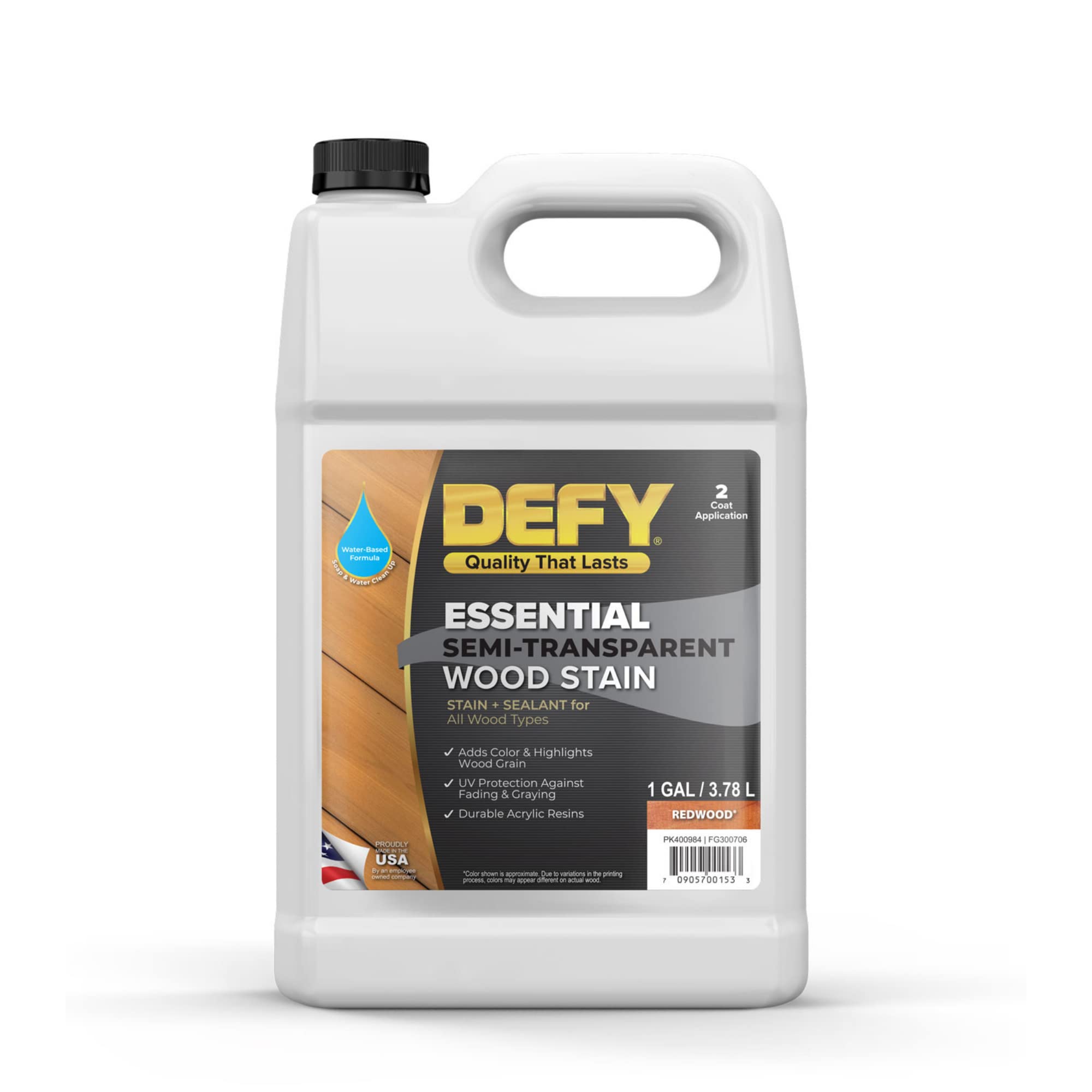
DEFY Essential combines stain and sealer in one water-based acrylic package. The Redwood color delivers a warm, natural tone that looks beautiful on cedar fences and pressure-treated decks without appearing artificially orange. Coverage is on the tighter side — 100-150 square feet per gallon for two coats — so a standard deck will need more than one gallon.
The thin consistency applies easily with a spray gun or brush, though it can drip if you’re not careful — a drop cloth is essential. It dries quickly and cleans up with soap and water. Users consistently praise the color accuracy, noting it matches the can label and doesn’t bleach out immediately in sun exposure.
Long-term durability data is still emerging, but first-year reviews show good water repellency and no peeling. If your main priority is a vivid, true-to-label color at a reasonable investment, this stain delivers strong results.
Why it’s great
- Accurate, vibrant Redwood color that resists sun bleaching
- Fast drying and easy water cleanup
- Works well with spray gun for quicker application
Good to know
- Thin formula can drip — protect surrounding surfaces
- Moderate coverage means larger decks require multiple gallons
6. Thompson’s WaterSeal Semi-Transparent Waterproofing Wood Stain, Chestnut Brown

Thompson’s WaterSeal is a household name for a reason — this semi-transparent stain offers reliable waterproofing at a friendly entry point. The Chestnut Brown color trends reddish, so check user photos before committing. Coverage ranges from 150 to 400 square feet per gallon depending on porosity, and the formula exceeds ASTM D-4446 waterproofing standards.
It can be applied to damp or dry wood, which adds flexibility for unpredictable weather days. Users consistently note that a single coat repels water well, but a second coat dramatically improves durability and fade resistance — especially on sun-exposed sections. The thin consistency dries fast in warm climates, so work in manageable sections.
The trade-off lies in longevity: after a hot summer, some fading was noted, requiring a spring refresh. For a budget-friendly entry into deck restoration that still delivers solid waterproofing, this is a reliable starting point.
Why it’s great
- Can be applied to damp wood — no need to wait days for perfect drying
- Exceeds industry standard for waterproofing
- Good water beading with a single coat
Good to know
- Color runs more red than the label suggests
- Fading may occur after one hot season; second coat extends life
7. Roxil Wood Sealer Liquid (1 Gallon Clear)
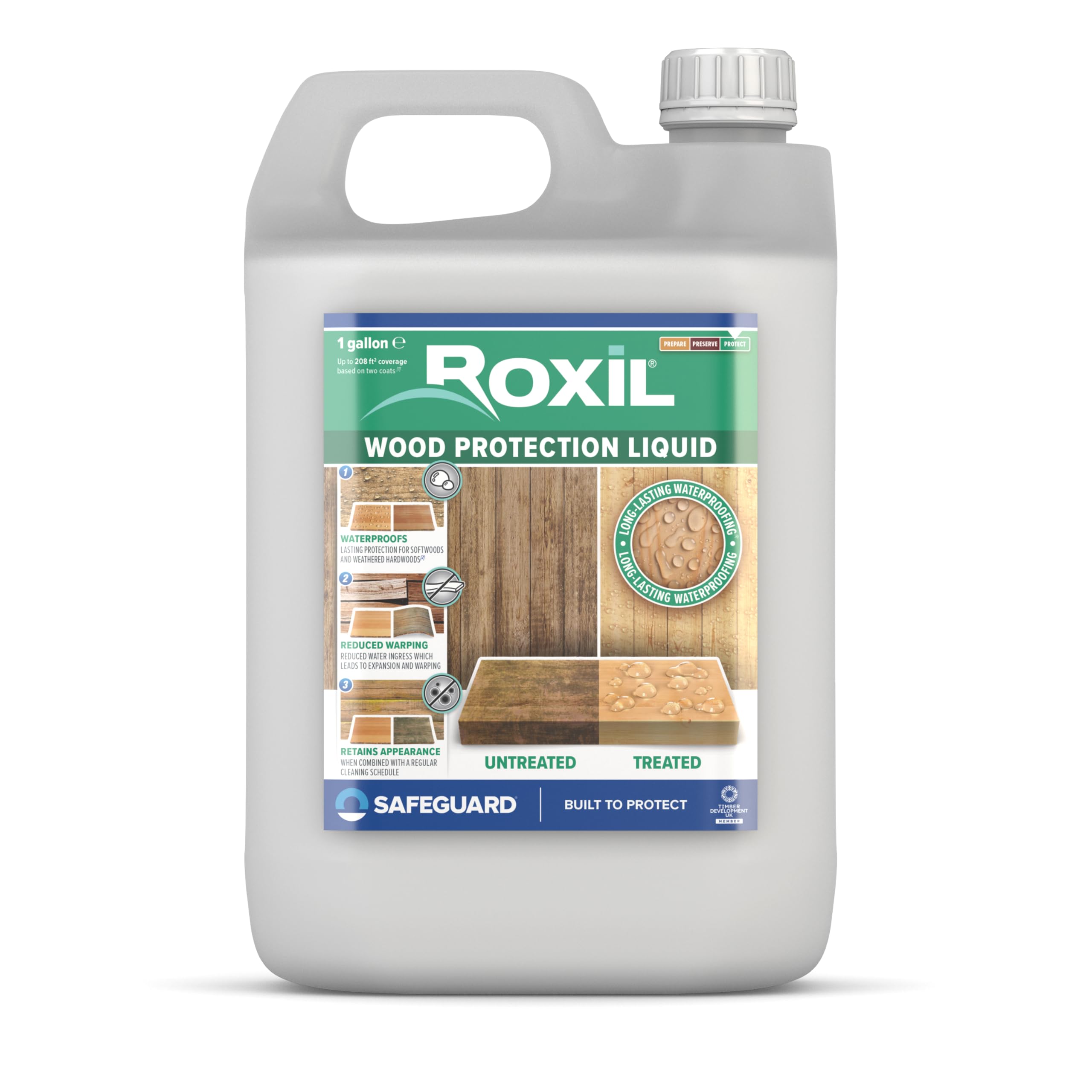
Roxil takes a different approach with silicone-based technology designed to penetrate deep into softwood timber — pressure-treated pine, cedar fencing, and decking. The clear finish preserves the wood’s original color and grain, making it ideal for projects where you don’t want to tint the surface. Coverage is 204 square feet per gallon for two coats.
Users on cedar decking report the sealer dries in about 30 minutes and maintains the wood’s appearance through multiple rainstorms and daily sun exposure. The manufacturer claims a 10-year lifespan for two coats, which would dramatically reduce the frequency of reapplication compared to stains that need annual touch-ups. Early feedback shows consistent water repellency.
The main hesitation is that the 10-year longevity hasn’t been widely verified in long-term reviews yet. The upfront cost is higher than entry-level stains, but if the durability holds, the cost per year drops significantly. For anyone wanting a natural, untinted seal that lasts, this is a strong candidate.
Why it’s great
- Clear silicone finish preserves natural wood appearance
- Dries in 30 minutes — fast turnaround between coats
- Early performance suggests multi-year durability
Good to know
- Long-term 10-year claim is unverified by extensive user data
- Higher upfront per-gallon cost than water-based stains
FAQ
Can I apply a deck restorer over old stain without stripping?
How long should I wait after pressure washing before applying a restorer?
Do I need to sand my deck before using a semi-transparent restorer?
Final Thoughts: The Verdict
For most users, the best deck restorer winner is the #1 Deck Premium Advanced Solid Color because its opaque finish hides years of weathering while the water-based acrylic chemistry makes application and cleanup straightforward. If you want a clear sealer that extends the life of composite surfaces without altering the look, grab the DEFY Extreme Composite Sealer. And for exotic hardwood decks that need deep oil penetration, nothing beats the DeckWise Ipe Oil.

Mo Maruf
I created WellFizz to bridge the gap between vague wellness advice and actionable solutions. My mission is simple: to decode the research and give you practical tools you can actually use.
Beyond the data, I am a passionate traveler. I believe that stepping away from the screen to explore new environments is essential for mental clarity and physical vitality.