Our readers keep the lights on and my smoothie glass nicely filled. As an Amazon Associate, I earn from qualifying purchases.
A deck is an outdoor living room floor, and the single biggest mistake owners make is treating it with a surface film that peels within a season. The right deck oil penetrates deep into the wood fibers, fortifying them against moisture from within rather than just laying a plastic-like shell on top. That distinction determines whether you are refreshing color every spring or truly extending the life of your lumber.
I’m Mohammad Maruf — the founder and writer behind WellFizz. This guide distills hundreds of hours of cross-referencing penetration depths, UV blocker chemistries, and reapplication intervals from actual user reports across multiple climate zones.
After analyzing gallon-performance data from seven top contenders, the clearest path to long-term wood health and natural aesthetics is finding the best deck oil for your specific wood density, sun exposure, and desired finish transparency.
How To Choose The Best Deck Oil
Decks take a beating from UV rays, rain, snow, and foot traffic. The oil you select must balance penetration depth with UV barrier strength and reapplication frequency. Here are the critical factors that separate a one-season stain from a multi-year system.
Transparency Level vs. Wood Density
Clear and transparent oils preserve the natural grain and are best for dense hardwoods like Ipe or Cumaru that absorb little pigment. Semi-transparent options add UV-absorbing color without masking the wood texture, ideal for softer pines and cedar that benefit from a light pigment load. Full-solid stains are film-formers, not true oils, and should be avoided if you want a penetrating system.
Water Repellency Duration
The best metric is how long water beads on the surface after application. Some premium nano-polymer oils claim six to ten years on vertical surfaces, but horizontal deck boards typically need renewal every one to two years in high-traffic areas. Check for independent ASTM D-4446 certification, which confirms the product meets industry waterproofing standards.
Climate Adaptation
In hot, rainy climates, oil that dries quickly and cures without a tacky surface prevents dirt adhesion. In dry, high-UV zones like the Southwest, fade-resistant polymers and a high VOC content (where legal) extend the interval between coats. Always match the oil’s drying time and UV package to your regional weather pattern.
Quick Comparison
On smaller screens, swipe sideways to see the full table.
| Model | Category | Best For | Key Spec | Amazon |
|---|---|---|---|---|
| DeckWise Ipe Oil | Premium Oil | Dense exotic hardwoods | 250 sq ft/gal coverage | Amazon |
| Seal-Once Nano Wood Sealer | Nano-Polymer | Clear finish, high traffic | 6-year horizontal warranty | Amazon |
| Sunnyside Boiled Linseed Oil | Natural Oil | Raw wood, tool handles | 12–18 hr dry time | Amazon |
| KILZ Semi-Transparent Stain | Acrylic Blend | UV protection on decks | 3-year deck warranty | Amazon |
| Thompson’s WaterSeal Semi-Transparent | Semi-Transparent | General deck maintenance | 150–400 sq ft/gal coverage | Amazon |
| Roxil Wood Sealer Liquid | Silicone Sealer | Clear natural look, fencing | 10-year vertical claim | Amazon |
| Thompson’s WaterSeal Transparent | Budget Transparent | Quick color refresh | ASTM D-4446 certified | Amazon |
In‑Depth Reviews
1. DeckWise Ipe Oil Hardwood Deck Semi-Transparent Natural Finish

Formulated specifically for dense exotic hardwoods like Ipe, Tigerwood, and Cumaru, this oil penetrates where film-formers cannot. The 250 VOC formulation carries pigment deep into the wood, creating a uniform color that resists UV fading for about 12 months before needing a refresh. Users report that the hardest part is the initial surface prep — once sanded, the oil applies evenly without overlapping marks.
This is not a clear oil; it provides a semi-transparent brown finish that unifies the deck’s appearance under both sun and shade. The coverage rate of 250 square feet per gallon matches the absorption density of tropical hardwoods, meaning one gallon handles a medium-sized deck efficiently. It holds up to foot traffic without becoming slick, though handrails require a different topcoat for grip safety.
For owners of exotic wood decks who expect the oil to deepen rather than mask the grain, this product delivers the most reliable performance in its class. Annual reapplication with a pressure wash and stain sponge is the standard maintenance cycle reported by long-term users in hot climates.
Why it’s great
- Penetrates ultra-dense hardwoods that reject surface stains
- Uniform color appearance across sun and shade zones
- Easy application without lap marks after proper sanding
Good to know
- Color is a heavier brown stain than the label suggests
- Handrails become too slick without a separate marine varnish topcoat
2. Seal-Once Nano Wood Sealer and Waterproofer

This water-based nano-polymer sealer penetrates below the surface to form a hydrophobic shield around wood fibers rather than sitting on top. The clear formula leaves the natural wood appearance unchanged, making it ideal for projects where aesthetics must be preserved. It dries fast, has a very mild scent, and cleans up with soap and water.
The warranty is a standout spec: six years on horizontal surfaces and ten years on vertical surfaces. While real-world reports from Southern sun exposure suggest a second coat may be needed after six months, the deep saturation and easy recoat process keep maintenance low. Users applying it to fence boards, planter boxes, and trailer decks consistently praise the water beading effect.
For homeowners who want a clear, breathable barrier that lets the wood grey naturally or accepts a tinted topcoat later, this is the most future-proof option in the lineup. It is not an oil in the traditional sense, but its penetrating behavior and waterproofing performance place it firmly in the deck oil category.
Why it’s great
- Industry-leading 6-year horizontal surface warranty
- Ultra-low VOC and easy water cleanup
- Penetrates fully without altering wood color or grain
Good to know
- May require second coat within 6 months in intense sun
- Clear formulation provides no UV-blocking pigment by itself
3. Sunnyside Corporation Boiled Linseed Oil

Derived from flax seed, boiled linseed oil is the original penetrating treatment for raw wood. It soaks deep into the fibers, enhancing natural grain patterns and creating a glossy, elastic film that fortifies from within. It dries in 12 to 18 hours and is non-toxic once cured, making it a safe choice for garden beds and tool handles.
Application requires discipline: excess oil must be wiped off after 15 minutes, or the surface darkens unevenly and pressure washing will not fix it. When applied correctly, it provides a warm, natural glow that no synthetic product replicates. Users who maintain garden planters and cedar fencing swear by its ability to protect wood without leaching harmful chemicals.
This is not a deck stain with UV blockers. It darkens over time and offers minimal UV resistance, so it works best on covered decks, indoor-outdoor furniture, and items prioritized for tactile feel rather than long-term color retention.
Why it’s great
- Deep penetration into unfinished wood for natural preservation
- Non-toxic cured surface safe for garden and animal-contact wood
- Enhances grain depth and creates a rich, glossy finish
Good to know
- Must wipe excess within 15 minutes to avoid uneven darkening
- No UV protection — not suitable for full-sun decks
4. KILZ Waterproofing Semi-Transparent Wood Stain

KILZ brings its 50-year reputation for consistent quality to a semi-transparent acrylic stain that prioritizes UV protection and waterproofing. The 100% acrylic formula resists rain, snow, and sun damage while maintaining a satin finish that does not peel. It carries a three-year deck warranty and a five-year warranty on fences and siding, giving it one of the strongest manufacturer guarantees in the mid-range segment.
Coverage is generous at 250–300 square feet per coat, with a second coat nearly doubling the surface area. Users consistently note that one coat provides enough color depth and water repellency for most decks. The Cedar Naturaltone shade leans toward a warm redwood tone that dries darker than the can suggests but stays consistent across the surface.
For a semi-transparent stain that outperforms pricier brands in both UV resistance and application ease, KILZ is the smart choice for moderate climates. Shipping reliability has been an issue for some buyers, so order with tracking confirmation.
Why it’s great
- Strong 3-year deck warranty with proven acrylic chemistry
- Excellent UV and mildew resistance for outdoor durability
- One-coat coverage saves time and material
Good to know
- Color appears darker than advertised on the label
- Shipping reliability has been inconsistent for some customers
5. Thompson’s WaterSeal Semi-Transparent Waterproofing Wood Stain
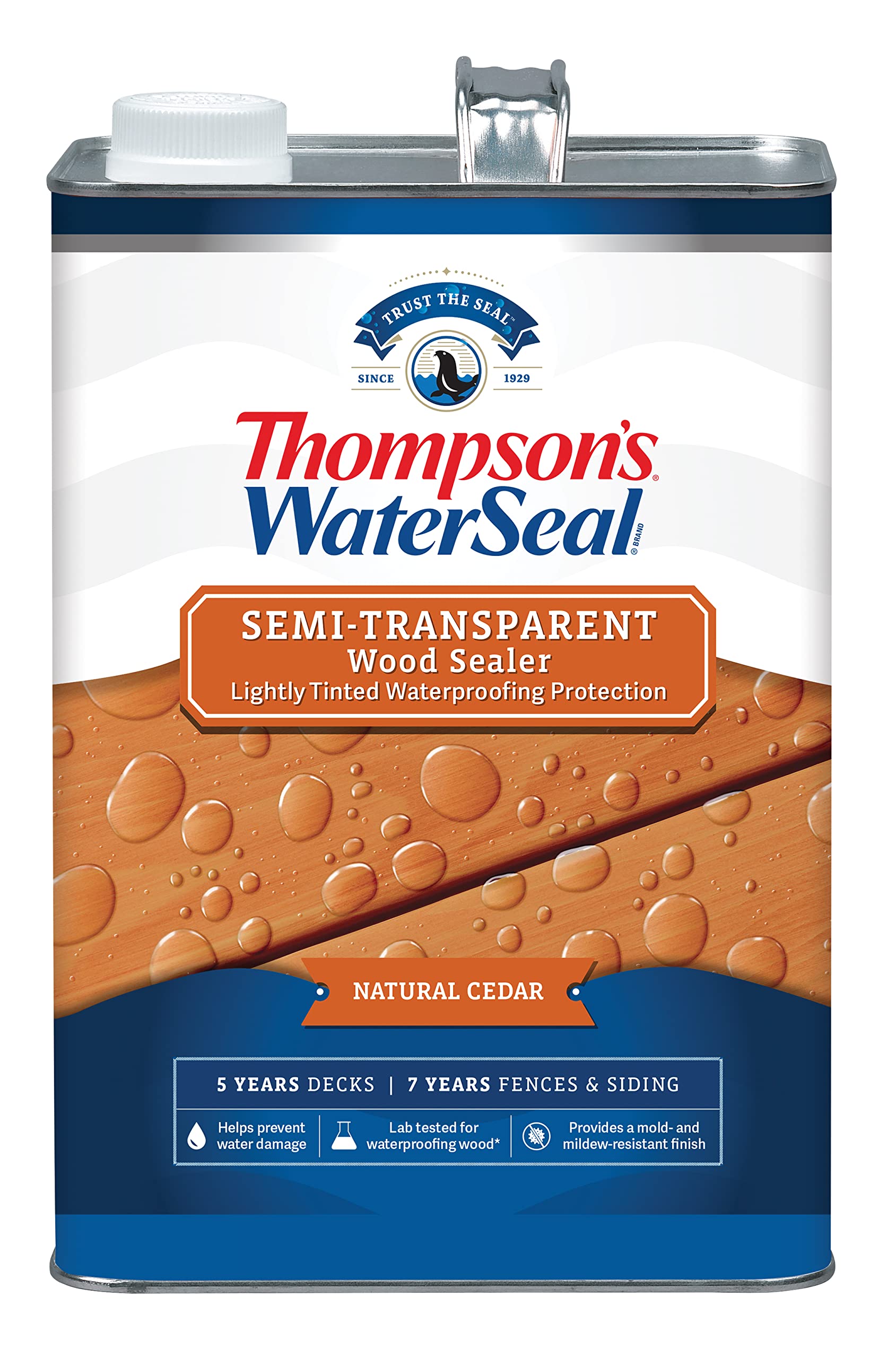
Thompson’s WaterSeal is a household name for a reason: the semi-transparent formula in Natural Cedar adds a pleasing tint while leaving wood grain fully visible. It applies easily with a garden sprayer and a small roller, and users consistently report that the product self-levels well, reducing lap marks. The advanced polymer package provides fade-resistant color and meets ASTM D-4446 waterproofing standards.
The key trade-off is longevity. In hot, rainy climates like South Florida, water beading drops off after about four months, though a quick reapplication restores performance. In moderate zones, the coating holds up significantly longer. Users in Arizona describe consistent performance over a decade with annual recoats, praising the simple application method for large surfaces.
For general deck maintenance where ease of use and predictable results matter more than maximum durability, this is a balanced performer. The color goes on pinkish but dries to a darker redwood tone that most owners find attractive.
Why it’s great
- Self-leveling application reduces streaks and lap marks
- ASTM D-4446 certified waterproofing from a trusted brand
- Works well with garden sprayers for fast large-area coverage
Good to know
- Water beading declines after 4 months in high-humidity climates
- Color dries significantly darker than the wet application shade
6. Roxil Wood Sealer Liquid Clear
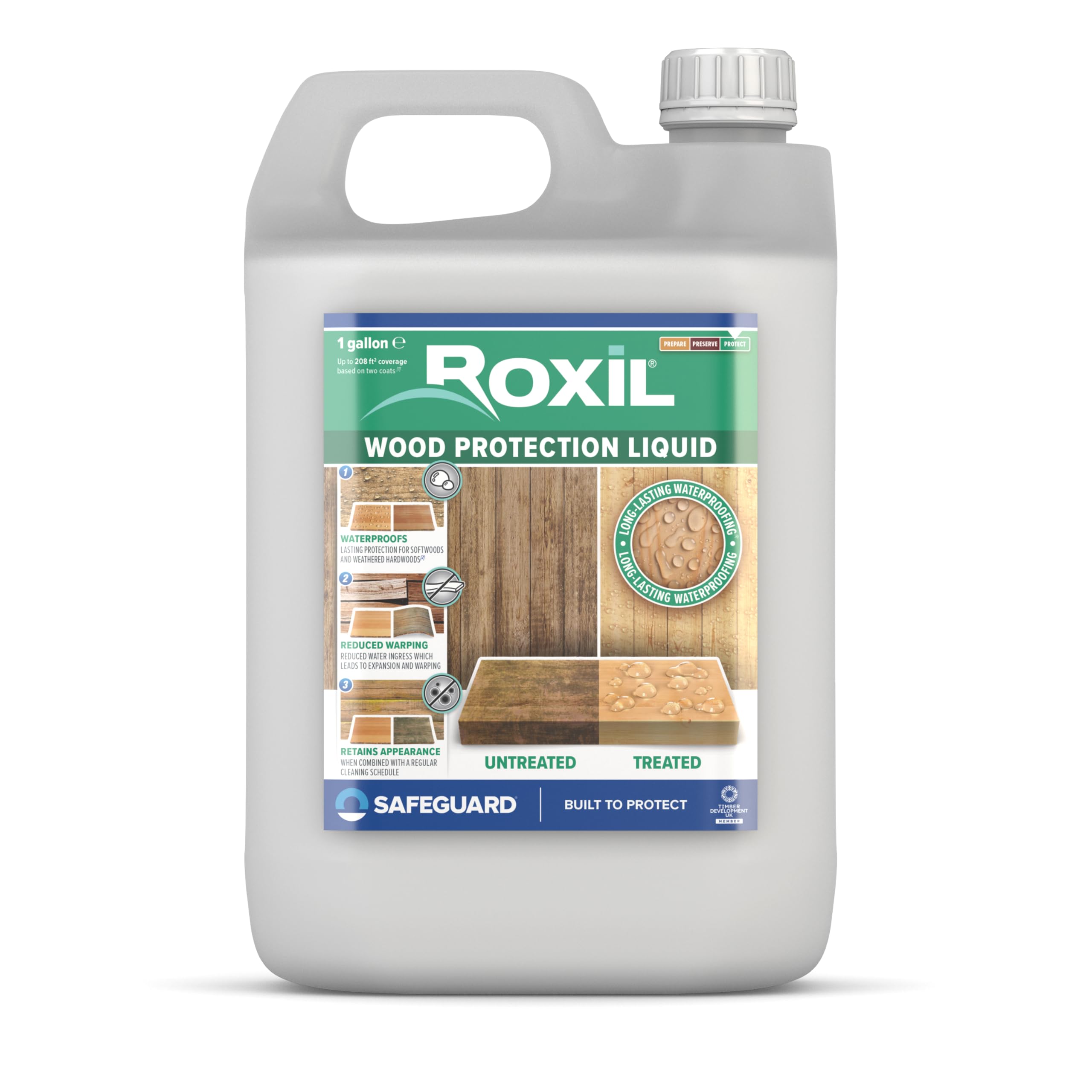
Roxil uses advanced silicone technology to penetrate softwood timbers and create a waterproof barrier without changing the wood’s appearance. The clear finish maintains the natural look of cedar, pine, and pressure-treated lumber, and the manufacturer claims a ten-year lifespan on vertical surfaces. At a 204-square-foot-per-gallon coverage rate for two coats, it is economical for large fencing and siding projects.
Users highlight the fast drying time — about 30 minutes — and the fact that the wood maintains its original color even after rainstorms and daily sun exposure. The silicone formula also improves dimensional stability, reducing warping in boards exposed to moisture cycling. Application is straightforward with a brush or sprayer, and cleanup uses simple soap and water.
Because it is a relatively new formulation from a European manufacturer, long-term data from North American climates is still limited. Early reports show strong water repellency and color retention, but the ten-year warranty claim should be taken as a best-case estimate for vertical, shaded wood surfaces.
Why it’s great
- Clear silicone formula preserves the wood’s natural appearance
- Dries in 30 minutes for fast multi-coat application
- Reduces warping and improves dimensional stability
Good to know
- Long-term durability in extreme climates still unproven
- Ten-year warranty likely applies only to vertical installations
7. Thompson’s WaterSeal Transparent Waterproofing Wood Stain
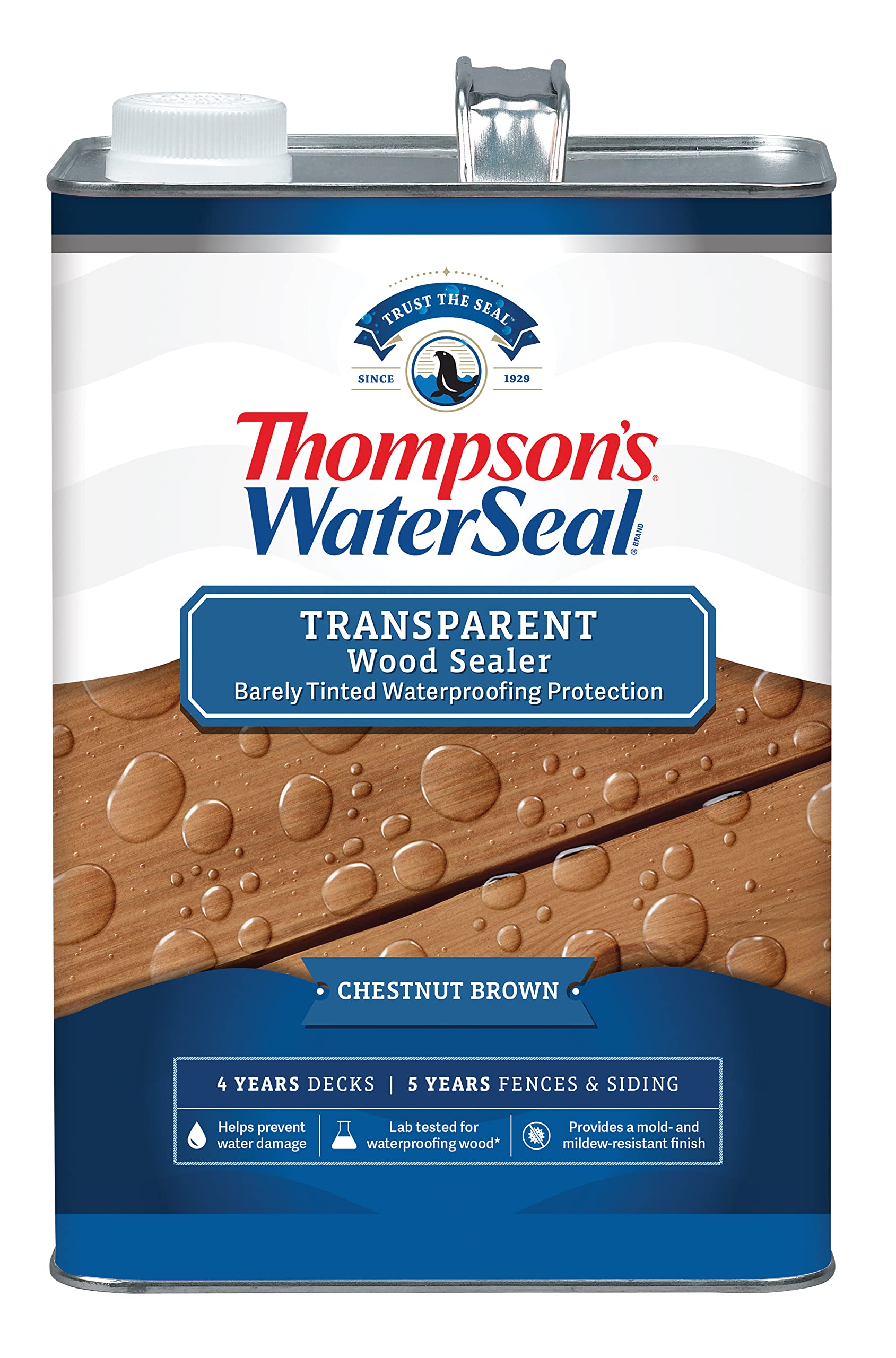
This entry-level transparent stain from Thompson’s provides bold tinted color while allowing wood texture to show through. The advanced polymers in the formula deliver fade-resistant protection against UV damage. Users love that it can be applied to damp or dry wood, and the dried surface cleans up easily.
The main caveat is the transparency level. Despite being labeled “transparent,” the Chestnut Brown color adds significant pigment that can change the wood’s tone noticeably. Long-time users of the brand were surprised when it altered a mahogany deck’s color. For a light refresh, test on an inconspicuous area first. Coverage ranges from 150 to 400 square feet per gallon depending on wood porosity.
At this price point, it is an excellent option for budget-conscious owners who want a reliable brand with industry-standard waterproofing certification. Just be ready for more color pay-off than a truly transparent product would deliver.
Why it’s great
- Industry standard ASTM D-4446 waterproofing certification
- Applies to damp or dry wood for scheduling flexibility
- Fade-resistant polymers extend color life through the season
Good to know
- Transparent label is misleading — adds noticeable pigment
- Coverage varies widely based on wood porosity
FAQ
Can I apply deck oil over an existing stain or sealer?
How often should I recoat my deck with oil?
Is boiled linseed oil safe for vegetable garden beds?
What is the difference between clear, semi-transparent, and solid deck stains?
Final Thoughts: The Verdict
For most users, the best deck oil winner is the DeckWise Ipe Oil because it penetrates even the densest exotic hardwoods and provides a uniform finish that lasts a full season with minimal color fade. If you want a clear, breathable barrier with an industry-leading warranty, grab the Seal-Once Nano Wood Sealer. And for a pure, natural treatment that preserves raw wood without synthetic chemicals, nothing beats the Sunnyside Boiled Linseed Oil.

Mo Maruf
I created WellFizz to bridge the gap between vague wellness advice and actionable solutions. My mission is simple: to decode the research and give you practical tools you can actually use.
Beyond the data, I am a passionate traveler. I believe that stepping away from the screen to explore new environments is essential for mental clarity and physical vitality.