Our readers keep the lights on and my smoothie glass nicely filled. As an Amazon Associate, I earn from qualifying purchases.
A deck stain that sits on top of the wood like a plastic film will always peel, crack, and flake—leaving you with a patchy mess and a weekend of heavy scraping. The real solution isn’t more film, it’s a formula that soaks into the wood fibers to protect from within. Oil-based and high-quality water-based stains achieve this penetration, creating a bond that moves with the wood as it expands and contracts through cycles of rain and sun.
I’m Mohammad Maruf — the founder and writer behind WellFizz. I’ve spent hundreds of hours analyzing customer durability reports, formulation data, and real-world application feedback to separate genuine long-term protectants from coatings that fail after one season.
After combing through technical specs and thousands of verified user experiences, I’ve built this guide to help you find the best deck oil stain for your specific wood type, climate, and finish preference.
How To Choose The Best Deck Oil Stain
Selecting the right deck oil stain isn’t about the richest color on the can—it’s about matching the formula’s resin system, solvent carrier, and pigmentation to your wood’s density, age, and sun exposure. A wrong match leads to premature fading or a peeling nightmare within months.
Oil-Based vs. Water-Based Carriers
Oil-based stains use a petroleum or natural oil carrier (like linseed or tung oil) that penetrates deep into the wood grain, providing a flexible barrier that moves with the wood. Water-based stains use acrylic or alkyd resins suspended in water, which dry faster but sit closer to the surface. For dense hardwoods like Ipe or Cumaru, an oil-based stain is often required to achieve meaningful penetration. For standard pressure-treated pine, a high-quality acrylic hybrid can deliver excellent adhesion and UV resistance with easier soap-and-water cleanup.
Semi-Transparent vs. Solid Opacity
A semi-transparent oil stain contains enough pigment to alter the wood’s natural color while still allowing the grain pattern and texture to show through. Solid stains form a thick, paint-like layer that hides the wood grain entirely. For long-term maintenance, semi-transparent is generally preferred because it wears evenly without peeling—you simply reapply when the water stops beading. Solid stains are more likely to peel and require extensive stripping before reapplication.
UV Inhibitors and Water Repellency
UV radiation is the primary cause of wood graying and color fade in outdoor stains. Look for formulations that include zinc nano-technology or chemical UV absorbers to extend the vibrant life of the stain. Water repellency, measured by how long water beads on the surface after drying, is your first indicator of remaining protection. A stain that fails the water-bead test after a few months lacks sufficient wax or silicone/siloxane additives.
Quick Comparison
On smaller screens, swipe sideways to see the full table.
| Model | Category | Best For | Key Spec | Amazon |
|---|---|---|---|---|
| Ready Seal Natural Light Oak | Oil-Based | No-lap application ease | 125 sq ft/gal coverage | Amazon |
| DeckWise Ipe Oil Natural | Oil-Based | Exotic hardwood decks | 250 sq ft/gal coverage | Amazon |
| DEFY Ultra Butternut | Water-Based | UV protection & deep color | 200-300 sq ft/gal per coat | Amazon |
| KILZ Waterproofing Cedar Naturaltone | Acrylic | Warranty-backed durability | 250-500 sq ft/gal coverage | Amazon |
| DEFY Essential Redwood | Water-Based | Budget-friendly water base | 100-150 sq ft/gal for 2 coats | Amazon |
| Thompson’s WaterSeal Chestnut Brown | Water-Based | Transparent budget option | 150-400 sq ft/gal coverage | Amazon |
| Thompson’s WaterSeal Desert Tan | Water-Based | Light tint semi-transparent | 150-400 sq ft/gal coverage | Amazon |
In‑Depth Reviews
1. Ready Seal Natural Light Oak Exterior Wood Stain
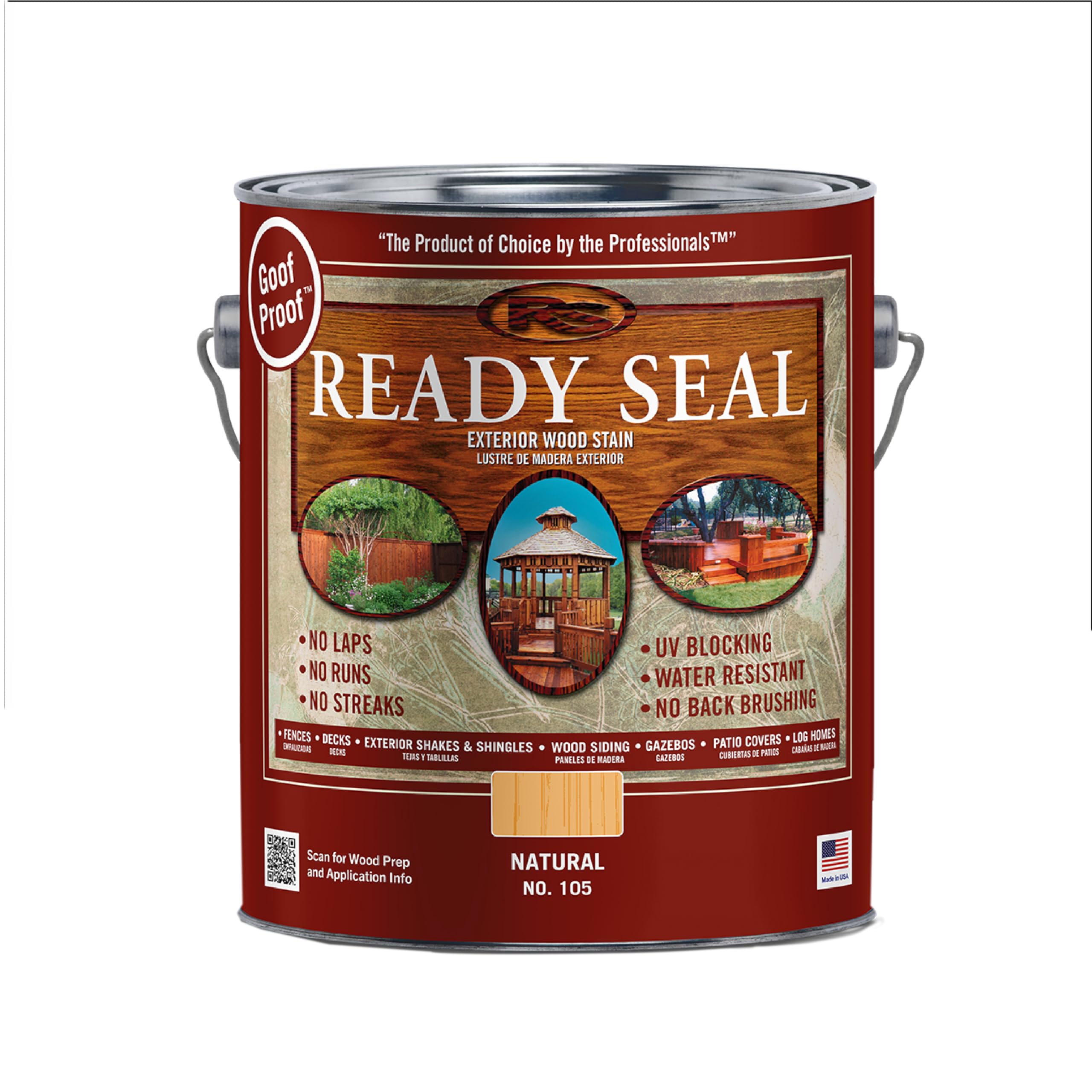
Ready Seal is engineered to eliminate the number-one frustration of deck staining: lap marks. Its oil-based formula has a long open time that allows overlapping wet edges to blend seamlessly without requiring back-brushing, making it nearly impossible to mess up the application. On porous surfaces like weathered cedar, the stain penetrates deeply on the first coat, though a second coat is generally recommended for uniform coverage on dense grain.
The durability of this stain stands out in wet climates. The flat finish keeps the texture of the wood prominent, and the Natural Light Oak color provides a subtle warm tone without overpowering the original wood character.
One practical consideration: the pigment settles aggressively during storage, so thorough stirring or mechanical mixing is critical before and during application. The low-odor formula is a welcome relief during long staining sessions, and the ability to apply in direct sunlight or even when light rain is minutes away expands the application window significantly compared to typical water-based alternatives.
Why it’s great
- No lap marks or streaks even without back-brushing
- Deep oil penetration into weathered and new wood
- Can be applied in direct sun or before rain
Good to know
- Pigment settles quickly—requires thorough stirring
- Limited color palette compared to water-based ranges
2. DeckWise Ipe Oil Hardwood Deck Semi-Transparent Natural Finish

DeckWise Ipe Oil is the reference standard for owners of exotic hardwood decks. The oil-based formula is specifically designed to penetrate the extreme density of woods like Ipe, Tigerwood, Cumaru, and Massaranduba, which reject typical water-based stains as effectively as rain on a waxed car. The natural brown tint adds richness without masking the unique grain patterns that make these woods desirable.
Annual reapplication is the norm with this product—users report a near-new appearance for 12 months followed by a gradual, even fade that doesn’t look patchy. The preparation process is straightforward but non-negotiable: pressure washing and sanding with 80-grit paper opens the pores enough for the oil to lock in. Application with a stain sponge or lambswool applicator yields the most uniform finish on horizontal deck boards.
A critical nuance: this finish is not suitable for handrails, as the oil leaves a slick surface that lacks the grip of a marine-grade varnish. For railing applications, the manufacturer recommends a compatible topcoat. The heavy brown pigment can surprise first-time users expecting a clear oil, so testing on a hidden board is advised before committing to the full surface.
Why it’s great
- Penetrates the densest exotic hardwoods effectively
- Fades evenly without peeling or flaking
- Easy to reapply with minimal surface prep
Good to know
- Not for use on handrails—creates a slick surface
- Color is a heavy brown, not a clear oil
3. DEFY Ultra Semi-Transparent Outdoor Wood Stain and Sealer

DEFY Ultra bridges the gap between easy water-based cleanup and the appearance of an oil-based stain. Its acrylic/alkyd hybrid formula uses zinc nano-technology for UV resistance that prevents graying and fading longer than standard acrylic stains. The versatility in finish is a standout feature: one coat delivers a flat, lighter look that lets the wood grain shine, while a second coat builds a satin sheen with deeper color saturation.
Application feedback highlights the forgiving nature of this stain—it dries to the touch in 1-2 hours but remains workable long enough to correct uneven spots. A 6-inch roller works efficiently on deck boards, and the thin consistency helps it seep between board gaps without pooling. Users who applied it to pressure-treated pine and cedar fences report consistent tone across the entire surface, even when spraying with a garden sprayer.
There is a durability concern that warrants attention. Several verified reviews describe bubbling and peeling within 6-12 months, even when used with the manufacturer’s recommended cleaner. The issue appears to affect a subset of users, possibly tied to application temperature or wood moisture content at the time of staining. Testing on a small area and closely following the drying time between coats is the safest approach.
Why it’s great
- Can achieve flat or satin finish based on coat count
- Zinc nano UV tech exceeds standard acrylic protection
- Easy water-based cleanup with oil-like appearance
Good to know
- Some reports of bubbling and peeling in certain conditions
- Dries lighter than advertised on very porous wood
4. KILZ Waterproofing Semi-Transparent Wood Stain, Cedar Naturaltone

KILZ leverages its reputation in primers to deliver a deck stain that prioritizes adhesion and uniform coverage. The 100% acrylic formula bonds to properly prepared wood without the need for a separate primer, and the Cedar Naturaltone color strikes a balance between subtle warmth and enhanced grain visibility. The coverage rate is the highest in this roundup—250-500 square feet per gallon, depending on surface porosity—making it a strong option for large decks and fences.
The warranty structure is a confidence builder: three years on horizontal deck surfaces and five years on vertical surfaces like fences and siding. This backing reflects the manufacturer’s confidence in the formula’s UV and moisture resistance. Users consistently describe the application as smooth and self-leveling, with a satin finish that hides minor surface imperfections without becoming glossy.
The main trade-off is that 100% acrylic stains form a thicker film compared to oil-based options. While this film resists mildew and UV fading well, it is more prone to wearing thin in high-traffic areas rather than fading evenly. Reapplication on traffic paths may be needed before the rest of the deck requires another coat.
Why it’s great
- Industry-leading 3-year deck warranty
- Smooth, self-leveling application with no brush marks
- Excellent coverage—up to 500 sq ft per gallon
Good to know
- Acrylic film can wear thin on high-traffic paths
- Longer drying time between coats (1-2 hours)
5. DEFY Essential Semi-Transparent Outdoor Wood Stain, Redwood
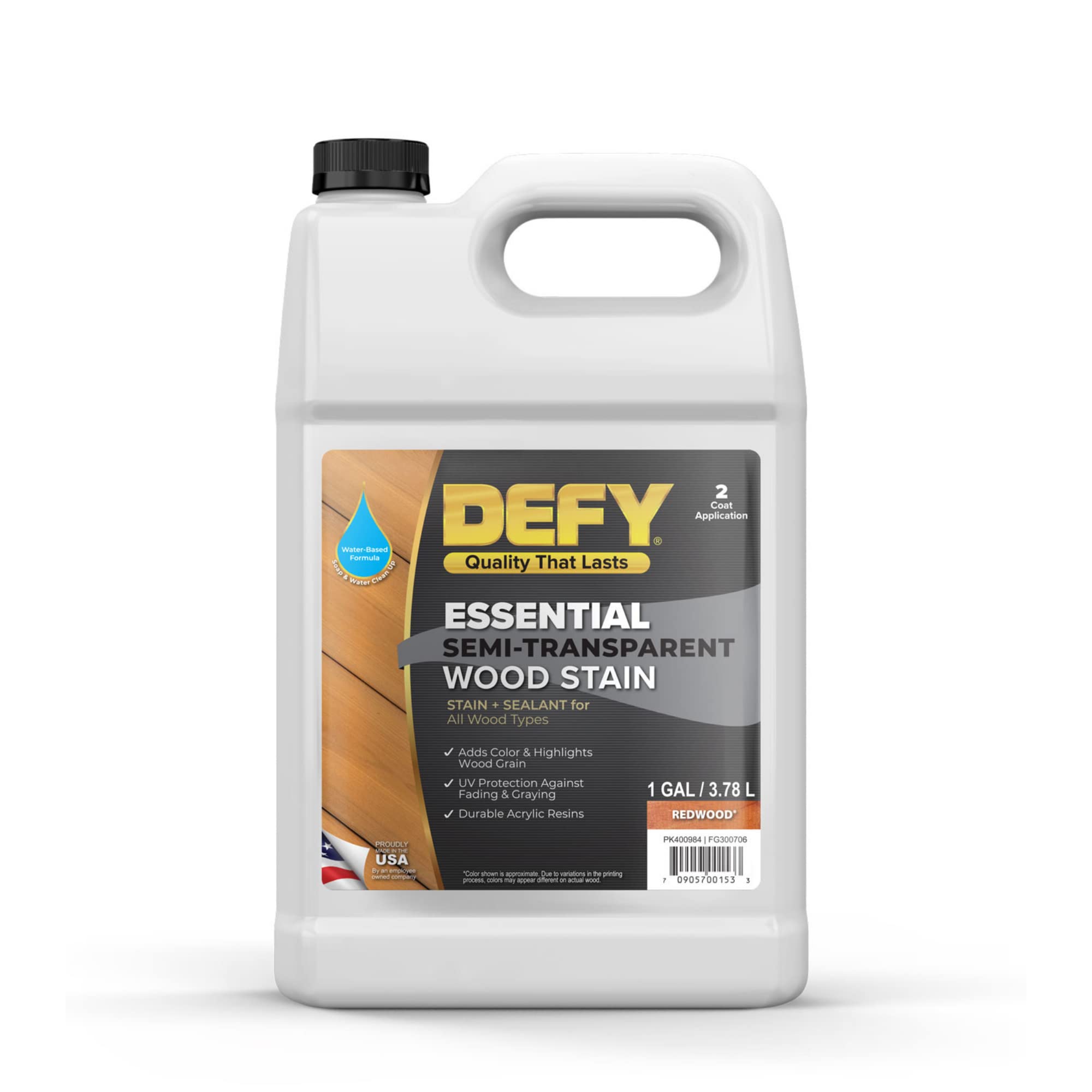
DEFY Essential is the entry-level sibling to the DEFY Ultra, stripping away the UV nano-technology but retaining the core water-based acrylic resin system. The Redwood color is a standout in this tier—users consistently describe it as a gorgeous cedar tone that avoids the unpleasant orange cast common in many redwood stains. The thin consistency allows it to soak into the wood rather than sit on top, which reduces the chance of peeling.
Coverage is lower per gallon than most competitors, at 100-150 square feet for the recommended two-coat application. This means a standard 200-square-foot deck will require two gallons for proper coverage, pushing the effective cost higher than the per-can price suggests. Application is straightforward with a spray gun or roller, and cleanup requires only soap and water.
The thin viscosity is a double-edged sword. It penetrates well but also drips and splashes more than thicker stains, so drop cloths are essential. Users who applied one coat on fence boards and two coats on bench surfaces reported better color depth with the double application. Long-term durability reports are mixed—some users see excellent performance through a full season, while others note fading after six months of direct sun exposure.
Why it’s great
- Rich redwood color without orange undertones
- Thin consistency for deep wood penetration
- Easy soap-and-water cleanup
Good to know
- Lower coverage rate—needs 2 gallons for most decks
- Thin formula requires drop cloths to avoid drips
6. Thompson’s WaterSeal Transparent Waterproofing Wood Stain and Sealer, Chestnut Brown
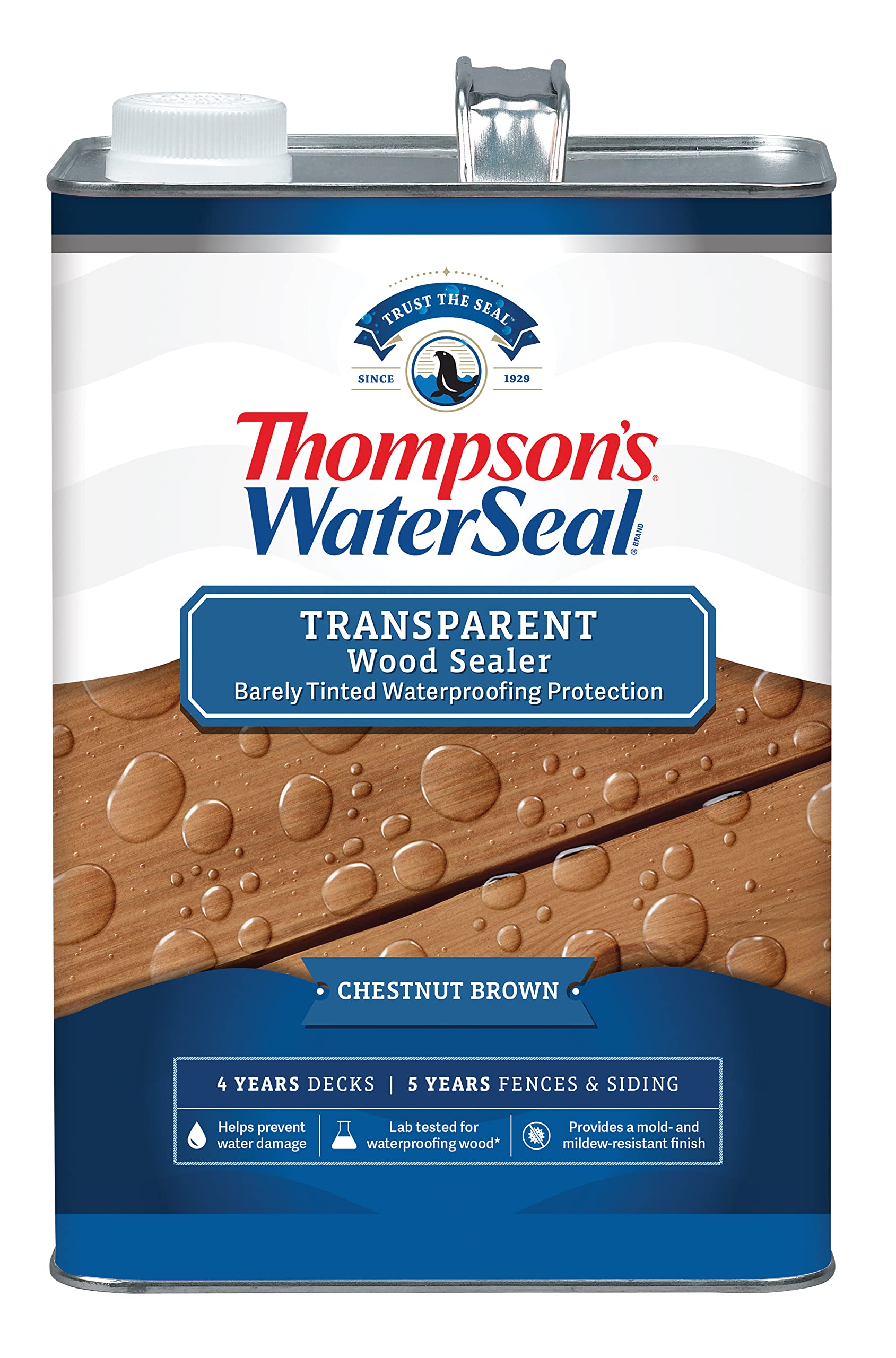
Thompson’s WaterSeal has been a household name in wood waterproofing for decades, and this transparent formulation continues that legacy. The Chestnut Brown color provides a subtle warm tint while allowing the natural grain and texture to remain the star of the show. The coverage range of 150-400 square feet per gallon gives flexibility depending on how much stain the wood absorbs.
The waterproofing performance meets the ASTM D-4446 industry standard, meaning the wood substrate is effectively protected from water penetration. Users report that rain beads up beautifully on the treated surface, and the advanced polymers in the formula resist UV damage to minimize fading over the season. The ability to apply to damp wood expands the application window—you don’t need perfectly dry conditions to get started.
The term “transparent” can be misleading. Multiple verified reviews note that the Chestnut Brown delivers significantly more color than expected, changing the appearance of light woods like mahogany or cedar noticeably. Drying time is quick, which is positive for dust pickup but requires careful attention to maintain a wet edge.
Why it’s great
- Meets ASTM D-4446 waterproofing standard
- Can be applied to damp wood
- Quick drying time for fast project completion
Good to know
- “Transparent” label is optimistic—adds significant tint
- Fast drying requires careful wet-edge management
7. Thompson’s WaterSeal Semi-Transparent Waterproofing Wood Stain and Sealer, Desert Tan

Thompson’s WaterSeal Semi-Transparent in Desert Tan is the most forgiving option in the brand’s lineup for color matching. The light beige-brown tone blends well with a wide range of wood species and existing finishes, making it a safe choice for homeowners who want a natural look without a dramatic color shift. The semi-transparent opacity offers more pigment than the transparent line but still allows wood texture to show through clearly.
Application is straightforward and beginner-friendly. Users consistently highlight the self-leveling nature of the stain—uneven spray patterns and brush marks tend to blend out as the product dries. The semi-gloss finish provides a subtle sheen that enhances the wood’s color depth without looking plasticky. For those in harsh sun climates like Arizona and Florida, the formula holds up well for about a full season before water beading diminishes.
The color on the can is not an exact match for the applied result. Several users note that the Desert Tan dries darker than the label suggests, shifting toward a richer redwood hue. While this is not a defect, it means that testing on a hidden section of the deck is especially important. Reapplication is simple—just clean the surface and apply another coat without sanding or stripping, as the semi-transparent formulation wears down evenly over time.
Why it’s great
- Self-leveling application hides application inconsistencies
- Light tan color works with many wood species
- Easy annual reapplication without stripping
Good to know
- Color dries darker than the can label suggests
- Semi-gloss sheen may show footprints in wet conditions
FAQ
Can I apply a new deck oil stain over an old layer of solid stain?
How long should I wait between power washing and applying a deck oil stain?
Why does my oil-based deck stain feel sticky hours after application?
Final Thoughts: The Verdict
For most users, the best deck oil stain winner is the Ready Seal Natural Light Oak because its oil-based, no-lap formula removes the biggest risk of a bad staining job while delivering deep penetration and durable water repellency. If you own an exotic hardwood deck like Ipe or Cumaru, grab the DeckWise Ipe Oil Natural Finish—it’s the only reliable option for those dense species. And for a water-based hybrid with advanced UV protection and finish flexibility, nothing beats the DEFY Ultra Butternut.

Mo Maruf
I created WellFizz to bridge the gap between vague wellness advice and actionable solutions. My mission is simple: to decode the research and give you practical tools you can actually use.
Beyond the data, I am a passionate traveler. I believe that stepping away from the screen to explore new environments is essential for mental clarity and physical vitality.