Our readers keep the lights on and my smoothie glass nicely filled. As an Amazon Associate, I earn from qualifying purchases.
Building a deck is an investment that deserves more than just a coat of paint on the joists. Moisture trapped between the decking boards and the joists is the primary cause of premature rot, turning a beautiful outdoor space into a major structural headache. The solution is a proper waterproof barrier applied before the deck boards go down.
I’m Mohammad Maruf — the founder and writer behind WellFizz. This guide compiles hours of digging into the specs, chemistry, and user reports for the top butyl and acrylic tape options available, so you can make a choice based on real-world performance data, not marketing claims.
Whether you’re a contractor or a DIY homeowner, applying a reliable seal is a critical step. After analyzing dozens of options and hundreds of customer experiences, I’ve built this list of the best deck joist tape to keep your lumber dry and your structure standing strong for decades.
How To Choose The Best Deck Joist Tape
Not all black tapes are created equal. The wrong choice leads to bubbling, peeling, and pathways for moisture. Focus on these three factors to get it right the first time.
Material: Butyl Rubber vs. Acrylic
Butyl rubber is the gold standard for this application. It remains flexible in cold weather, provides a strong initial tack, and has the unique ability to “self-heal” around nail and screw penetrations. Acrylic adhesives, like those used by FrogTape, offer excellent UV resistance and extreme temperature tolerance but lack the self-sealing property that many builders prefer for ultimate peace of mind. For below-deck applications where UV exposure is low, butyl is generally the superior choice.
Thickness and Conformability
Thicker tape (typically 13 mils or more) is more durable and better at bridging small gaps and imperfections in pressure-treated lumber. However, a very thick tape can be harder to apply around corners. The “conformability” of the tape is key — it must stick into the grain of the wood, not just bridge over it, to prevent moisture from wicking underneath.
The Release Liner is Make-or-Break
This is the most overlooked spec. A cheap release liner tears into tiny strips, forcing you to stop constantly to pick at the backing paper. A high-quality liner peels off in one long, continuous sheet. Reading user reports on this single detail can save you hours of frustration on a large deck project.
Quick Comparison
On smaller screens, swipe sideways to see the full table.
| Model | Category | Best For | Key Spec | Amazon |
|---|---|---|---|---|
| FrogTape Pro Grade | Acrylic | Extreme temperature ranges | 13 mils thick | Amazon |
| ADHES Butyl Joist Tape | Butyl | Bonding to varied surfaces | 4-inch width | Amazon |
| CHUANGDANG 4-Pack | Butyl | High-value bulk buy | 700 microns thick | Amazon |
| JOAPRIL Butyl Tape | Butyl | Contractor-grade bulk | 4 rolls total | Amazon |
| Heelos Butyl Tape | Butyl | Ease of application | 4 rolls total | Amazon |
In-Depth Reviews
1. FrogTape Pro Grade Deck and Joist Flashing Tape
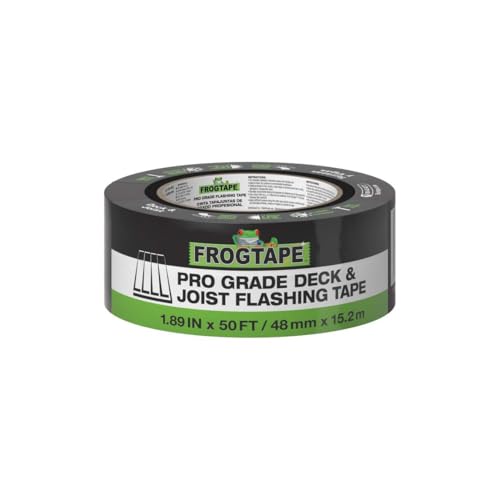
FrogTape takes a different approach with a 13-mil acrylic adhesive system rather than a standard butyl formula. This provides a unique advantage for certain conditions: the tape stays put in extreme temperatures ranging from forty below to over 200 degrees Fahrenheit without melting or freezing. The acrylic formula is also highly UV resistant, making it a solid choice for ledger boards or areas that see direct sun exposure before the decking is installed.
The 50-foot roll is 2 inches wide and features a polyethylene and PVC backing that offers excellent conformability around corners and edges. Users consistently praise the adhesive’s “perfect” tack — it’s initially repositionable, which is a lifesaver when aligning strips on long joists, yet it bonds aggressively over time. The self-healing property around fasteners is a standout feature, though it’s achieved through a different mechanism than butyl tapes.
One important note: this is not your standard butyl tape. If you want a time-tested, self-sealing sealant that flows around nail shanks, butyl is the way to go. But if you need a tape that can survive prolonged UV exposure and extreme thermal cycling without becoming brittle, the FrogTape’s advanced acrylic is the superior engineering choice.
Why it’s great
- 13-mil thickness provides excellent durability and gap bridging.
- Exceptional temperature range (-40°F to 240°F) for all climates.
- 12-month UV resistance outperforms standard butyl tapes.
Good to know
- Acrylic adhesive does not self-seal like butyl around fasteners.
- Single roll only; no multi-pack value option available.
2. ADHES Deck Joist Tape (4″ x 50′)
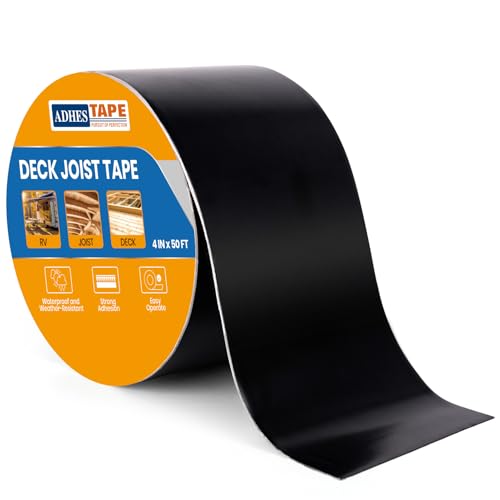
The ADHES tape is a smart pick for builders who want a wider 4-inch coverage to handle larger surface areas or wrap around beams with fewer strips. It uses a pure butyl rubber construction that provides superior waterproofing and anti-corrosion properties, making it ideal for protecting metal connector plates as well as wooden joists. Its ability to adhere to wood, metal, plastic, and rubber makes it a versatile tool for any jobsite.
User feedback highlights two key strengths: the butyl adhesive is very sticky and maintains a strong hold, and the release liner is much easier to peel than many competing budget tapes. The manufacturer notes that the tape achieves maximum adhesion within 24 hours, which is standard for butyl. The temperature range from twenty below to 230 degrees Fahrenheit covers all but the most extreme northern climates.
The only significant complaint revolves around the backing paper, which some users found to be too weak and prone to tearing. It required extra patience to remove in small pieces, which can slow down installation on a large deck. For the price, however, the combination of width and butyl performance makes this a compelling value.
Why it’s great
- 4-inch width reduces the number of strips needed for full coverage.
- Excellent adhesion to a wide range of building materials.
- Butyl rubber provides reliable self-sealing around fasteners.
Good to know
- Release liner can tear and requires careful handling.
- Reaches full stickiness only after 24 hours of curing.
3. CHUANGDANG Black Joist Tape (4-Pack)
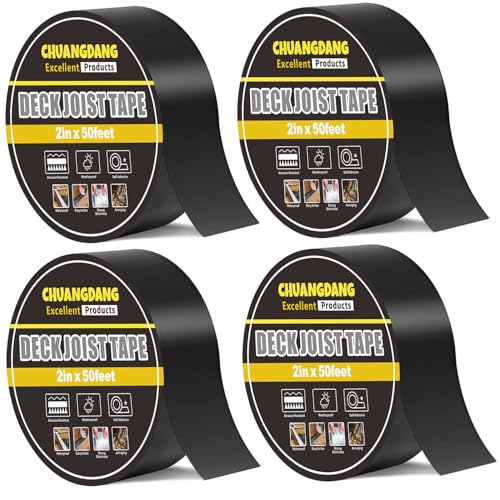
The CHUANGDANG tape stands out for its construction — it combines a high-elasticity PDA film with a pure natural butyl rubber adhesive. This results in a tape that is both incredibly strong in tension (resisting tears during installation) and highly conformable to the rough surface of treated lumber. At 700 microns thick (roughly 27 mils), it is significantly thicker than most competitors, providing a robust moisture barrier.
Users report excellent stickiness, noting that it bonds aggressively to treated wood and stays in place even in sunlight. The 4-pack of 2-inch by 50-foot rolls offers great coverage for a typical deck project. The tape is designed to withstand temperatures from minus four degrees Fahrenheit to over 400 degrees Fahrenheit, giving it a wider safe zone than many butyl alternatives. The tape does have a curing period and is not immediately at full stickiness, but reviewers confirm it locks down after about 12 hours.
The primary flaw reported is consistent with many thick butyl tapes: the plastic backing can tear during the peeling process. One user noted this “annoying issue” required occasional rework. However, the overwhelming majority of reviews praise its durability, adhesion, and value, making it a top-tier choice for a homeowner who plans to do it right once.
Why it’s great
- Exceptionally thick at 700 microns for maximum durability.
- High-elasticity film resists tearing during application.
- Excellent value with a 4-pack of 50-foot rolls.
Good to know
- Backing can tear, requiring careful removal.
- Tape reaches peak stickiness after a 12-hour cure.
4. JOAPRIL Butyl Joist Tape (4-Pack)
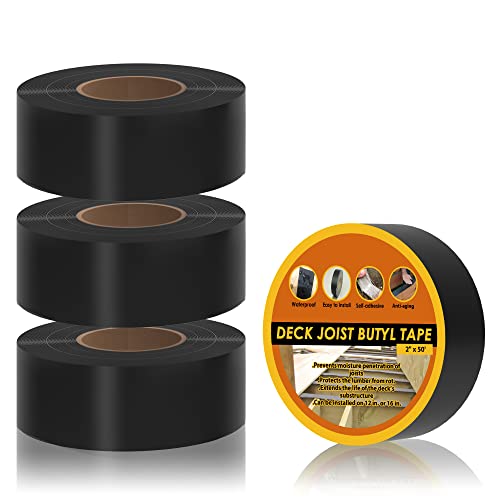
The JOAPRIL tape is a straightforward, no-nonsense butyl solution designed to get the job done. It comes in a 4-pack of 2-inch by 50-foot rolls, totaling 200 feet of tape — enough for a substantial deck. Its primary material is a high-quality butyl adhesive that is reported to be very sticky and effective at creating an airtight, waterproof seal that conforms nicely to the surfaces beneath.
Customer feedback confirms it provides “added protection where it’s needed” and that it works well for its intended purpose. The tape handles temperature swings from twenty below to 230 degrees Fahrenheit, making it suitable for most climates. The broad compatibility with wood, metal, and rubber is a plus for applications beyond just joists, such as sealing beams or roof repairs.
Again, the release liner is the star of the negative feedback. Multiple users describe the plastic backing as “difficult to unwrap” and prone to splitting at an angle, similar to cheap masking tape. One user noted spending more time peeling the backing than applying the tape. This is a critical flaw that can add significant labor time to a project, even if the tape itself performs perfectly once installed.
Why it’s great
- Good quality butyl that sticks well and conforms to surfaces.
- 4-pack provides generous 200 feet of total tape.
- Strong adhesion that provides a reliable waterproof seal.
Good to know
- Release liner is notoriously difficult to peel and splits frequently.
- Installation speed is significantly slowed by the liner issue.
5. Heelos Butyl Joist Tape (4-Pack)

The Heelos tape aims to solve the most common frustration with butyl tape: the release liner. Customer reports indicate that this tape comes with a protective film that is easier to remove than many competitors, with one user noting “no backing issues” during their install. This is a huge advantage when you’re working on a long joist line and don’t want to stop to pick at torn plastic.
The tape itself is made of a standard butyl rubber and is designed to provide a waterproof, rot-resistant seal. It comes in a 4-pack of 2-inch by 50-foot rolls. Users report that it is extremely sticky and durable — so much so that it becomes nearly impossible to peel off after a few days. The self-adhesive backing is simple to use: clean the surface, cut to length, and apply. The manufacturer recommends warming the tape with a hair dryer in cold weather to improve tack.
A minor trade-off is that while the tape itself is tough, it can be torn if deck boards are dragged across it or if someone twists their foot on an exposed strip. It’s best to cover the tape with decking promptly after installation. For users prioritizing a smooth application process without the headache of a fighting liner, this is the most user-friendly option in the list.
Why it’s great
- Release liner is reported to be easy to peel without tearing.
- Extremely aggressive adhesion that doesn’t let go.
- Good value and volume with 4 rolls per pack.
Good to know
- Can be torn by dragging deck boards or foot traffic before covering.
- Multiple backing segments per roll can be a minor nuisance.
FAQ
Is it necessary to use joist tape on pressure-treated lumber?
Should I choose a 2-inch or 4-inch wide joist tape?
Can I apply deck joist tape in cold weather?
Final Thoughts: The Verdict
For most users, the best deck joist tape winner is the CHUANGDANG Black Joist Tape (4-Pack) because it provides the best balance of extreme thickness, durable butyl construction, and high-volume value for a complete deck project. If you want a tape that is incredibly easy to apply without fighting a torn release liner, grab the Heelos Butyl Joist Tape. And for projects requiring maximum UV resistance and extreme temperature tolerance, nothing beats the FrogTape Pro Grade Flashing Tape.

Mo Maruf
I created WellFizz to bridge the gap between vague wellness advice and actionable solutions. My mission is simple: to decode the research and give you practical tools you can actually use.
Beyond the data, I am a passionate traveler. I believe that stepping away from the screen to explore new environments is essential for mental clarity and physical vitality.