Our readers keep the lights on and my smoothie glass nicely filled. As an Amazon Associate, I earn from qualifying purchases.
That first hard freeze after investing a weekend staining your deck can feel like a gamble. You’re betting the coating you chose can handle expanding ice crystals, bitter temperature swings, and months of snow load without cracking or peeling. For wood and composite surfaces exposed to winter’s worst, the difference between a resilient barrier and a failed one comes down to specific chemistry and application behavior — not marketing claims.
I’m Mohammad Maruf — the founder and writer behind WellFizz. I’ve spent thousands of hours analyzing formulation data, freeze-thaw cycling specs, and surface adhesion reports to separate durable winter-ready sealants from products that fail in the first cold snap.
This guide breaks down the five most reliable formulations for safeguarding outdoor surfaces through harsh conditions, helping you identify the best deck coating for winter protection based on measurable performance rather than packaging promises.
How To Choose The Best Deck Coating For Winter Protection
Winter is the great revealer of poor deck coatings. A product that looks good in July can turn into a flaking, cracking mess by February. The science is straightforward: water seeps into microscopic voids, freezes, expands, and the expanding ice shears the coating from the wood or composite substrate. Coatings that survive winter must be flexible enough to stretch with the ice and adhesive enough to resist that shear stress.
Elasticity and elongation
The most critical winter specification is the coating’s ability to stretch without breaking. Liquid rubber formulations typically offer the highest elongation — some remaining flexible down to -40°F. Acrylic-based stains and sealers have less give and rely on thicker film builds, which can crack when the substrate contracts in extreme cold. Look for products that explicitly state freeze-thaw cycling stability or low-temperature flexibility.
Breathability vs. waterproofing
A common winter mistake is trapping moisture beneath a non-breathable film. If moisture from the ground or air gets trapped under the coating and freezes, it lifts the coating from below. Penetrating sealers like silane-siloxane blends allow vapor to escape while blocking liquid water. Film-forming sealers create a surface barrier that is more waterproof but risk winter delamination if the substrate isn’t bone-dry before application.
Application temperature range
Many coatings require temperatures above 45°F to cure properly. Applying a coating when the forecast shows nights dipping below that threshold can result in a weak bond that fails in the first freeze. Some formulations, particularly silicone creams and certain rubber sealants, have wider application windows and faster initial set times, making them more forgiving in shoulder-season application.
UV resistance for winter sun
Winter UV exposure is often worse than summer because low-angle sunlight and snow reflection intensify radiation on horizontal surfaces. Coatings with UV stabilizers, nano-zinc particles, or opaque pigments prevent the polymer binder from degrading, which keeps the film flexible when temperatures drop. Clear sealers without UV protection can become brittle within a single winter.
Quick Comparison
On smaller screens, swipe sideways to see the full table.
| Model | Category | Best For | Key Spec | Amazon |
|---|---|---|---|---|
| Roxil Wood Sealer Cream | Premium Silicone Cream | Maximum winter durability on wood | 10-year warranty, 50-60 sq ft/gal coverage | Amazon |
| DEFY Extreme Composite Deck Sealer | Nano-Zinc Clear Sealer | Reviving faded composite decks | Zinc nano-particles for UV/water defense | Amazon |
| Tufinein Rubber Liquid Sealant | Liquid Rubber Coating | Sealing cracks and leaks on multiple surfaces | Flexible down to -40°F, self-leveling | Amazon |
| MasonryDefender All Purpose Sealer | Penetrating Silane-Siloxane | Concrete and masonry winter protection | Clear, breathable, for brick/stone/concrete | Amazon |
| DEFY Essential Semi-Transparent Stain | Acrylic Stain & Sealer | Budget-friendly wood color and protection | Matte finish, 100-150 sq ft/gal for 2 coats | Amazon |
In‑Depth Reviews
1. Roxil Wood Sealer Cream

Roxil’s silicone cream emulsion is the most premium formulation in this roundup, built specifically for winter extremes. The thick, no-drip cream consistency eliminates the runoff and pooling that plague thinner sealers in cold conditions, and the deep-penetrating silicone bonds literally inside the wood fibers rather than sitting on top. It creates a breathable barrier that rejects liquid water while allowing trapped moisture vapor to escape — the critical dynamic that prevents winter delamination.
Users consistently report dramatic water beading and roll-off on treated decks, fences, and playground sets, even after multiple rain and snow cycles. The 10-year warranty claim is ambitious, but the formulation chemistry supports it better than most alternatives. The cream applies opaque white for visibility during application and dries completely transparent without altering the wood’s natural color or leaving a glossy plastic look.
For winter-protection buyers who want one application that lasts through multiple freeze-thaw seasons and can be applied without sanding between coats, Roxil is the definitive choice. The thicker formulation means coverage sits at 50 to 60 square feet per gallon, so plan to buy more volume than you would for a thin stain, but the trade-off is genuine long-term durability that cheaper products cannot match.
Why it’s great
- No-drip cream formulation applies cleanly in cooler weather
- Breathable silicone barrier prevents winter moisture trapping
- Dries completely clear with no surface film or shine
Good to know
- Lower coverage rate requires more product per project
- Premium price reflects specialized silicone chemistry
2. DEFY Extreme Composite Deck Sealer

Composite decks have a unique winter vulnerability: the plastic content contracts more than wood, and many standard sealers simply cannot flex enough to stay bonded. DEFY Extreme uses zinc nano-particles suspended in a water-based acrylic carrier to create a flexible clear film that resists both UV degradation and moisture penetration. Users have restored 20-year-old faded Trex decks to a renewed, richer color with a single application.
The zinc component is not just for UV blocking — it also reduces the graying and oxidation that winter sun reflection accelerates. The sealer applies with a sprayer, brush, or pad and dries to a clear finish, though some users note a temporary slight tackiness in direct sunlight that diminishes over weeks. The coverage rate of 100 to 150 square feet per gallon for two coats is efficient for a clear sealer.
What makes this product winter-worthy is its temperature flexibility. It cures in temperatures as low as 45°F, and the nano-zinc formulation resists the brittleness that plagues standard acrylics in freezing conditions. For owners of older composite decks who want to extend life without replacing boards, this is a targeted winter-prep solution that visibly transforms faded surfaces.
Why it’s great
- Zinc nano-particles prevent UV fading and winter graying
- Revitalizes severely oxidized composite decks
- Efficient coverage for a clear sealer
Good to know
- Milky residue can form in standing water puddles
- Overspray bonds tenaciously and is difficult to remove
3. Tufinein Rubber Liquid Sealant
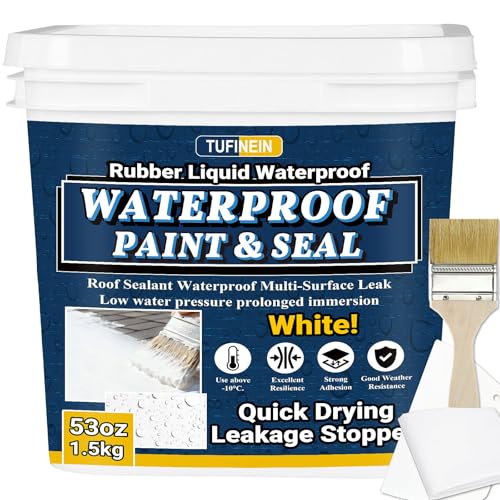
When winter protection requires elasticity above all else, the Tufinein rubber liquid sealant delivers the widest operating temperature range in this comparison — remaining flexible from -40°F up to 176°F. This is a liquid rubber coating that self-levels into a continuous membrane, making it ideal for sealing cracks, joints, and transitions where wood or concrete expansion and contraction concentrate stress.
The product comes as a 53-ounce can of thick, rubbery liquid that cures in 2 to 4 hours to form a dense black or bluish-gray rubber membrane. Users have applied it to cracked rubberized porch floors, outdoor fountain basins, and metal roof joints with consistent waterproofing results. It adheres well to concrete, metal, plastic, and brick surfaces, making it the most versatile substrate option here.
A few practical notes: the coating remains slightly tacky when cured, so it is not suitable for high-traffic walking surfaces. It also has a strong solvent smell during application, so proper ventilation is mandatory. The self-leveling nature means it fills small gaps and cracks automatically, but for larger defects, the included polyester fabric patch enhances bridging strength. This is a specialized winter repair coating rather than a whole-deck refinishing product.
Why it’s great
- Extreme elasticity across -40°F to 176°F range
- Self-leveling formula bridges cracks without brush marks
- Adheres to concrete, metal, brick, and plastic
Good to know
- Cured surface remains tacky and not foot-traffic friendly
- Strong chemical odor requires ventilation during application
4. MasonryDefender All Purpose Sealer

Structures adjacent to your deck — brick steps, concrete retaining walls, stone planters, and granite borders — suffer winter damage just as aggressively as the deck surface itself. MasonryDefender uses a silane-siloxane penetrating chemistry that soaks into porous masonry and chemically bonds to the substrate, creating a hydrophobic zone that stops liquid water from entering while allowing trapped vapor to exit.
This clear, color-free sealer does not change the appearance of the treated surface, which is ideal for preserving natural stone aesthetics. Users report immediate water beading on brick walkways and concrete slabs after a single spray application with a garden pump sprayer. The 128-ounce gallon covers 90 to 150 square feet depending on porosity, and drying time is fast enough that light rain 24 hours later does not compromise the seal.
For winter protection, the penetrating nature is the key advantage. Because there is no surface film to peel or crack, freeze-thaw cycles do not delaminate the sealer — it works from inside the material. The main caveat is that the product must be shaken extremely well before use, or the silane-siloxane solids will clump and clog spray nozzles. It is specifically designed for masonry, not for bare wood or composite planks.
Why it’s great
- Penetrating formula prevents surface delamination in freeze cycles
- Preserves natural masonry appearance without gloss or tint
- Fast-drying, easy spray application for large areas
Good to know
- Requires thorough shaking to prevent nozzle clogging
- Not suitable for wood or composite surfaces
5. DEFY Essential Semi-Transparent Stain
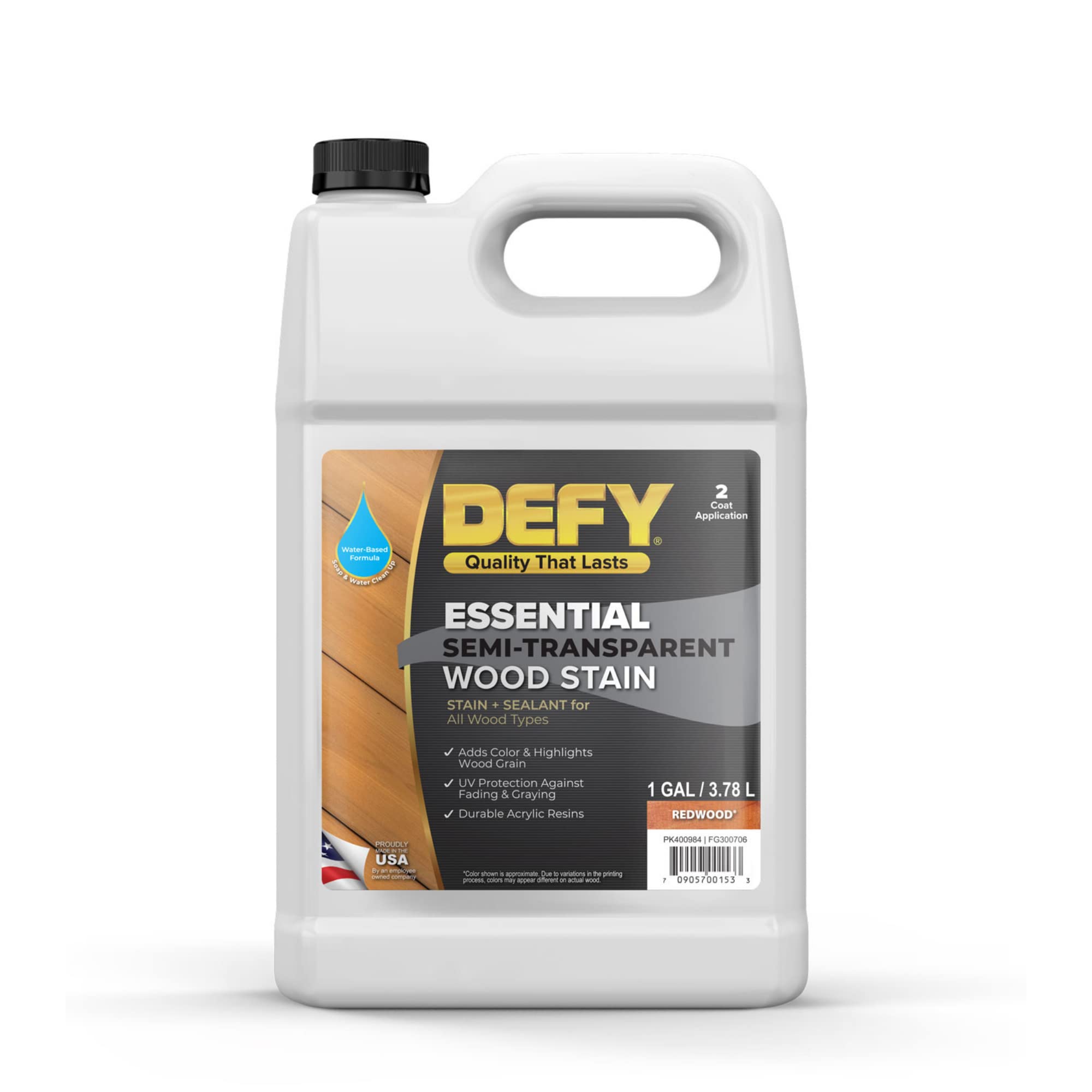
If your winter-prep budget is tight and your primary goal is adding color and basic water resistance to a wood deck or fence, the DEFY Essential Semi-Transparent Stain provides entry-level protection at an accessible price point. The acrylic resin formulation includes moisture-resistant and UV-resistant additives, delivering a matte finish that enhances the natural wood grain without creating a heavy plastic coating.
Users highlight how easy it is to apply with a spray gun or roller — the stain goes on smoothly and dries in a reasonable time, making it a practical choice for large areas like fences or pergolas. The coverage rate of 100 to 150 square feet per gallon per coat is competitive, and cleanup with soap and water simplifies the process. The semi-transparent redwood tint in the tested gallon adds warmth without looking artificially orange.
For winter durability, this is a lighter-duty option. The acrylic film has less elasticity than rubber or silicone formulations, so it is more vulnerable to cracking if applied on wood with existing moisture content above 15 percent. It requires temperatures above 50°F for proper curing, which limits the application window in fall. Users seeking the longest possible winter seal should prioritize a premium option, but for color refresh with moderate protection, this stain performs reliably within its category.
Why it’s great
- Affordable entry point for color and basic water protection
- Easy sprayer application with quick drying time
- Low VOC formula with soap-and-water cleanup
Good to know
- Thin consistency runs and drips easily, requires drop cloths
- Acrylic film less flexible in extreme freeze-thaw conditions
FAQ
Can I apply a winter deck coating when it is below 50°F?
How do I prepare my deck for winter coating application?
How often should I reapply deck coating for winter protection?
Final Thoughts: The Verdict
For most users, the best deck coating for winter protection winner is the Roxil Wood Sealer Cream because its silicone cream chemistry delivers unmatched breathable waterproofing, no-drip application even in cool weather, and genuine long-term durability through freeze-thaw cycles. If you need to restore a faded composite deck to like-new condition before winter, grab the DEFY Extreme Composite Deck Sealer with its zinc nano-technology. And for sealing cracks, joints, and masonry surfaces around the deck that also take winter damage, nothing beats the Tufinein Rubber Liquid Sealant for its extreme low-temperature flexibility.

Mo Maruf
I created WellFizz to bridge the gap between vague wellness advice and actionable solutions. My mission is simple: to decode the research and give you practical tools you can actually use.
Beyond the data, I am a passionate traveler. I believe that stepping away from the screen to explore new environments is essential for mental clarity and physical vitality.