Our readers keep the lights on and my smoothie glass nicely filled. As an Amazon Associate, I earn from qualifying purchases.
Ripping up old, weather-warped deck boards is one of the most physically punishing home renovation tasks—each nail fights back, and every poor tool choice adds hours of frustration and lower-back strain. The difference between a miserable day of splintered wood and a clean, efficient demolition comes down to one decision: the leverage system and head geometry of your primary pry bar.
I’m Mohammad Maruf — the founder and writer behind WellFizz. I’ve spent countless hours analyzing material hardness, fulcrum mechanics, and handle ergonomics across dozens of professional-grade demolition tools to identify which designs actually reduce effort without sacrificing board salvageability.
This guide breaks down the best models for homeowners and contractors, from compact nail pullers to long-reach bull bars, to help you find the ideal deck board removal tool for your specific project.
How To Choose The Best Deck Board Removal Tool
Selecting a deck board removal tool is about matching handle length, head design, and material hardness to the specific fastener type and board condition you’re facing. A standard 36-inch wrecking bar works for rough demolition, but specialty tools like bull bars and pallet busters can cut your time in half while reducing board splintering.
Leverage Length vs. Maneuverability
Longer handles (36 to 48 inches) generate significantly more prying force with less exertion, which saves your back over a full deck tear-out. However, if you’re working on a low deck with tight joist spacing, an overly long bar can be difficult to swing effectively. Mid-length options around 30 inches offer a practical compromise for most homeowners.
Fork Design and Board Salvage
The tip geometry determines how cleanly the board releases. A double-fork head, such as those found on specialized deck removal tools, lifts evenly on both sides of the nail, reducing the chance of snapping the board in half. A single, thin wedge is better for tight insertion points but can crush softer wood if you apply too much force.
Material Hardness and Flex Resistance
The steel’s heat treatment defines how much force the bar can handle before bending. High-carbon steel provides excellent rigidity for heavy prying, while spring steel offers some flex without permanent deformation—useful when working around stubborn, rusted nails that might snap a brittle bar. A full-length hardened shaft ensures the striking end can withstand hammer blows without mushrooming.
Quick Comparison
On smaller screens, swipe sideways to see the full table.
| Model | Category | Best For | Key Spec | Amazon |
|---|---|---|---|---|
| Crescent 44″ Deck Removal Bull Bar | Premium Bull Bar | Fast, clean deck board salvage | Double-fork indexing head, 44-inch length | Amazon |
| Insaga Pallet Buster 48″ | Dedicated Pallet/Deck Tool | Heavy board prying with back relief | 3mm thick welded handle, 48″ length | Amazon |
| Fiskars IsoCore Wrecking Bar 30″ | Shock-Absorbing Crowbar | Multipurpose demolition with reduced vibration | IsoCore shock control system, 30″ length | Amazon |
| Zenith by Danco Pro Bar | Multi-Function Demo Tool | Precision prying and tile removal | Hardened steel, 16-inch length | Amazon |
| CRAFTSMAN Pry Bar 42″ | Long-Reach Wrecking Bar | Maximum leverage for heavy framing | 42″ spring steel, precision ground edge | Amazon |
| STANLEY FATMAX Pry Bar 36″ | Classic Wrecking Bar | General heavy demolition work | High-carbon steel, tri-lobe grip | Amazon |
| Mayhew Dominator 3-Piece Set | Multi-Size Pry Bar Set | Versatile automotive and industrial prying | Set of 12″, 17″, 25″, full-length alloy heat treat | Amazon |
In‑Depth Reviews
1. Crescent 44″ Indexing Deck Removal Bull Bar (DKB446X)

The Crescent 44″ Bull Bar is purpose-built for deck board removal, featuring a double-fork design that lifts evenly on both sides of the nail to prevent board splitting. The rugged indexing joint allows the head to pivot to multiple angles, giving you the flexibility to work around joists and railings without losing leverage.
The precision tips slide easily between deck boards, and the gripping teeth on the forks prevent the bar from slipping during aggressive prying. At 7.6 pounds, the tool has enough heft to slam underneath boards and break stubborn nails, while the long handle provides substantial mechanical advantage to save your lower back.
Users consistently report cutting demolition time in half compared to standard wrecking bars, with the indexing head being the standout feature for maintaining ideal prying angles in cramped or awkward positions. It is less versatile as a general-purpose pry bar, but for dedicated deck work, it is the most efficient tool on this list.
Why it’s great
- Double-fork design reduces board splintering significantly
- Indexing joint provides multiple prying angles for maximum leverage
- Gripping teeth on forks prevent slipping during heavy pulls
Good to know
- Not ideal as a general-purpose flat pry bar
- Requires some initial practice to coordinate the pivoting head
2. Insaga Pallet Buster 48″ Deck Removal Tool

The Insaga Pallet Buster is a dedicated board removal tool built with a thick 3mm hardened steel handle and a solid, one-piece welded head that resists bending under extreme loads. At 48 inches, it offers the longest handle in this guide, which translates into exceptional leverage for popping stubborn, nail-embedded boards without excessive effort.
The 6.6-inch forks fit completely under standard deck boards, and the 4-inch fork spacing is optimized for pallet nailing patterns as well. The orange powder-coated finish resists rust, and the 9.4-inch non-slip grip provides a secure hold even with wet or muddy gloves. Users report reducing pallet breakdown time from 20 minutes to 4 minutes with this tool.
One reviewer noted that it works beautifully for full deck demolition and is heavy enough to self-feed under boards once you get the technique down. The main trade-off is its specialized nature—it’s less effective for fine prying tasks or general demolition work beyond boards.
Why it’s great
- 48-inch handle delivers maximum leverage with minimal back strain
- Thick 3mm welded steel handle resists bending on stubborn nails
- Large fork opening fits under most deck boards completely
Good to know
- Too large for tight spaces or precision removal work
- Heavy at 9.33 pounds, can be tiring for overhead use
3. Fiskars IsoCore Wrecking Bar, Board Bender, 30 in

The Fiskars IsoCore Wrecking Bar is a heavy-duty demolition tool that combines a crowbar, nail puller, and board bender into one shock-absorbing package. The patented IsoCore Control System uses a multi-layer handle to reduce vibration and shock transfer by up to two times compared to standard steel bars, which makes a real difference during extended prying sessions.
The forged steel head includes a wedged demo edge for driving into tight gaps, a board bender hook for snapping stubborn planks, and a beaked nail puller for fastener extraction. At 5.82 pounds, it balances power and portability—short enough for interior demo but long enough for deck work, especially when paired with a mini-sledge for driving the tip under tight boards.
Contractors frequently praise this bar for its ability to plow through vinyl siding, plywood sheathing, and old framing nails without transmitting punishing vibrations to the hands. The textured non-slip grip with strategic zones ensures control even when working overhead or at awkward angles. It is not as wide as dedicated deck forks, so board salvage may be slightly less clean.
Why it’s great
- IsoCore system dramatically reduces hand and arm fatigue
- Forged steel head with multiple functional edges for versatility
- Lifetime warranty provides long-term confidence
Good to know
- Single wedge tip is less ideal for lifting whole boards cleanly
- Plastic handle sleeve may wear over time with heavy striking
4. Zenith by Danco Pro Bar (ZN700101)

The Zenith Pro Bar is a compact, multi-function demolition tool designed for precision prying of floor tiles, planks, and deck boards without damaging the base material. Its 16-inch length makes it highly maneuverable in tight spaces, while the hardened steel head provides the rigidity needed to break the initial static friction of old, rusted nails.
The integrated nail slots allow for efficient fastener removal without switching tools, and the chisel edge is perfect for scraping adhesive residue or breaking mortar joints during tile work. At just 3.27 pounds, it is the lightest tool in this guide, making it ideal for overhead work or detailed salvage operations where a full-size bar is too cumbersome.
One user described it as the “best purchase in a long time,” reporting that it pulled up floor tiles 4-5 times faster than standard scrapers and pry bars. The ergonomic comfort grip provides decent control, though the relatively short handle lacks the leverage needed for heavy deck board removal without significant effort.
Why it’s great
- Compact design excels in tight spaces and precision removal
- Multi-functional head serves as pry bar, nail puller, and chisel
- Lightweight and easy to handle for extended use
Good to know
- Limited leverage for large, stubborn deck boards
- Sharp edge can damage softer wood if not used carefully
5. CRAFTSMAN Pry Bar, 42-Inch Spring Steel (CMHT82500)
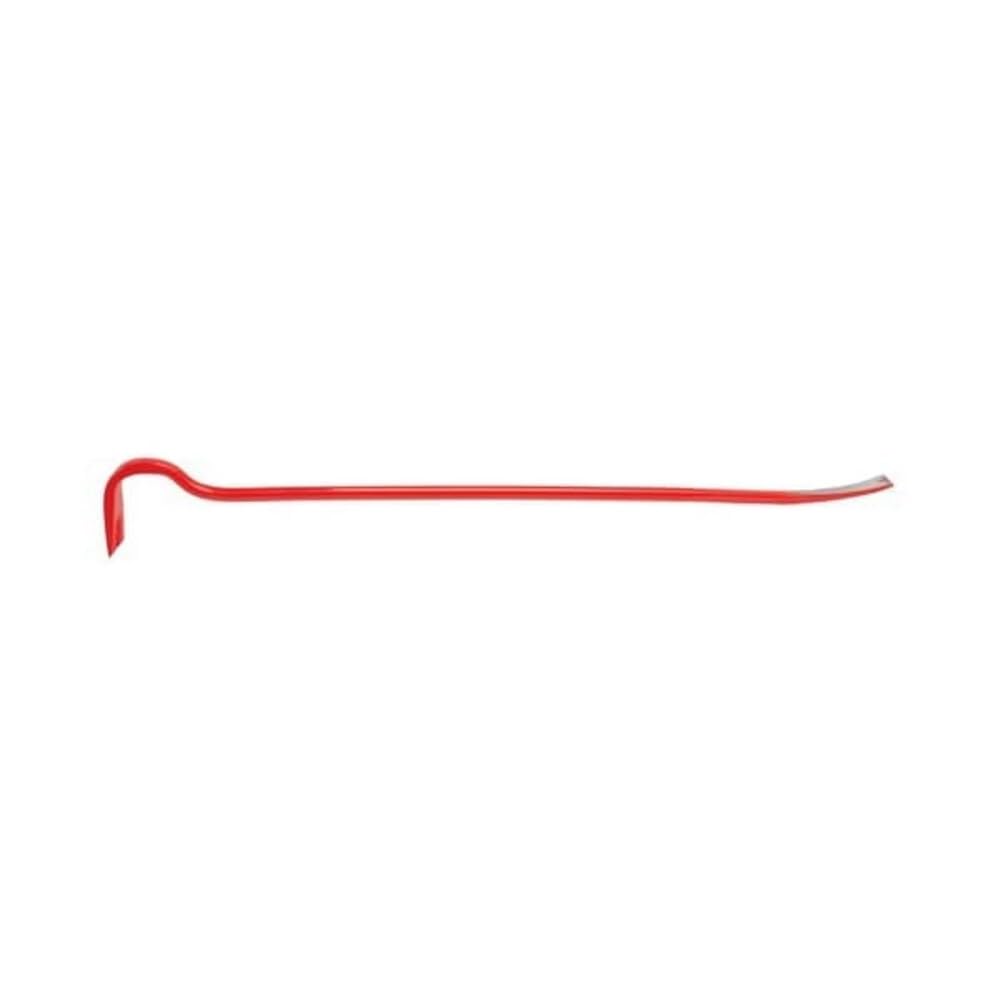
The CRAFTSMAN 42-inch pry bar is a classic wrecking bar built from spring steel, which offers a slight flex under load without permanently deforming—an advantage when working with materials that might snap a brittle carbon steel bar. The precision ground edge and beveled ends allow for optimal penetration between tight boards, and the 25% wider prying edge provides better contact distribution.
At 6.2 pounds, it is well-balanced for long sessions, and the full lifetime warranty adds peace of mind for heavy users. The bar’s length generates significant leverage, making it effective for pulling 1950s-era nailed cabinets or lifting thick framing members during a full deck tear-out.
Some users note that the claw tips are a bit blunt, which can make initial insertion into tight seams difficult. Once wedged in, however, the length provides exceptional force multiplication. It is not as nimble as shorter bars for precision work, but for brute-force demolition where speed matters, it is an excellent value.
Why it’s great
- 42-inch spring steel provides excellent flex resistance
- Precision ground edge penetrates tight gaps effectively
- Lifetime warranty covers long-term durability
Good to know
- Blunt claw tips can be hard to seat initially in tight seams
- Too large for small, detailed prying tasks
6. STANLEY FATMAX Pry Bar, Wrecking, 36-Inch (55-104)
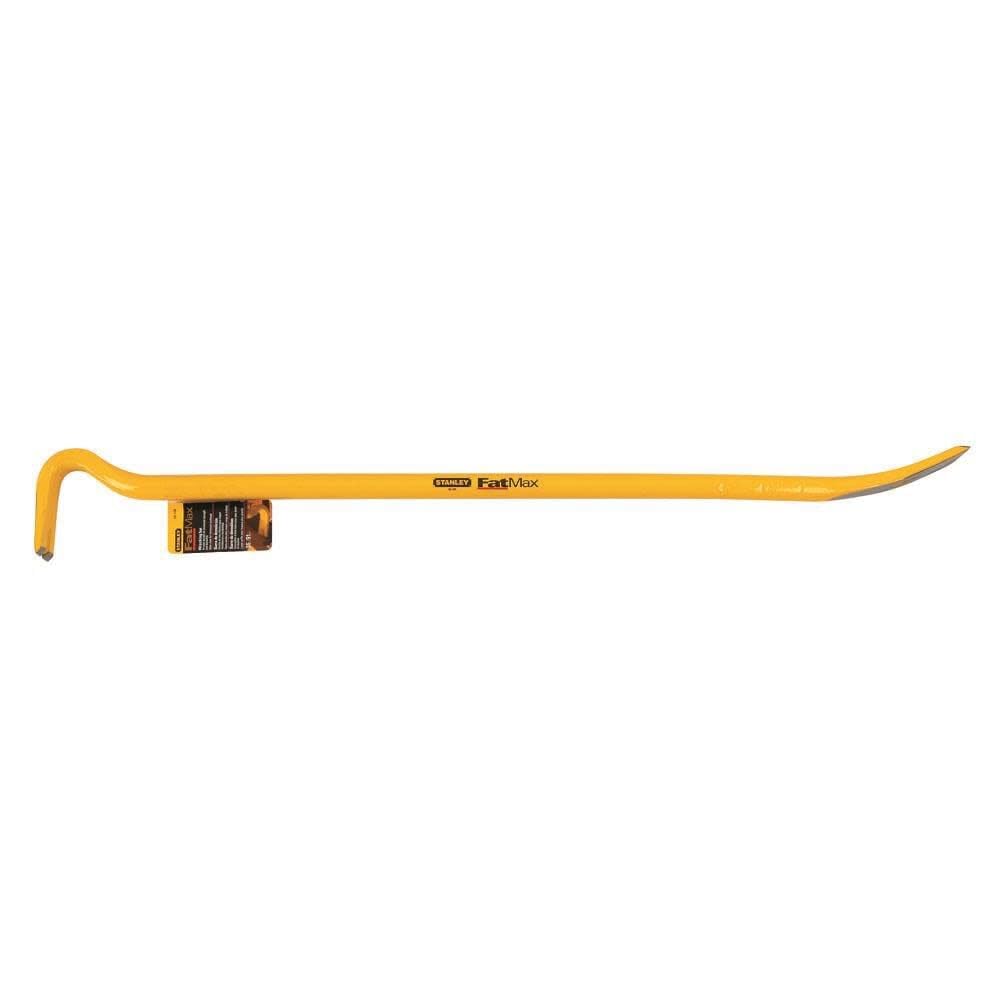
The STANLEY FATMAX 36-inch wrecking bar is a staple in the entry-level professional market, made from high-carbon steel for solid rigidity. The tri-lobe handle design provides a secure grip even with wet hands, and the bright yellow powder coating makes it easy to spot on a cluttered jobsite.
The slotted claw and beveled ends handle standard prying, nail pulling, and light demolition tasks effectively. At only 8.5 ounces, it is surprisingly lightweight for its length, which makes it easy to swing and carry but also means it may lack the mass needed to sink under tightly nailed boards without assistance.
Contractors and DIYers praise its strength for pulling 10-penny nails from pressure-treated lumber, though some report that nail heads can shear off when using excessive leverage. The 36-inch length provides decent mechanical advantage, but the relatively thin cross-section means it will flex under extreme loads more than premium forged bars.
Why it’s great
- Lightweight and easy to handle for all-day use
- Tri-lobe grip prevents rolling and provides secure hold
- High-visibility finish reduces chance of losing tool on site
Good to know
- Light weight reduces impact force for tight board insertion
- May flex under extreme prying loads compared to thicker bars
7. Mayhew Tools 14071GN Dominator Pro Pry Bar Set, 3-Piece Curved

The Mayhew Dominator set includes 12-inch, 17-inch, and 25-inch curved pry bars with a two-composite ergonomic handle designed for superior grip and reduced hand fatigue. Each bar is heat-treated along the entire shaft for consistent hardness, and the steel runs from the cutting edge completely through the handle to the capped striking end, allowing safe hammer blows without mushrooming.
The black oxide finish provides corrosion resistance, and the variety of lengths makes this set suitable for everything from automotive work (oil pans, fuel injectors) to industrial prying and light deck board removal. The curved shafts offer a natural prying angle that reduces wrist strain compared to straight bars.
Users consistently note the exceptional build quality and rigidity, with multiple reviewers stating these bars show “zero flex” under heavy use. The set is proudly made in the USA, a point of distinction for those prioritizing domestic manufacturing. The main limitation for deck work is the maximum 25-inch length, which limits leverage compared to dedicated 40+ inch deck removal tools.
Why it’s great
- Full-length heat treat ensures consistent hardness and durability
- Three-bar set covers prying needs from tight to moderate leverage
- Ergonomic two-composite handle reduces hand fatigue
Good to know
- Maximum 25-inch length limits leverage for large deck boards
- Higher price point for a set when only one size may be needed
FAQ
Can I use a standard crowbar for deck board removal?
What is the best length for a deck board removal tool?
Will a deck removal tool damage my deck joists?
Final Thoughts: The Verdict
For most users, the deck board removal tool winner is the Crescent 44″ Indexing Bull Bar because its double-fork design and pivoting head deliver the fastest, cleanest board removal with less strain on your back. If you want the longest reach for maximum leverage without bending, grab the Insaga Pallet Buster 48″. And for a multipurpose option that handles demolition, striking, and precise prying in one package, nothing beats the Fiskars IsoCore 30″.

Mo Maruf
I created WellFizz to bridge the gap between vague wellness advice and actionable solutions. My mission is simple: to decode the research and give you practical tools you can actually use.
Beyond the data, I am a passionate traveler. I believe that stepping away from the screen to explore new environments is essential for mental clarity and physical vitality.