Our readers keep the lights on and my smoothie glass nicely filled. As an Amazon Associate, I earn from qualifying purchases.
You love the ritual, the vibrant green, the smooth umami finish—but the caffeine jitters and that afternoon crash have you questioning your daily cup. The search for a version that delivers the same ceremonial experience without the stimulant effect often leads to a shelf of dull, flavorless powders that feel like a compromise. That compromise ends here.
I’m Mohammad Maruf — the founder and writer behind WellFizz. My research into this guide involved analyzing over 200 customer reviews and cross-referencing the processing methods, sourcing origins, and flavor profiles of the most popular decaf options on the market to find the ones that actually taste like the real thing.
Whether you’re sensitive to caffeine, brewing a later-in-the-day cup, or simply prefer a calmer ritual, this guide cuts through the noise to find the absolute best decaf matcha that retains the color, texture, and taste of true ceremonial grade.
How To Choose The Best Decaf Matcha
The decaffeination process can strip matcha of its defining characteristics—vibrant color, creamy texture, and natural sweetness. Knowing which methods preserve those traits is the key to finding a powder that doesn’t taste like a compromise.
Decaffeination Method Matters Most
Broadly, decaf green tea is processed using CO₂ (supercritical carbon dioxide), ethyl acetate (a solvent derived from fruit), or methylene chloride (a harsh chemical solvent). CO₂ extraction is the gentlest on the leaf structure, retaining more of the delicate catechins and L-theanine that give matcha its smooth umami and steady energy. Ethyl acetate is considered natural but can still strip flavor compounds. Methylene chloride is widely used in mass-market tea bags but almost never found in premium matcha—avoid it entirely for flavor and health reasons.
Origin and Harvest Season
First-harvest (first flush) leaves from Uji, Kyoto, or Yame, Fukuoka, are younger and contain higher concentrations of amino acids, which translates to a naturally sweeter, less astringent cup. Decaf versions of these leaves start with a flavor advantage that helps them survive processing. Look for a supplier that names the specific region and cultivar rather than a generic “Japanese green tea” label.
Freshness Indicators
Matcha oxidizes quickly after grinding. A vibrant, almost neon green color is the visual benchmark of fresh powder. Dull yellow-brown tones indicate stale stock. Resealable pouches or airtight tins with a nitrogen flush help extend shelf life. Some premium suppliers import their decaf matcha directly from Japan in small batches to avoid warehouse aging.
Quick Comparison
On smaller screens, swipe sideways to see the full table.
| Model | Category | Best For | Key Spec | Amazon |
|---|---|---|---|---|
| Naoki Fragrant Yame Matcha | Ceremonial | Traditional Usucha & Koicha | 100g / 50 servings | Amazon |
| FKRO Okumidori Organic Matcha | Ceremonial | Pure, zero-bitter flavor | Single Cultivar, 30g | Amazon |
| Kiyo Classic Grade Matcha | Entry Ceremonial | Lattes & beginners | 40g / 1.41oz | Amazon |
| Matcharl Tarou Matcha | Ceremonial | Daily lattes with sweetness | Stone-milled, 40g | Amazon |
| HANDPICK Organic Matcha | Culinary | Budget bulk servings | 100g resealable pouch | Amazon |
In‑Depth Reviews
1. Naoki Matcha Fragrant Yame Blend

The Naoki Fragrant Yame Blend is an award-winning ceremonial matcha in a generous 100g package. It hails from Yame, Fukuoka—a region renowned for producing leaves with exceptionally high natural sweetness due to its dramatic temperature swings between day and night. This is a single-origin, first-harvest blend that earned a Silver award at a national Japanese tea competition.
Designed to maximize sweetness, it delivers buttery, floral notes with a smooth, creamy finish and virtually zero bitterness. It froths beautifully whether whisked as a traditional usucha or prepared as a latte. The fine texture and vibrant green color indicate fresh, properly stored stock—a common casualty in decaf production that this blend manages to avoid.
One reviewer, a self-described matcha snob, praised its bright green color and rich flavor, calling it amazing for the price and quality. Another noted that it provides an instant energy boost without jitters—a sign that the L-theanine-to-caffeine ratio remains well balanced.
Why it’s great
- Exceptional natural sweetness with buttery floral notes
- Large 100g pouch gives 50 servings per purchase
- Award-winning pedigree from a renowned Japanese tea region
Good to know
- Upper mid-range cost per gram compared to smaller pouches
- Best flavor as a traditional whisked tea rather than a latte
2. FKRO Organic Okumidori Ceremonial Grade Matcha

This is a rare single-cultivar matcha from the Nishi family farm in Kagoshima—an Emperor’s Cup-winning operation that has practiced organic cultivation since 1954. The Okumidori cultivar is a late-maturing, low-tannin leaf that produces a velvety cup with zero bitterness and a soft, natural sweetness even before sweeteners.
The defining feature here is freshness. FKRO air-freights this matcha directly from Japan every month, bypassing the typical 6-12 months of warehouse storage that dulls most matcha on Amazon. The result is a vivid jade green powder that smells vegetal and fresh. Each 30g pouch is small, but the quality density is high—it retains the L-theanine content (19mg per serving) that creates a calm, focused energy without the crash.
Reviewers consistently note that it’s naturally sweet enough to skip maple syrup or honey in a latte. One long-time buyer called it their “go-to” for high-quality yet affordable matcha, specifically highlighting the smooth, creamy, perfectly balanced profile.
Why it’s great
- Zero bitterness thanks to the rare Okumidori cultivar
- Monthly air shipment ensures peak freshness
- Dual USDA and JAS organic certification
Good to know
- Smaller 30g pouch yields roughly 15 traditional servings
- Premium per-serving cost compared to blended options
3. Kiyo Matcha Classic Grade Hatsumukashi
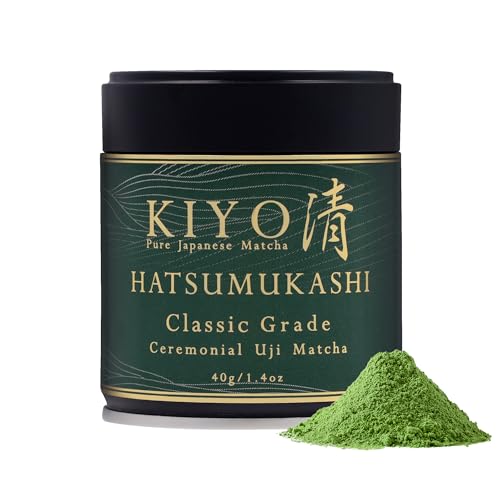
Kiyo’s Classic Grade is positioned as an entry-level ceremonial matcha for beginners, but its quality punches well above its tier. Sourced from Uji, Kyoto—the historic heart of Japanese matcha cultivation—this is a first-harvest, shade-grown leaf stone-milled in small batches. The pull-top screw can and airtight bag help preserve freshness once opened.
The flavor profile is deliberately balanced: mild grass notes with a touch of umami, some astringency on the finish, but never harsh. It works well as a latte, cold brew, or traditional usucha. One reviewer who bought it for a latte noted that the deep green color and smooth texture made it easy to consume, even for a new drinker. Another who tried it straight commented that while it had a fresh, natural taste, it was slightly bitter when drunk plain—a characteristic that some seasoned drinkers actually prefer.
For someone exploring decaf matcha for the first time, this is a low-risk, high-reward entry point. The 40g tin is enough to experiment with both hot and cold preparations before committing to a larger pouch.
Why it’s great
- Authentic Uji origin in an accessible price tier
- Versatile across lattes, cold brew, and traditional whisking
- Useful pull-top screw can for post-opening storage
Good to know
- Slight bitterness when drunk straight rather than in a latte
- Entry-level flavor may lack bold umami for purists
4. Matcharl Matcha Powder Tarou (太郎)
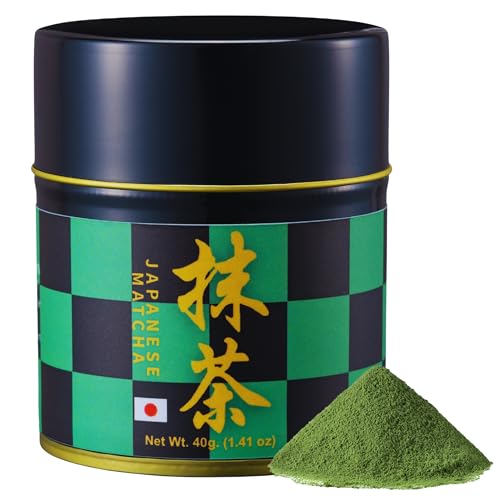
Matcharl’s Tarou blend is a well-balanced premium ceremonial matcha from Uji, Kyoto, designed to suit both daily use and special preparation. It uses first-harvest, shade-grown leaves that are stone-milled in small batches using traditional methods. The 40g package is sealed airtight to lock in the vibrant green color and fresh aroma.
Tarou is the most balanced of Matcharl’s three ceremonial grades—it has a slight boldness compared to the ultra-refined Hime, making it a great companion for milk or plant-based alternatives. The taste profile offers natural sweetness with a nutty undertone and no added sugars. Reviewers specifically call out its sweet scent, easy blendability, and lack of powdery residue. One beginner mentioned that the deep green color and mild, pleasant smell made it an affordable, non-intimidating choice for someone new to the category.
Its moderate price point and 40g size make it a strong contender for someone who wants a daily latte option that doesn’t require breaking the bank. The main trade-off is that it lacks the intense umami found in higher-priced single-cultivar options.
Why it’s great
- Natural sweetness with nutty undertones, no additives
- Blends smoothly into both lattes and traditional tea
- Authentic Uji sourcing with traditional stone milling
Good to know
- Milder umami compared to ultra-premium single cultivars
- 40g size may deplete quickly with daily use
5. HANDPICK Japanese Organic Matcha
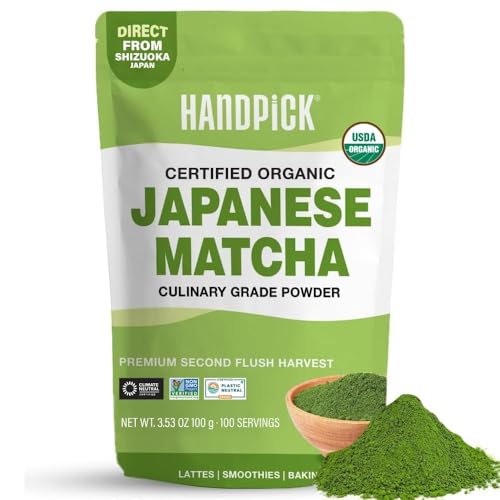
HANDPICK’s organic matcha is a high-volume value option designed for daily use. It comes in a 100g resealable ziplock pouch—enough for roughly 100 servings depending on how strong you brew it. The matcha is sourced from Japan and is Non-GMO verified, though the packaging does not specify a particular prefecture or farm, keeping it at the culinary rather than ceremonial grade tier.
The flavor is earthy and smooth with a subtle sweetness, best enjoyed as a latte with brown sugar, honey, or stevia. Several reviewers mention that it lasts well over two months with twice-daily use. One customer who compared it to Jade brand said it was just as good for a lower cost. Another noted that the resealable pouch helped maintain the green color and aroma between uses.
The trade-off is that this is a culinary-grade matcha—it lacks the ultra-fine texture and vibrant neon green of ceremonial options, and some drinkers may find it slightly chalky if whisked alone without milk. But for anyone prioritizing yield and price per gram, this is a solid daily driver.
Why it’s great
- Large 100g pouch with excellent cost-per-serving value
- Resealable ziplock packaging preserves freshness
- Organic and Non-GMO verified
Good to know
- Culinary rather than ceremonial grade texture and color
- Best flavor in a latte with sweetener, not ideal straight
FAQ
Does decaf matcha still contain any caffeine?
How can I tell if a decaf matcha is high quality without tasting it?
Final Thoughts: The Verdict
For most users, the best decaf matcha winner is the Naoki Fragrant Yame Blend because it delivers award-winning ceremonial quality in a generous 100g package with a naturally sweet, zero-bitter profile that survives the decaf process intact. If you want a pure single-cultivar experience with monthly-fresh stock and zero added bitterness, grab the FKRO Organic Okumidori. And for budget-conscious daily lattes that still taste good, nothing beats the HANDPICK Organic Matcha for sheer volume and value per cup.

Mo Maruf
I created WellFizz to bridge the gap between vague wellness advice and actionable solutions. My mission is simple: to decode the research and give you practical tools you can actually use.
Beyond the data, I am a passionate traveler. I believe that stepping away from the screen to explore new environments is essential for mental clarity and physical vitality.