Our readers keep the lights on and my smoothie glass nicely filled. As an Amazon Associate, I earn from qualifying purchases.
There is one simple, brutal truth about the decaf bean market: most of it tastes thin, flat, and vaguely sad. The decaffeination process can strip away not just the caffeine but the very compounds that give a bean its soul. Finding a bag that delivers a full-bodied, rich, and genuinely satisfying cup is the real challenge — one that demands a careful look at the bean origin, the roast profile, and the decaffeination method itself. This guide is built to end that search.
I’m Mohammad Maruf — the founder and writer behind WellFizz. I’ve spent hundreds of hours analyzing the decaf coffee category, cross-referencing roast profiles, decaffeination methods, and customer feedback to find the beans that actually deliver on flavor.
Whether you are a weekend pour-over enthusiast or a weekday espresso drinker, this guide will help you find the perfect beans for your setup. Let’s uncover the best decaf coffee beans that actually taste like the real thing.
How To Choose The Best Decaf Coffee Beans
Selecting a great decaf is less about avoiding caffeine and more about finding a bean that retains its character through the decaffeination process. There are three primary factors you should evaluate before making a purchase: the decaffeination method, the roast level, and the quality of the bean origin.
Decaffeination Method
The way caffeine is removed is the single most important factor in determining the final flavor. The Swiss Water Process uses water to gently remove caffeine without chemicals, preserving more of the bean’s natural oils and flavor compounds. This method is widely considered the gold standard for taste. The direct-solvent method, which uses methylene chloride or ethyl acetate, is faster and cheaper but can sometimes leave a faint chemical aftertaste.
Roast Level
Dark roasts are often the safest bet for decaf because the roasting process creates bold, smoky notes that can mask the flatness that sometimes comes with decaffeination. A dark roast, like a French roast, will deliver a fuller body. Medium roasts can offer a more nuanced flavor if the bean was decaffeinated well, but they are more vulnerable to tasting thin. Light roasts are a high-risk, high-reward category for decaf.
Bean Quality and Origin
Since the decaffeination process is a stressor on the bean, starting with a high-quality bean is crucial. Look for 100% Arabica beans, which naturally have more complex flavors than Robusta. Single-origin beans from high-altitude regions tend to have a denser structure that survives the decaf process better, retaining more of their original acidity and sweetness. A well-sourced bean is the foundation of a good decaf cup.
Quick Comparison
On smaller screens, swipe sideways to see the full table.
| Model | Category | Best For | Key Spec | Amazon |
|---|---|---|---|---|
| San Francisco Bay Decaf French Roast | Whole Bean | Bold dark roast lovers | Swiss Water Process | Amazon |
| Lifeboost Swiss Water Decaf Ground | Ground | Health-focused drinkers | Mycotoxin Tested | Amazon |
| Gevalia House Blend Decaf | Ground | Multiple brew methods | Fine Grind | Amazon |
| Copper Moon Southern Pecan | Whole Bean | Flavored coffee fans | Flavor Infused | Amazon |
| Lucy Jo’s Mellow Belly Decaf | Whole Bean | Sensitive stomachs | Low Acid | Amazon |
In‑Depth Reviews
1. San Francisco Bay Coffee – Decaf Dark Roast Whole Bean Coffee – Decaf French Roast
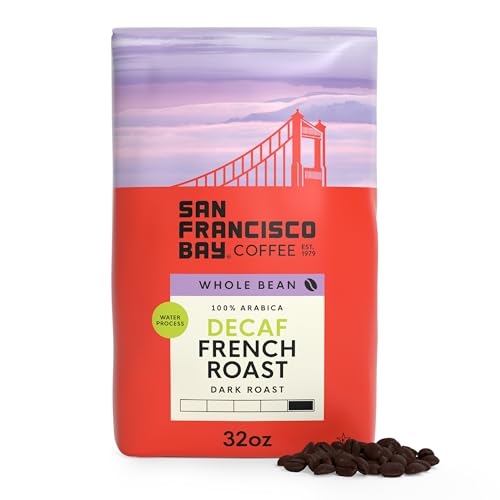
This 2-pound bag of dark-roasted whole beans from San Francisco Bay is a perennial favorite for a simple reason: it delivers a bold, smoky, full-bodied cup that can stand next to any caffeinated French roast. The Swiss Water Process ensures no chemical residue, and the deep roasting profile adds a layer of richness that masks the thinnest tendencies of decaf. Customer reviews highlight its consistent quality, with many users having purchased it dozens of times.
The beans are sourced from Central and South America, giving them a solid base of earthy and chocolatey notes. It works beautifully as a pour-over, espresso, or French press, producing a satisfying crema in an espresso machine. The roast is dark but not burnt, avoiding the bitter charcoal flavor that plagues poorly roasted beans.
For the volume and quality, this is the most balanced option for those who want a bold decaf without a premium price tag. It is a workhorse bean that excels in versatility and consistency, making it the top pick for most households.
Why it’s great
- Consistent bold, smoky flavor with low acidity
- Large 2-pound bag provides excellent value
Good to know
- Some bags can have a slightly drier batch
2. Lifeboost Medium Roast Swiss Water Decaf Coffee Ground
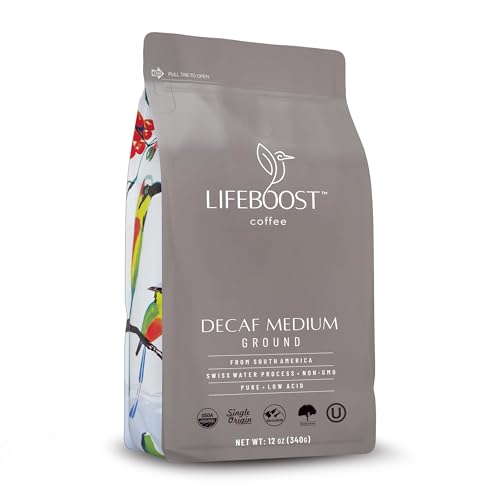
Lifeboost focuses on purity. This ground decaf is certified organic, single-origin from the mountains of South America, and third-party tested for mycotoxins, heavy metals, pesticides, and over 400 other contaminants. It uses the Swiss Water Process for decaffeination, and the medium roast profile aims to preserve the bean’s natural sweetness and acidity.
Initial reviews noted a slightly weak flavor, but adjusting the brewing technique — specifically using a finer grind and hotter water for a pour-over — unlocked a deep, velvety cup with low acidity. It is notably gentle on the stomach, making it a top choice for those who experience acid reflux or digestive discomfort from other coffees.
If your priority is a clean, health-focused bean that is easy on your body and tastes genuinely good, this is the stand-out option. The 12-ounce bag is smaller, but the uncompromising quality justifies it.
Why it’s great
- Third-party tested for mycotoxins and pesticides
- Low acid and very gentle on sensitive stomachs
Good to know
- Requires precise brewing for optimal flavor
3. Gevalia House Blend Decaf Medium Roast Ground Coffee

Gevalia is a familiar name in the decaf world, and this House Blend ground coffee earns its spot with a fine grind size that works well for a variety of brew methods. The medium roast produces a smooth, low-acid cup that is neither too bitter nor too weak. A 20-ounce bag offers a generous amount, and the resealable tin tie helps maintain freshness.
One thing to note: the grind is quite fine. Several users reported that it caused overflow in their Cuisinart drip machine. The solution was to switch to a faster-flowing filter, like the CAFEC 103 trapezoid, to allow the water to pass through more freely. In an Aeropress or a café filtro, this fine grind yields a robust, satisfying extraction with no sour notes.
For the price and bag size, this is a solid entry point for anyone who wants a reliable, everyday decaf that is easy to find and consistently produces a decent cup.
Why it’s great
- Fine grind works perfectly for Aeropress and pour-over
- Large 20-ounce bag with a resealable package
Good to know
- Very fine grind can cause overflow in some drip machines
4. Copper Moon Medium Roast Whole Bean Coffee, Southern Pecan Blend

If you are bored with standard roasts and want a flavor-forward experience, the Copper Moon Southern Pecan is a delicious detour. This whole-bean coffee is flavor-infused with notes of toasted pecans, creamy caramel, and a whisper of vanilla, evoking the comforting taste of pecan pie. The medium roast base provides a smooth canvas for those flavors without being overpowering.
Some users found the pecan flavor too strong on its own, creating a thin mouthfeel. The recommended fix is to blend it 50/50 with a standard medium roast, which balances the flavor profile and adds body. On its own, it is undeniably sweet and aromatic, filling the room with a cozy, holiday-like scent during brewing.
For anyone who enjoys flavored coffee but wants to avoid caffeine, this is an excellent choice. It is also gluten-free, mold-free, and kosher certified, making it a clean option for a fun morning or afternoon cup.
Why it’s great
- Rich, aromatic pecan pie flavor profile
- Large 2-pound bag of whole beans
Good to know
- Flavor can be too strong for some; best blended
5. Lucy Jo’s Coffee Roastery, Organic Decaf Mellow Belly Low Acid Blend

Lucy Jo’s Mellow Belly is a specialty decaf designed specifically for people with sensitive stomachs. This medium-dark roast whole bean is low-acid, organic, and decaffeinated using the water process. The flavor profile is smooth and creamy with earthy notes and a slight sweetness, producing a cup that is remarkably gentle on the stomach without sacrificing body.
Many users with IBS or interstitial cystitis reported being able to drink this coffee with no irritation, a rare feat for decaf. It produces excellent crema in an espresso machine and works well hot or iced. The 11-ounce bag is on the smaller side, and the price point is higher per ounce than other options, but the targeted low-acid formulation justifies it.
If you are someone who loves coffee but your stomach disagrees with most decaf options, this is the bag to try. It proves that a low-acid coffee can still be full-flavored and complex.
Why it’s great
- Exceptionally low acidity with a smooth, creamy body
- Safe for IBS and other digestive sensitivities
Good to know
- Smaller 11-ounce bag with a higher per-ounce cost
FAQ
Does the Swiss Water Process remove all the flavor from the bean?
Why does some decaf coffee taste thin or watery?
Can I use decaf beans in my espresso machine?
Final Thoughts: The Verdict
For most users, the decaf coffee beans winner is the San Francisco Bay Decaf French Roast because it delivers a consistently bold, smoky flavor in a large 2-pound bag at a very reasonable price. If you want a health-focused, mycotoxin-tested bean that is gentle on your stomach, grab the Lifeboost Swiss Water Decaf. And for a flavorful twist on your morning routine, nothing beats the Copper Moon Southern Pecan.

Mo Maruf
I created WellFizz to bridge the gap between vague wellness advice and actionable solutions. My mission is simple: to decode the research and give you practical tools you can actually use.
Beyond the data, I am a passionate traveler. I believe that stepping away from the screen to explore new environments is essential for mental clarity and physical vitality.