Our readers keep the lights on and my smoothie glass nicely filled. As an Amazon Associate, I earn from qualifying purchases.
Your posterior chain is ready to pull 50 more pounds, but your fingers give out at the lockout. That moment — the bar slipping mid-rep — is the single most frustrating failure in the gym. A deadlift grip isn’t about forearm strength; it’s about choosing the right tool to disconnect your pulling power from your palm endurance.
I’m Mohammad Maruf — the founder and writer behind WellFizz. I’ve spent hundreds of hours analyzing tensile specs, webbing materials, and stitching patterns across lifting straps to find which designs actually transfer force without tearing or digging in.
Whether you pull sumo or conventional, raw or equipped, this guide to the best deadlift grip breaks down five strap architectures — from figure-8 locks to classic cotton wraps — so you can match the hold to the weight.
How To Choose The Best Deadlift Grip
A deadlift strap’s sole job is to offload grip endurance so your back and legs can express full force. But not every strap architecture works for every puller. The wrong design can slip, pinch, or limit bar rotation. Here’s what separates a smart buy from a regret.
Strap Architecture: Loop vs. Figure-8 vs. Cuffed D-Ring
Loop-style straps (traditional cotton or nylon) wrap around the bar and back under the wrist — flexible but require consistent technique to lock tight. Figure-8 straps skip the wrap step entirely: you slide your hands through two fixed loops and the bar cradle locks instantly without twisting. Cuffed D-ring straps offer a hybrid approach — a padded wrist cuff with a metal ring that the strap loops through, adding wrist support for pressing movements alongside deadlifts.
Webbing Material and Friction
Raw cotton webbing provides the highest static friction against chilled steel knurling — it bites into the bar and won’t slide once compressed. Nylon webbing is stronger and lasts longer but can feel slick on brand-new knurling until broken in. Double-layer cowhide leather adds a middle ground: high friction without the fraying of cotton, though it bulkens the bar diameter slightly in the palm.
Quick Comparison
On smaller screens, swipe sideways to see the full table.
| Model | Category | Best For | Key Spec | Amazon |
|---|---|---|---|---|
| Element 26 Padded Figure 8 | Figure-8 Lock | Max weight, minimal setup time | Single-stitch seam, neoprene pad | Amazon |
| IronMind Strong-Enough | Nylon Loop | Professional strongman, durability | 21.25″ x 1.5″ nylon webbing | Amazon |
| Ekkovision Cuffed D-Ring | Cuffed D-Ring | Versatile lifts with wrist support | Thick cushioned padding, metal D-ring | Amazon |
| ORANGE FOREST Double Leather | Leather Loop | High friction, 440 lb rated | 0.16″ double-layer cowhide | Amazon |
| Bear Grips Cotton | Cotton Loop | Entry-level, budget starter kit | 5mm neoprene wrist pad | Amazon |
In‑Depth Reviews
1. Element 26 Padded Figure 8 Lifting Straps
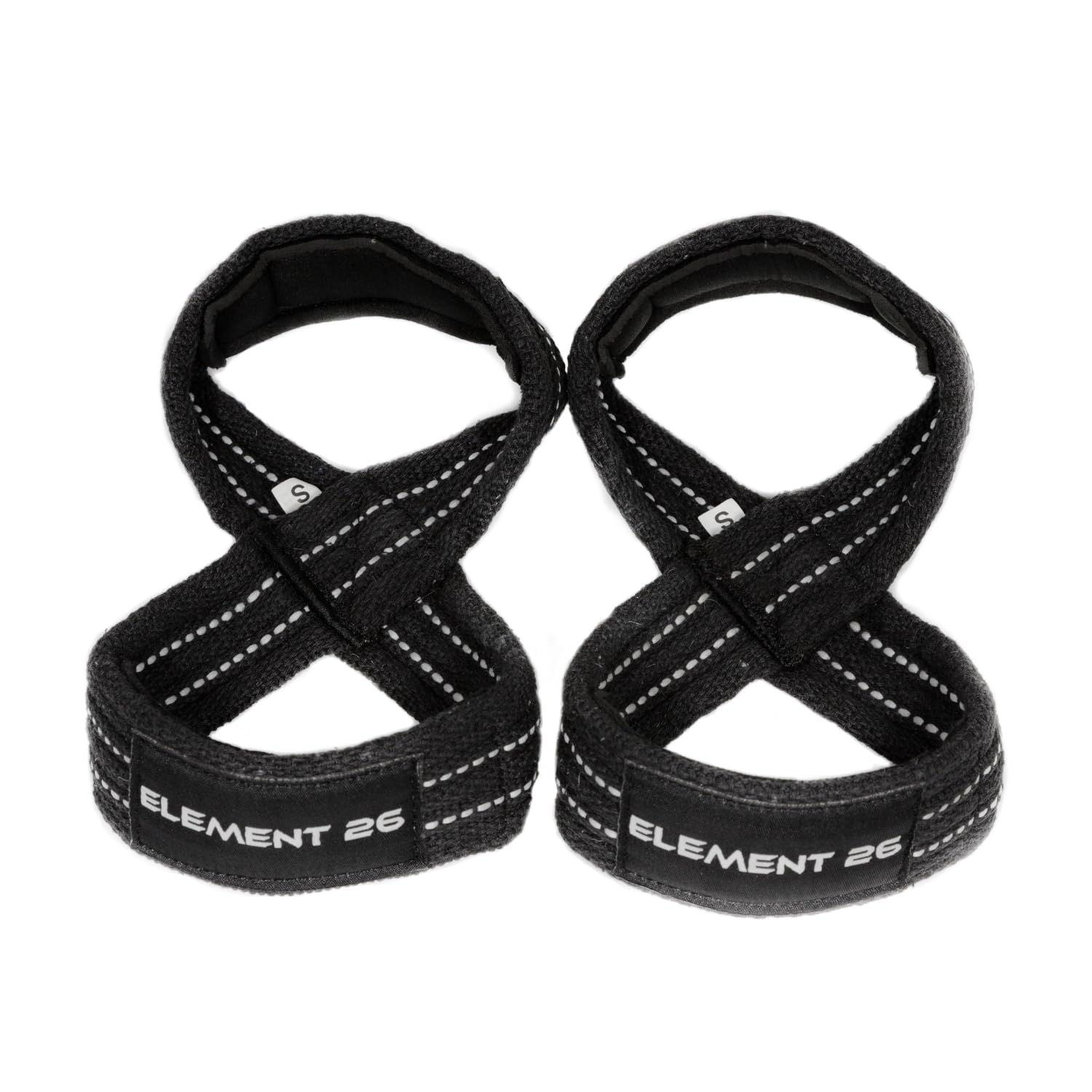
The figure-8 architecture eliminates the slip risk common with loop-style wraps because the bar cradle is pre-formed into the webbing — you slide your hands in, hook the bar, and the strap locks instantly without twisting or loosening mid-pull. Element 26 uses a single stitching point on the load-bearing seam rather than the two-stitch construction you see on cheaper figure-8 clones, reducing the chance of seam separation under heavy eccentric loads.
The neoprene pad sits unobtrusively across the wrist — thick enough to prevent the strap from biting into the radius during maximal pulls but flat enough to avoid adding bulk that interferes with hook-grip transition. Customer feedback consistently notes that the quick on-off nature saves significant rest-period time: you can exit the bar in under two seconds without awkward wrist contortion.
Versatility is the trade-off. These straps excel for conventional and sumo deadlifts, rack pulls, and shrugs, but the fixed figure-8 loop doesn’t adapt well to dumbbell rows, lat pulldowns, or Olympic pulling variations. If your training is built around the deadlift platform, this is the most secure grip solution available.
Why it’s great
- Instant bar lock with zero wrap technique needed
- Single-stitch seam is stronger than dual-stitch alternatives
- Comfortable pad doesn’t migrate during pulls
Good to know
- Not suitable for single-arm or dumbbell work
- Size selection is critical — check the sizing guide before ordering
2. IronMind Strong-Enough Lifting Straps

Nylon lacks the immediate friction of raw cotton; you need roughly three sessions to work the surface texture into the knurling grooves. Once conditioned, the grip is effectively permanent for any weight you can hold at lockout.
The construction is minimalist by design — no padding, no levers, no D-rings. This keeps the strap thin enough to slide easily through the eyelet and wrap flat against the bar without bunching. The lack of wrist cushion means you’ll feel the webbing under heavy loads, but experienced pullers tend to prefer the direct tactile feedback over padded alternatives that can mute bar feel.
BarBend named these the most durable weightlifting straps on the market, and the one-size-fits-all length accommodates hand sizes from small to XXL. The trade-off is the learning curve: if you’re new to loop-style wraps, you’ll need practice to achieve consistent tightness on every rep.
Why it’s great
- Proven in professional strongman competitions
- Nylon webbing outlasts cotton by years
- Flat profile doesn’t add palm bulk
Good to know
- Requires break-in period before achieving peak friction
- No wrist padding — felt at max loads
3. Ekkovision Weight Lifting Straps With Cuffed D Ring

The Ekkovision strap introduces a wrist cuff that integrates the D-ring into a padded sleeve rather than sewing the ring directly into the webbing. This design distributes tension across a broader wrist surface area, which reduces the linear pressure you’d feel from a traditional loop strap during high-rep back-off sets or RDLs. The cuff’s velcro closure allows micro-adjustments — useful if your wrist measurement falls between standard sizing.
The strap body itself uses heavy-duty cotton with reinforced stitching at the D-ring junction. Customer feedback after one year of consistent use reports no fraying at the stitching points, which is the most common failure mode for budget D-ring straps. The non-slip rubberized patch on the palm-facing side adds a second friction layer against the knurling — a detail absent from basic cotton loops.
Versatility is the main argument for this design: you can use the cuffed D-ring for deadlifts, then transition to overhead pressing, pulldowns, or rows without adjusting your wrap. The cuff does create a slightly bulkier wrist profile than minimalist cotton straps, so check that it fits under your existing wrist wraps if you stack supports.
Why it’s great
- Padded cuff relieves wrist pressure under load
- Rubberized palm patch boosts friction
- Works across multiple lift types without re-wrapping
Good to know
- Cuff adds wrist bulk — may conflict with wraps
- No included instructions for webbing routing
4. ORANGE FOREST Weight Lifting Wrist Strap with Double Layer Leather

Double-layer cowhide at 0.16-inch thickness gives this strap a palm feel unlike cotton or nylon — the leather molds slightly to your hand shape after a few sessions and creates a tacky interface against chalked knurling. The raised surface design on the leather-facing side adds micro-friction that prevents the strap from migrating sideways during heavy pulls, a common frustration with smooth cotton webbing.
The neoprene wrist pad is thickened and widened compared to average loop straps, covering a larger area of the radius and ulna to prevent the pinching that occurs when the webbing bunches against the wrist bone. The high-density velcro closure holds securely even after repeated sweat exposure, which is a known failure point for lower-end velcro straps that lose grip after a few months.
Rated for 440 pounds without tearing, this strap is appropriate for intermediate to advanced pullers. The leather does add measurable thickness to the bar in your palm — roughly the equivalent of adding a fat-grip attachment — which can be a distraction if you prefer a direct palm-to-steel connection for technique work.
Why it’s great
- Leather molds to hand for custom fit over time
- Thick neoprene pad prevents wrist bone pain
- High-density velcro holds after sweat exposure
Good to know
- Adds bar diameter bulk in the palm
- Buckle can dig into wrist under very heavy loads
5. Bear Grips Lifting Straps

Bear Grips uses 100% raw cotton webbing, which offers the highest static friction coefficient against steel knurling of any common strap material. The cotton compresses under load and bites into the bar finish — this is the same reason experienced lifters often prefer cotton over nylon despite shorter lifespan. The 5mm neoprene pad under the wrist is a welcome feature for a strap in this tier, reducing the cutting sensation that bare cotton loops cause when pulling maximal weight.
Triple stitching through the folded eyelet and along the pad attachment gives this strap better seam integrity than many similarly priced options that use single or double stitching. Multiple customer reports confirm the strap survives one to two years of three-times-per-week deadlift sessions before the cotton begins fraying at the wear points — acceptable durability for the tier.
The main limitation is the single-loop design and standardized length: lifters with very large hands or those who wrap the strap more than twice around the bar may find the tail too short. For beginners or those adding straps for the first time, this is a functional entry point that won’t hold back sub-400 pound pulls.
Why it’s great
- Raw cotton provides natural high friction against knurling
- Neoprene pad protects wrist at a low price point
- Triple stitching prevents premature seam failure
Good to know
- Cotton frays over time faster than nylon or leather
- Limited tail length for large-hand users
FAQ
Are figure-8 straps better than loop straps for deadlifts?
What causes deadlift straps to tear at the stitching?
Final Thoughts: The Verdict
For most users, the best deadlift grip winner is the Element 26 Padded Figure 8 because it eliminates wrap inconsistency and provides the most secure bar lock for maximal pulls. If you want a proven strongman staple with unmatched durability, grab the IronMind Strong-Enough. And for versatile wrist-cuffed support across multiple lift types, nothing beats the Ekkovision Cuffed D-Ring.

Mo Maruf
I created WellFizz to bridge the gap between vague wellness advice and actionable solutions. My mission is simple: to decode the research and give you practical tools you can actually use.
Beyond the data, I am a passionate traveler. I believe that stepping away from the screen to explore new environments is essential for mental clarity and physical vitality.