Our readers keep the lights on and my smoothie glass nicely filled. As an Amazon Associate, I earn from qualifying purchases.
A weak grip doesn’t just fail the last rep — it kills the entire set before your posterior chain has a chance to fire. Deadlifting without the right gear means your hands become the weakest link, forcing your lower back to compensate and leaving pounds of potential on the floor. The real work starts when your supporting tools match the mechanical demands of a loaded barbell.
I’m Mohammad Maruf — the founder and writer behind WellFizz. I’ve spent hundreds of hours analyzing the engineering, material science, and user feedback behind the most essential gear for the deadlift platform.
Whether you need to lock in your spine, protect your palms, or strip plates faster between sets, the right setup changes everything. This guide breaks down the best deadlift accessories to keep your pulls safe, consistent, and brutally effective.
How To Choose The Best Deadlift Accessories
Deadlifting is a full-system lift, so the accessories you pick either reinforce your structure or waste your energy. Focus on the three areas where failure most often happens: core bracing, hand-to-bar connection, and plate loading efficiency.
Belt Thickness and Width
A belt’s primary job is to give your abs something to push against. Thicker belts (10mm and above) provide rigid bracing for max-effort pulls, while 7mm belts offer a balance of flexibility and support for rep work and Olympic lifts. Tapered belts (4″ at the back, narrower in front) are often more comfortable for shorter torsos and sumo stance.
Grip Assistance vs. Palm Protection
Straps and grips solve different problems. Wrist wraps transfer load directly from your arm to the bar, bypassing a weak grip entirely. Palm pads and gloves protect skin from tearing but do not increase pulling power. For deadlifts, the priority should be load transfer — not just abrasion resistance.
Deadlift Jack Footprint and Leverage
A barbell jack must fit under a loaded bar without tipping. Look for a wide base, a handle that provides real mechanical advantage, and plastic or UHMW padding to protect your bar’s knurling. A jack rated for 600lb or more ensures you won’t outgrow it as your pull increases.
Quick Comparison
On smaller screens, swipe sideways to see the full table.
| Model | Category | Best For | Key Spec | Amazon |
|---|---|---|---|---|
| Versa Gripps Fit Pro | Premium Grip | High-volume deadlifts and pull-ups | Extended grip length, 20% softer foam | Amazon |
| MANUEKLEAR Lever Belt | Premium Belt | Max-effort powerlifting | 10mm thick, quick-locking lever | Amazon |
| Iron Bull Strength 7mm Belt | Mid-Range Belt | IPF-approved competition training | 7mm tapered, double roller buckle | Amazon |
| Cobra Grips PRO | Mid-Range Grip | Palm protection with wrist support | 6mm neoprene, adjustable wrist wrap | Amazon |
| RitFit Deadlift Jack | Mid-Range Tool | Home gym plate loading | 660lb capacity, compact footprint | Amazon |
| BRTGYM Deadlift Jack | Budget Tool | Portable bar loading | 600lb capacity, 5.7lb weight | Amazon |
| GurZinn 9mm Leather Belt | Budget Belt | Entry-level bracing for light-heavy pulls | 9mm padded, 4″ width | Amazon |
In‑Depth Reviews
1. Versa Gripps Fit Pro
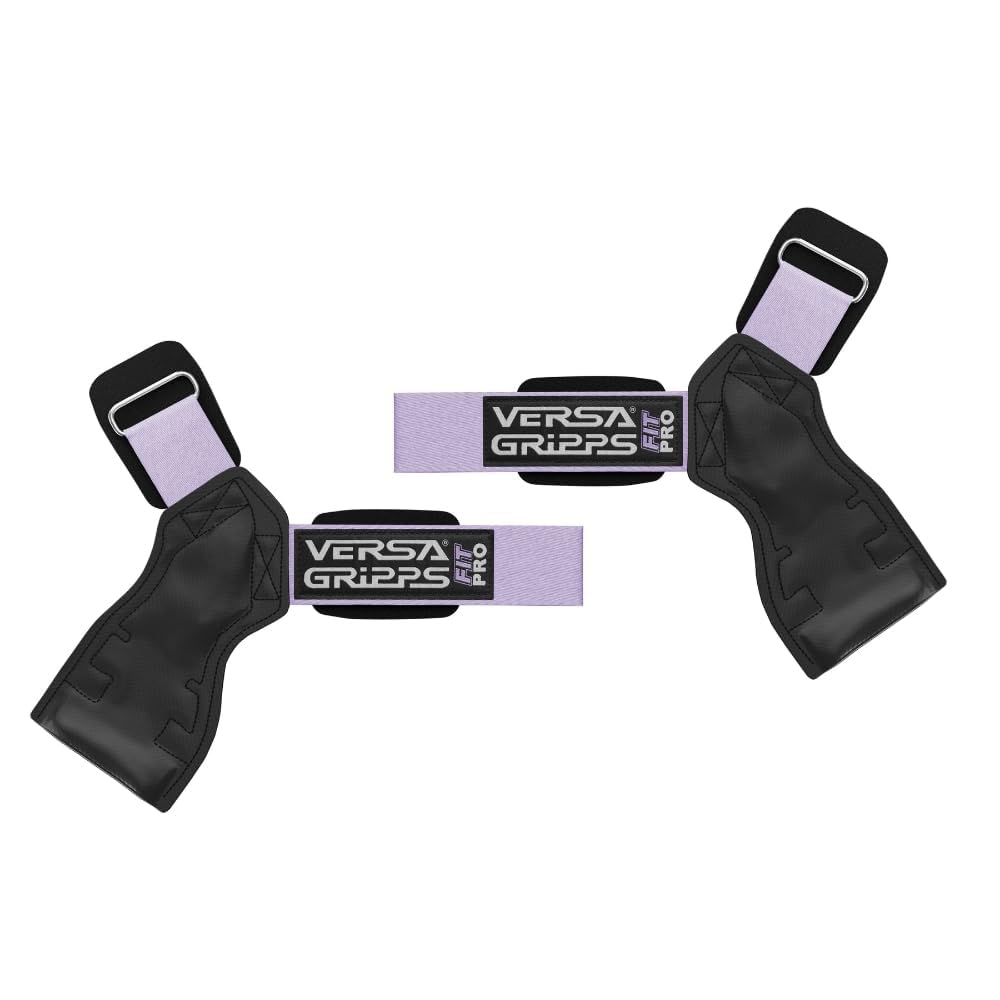
The Versa Gripps Fit Pro is the most refined deadlift grip accessory available. An extended grip pad increases bar surface contact, which directly reduces forearm fatigue during high-rep pulling. The proprietary non-slip material provides a tacky interface that does not wear off over time, unlike rubber pads that lose texture.
The foam is 20% softer than the standard Versa Gripps model, which makes a real difference during long sessions or back-off sets. The revised wrist webbing spreads pressure more evenly, eliminating the pinch point common in cheaper strap designs. Four precision sizes ensure a snug fit without excessive bulk.
These grips replace straps, hooks, and gloves in a single package. Users report being able to pull heavier on RDLs and rows without grip failure. The durability is excellent — after a year of twice-weekly use, the materials show minimal wear. Proper sizing is critical, so measure your wrist circumference before ordering.
Why it’s great
- Extended grip length maximizes bar contact and reduces forearm fatigue
- Softer foam and redesigned webbing eliminate wrist pinching
- Replaces straps, hooks, and gloves with a single durable unit
Good to know
- Higher initial investment compared to basic strap alternatives
- Requires precise wrist measurement for proper fit
2. MANUEKLEAR Lever Lifting Belt
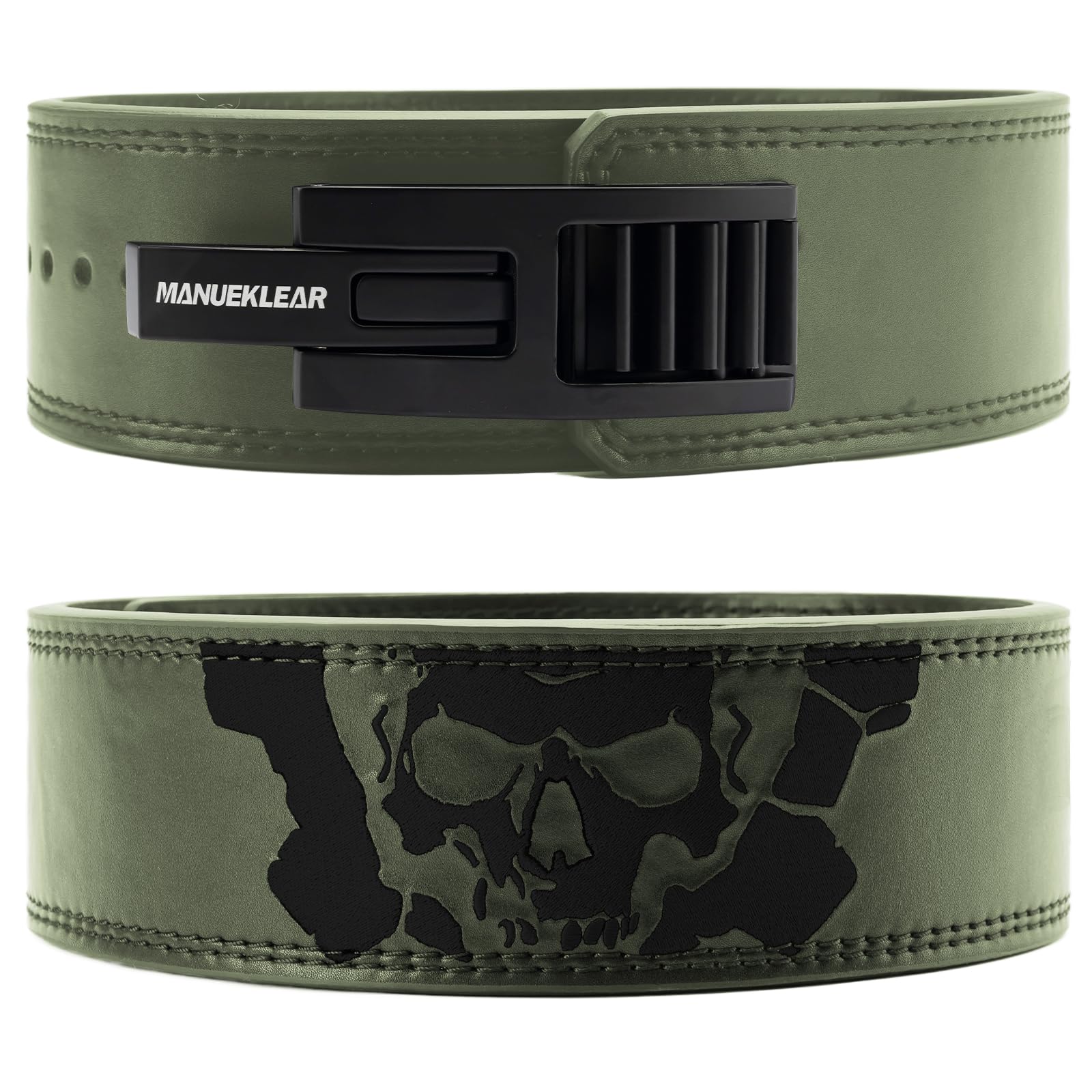
For max-effort deadlifts where bracing pressure is non-negotiable, the MANUEKLEAR lever belt delivers the rigidity needed to support a fully loaded spine. At 10mm thick, this single-prong lever design provides a hard stop for your intra-abdominal pressure, allowing you to pull against a solid wall rather than a flexible band.
The quick-locking lever mechanism is a major upgrade over traditional prong belts. It allows for rapid adjustment between squat and deadlift setups without the fumbling of threading a buckle. The heavy-duty leather construction and durable lever hardware hold up well under heavy use, and the two-screw adjustability allows fine-tuning of the fit.
At roughly 3.5 pounds, the belt has a noticeable presence. Users with a 35-inch waist should order Medium rather than Large. The belt does take a few sessions to break in the stiff leather, but once settled, it provides a locked-in feel that inspires confidence on heavy singles and doubles.
Why it’s great
- Solid 10mm leather provides rigid support for max-effort pulls
- Quick-locking lever allows fast micro-adjustments between lifts
- Durable construction withstands heavy training loads
Good to know
- Heavier than standard belts at over 3 pounds
- Leather stiffness requires a short break-in period
3. Iron Bull Strength 7mm Leather Belt
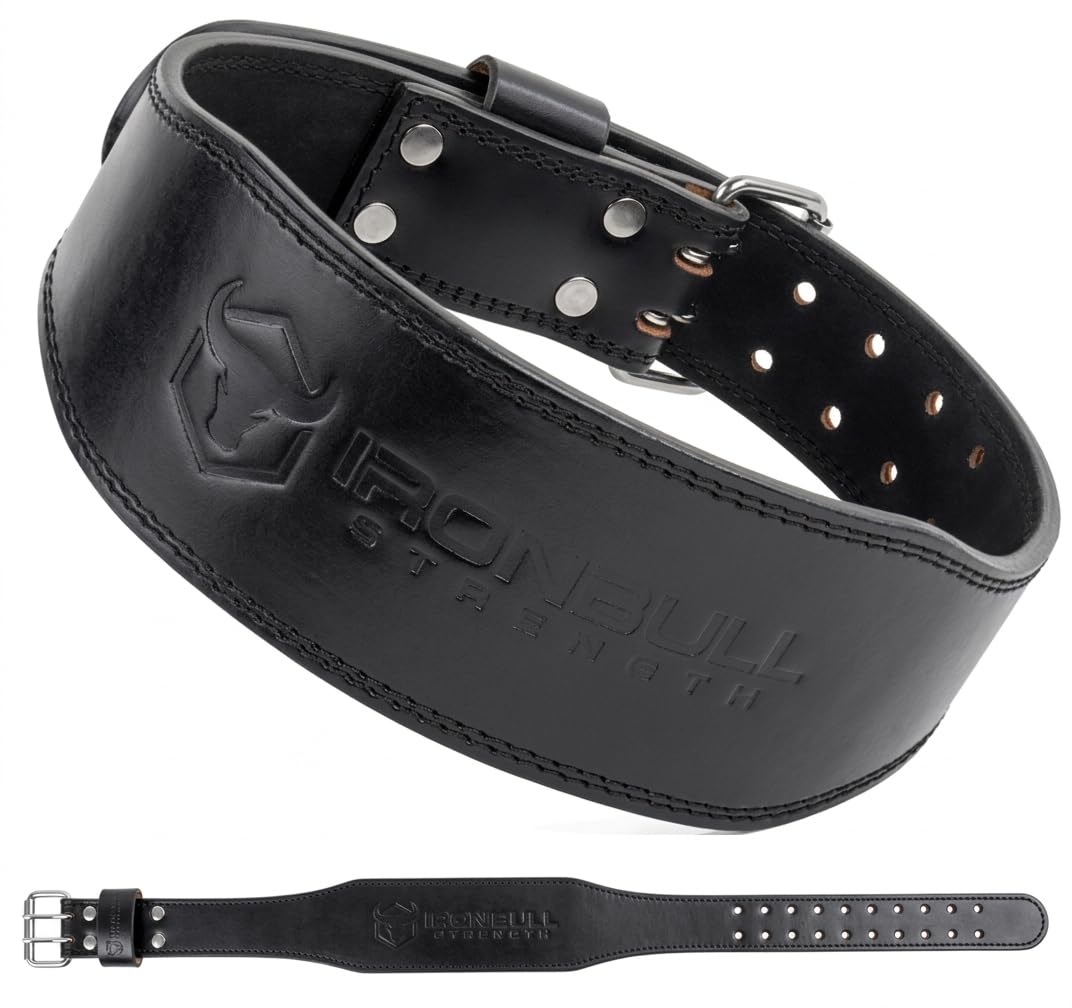
The Iron Bull Strength belt is the sweet spot for lifters who want competition credibility without the bulk of a 10mm belt. Its 7mm A-Grade leather construction provides enough rigidity for heavy deadlifts while offering the flexibility needed for Olympic lifts and dynamic work. The tapered design—4 inches wide at the back tapering to 2 inches in front—accommodates shorter torsos and sumo deadlift positions comfortably.
The double roller steel buckle with black coating is precision-made and shows no weakness under load. The belt is certified for IPF, USAPL, USPA, IPL, USAW, and IWF, so it passes any platform check. The full suede lining and single-piece leather core eliminate the delamination issues found in cheaper glued belts.
This belt requires minimal break-in time due to the 7mm thickness. It molds to your body shape after a few sessions without losing structural integrity. The included carrying case is a practical bonus for gym bag storage. For lifters who compete or train with competition standards in mind, this belt delivers proven compliance.
Why it’s great
- Full IPF/USAPL/USPA/IPL competition approval
- Tapered design provides support without limiting range of motion
- Single-piece A-Grade leather core prevents delamination
Good to know
- Some smaller-framed lifters may find the 4-inch back too wide
- Requires accurate waist measurement, not pants size
4. Cobra Grips PRO Weight Lifting Gloves

The Cobra Grips PRO solves a specific problem: palm tearing during high-rep deadlifts without the bulk of full-fingered gloves. The 6mm neoprene pad provides ample cushioning between the bar and your hand, reducing callus stress and preventing skin from folding under load. The built-in adjustable wrist wrap adds stabilization without requiring separate wrist wraps.
The rubber grip surface provides a tacky interface that improves bar control, particularly when chalk is not allowed. The single-size design with adjustable straps fits wrists from 5.5 to 8.75 inches. Users note that the grip is effective for both conventional deadlifts and pull-ups, making it a versatile addition to a home gym setup.
One trade-off is the lack of left/right labeling, which can cause confusion during setup. The rubber material also does not breathe as well as fabric-based alternatives, so sweat buildup is a consideration during longer sessions. The durability is solid, with the rubber pad outlasting cheaper foam alternatives.
Why it’s great
- Effective palm protection without full-finger glove bulk
- Adjustable wrist support eliminates need for separate wraps
- Tacky rubber grip improves bar control without chalk
Good to know
- No left/right labeling can make initial setup confusing
- Neoprene material retains heat and sweat during long sessions
5. RitFit Deadlift Jack/Barbell Jack

The RitFit Deadlift Jack transforms plate loading from a back-straining chore into a quick, safe process. Its wide base and anti-slip handle provide stable leverage for lifting a loaded barbell, allowing you to slide plates on and off without bending into a compromised position. The 660-pound capacity covers nearly every home gym scenario.
The PVC plastic protection at the top bar contact point prevents damage to your barbell’s knurling, a detail that cheaper steel-only designs often miss. The compact dimensions (16.93 x 7.87 x 4.13 inches) make it easy to store against a wall or hang in a corner. Users report that it works well for hip thrust loading, not just deadlifts.
One minor issue: the plastic protection can leave a slight residue on knurling, although this does not affect performance. The jack requires no assembly, so it is ready to use out of the box. For lifters training at home without a dedicated lifting platform, this accessory reduces setup fatigue significantly.
Why it’s great
- Wide base and anti-slip handle provide stable leverage
- PVC plastic protection safeguards barbell knurling
- Compact footprint for easy storage in small gyms
Good to know
- Plastic protection can leave a light residue on knurling
- Handle design may feel less leveraged for very heavy loads above 500lb
6. BRTGYM Deadlift Jack Barbell Stand

The BRTGYM jack offers a budget-friendly entry into barbell loading convenience without sacrificing structural integrity. Constructed from carbon steel with a black powder-coated finish, it can handle up to 600 pounds of loaded barbell. The built-in pullback handle features a rubber sleeve for grip, making it easy to position under the bar.
At 5.7 pounds, this jack is notably portable. It fits in a gym bag or hangs on a wall hook, making it suitable for lifters who train at multiple locations. The 2-inch wide gap accommodates both standard 1-inch and 2-inch Olympic bars. UHMW plastic padding protects the bar knurling from contact wear.
The handle leverage is the main limitation. Some users find that the handle does not provide enough mechanical advantage for the heaviest loads, preferring to grip the floor-contact element instead. The jack also does not lift the bar as high as some premium models, which can make plate changes slightly more challenging with large-diameter bumper plates.
Why it’s great
- Lightweight and portable at just 5.7 pounds
- UHMW plastic padding protects barbell knurling
- Fits both 1-inch and 2-inch Olympic bars
Good to know
- Handle lacks leverage for very heavy loads above 400lb
- Lower lift height can make plate changes with large-diameter bumpers difficult
7. GurZinn 9mm Leather Weight Lifting Belt

The GurZinn belt is a functional entry-level option for lifters who need basic lumbar support without the investment of a premium lever or competition belt. At 9mm thick with a 4-inch width, it provides a reasonable bracing surface for moderate deadlifts and squats. The sponge pad inside the belt adds comfort but does not replace the rigid pressure needed for max-effort pulls.
The double-sided leather construction with reinforced top stitches and six stainless steel rivets gives the belt surprising durability for its tier. The 10 rows of adjustment holes allow fine-tuning of the fit across a wide range of waist sizes. The belt is particularly useful for smaller-framed lifters who struggle to find a snug fit.
The main trade-off is the padded construction. The sponge layer compresses over time, reducing the belt’s ability to provide a hard bracing surface. For lifters progressing beyond 315-pound pulls, a solid leather belt without padding will offer better feedback. The finish is also stiff initially and requires work to break in fully.
Why it’s great
- Affordable entry point for lumbar support during deadlifts
- Generous 10-row adjustment range accommodates various waist sizes
- Reinforced stitching and stainless steel rivets add durability
Good to know
- Sponge pad compresses over time, reducing rigid bracing ability
- Not suitable for very heavy pulls above mid-300lb range
FAQ
Should I buy a 7mm or 10mm deadlift belt?
Do deadlift accessories like grips or straps reduce grip strength over time?
How do I measure my waist for a deadlift belt?
Can a deadlift jack damage my barbell?
Do I need a lever belt or a prong belt for deadlifting?
Final Thoughts: The Verdict
For most users, the best deadlift accessories winner is the Versa Gripps Fit Pro because it solves the most common deadlift failure — grip fatigue — while providing all-day comfort and durable construction. If you want rigid spine bracing for max pulls, grab the MANUEKLEAR Lever Belt. And for effortless plate loading in a home gym, nothing beats the RitFit Deadlift Jack.

Mo Maruf
I created WellFizz to bridge the gap between vague wellness advice and actionable solutions. My mission is simple: to decode the research and give you practical tools you can actually use.
Beyond the data, I am a passionate traveler. I believe that stepping away from the screen to explore new environments is essential for mental clarity and physical vitality.