Our readers keep the lights on and my smoothie glass nicely filled. As an Amazon Associate, I earn from qualifying purchases.
A dead blow hammer solves a problem you didn’t realize you had until you swing a standard mallet into a stubborn piece of metal or a concrete form and the head kicks back at your wrist. That rebound is wasted energy, and the thudding shock travels straight up your arm. A dead blow hammer, packed with steel shot inside a polyurethane shell, absorbs that bounce and transfers nearly all the striking force into the workpiece. The result is a clean, controlled hit that leaves surfaces unmarred and your joints grateful.
I’m Mohammad Maruf — the founder and writer behind WellFizz. I’ve spent hundreds of hours analyzing tool construction, comparing head materials, steel core designs, and shot density specs to separate the true performers from the lookalikes that crack after a few swings.
Whether you’re seating bearings, forming sheet metal, or setting tent stakes, the best dead blow hammer will deliver precise, repetitive strikes without rebound or surface damage across demanding workshop and jobsite conditions.
How To Choose The Best Dead Blow Hammer
The difference between a dead blow hammer that lasts a decade and one that splits on the second job comes down to four factors. Weight determines deliverable force, head material dictates how well the hammer protects the work surface, steel shot grain size affects rebound absorption, and handle construction decides whether the tool survives an overstrike or snaps at the neck.
Weight and Striking Force
Dead blow hammers typically range from 16 oz to 48 oz (1 to 3 lb). Light hammers around 16–28 oz work well for trim carpentry, upholstery, and light automotive trim. The 32–48 oz range is the sweet spot for chassis work, bearing seating, concrete form removal, and heavy assembly where you need serious momentum without the bounce.
Head Material and Surface Protection
Polyurethane (PU) is the standard for dead blow heads — it resists oil, chemicals, and wear while staying soft enough to avoid marring painted or machined surfaces. A few budget models use rubber that degrades faster and leaves transfer marks. Always verify PU construction if you work near finished surfaces.
Handle Core and Grip
A steel core running through the handle prevents the hammer from snapping on a missed swing. Models without a steel core rely entirely on the polyurethane or rubber handle material for structural integrity, which fails under repeated overstrikes. Look for a reinforced handle if the tool will see daily use. A textured or cushioned grip also reduces hand fatigue during extended sessions.
Quick Comparison
On smaller screens, swipe sideways to see the full table.
| Model | Category | Best For | Key Spec | Amazon |
|---|---|---|---|---|
| ESTWING CCD45 | Premium | Heavy auto & industrial use | 45 oz, steel core handle | Amazon |
| Capri Tools 10097 | Mid-Range | Precision & machinist work | 2 lb, alloy steel handle | Amazon |
| REAL STEEL 0318 | Mid-Range | DIY & furniture assembly | 45 oz, forged steel core | Amazon |
| Titan 63142 | Value Set | Versatile two-weight setup | 2 lb & 3 lb, diamond grip | Amazon |
| CRAFTSMAN CMHT54166 | Entry-Level | Light duty & home use | 28 oz, rubber handle | Amazon |
In‑Depth Reviews
1. ESTWING Dead Blow Hammer CCD45

The ESTWING CCD45 stands apart from the crowd with a full-length steel core wrapped in polyurethane, giving it a balance that feels more like a precision tool than a blunt mallet. The 45 oz head packs enough mass to handle bearing races and suspension work without any rebound. The cushion grip is comfortable and secure even with oily hands, and the oil/chemical resistance makes it garage-ready from day one.
Estwing has built a reputation on durability, and the CCD45 delivers on that promise. The steel shot inside the head dampens vibration so effectively that you can deliver multiple hard strikes without the fatigue that comes from a traditional rubber mallet. Users who replaced cracked budget dead blows with this model noted the difference immediately — the shell is thick enough to survive repeated impacts on sharp steel edges.
The only real tradeoff is price; this sits at the premium end of the dead blow market. But for anyone who uses a dead blow weekly or daily in automotive, industrial, or construction settings, the investment pays for itself in longevity alone. The handle won’t snap, the face won’t chunk out, and the dead blow effect remains consistent over years of abuse.
Why it’s great
- Steel core handle eliminates breakage on overstrikes
- Oil and chemical resistant head holds up in garages
- Exceptional balance reduces user fatigue
Good to know
- Premium price point may exceed occasional user budgets
- Heavier than entry-level 28 oz models
2. Capri Tools 10097 Dead Blow Hammer
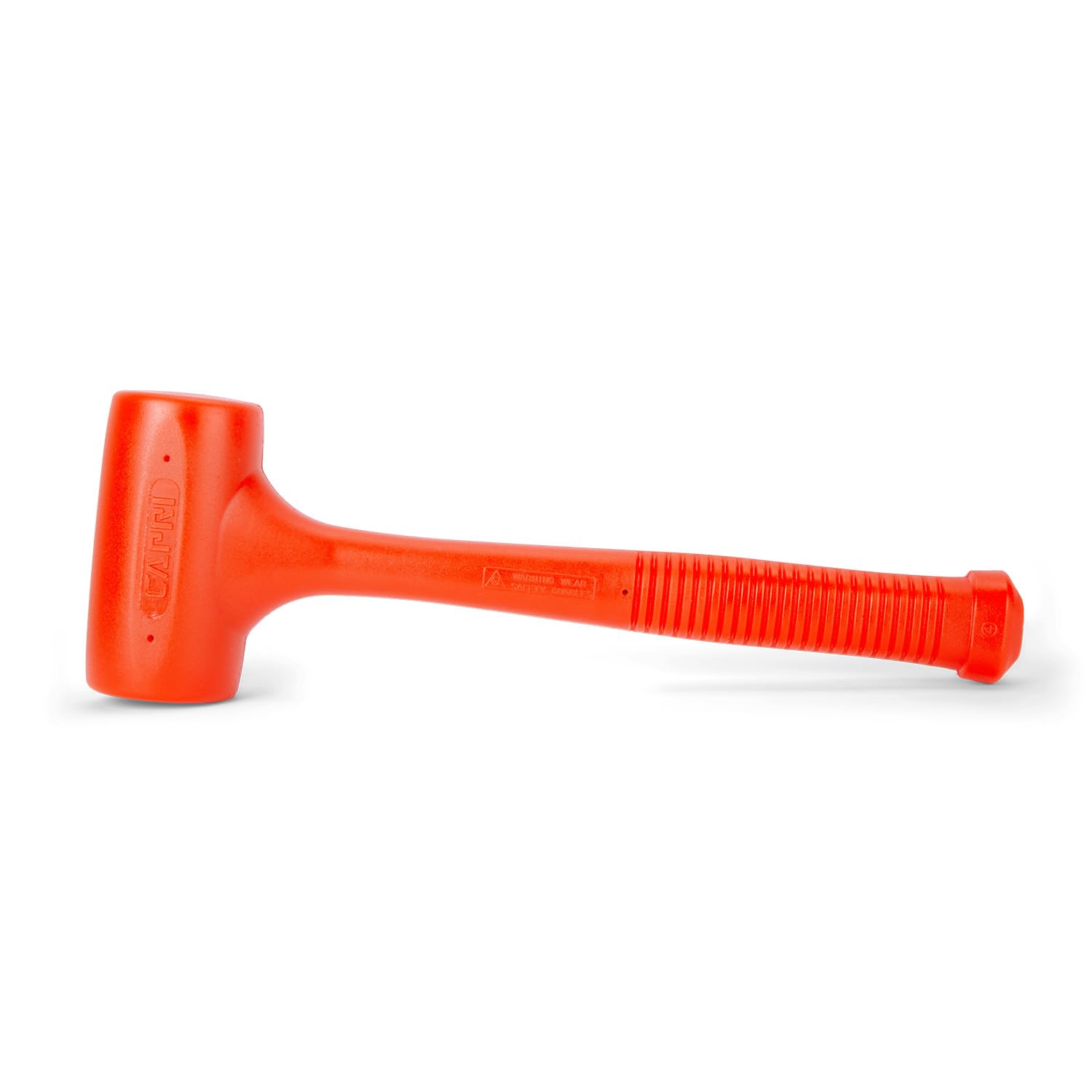
The Capri Tools 10097 is a 2 lb dead blow engineered for controlled striking in tight spaces. Its alloy steel handle provides a rigid backbone that resists bending or snapping, while the polyurethane head stays non-marring on machined surfaces. The round grip offers a natural feel in the hand, though some users report it can feel a bit slippery without added grip tape.
This hammer shines in automotive and machinist applications where precision matters more than raw power. The steel shot fill delivers a near-instantaneous energy transfer on impact, meaning you can deliver a hard hit without the tool bouncing back into your follow-through. It’s compact enough for vise work and brake rotor jobs, yet heavy enough to move stubborn components with authority.
Capri backs the 10097 with a 10-year warranty, which signals confidence in the build quality. The polyurethane material resists absorbing liquids and won’t degrade from exposure to shop chemicals. If the handle grip texture were a bit more aggressive, this would be nearly perfect for shop use, but a wrap of tape solves that in seconds.
Why it’s great
- Alloy steel handle provides excellent durability
- No-mar polyurethane head protects surfaces
- 10-year warranty from manufacturer
Good to know
- Handle grip can feel slippery without modification
- 2 lb weight may feel light for heavy framing work
3. REAL STEEL 0318 Dead Blow Hammer

The REAL STEEL 0318 punches well above its price bracket with a 3-layer structural design that wraps a forged carbon steel core inside a TPE outer jacket. The result is a hammer that feels substantial in hand at 45 oz while offering impressive rebound control. The flat striking face is wide enough to deliver clean hits on panel work and furniture assembly without leaving marks.
Users transitioning from budget dead blows notice the difference immediately — the REAL STEEL doesn’t transmit that jarring shock back into the wrist. The cushion grip absorbs some vibration, though it isn’t as plush as the ESTWING’s grip. The overall length of 14.5 inches gives good leverage without feeling cumbersome in a tool bag.
The TPE jacket resists oil and chemical exposure, making this a viable option for garage work. A few users reported that the outer layer can show wear faster than solid polyurethane on very sharp edges, but for general automotive, diy, and assembly tasks, the durability is more than adequate at this price tier.
Why it’s great
- Forged steel core adds serious overstrike protection
- Wide flat striking face delivers balanced hits
- Oil and chemical resistant TPE jacket
Good to know
- Outer TPE can wear faster on sharp metal edges
- Cushion grip is decent but not best-in-class
4. Titan 63142 2-Piece Dead Blow Hammer Set

The Titan 63142 is a two-hammer set that delivers remarkable versatility at a budget-friendly cost. You get a 32 oz and a 48 oz head, giving you the option to reach for the lighter unit for trim and assembly work or the heavier one for automotive and outdoor tasks. Both hammers feature a non-slip diamond textured handle and a steel core running through the full length for overstrike protection.
The polyurethane head is spark and rebound resistant, making it suitable for environments where you want to avoid metal-on-metal ignition risk. Users have put the 48 oz hammer through heavy abuse on stone slab pathways, brick work, and tent stakes, and the heads held up without cracking or deforming. The diamond texture grip is one of the more aggressive designs at this price point, giving you solid control even with wet or greasy hands.
The tradeoff is in the finish — the heads show cosmetic wear faster than premium models, and hitting sharp edges will chew up the face. But for those who need two different weights without buying separate hammers, this set is a smart investment. It’s especially practical for campers, mechanics, and diyers who want a range of striking force options in one box.
Why it’s great
- Two-hammer set covers light and heavy tasks
- Diamond textured grip offers excellent hold
- Steel core prevents handle breakage
Good to know
- Faces show cosmetic wear faster than premium options
- Sharp edges can damage the polyurethane shell
5. CRAFTSMAN 28 Oz Dead Blow Hammer CMHT54166

The CRAFTSMAN CMHT54166 is a 28 oz dead blow that hits the sweet spot for homeowners and light-duty users who want the dead blow advantage without the premium price. The steel shot-filled molded head provides enough mass to avoid the bounce-back problem of a standard hammer, and the soft polyurethane face won’t leave marks on wood trim or painted surfaces. The textured rubber grip is comfortable and provides decent purchase even with dry hands.
Build quality is solid for the price tier. The steel-reinforced handle gives overstrike protection that budget rubber mallets lack entirely. Users who previously bought off-brand dead blows and watched them crack within weeks found the CRAFTSMAN to be a significant step up in durability. The 28 oz weight is light enough for extended use on furniture assembly and siding work without wearing out your arm.
Where this hammer falls short is sheer momentum — for heavy automotive work like seating control arm bushings or breaking stubborn bolts free, the lighter head doesn’t deliver the same authority as a 45 oz model. It’s also not the best choice for concrete form work. But for the average weekend project list, it offers genuine dead blow performance at a very accessible price.
Why it’s great
- Lightweight and comfortable for extended use
- Steel reinforced handle adds overstrike safety
- Non-marring polyurethane face protects surfaces
Good to know
- 28 oz weight lacks authority for heavy automotive work
- Not suitable for concrete form or heavy framing tasks
FAQ
What size dead blow hammer should I buy for general automotive work?
Can a dead blow hammer replace a regular ball-peen or framing hammer?
Why do some dead blow hammers crack within the first few uses?
Final Thoughts: The Verdict
For most users, the best dead blow hammer winner is the ESTWING CCD45 because it combines a steel core handle, oil-resistant polyurethane head, and 45 oz of controlled striking force into a package that outlasts everything else in the category. If you want a precision option for machinist work, grab the Capri Tools 10097. And for a budget-friendly two-hammer set that covers light and heavy tasks, nothing beats the Titan 63142.

Mo Maruf
I created WellFizz to bridge the gap between vague wellness advice and actionable solutions. My mission is simple: to decode the research and give you practical tools you can actually use.
Beyond the data, I am a passionate traveler. I believe that stepping away from the screen to explore new environments is essential for mental clarity and physical vitality.