Our readers keep the lights on and my smoothie glass nicely filled. As an Amazon Associate, I earn from qualifying purchases.
Finding a router that fully unlocks the power of open-source firmware means looking past the glossy marketing and focusing on raw hardware compatibility. You need a device with ample flash storage, robust RAM, and a well-supported chipset—specs that the average consumer router skimps on to cut costs.
I’m Mohammad Maruf — the founder and writer behind WellFizz. My research dives deep into the technical specifications and community forums to identify which routers truly deliver a stable, feature-rich DD-WRT experience.
This guide cuts through the noise to help you pick the right hardware for a custom, high-performance network. These are the best dd-wrt router options available today, each vetted for compatibility and real-world performance.
How To Choose The Best DD-WRT Router
Selecting a router for DD-WRT requires a shift in perspective. You aren’t just buying for out-of-the-box speed; you are buying a hardware platform that must run a full Linux-based operating system. Prioritize internal storage, RAM, and a proven chipset over the latest Wi-Fi buzzword.
Flash Storage and RAM: The Non-Negotiables
DD-WRT is a complete OS. It needs space for the firmware image, logs, and configuration files. A router with at least 16MB of flash storage (NAND) is a baseline for a stable, feature-rich build. More is better. RAM is equally critical. Look for 128MB or more of DDR3 RAM to comfortably run services like OpenVPN, ad-blocking, and traffic shaping without the router slowing down or crashing.
Chipset Compatibility is King
Not all Wi-Fi chipsets play nicely with open-source drivers. Broadcom chipsets have long been the standard for DD-WRT, offering stable support for both 2.4GHz and 5GHz bands. Qualcomm (Atheros) chipsets often have excellent open-source driver support as well. Before purchasing, always check the official DD-WRT router database to see if the specific hardware revision is supported and how mature the build is.
Ethernet Ports and WAN Flexibility
Your DD-WRT router needs the physical ports to match your internet plan. A 2.5 Gbps WAN port is essential for multi-gig fiber or cable connections, preventing the router from becoming a bottleneck. For local networks, multiple Gigabit LAN ports are standard, but having a second 2.5G port for a fast NAS or gaming PC is a huge advantage. Ensure the router can handle your desired wired speeds.
Quick Comparison
On smaller screens, swipe sideways to see the full table.
| Model | Category | Best For | Key Spec | Amazon |
|---|---|---|---|---|
| Synology RT6600ax | Premium Prosumer | Advanced Network Control & Security | 1.8GHz Quad-Core CPU, 1GB RAM | Amazon |
| GL.iNet Flint 3 (BE9300) | Premium Performance | OpenVPN Speed & WiFi 7 | 2.5G Ports, 1GB DDR4 RAM | Amazon |
| TP-Link Archer AX80 | Mid-Range Power | Advanced QoS & VPN Client | 8 Antennas, 2.5G WAN Port | Amazon |
| ASUS RT-BE58 Go | Travel & Mesh | Portable VPN Hotspot & AiMesh | USB-C Powered, 3600 Mbps | Amazon |
| NETGEAR RS300 (Refurbished) | Premium Value | High WiFi 7 Speed for the Price | Tri-Band, 2.5G Ports | Amazon |
| NETGEAR Nighthawk RAX36 | Mid-Range Workhorse | Reliable WiFi 6 for Large Homes | AX3000, 2,000 sq. ft. Coverage | Amazon |
| NETGEAR Nighthawk RS140 | Entry-Level WiFi 7 | Budget-Friendly WiFi 7 Upgrade | BE5000, 2.5G Internet Port | Amazon |
In‑Depth Reviews
1. Synology RT6600ax

The Synology RT6600ax is a networking powerhouse designed for the prosumer who demands absolute control. Its SRM operating system, while not DD-WRT, is incredibly powerful, and the hardware—a quad-core CPU with 1GB of RAM—provides an ideal platform for DD-WRT if desired. This unit is built for network segmentation, security, and high performance.
You get a dedicated 2.5GbE WAN port for multi-gig internet, tri-band Wi-Fi 6, and the ability to create up to five separate networks. The built-in Threat Prevention and comprehensive VPN server (supporting up to 40 free clients with 2FA) are normally premium add-ons, but here they are free and native. Users report excellent range and rock-solid stability, even when handling 30+ devices and demanding gaming loads.
The primary limitation is its single 2.5GbE port, meaning your LAN is limited to Gigabit unless you use a separate switch. The auto-5GHz channel selection can also be finicky. However, for someone who values software features, security, and a stable hardware foundation that screams “custom firmware ready,” the RT6600ax is the top-tier choice.
Why it’s great
- Industry-leading software features like Threat Prevention and parental controls.
- Excellent tri-band Wi-Fi coverage and stability with a high device load.
- Robust built-in VPN server with no subscription fees or client limits.
Good to know
- Only one 2.5GbE port; the rest are Gigabit.
- Does not include Wi-Fi 6E support in the 6GHz band.
- The premium price tag reflects its business-grade software capabilities.
2. GL.iNet GL-BE9300 (Flint 3)

The GL.iNet Flint 3 is a specialist router with a focus on open-source firmware and VPN performance. Running a custom interface based on OpenWrt, it offers a familiar user experience for DD-WRT veterans. Its hardware is built for speed, featuring a tri-band WiFi 7 radio and five 2.5 Gigabit Ethernet ports, which is a major advantage for wired networking.
The standout feature is its raw VPN throughput. Users consistently report WireGuard speeds of over 600Mbps, which is rare and exceptionally useful for protecting a full gigabit connection. The integrated AdGuard Home support is another massive plus, allowing you to block ads network-wide without any subscription. The user interface is responsive, and the 1GB of RAM handles multiple plugins and a high device count with ease.
On the downside, the Wi-Fi range is surprising for its class—some users found it to be about half that of their ISP-provided router, barely covering a 2,000 sq. ft. home. Also, the USB 3.0 port offers disappointing NAS performance, crawling at around 30MB/s. For wire-speed VPN and multi-gig wired networking, it’s a fantastic, open-source-friendly machine.
Why it’s great
- Exceptional WireGuard and OpenVPN speeds that exceed 600Mbps.
- Five 2.5 Gigabit Ethernet ports for high-speed wired connectivity.
- Built-in AdGuard Home support for network-wide ad blocking.
Good to know
- Wi-Fi range is weaker than some competitors in its price tier.
- USB 3.0 port speeds are poor for NAS or external storage use.
- Setup requires a firmware update for optimal performance.
3. TP-Link Archer AX80

The TP-Link Archer AX80 is a strong mid-range contender that proves you do not need to spend a lot for robust hardware. Its eight high-gain antennas and Beamforming technology deliver exceptional coverage, often eliminating the need for a mesh system in average-sized homes. It features a 2.5 Gbps WAN/LAN port, future-proofing it for faster internet plans.
The dual-band Wi-Fi 6 (AX6000 standard) provides plenty of bandwidth for streaming, gaming, and multiple devices. It supports MU-MIMO and OFDMA for efficient data handling. For the DD-WRT crowd, the hardware is a popular target for custom firmware due to its solid Qualcomm chipset and ample storage. It also features a built-in VPN client, allowing the whole network to route through a VPN service without installing software on each device.
Some users experienced dropouts with its QoS feature, which required disabling it. The quick setup can also be annoying by redirecting to an ISP activation page if you are using a provider like Xfinity. However, once configured, the Archer AX80 is a reliable workhorse, offering incredible range that outperforms many more expensive models.
Why it’s great
- Exceptional Wi-Fi range and signal strength that can cover a whole house.
- Strong hardware foundation well-suited for custom firmware like DD-WRT.
- 2.5 Gbps WAN port for multi-gig internet bridging.
Good to know
- QoS feature can cause instability and may need to be disabled.
- Easy setup wizard can be intrusive with certain ISPs.
- Only dual-band, so it lacks a dedicated backhaul or 6GHz radio.
4. ASUS RT-BE58 Go
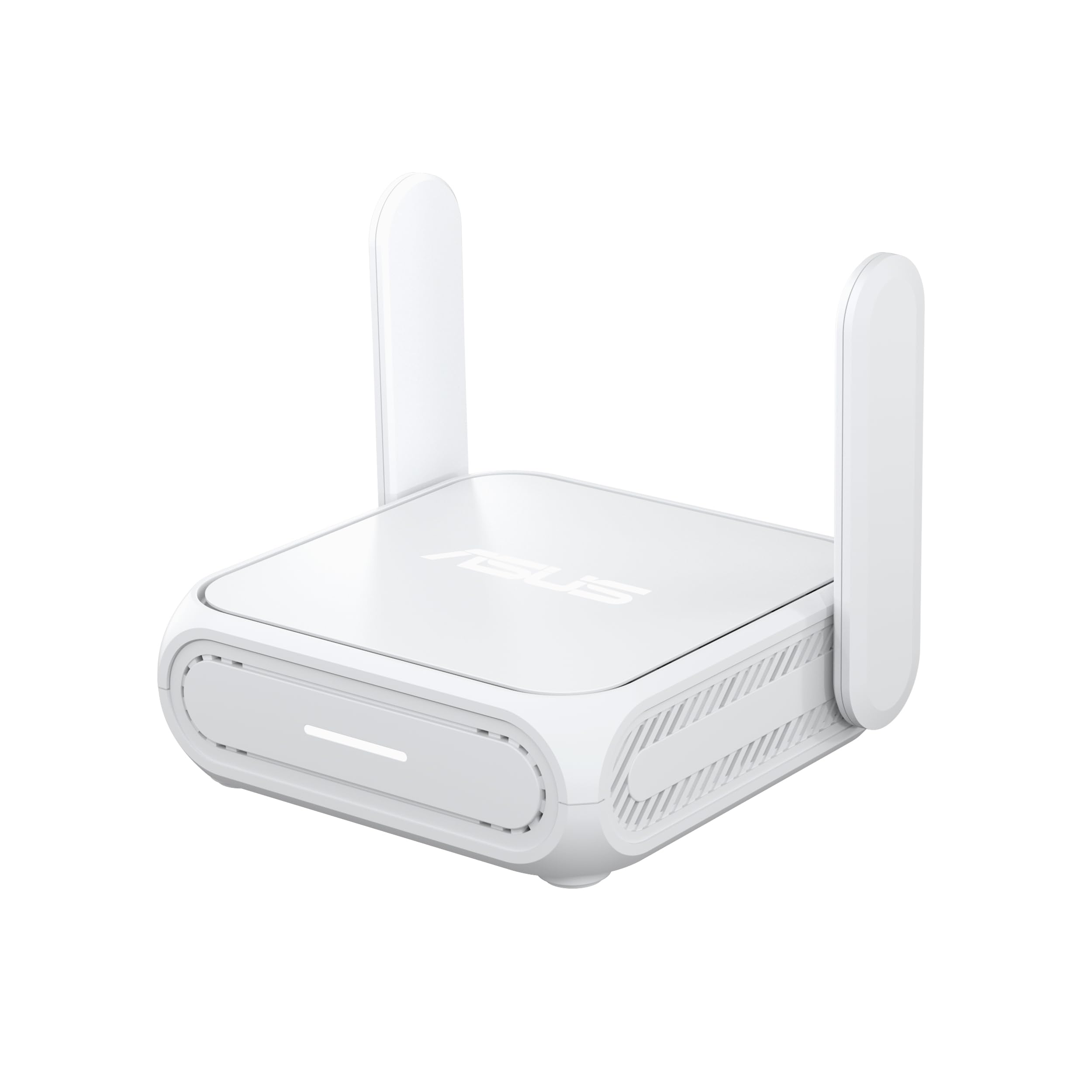
The ASUS RT-BE58 Go redefines what a travel router can do. This compact, USB-C powered device packs a surprisingly powerful punch with Wi-Fi 7 and support for advanced custom firmware like Asuswrt-Merlin, which shares many characteristics with DD-WRT. Its small size and unique power source make it ideal for RVs, hotels, and cruise ships.
It operates in WISP mode, allowing it to connect to a public Wi-Fi network (like a hotel’s) and create a secure, private hotspot for all your devices. The built-in VPN features protect your data on those insecure networks. It can also turn a smartphone’s mobile tethering into a full home network. The AiMesh compatibility means it can later be integrated into a larger mesh system at home, adding value beyond travel use.
The main trade-off is its single 1G LAN port, which is a bottleneck for high-speed local transfers. Performance can be finicky when reconnecting to a new hotel network, requiring occasional device restarts. It is also a dual-band router, so the 6GHz Wi-Fi 7 band is absent. For a portable, security-focused router that can run powerful firmware, it is unmatched.
Why it’s great
- Compact and portable with USB-C power, perfect for travel.
- Creates a secure, private VPN-protected network on any public Wi-Fi.
- Excellent Asuswrt-Merlin firmware support with add-on capabilities.
Good to know
- Single 1G LAN port limits wired network performance.
- Can be finicky with initial connections and settings changes.
- Dual-band only, lacking the full Wi-Fi 7 6GHz advantage.
5. NETGEAR Nighthawk RS300 (Refurbished)

The NETGEAR Nighthawk RS300 offers a direct path into the next generation of Wi-Fi without the full premium price tag, especially as a certified refurbished unit. It is a tri-band router supporting Wi-Fi 7, delivering theoretical speeds of up to 9.3 Gbps. Its sleek tower design houses high-performance antennas and includes two 2.5 Gigabit LAN ports for fast wired connections.
In real-world use, it provides blazing-fast wireless speeds—users on fiber connections report hitting over 1,100 Mbps wirelessly. It covers a sizeable 2,500+ sq. ft. area and handles a high density of devices without issue. The security features, including automatic firmware updates and advanced router protection, are built-in. It is a powerful, future-proof platform for a custom firmware project.
The primary drawback is its Wi-Fi range, which, while good, is weaker than its predecessor, especially when penetrating floors. Some users noted the need to use an older router as an access point for basements. The design also prioritizes horizontal coverage. As a refurb, it represents an exceptional value for getting Wi-Fi 7 hardware into your hands for a custom networking setup.
Why it’s great
- Outstanding Wi-Fi 7 speeds with multi-gig wired performance.
- Great value for a premium tri-band router, especially refurbished.
- Sleek design with high-performance antennas and 2.5G ports.
Good to know
- Vertical signal strength (up/down floors) is notably weaker.
- Refurbished unit conditions can vary slightly.
- Advanced device prioritization features are limited in stock firmware.
6. NETGEAR Nighthawk WiFi 6 Router (RAX36)

The NETGEAR Nighthawk RAX36 is a straightforward, reliable WiFi 6 router that focuses on solid performance and coverage. It is rated to cover up to 2,000 sq. ft. and handle up to 25 devices, making it a perfect fit for a typical mid-sized family home. The AX3000 speeds ensure smooth streaming and gaming without breaking the bank.
Users consistently praise its rock-solid stability, often upgrading from older routers that suffered from daily disconnections. Setup is exceptionally easy via the Nighthawk app, and once configured, it manages traffic efficiently without requiring constant attention. It features a built-in VPN capability for remote access and a USB 3.0 port for basic network storage.
The main trade-off is its internal antennas, which limit its ability to be custom-positioned for optimal signal. It also lacks a 2.5G WAN port, capping it at Gigabit speeds from the modem. For those seeking a stable, high-performance WiFi 6 router that is simple to deploy and a great target for DD-WRT, the RAX36 is a proven choice.
Why it’s great
- Delivers strong, stable coverage across a 2,000 sq. ft. home.
- Very easy setup and management through the Nighthawk app.
- Ideal reliability for multiple devices and streaming workloads.
Good to know
- Internal antennas mean less flexibility for signal positioning.
- Lacks a 2.5G port, limited to Gigabit WAN speeds.
- Capped at 25 devices, which is lower than some competitors.
7. NETGEAR Nighthawk RS140

The NETGEAR Nighthawk RS140 is the most accessible entry point into the world of WiFi 7 routers. It is a dual-band unit (BE5000 standard) that offers a 2.5 Gigabit internet port, ensuring your fastest wired connection does not become a bottleneck. It covers up to 2,250 sq. ft. and supports up to 80 devices, an excellent capacity for a smart home.
Setup is straightforward via the app, and it pairs well with standard cable modems. Users find it to be a simple, effective upgrade from older WiFi 5 or first-gen WiFi 6 routers, providing a noticeable jump in speed and coverage. The security features are also a plus. For the price, it delivers a modern, fast, and reliable Wi-Fi experience.
The compromises are clear: it is dual-band, so you miss out on the interference-free 6GHz band and the highest speed multipliers of WiFi 7. The 2.5G port is for WAN only, so the LAN ports are all gigabit. For a budget-conscious user looking to get a WiFi 7 router that can be a stable home hub, the RS140 is a fine, low-risk choice.
Why it’s great
- Most affordable way to get a WiFi 7 router with a 2.5G WAN port.
- Excellent device capacity, supporting up to 80 connections.
- Easy setup and reliable performance for a standard home network.
Good to know
- Dual-band only; lacks the 6GHz radio for the full WiFi 7 experience.
- All LAN ports are Gigabit, not 2.5G.
- Entry-level WiFi 7 speeds (BE5000) are a fraction of premium models.
FAQ
What is a DD-WRT router and why would I use it?
Can I install DD-WRT on any router?
Will DD-WRT improve my internet speed?
Final Thoughts: The Verdict
For most users, the best dd-wrt router winner is the Synology RT6600ax because it offers an unmatched foundation of powerful hardware, robust software features, and a proven history of stability perfect for running custom firmware. If you want blazing-fast VPN speeds and multi-gig wired networking, grab the GL.iNet Flint 3. And for a powerful mid-range option that balances cost and performance, nothing beats the range and reliability of the TP-Link Archer AX80.

Mo Maruf
I created WellFizz to bridge the gap between vague wellness advice and actionable solutions. My mission is simple: to decode the research and give you practical tools you can actually use.
Beyond the data, I am a passionate traveler. I believe that stepping away from the screen to explore new environments is essential for mental clarity and physical vitality.