Our readers keep the lights on and my smoothie glass nicely filled. As an Amazon Associate, I earn from qualifying purchases.
Dark soy sauce is the quiet workhorse of a proper stir-fry, braised pork belly, or lo mein. Where regular soy sauce brings salt, dark soy sauce brings color, a deeper molasses-like sweetness, and a thicker body that clings to noodles and meat. The wrong bottle leaves your dish either pale and listless or overly salty and one-note.
I’m Mohammad Maruf — the founder and writer behind WellFizz. After researching dozens of brands and cross-referencing fermentation methods, sodium levels, and thickness against hundreds of verified buyer reports, I built this guide around the five bottles worth knowing.
Every selection below was chosen for its ability to deliver genuine depth, proper glaze-forming viscosity, and balanced seasoning for home cooks who want restaurant-quality results. This guide covers the very best dark soy sauce options available for different cooking styles and dietary needs.
How To Choose The Best Dark Soy Sauce
Dark soy sauce is thicker, darker, and slightly sweeter than its light counterpart because it undergoes a longer aging process and often includes added molasses or caramel color. Picking the right one requires looking past the label and understanding three specific factors.
Viscosity and Body
The defining trait of dark soy sauce is its pour: it should coat the back of a spoon like a thin syrup. A watery bottle signals it is either not aged long enough or is a light soy sauce mislabeled. The thickness directly affects how well it clings to stir-fried noodles or glazes a piece of roasted meat.
Salt Balance
Too much sodium ruins the sweet-savory equilibrium that makes dark soy sauce useful. Many premium dark sauces hover around 600–900 mg per tablespoon. Anything over 1,200 mg per tablespoon will dominate your dish, forcing you to use less and miss the color payoff you actually bought it for.
Ingredient Purity
The best dark soy sauces list four to six ingredients: soybeans, wheat, salt, water, and sometimes sugar or molasses. Additives like hydrolyzed vegetable protein, artificial colors, or preservatives are red flags. Naturally brewed bottles always taste cleaner and develop better depth during cooking.
Quick Comparison
On smaller screens, swipe sideways to see the full table.
| Model | Category | Best For | Key Spec | Amazon |
|---|---|---|---|---|
| Lee Kum Kee Premium Dark Soy Sauce | Mid-Range | Glossy stir-fries & braises | 59 fl oz; thick, slightly sweet pour | Amazon |
| Pearl River Bridge Superior Dark Soy Sauce | Mid-Range | High-intensity color & coating | 60 fl oz; 1,300 mg sodium per tbsp | Amazon |
| Ohsawa Nama Shoyu | Premium | Unpasteurized, complex umami | 32 fl oz; aged 1.5 years in cedar | Amazon |
| Best of Thailand Japanese Style Dark Soy Sauce | Premium | Low-sodium, clean ingredient cooking | 47.3 fl oz; 75% less sodium | Amazon |
| Lee Kum Kee Gluten Free Soy Sauce | Budget-Friendly | Gluten-free households | 64 fl oz; gluten-free, large value size | Amazon |
In‑Depth Reviews
1. Lee Kum Kee Premium Dark Soy Sauce

This is the standard by which other dark soy sauces are measured in most home and professional kitchens. Lee Kum Kee’s premium version pours with a noticeable thickness that immediately signals it will glaze properly. The flavor hits a balanced savory-sweet note without the aggressive salt punch that cheaper alternatives deliver.
The 59-ounce jug is a true value play for anyone who cooks Asian food more than once a week. Reviewers consistently mention how the deep mahogany color transforms stir-fried noodles and braised meats into glossy, restaurant-looking dishes. The slight sweetness comes from added sugar and molasses, which rounds out the savory backbone.
One common note from users is that the texture is thicker than standard soy sauce, so you may need to adjust your pour or stir a bit more to distribute it evenly. That same thickness, however, is exactly what makes it the right tool for achieving that signature lacquered finish on char siu or red-cooked pork.
Why it’s great
- Ideal viscosity for glazing and coating noodles
- Balanced sweet-savory flavor that is not overly salty
- Large format bottle reduces cost per ounce significantly
Good to know
- Thicker consistency may require recipe adjustment if switching from thin soy sauce
- Contains wheat and sugar for those avoiding either
2. Pearl River Bridge Superior Dark Soy Sauce
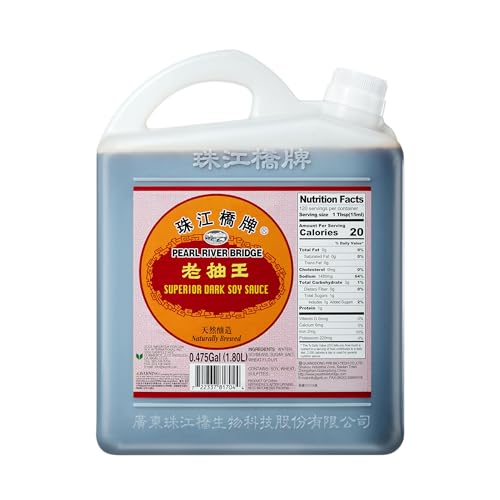
Pearl River Bridge has been a fixture in Chinese restaurants for decades, and this food-service pack proves why. The color is exceptionally dark, almost black, and it coats food with a density that cheaper brews simply cannot match. This is a sauce that is built for visual impact as much as flavor.
The sodium content sits at 1,300 mg per tablespoon, which is among the highest in this roundup. Veteran users warn first-timers to taste before measuring and reduce the recipe amount by roughly 75 percent. Used in moderation, the rich color and full-bodied umami can define a dish like red-braised beef or soy-marinated eggs.
Reviewers who love this sauce point to the way it creates a mirror-like glaze on proteins with zero added thickeners. The plastic jug is practical for heavy use, though some note the packaging is purely utilitarian. If you prioritize intense color payoff over a mild sodium load, this is the bottle to grab.
Why it’s great
- Produces the darkest, richest color of any option tested
- Naturally brewed using traditional methods
- Large 60-ounce size is cost-effective for serious cooking
Good to know
- Very high sodium requires careful measurement
- Not ideal for direct dipping or raw use
3. Ohsawa Nama Shoyu

Ohsawa is not a dark soy sauce in the Chinese tradition, but it belongs here because its unpasteurized nama shoyu offers a complexity that no mass-market dark sauce can replicate. Aged for a minimum of one and a half years in Akita cedar kegs, it develops a mellow, savory depth that is more nuanced than salty.
The ingredient list is a study in restraint: organic soybeans, organic whole wheat, sun-dried sea salt, and mountain spring water. No caramel color, no molasses, no preservatives. The amber color is lighter than the Chinese-style dark sauces, but the richness of flavor is dense enough to anchor braises and marinades beautifully.
Long-term users cite this as their only soy sauce for everything from udon broth to tofu dips. The one drawback is practical — a 32-ounce bottle is smaller, and the plastic lid threading is fragile. The flavor, however, is unrivaled for anyone who values purity and traditional craftsmanship over sheer darkness.
Why it’s great
- Unpasteurized fermentation preserves natural enzymes and complexity
- Organic, kosher, non-GMO, and vegan with clean ingredients
- Cedar aging creates a truly unique aromatic profile
Good to know
- Lighter color may not deliver the deep black hue expected from dark soy
- Plastic cap is prone to breaking during shipping
4. Best of Thailand Japanese Style Dark Soy Sauce

This two-pack from Best of Thailand solves a specific problem: getting the color and savory depth of dark soy sauce without flooding your dish with sodium. At 75 percent less sodium than standard soy sauces, it is a genuinely useful tool for anyone watching their blood pressure or just wanting a lighter hand with the salt shaker.
The flavor profile leans more Japanese-style than Chinese — slightly sweeter, mellower, and less syrupy. It works well as a marinade base, a stir-fry seasoning, and even a sushi dip. Users praise the convenience of the squeezable dispensers, which are easier to handle than a heavy glass bottle.
The trade-off is that the color is not as deep and the body is not as thick as traditional Chinese dark soy sauces. If you are building a classic red-braised dish that relies on visual darkness, this may not achieve the look. But for everyday cooking where flavor balance and sodium control matter more, it is a strong contender.
Why it’s great
- Dramatically lower sodium without sacrificing authentic umami
- Squeezable bottles make portion control easy
- Versatile enough for both cooking and dipping
Good to know
- Thinner consistency than traditional Chinese dark soy
- Packaging quality is basic and may not pour cleanly at first
5. Lee Kum Kee Gluten Free Soy Sauce

Gluten-free soy sauces often lack depth because brewers strip out the wheat that contributes complex fermentation byproducts. Lee Kum Kee’s gluten-free version does not make that compromise. It delivers the same rich, savory, full-bodied taste that their standard soy sauce is known for, but crafted without gluten-containing grains.
The 64-ounce jug makes this a practical household staple for families managing celiac disease or gluten sensitivity. Reviewers who have used it for years confirm that taste is indistinguishable from traditional soy sauce. It works equally well in marinades, stir-fries, soups, and dipping setups without anyone at the table questioning the flavor.
The one nuance is that this is a general-purpose soy sauce rather than a dark soy sauce specifically. It has a thinner body and lighter color than the Lee Kum Kee Premium Dark above. For gluten-free cooking that still demands the thick, sweet glaze of a true dark soy, you may need to pair this with a molasses or sugar adjustment.
Why it’s great
- Authentic soy sauce flavor without any gluten
- Generous 64-ounce size is excellent value per serving
- Brewed from non-GMO whole soybeans for clean taste
Good to know
- Not a true dark soy — thinner and lighter in color
- May require extra sugar or molasses to mimic dark soy glaze
FAQ
Can dark soy sauce be used as a direct substitute for light soy sauce?
Does dark soy sauce need to be refrigerated after opening?
Final Thoughts: The Verdict
For most users, the best dark soy sauce winner is the Lee Kum Kee Premium Dark Soy Sauce because it nails the perfect balance of viscosity, sweetness, and color depth for everyday stir-fries and braises. If you want intense color and a classic restaurant-grade glaze, grab the Pearl River Bridge Superior Dark Soy Sauce. And for low-sodium cooking that still delivers full umami, nothing beats the Best of Thailand Japanese Style Dark Soy Sauce.

Mo Maruf
I created WellFizz to bridge the gap between vague wellness advice and actionable solutions. My mission is simple: to decode the research and give you practical tools you can actually use.
Beyond the data, I am a passionate traveler. I believe that stepping away from the screen to explore new environments is essential for mental clarity and physical vitality.