Our readers keep the lights on and my smoothie glass nicely filled. As an Amazon Associate, I earn from qualifying purchases.
Finding a dairy-free milk that meets a one-year-old’s nutritional needs—protein, healthy fats, key vitamins, and minerals—without triggering allergies or digestive upset can feel like a minefield. Many parent-facing brands hide behind clean labels while delivering mostly water and sugar.
I’m Mohammad Maruf — the founder and writer behind WellFizz. I’ve spent countless hours cross-referencing nutritional panels, ingredient origins, and pediatric guidelines to separate genuinely complete toddler drinks from overpriced juice in a carton.
This guide breaks down the top contenders, evaluating protein content, fat sources, fortification, and allergen safety so you can confidently choose the best dairy free milk for 1 year old without relying on marketing spin.
How To Choose The Best Dairy Free Milk For 1 Year Old
At twelve months, a child transitions from formula or breast milk to a broader diet, but milk remains a primary vehicle for protein, fat, calcium, and vitamin D. Finding a dairy-free replacement that mirrors that dense nutritional profile without causing tummy trouble is the core challenge for parents dealing with allergies, sensitivities, or lifestyle choices.
Check the Protein and Fat Profile
Cow’s milk delivers around 8g of protein and 8g of fat per cup. Many plant milks—especially almond or oat—fall short on protein (often 1-2g) and rely on added oils for fat. For a one-year-old, look for options with at least 5-8g of protein from a complete source like pea or goat milk, paired with healthy fats from algae or plant oils to support brain development.
Prioritize Fortification Levels
Dairy naturally provides calcium, vitamin D, and B12. Dairy-free alternatives must be fortified to match. Scrutinize the label for DHA (omega-3 for brain and eye development), iron (critical after six months of age), zinc (immune function), and choline. A product with 22+ vitamins and minerals or one specifically formulated for toddlers (like stage 3 drinks) will often have better-targeted fortification.
Verify the Allergen Safety
Dairy-free is the headline, but hidden allergens like soy, gluten, or tree nuts can cause reactions in sensitive toddlers. If your child has a confirmed milk allergy, also check for cross-contamination warnings and choose a product that is explicitly labeled free from the top eight allergens. Goat milk, while easier on some digestions, is not dairy-free—it contains goat whey and casein, so it is unsuitable for a true milk protein allergy.
Quick Comparison
On smaller screens, swipe sideways to see the full table.
| Model | Category | Best For | Key Spec | Amazon |
|---|---|---|---|---|
| Ripple Kids Original Plant Based Milk | Premium | Complete plant-based nutrition | 8g pea protein per serving | Amazon |
| Holle Goat Milk Toddler Drink | Premium | Gentle digestion, European standards | Whole goat milk, no palm oil | Amazon |
| Similac Go & Grow 360 Total Care | Mid-Range | Digestive health with HMOs | 5 HMO prebiotics, DHA, lutein | Amazon |
| Orgain Organic Kids Nutritional Dairy Protein Shakes | Mid-Range | Picky eaters, extra protein | 8g grass-fed whey protein | Amazon |
| Mooala Organic Almond Milk Unsweetened | Budget | No added sugar, simple ingredients | Unsweetened, organic almonds | Amazon |
In‑Depth Reviews
1. Ripple Kids Original Plant Based Milk
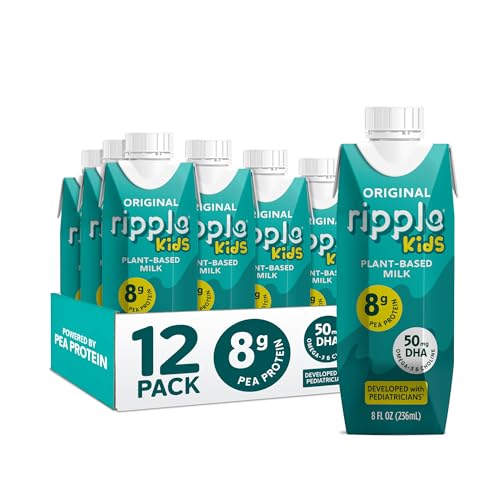
Ripple Kids delivers a rare combination for a plant-based milk: 8g of complete pea protein per serving, supplemented with 50mg of DHA omega-3 from algae oil, prebiotics for digestive health, and half the sugar of 2% dairy milk. Pediatrician-developed and free from dairy, soy, nuts, gluten, and lactose, it covers nearly every allergen need in one shelf-stable carton.
Parents of children with true milk protein allergy or multiple food sensitivities report that Ripple is the only plant milk their toddlers accept both cold and in cooking. The texture closely mimics real milk, and the vanilla variant is especially popular with picky eaters. Reviews consistently note that it travels well and remains fresh without refrigeration until opened.
The pea protein base provides a smooth, creamy mouthfeel rather than the watery consistency common with almond or oat milks. At 8g of protein and added DHA, it rivals dairy milk’s nutritional density without any animal-derived ingredients. This is the most balanced shelf-stable option for a one-year-old requiring complete plant-based nutrition.
Why it’s great
- High protein (8g) from pea protein, not nuts or soy
- Contains DHA, prebiotics, and choline for brain and gut health
- Shelf-stable for travel and daycare convenience
Good to know
- Premium price point compared to basic almond milk
- Not suitable if your child has a pea allergy
2. Holle Goat Milk Toddler Drink
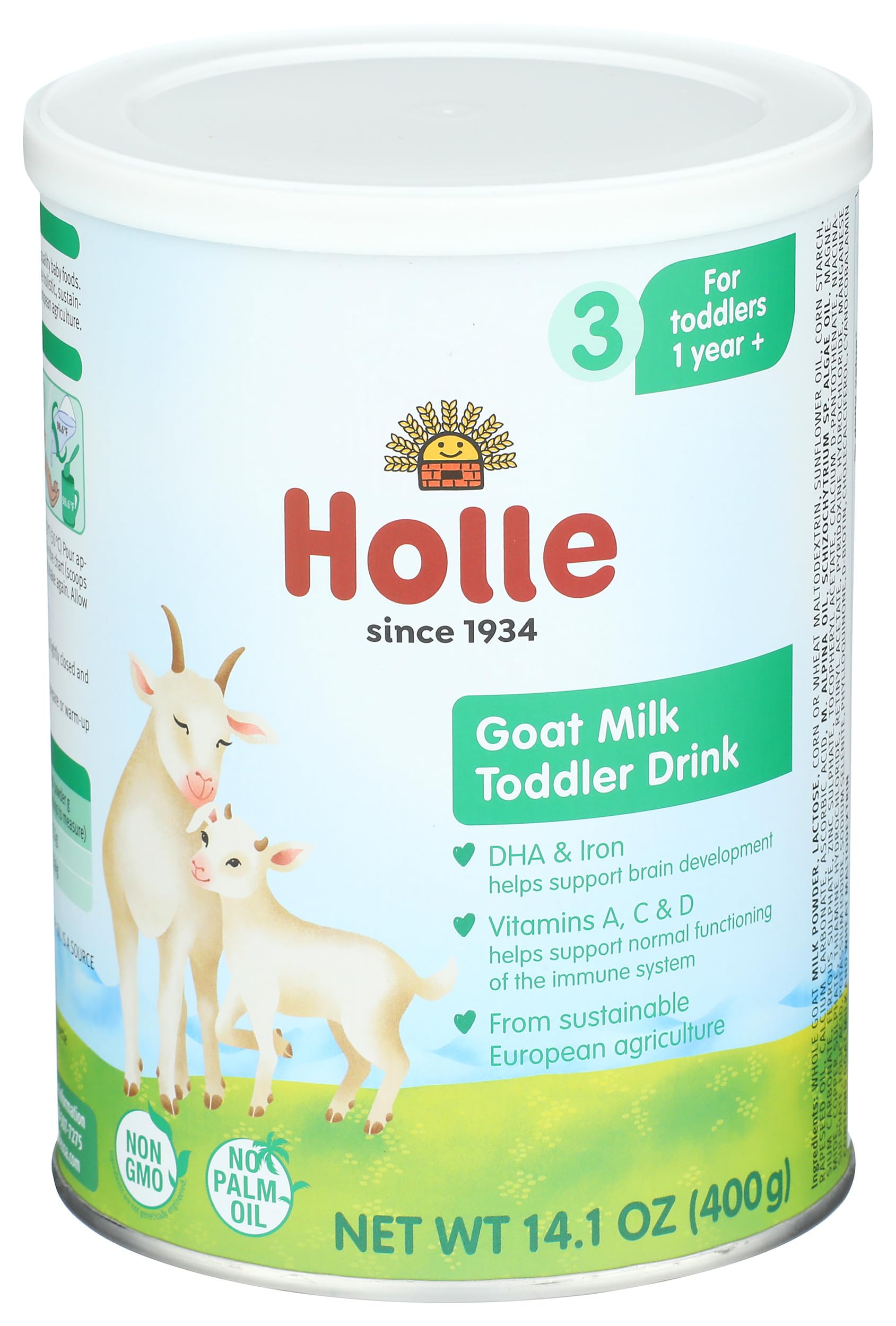
Holle’s goat milk toddler drink is a stage 3 formula (12+ months) made from whole European goat milk, fortified with DHA from algae oil, iron, zinc, and calcium. It uses no palm oil and avoids artificial colors, flavors, and preservatives, earning a Clean Label Project Purity Award for heavy metal testing. Goat milk naturally has a different casein-to-whey protein ratio than cow milk, which many parents find easier on sensitive stomachs.
Customer reviews highlight that children who struggle with cow milk formula or toddler drinks often tolerate Holle goat milk well. The powder format mixes easily, and the nutritional profile—including lutein and selenium—mirrors European pediatric guidelines. However, because it contains goat milk proteins, it is not suitable for a child with a confirmed milk protein allergy (it is dairy-based, just from goats).
The maltodextrin content (derived from corn or wheat) is worth noting for parents avoiding grains. The European standards behind the production are stricter than typical US regulations, which gives many families peace of mind regarding ingredient sourcing. As a powdered product, it also allows you to control the concentration and reduce waste.
Why it’s great
- Whole goat milk base with easier digestion for many toddlers
- European quality standards and Clean Label Purity Award
- Fortified with DHA, iron, zinc, and no palm oil
Good to know
- Contains milk (goat) – not suitable for dairy protein allergy
- Powder form may be less convenient than ready-to-drink cartons
3. Similac Go & Grow 360 Total Care

Similac Go & Grow 360 Total Care is a powdered toddler nutritional drink formulated for children 12 months and older. Its standout feature is the inclusion of five different human milk oligosaccharides (HMOs) – prebiotics that support the growth of healthy gut bacteria – making it the first US toddler drink to offer this blend. It also provides DHA, lutein, and vitamin E for brain and eye development.
This is a dairy-based product (nonfat milk is listed in ingredients), so it is not suitable for children with a cow milk protein allergy. However, for toddlers who tolerate dairy but whose parents want a fortified drink with specific digestive health support, the HMO blend is a meaningful differentiator. The formula contains no artificial growth hormones, no palm olein oil, and is non-GMO.
Reviews from caregivers note that children transitioning from Similac infant formula accept the taste readily, and parents appreciate the targeted nutrition for the 12-24 month period. The powder format offers flexibility for mixing with water or purees, though the can is smaller than standard bulk formula containers. It is also SNAP-eligible in select states.
Why it’s great
- First US toddler drink with 5 HMO prebiotics for gut health
- Includes DHA, lutein, and vitamin E for brain and eye development
- No artificial growth hormones and non-GMO
Good to know
- Contains dairy – not suitable for milk protein allergy
- Powder format requires mixing and measuring
4. Orgain Organic Kids Nutritional Dairy Protein Shakes
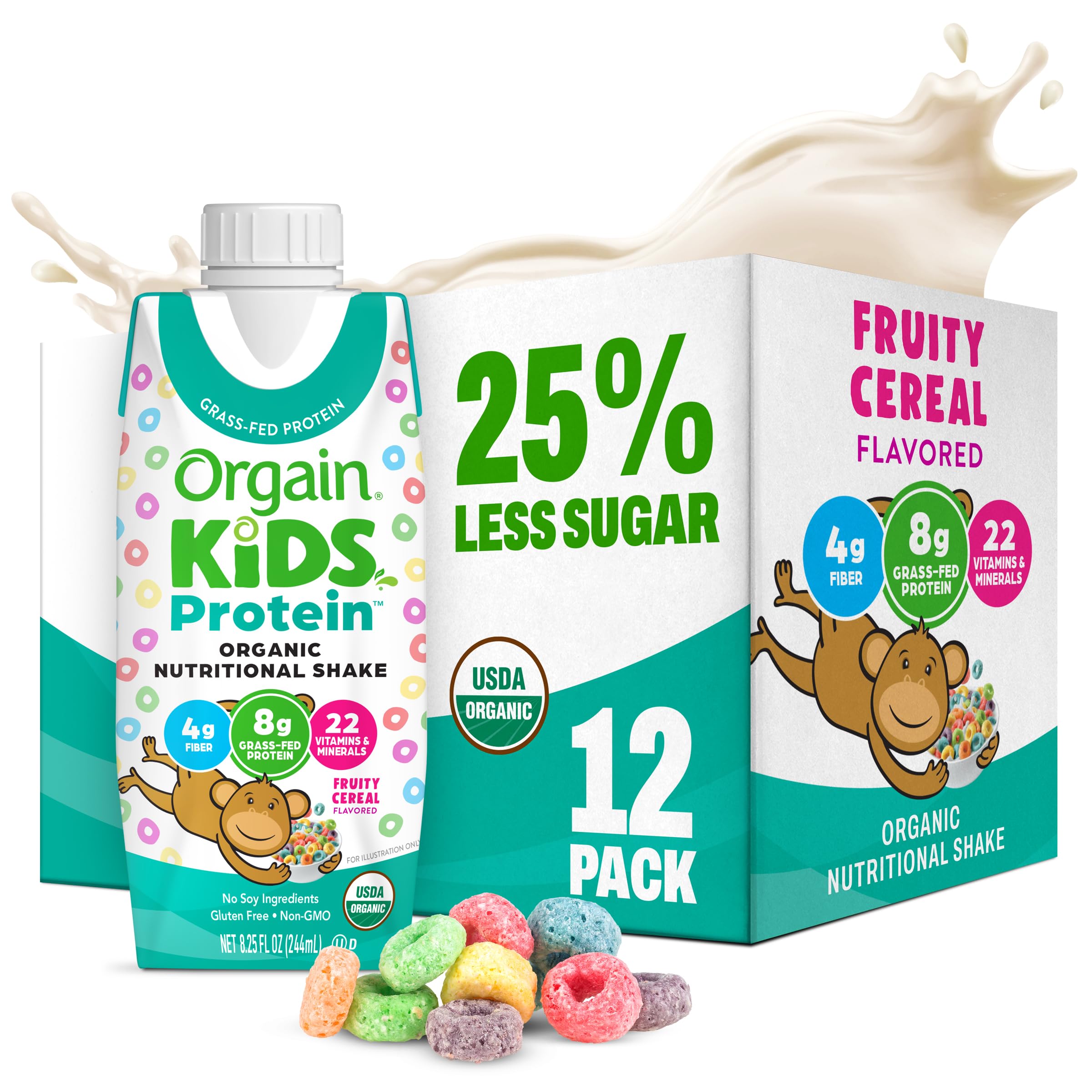
Orgain’s Organic Kids shake is a ready-to-drink nutritional beverage designed for children ages 4-10, but parents also report using it successfully with toddlers as young as 18 months. Each 8.25-ounce bottle delivers 8g of grass-fed whey protein, 3g of fiber, and 22 vitamins and minerals, including immune-supporting vitamin C, D, B12, and zinc. The fruity cereal flavor is notably well-liked by picky eaters.
It is important to note that this product contains milk (whey protein from grass-fed cow milk), so it is not dairy-free. The keyword compatibility exists because many parents search for “dairy free milk” when their child is lactose-sensitive rather than allergic, and for those who tolerate whey, this is an excellent high-protein option. The shakes contain 25% less sugar than leading kids nutritional shakes, and are USDA Organic, non-GMO, and gluten-free.
The shelf-stable format makes these ideal for on-the-go use, and customers consistently report that even children who refuse other protein drinks will drink the fruity cereal flavor. For a child transitioning from formula who needs extra protein and calories, this shake provides a dense nutritional punch, though the 4+ age recommendation means you should consult your pediatrician for very young toddlers.
Why it’s great
- 8g grass-fed whey protein with all essential amino acids
- 22 vitamins and minerals plus fiber for digestive health
- Fruity cereal flavor is a proven hit with picky kids
Good to know
- Contains milk (whey) – not for dairy protein allergy
- Labeled for ages 4+; check with your pediatrician for younger toddlers
5. Mooala Organic Almond Milk Unsweetened
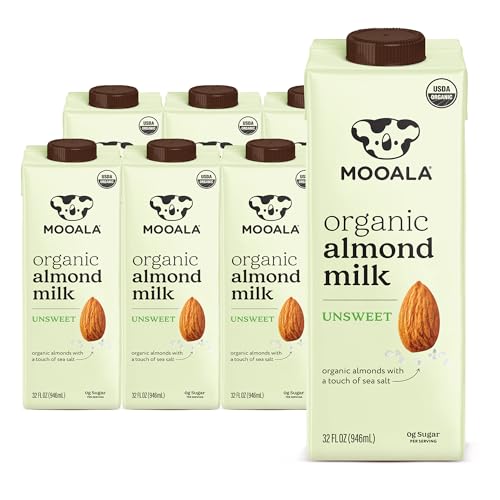
Mooala’s unsweetened organic almond milk offers a minimalist ingredient list: organic roasted almonds, water, and sea salt. It is free from dairy, soy, gluten, and added sugars, making it a budget-friendly entry point for families transitioning to a dairy-free household. Each shelf-stable carton provides calcium and vitamin E, though protein content (around 1g per serving) is significantly lower than dairy or pea-based alternatives.
For a one-year-old, this almond milk serves best as an occasional beverage or a base for smoothies rather than a primary milk replacement, due to its low calorie and protein density. Customer reviews praise its neutral, creamy taste—many describe it as the best-tasting organic almond milk they have found for frothing or cereal. The unsweetened formulation avoids the sugar spikes common in flavored plant milks.
Mooala’s shelf-stable packaging is convenient for stocking a pantry, and the product maintains a creamy consistency without separating as much as some competing almond milks. However, because it lacks DHA, iron, zinc, and the higher protein content of toddler-specific formulas, it is best paired with a diet where other protein and fat sources are well-established. Use it as a complementary beverage, not a sole milk source.
Why it’s great
- Simple organic ingredients – almonds, water, sea salt
- No added sugar and dairy/soy/gluten-free
- Shelf-stable for easy storage
Good to know
- Low in protein (approx 1g) and calories – not a complete milk replacement for a one-year-old
- Lacks DHA, iron, and zinc fortification found in toddler-formulated drinks
FAQ
Can I give my one-year-old almond milk as their main milk source?
Is goat milk considered dairy free and safe for a milk allergy?
Final Thoughts: The Verdict
For most users, the dairy free milk for 1 year old winner is the Ripple Kids Original Plant Based Milk because it delivers 8g of pea protein, DHA, prebiotics, and a shelf-stable format in one allergen-friendly package. If you prefer a gentle digestion option with European quality standards, grab the Holle Goat Milk Toddler Drink. And for a simple, unsweetened plant milk to use in smoothies or as a supplement, nothing beats the Mooala Organic Almond Milk Unsweetened.

Mo Maruf
I created WellFizz to bridge the gap between vague wellness advice and actionable solutions. My mission is simple: to decode the research and give you practical tools you can actually use.
Beyond the data, I am a passionate traveler. I believe that stepping away from the screen to explore new environments is essential for mental clarity and physical vitality.