Our readers keep the lights on and my smoothie glass nicely filled. As an Amazon Associate, I earn from qualifying purchases.
A daily hiking backpack is the single most personal piece of gear you own, because every contour of your torso, every ridge of your spine, and every drop of sweat between your shoulder blades either works with the pack or against it. The wrong one shifts weight onto your neck, traps heat against your back, and turns a four-mile ridge walk into a chafing misery. The right one disappears so completely that you forget you are wearing it, letting you focus entirely on the trail ahead.
I’m Mohammad Maruf — the founder and writer behind WellFizz. I have spent hundreds of hours cross-referencing foam density, frame architecture, fabric denier, hydration bladder compatibility, and real-world load distribution ratings from day hikers who log twenty-plus miles every weekend, not gym-to-car commutes.
This guide cuts through the marketing noise to surface the packs that actually breathe, balance, and hold up after fifty hikes, not fifty minutes. Whether you need a streamlined 20-liter shell or a feature-packed 30-liter hauler, the best daily hiking backpack lives at the intersection of torso-specific ergonomics and thoughtful pocket architecture that keeps weight off your spine and snacks within reach.
How To Choose The Best Daily Hiking Backpack
A daily hiking backpack must balance torso-specific fit, ventilation, hydration compatibility, and organized storage without adding unnecessary weight or bulk. Here are the four most critical factors that separate a pack built for sustained trail performance from a generic day bag that will leave you sore by lunch.
Torso Length and Hipbelt Fit
A backpack’s suspension system is defined by the distance between the shoulder strap anchor and the hipbelt top. Packs sized by torso length rather than a generic one-size-fits-all design transfer 70 to 80 percent of the load to your hips, saving your shoulders and lower back from fatigue on long ascents. Measure from the C7 vertebra at the base of your neck to the iliac crest of your hipbone, then match that measurement to the pack’s stated torso range. Adjustable sternum straps and load-lifter straps fine-tune the fit once the torso length is correct.
Backpanel Ventilation Architecture
Mesh trampoline panels and 3D foam channel systems create an air gap between your back and the pack fabric, allowing heat and moisture to escape. This gap directly affects how dry you stay — a significant factor on warm-weather day hikes where sweat accumulation under a flat foam backpanel can soak through your shirt within the first mile. The deeper the channel or the more aggressive the trampoline curve, the greater the airflow, though deeper frames may protrude into the main compartment’s volume slightly.
Hydration Bladder Integration and Access
A dedicated hydration sleeve with a central hang loop, a hose port on the shoulder strap, and a tube retention clip turns a pack from water-bottle-dependent to hands-free. The sleeve should be large enough to accommodate a 2 to 3-liter bladder without bulging into the main compartment, and the hose length must reach your mouth without pulling the bladder out of position. Some packs include a bladder; others leave the slot empty, so check whether the total package includes a reservoir before you buy.
Fabric Denier and Zipper Quality
Fabric weight is measured in denier — higher numbers indicate thicker, more abrasion-resistant material. A daily hiking backpack used on rocky terrain should start at 420D nylon or ripstop polyester for the main body, with 500D or greater reinforcement on the base and high-wear contact points. YKK zippers represent the industry standard for reliability because their self-lubricating sliders and corrosion-resistant coatings survive repeated exposure to dust, sand, and moisture without jamming.
Quick Comparison
On smaller screens, swipe sideways to see the full table.
| Model | Category | Best For | Key Spec | Amazon |
|---|---|---|---|---|
| Osprey Sportlite 25 | Premium | Ultralight day hikes with lumbar support | 1.6 lbs / 25L / AirScape backpanel | Amazon |
| Salomon Trailblazer 20 | Premium | Fast-paced hiking with stable load management | 15.3 oz / 20L / 3D perforated foam back | Amazon |
| Eddie Bauer Adventurer 30L | Premium | Heavy day loads with trampoline airflow | 1.56 lbs / 30L / FreeCool trampoline panel | Amazon |
| Water Buffalo Sherpa 22L | Mid-Range | Integrated hydration with waterproof zippers | 22L / 2L BPA-free bladder / 420D nylon | Amazon |
| IX INOXTO 26L/40L | Mid-Range | All-in-one pack with 3L bladder and rain cover | 2.2 lbs / 26L expandable / steel frame support | Amazon |
| MOUNTAINTOP 30L | Budget-Friendly | Value-focused day hikes with rain cover included | 1.8 lbs / 30L / 500D polyester | Amazon |
| Osprey Daylite Expandable 26+6 | Travel/Hybrid | Airline-compliant travel plus day hiking | 1.85 lbs / 26+6L / expandable / AirScape panel | Amazon |
In‑Depth Reviews
1. Osprey Sportlite 25L

The Osprey Sportlite 25L achieves a rare balance: a sub-1.6-pound frame that still delivers legitimate lumbar support through a tensioned mesh backpanel. The AirScape suspension uses a contoured foam frame with a mesh overlay that pulls the pack away from your lower back, creating an air channel that keeps your shirt dry even on sustained climbs. The single aluminum peripheral frame carries weight efficiently without the bulk of a fully framed expedition pack, making it ideal for day hikes where every ounce counts.
Storage is intentionally streamlined — three compartments, a zippered waist belt pocket, and an open stretch mesh pocket on the opposite hip. The main compartment fits a 3-liter hydration bladder with room left for a light shell, food, and a first-aid kit, though the bladder hook design requires a carabiner for wide-handled reservoirs. Side pockets hold two 500-milliliter bottles or a single 750-milliliter bottle securely, and the front panel features a blinky light attachment slot for low-light visibility.
The sternum strap includes an integrated rescue whistle, and the quick-release upper compression straps let you cinch down a light load without fighting with webbing. The torso length is available in a single M/L size that accommodates most adult torsos, but shorter hikers should check the fit before committing. The material is tough without being heavy, and multiple users report no stitching failures after years of weekend use on rocky terrain.
Why it’s great
- Exceptional weight-to-support ratio for a day pack
- AirScape panel prevents sweat buildup on long climbs
- Integrated rescue whistle and blinky light attachment add safety
Good to know
- Bladder hook may not fit wide-mouth reservoirs without a carabiner
- Single torso size may not suit shorter frames
- No internal zippered pockets for small gear organization
2. Salomon Trailblazer 20

The Salomon Trailblazer 20 is engineered for hikers who prioritize speed and minimal weight over raw capacity. At just over 15 ounces, it is the lightest pack in this lineup, yet it still features a 3D perforated foam back panel that provides noticeable ventilation compared to flat foam backplates. The 20-liter volume forces disciplined packing, but the multiple compartments — including a zippered belt pocket, an internal reservoir sleeve, and two stretch side pockets — keep small essentials organized without adding bulk.
The adjustable elastic sternum strap allows for chest expansion during heavy breathing, a detail that matters on steep climbs when your ribcage needs room to expand. YKK zippers run smoothly even after exposure to dust and light rain, and the PFC-free polyamide fabric resists abrasion from rock contact. The internal hanging sleeve fits a 15-inch laptop, making the pack usable for urban commutes as well as trail days, though the laptop sleeve adds a small volume penalty inside the main compartment.
Dedicated trekking pole holders and gear loops keep your poles secure without flopping, and the side stretch pockets grip water bottles firmly during fast descents. The hydration sleeve does not come with a bladder, so you will need to supply your own reservoir. Some users note that the back panel foam feels less substantial than premium offerings, and the shoulder strap padding is minimal for loads exceeding ten pounds.
Why it’s great
- Extremely lightweight at 15.3 ounces
- 3D perforated back panel improves airflow
- YKK zippers and PFC-free fabric for durability
Good to know
- No included hydration bladder
- Minimal shoulder padding for heavier loads
- Sternum strap adjustment may feel basic to some users
3. Eddie Bauer Adventurer 30L

The Eddie Bauer Adventurer 30L is a volume-first pack designed for day hikers who carry extra layers, camera gear, or lunch for two. Its standout feature is the FreeCool trampoline airflow back panel, which uses a mesh web suspended over a rigid frame to create a deep air gap between your back and the pack body. This design keeps your entire backside ventilated even when the pack is fully loaded, making it a strong choice for warm-weather hikes where sweat management is the priority.
The 70-denier shadow ripstop nylon body is light yet resists punctures from branches and rock edges, while the total weight stays at 1 pound 9 ounces despite the large volume. Exterior pockets include two deep water bottle sleeves that accommodate Nalgene-sized bottles, plus multiple gear loops and attachment points for lashing extra gear. The interior sleeve fits a hydration bladder of up to 3 liters, and the main compartment opens wide enough to pack a jacket, food bag, and a small camera cube without overstuffing.
The shoulder straps are wider and flatter than the previous generation, which some users with narrow shoulders find less comfortable. The hipbelt is padded but not load-bearing in the way a true expedition hipbelt is — this pack transfers most weight through the shoulders rather than the hips. The side-access laptop compartment is convenient for hybrid use, though the pack is best suited for trail days rather than daily office commutes.
Why it’s great
- Deep trampoline backpanel keeps your back completely dry
- Lightweight for a 30-liter pack at 1.56 pounds
- Plentiful gear loops and attachment points for external lashing
Good to know
- Wide, flat shoulder straps may not suit narrow shoulders
- Hipbelt is not load-bearing for heavy carries
- No included hydration bladder
4. Water Buffalo Sherpa 22L
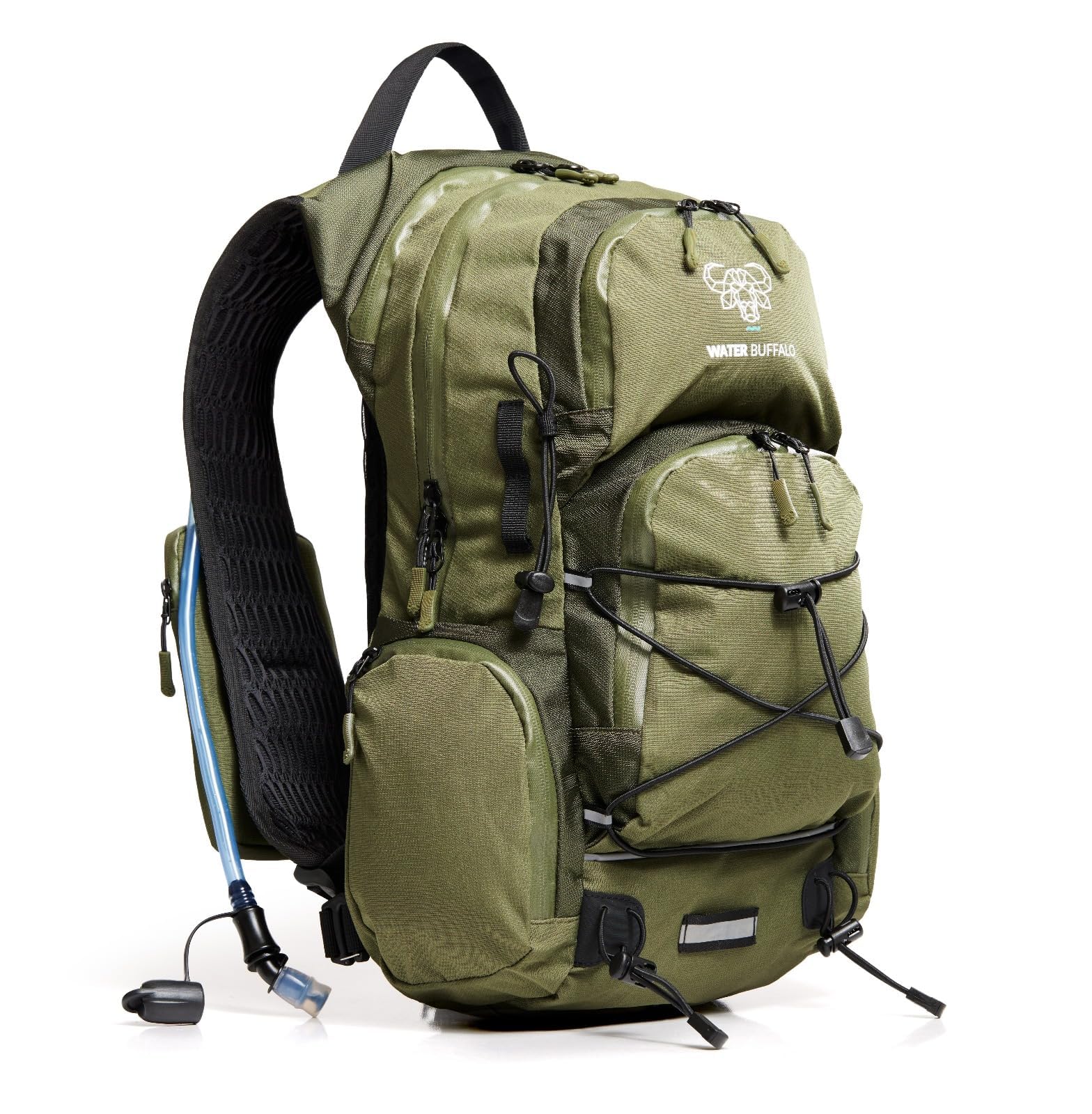
The Water Buffalo Sherpa 22L is built around a simple premise: give day hikers a comfortable, well-organized pack that comes ready to hydrate out of the box. The included 2-liter BPA-free bladder fits into a dedicated sleeve with a magnetic hose clip on the shoulder strap, so you can drink on the move without looking down. The wide-mouth bladder opening makes filling and cleaning straightforward, though the bite valve design is simpler than some premium reservoirs and may leak if not fully closed.
The pack body uses 150D ripstop polyester and 420D jacquard nylon — a smart combination that keeps weight low while reinforcing high-wear zones at the base and front panel. Rainproof zipper liners on the main compartment provide an extra layer of moisture protection, and the adjustable hip and chest straps lock the load close to your body to prevent bounce during trail runs or fast descents. Trekking pole holders and gear loops are integrated into the front panel, keeping pole tips off the ground and within easy reach.
Six storage pockets — including a front utility pocket with organization slots, two side stretch pockets, and a zippered hip pocket — provide enough division for a full day’s gear without overcomplicating the layout. The bladder hose exits through a port on the top of the shoulder strap, which is well-placed for tube routing but may chafe on shorter torsos. The included bladder is functional but not as durable as a separate aftermarket reservoir, and several users report replacing it after extended use.
Why it’s great
- Comes with a 2-liter BPA-free bladder ready to use
- Waterproof zipper liners protect gear in light rain
- Six pockets provide excellent organization for a 22-liter pack
Good to know
- Included bladder may leak at the valve over time
- Tube routing may chafe on shorter torsos
- 150D body fabric feels less abrasion-resistant than higher denier
5. IX INOXTO 26L/40L
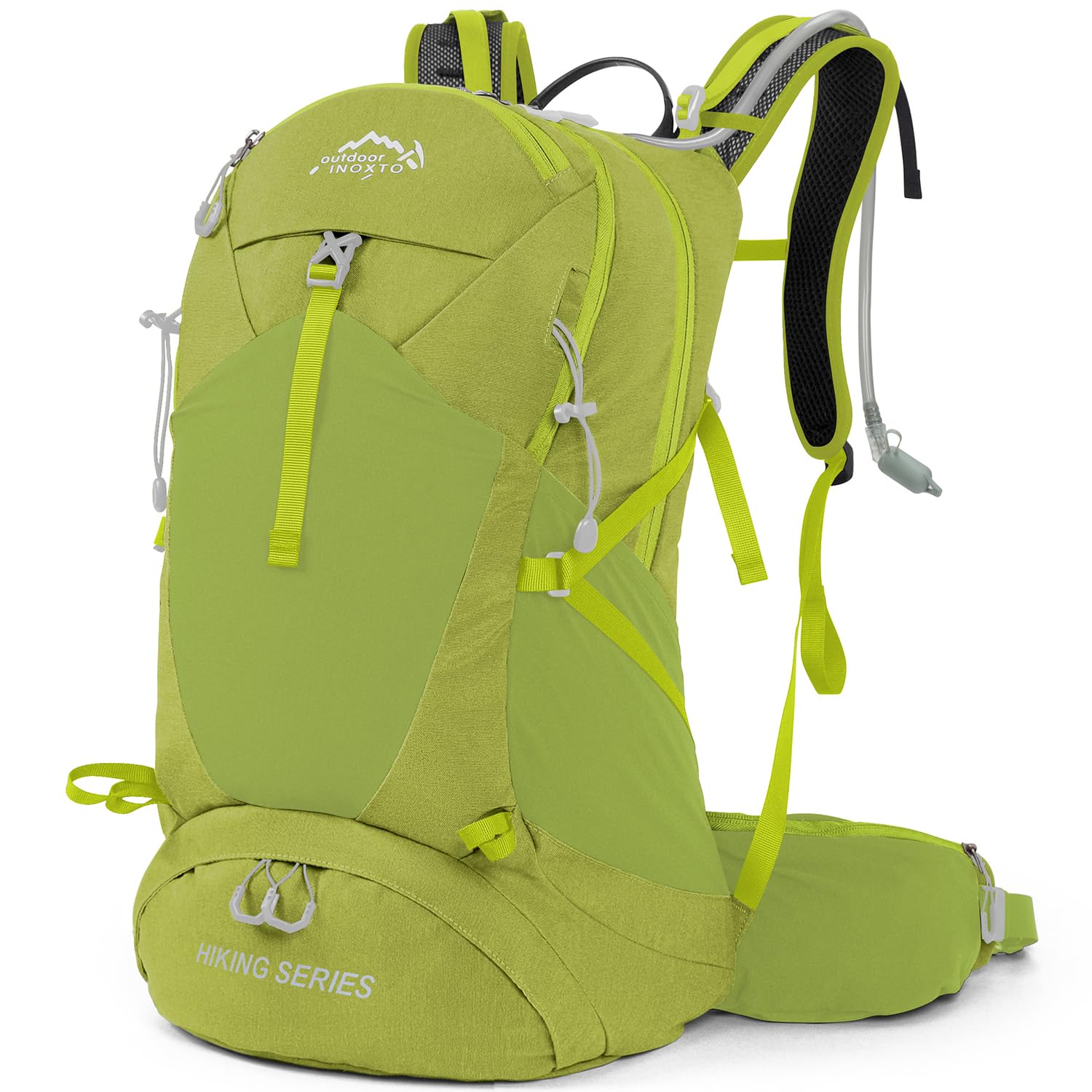
The IX INOXTO 26L/40L is a feature-dense package that includes a 3-liter leak-proof hydration bladder, a waterproof rain cover, and a steel frame support system for load distribution — all at a price point that undercuts most packs with comparable features. The 3D touch suspension system uses a contoured mesh back panel stretched over a steel frame, creating an air gap that reduces back sweat even on hot, humid trails. The frame helps distribute weight evenly across the hips, reducing shoulder strain during long carries.
The pack offers expandable capacity — it functions as a 26-liter day pack in its compressed configuration and expands to 40 liters when you need extra space for an overnight layer or bulkier gear. Multiple compartments include a main zippered chamber, a front pocket with organizer slots, a top pocket, two side mesh pockets, and two hip belt pockets. The separate bottom compartment provides access to the main chamber from below, which is useful for stashing dirty shoes or a separate rain layer without contaminating the main load.
The included 3-liter bladder features a large opening for easy filling and ice insertion, and the hose delivers a steady flow without the need for constant sucking. The rain cover fits snugly over the expanded pack and stores in its own dedicated pocket at the base. Some users note that the shoulder strap angle is designed for flatter shoulders, and the steel frame adds noticeable weight compared to aluminum or frameless alternatives. The overall build quality is solid for the price, but the zippers do not feel as smooth as those on premium brands.
Why it’s great
- Includes a 3-liter bladder and waterproof rain cover
- Steel frame support improves load distribution
- Expandable from 26L to 40L for flexible capacity
Good to know
- Steel frame adds noticeable weight over aluminum alternatives
- Shoulder strap angle suits flatter shoulder profiles
- Zippers feel less refined than higher-end options
6. MOUNTAINTOP 30L
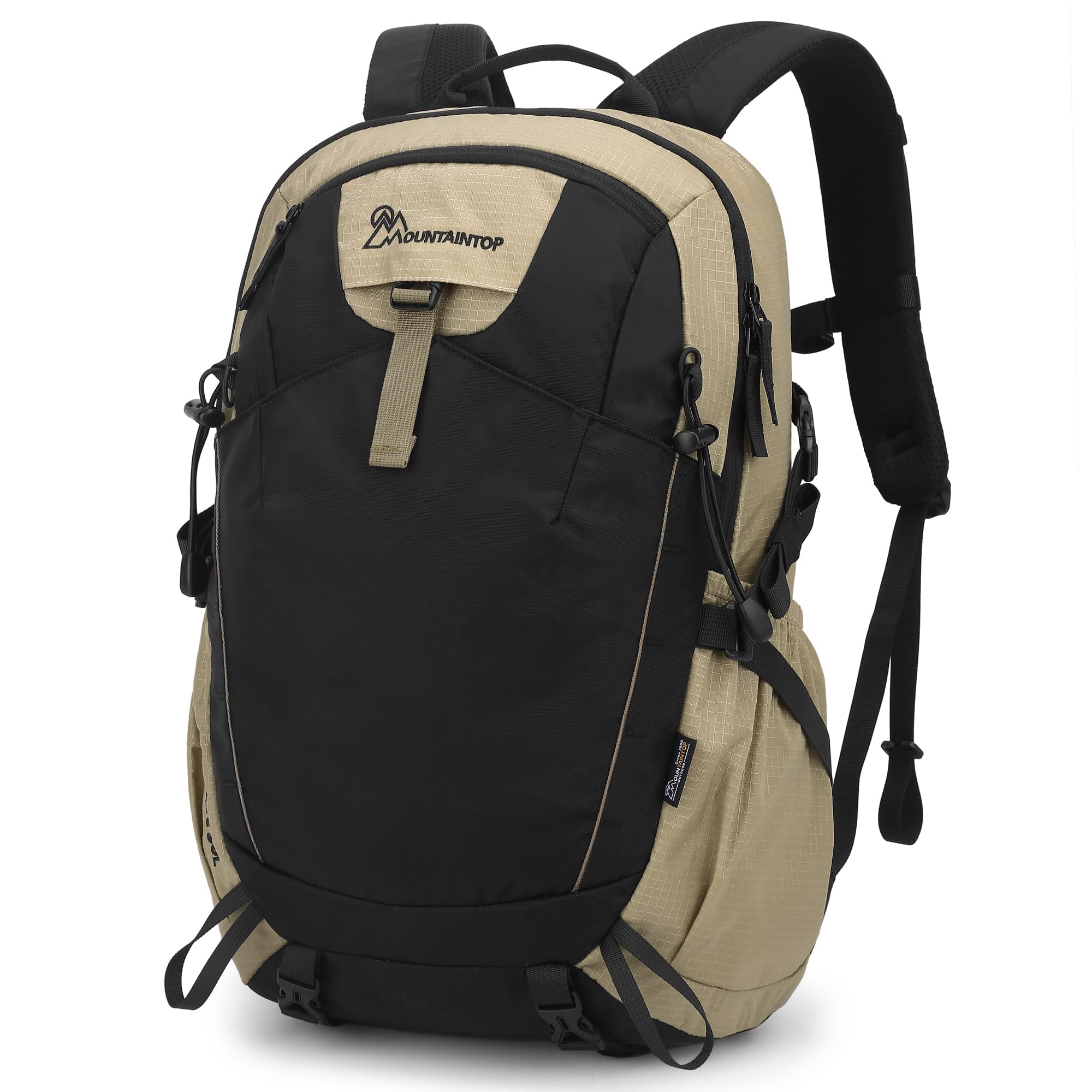
The MOUNTAINTOP 30L is a budget-friendly entry that punches above its weight class in fabric durability. The main body is constructed from 500D high-density polyester, a heavier denier than many packs at this price point, which resists abrasion from brush and rock contact better than the 150D to 300D materials common in this tier. The pack weighs 1.8 pounds, which is reasonable for a 30-liter pack, and includes a rain cover stored in a base pocket — a feature often reserved for more expensive models.
The compartment layout includes a main chamber with an interior sleeve for a hydration bladder, a front zippered pocket with buckle closure, a second front slip pocket, and two side mesh pockets. Load compression straps on both sides and the bottom let you tighten the pack’s profile when carrying a light load. The ergonomic shoulder straps and padded back panel provide moderate comfort, though the foam density is lower than premium packs and will compress over extended use.
Hydration bladder hose routing is accommodated through a port at the top of the shoulder strap, and the side straps can secure trekking poles or a tripod. The pack meets most airline carry-on size requirements, adding versatility for travel use. Some users with torsos over six feet find the pack slightly short in the body, causing the hipbelt to ride above the natural waist. The included rain cover functions well but the elastic border may be too large for the compressed pack size.
Why it’s great
- 500D polyester body is more abrasion-resistant than typical budget packs
- Includes a rain cover and load compression straps
- Airline carry-on compatible for travel versatility
Good to know
- Torso length may be short for hikers over 6 feet
- Foam padding compresses faster than premium alternatives
- Rain cover elastic border may not fit the pack snugly
7. Osprey Daylite Expandable 26+6
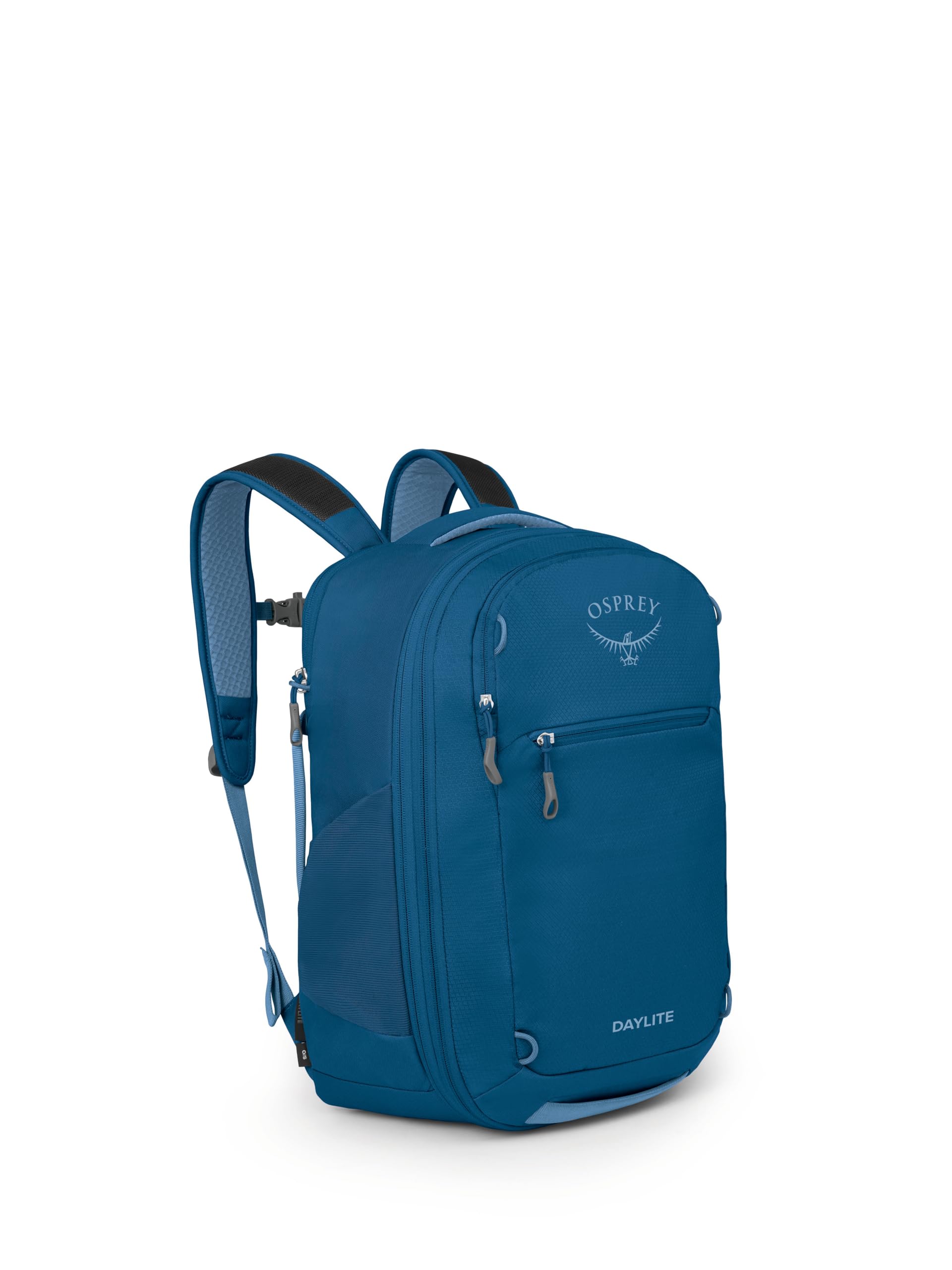
The Osprey Daylite Expandable 26+6 is a travel-first design that doubles as a capable day hiking pack, making it a perfect choice for hikers who also fly. The main compartment expands by two inches — adding 6 liters of capacity — allowing you to compress it to 26 liters for personal-item airline compliance or expand it to 32 liters when you need extra space for trail gear. The AirScape backpanel provides the same ventilated, ergonomic support found on Osprey’s larger packs, keeping your back cool during long walking days.
The pack features two stretch water bottle pockets that grip bottles securely during travel, a front zip pocket for quick-access essentials like passport and phone, and a padded laptop sleeve that fits a 15-inch computer. The luggage pass-through slides over rolling suitcase handles for seamless airport navigation, and the side compression straps keep the load stable when the pack is not fully packed. The overall weight is 1.85 pounds, and the rectangular shape fits under most airplane seats without crowding legroom.
On the trail, the 26-liter compressed mode is adequate for light day hikes with a hydration bladder, though the pack lacks dedicated trekking pole holders and the hipbelt is minimal compared to dedicated hiking packs. The expandable zipper is smooth and secure, and the main compartment opens like a suitcase for easy packing of a jacket, food, and a small camera. Users who want a single bag for both air travel and short hikes will find the versatility valuable, but dedicated day hikers may prefer a pack with more breathable suspension and trail-specific features.
Why it’s great
- Expands from 26L to 32L for flexible capacity
- AirScape backpanel keeps your back cool
- Luggage pass-through and laptop sleeve for travel
Good to know
- No trekking pole holders or dedicated trail features
- Minimal hipbelt limits load-bearing on trails
- Expandable zipper adds potential failure point over time
FAQ
What size daily hiking backpack do I really need for a full day on the trail?
Can I use a daily hiking backpack for airline travel as a carry-on?
How important is the backpanel ventilation feature for warm-weather hiking?
Should I buy a pack that includes a hydration bladder or supply my own?
Final Thoughts: The Verdict
For most users, the best daily hiking backpack winner is the Osprey Sportlite 25L because it delivers legitimate lumbar support, excellent backpanel ventilation, and a sub-1.6-pound frame that disappears during a full day on the trail. If you want ultralight speed and an 15.3-ounce weight, grab the Salomon Trailblazer 20. And for maximum ventilation and 30-liter capacity without the bulk, nothing beats the Eddie Bauer Adventurer 30L.

Mo Maruf
I created WellFizz to bridge the gap between vague wellness advice and actionable solutions. My mission is simple: to decode the research and give you practical tools you can actually use.
Beyond the data, I am a passionate traveler. I believe that stepping away from the screen to explore new environments is essential for mental clarity and physical vitality.