Our readers keep the lights on and my smoothie glass nicely filled. As an Amazon Associate, I earn from qualifying purchases.
Lifeless sound from a good pair of headphones can feel like a betrayal. That flat, digital glare or the audible hiss from a computer’s onboard audio is a common frustration, robbing music of its texture and space. A dedicated digital-to-analog converter is the single most effective cure, and the current market offers an unprecedented depth of quality at approachable price points.
I’m Mohammad Maruf — the founder and writer behind WellFizz. This guide distills hundreds of hours of research into the chipset architectures, output topologies, and real-world performance benchmarks of competing models to find the actual standouts.
Whether you need a compact dongle for commuting or a desktop hub for critical listening, this guide will help you identify the best dac under 500 that matches your specific gear and listening habits.
How To Choose The Best DAC Under 500
The right DAC for your desktop or portable setup hinges on three pillars: output topology, chipset implementation, and connectivity. Ignoring any one of these can lead to a mismatch that leaves performance on the table.
Output Topology: Balanced vs. Single-Ended
A balanced 4.4mm output doubles the voltage swing and effectively cancels common-mode noise picked up by the cable. This is critical for powering high-impedance headphones like the Sennheiser HD 600 series or planars that crave current. Single-ended 3.5mm or 6.35mm outputs are sufficient for sensitive IEMs and low-impedance dynamic headphones, but the 4.4mm path offers a cleaner, wider soundstage with better channel separation.
The Chipset Isn’t Everything
An ESS ES9039Q2M or AKM AK4493SEQ is a powerful starting point, but the surrounding analog stage — the low-pass filter op-amps, voltage regulators, and decoupling capacitors — determines the final noise floor and distortion character. A DAC with a modest chip but excellent circuit design will outperform a flagship chip paired with a noisy power supply.
Connectivity and Use Case
Desktop users should prioritize USB, optical, and coaxial inputs, plus preamp outputs for active speakers. Portable listeners need a compact form factor, robust build, and low power draw. Gamers benefit from virtual surround processing and microphone support. A versatile unit with multiple input types saves you from needing a separate switcher later.
Quick Comparison
On smaller screens, swipe sideways to see the full table.
| Model | Category | Best For | Key Spec | Amazon |
|---|---|---|---|---|
| Fosi Audio ZH3 | Premium | Desktop All-in-One | AKM4493SEQ / 2570mW@32Ω | Amazon |
| TOPPING DX5 II | Premium | High-End Desktop | Dual ES9039Q2M / 7600mW x2 | Amazon |
| iFi Zen DAC 3 | Premium | Desktop / Near-Field | Burr-Brown / 300mW Balanced | Amazon |
| iFi Hip-dac 3 | Premium | Portable / On-the-Go | Burr-Brown / 400mW Balanced | Amazon |
| Fosi Audio ZD3 | Mid-Range | Desktop Preamp / HDMI ARC | ES9039Q2M / DSD512 | Amazon |
| FiiO K11 | Mid-Range | Desktop Starter | 1400mW / 4.4mm Balanced | Amazon |
| TANCHJIM Space PRO | Mid-Range | Gaming / Mic Support | Dual CS43198 / 618mW@26Ω | Amazon |
| BASN PA60 | Budget-Friendly | Ultra-Portable Dongle | ES9039Q2M / 60-step Volume | Amazon |
| Douk Audio K5 | Budget-Friendly | Entry Desktop / Value Champ | ESS9038Q2M / 560mW@32Ω | Amazon |
In‑Depth Reviews
1. Fosi Audio ZH3

The Fosi ZH3 is a fully balanced desktop hub that packs the coveted AKM4493SEQ DAC chip, an XMOS XU316 processor, and four OPA1612 amplifiers into a compact chassis. A self-developed dual-power circuit keeps the noise floor at a microscopic 1.9μV, which translates to a pitch-black background behind your music. The 4.4mm balanced output delivers 2570mW per channel at 32 ohms, enough to drive demanding planars and high-impedance Sennheiser HD 660 S2 headphones with authority.
Connectivity is comprehensive: USB, optical, coaxial, and RCA inputs on the input side, plus preamp outputs via RCA and XLR. A three-level gain switch accommodates anything from ultra-sensitive IEMs to 300-ohm studio cans. The built-in bass and treble EQ adjustments, along with six digital filter types (including a bypass mode), let you fine-tune the presentation. The display is clean and intuitive, and the included remote makes it easy to switch sources from your listening position.
The only trade-off is the external power supply and the fact that the EQ only affects the headphone output, not the preamp outputs. Still, for its price, the ZH3 delivers a level of measured performance and feature completeness that rivals DACs costing significantly more. It is the definitive all-in-one solution for a desktop system.
Why it’s great
- Exceptional AKM DAC with ultra-low 1.9μV noise floor
- Powerful 2570mW balanced output drives almost any headphone
- Includes bass/treble EQ, six filter types, and swappable op-amps
Good to know
- EQ only works on headphone output
- External power supply adds a cable to your desk
2. TOPPING DX5 II
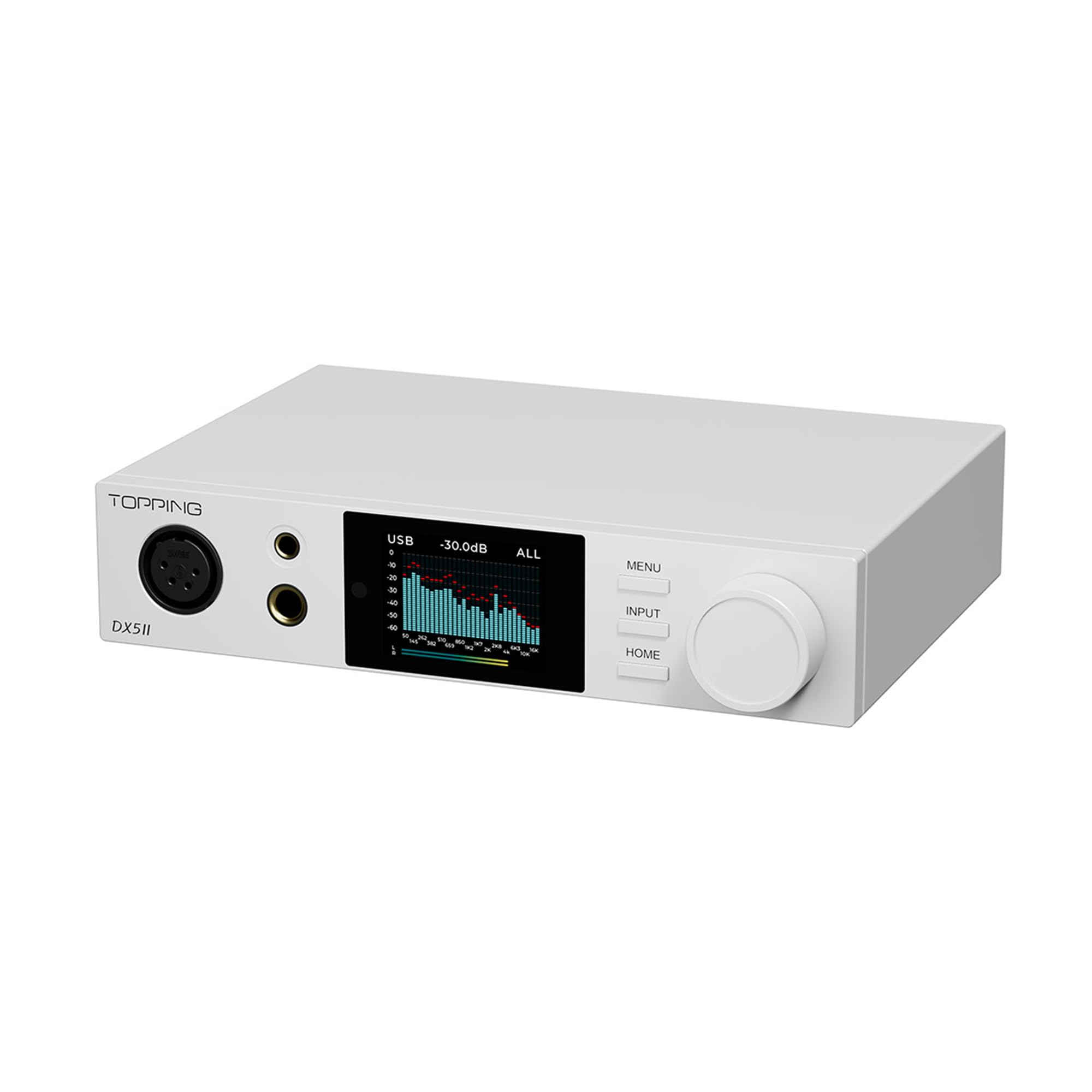
The DX5 II is a statement piece from Topping, leveraging dual ES9039Q2M DAC chips in a fully balanced quad-channel architecture. The X-Hybrid amplifier section provides a staggering 7600mW per channel into balanced output, easily overkill for any headphone currently on the market. This power comes without sacrificing finesse — the measured THD+N is vanishingly low, and the signal-to-noise ratio is among the best in its class.
The headline feature is the built-in 10-band parametric EQ, a rare inclusion at any price point. This allows you to correct for room modes, compensate for headphone frequency response, or simply dial in your preferred tonal balance. The 2.0-inch Aurora UI full-color display with customizable themes and a pressable knob make navigation a breeze. Connectivity includes USB, Bluetooth 5.1 with LDAC, coaxial, and optical SPDIF, plus a 12V trigger for seamless system integration.
The build quality is excellent, though some QC reports mention jacks that are sensitive to hot-swapping. Topping recommends powering down before changing cables. The remote control is functional but uses a unique IR code that won’t work with universal remotes. Despite these minor quirks, the DX5 II offers a level of transparency, power, and EQ flexibility that is genuinely hard to beat in this segment.
Why it’s great
- Dual DAC chips and 7600mW balanced output
- Advanced 10-band parametric EQ for precise tuning
- LDAC Bluetooth 5.1 for high-quality wireless streaming
Good to know
- Hot-swapping cables may damage the unit
- Remote uses a non-standard IR code
3. iFi Zen DAC 3
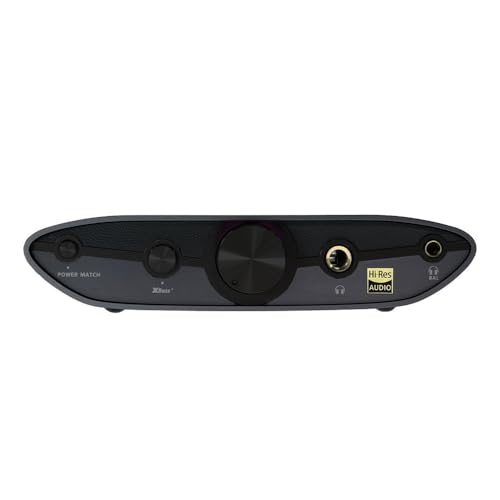
The Zen DAC 3 is iFi’s latest entry-level desktop DAC, transitioning to a matte black stealth aesthetic while retaining the signature Burr-Brown True Native chipset. This chip handles PCM up to 32-bit/768kHz and DSD512 natively, without the internal conversion that some ESS-based designs rely on. The result is a natural, cohesive sound that avoids the overly analytical edge some listeners find fatiguing.
The analog stage is built around a balanced circuit with dual headphone outputs — a 4.4mm balanced and a 6.3mm single-ended jack. The PowerMatch feature adjusts gain in two levels to suit IEMs or power-hungry full-size headphones. The TrueBass function provides a subtle, well-damped lift to the low end without bloat. The USB-C input handles both power and data, so no separate wall wart is required, simplifying desktop cable management.
The headphone output is not as powerful as the ZH3 or DX5 II, reaching about 300mW balanced. This is sufficient for most dynamic headphones like the HD 600 or Beyerdynamic DT 900 Pro X, but planars may feel current-limited. The Zen DAC 3 also lacks a line-level preamp output, so using it as a standalone DAC for active speakers requires an additional volume control downstream. For a pure, musical desktop DAC that focuses on refinement over raw power, it is a strong contender.
Why it’s great
- True Native Burr-Brown chipset for natural sound
- USB-C powered for a clean desktop setup
- Effective PowerMatch and TrueBass features
Good to know
- Balanced output limited to 300mW — not ideal for planars
- Lacks dedicated preamp outputs for speakers
4. iFi Hip-dac 3

The Hip-dac 3 is the portable companion that doesn’t sacrifice performance. Its internal battery isolates the sensitive analog circuitry from the noisy USB power of your phone or laptop, resulting in a dramatically cleaner sound floor. The revised internal power supply components in this version reduce self-noise even further. It handles native PCM 32-bit/384kHz, DSD256, and full MQA decoding.
Dual USB-C inputs let you charge and listen simultaneously. The outputs are a fully balanced 4.4mm and an S-Balanced 3.5mm jack. PowerMatch adjusts gain to satisfy hungry headphones like the Sennheiser HD 600, while iEMatch optimizes output for ultra-sensitive IEMs by dropping the noise floor to inaudible levels. The XBass button provides a tastefully tuned low-end boost that’s far more musical than a simple EQ shelf.
Battery life runs around eight hours at moderate volume, which covers a full day of commuting or a work session. The aluminum enclosure is sturdy and pocketable. The only real limitation is the lack of a dedicated line-level output, making it strictly a headphone-first device. For portable use, however, the Hip-dac 3 delivers a level of refinement and driving power that few dongles can match.
Why it’s great
- Battery-powered design eliminates USB noise
- PowerMatch and iEMatch for headphone versatility
- Balanced 4.4mm output with XBass tuning
Good to know
- Battery lasts about 8 hours
- No dedicated line-level preamp output
5. Fosi Audio ZD3

The ZD3 is Fosi’s first desktop DAC to include HDMI ARC input, making it a perfect bridge between your TV and a stereo amplifier or active speakers. The chipset is the ES9039Q2M paired with the XMOS XU316 processor, supporting PCM 32-bit/768kHz and DSD512. Unlike portable designs, this unit runs on an external power supply that breaks the ground loop hum often introduced by a PC’s USB port.
The preamp section is fully balanced with XLR and RCA outputs. A preamp bypass switch lets you run the ZD3 as a pure DAC into an integrated amplifier or activate the volume control for direct connection to powered monitors. The 1.5-inch OLED display shows input, sampling rate, and volume clearly. The remote control covers all essential functions. The LME49720 op-amps in the analog stage are socketed, allowing easy upgrades to Sparkos or Burson discrete op-amps.
The only notable omissions are a headphone output and a True eARC capability — the HDMI port is ARC only, so CEC volume control from your TV remote may be limited. The volume knob has an orange glow that some find odd. Still, the ZD3 is an exceptional value for anyone building a hybrid desktop/home theater system around active speakers.
Why it’s great
- HDMI ARC input for seamless TV integration
- Fully balanced XLR and RCA preamp outputs
- Socketed op-amps for future upgrades
Good to know
- No headphone output on board
- HDMI is ARC, not eARC — limited CEC control
6. FiiO K11

The K11 is FiiO’s compact desktop gateway, offering a compelling mix of performance and features at a price that undercuts most competitors. The amplifier section delivers 1400mW into 32 ohms via the balanced 4.4mm output, enough to drive the vast majority of headphones up to 350 ohms. The ESS-based DAC supports PCM 384kHz/24-bit and DSD256, providing ample resolution for high-res streaming.
The small form factor is deceptive — the aluminum alloy body feels substantial, and the VA display shows sampling rate, volume, gain, and output mode at a glance. The volume knob is smooth and responsive. Input options include USB, coaxial, and optical, while outputs include 4.4mm balanced and 6.35mm single-ended headphone jacks, plus RCA and coaxial line outputs. This variety makes it easy to integrate into most desktop setups.
The default digital filters can sound slightly compressed; selecting Filter 4 or Filter 6 (bypass) opens up the soundstage noticeably. Linux users should note that the USB interface may require a specific USB-C to USB-C cable rather than the included USB-C to USB-A cable for proper recognition. Despite these small caveats, the K11 is an excellent entry point that leaves plenty of headroom for future headphone upgrades.
Why it’s great
- 1400mW output drives most headphones easily
- Compact desktop footprint with a clear VA display
- Versatile input and output selection
Good to know
- Default digital filters can sound compressed
- USB-C to USB-A cable may cause recognition issues on Linux
7. TANCHJIM Space PRO
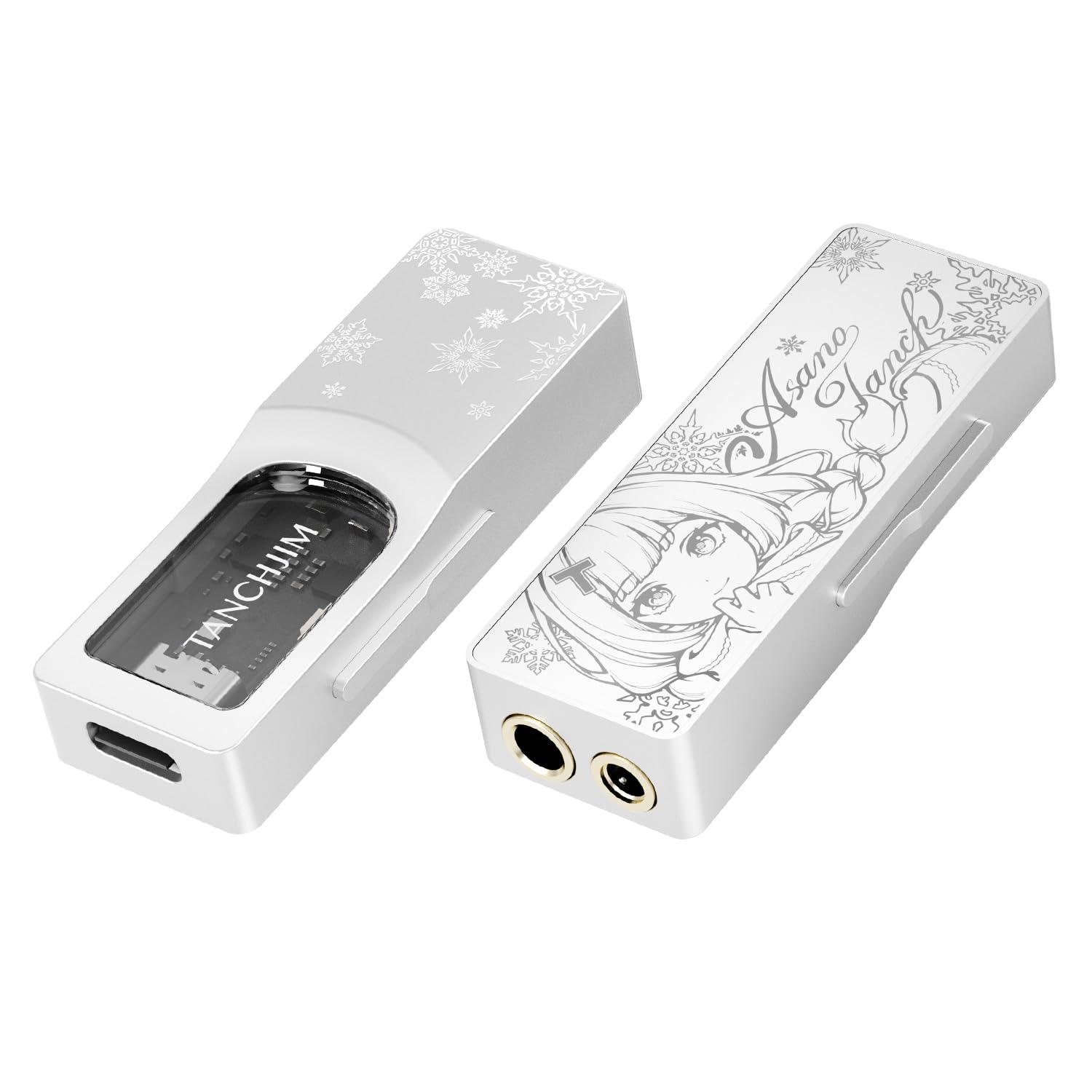
The Space PRO from TANCHJIM takes a dual CS43198 DAC approach with independent amplification for the left and right channels. This fully balanced four-channel architecture achieves a dynamic range of 131dB and a THD+N of just 0.000199%. Under a 26-ohm load, it delivers 618mW of output power, making it a potent tool for both music and gaming.
The “Tactical Perception” feature, accessible via the THANCHJIM app, lets you adjust in-game sound elements like gunshots and footsteps. Virtual 5.1/7.1 surround processing enhances spatial awareness in competitive titles. Critically, the 3.5mm jack supports CTIA-standard microphone input, so you can use a headset with an in-line mic for voice chat while the 4.4mm balanced output drives your headphones. The aluminum and stainless steel build feels premium and robust.
The silver-plated single-crystal copper USB cable is a nice touch, providing better noise rejection than standard braided cables. The app, however, is less polished than the hardware — it’s hosted on a Chinese website and may be difficult to find. The lack of a dedicated hardware gain button on the unit itself is a minor inconvenience. For gamers who value positional audio and a clean microphone path, this is a standout option.
Why it’s great
- Dual CS43198 chips with 131dB dynamic range
- 3.5mm microphone support for in-game chat
- Virtual 5.1/7.1 surround and Tactical Perception app
Good to know
- App software is hard to locate and unpolished
- No dedicated hardware gain button
8. BASN PA60
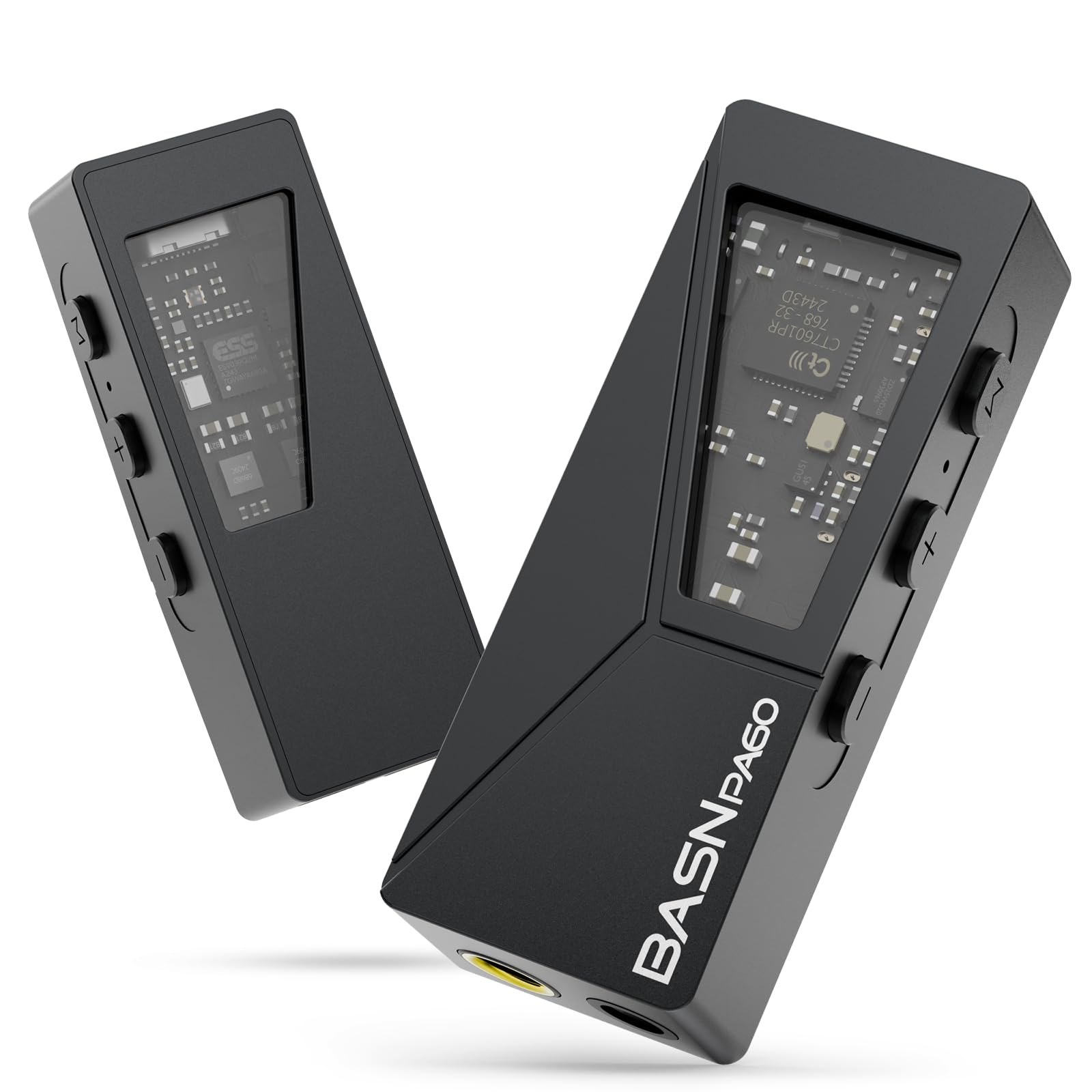
The BASN PA60 is an ultra-compact USB-C dongle that punches well above its size class. At just 17 grams and the dimensions of a pocket lighter, it houses the flagship ES9039Q2M DAC chip and a CT7601PR USB interface. It supports PCM up to 768kHz/32-bit and DSD512, making it one of the most capable portable decoders available. The 4.4mm balanced output provides a clean, black background with excellent instrument separation.
The independent 60-step volume control is a standout feature, letting you fine-tune output level separately from your source device. This bypasses the often-coarse volume steps on Android or Windows. The PA60 also includes eight selectable digital filters and adjustable high/low gain modes. Intelligent impedance detection automatically switches gain settings to protect sensitive IEMs from over-driving while providing ample power for harder-to-drive headphones.
Build quality is high with a precision-machined aluminum alloy shell and a sophisticated anodized finish. It works seamlessly with Android, iPhone (with an additional Lightning cable), iPad, Mac, Windows PC, and even gaming consoles like the Switch and PS5 when switched to UAC 1.0 mode. The only downside is that the body is a fingerprint magnet, and the lack of a display means you must rely on a small LED for bit-rate indication. For mobile listeners demanding desktop-grade sound, this is a brilliant little device.
Why it’s great
- Flagship ES9039Q2M chip in a 17g dongle
- Independent 60-step volume control
- 8 digital filters and auto gain detection
Good to know
- Fingerprint-prone aluminum finish
- No display — relies on small LED indicator
9. Douk Audio K5

The Douk Audio K5 is an extraordinary value proposition that proves excellent sound doesn’t require a large budget. The ESS9038Q2M DAC chip is paired with a SA9312 DSP and OPA1678/SGM8262 op-amps, achieving a signal-to-noise ratio over 121dB and a THD of just 0.0007%. It supports PCM 32-bit/384kHz and DSD256, putting high-resolution decoding within easy reach of budget-conscious listeners.
The K5 offers a surprising amount of flexibility. Dual 6.35mm and 3.5mm headphone jacks deliver 560mW per channel at 32 ohms, with high and low gain modes that accommodate headphones from 16 to 600 ohms. The bass and treble controls feature a center detent for precise adjustment, and a bypass switch lets you remove tone shaping entirely for a pure signal path. Inputs cover USB and optical SPDIF, while outputs include optical, RCA, and both headphone jacks.
The CNC-molded aluminum body feels more substantial than the price suggests. The volume knob doubles as a power button, and colorful LED indicators show the current input and sampling rate. One minor issue reported is a defective 3.5mm jack on some units, so testing the full set of outputs upon arrival is advisable. For an affordable desktop DAC that delivers genuinely clean, distortion-free audio with useful tone controls, the K5 is hard to beat.
Why it’s great
- ESS9038Q2M chip with 0.0007% THD
- Bass/treble EQ with bypass for pure signal
- Dual headphone jacks with high/low gain
Good to know
- Some units may have a defective 3.5mm jack
- Limited to USB and optical inputs
FAQ
Do I need a balanced DAC if my headphones don’t have a balanced cable?
Will a high-res DAC improve the sound of Spotify or YouTube Music?
What is the difference between USB Audio Class 1 and 2?
How much output power do I actually need for my headphones?
Final Thoughts: The Verdict
For most users, the best dac under 500 winner is the Fosi Audio ZH3 because it delivers a premium AKM chipset, massive 2570mW balanced output, and a full suite of EQ and filter controls at a price that leaves room for good headphones. If you want the ultimate in transparency and parametric EQ control, grab the TOPPING DX5 II. And for portable use where battery-powered isolation is king, nothing beats the iFi Hip-dac 3.

Mo Maruf
I created WellFizz to bridge the gap between vague wellness advice and actionable solutions. My mission is simple: to decode the research and give you practical tools you can actually use.
Beyond the data, I am a passionate traveler. I believe that stepping away from the screen to explore new environments is essential for mental clarity and physical vitality.