Our readers keep the lights on and my smoothie glass nicely filled. As an Amazon Associate, I earn from qualifying purchases.
That single missed reload sound, the faint grass rustle you can’t locate, the muffled dialogue during a critical cutscene — your onboard motherboard audio is the culprit, smearing sound into a muddy mess. A dedicated gaming DAC (Digital-to-Analog Converter) pulls those details apart, giving you the spatial clarity to react faster and hear more in every match.
I’m Mohammad Maruf — the founder and writer behind WellFizz. I’ve spent hundreds of hours cross-referencing DAC chip specs, amplifier power ratings, sample rate capabilities, and real-world user feedback to find the units that actually deliver cleaner audio and better spatial awareness for gaming.
Whether you need USB-C convenience, a microphone input for team chat, or balanced outputs for high-impedance headphones, this guide breaks down the top contenders for the best dac for gaming available right now.
How To Choose The Best DAC For Gaming
Not every DAC is built for gaming. Some prioritize pure musical fidelity without a microphone input, while others include DSP processing specifically tuned for hearing footsteps. Here are the key specs to evaluate before buying.
Virtual Surround Sound and Spatial Audio
The best gaming DACs include either Dolby Headphone, DTS Headphone:X, Creative’s Scout Mode, or EPOS’ binaural 7.1 engine. These process stereo audio into virtual channels that help you judge distance and direction — critical in competitive shooters where positional audio wins fights. Some DACs let you toggle between presets for different game genres.
Headphone Amplifier Power and Impedance Matching
A DAC without sufficient amplifier power cannot properly drive high-impedance headphones (250Ω or 300Ω). Look for maximum output power measured in milliwatts (mW) into a specific impedance load — at least 200mW into 32Ω for moderate efficiency, and 1000mW+ to properly drive planar magnetic headphones. A low output impedance (under 2Ω) also preserves frequency response consistency with multi-driver IEMs.
Connectivity and Microphone Input
Gaming DACs need to connect to consoles like PS5, Xbox Series X, and Nintendo Switch in addition to PC. Check for USB-C, optical (TOSLINK), and coaxial input options. If you use a headset with a separate microphone, a built-in mic input with an analog-to-digital converter (like the Schiit Fulla E or Fosi Audio K7) eliminates the need for a separate audio interface. Sidetone (hearing your own voice) is also worth prioritizing for natural communication.
Sample Rate and Bit Depth
Most game audio is mastered at 48kHz/24-bit. While higher sample rates like 192kHz and 384kHz look impressive on paper, they do not meaningfully improve gaming audio. What matters more is a clean signal path with low jitter and a high signal-to-noise ratio (SNR) above 110dB. Don’t overpay for quad-DAC chips or ultra-high sample rate support that your games will never use.
Quick Comparison
On smaller screens, swipe sideways to see the full table.
| Model | Category | Best For | Key Spec | Amazon |
|---|---|---|---|---|
| FiiO K13 R2R | Premium | Analog warmth and headphone enthusiasts | 2400mW output, 24-bit R2R DAC, 10-band PEQ | Amazon |
| Creative Sound Blaster GC7 | Mid-Range | Advanced DSP and on-the-fly controls | 192kHz/24-bit, AKM4377 DAC, Super X-Fi | Amazon |
| Fosi Audio K7 | Mid-Range | Balanced output and mic input versatility | 2100mW, AK4493S DAC, 4.4mm balanced out | Amazon |
| SteelSeries GameDAC Gen 2 | Mid-Range | Multi-system switching and AI noise cancellation | 96kHz/24-bit, ESS Sabre Quad-DAC, dual input | Amazon |
| EPOS GSX 1000 2nd Edition | Mid-Range | Sub-250ohm headsets and binaural 7.1 surround | 48kHz sample rate, binaural 7.1 engine | Amazon |
| Schiit Fulla E | Budget | Desktop work and critical listening | 300mW into 16Ω, 24-bit mic input, USB-C | Amazon |
| Creative Sound BlasterX G5 | Budget | Console compatibility and portable 7.1 | 192kHz/24-bit, 600Ω amp, mini-TOSLINK | Amazon |
In‑Depth Reviews
1. FiiO K13 R2R
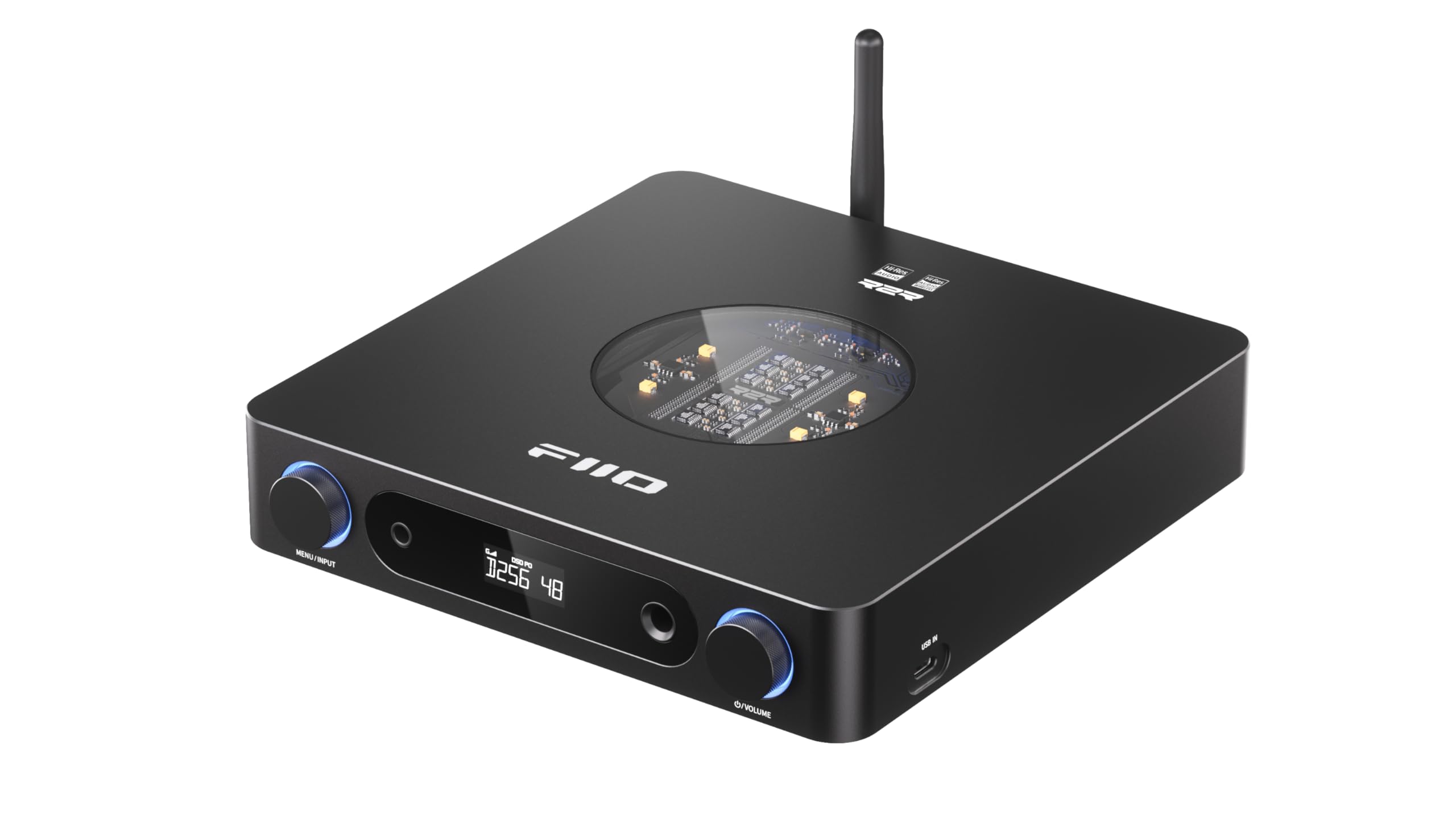
The FiiO K13 R2R brings a rare characteristic to gaming audio — analog-like warmth and natural timbre that most delta-sigma DACs cannot replicate. Its proprietary 24-bit fully differential R2R architecture, built from 192 precision resistors, delivers a smooth, organic sound that removes listening fatigue during long sessions. With 2400mW of output power, it easily drives demanding planars and 300Ω Sennheiser HD 650s without breaking a sweat.
Gamers benefit from the dual NOS/OS modes — Non-Oversampling preserves the original recording purity, while Oversampling up to 384kHz tightens clarity for competitive scenarios. The 10-band parametric EQ with Auto EQ presets lets you boost footsteps or reduce harsh treble peaks without leaving your chair. It also functions as a preamp with XLR and RCA line outs, making it the hub of a high-end desktop setup.
Bluetooth 5.4 with LDAC support adds wireless streaming convenience for music between matches, and the included infrared remote gives volume control from across the room. The build is heavy machined aluminum with a premium feel, though the knobs have a slight clicky wobble reported by some users. The FiiO Connect app offers full control on desktop or mobile.
Why it’s great
- R2R DAC delivers natural, fatigue-free sound with exceptional layering and depth.
- Powerful 2400mW headphone amp drives high-impedance and planar headphones easily.
- 10-band PEQ with online preset sharing for custom gaming profiles.
Good to know
- Requires separate USB DAC driver installation on Windows 11.
- Volume knob press changes gain levels, potentially causing sudden loud bursts.
- Remote control feels cheap compared to the solid chassis.
2. Creative Sound Blaster GC7

The Sound Blaster GC7 combines Creative’s Super X-Fi holographic audio with the classic Sound Blaster DSP suite, giving you two distinct spatial audio engines in one box. The AKM4377 audiophile DAC delivers a clean 120dB SNR and supports up to 192kHz/24-bit playback. The angled chassis and tactile controls make it easy to adjust game-chat balance, switch between Scout Mode and Battle Mode, or cycle EQ presets without minimizing your game.
Scout Mode specifically enhances faint audio cues like distant footsteps or weapon swaps, bringing them audibly forward — a genuine competitive advantage in FPS and battle royale titles. The four programmable buttons can be customized with macros for streaming, profile switching, or RGB effects. For multiplayer gaming, the GameVoice Mix knob lets you instantly blend Discord chat volume with in-game sound.
That said, the GC7’s software requirement is its biggest friction — you need at least three separate Creative applications and a mobile app for the Super X-Fi head-mapping. Some users report driver installation bugs and instability on Windows. The plastic build feels less premium than metal alternatives, but the feature density is unmatched at this tier.
Why it’s great
- Dual DSP (Super X-Fi and Sound Blaster) with Scout Mode for precise directional audio.
- Hardware GameVoice Mix dial for real-time game/chat balance control.
- Optical input and output for console connectivity and additional audio sources.
Good to know
- Software setup is cumbersome, requiring multiple apps and account registration.
- Plastic build feels less durable than all-metal competitors.
- Super X-Fi profile creation requires a mobile ear-scanning process.
3. Fosi Audio K7

The Fosi Audio K7 is a desktop DAC/amp combo that packs audiophile-grade hardware into a compact all-metal chassis. Its AK4493S DAC, XMOS XU208 USB controller, and TPA6120 headphone amplifier deliver up to 2100mW into 32Ω, enough to drive most planars and high-impedance dynamics with authority. The inclusion of a 4.4mm balanced output alongside 3.5mm single-ended and RCA line outs makes it one of the most flexible hubs under the premium tier.
What sets the K7 apart for gamers is the dedicated 3.5mm microphone input — a rare feature in USB DACs at this price point. You can plug in your headset’s mic or a standalone dynamic microphone, and the onboard analog-to-digital conversion handles your voice without needing a separate audio interface. Bluetooth aptX HD and LL are built in for wireless headset pairing during less competitive sessions.
The dual large control knobs (volume and input selection) and five shortcut buttons make daily operation intuitive. Bass and treble adjustment knobs let you tune in-game frequencies on the fly. Some users note that the volume knob’s continuous rotation (no stop) and a 3-step volume increment can feel imprecise for fine adjustments. The K7 works seamlessly with PC and PS5 via USB-C.
Why it’s great
- 2100mW output power drives demanding headphones cleanly via balanced 4.4mm output.
- Dedicated 3.5mm microphone input eliminates need for separate audio interface.
- Aluminum alloy chassis with superior EMI shielding and tactile controls.
Good to know
- Volume knob press changes gain setting, risking loud volume spikes.
- EQ response is slightly sluggish compared to PC-based software EQ.
- Continuous volume knob makes resetting to a known level difficult.
4. SteelSeries GameDAC Gen 2

The SteelSeries GameDAC Gen 2 is designed for the gamer who switches between PC, Xbox, and PlayStation throughout the day. Its dual-system input allows you to connect two sources simultaneously — say a PC and a PS5 — and toggle between them with one button press. The ESS Sabre Quad-DAC inside delivers a 78 percent purer signal than the Gen 1, with 96kHz/24-bit resolution that unlocks richer texture and micro-detail in game audio.
AI-powered ClearCast noise cancellation works on your microphone and incoming chat audio, cleaning up background hum, fan noise, and keyboard clicks. This is especially useful in competitive team games where clear communication matters. The 360° Spatial Audio engine provides immersive surround sound that makes footsteps, reloads, and vocal cues feel directional and dimensional.
While the GameDAC Gen 2 is optimized for SteelSeries Arctis Nova Pro headsets, it works with any headset via a 3.5mm connection. Some users note that it requires a separate 3.5mm extension for certain SteelSeries models, and the competitive landscape at this price point is crowded. The Sonar software enables game-specific EQ profiles and footstep enhancement, making it a capable all-rounder for competitive and casual gamers alike.
Why it’s great
- Dual-system input allows instant switching between PC and console (Xbox, PS, Switch).
- AI ClearCast noise cancellation cleans up mic and incoming chat audio effectively.
- ESS Sabre Quad-DAC delivers noticeably cleaner sound than stock motherboard audio.
Good to know
- Best suited for SteelSeries Arctis headsets; compatibility limited with other brands.
- Requires separate 3.5mm extension cable for some SteelSeries headsets.
- Lacks powerful headphone amp for driving high-impedance open-back headphones.
5. EPOS GSX 1000 2nd Edition

The EPOS GSX 1000 2nd Edition focuses on a single, well-executed feature — binaural 7.1 surround sound that creates an accurate 3D audio space through ordinary headphones. Unlike many virtual surround solutions that sound hollow or phasey, EPOS’ rendering engine provides precise directional cues with natural spatial depth. This makes it excellent for open-world exploration games where immersion matters and for competitive FPS where you need to trace a shooter’s position.
The dedicated volume wheel is machined aluminum with a satisfying weight, and the central touch display lets you toggle between headphone and speaker output without unplugging cables. Adjustable sidetone lets you hear your own voice at a comfortable level, reducing the “shouting in a vacuum” feeling common with closed-back headsets. EQ presets for story, music, and gaming modes are accessible via the device itself — no software required.
However, the GSX 1000’s amplifier is on the weaker side, best suited for sub-250Ω headsets. Users with high-impedance headphones like the Sennheiser HD 650 (300Ω) will find it underpowered, requiring an additional amplifier. Some units have reported screen failure or internal rattling, and the ChatMix wheel has inconsistent behavior. The 48kHz maximum sample rate is low by DAC standards, but adequate for gaming.
Why it’s great
- Binaural 7.1 engine provides accurate spatial audio with natural depth and direction.
- Seamless speaker/headset switching via central touch display — no cable swapping.
- Adjustable sidetone for natural voice monitoring during chat.
Good to know
- Headphone amp is underpowered for high-impedance (300Ω+) audiophile headphones.
- 48kHz maximum sample rate is low compared to competitors.
- Some quality control issues reported with screen failure and internal rattling.
6. Schiit Fulla E

The Schiit Fulla E is a USA-made DAC/amp combo that punches well above its weight for critical listening and desk gaming. Its amplifier delivers 300mW into 16Ω — enough to drive my Sennheiser HD 6XX to uncomfortable listening levels without any noise floor or hiss. The USB-C connection with a secondary dedicated power input ensures the DAC section operates independently from the source device, resulting in a vanishingly low noise floor ideal for quiet nighttime sessions.
The built-in 24-bit microphone input uses a TI analog-to-digital converter with automatic gain control. Your teammates will hear a clean, broadcast-quality voice with no clipping, even if you move away from your mic. The Fulla E also works with game consoles like PS4 and PS5 using the optical adapter, though it lacks the multi-system switching convenience of the SteelSeries GameDAC Gen 2.
The lack of RCA outputs means you cannot easily connect powered speakers — the 3.5mm line out only works when headphones are unplugged, limiting desktop flexibility. A small number of users report mic input failure after several weeks, where the audio becomes distorted or lopsided. Schiit’s customer service reputation is mixed, so purchase from a retailer with a solid return policy.
Why it’s great
- Exceptional DAC/amp sound quality rivals setups costing twice as much.
- 24-bit mic input with AGC provides clean voice capture for Discord and streaming.
- USB-C with optional external 5V power supply isolates DAC from noisy PC USB ports.
Good to know
- No RCA outputs — cannot easily connect powered speakers alongside headphones.
- Mic input reliability reported as inconsistent across some units.
- Limited power for very high-impedance headphones like 600Ω Beyerdynamic models.
7. Creative Sound BlasterX G5

The Sound BlasterX G5 is a compact, bus-powered external sound card that brings Creative’s acclaimed 7.1 virtual surround processing to PC, Mac, PS4, and Xbox One. Despite its small size, it houses a headphone amplifier rated up to 600Ω, making it one of the few budget-friendly options that can properly drive high-impedance studio headphones. The included mini-TOSLINK cable allows optical connection to consoles, preserving digital audio purity.
The Sound Blaster Acoustic Engine Pro suite includes Scout Mode, Crystalizer, and a 10-band EQ that can dramatically reshape gunshot and footstep frequencies. Users report a clear, warm, and articulate sound signature with excellent instrument separation — a noticeable step up from onboard Realtek sound. The G5 is particularly effective for streaming setups where the external processing offloads audio work from the CPU.
The main trade-off is the proprietary mini-TOSLINK connection instead of full-size optical, and the lack of a microphone input. Some users report occasional USB disconnects after system sleep that require re-plugging the device. The G5 is now a mature product with stable drivers and a proven track record, making it a reliable entry point for gamers wanting dedicated audio without spending on premium tiers.
Why it’s great
- Compact bus-powered design works with PC, Mac, PS4, and Xbox One without external power.
- 600Ω headphone amplifier drives high-impedance headphones that most budget DACs cannot.
- Scout Mode and 10-band EQ provide competitive audio advantages in FPS games.
Good to know
- Uses mini-TOSLINK optical connection instead of standard full-size TOSLINK.
- No microphone input — requires separate USB mic or audio interface for voice chat.
- Some users experience USB disconnect issues after system sleep/wake cycles.
FAQ
Will a DAC improve the sound of my gaming headset?
What is the difference between a DAC and a headphone amplifier?
Do I need a DAC for competitive gaming on a console?
Can I use a DAC with wireless gaming headsets?
Final Thoughts: The Verdict
For most users, the best dac for gaming winner is the FiiO K13 R2R because its warm analog sound signature, powerful 2400mW amplifier, and flexible 10-band PEQ make it equally excellent for competitive audio cues and rich game soundtracks. If you want advanced DSP processing with dual audio engines, grab the Creative Sound Blaster GC7. And for multi-system switching between PC and console at a mid-range price, nothing beats the SteelSeries GameDAC Gen 2.

Mo Maruf
I created WellFizz to bridge the gap between vague wellness advice and actionable solutions. My mission is simple: to decode the research and give you practical tools you can actually use.
Beyond the data, I am a passionate traveler. I believe that stepping away from the screen to explore new environments is essential for mental clarity and physical vitality.