Our readers keep the lights on and my smoothie glass nicely filled. As an Amazon Associate, I earn from qualifying purchases.
Most people assume that true high-fidelity audio requires a three-figure investment, leaving a pile of muddled Bluetooth earbuds as the only alternative. That assumption is wrong. A cheap DAC (digital-to-analog converter) can transform the lifeless, noisy output from your phone or laptop into a detailed, spacious soundstage — revealing textures in your favorite tracks you never knew existed.
I’m Mohammad Maruf — the founder and writer behind WellFizz. I’ve spent countless hours cross-referencing THD+N figures, DAC chip specifications, output impedance ratings, and real-world user endurance tests to separate the genuine budget audio gems from the hollow dongles.
After analyzing the smallest measurable details — from signal-to-noise ratios to plug-and-play compatibility across Android, iOS, and PC — I’ve assembled the only list of the best dac cheap options that actually deliver clean, dynamic sound without burning your wallet.
How To Choose The Best Cheap DAC
A low price tag often means compromises, but in the DAC world, the right compromises are invisible to your ears. Focus on the chipset, output power, and compatibility — ignore the marketing fluff. Here are the three specs that separate a real bargain from a disappointment.
DAC Chip and Maximum Sampling Rate
The heart of any converter is its silicon. Look for a unit that supports at least 32bit/384kHz PCM and DSD128. These numbers tell you the chip can handle high-resolution audio streams without down-sampling. Entry-level units without a dedicated chip (relying on the phone’s internal codec) often exhibit a flat soundstage and audible noise floor.
Output Power and Headphone Impedance
Your headphones or IEMs need enough current to reach a satisfying volume without distortion. A cheap DAC should still deliver at least 200mW into a 32Ω load if you plan to drive over-ear headphones. For sensitive IEMs, even 30mW is plenty, but an amplifier stage with a low output impedance (under 1Ω) prevents frequency response changes. Check the spec sheet for milliwatts at the specific impedance of your gear.
Physical Connectivity and Portability
A rigid USB-C plug with no cable pigtail is far more durable than a flimsy dongle with a thin wire that frays after three months. Also confirm the connector works with your phone’s case — many compact DACs are too wide to seat fully when a thick case is installed. The best budget units include both a 3.5mm single-ended and a 4.4mm balanced output for future headphone upgrades.
Quick Comparison
On smaller screens, swipe sideways to see the full table.
| Model | Category | Best For | Key Spec | Amazon |
|---|---|---|---|---|
| Kiwi Ears Allegro Mini | Portable DAC/Amp | IEM users wanting 4.4mm balanced | THD+N 0.004% at 32Ω | Amazon |
| FiiO KA11 | USB-C Dongle | Gaming and hi-res on Switch/PS5 | 200mW at 32Ω, CS43131 chip | Amazon |
| Douk Audio U3 | Desktop Headphone Amp | High-impedance headphones at a desk | Class A, socketed NE5532 op-amp | Amazon |
| MYPIN Bluetooth DAC | Bluetooth Receiver / DAC | Adding wireless to a stereo system | 192kHz/24bit, 16-300Ω amp | Amazon |
| Vantec NBA-200U | USB Audio Adapter | Adding optical SPDIF to a PC | 7.1 virtual surround, SPDIF I/O | Amazon |
In‑Depth Reviews
1. Linsoul Kiwi Ears Allegro Mini
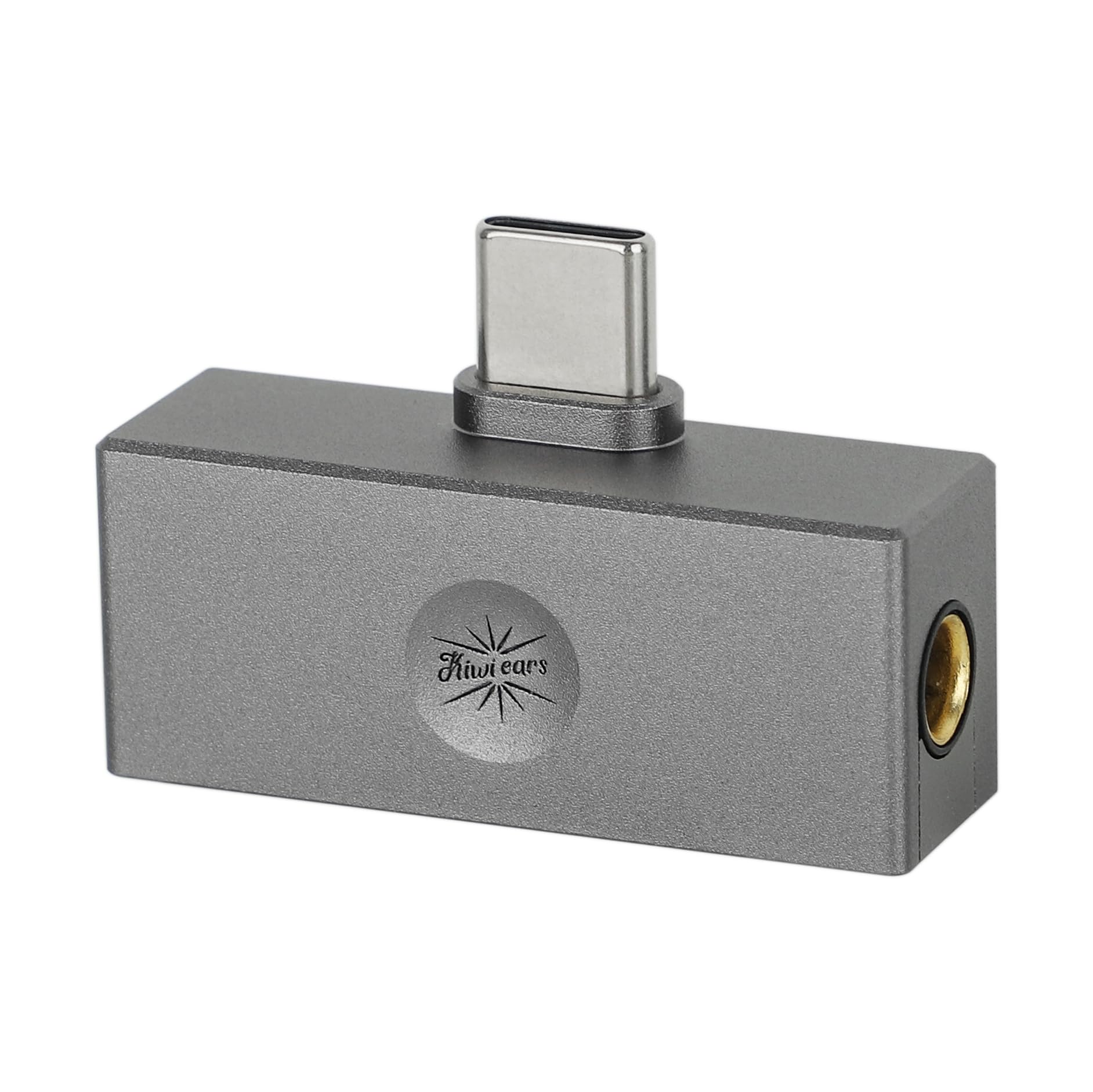
The Allegro Mini packs a custom chip that decodes PCM up to 32bit/384kHz and DSD128, all within a compact titanium-finished aluminum shell. Unlike many dongles that use a fragile pigtail cable, this is a rigid USB-C plug with no wire to fray — a durability detail that budget buyers often overlook. It provides both a 3.5mm single-ended and a 4.4mm balanced output, a rare feature at this price level that future-proofs your connection for higher-end IEMs.
The measured THD+N of just 0.004% at 32Ω means the signal path is exceptionally clean. Users report that it drives medium- and high-impedance IEMs with authority, while remaining small enough to fit most phone cases. The aluminum alloy body dissipates heat well — it gets warm under load but never hot — and the low noise floor makes it a strong match for sensitive multi-driver earphones.
Real-world feedback highlights the convenience of not needing a separate battery or charging cycle, unlike earlier portable DAC/amps. The 3.5mm output is transparent with no audible coloration, and the 4.4mm balanced output provides slightly higher voltage swing for those who want extra headroom. Downside: users with bulky protective cases may need to remove the case for a full seat connection.
Why it’s great
- Exceptionally low THD+N of 0.004% for pure, uncolored audio
- Rigid USB-C construction eliminates cable fraying
- Dual 3.5mm and 4.4mm outputs for versatile headphone pairing
Good to know
- May not fully seat with very thick phone cases
- No built-in volume buttons
2. FiiO KA11 USB-C DAC/Amp

The FiiO KA11 is a tiny powerhouse that fits in the palm of your hand, yet it pushes 245mW at 16Ω and 200mW at 32Ω — enough to drive demanding planar magnetic headphones like the Hifiman Edition XS at half volume. At its core sits the CS43131 DAC chip, a proven performer that delivers a signal-to-noise ratio of 125dB and THD+N below 0.0006%, making it one of the cleanest sub- converters available.
A standout feature is UAC 1.0 mode support, which you switch on via the FiiO Control app. This makes the KA11 plug-and-play with Nintendo Switch and PS5, restoring low-latency, high-resolution game audio through your favorite headphones. The matte black body is compact — 44×9.7×10.5mm — and connects directly via USB-C without a cable, so there is no weak point that typically breaks on cheaper dongles.
Customer reviews consistently praise its neutral, uncolored sound signature. It pairs naturally with IEMs like the Moondrop Chu2 and over-ears like the Sennheiser HD560s without adding any harshness. The only persistent complaint is the bright blue LED that stays on permanently — a minor annoyance for bedside listening. Some units have reported failure after a few months, though FiiO’s warranty support is generally responsive.
Why it’s great
- High output power (200mW at 32Ω) drives full-size headphones
- UAC 1.0 mode for plug-and-play on Switch and PS5
- Ultra-low THD+N of 0.0006% and 125dB SNR
Good to know
- Bright blue LED cannot be turned off
- Some units have exhibited failure after 2–3 months
3. Douk Audio U3 Headphone Amp

The Douk Audio U3 is not a portable dongle — it is a desktop Class A headphone amplifier designed for those who want to drive high-impedance cans like the Sennheiser HD600, HD650, or Beyerdynamic DT880. It relies on a socketed TI-NE5532 op-amp and a 1300mA output transistor working in pure Class A bias, delivering a warm, detailed sound with excellent transient response. The stepped volume knob offers precise, repeatable level adjustments in roughly 1-2dB increments.
This amp requires a separate DAC (or a line-level source via RCA input) and an external 5-20V DC power supply — it contains no internal DAC chip. The socketed op-amp design is the key upgrade path: audiophiles can swap the NE5532 for a Sparkos Labs SS3602 or a Burson V5i to tailor the harmonic profile. Users report that after a 48-hour burn-in, the sound opens up, revealing deeper imaging and instrument separation.
The build quality is surprising for the price: a solid metal chassis, a positive-click power switch, and RCA jacks that feel secure. Negative points include a glaring blue front panel LED that is best covered with tape, and a faint power-off fizz that can be avoided by turning down the volume before shutdown. It needs a clean USB power adapter — cheap phone chargers may introduce a ground-loop buzz.
Why it’s great
- Socketed op-amp for easy DIY upgrades to higher-end chips
- Class A bias delivers warm, detailed, and dynamic sound
- Powers high-impedance headphones (300Ω) with ease
Good to know
- No internal DAC — requires a separate line-level source
- Power-off pop can be avoided only by lowering volume first
4. MYPIN Bluetooth 5.0 DAC / Amp
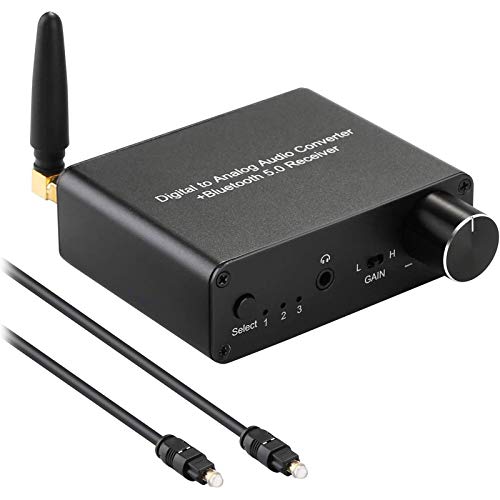
The MYPIN DAC is the only unit on this list that combines a wired DAC with a Bluetooth 5.0 receiver, making it a versatile bridge between your phone and an older stereo system. It accepts optical, coaxial, and 3.5mm digital inputs and outputs to both RCA and a front-panel 3.5mm headphone jack. The built-in headphone amplifier supports loads from 16Ω to 300Ω, with a hi/low gain switch to match sensitivity.
Its maximum sampling rate is 192kHz/24bit, which is slightly lower than the 384kHz offered by the Kiwi Ears and FiiO units, but perfectly adequate for streaming services like Tidal HiFi and Apple Music Lossless. The Bluetooth implementation uses an external antenna for stable range, though real-world tests show reliable connection only up to about 15 feet — sufficient for a living room but not for crossing multiple rooms. The volume knob doubles as a power switch, a neat space-saving feature.
Customer reviews note that audio quality over Bluetooth is surprisingly clear, with very low background hiss. The metal case feels durable and the front headphone jack is convenient. Drawbacks include: the volume potentiometer feels spongy and may degrade over time, the unit cannot stream to Bluetooth speakers (receiver only), and some units have failed after short use. It requires USB power, and no adapter is included in the box.
Why it’s great
- Bluetooth 5.0 receiver and wired DAC in one compact box
- Optical, coaxial, and 3.5mm digital inputs for legacy gear
- Front headphone jack with hi/low gain for 16-300Ω headphones
Good to know
- Bluetooth range is limited to ~15 feet
- Spongy volume knob may feel less durable over time
5. Vantec USB External 7.1 Audio Adapter

The Vantec NBA-200U is a USB external sound card, not a portable DAC dongle. Its primary value lies in its optical SPDIF input and output, allowing you to bypass a PC’s noisy onboard audio and feed a clean digital signal to an external receiver or DAC. It supports 7.1 virtual surround sound via analog outputs, and it handles Dolby Digital and DTS pass-through over optical, making it a cheap fix for a home theater PC or a gaming setup with an old AVR.
The unit samples at 44.1kHz and 48kHz only — no high-res 192kHz support — which is fine for movies, YouTube, and standard-resolution music but not for audiophile FLAC files. Analog output quality is comparable to decent motherboard audio, so the real benefit comes from the clean optical output that eliminates electrical interference from the PC’s power supply. On Windows 10 and 11, driver installation may require a manual workaround (renaming files in the WIN81 folder), but once set up, it is plug-and-play.
Customer feedback over many years confirms it works reliably with USB switches, Mac, and PC, and it fully resolves 5.1 and 7.1 surround when configured properly in Windows sound settings. The blue LED is exceedingly bright. The biggest limitation: it cannot decode multichannel PCM, Dolby TrueHD, or DTS-HD Master Audio — only standard Dolby Digital and DTS formats are passed through over optical. For pure stereo music listening, a dedicated DAC like the Kiwi Ears is a better choice.
Why it’s great
- Optical SPDIF I/O eliminates motherboard electrical noise
- 7.1 virtual surround for gaming and movie playback
- Works with USB switches and is recognized by Windows, Mac, and Linux
Good to know
- No high-resolution audio support above 48kHz sampling
- Requires manual driver tweaks on modern Windows 10/11 builds
FAQ
Will a cheap DAC improve sound quality over my phone’s headphone jack?
Can I use a cheap DAC with a Nintendo Switch or PlayStation 5?
Is there a difference between a USB-C dongle DAC and a desktop DAC/amp?
Final Thoughts: The Verdict
For most users, the best dac cheap winner is the Linsoul Kiwi Ears Allegro Mini because it delivers both a 4.4mm balanced output and an exceptionally low THD+N of 0.004% in a rigid, cable-free aluminum body — at a price that rivals basic dongles. If you want console gaming support and higher output power for over-ear headphones, grab the FiiO KA11. And for a desktop setup where you plan to upgrade op-amps and drive high-impedance classics, nothing beats the Douk Audio U3.

Mo Maruf
I created WellFizz to bridge the gap between vague wellness advice and actionable solutions. My mission is simple: to decode the research and give you practical tools you can actually use.
Beyond the data, I am a passionate traveler. I believe that stepping away from the screen to explore new environments is essential for mental clarity and physical vitality.