Our readers keep the lights on and my smoothie glass nicely filled. As an Amazon Associate, I earn from qualifying purchases.
Picking a desktop DAC amplifier means choosing between a chipset that measures flawlessly and one that sounds musical. The difference is rarely visible on paper — it lives in the noise floor, the transient response, and the sheer current your headphones demand. A flat frequency response graph won’t tell you if the bass slams, the mids breathe, or the treble turns analytical after an hour of listening. This guide exists to bridge that gap: translating the specs that matter (output power per impedance, THD+N figures, clock jitter reduction) into the listening experience that defines a great desktop audio setup.
I’m Mohammad Maruf — the founder and writer behind WellFizz. My approach to evaluating DAC amplifiers involves cross-referencing component selection (DAC chips, op-amps, clock circuits) with real-world power delivery across a range of headphone impedances, from sensitive IEMs to planar magnetic monsters.
Whether you’re building your first desktop stack or upgrading from a motherboard audio jack, knowing the right DAC amplifier means balancing chipset performance, output topology, and connectivity with your actual headphones. This guide dives deep into nine models across the value, mid-range, and premium tiers to help you invest your budget where it matters most: the sound.
How To Choose The Best DAC Amplifier
Not all DAC amplifiers are built equally. A model with a high-end chip can sound lifeless if the power supply is noisy or the output stage can’t deliver current into your specific headphones. Focus on these three areas to narrow your options.
Output Power and Impedance Matching
The output power rating (specified in milliwatts at a given impedance, e.g., 2000mW @ 32Ω) tells you how much voltage and current the amplifier can deliver. High-impedance headphones (250Ω–600Ω) need voltage swing; low-impedance planars need current. A DAC amplifier that excels at one range may struggle with the other, so match the power spec to your headphone’s impedance and sensitivity.
DAC Chipset and Clock Architecture
The DAC chip (ESS, AKM, Cirrus Logic, ROHM) determines the theoretical maximum resolution and dynamic range, but the clock circuit and power supply implementation matter more for real-world sound quality. Look for models with dedicated clock processing (like CK-03 or PLL technologies) and low-noise LDO regulators to minimize jitter and preserve micro-detail.
Balanced vs. Single-Ended Output
A true balanced circuit uses separate amplifier channels for the positive and negative phases of the audio signal, doubling the voltage swing and canceling common-mode noise introduced by long cable runs. If your headphones have a 4.4mm Pentaconn or XLR cable, a balanced DAC amplifier provides more power and a lower noise floor compared to single-ended 6.35mm or 3.5mm outputs.
Quick Comparison
On smaller screens, swipe sideways to see the full table.
| Model | Category | Best For | Key Spec | Amazon |
|---|---|---|---|---|
| Topping DX5 II | Premium | Desktop all-in-one with PEQ | 7600mW x2 @ 32Ω Balanced | Amazon |
| aune S9c Pro | Premium | Reference-grade headphone amp | 5000mW @ 32Ω, 10MHz Clock Input | Amazon |
| FiiO K13 R2R | Mid-Range | Warm, analog-sounding R2R DAC | 2400mW @ 32Ω Balanced | Amazon |
| FiiO K7 | Mid-Range | Balanced output with THX AAA | 2000mW @ 32Ω Balanced | Amazon |
| Fosi Audio K7 | Mid-Range | Versatile connectivity and mic input | 2100mW @ 32Ω Balanced | Amazon |
| iFi Zen DAC 3 | Mid-Range | USB-powered with TrueBass | 300mW @ 32Ω Balanced | Amazon |
| S.M.S.L D200 | Premium | ROHM DAC for natural vocals | PCM 768kHz/32bit, DSD512 | Amazon |
| S.M.S.L DS100 | Budget | Entry-level desktop DAC/amp | CS43131, 7Vrms @ 600Ω | Amazon |
| Topping DX1 | Budget | USB-powered beginner combo | 280mW x2 @ 32Ω | Amazon |
In‑Depth Reviews
1. Topping DX5 II
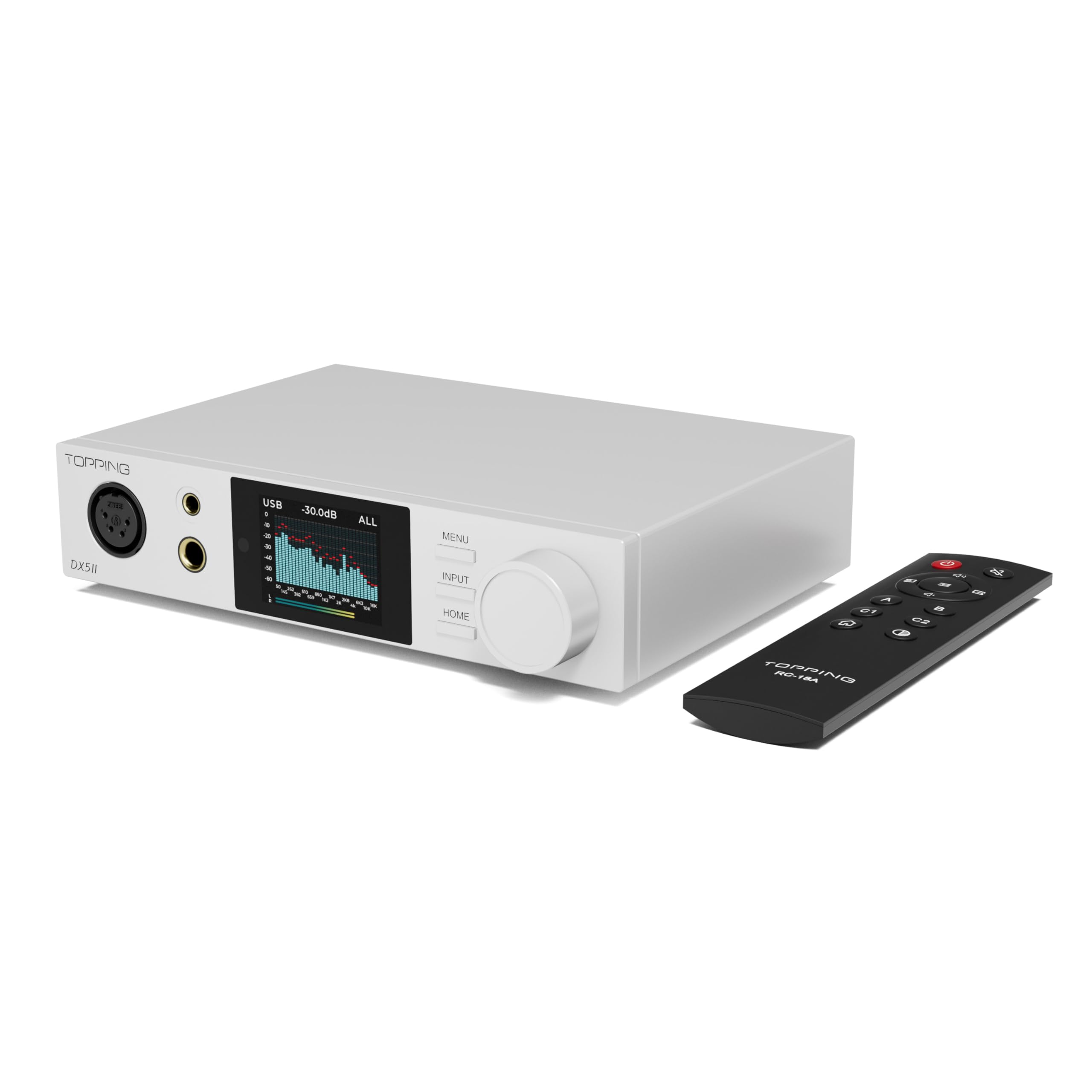
The Topping DX5 II represents a serious step up from the usual desktop combo. It packs dual ES9039Q2M DAC chips and an X-Hybrid amplifier circuit that cranks out 7600mW x2 into 32 ohms balanced. That kind of headroom means it can drive nearly any headphone on the market, from sensitive IEMs to power-hungry planars, without breaking a sweat. The built-in 10-band PEQ gives you precise tonal shaping directly in the hardware, bypassing software EQ entirely.
The Aurora UI with a 2.0-inch color display and pressable knob makes navigation smooth, and the 12V trigger support lets it integrate seamlessly with a larger HiFi system. On the wireless side, the QCC5125 Bluetooth chip handles LDAC, aptX Adaptive, and aptX HD, delivering CD-quality wireless streaming. The sound signature is transparent and neutral — it neither adds nor subtracts from the recording, revealing both the strengths and flaws of your source material.
Some early units have reported headphone jack protection issues, though later production runs seem improved. The volume knob feels solid, but the remote control is basic for a premium unit. If you want a do-everything desktop DAC amplifier with flexible EQ and massive power, the DX5 II is a top contender in its tier.
Why it’s great
- Exceptional 7600mW x2 balanced output drives demanding headphones
- 10-band PEQ with presets and Auto EQ for hardware tuning
- LDAC Bluetooth 5.1 and 12V trigger for system integration
Good to know
- Headphone jack protection may be insufficient for hot-swapping
- Remote control lacks tactile feedback
2. aune S9c Pro
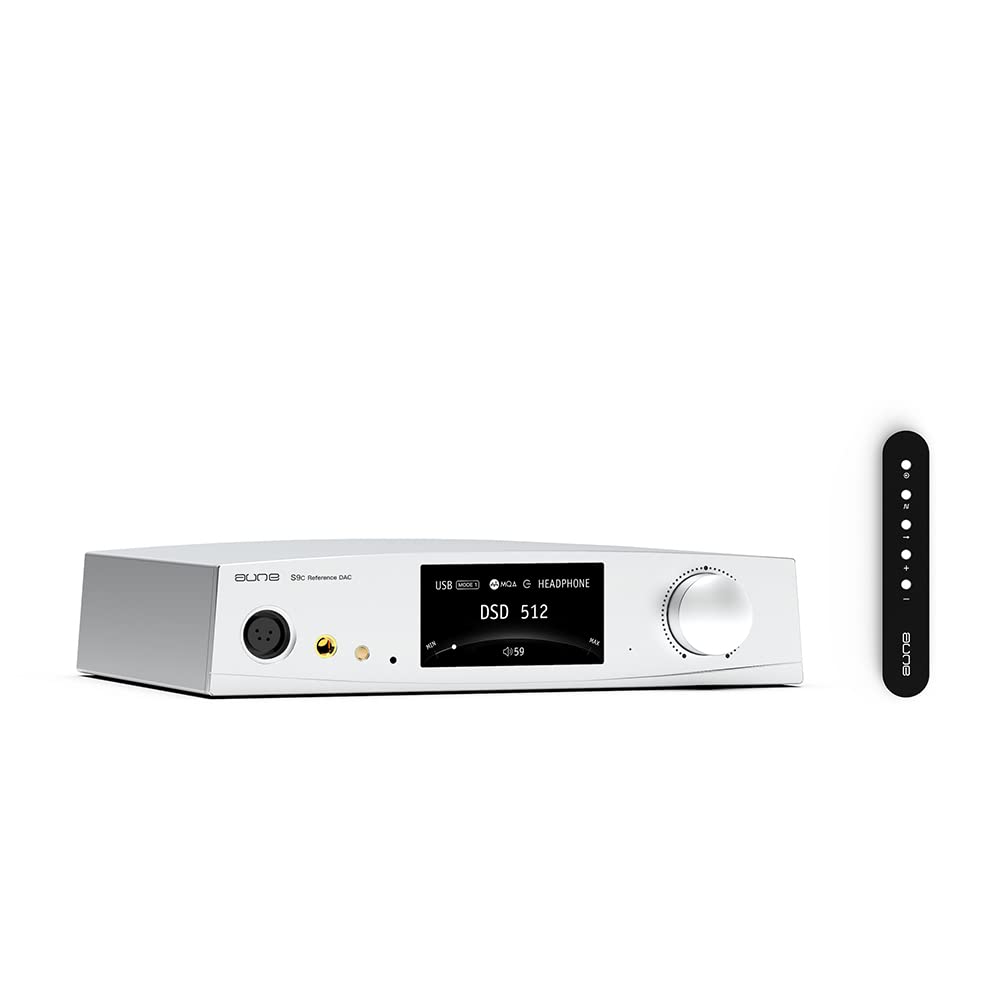
The aune S9c Pro is built around a second-generation PLL core that took four years to develop, combined with a 10 MHz external clock input for ultimate jitter reduction. The result is a DAC amplifier that reproduces soundstage and imaging with an almost holographic precision. Inside, you’ll find dual ES9068 DAC chips, a fully discrete amplifier circuit with twin JFETs per channel, and a 50W toroidal transformer feeding a 23900 μF capacitor array. This power delivery approach gives the S9c Pro a rich, dynamic sound with fast transient response.
Output options include 6.35mm single-ended, 4.4mm balanced, and XLR, with a line output noise floor as low as 2.04 μV. The two tuning modes — Standard and Pure — let you choose between a more detailed presentation and a smoother, more musical character. The build is substantial, weighing around 10 pounds, and the chassis feels rock-solid. The remote control volume steps can be glitchy, and the device lacks analog inputs, but the sheer power and clarity make it a near-end-game choice for many listeners.
Customer feedback highlights its ability to drive demanding headphones like the DCA Expanse and Meze 109 Pro with authority. The sound is analytical and detailed, not warm, making it ideal for critical listening and mixing. The S9c Pro requires 110V and draws attention with its heft, but the sound quality justifies the footprint.
Why it’s great
- Exceptional jitter reduction with 10MHz clock input and PLL
- 5W output at 32Ω drives any headphone with ease
- Two tuning modes and fully discrete amp circuit
Good to know
- Remote control range and volume response can be inconsistent
- Heavy chassis at 10 pounds requires desk space
3. FiiO K13 R2R
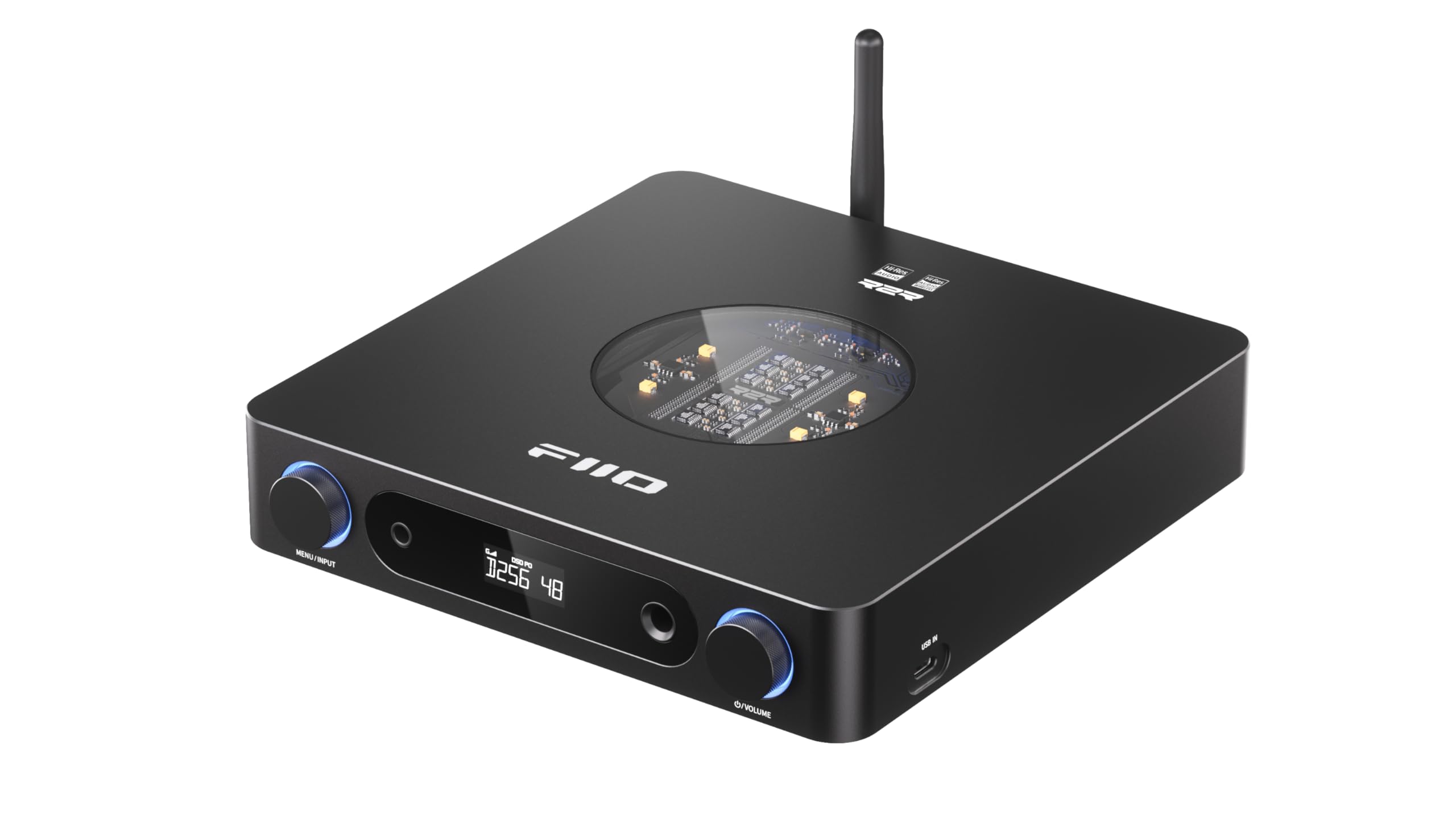
The FiiO K13 R2R takes a different path from the delta-sigma pack by using a proprietary 4-channel fully differential complementary 24-bit R2R DAC built from 192 ultra-precise 0.1% thin-film resistors. This design gives it a naturally warm, analog-like timbre that many listeners find more engaging and less fatiguing than clinical delta-sigma converters. The NOS (Non-Oversampling) mode preserves the original recording’s sampling rate, adding to the organic character, while OS mode up-samples to 384kHz for improved measured performance.
With 2400mW output via the 4.4mm balanced jack, the K13 R2R drives planar headphones confidently, and the built-in 10-band PEQ with Auto EQ support lets you fine-tune the response. The Bluetooth 5.4 module supports LDAC, and the dual power supply (linear for analog, switching for digital) keeps the noise floor low. The build is heavy aluminum with a clean aesthetic, though the knobs feel slightly wobbly on some units.
Listeners report a smooth, immersive sound that works especially well with electronic and atmospheric music. The line outputs via RCA are particularly praised for their depth and body when feeding studio monitors. If you prefer a warm, non-fatiguing sound signature without sacrificing detail retrieval, the K13 R2R delivers a unique flavor in this price range
Why it’s great
- Warm, analog-like R2R sound with NOS/OS modes
- 2400mW balanced output for planars and high-impedance headphones
- 10-band PEQ with presets and Auto EQ support
Good to know
- Knobs feel slightly wobbly despite heavy aluminum build
- Setup requires correct USB driver and PEQ gain adjustment
4. FiiO K7

The FiiO K7 is a well-established desktop balanced DAC amplifier that uses dual AK4493SEQ chips and dual THX AAA 788+ amplifier modules. This combination produces 2000mW stable output power into 32 ohms balanced, with THD+N below 1% at full output. The six-stage audio circuit design borrowed from FiiO’s higher-end models keeps noise and distortion low, resulting in a clean, dynamic presentation that works well with most headphones.
Connectivity includes USB, optical, coaxial, and AUX inputs, with 4.4mm balanced and 6.35mm/3.5mm single-ended outputs. The RGB indicator lights differentiate sampling rates, and the two gain levels let you match the output to your headphone’s sensitivity. The build is compact and available in titanium, matte black, or silver. The volume knob has a mute zone at the bottom of its rotation, useful for sensitive IEMs.
Users note a mild but clear improvement over standard soundcard outputs, with better soundstage and clarity. The K7 runs cool and is a popular starter balanced combo, though some find it a stepping stone to pricier stacks. For the balanced output power and THX AAA performance at this price, the K7 remains a strong value.
Why it’s great
- Balanced THX AAA 788+ amps deliver clean 2000mW power
- Dual AK4493SEQ chips for high dynamic range
- Mute zone on volume knob protects sensitive IEMs
Good to know
- RGB lights may not appeal to all users
- Step-up to K9 ESS reveals notable improvements
5. Fosi Audio K7

The Fosi Audio K7 is a versatile desktop hub that combines an AK4493S DAC, XMOS XU208 USB processor, and TPA6120 headphone amps into a compact aluminum chassis. It outputs 2100mW into 32 ohms balanced, enough to drive most full-size headphones with authority. Unique among this group, the K7 includes a 3.5mm microphone input, making it a practical choice for gamers and streamers who want to consolidate their audio and mic connections.
Input options cover USB-C, coaxial, optical, and Bluetooth aptX HD/LL, while outputs include 4.4mm balanced, 3.5mm single-ended, and RCA for powered speakers. The dual large control knobs and five shortcut buttons make operation easy, and the angled chassis improves ergonomics during desktop use. The high-resolution display shows real-time status and input selection clearly.
Sound quality is neutral with good detail retrieval, and the bass/treble adjustment lets you tweak the tuning on the fly. The volume knob uses digital steps, but the ticks are slightly coarse at 3dB increments, making fine adjustments tricky. The overall build is solid, with a sleek metallic finish and good EMI shielding. For users who need a mic input alongside a high-power DAC amplifier, the K7 is a rare and well-executed option.
Why it’s great
- 3.5mm microphone input for gaming/streaming setups
- 2100mW balanced output drives demanding headphones
- Bluetooth aptX HD/LL and angled chassis for ergonomics
Good to know
- Volume knob has coarse 3dB steps
- No XLR output or full EQ customization
6. iFi Zen DAC 3
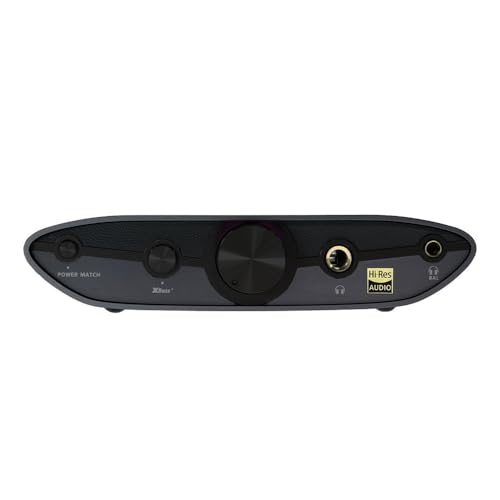
The iFi Zen DAC 3 is a USB-powered desktop DAC amplifier that prioritizes simplicity and musicality over raw power. It uses a Burr-Brown True Native chipset and supports up to PCM 32-bit/768kHz, DSD512, and full MQA decoding. The balanced output delivers 300mW into 32 ohms, which is enough for many mid-impedance headphones but may struggle with demanding planars or 300-ohm dynamic drivers.
Key features include PowerMatch (three gain settings) and TrueBass (a bass enhancement circuit that adds subtle low-end weight without muddying the mids). The design is minimalist, with a matte black aluminum chassis, USB-C input, and a large, satisfying volume knob. Outputs are 4.4mm balanced and 6.3mm single-ended, and the line output can operate at fixed or variable volume.
Sound quality is tonally balanced with a slightly warm tilt, good texture, and a wide soundstage. The mids are pushed back compared to the Zen DAC V2, reducing vocal presence but improving airiness. The TrueBass function is effective for adding punch to bass-light headphones. The Zen DAC 3 is best for listeners with efficient headphones who want a clean, engaging sound from a compact, bus-powered DAC amplifier.
Why it’s great
- Compact, USB-powered design with minimalist aesthetic
- TrueBass circuit adds subtle, controlled low end
- Supports full MQA decoding and DSD512
Good to know
- Limited to 300mW balanced output; struggles with demanding headphones
- Audio plays on all outputs simultaneously with no mute option
7. S.M.S.L D200
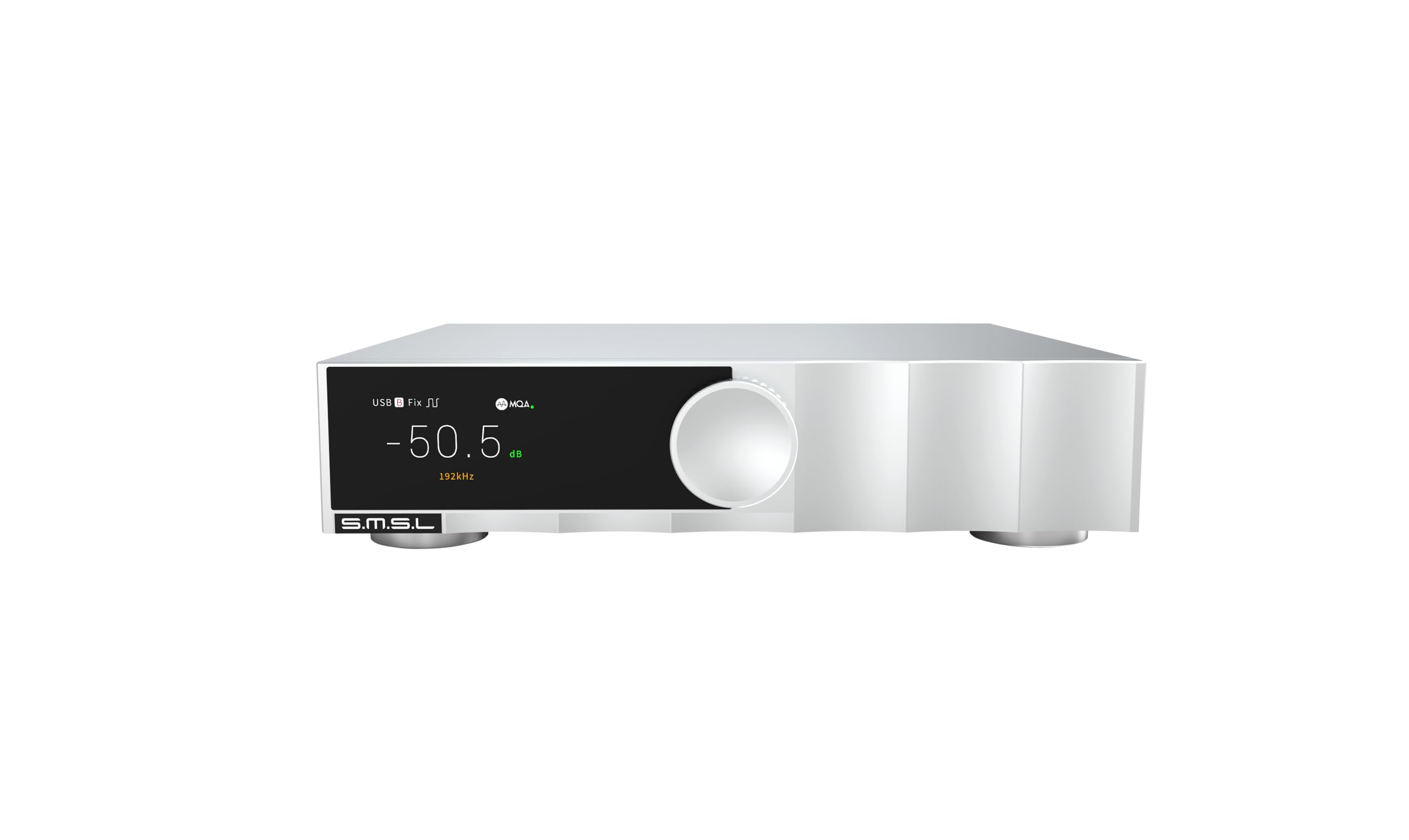
The S.M.S.L D200 uses the ROHM BD34352EKV DAC chip, a premium component known for its natural, organic tonality with excellent vocal texture and presence. It supports PCM up to 32-bit/768kHz and DSD512, with full MQA-CD decoder support. The self-developed CK-03 clock processing circuitry reduces jitter, and the pure audio circuit board with independent linear power supply ensures a clean signal path.
Connectivity includes USB, optical, coaxial, and Bluetooth 5.1 with LDAC for wireless high-fidelity streaming. The new UI includes lyrics display support on a fully laminated capacitive glass display panel, and the remote control allows easy playback control. The unit can operate as a pure DAC or preamp, making it flexible for desktop and system integration.
Listeners describe the sound as engaging, detailed, and non-fatiguing, with a rich midrange and tight, powerful bass. It competes well with DACs costing significantly more, and the ROHM chipset offers a distinct character compared to ESS or AKM designs. The D200 lacks a built-in headphone amplifier, so it needs to be paired with a separate amp or used as a preamp for active speakers.
Why it’s great
- ROHM chip delivers natural, organic tonality with vocal presence
- CK-03 clock circuit reduces jitter effectively
- LDAC Bluetooth and MQA-CD support
Good to know
- No built-in headphone amplifier; requires external amp
- Compatibility issues reported with some amplifier brands
8. S.M.S.L DS100

The S.M.S.L DS100 is a compact, budget-friendly DAC amplifier that punches above its weight with the CS43131 chip from Cirrus Logic and an XMOS XU316 USB controller. It delivers up to 7Vrms into 600 ohms via the 6.35mm output, offering plenty of voltage swing for high-impedance headphones. The 4.4mm balanced output adds flexibility for users with balanced cables.
The CK-03 clock processing circuit and low-noise LDO power supply keep the noise floor low, resulting in a clean, transparent sound. The aluminum alloy CNC-machined chassis with gold-plated terminals feels premium for its price. Input options are USB, optical, and coaxial, and the four LED indicators show the current volume level and input mode. The unit is powered via USB and requires a driver installation on Windows systems.
Customer feedback highlights its ability to drive HD58X and DT 990 Pro (80-ohm) easily, with no bloatware and a simple plug-and-play experience on Mac. The volume knob is smooth, and the form factor is easy to place on any desk. The DS100 lacks a line output for speakers and the headphone output may not satisfy users with very high-impedance dynamics at max volume, but for the price, it delivers excellent clarity and power.
Why it’s great
- CS43131 DAC chip with XMOS XU316 for clean, detailed sound
- 7Vrms output at 600Ω for high-impedance headphones
- Compact aluminum chassis with gold-plated terminals
Good to know
- No line-level output for connecting powered speakers
- Windows driver download required; not fully plug-and-play on PC
9. Topping DX1
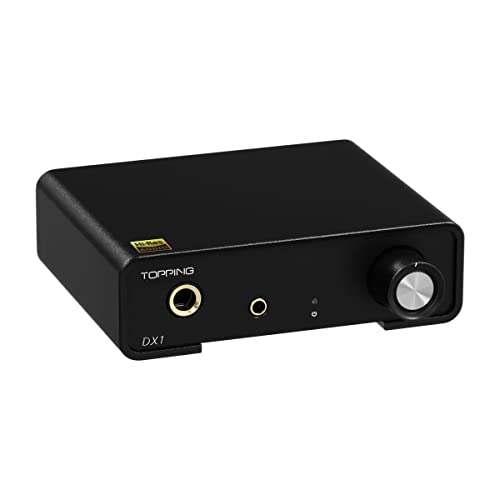
The Topping DX1 is an entry-level DAC amplifier combo that uses the AK4493S chip from AKM’s VELVET Sound series, decoding up to 32-bit/384kHz PCM with a dynamic range of 120dB. It outputs 280mW x2 into 32 ohms and 51mW x2 into 300 ohms, making it suitable for low-impedance headphones and IEMs but underpowered for high-impedance dynamic drivers above 250 ohms. The two-stage gain switch and Discrete LNRD power supply keep the noise floor low, even with sensitive IEMs.
Connectivity is limited to USB input, with 6.35mm and 3.5mm headphone outputs. The line output operates at fixed volume, useful for connecting to an external amplifier. The DX1 is plug-and-play with Windows 10/11, Mac, Linux, iOS, and Android without driver installation, except for ASIO applications. The build is compact and sleek, with a professional aesthetic.
Listeners praise its clean sound and lack of distortion or hissing, making it a great starting point for newcomers. The 32-bit depth can cause compatibility issues with some apps, but this is adjustable. The DX1 runs slightly warm but never hot. It’s an excellent value for users with IEMs or low-ohm over-ears who want a transparent upgrade from a phone or motherboard jack.
Why it’s great
- AK4493S chip with 120dB dynamic range for clear sound
- Low noise floor from Discrete LNRD circuit; great for IEMs
- Plug-and-play on most platforms without drivers
Good to know
- Limited power for headphones above 250 ohms
- No on/off switch; USB powers on continuously
FAQ
Do I need a balanced DAC amplifier for my headphones?
What does the DAC chip matter if the amplifier section is weak?
How much output power do I need for 300-ohm headphones?
Can I use a DAC amplifier with powered studio monitors?
Final Thoughts: The Verdict
For most users, the dac amplifier winner is the Topping DX5 II because it delivers massive balanced power, built-in 10-band PEQ, LDAC Bluetooth, and a clean, transparent sound that drives virtually any headphone. If you want a warm, analog-like character with R2R naturalness, grab the FiiO K13 R2R. And for reference-grade performance with external clock input and uncompromising detail, nothing beats the aune S9c Pro.

Mo Maruf
I created WellFizz to bridge the gap between vague wellness advice and actionable solutions. My mission is simple: to decode the research and give you practical tools you can actually use.
Beyond the data, I am a passionate traveler. I believe that stepping away from the screen to explore new environments is essential for mental clarity and physical vitality.