Our readers keep the lights on and my smoothie glass nicely filled. As an Amazon Associate, I earn from qualifying purchases.
Choosing a portable or desktop amplifier for your headphones is about matching impedance, sensitivity, and the sonic signature you actually want to hear — not just chasing the highest chip count or wattage figure on a spec sheet. A mismatched DAC/Amp combo can leave high-impedance headphones sounding thin or sensitive IEMs hissing with noise.
I’m Mohammad Maruf — the founder and writer behind WellFizz. I have spent hundreds of hours cross-referencing output power curves, DAC chip architectures, THD+N measurements, and real-user feedback to identify which units actually deliver transparent, noise-free amplification across the widest range of headphone loads.
This guide cuts through the marketing noise to highlight nine rigorously evaluated models that deliver meaningful performance for their price. If you want to hear what your headphones are truly capable of, choosing the right dac amp for headphones is the single most important upgrade you can make.
How To Choose The Best DAC Amp For Headphones
Choosing your amplifier starts with your headphones. High-impedance dynamic drivers need voltage swing — low-impedance planar magnetics need current. Sensitive IEMs punish a noisy circuit. The DAC chip handles decoding; the amp stage delivers the power. A mismatch in either ruins the experience.
Match Power to Your Headphone Load
Look at your headphone’s impedance (ohms) and sensitivity (dB/mW). A 300Ω Sennheiser HD 600 needs around 1-2 mW of clean power to hit loud listening levels, but some units deliver that with less than 10% volume — a sign of proper gain staging. For power-hungry planars like the Hifiman Sundara or Audeze LCD series, aim for 1W+ into 32Ω from the balanced output. Dividing the rated output into your load’s impedance curve gives you the real usable volume.
Prioritize Noise Floor and Output Impedance
A flat, silent background is the hallmark of a well-designed DAC/Amp. High output impedance (above 2-3 ohms) alters the frequency response of multi-driver IEMs, boosting bass unevenly and muddying the mids. Low noise floor matters especially if you listen at low gain with sensitive gear. Look for THD+N figures below 0.001% and signal-to-noise ratios above 120dB for black-background listening.
Decide Between Balanced and Single-Ended
Balanced 4.4mm or XLR outputs double the voltage swing, reduce crosstalk, and improve channel separation. If your headphones have a balanced cable, the upgrade is audible — tighter bass, wider soundstage. Single-ended 3.5mm or 6.35mm outputs are sufficient for most IEMs and efficient headphones, but you leave 3-6dB of potential headroom on the table. Many modern units offer both, giving you flexibility without committing to one ecosystem.
Evaluate EQ and Feature Set
Parametric EQ is a game-changer for correcting headphone frequency response to match a target curve or personal preference. Browser-based or app-driven 10-band PEQ saves you from buying a new headphone just to change the tuning. If you game, virtual surround and mic support may matter. If you stream over Bluetooth, LDAC and aptX Adaptive ensure near-lossless wireless playback. Always check whether the EQ applies to all outputs or only the headphone jack — some units restrict it.
Quick Comparison
On smaller screens, swipe sideways to see the full table.
| Model | Category | Best For | Key Spec | Amazon |
|---|---|---|---|---|
| iFi Hip-dac 3 | Portable | High-res mobile listening | True Native MQA / 32-bit 384kHz PCM | Amazon |
| Fosi Audio ZH3 | Desktop | Full desktop preamp and headphone amp | 2570mW per ch. balanced (32Ω) | Amazon |
| TOPPING DX5 II | Desktop | High-power balanced desktop | 7600mW per ch. balanced (32Ω) | Amazon |
| FiiO K13 R2R | Desktop | Warm, analog-sounding R2R | 2400mW output, 24-bit R2R DAC | Amazon |
| Khadas Tea Pro | Portable | Ultra-portable with MagSafe | 2100mAh battery, 11hr wireless | Amazon |
| SPACE PRO | Portable | Gaming with mic support | 618mW balanced (26Ω), 131dB DNR | Amazon |
| FIIO KA15 | Portable Dongle | Desktop-mode dongle with screen | 560mW balanced, dual CS43198 DACs | Amazon |
| Protocol Max | Portable Dongle | PEQ and high power in a pocket | 600mW balanced, browser-based 10-band PEQ | Amazon |
| S.M.S.L DS100 | Desktop Mini | Budget desktop with MQA | 7 Vrms balanced (600Ω) | Amazon |
In‑Depth Reviews
1. iFi Hip-dac 3

The iFi Hip-dac 3 is a refined portable DAC/Amp that hits the sweet spot between pocket-friendliness and real audiophile-grade output. It uses a True Native Burr-Brown DAC architecture that handles PCM up to 384kHz, DSD256, and full MQA decoding — so every streaming format sounds bit-perfect. The PowerMatch feature adjusts gain to match your headphone’s sensitivity, and iEMatch optimizes the output for super-sensitive IEMs without raising the noise floor.
Build quality is stellar: a matte black aluminum enclosure the size of a deck of cards, two USB-C ports (one for data, one for charging), and both 4.4mm balanced and 3.5mm S-Balanced outputs. The revision to internal power supply components makes it quieter than the previous generation, with a blacker background that reveals micro-detail in complex tracks. Owners report around 8 hours of battery life at moderate listening levels and praise the included Lightning-to-USB-C cable for instant iOS compatibility.
Where it shines is driving moderately demanding full-size headphones like the Sennheiser HD 600 or Sony MDR-MV1 — it delivers clean, powerful output without needing a desktop stack. The XBass button adds a tasteful low-end boost without bleeding into the mids. It is not the most powerful unit on this list, but its well-tuned circuitry and thoughtful feature set make it a top-tier portable companion for discerning listeners.
Why it’s great
- True Native DAC handles MQA natively without software layer
- PowerMatch and iEMatch adapt to wide impedance range
- Rugged metal shell with dual USB-C for power and data
Good to know
- Battery life around 8 hours — fine for a day but not all-week
- No Bluetooth; strictly wired connection
2. Fosi Audio ZH3

The Fosi Audio ZH3 is a fully balanced desktop DAC, headphone amplifier, and preamp that packs an AKM4493SEQ DAC, XMOS XU316 processor, and four OPA1612 op-amps into a compact chassis. It delivers 2570mW per channel into 32Ω from the 4.4mm balanced output and 640mW from 6.35mm single-ended — more than enough to drive everything from sensitive IEMs to 300Ω dynamic drivers with authority. The self-developed dual-power balanced circuit keeps noise down to 1.9μV.
Connectivity is generous: USB, optical, coaxial, and RCA inputs feed into XLR, RCA, 4.4mm, and 6.35mm outputs. A 3-level gain switch matches headphone impedance, and the bass/treble EQ plus six digital filters let you dial in the exact tonal balance. The integrated 2-inch display and remote control make switching between preamp and headphone modes seamless. Owners note that it powers Sennheiser HD 660 S2 effortlessly and sounds transparent and neutral with minimal coloration.
The ZH3 functions as a true DAC/preamp for active speakers or a power amplifier, with RCA and XLR pre-outs that can be controlled via the 12V trigger. The external power supply is a minor concession for the otherwise-desktop-integrated build. For anyone building a compact desktop HiFi system around high-impedance headphones and active monitors, the ZH3 offers a rare combination of versatility, measured performance, and real-world driving capability at a price that undercuts most competitors.
Why it’s great
- 2570mW balanced output handles almost any headphone
- XLR and RCA preamp outputs for active speaker systems
- Bass/treble EQ and 6 filter types built-in
Good to know
- External power supply adds one extra brick to the desk
- EQ applies only to headphone output, not preamp
3. TOPPING DX5 II
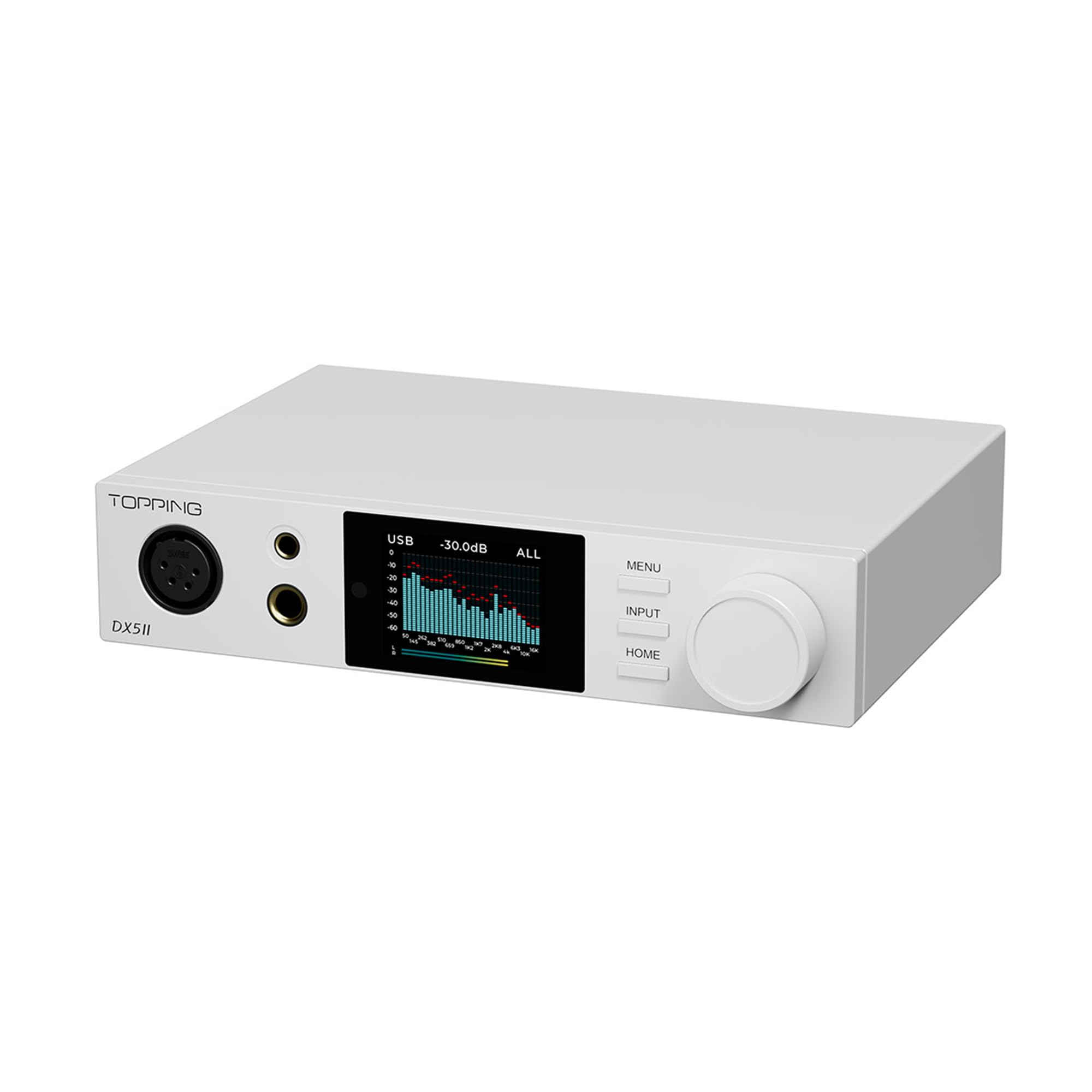
The TOPPING DX5 II is a desktop all-in-one that pushes balanced output to 7600mW per channel into 32Ω — an absurd level of headroom that can power even the most current-hungry planar headphones without breaking a sweat. It uses dual ESS ES9039Q2M DAC chips in a fully balanced quad-channel design, with a self-developed X-Hybrid amplifier circuit that delivers this power with vanishingly low distortion and a noise floor so black it disappears into the music.
The feature set is comprehensive: a 10-band high-precision PEQ for custom headphone correction, LDAC Bluetooth 5.1 via the QCC5125 chipset, USB/optical/coaxial inputs, and both 4.4mm balanced and 6.35mm single-ended outputs. The 2-inch Aurora UI color display is crisp and navigable via a pressable knob or included remote. Owners highlight the transparent, neutral sound signature that reveals every recording flaw or mastery without adding any coloration of its own.
One caveat: the headphone jacks are unprotected against hot-swapping, and a small number of units have reported failure after being plugged or unplugged while powered. Using the volume-down-before-connect routine mitigates this known issue. For anyone who wants a feature-dense, reference-level desktop DAC/Amp that can drive literally any headphone on the market, the DX5 II is a benchmark at its price point — just handle the jacks with care.
Why it’s great
- 7600mW balanced output drives any headphone
- 10-band PEQ with presets and custom curves
- LDAC Bluetooth for high-res wireless streaming
Good to know
- Hot-swapping headphones can damage the unit — always power down
- Remote not compatible with other Topping models
4. FiiO K13 R2R
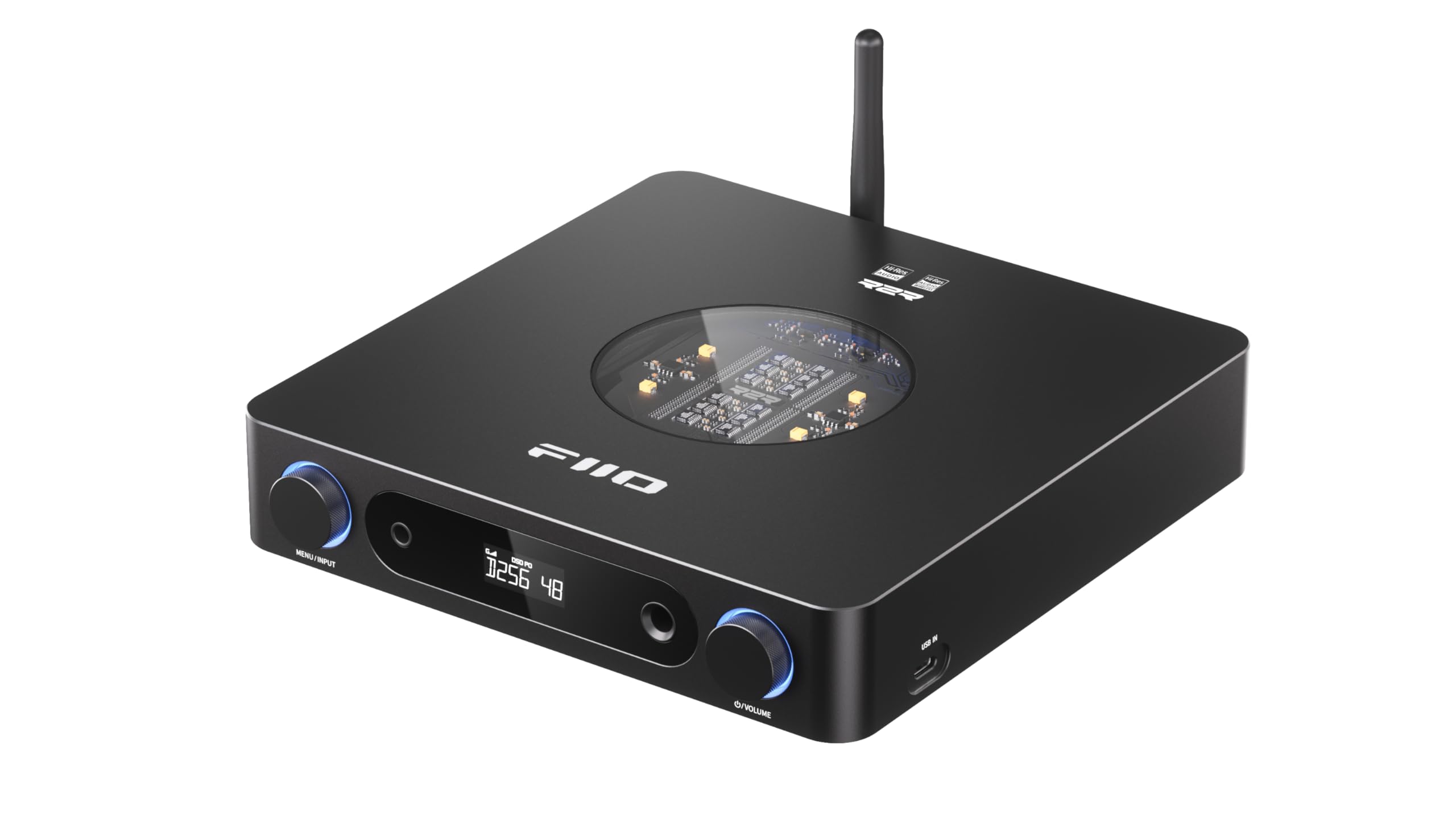
The FiiO K13 R2R is a desktop DAC/Amp that breaks from the ESS/Sabre orthodoxy by using a proprietary fully differential 24-bit R2R ladder DAC built from 192 ultra-precise 0.1% thin-film resistors. The result is a warmer, more analog-like timbre that reduces listening fatigue and adds body to instruments — especially noticeable on bright headphones or edgy studio monitors. It offers NOS (non-oversampling) mode that preserves the original sampling rate for a natural, unprocessed sound, or OS mode that upsampled to 384kHz for cleaner metrics.
The amplifier section delivers 2400mW of output, enough to drive most dynamic and planar headphones via the 4.4mm balanced or 6.35mm single-ended jacks. The 10-band PEQ is controlled via the FiiO Control app or web interface, and the unit supports LDAC Bluetooth 5.4 for high-res wireless streaming.
It also functions as a preamp with XLR balanced and dual RCA line outputs. The aluminum build is substantial, and the included infrared remote adds convenience. Setup requires installing the USB DAC driver on Windows, and the initial PEQ URL in the manual needs updating. For listeners who find ESS sabre DACs sterile or “etched,” the K13 R2R’s character is a deliberate, welcome alternative that makes streaming services sound more like vinyl than computer files.
Why it’s great
- R2R ladder DAC produces warm, natural, fatigue-free sound
- NOS mode preserves original recording character
- 10-band PEQ with app and web-based configuration
Good to know
- Windows requires driver installation — not fully plug-and-play
- NOS mode has slightly higher noise floor than oversampling mode
5. Khadas Tea Pro
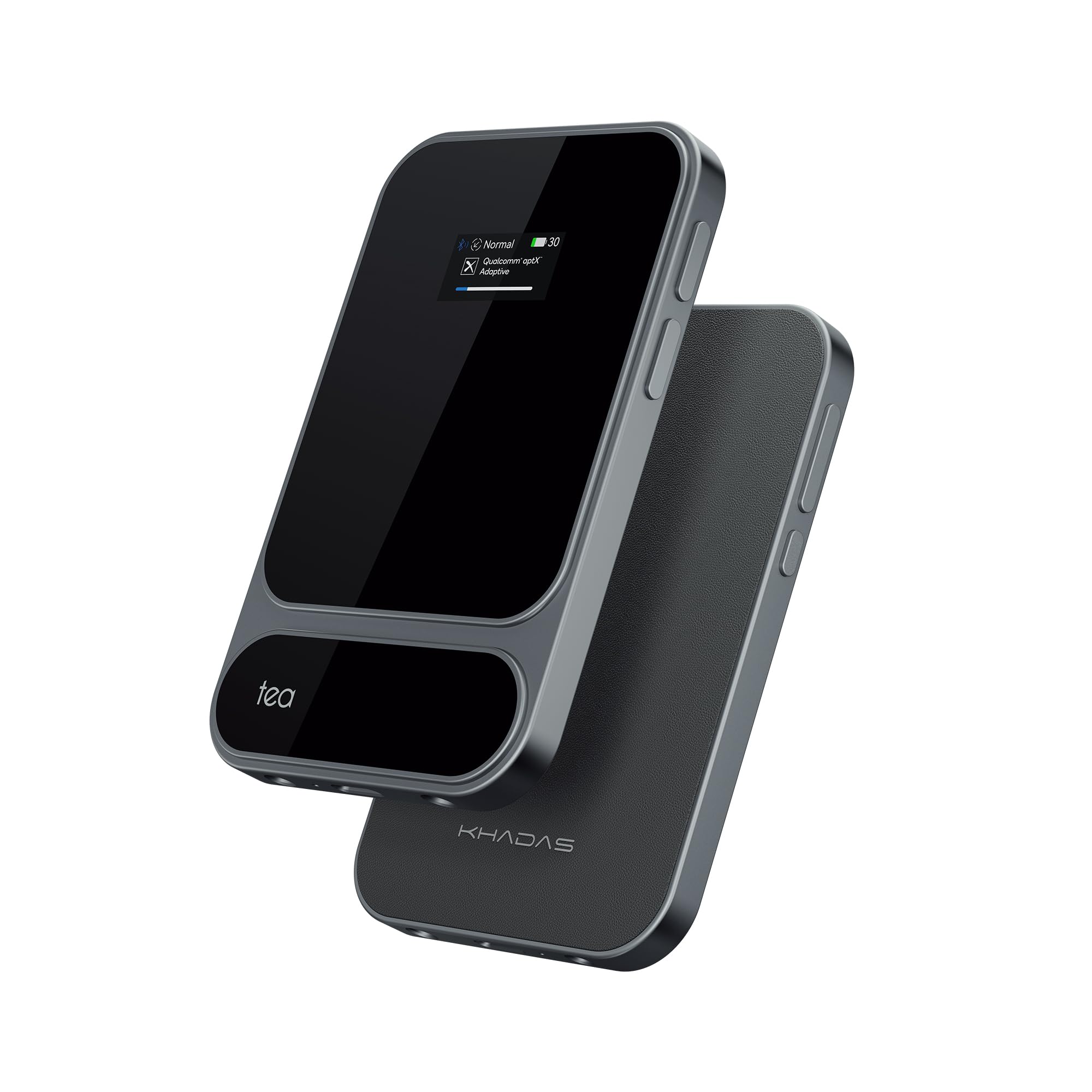
The Khadas Tea Pro is a credit-card-sized portable DAC/Amp that packs an ESS ES9039Q2M DAC, XMOS XU316 USB controller, and Qualcomm QCC5181 Bluetooth chip into a 7.85mm-thin aluminum body. Weighing only 96 grams, it magnetically attaches to MagSafe iPhones (12-17) via a leather-backed mount, turning your phone into a high-resolution audio source without dangling cables. It supports LDAC, aptX HD, aptX Adaptive, and AAC codecs over Bluetooth 5.4, plus PCM up to 768kHz/32-bit and DSD512 over USB.
The 2100mAh battery delivers up to 11 hours of wireless playback or 8 hours wired. Output is via both 3.5mm single-ended and 4.4mm balanced jacks. The 0.95-inch AMOLED screen shows volume, gain, battery, and audio format at a glance. Owners praise the detailed, spacious sound signature with IEMs like the IE 600 and the convenience of magnetic mounting that keeps the unit flush against the phone — though the 4.4mm plug’s thickness can lift the DAC off the phone, weakening the magnetic hold on some cases.
DSD playback requires careful setup: the iPhone volume must be maxed to detect DSD streams, and volume is then controlled only on the Tea Pro. Not all units auto-detect DSD consistently, sometimes requiring a power cycle. For daily wired or wireless listening with high-resolution streaming, the Tea Pro’s combination of portability, connectivity, and clean amplification is nearly unmatched in its form factor.
Why it’s great
- Ultra-compact (7.85mm) with MagSafe mounting for phones
- Full LDAC, aptX Adaptive, and DSD512 support
- 11-hour battery life for wireless listening
Good to know
- 4.4mm plug thickness can break magnetic hold on slim cases
- DSD detection can be temperamental — sometimes requires power cycling
6. SPACE PRO
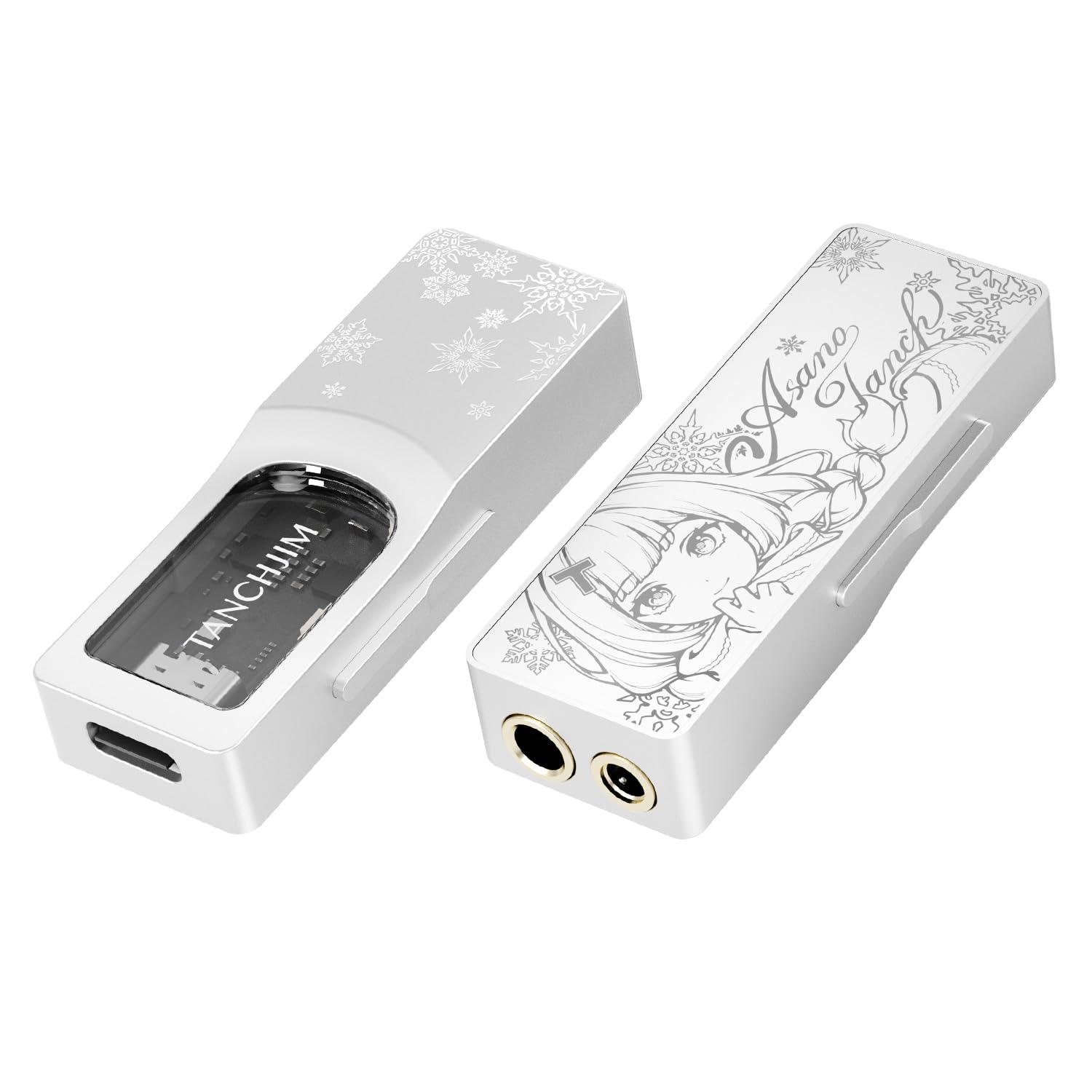
The SPACE PRO from TANCHJIM is a portable DAC/Amp that bridges high-fidelity audio and gaming-specific features. It packs dual CS43198 DAC chips with independent SGM8262 amplifiers for each channel, delivering 618mW into 26Ω balanced. The balanced output achieves a 131dB dynamic range and 0.000199% THD+N — figures that rival desktop units. But the headline feature is the “Tactical Perception” system: an app-driven EQ that isolates and enhances in-game sounds like footsteps, gunshots, and impacts, paired with virtual 5.1/7.1 surround processing.
The 3.5mm jack supports CTIA-standard microphones and inline controls, letting you use a gaming headset’s mic while the 4.4mm output drives high-impedance headphones simultaneously. Build quality is premium — a stainless steel shell with a USB-C silver-plated monocrystal copper cable that reduces interference. Owners report a clean, controlled sound signature with excellent spatial separation in games, and neutral enough for music after tweaking the app’s presets.
The companion app is functional but unpolished — the website is in Chinese, and the software interface can be clunky. The lack of a dedicated gain button means switching between IEMs and full-size headphones requires menu diving. For gamers who want a single portable device that handles competitive audio cues, mic integration, and music listening without swapping gear, the SPACE PRO is a niche-filling champion that punches well above its price.
Why it’s great
- App-controlled tactical EQ for in-game audio cues
- 3.5mm mic support works simultaneously with 4.4mm headphone output
- Very low THD+N (0.000199%) and 131dB dynamic range
Good to know
- App and firmware website are Chinese-language — English version limited
- Gain control requires software adjustment, no hardware button
7. FIIO KA15

The FIIO KA15 is a portable USB dongle DAC/Amp that punches far above its dongle-sized enclosure. It uses dual Cirrus Logic CS43198 DAC chips paired with dual SGM8262 op-amps, capable of 560mW balanced output in its patented Desktop Mode — a 207% increase over the previous KA5 generation. The 0.96-inch IPS color screen with retro tape-recorder UI is a visual delight, and the FIIO Control app gives you full control over 10-band PEQ, channel balance, UAC mode, and screen brightness. It supports PCM up to 768kHz/32-bit, DSD256, and Hi-Res Audio certification.
A standout feature is real-time voltage and current monitoring that dynamically adjusts power consumption. When music stops, the KA15 enters ultra-low-power sleep mode, preserving your phone’s battery overnight. The 3.5mm jack doubles as a coaxial S/PDIF output for connecting to external decoders. It also supports CTIA-standard microphones via the 3.5mm port. Owners describe it as a “beast” for its size, easily driving 80-ohm headphones to satisfying volume levels with a tight, detailed bass and smooth treble.
However, some units suffer from quirks: track skip buttons can be unresponsive, and a small number of units fail to power up immediately on connection. The detachable USB cable is stiff and one owner reported it damaging their phone’s USB port. Sound quality is excellent, but it is worth noting that a premium modern phone’s internal DAC may equal the KA15 with high-res FLAC files — though the extra power headroom and PEQ remain unique advantages. For those wanting a feature-rich dongle with a screen and app control, the KA15 is a top contender.
Why it’s great
- Desktop Mode delivers 560mW balanced from a dongle form factor
- Real-time power monitoring and ultra-low-power sleep
- Full 10-band PEQ with app and web interface
Good to know
- Stiff detachable cable can stress phone USB ports
- Track skip buttons occasionally unresponsive
8. Protocol Max
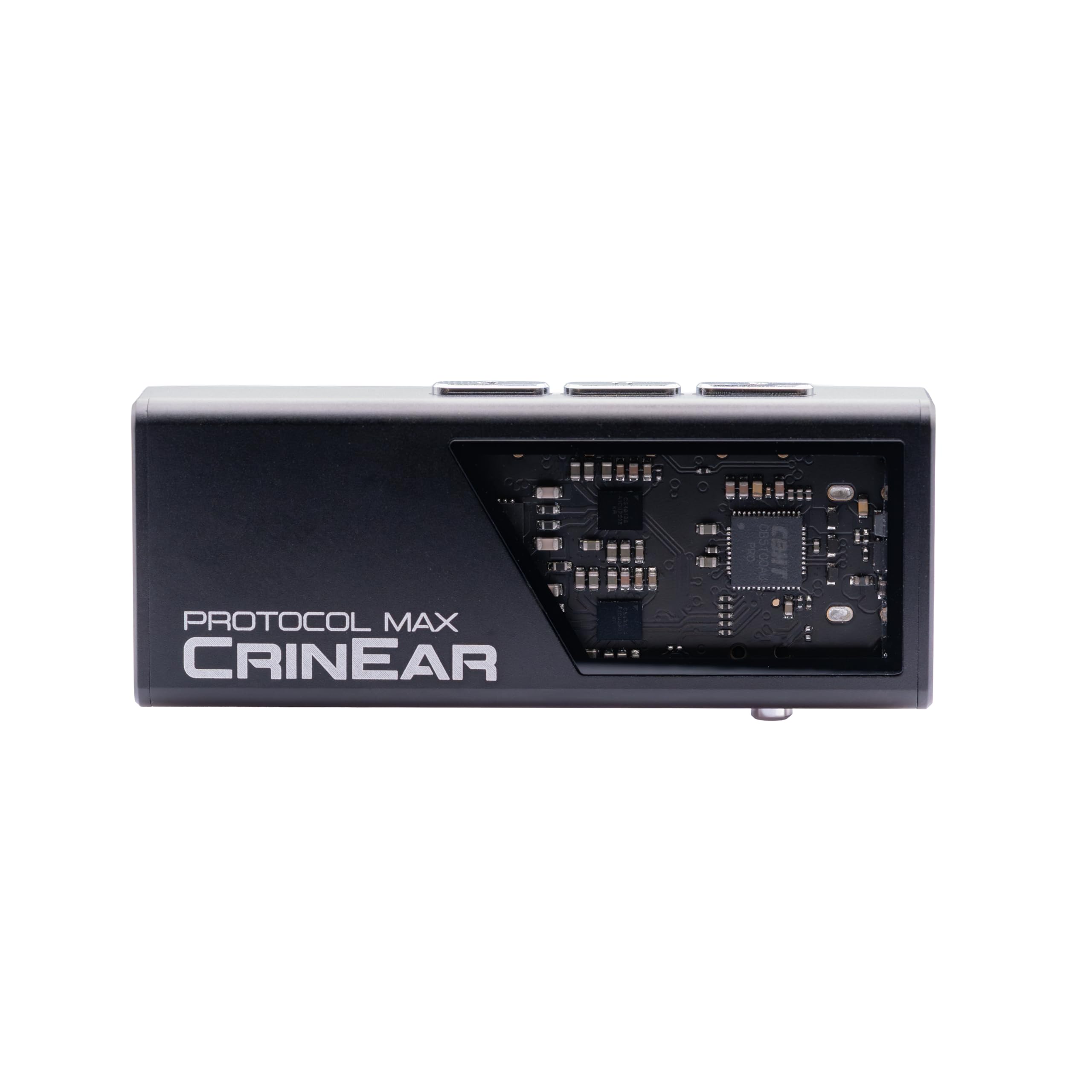
The Protocol Max is a portable DAC/Amp that uses dual Cirrus Logic CS43198 DAC chips and dual SG Micro SGM8262-2 operational amplifiers to deliver 600mW of power from its balanced 4.4mm output. What sets it apart is the browser-based 10-band parametric EQ — you connect via a PC or phone browser, adjust filters, save presets directly to the device, and disconnect. No app installation, no drivers, no firmware updates needed. The EQ presets persist even after power cycling, making it a true set-it-and-forget-it tool for headphone correction.
It features two power modes: Eco for extended battery life and Boost for maximum output. The anodized aluminum housing feels premium and durable. Owners report it drives the Sennheiser HD 600 to loud levels at 25% volume via the 4.4mm balanced output — previously needing 50% on other dongles. The 10-band PEQ is described as a “game-changer” for correcting headphone frequency response to modern target curves, with users noting they no longer feel the need to upgrade IEMs after dialing in their preferred sound.
The main downsides: it has no internal battery — it draws power from the source device, which can drain a phone battery noticeably faster. The EQ setup via a desktop browser is powerful but clunky for beginners, and the documentation is minimal. A small number of units developed buzzing or static within a few weeks, though replacements have been reliable. For the price, the combination of dual flagship DACs, clean 600mW output, and persistent PEQ is unmatched in the portable dongle space.
Why it’s great
- Browser-based 10-band PEQ saves presets directly to device
- 600mW balanced output drives HD 600 class headphones easily
- Dual CS43198 DACs deliver clean, detailed sound
Good to know
- No internal battery — drains phone battery faster
- Minimal documentation and browser EQ setup is clunky for newcomers
9. S.M.S.L DS100

The S.M.S.L DS100 is a compact desktop DAC/Amp that proves you don’t need a large budget for transparent, clean amplification. It uses a single Cirrus Logic CS43131 chip — the same family found in many portable dongles — but with desktop-grade implementation via the CK-03 clock processing circuit and multiple low-noise LDO power supplies. The result is a THD+N of just 0.00017% (-115dB) and an output capable of 7 Vrms into 600Ω high-impedance headphones. It supports MQA and MQA-CD via the XMOS XU-316 USB bridge, plus PCM up to 32-bit/768kHz and DSD256.
The DS100 offers both 6.35mm single-ended and 4.4mm balanced headphone outputs, plus coaxial, optical, and USB inputs. The CNC-machined aluminum body is only 3.5 inches square, with a gold-plated finish that feels premium. It draws power from USB, eliminating the need for a wall wart. Owners highlight its plug-and-play simplicity with the DT 990 Pro (80-ohm) and HD 58x, praising the convenient physical volume knob and zero-noise background. It also functions as a line-level DAC via the RCA outputs.
Potential downsides: the DS100 does not include a 3.5mm adapter for the headphone jack, and Windows users must download a driver. The headphone output is limited to 61mW into 16Ω, meaning it’s not ideal for very low-impedance, current-hungry planars. For anyone starting their desktop HiFi journey with a pair of dynamic headphones in the 32-300 ohm range, the DS100 delivers reference-quality transparency and a dead-quiet background at a near-entry-level price.
Why it’s great
- Ultra-low THD+N (0.00017%) for a clean, transparent sound
- 7 Vrms balanced output for high-impedance headphones
- Compact aluminum body with coax/optical/USB inputs
Good to know
- 61mW into 16Ω — not ideal for current-hungry low-impedance planars
- Windows driver download required; no 3.5mm adapter included
FAQ
Do I need a balanced cable to use a balanced output?
Will a DAC/Amp improve sound quality from my phone or laptop?
What does PEQ do and do I really need it?
Final Thoughts: The Verdict
For most users, the dac amp for headphones winner is the iFi Hip-dac 3 because it delivers transparent, high-power output in a portable package with PowerMatch and iEMatch for unmatched versatility across headphone types. If you want desktop-level raw power and balanced preamp capability, grab the Fosi Audio ZH3. And for a warm, analog-sounding R2R experience that reduces fatigue during long listening sessions, nothing beats the FiiO K13 R2R.

Mo Maruf
I created WellFizz to bridge the gap between vague wellness advice and actionable solutions. My mission is simple: to decode the research and give you practical tools you can actually use.
Beyond the data, I am a passionate traveler. I believe that stepping away from the screen to explore new environments is essential for mental clarity and physical vitality.