Our readers keep the lights on and my smoothie glass nicely filled. As an Amazon Associate, I earn from qualifying purchases.
A muddy midrange, a collapsed soundstage, or a persistent hiss from your speakers often has nothing to do with your expensive amplifier or high-end headphones. The real bottleneck for many home audio setups is the digital-to-analog conversion happening inside a laptop’s noisy internal sound card or a TV’s cheap output stage. A dedicated D to A converter bypasses that noisy path, handling the critical job of translating digital bits into an analog audio signal with precision, low jitter, and a clean noise floor that reveals the details your music was always hiding.
I’m Mohammad Maruf — the founder and writer behind WellFizz. My research process for this guide involved cross-referencing technical specifications like DAC chip architecture, output voltage, supported sample rates, and connector types from seven distinct models to identify the units that deliver measurable audio fidelity improvements for real-world listening scenarios.
Whether you are building a desktop headphone rig, upgrading a vintage stereo system, or integrating a streaming source into your home theater, selecting the right component matters. This guide breaks down the specs, use cases, and trade-offs to help you find the best d to a converter for your specific audio chain.
How To Choose The Best D To A Converter
Choosing the right converter starts with understanding your signal path from source to amplifier. A mismatch in output type — for example, using an unbalanced RCA cable when your amplifier accepts balanced XLR — can introduce noise and reduce dynamic range. The right converter matches your source, your amplifier, and your listening expectations precisely.
Output Type: Balanced vs. Single-Ended
Balanced XLR outputs carry a inverted copy of the signal alongside the original, allowing the amplifier to cancel out noise picked up along the cable run. If your amplifier or powered monitors have XLR inputs, a converter with balanced outputs will deliver a quieter background and greater channel separation. Single-ended RCA outputs remain standard for consumer gear and vintage receivers, and many modern converters include both to maximize compatibility.
DAC Chip Architecture
The ESS Sabre series (ES9039Q2M, ES9018K2M) is known for extremely low distortion and high dynamic range — ideal for critical listening. The XMOS XU316 interface chip manages USB data timing to reduce jitter. A converter using a reference-grade DAC chip paired with an asynchronous USB controller will generally outperform a generic chip even if the headline sample rate number is identical on paper.
Connectivity & Sample Rate Support
For desktop use, USB input is standard and should support at least 24-bit/192kHz. For home theater integration, HDMI ARC input is a major convenience. Optical and coaxial inputs allow connection to CD transports, game consoles, and older TVs. Higher sample rate support (768kHz, DSD512) is less about audible benefits and more about ensuring the converter’s internal processing is modern and capable — a good indicator of overall build quality.
Quick Comparison
On smaller screens, swipe sideways to see the full table.
| Model | Category | Best For | Key Spec | Amazon |
|---|---|---|---|---|
| WiiM Amp Ultra | Streaming Amp | All-in-one streaming & room correction | ESS ES9039Q2M DAC + 100W amp | Amazon |
| Fosi Audio ZD3 | DAC Preamp | Desktop/desk with ARC & balanced out | ES9039Q2M + XMOS XU316, DSD512 | Amazon |
| FiiO K11 | DAC/Amp | Desktop headphone listening | 1400mW, 384kHz/24-bit, 4.4mm balanced | Amazon |
| Blafili B3 | Bluetooth Receiver | Hi-Fi wireless streaming to stereo | ESS ES9018K2M, balanced XLR out | Amazon |
| 1Mii B03S | BT Transceiver | TV wireless audio & bypass mode | SABRE DAC, aptX Adaptive, 265ft range | Amazon |
| SMSL PO100 PRO | DDC | Jitter reduction & re-clocking | XMOS XU316, MQA, I2S output | Amazon |
| Fosi Audio ZP3 | Preamp | System control & sub integration | Balanced in/out, HPF, bass/treble EQ | Amazon |
In‑Depth Reviews
1. WiiM Amp Ultra
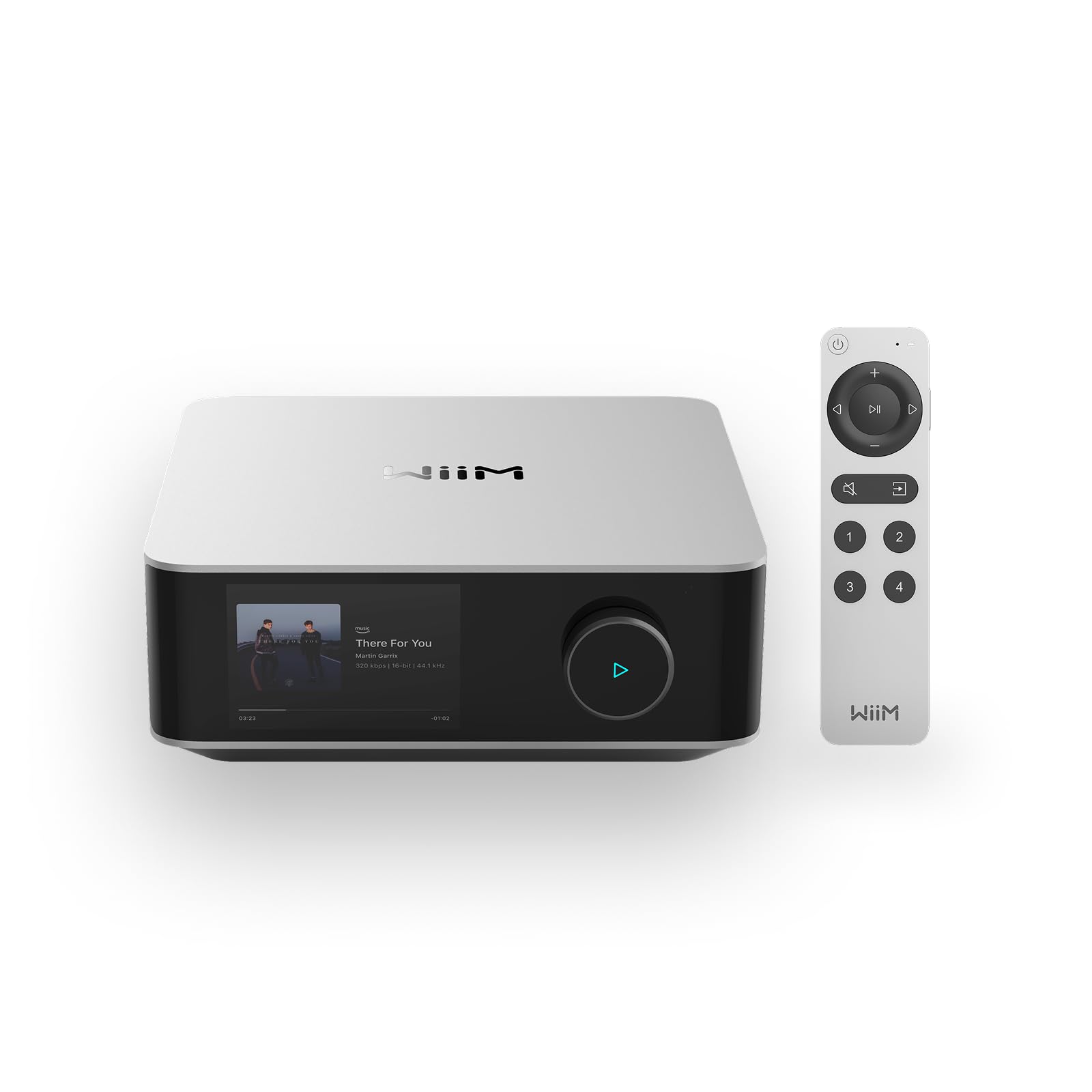
The WiiM Amp Ultra is the most complete all-in-one audio solution in this lineup, combining a premium ESS ES9039Q2M DAC with dual TI TPA3255 amplifiers rated at 100 watts per channel. The inclusion of Wi-Fi 6, Bluetooth 5.3 with LE Audio, and HDMI ARC makes it equally suited for streaming hi-res music from TIDAL or Qobuz and connecting to a TV for movie dialogue clarity. The built-in RoomFit room correction auto-calibrates the sound to your space — a feature typically reserved for much more expensive processors.
The 3.5-inch touchscreen display shows album art and system settings, which streamlines daily use without requiring the app for basic volume changes or source selection. Dual subwoofer outputs and a dedicated preamp output give flexibility for 2.1 or even 2.2 setups. The amplifier section runs remarkably cool and drives demanding 4-ohm towers with authority, delivering studio-perfect clarity and separation even at reference levels.
Owners upgrading from older receivers report a massive leap in sound quality — extended highs and lows, vanishingly low noise floor, and precise bass management through the app’s parametric EQ. The only missing piece is AirPlay compatibility, which is not supported. For anyone wanting one box that streams, converts, amplifies, and corrects for room acoustics, this delivers performance that rivals separates at a fraction of the footprint.
Why it’s great
- ESS Sabre DAC delivers exceptional dynamic range and low THD+N
- RoomFit room correction transforms sound in untreated spaces
- HDMI ARC, optical, and RCA inputs cover TV and legacy sources
Good to know
- Does not support AirPlay streaming
- Bluetooth source switching has a noticeable delay
2. Fosi Audio ZD3

The Fosi Audio ZD3 is a dedicated DAC preamp built around the same flagship ESS ES9039Q2M chip found in the WiiM Amp Ultra, but it remains a pure digital-to-analog converter without an integrated amplifier. This makes it ideal for pairing with a separate power amp like Fosi’s own ZA3. The XMOS XU316 interface handles asynchronous USB audio, supporting sample rates up to 32-bit/768kHz and DSD512 — ensuring compatibility with any lossless library you throw at it.
The standout feature for home theater fans is the HDMI ARC input, which lets the ZD3 pull audio from your TV without an extra optical cable. Balanced XLR and unbalanced RCA outputs are both active simultaneously, so you can run two different amplifier setups at the same time. The 1.5-inch OLED display is crisp and readable across a room, and the included remote handles volume, input selection, and preamp bypass switching for integration with a receiver.
Owners consistently note that the ZD3 lifts a veil from their system — soundstage expands, transients gain air, and background noise drops to near nothing. Some prefer replacing the stock LME49720 op-amps with Sparkos or NJR units for warmer bass, but even stock the unit is competitively clean. The lack of auto standby is a minor inconvenience, but the overall build quality and connectivity make this a strong contender for a desktop or living room stack.
Why it’s great
- HDMI ARC input simplifies TV audio connection
- Balanced XLR and RCA outputs work simultaneously
- User-swappable op-amps for sound signature tuning
Good to know
- No auto standby function; unit idles at ~1W
- Volume knob design may not appeal to all users
3. FiiO K11

The FiiO K11 is a compact desktop DAC and headphone amplifier engineered for users who primarily listen through headphones but still want line outputs for powered speakers. Its 1400mW output into 32 ohms is sufficient to drive most dynamic and planar magnetic headphones up to 350 ohms to loud levels without distortion. The 6.35mm single-ended and 4.4mm balanced headphone outputs give flexibility for aftermarket cables.
Input options include USB-C, coaxial, and optical — a well-rounded selection for connecting a PC, CD transport, or game console. The high-definition VA display shows sample rate, volume level, gain setting, and output mode clearly, making it easy to confirm you’re getting bit-perfect playback. The aluminum alloy body feels solid and occupies minimal desk space, measuring under 10 inches wide.
Listeners report a clean, neutral sound signature with noticeably better stereo separation and a lower noise floor compared to motherboard or laptop outputs. The built-in digital filters offer subtle tonal shaping options, with Filter 4 being the most natural according to several users. Some note that the USB-C port may require a specific cable for Linux compatibility, but with Windows and macOS it is plug-and-play. For a pure, no-nonsense headphone DAC/amp under serious competition, the K11 holds its ground.
Why it’s great
- High power output drives demanding headphones easily
- Clear VA display shows real-time sample rate and volume
- Compact metal chassis fits any desktop layout
Good to know
- USB-C to USB-A cable may not work on Linux; use C-to-C
- Balanced output via 4.4mm requires a compatible cable
4. Blafili B3

The Blafili B3 fills a specific but important niche: a Bluetooth receiver that prioritizes sound quality over convenience gimmicks. It pairs the Qualcomm QCC5125 chipset with the ESS ES9018K2M DAC — the same DAC that appeared in many high-end portable players a few years ago. The output options are unusually comprehensive: balanced XLR, unbalanced RCA, coaxial, and optical (Toslink) all work simultaneously, so you can send the same signal to an amplifier and a subwoofer or recording interface at the same time.
The unit features a removable RP-SMA antenna for extended range — up to 100 feet in open air — and a small 1.3-inch acrylic-covered display that shows Bluetooth codec and connection status. Unlike many Bluetooth receivers that blast loud pairing prompts, the B3 uses silent pairing with no beeps or voice announcements, preserving the quiet of your listening room. It also functions as a USB DAC up to 16-bit/48kHz for a computer connection.
Listeners confirm that the B3 delivers audiophile-grade clarity and dynamics via LDAC and aptX HD, with a noise floor low enough to rival wired DACs in the same price range. The XLR outputs are split L/R (not a balanced stereo signal), but they drive balanced inputs with excellent noise rejection. For anyone with a vintage or high-end amplifier that lacks Bluetooth, the B3 adds wireless streaming without sacrificing analog integrity.
Why it’s great
- Balanced XLR, RCA, coax, and optical outputs all active
- ESS ES9018K2M DAC delivers low distortion and high dynamic range
- Removable antenna extends usable range significantly
Good to know
- Power adapter not included in the box
- XLR outputs are split L/R, not a stereo pair
5. 1Mii B03S

The 1Mii B03S is primarily a Bluetooth transmitter and receiver, but it packs a SABRE DAC that elevates its sound quality above typical Bluetooth adapters. In transmitter mode, it streams audio from a TV, DVD player, or PC to wireless headphones or speakers. In receiver mode, it brings Bluetooth streaming to a wired stereo system. The family-friendly bypass mode is a standout feature — it outputs audio to both Bluetooth headphones and a wired speaker simultaneously, allowing one listener to use headphones while others hear the same content through the room speakers.
Support for aptX Adaptive, aptX Low Latency, and aptX HD means that lip-sync issues are virtually eliminated with compatible headphones. The Class 1 Bluetooth radio paired with dual antennas achieves a claimed range of 265 feet in open air, which is enough to cover a large house or backyard. Connectivity covers optical, RCA, and 3.5mm inputs/outputs, and volume control is handled via physical buttons on the unit.
Users upgrading from TV Bluetooth report an immediate fix for stuttering audio and low volume. One owner noted that pairing can be slightly finicky without a screen, but once connected, stability is rock-solid. The B03S is not a pure D to A converter in the traditional sense — it is a wireless audio bridge with a high-quality DAC inside. For the specific use case of adding Bluetooth to an older TV or stereo while keeping low latency, it is a top-tier solution.
Why it’s great
- Dual transmission mode: private headphones + wired speakers
- aptX Low Latency eliminates audio-video delay
- Extreme range covers large indoor spaces
Good to know
- No on-screen display; pairing relies on button combos
- Cannot operate in TX and RX modes at the same time
6. SMSL PO100 PRO

The SMSL PO100 PRO is technically a digital-to-digital converter (DDC), not a DAC — it takes a USB audio signal and outputs it via optical, coaxial, or I2S without performing digital-to-analog conversion. Its job is to re-clock the digital signal, reducing jitter before the signal reaches your main DAC. This is a critical upgrade path for anyone using a streamer or computer as a source and finding that their DAC’s USB input sounds inferior to its coaxial or optical input.
The XMOS XU316 chip powers asynchronous USB transmission, supporting PCM up to 32-bit/768kHz and DSD native/DOP64. I2S output at LVDS level allows direct connection to many DACs with I2S inputs for potentially lower clock jitter. The unit also supports MQA decoding onboard, which is useful for TIDAL subscribers who want first unfold handled before the DAC. It comes with both USB-A-to-C and USB-C-to-C cables for broad device compatibility, including PS5, Nintendo Switch, and Android phones.
Real-world reactions are striking: users describe getting a “thumping chest” drum solo and “bolder transients” after adding the PO100 PRO between a WiiM Ultra and a DAC. The effect is most noticeable on already revealing systems where jitter was the limiting factor. Setup is straightforward, but note that it requires an optical, coaxial, or I2S input on your amplifier or DAC. For anyone whose DAC lacks a good USB receiver, this small box delivers a disproportionately large upgrade.
Why it’s great
- XMOS XU316 chip provides ultra-low jitter re-clocking
- I2S output supports high-bandwidth digital connection
- MQA decoding for TIDAL users
Good to know
- Not a DAC — requires an external converter
- I2S mode must be set correctly via physical switch
7. Fosi Audio ZP3
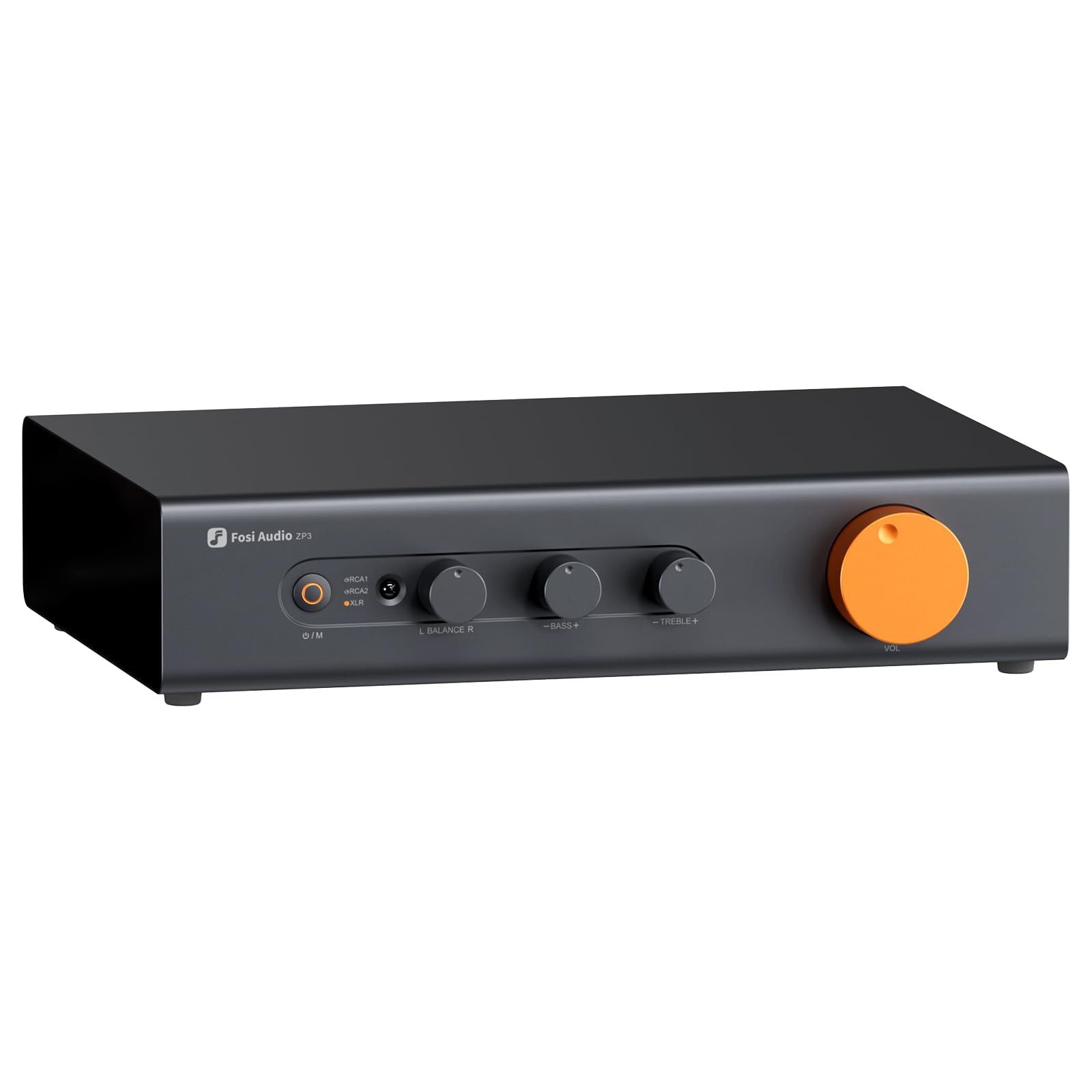
The Fosi Audio ZP3 is a balanced preamplifier that integrates with an existing DAC and power amplifier to add subwoofer management, high-pass filtering, and tone control. It accepts three inputs — two RCA and one XLR — and provides RCA, XLR, and dedicated subwoofer outputs. The high-pass filter operates at three selectable frequencies (50Hz, 80Hz, 120Hz), sending only bass to the sub-out while keeping main speakers clean of deep low frequencies for improved clarity.
Built with ELNA capacitors, NJR NJU72315 volume control IC, and gold-plated RCA jacks, the ZP3 prioritizes signal purity. The bass and treble controls include a bypass function for a pure signal path when desired. A 12-volt trigger input/output allows synchronized power-on with other components. The remote control handles input switching and volume, though the knob on the front panel provides no visual volume indicator — a common complaint among users.
Owners report that the ZP3 integrates seamlessly with Fosi’s ZD3 and ZA3 stack, creating a modular system that outperforms many integrated amps in terms of flexibility and sound quality. The sub-out integration is especially valued by those moving from a 2.0 to a 2.1 setup. The absence of a display for volume level is the main point of friction, but for those who set their volume via remote from a listening position, it is a non-issue. For a balanced preamp at this price point, the feature set is generous.
Why it’s great
- High-pass filter cleans up main speaker response
- Dedicated subwoofer output for 2.1 systems
- Bass/treble tone controls with bypass option
Good to know
- No on-screen volume indicator on the knob
- XLR input may cause popping on some source changes
FAQ
Is a digital-to-analog converter worth it if I only listen to Spotify?
What is the difference between a DAC and a DDC?
Does a balanced headphone connection really sound better?
Can I use a Bluetooth receiver as my main DAC for hi-fi listening?
Final Thoughts: The Verdict
For most users, the d to a converter winner is the Fosi Audio ZD3 because it pairs a flagship ESS ES9039Q2M DAC chip with HDMI ARC, balanced XLR output, and user-swappable op-amps at a price that undercuts most competitors. If you want the absolute best streaming all-in-one with room correction, grab the WiiM Amp Ultra. And for a pure, no-compromise wireless upgrade to a vintage stereo system, nothing beats the Blafili B3 with its balanced XLR outputs and ESS DAC.

Mo Maruf
I created WellFizz to bridge the gap between vague wellness advice and actionable solutions. My mission is simple: to decode the research and give you practical tools you can actually use.
Beyond the data, I am a passionate traveler. I believe that stepping away from the screen to explore new environments is essential for mental clarity and physical vitality.