Our readers keep the lights on and my smoothie glass nicely filled. As an Amazon Associate, I earn from qualifying purchases.
Resurfacing a cylinder wall without the right tool is a direct path to scoring, uneven cross-hatching, and premature ring failure. A proper cylinder honing tool applies controlled abrasive pressure to restore the bore’s geometry, ensuring your new rings seat correctly and oil retention is consistent across every stroke. Whether you are deglazing a small engine cylinder or refreshing a V8 block, the distinction between a clean hone and a ruined bore comes down to stone grit selection, adjustable pressure control, and the tool’s ability to self-center within the bore.
I’m Mohammad Maruf — the founder and writer behind WellFizz. I have spent thousands of hours cross-referencing manufacturer specifications, reading verified buyer experiences, and analyzing the mechanical design elements that separate high-performing engine reconditioning tools from those that introduce taper or chatter.
This guide distills that research into a focused comparison of the top models available, helping you select the right best cylinder honing tool for your specific engine project without wasting time on tools that cannot deliver a consistent cross-hatch pattern.
How To Choose The Best Cylinder Honing Tool
Selecting the correct cylinder hone goes beyond matching the diameter of your bore. You need to consider the type of abrasive, the expansion mechanism, and whether the tool can compensate for minor wear without digging into the cylinder wall. Every engine rebuild or deglaze job demands a specific approach to grit and pressure.
Stone Grit and Material Compatibility
The grit number determines how aggressive the cut is and what surface finish you will achieve. Coarse 80-grit stones remove material quickly and are suited for rough bores or when you need to break a glaze before re-ringing. Medium 220 or 240-grit stones, typically silicon carbide, are the standard for finishing cast iron and mild steel cylinders, producing a 24–32 microinch Ra surface that allows oil to adhere properly. Using a grit that is too fine on a worn bore will not remove enough material for new rings to seat; too coarse and you risk excessive oil consumption.
Adjustable Expansion vs. Fixed Ball Hone Design
Rigid stone hones with micrometer or rack-and-pinion adjustment give you precise control over stone pressure, making them ideal for correcting slight taper or out-of-round conditions in larger engine blocks. Flexible ball hones, on the other hand, use abrasive globules bonded to nylon filaments that self-center and self-align within the bore. These are excellent for light deglazing and deburring cross-drilled holes because they follow the existing bore geometry without introducing a rigid cutting angle.
Bore Diameter Range and Shank Compatibility
Every hone has a stated operating range, and using it outside that range risks breaking stones or producing an uneven cut. For small engines, tools covering 2 to 7 inches are common. For automotive V8 blocks, a 3 to 4.25-inch range is standard. Ensure the shank diameter fits your drill chuck (usually 3/8 or 1/2 inch) and that the overall tool length allows you to reach the full depth of the cylinder without bottoming out on the crankshaft.
Quick Comparison
On smaller screens, swipe sideways to see the full table.
| Model | Category | Best For | Key Spec | Amazon |
|---|---|---|---|---|
| Brush Research FLEX-HONE | Ball Hone | Professional cross-hatch on cast iron | 240 grit, 4″ diameter, 6″ abrasive length | Amazon |
| Lisle 15000 | Rigid Stone Hone | Precision sizing on 3″-4.25″ bores | Micrometer feed, 5″ stones, rack & pinion | Amazon |
| Kolvoii Honing Set | Stone Hone Kit | Multi-size engine rebuilding | 4 hones, 11 spare stones, 3/4″-7″ range | Amazon |
| Pro-Graad TwistFlex | Ball Hone | 4.00″-4.27″ bores, self-centering | 240 grit, 4.25″ diameter, flexible stems | Amazon |
| ZXQDRE 4″ Ball Hone | Ball Hone | LS engine deglazing and deburring | 240 grit, 4″ bore, 13.5″ overall length | Amazon |
| Powerbuilt Deglazer | Stone Hone | Budget-friendly 2″-7″ deglazing | 220 grit stones, adjustable collar, flex shaft | Amazon |
| Garhgi Ball Hone | Ball Hone | Small engine 54mm bore refresh | 240 grit, 2.25″ diameter, polymer shaft | Amazon |
In‑Depth Reviews
1. Brush Research FLEX-HONE GBD40024

The FLEX-HONE is manufactured oversized by design — roughly 10% larger than the nominal bore diameter — so that when inserted, the abrasive globules bonded to flexible nylon filaments exert consistent radial pressure against the cylinder wall. This engineered oversize makes it self-centering, self-aligning, and self-compensating for wear, eliminating the chatter and uneven cuts common with rigid stone hones. In practice, users report producing a textbook 45-degree cross-hatch on small-block Chevy 350 bores in under ten seconds at low RPM with honing oil.
Each abrasive globule is a silicon carbide sphere fired onto the nylon strand, which prevents shedding and maintains cutting consistency throughout the tool’s life. The 240 grit is ideal for achieving a 24–32 microinch Ra finish on cast iron, mild steel, and softer ferrous materials — exactly the range required for proper oil retention on rebuilt engine cylinders. The 0.310-inch shank fits standard 3/8-inch drill chucks, and the overall 13.5-inch length gives you enough reach for deep six-cylinder blocks.
Made in the USA by Brush Research Manufacturing, the company that invented the ball hone concept, this tool carries a reputation for consistency that few competitors match. It excels equally on hydraulic cylinder restoration, brake master cylinders, and pneumatic bore finishing. The only trade-off is the upfront investment, which sits above most entry-level kits, but the predictable results and long service life justify the cost for anyone doing serious engine work.
Why it’s great
- Self-centering design prevents bore damage and ensures uniform cross-hatch.
- 240 grit silicon carbide produces the correct surface finish for ring seating.
- Made in the USA with decades of proven performance in professional shops.
Good to know
- Requires lubricant (honing oil or motor oil) for proper operation.
- Order by bore size; the tool will feel tight on first insertion due to the intentional oversize.
2. Lisle 15000 Engine Cylinder Hone

The Lisle 15000 is a rigid stone hone that uses a micrometer head and a fast-action rack-and-pinion mechanism to expand the stones against the bore wall with measurable precision. This design is critical when you need to correct minor taper or out-of-round conditions because you can incrementally increase stone pressure and monitor the cut with a bore dial gauge. The standard range covers 3 to 4.25 inches, which fits the vast majority of automotive four-cylinder and V8 engine blocks.
Long 5-inch stones cut faster and more evenly than shorter alternatives, reducing the number of passes needed to achieve a uniform cross-hatch. The kit ships with one set of 80-grit coarse stones and one set of 180-grit medium stones, plus a cleaning brush and dressing paddle stored in a hard case. The bottom guard plate protects the crankshaft from accidental contact, which is a thoughtful touch for in-chassis honing. The universal joint action allows the tool to find its own alignment, making rear cylinder access on V-configurations more manageable.
The tool weighs roughly four pounds and features a hex shank end that requires a heavy-duty 1/2-inch drill. Users consistently report that the roundness of their finished bores checks out perfectly against a dial indicator when proper honing oil and technique are used. The main downside is the price, which positions it as a serious investment for the home mechanic. However, for those rebuilding multiple engines or working on larger blocks where a ball hone cannot correct geometry, the Lisle 15000 delivers machine-shop-level results.
Why it’s great
- Micrometer adjustment allows precise stone expansion for correcting bore geometry.
- 5-inch stones cut faster and produce a more consistent finish than shorter stones.
- Bottom guard plate prevents crankshaft damage during in-chassis honing.
Good to know
- Requires a 1/2-inch heavy-duty drill; standard 3/8-inch drills may lack torque.
- Clip-on stones can loosen on the racks if not properly seated before use.
3. Kolvoii Cylinder Hone Tool Set
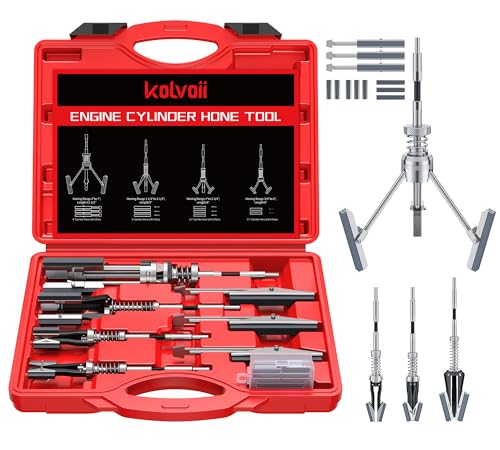
The Kolvoii set includes four separate hone heads: two 1-1/8-inch units (one with two claws, one with three claws), a 2-inch three-claw hone, and a 3-inch three-claw hone. This variety lets you work on cylinders ranging from 3/4 inch up to 7 inches without buying individual tools for each bore size. Each head is constructed from structural-grade A36 steel with a zinc coating to resist corrosion, and the self-aligning flexible shaft automatically centers itself inside the bore as you apply rotational pressure.
The adjustable tension mechanism works via a clockwise or counterclockwise screw that increases or decreases spring-loaded arm pressure against the honing stones. This fine control is especially useful when switching between different cylinder diameters within the same engine block. The 11-piece replacement stone set includes three 4-inch grind stones, three 2-inch grind stones, and five 1-1/8-inch grind stones, all in 220 grit. That grit is appropriate for light deglazing and cleaning up carbon deposits without removing excessive material from the bore wall.
Users who have honed multiple engines — including a Can-Am Outlander 570 — report that the tool delivers clean, consistent results while keeping everything organized in the included storage case. The main caveat is that some buyers experienced a claw breaking on the smallest hone head, though the manufacturer offered replacements promptly. This set is best suited for the DIY mechanic who services a variety of small engines, motorcycles, and automotive cylinders and wants one case to cover all those jobs.
Why it’s great
- Includes four hone heads covering 3/4-inch to 7-inch cylinders.
- Eleven spare 220-grit stones extend the usable life of the kit significantly.
- Self-aligning flexible shaft simplifies centering and reduces operator error.
Good to know
- The smallest 1-1/8-inch head can be fragile if excessive side pressure is applied.
- Not intended for heavy-duty shop use; best suited for DIY and occasional engine work.
4. Pro-Graad TwistFlex 4-1/4″ Cylinder Hone

The TwistFlex uses round silicon carbide spheres fastened to the ends of flexible nylon stems rather than abrasive bonded along the entire strand. This specific construction produces even pressure across the bore surface and excels at deburring cross-drilled holes without leaving a rough edge. The 4.25-inch diameter is designed for bores measuring 4.00 to 4.27 inches, making it ideal for larger displacement four-cylinder and V6 blocks where consistent finishing across the full stroke length is critical.
Pro-Graad recommends running this tool at 300 to 500 RPM with liberal lubricant application, and a maximum of two passes within 20 to 45 seconds of total run time. This short window is intentional — the abrasive globules cut fast, and over-honing can round off the cross-hatch peaks. The self-centering property of the flexible stems means the tool compensates for minor bore variations automatically, producing a consistent 24–32 Ra surface finish on cast iron, mild steel, and stainless steel.
The shank diameter is 0.354 inches, compatible with standard drill chucks, and the overall length of 13.5 inches provides adequate reach for deep bores. Users consistently report that the inexpensive price relative to the Brush Research unit does not translate to poor results — the TwistFlex cleans cylinder walls effectively and looks nearly unused after multiple applications when proper lubrication is used. The main limitation is its narrow bore range; you cannot use it on a 3-inch cylinder or a 5-inch bore, so verify your dimensions before purchasing.
Why it’s great
- Flexible nylon stems with abrasive spheres produce even pressure and deburr cross-holes.
- Self-centering design eliminates chatter and compensates for bore wear.
- Competitive pricing for a dedicated 4.25-inch ball hone with 240 grit.
Good to know
- Only fits bores between 4.00 and 4.27 inches; not adaptable to other sizes.
- Requires careful speed control and limited passes to avoid over-honing.
5. ZXQDRE 4 Inch Ball Hone
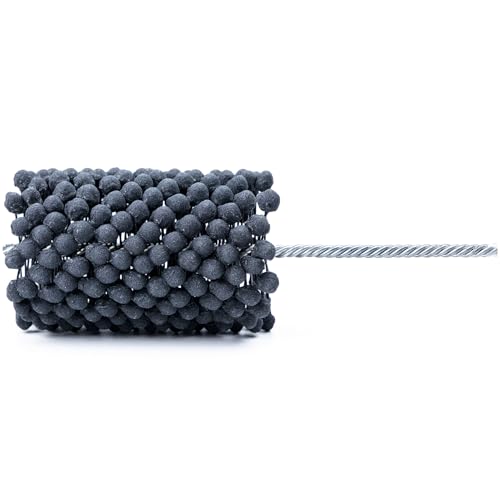
The ZXQDRE 4-inch ball hone targets a very specific bore range — 3.751 to 4 inches — which covers many popular small-block V8 engines such as the Chevy LS series. The 240-grit silicon carbide abrasive is rated to produce a 24–32 Ra finish, which is the correct texture for oil retention on iron and steel cylinder walls. Users report using this tool on 5.3-liter LS engines and seeing a clean deglaze with a visible cross-hatch after a few seconds of low-RPM work with honing oil.
The flexible, oversized design means the brush self-centers inside the bore, distributing cutting pressure evenly around the circumference. This characteristic reduces the risk of creating a tapered or out-of-round bore, which is a common issue when using a rigid hone without a torque plate. The tool also functions as a deburring brush for cross-drilled oil passages, finishing two tasks in one pass. The 13.5-inch overall length and 0.354-inch shank fit standard drill presses and hand drills without modification.
Construction quality feels solid for the price tier, with the abrasive spheres firmly bonded to the nylon filaments so no shedding occurs during normal use. The main limitation is the narrow bore diameter window — if your project falls outside 3.751 to 4 inches, you will need a different size. That said, for anyone working on LS or other small-block V8s, this tool provides professional-grade results without the premium price of the USA-made equivalent.
Why it’s great
- Specifically sized for LS and small-block V8 bores (3.751″-4″).
- Self-centering ball design prevents taper and produces an even cross-hatch.
- Finishes and deburrs cross-holes simultaneously, saving time on each cylinder.
Good to know
- Not suitable for bores outside the 3.751″-4″ range.
- Heavy use without lubrication will degrade the abrasive spheres prematurely.
6. Powerbuilt Adjustable Cylinder Deglazer
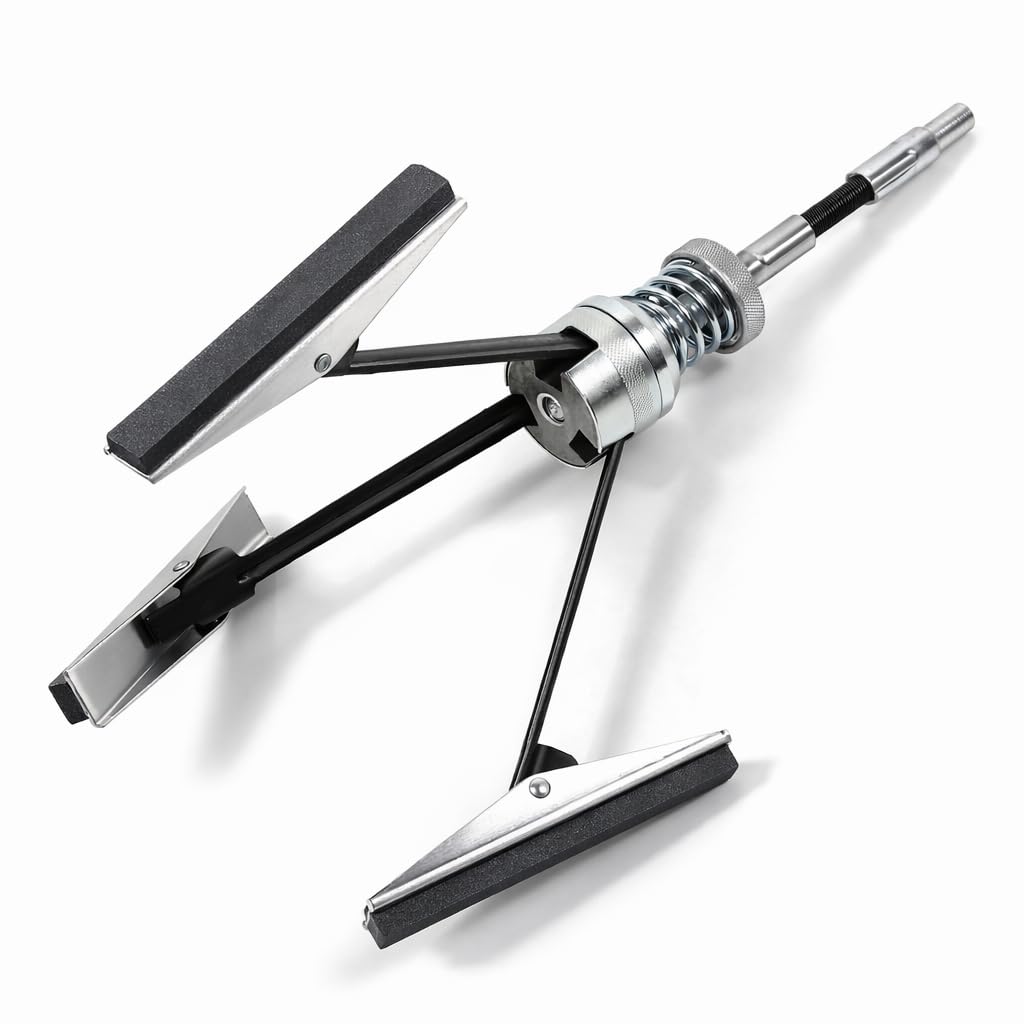
The Powerbuilt 648439 is a three-stone adjustable deglazer that uses a knurled wheel to control spring pressure against the cylinder wall. Its range of 2 to 7 inches covers everything from small engine bore sizes up to larger automotive cylinders. The stones are 4-inch long #220 grit units, which are replaceable when worn, and the flexible shaft allows the tool to self-center while reducing the risk of digging in at an angle. Users have successfully employed this hone on applications as diverse as Ford 351W V8 cylinders and Maglite flashlight interiors damaged by battery leakage, demonstrating its versatility beyond engine blocks.
The adjustable collar with a set screw lets you pre-set two maximum diameters, so you can quickly switch between different bore sizes without removing the tool from the drill. This feature is especially useful when honing a multi-cylinder engine where each bore may vary slightly. The knurled wheel provides tactile feedback on stone pressure, giving you a feel for how aggressively the stones are cutting. A lifetime warranty backs the tool, which is a strong indicator of expected durability at this price point.
Some users note that the #220 grit is appropriate for cast iron rings but not fine enough for moly rings, which require a finer stone. Additionally, extending the stones too far past the bottom of the bore can cause chipping or breakage, so careful depth control is necessary. For the DIY mechanic who needs one tool to handle multiple cylinder sizes without a major investment, the Powerbuilt deglazer delivers reliable performance with replaceable components that extend its service life.
Why it’s great
- Adjustable spring pressure gives you fine control over stone aggressiveness.
- 2- to 7-inch range covers most small to mid-size engine cylinders.
- Lifetime warranty and replaceable 220-grit stones lower long-term cost.
Good to know
- #220 grit is not suitable for moly rings; requires finer stones for those applications.
- Over-extension past the bore bottom can chip or break the stones.
7. Garhgi 2-1/4″ Cylinder Hone Tool
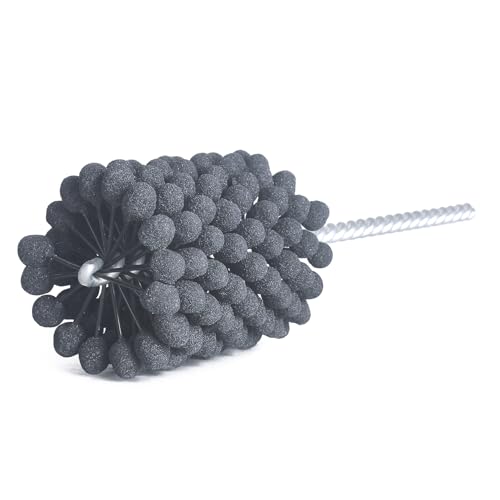
The Garhgi ball hone is built around a 2.25-inch diameter silicon carbide brush with 240 grit abrasive, designed for bores between 2.126 and 2.25 inches. This makes it an excellent choice for small single-cylinder engines found in lawn mowers, generators, and motorcycles. The abrasive spheres are bonded to flexible nylon bristles, and the brush features a polymer shaft rather than a solid steel shank, which reduces the risk of damage if an abrasive sphere detaches during operation.
Users report that the 54mm variant of this brush creates a perfect 45-degree cross-hatch in under one minute when used with a cordless drill and honing oil. The self-centering property of the ball hone design prevents the tool from grabbing or gouging the cylinder wall, which is a common complaint with rigid stone hones on small bores. The 240 grit is fine enough to deglaze light glazing on cast iron without removing excessive material, preserving the original bore geometry. The brush comes in various stock sizes from 3mm to 110mm and grits from 60 to 500, so you can order the exact diameter your project requires.
The M6 thread on the brush allows you to mount extenders for accessing hard-to-reach cylinders, and the tool is compatible with drill presses, hand drills, and CNC equipment. The main limitation is that this tool is intended for light deglazing and deburring only — it will not correct deep scratches, heavy wear, or bore taper. For a quick cylinder refresh on small engines, however, the Garhgi brush offers an affordable and forgiving solution.
Why it’s great
- Polymer shaft reduces the risk of bore damage if an abrasive sphere breaks loose.
- Self-centering design creates an even cross-hatch quickly without gouging.
- Available in multiple sizes and grits to match specific small-bore cylinders.
Good to know
- Limited to light deglazing; will not correct deep scratches or bore taper.
- Narrow 2.126″-2.25″ bore range restricts use to small engines only.
FAQ
What grit should I use for honing a cast iron cylinder?
Can a ball hone correct an out-of-round cylinder bore?
Why does my cylinder hone need lubricant?
Final Thoughts: The Verdict
For most users, the best cylinder honing tool winner is the Brush Research FLEX-HONE because it combines a self-centering ball design, proven 240-grit silicon carbide abrasive, and USA manufacturing consistency that professional engine builders trust. If you need to correct bore geometry with precise micrometer control, grab the Lisle 15000. And for a budget-friendly option that covers a wide range of cylinder sizes, nothing beats the Powerbuilt Adjustable Deglazer for its adjustable stone pressure and lifetime warranty.

Mo Maruf
I created WellFizz to bridge the gap between vague wellness advice and actionable solutions. My mission is simple: to decode the research and give you practical tools you can actually use.
Beyond the data, I am a passionate traveler. I believe that stepping away from the screen to explore new environments is essential for mental clarity and physical vitality.