Our readers keep the lights on and my smoothie glass nicely filled. As an Amazon Associate, I earn from qualifying purchases.
Choosing the right helmet is as much a decision about fit and ventilation as it is about the protection technology inside. The market offers everything from basic foam shells to advanced systems designed to manage rotational forces, and the gap between feeling safe and being safe can be defined by what’s between your head and the outer shell.
I’m Mohammad Maruf — the founder and writer behind WellFizz. I’ve spent hundreds of hours analyzing crash-test data, comparing shell construction methods, and dissecting the real-world performance of rotational impact systems to build this guide.
Whether you’re a daily commuter or a weekend road rider, the right cyclist helmet balances weight, airflow, and certified safety features such as MIPS or Koroyd without compromising on everyday comfort.
How To Choose The Best Cyclist Helmet
A helmet’s job is straightforward in theory, but the engineering that separates a mediocre lid from a life-saving one involves specific choices in shell construction, impact liner technology, and retention system design. Understanding these factors before you buy ensures you’re investing in real protection, not just a logo.
Rotational Impact Systems: MIPS vs. Koroyd vs. KinetiCore
The single most important innovation in modern helmet design is the management of rotational forces. MIPS (Multi-directional Impact Protection System) uses a low-friction layer that allows the outer shell to slide relative to the liner during an angled impact. Koroyd takes a different approach with a series of welded tubes that crumple and absorb energy in a controlled manner. Lazer’s KinetiCore integrates crumple zones directly into the EPS foam, eliminating the need for separate sliding layers. All three are proven to reduce the transfer of rotational energy to the brain, and any serious buyer should prioritize one of these systems over a basic EPS-only design.
Fit System and Sizing Strategy
A helmet that shifts during a ride or wobbles on your head is both uncomfortable and unsafe. Look for a rear dial retention system that offers micro-adjustment — these let you fine-tune the fit after the strap is buckled. Pay attention to the number of shell sizes a model uses; premium manufacturers often offer multiple shell sizes within a single size range, allowing for a more tailored shape rather than a simple one-size-fits-all approach. The strap splitter design also matters — quick-adjust fasteners keep straps flat and positioned correctly below your ears.
Ventilation and Real-World Climate Adaptation
Vent count is not a vanity metric. More vents generally mean better airflow, but each channel also reduces structural foam, which must be compensated for by the internal skeleton. A helmet with 20 or more vents paired with deep internal channeling will keep you noticeably cooler on steep climbs or summer commutes. Look for integrated eyewear management like Smith’s AirEvac system, which prevents fog by channeling warm air away from glasses. If you ride in mixed climates, consider adjustable visors that provide sun protection without blocking airflow.
Quick Comparison
On smaller screens, swipe sideways to see the full table.
| Model | Category | Best For | Key Spec | Amazon |
|---|---|---|---|---|
| Smith Engage MIPS | Premium | Trail and mountain riding | Zonal Koroyd + MIPS | Amazon |
| Lumos Ultra | Premium | Urban commuting visibility | 360° LED + TÜV certified | Amazon |
| Smith Persist MIPS | Mid-Range | Endurance road cycling | 21 vents + AirEvac | Amazon |
| Thousand Heritage 2.0 | Premium | Retro style daily commuter | PopLock anti-theft channel | Amazon |
| BELL Avenue MIPS | Mid-Range | Value-focused road use | Mips Evolve integrated fit | Amazon |
| Giro Register II MIPS | Mid-Range | Entry-level MIPS protection | In-Mold Hardbody lower wrap | Amazon |
| LAZER Tempo KinetiCore | Budget | Budget-friendly rotation tech | Built-in KinetiCore crumple zones | Amazon |
In‑Depth Reviews
1. Smith Engage MIPS Cycling Helmet
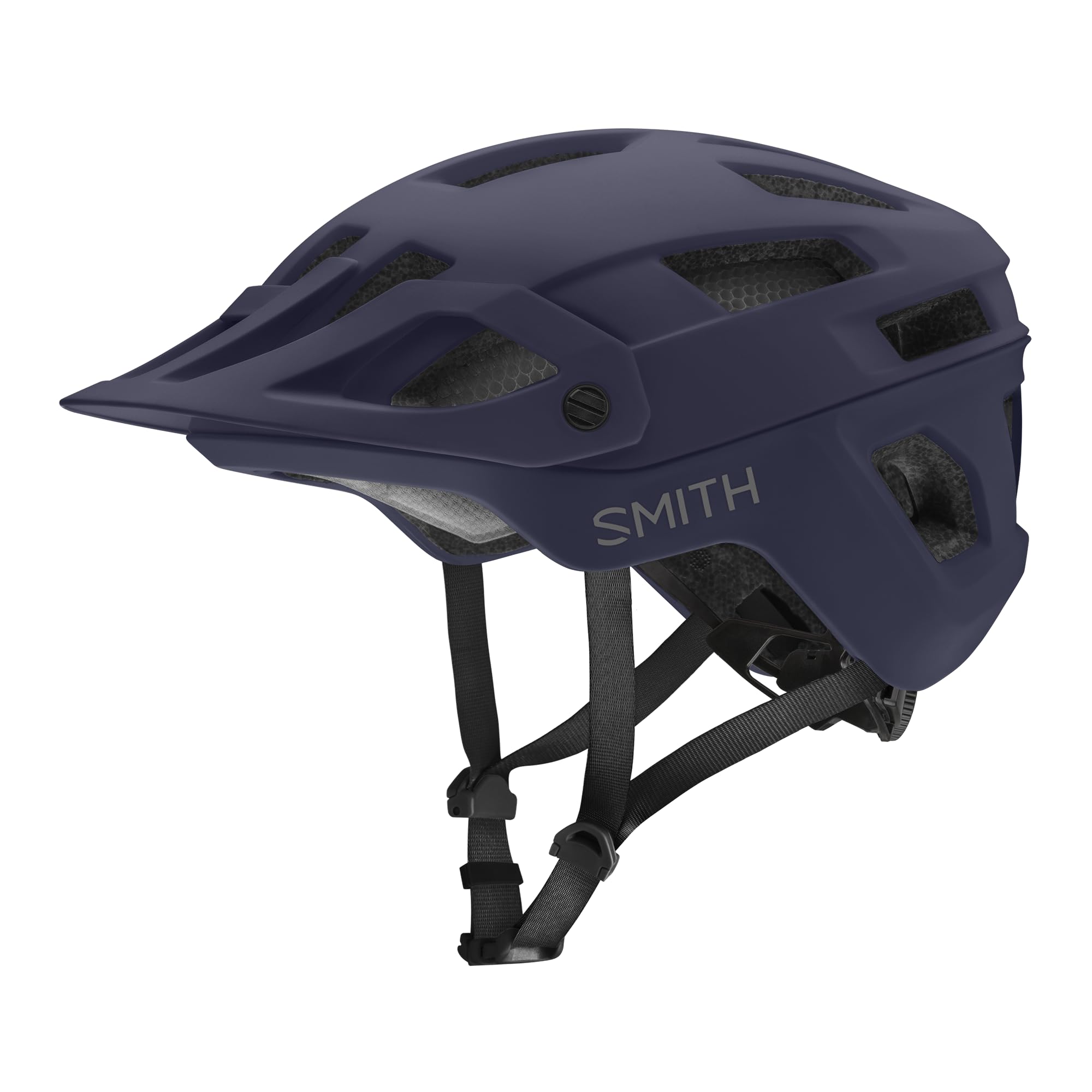
The Smith Engage sits at the top because it combines two independent impact management systems — MIPS and zonal Koroyd — into a single package that feels noticeably lighter than its 0.63-kilogram weight suggests. The Koroyd tubes are exposed in specific zones to provide controlled crumpling during impact while maintaining deep channeling for airflow. The adjustable two-position visor is a standout for trail riders who need sun coverage during descents without blocking the field of view on technical climbs.
The low-bulk single-layer webbing and Ionic+ lining with sweat-activated odor control make long days on the saddle more comfortable. Riders consistently report that this model avoids the mushroom-head look common to many mountain helmets because the rear coverage extends lower without restricting neck articulation. The 20 fixed vents are arranged to pull hot air from the crown while cool air enters through the front ports, providing effective thermal management even on steep, slow ascents.
One detail worth noting: the matte color finishes are durable but can appear slightly muted compared to glossy competitors. The magnetic buckle is easy to use with gloves but may require a moment of practice at first. The retention dial is well-damped and allows precise adjustments while riding, though some users find the helmet shifts slightly forward on rough terrain when riding without sunglasses or goggles.
Why it’s great
- Dual Koroyd and MIPS protection layers
- Excellent rear-head coverage without restricting motion
- Odor-controlling Ionic+ liner for multi-day use
Good to know
- Matte colors appear less vivid than glossy alternatives
- Can slide forward slightly without eyewear during bumpy descents
2. Lumos Ultra Bike Helmet
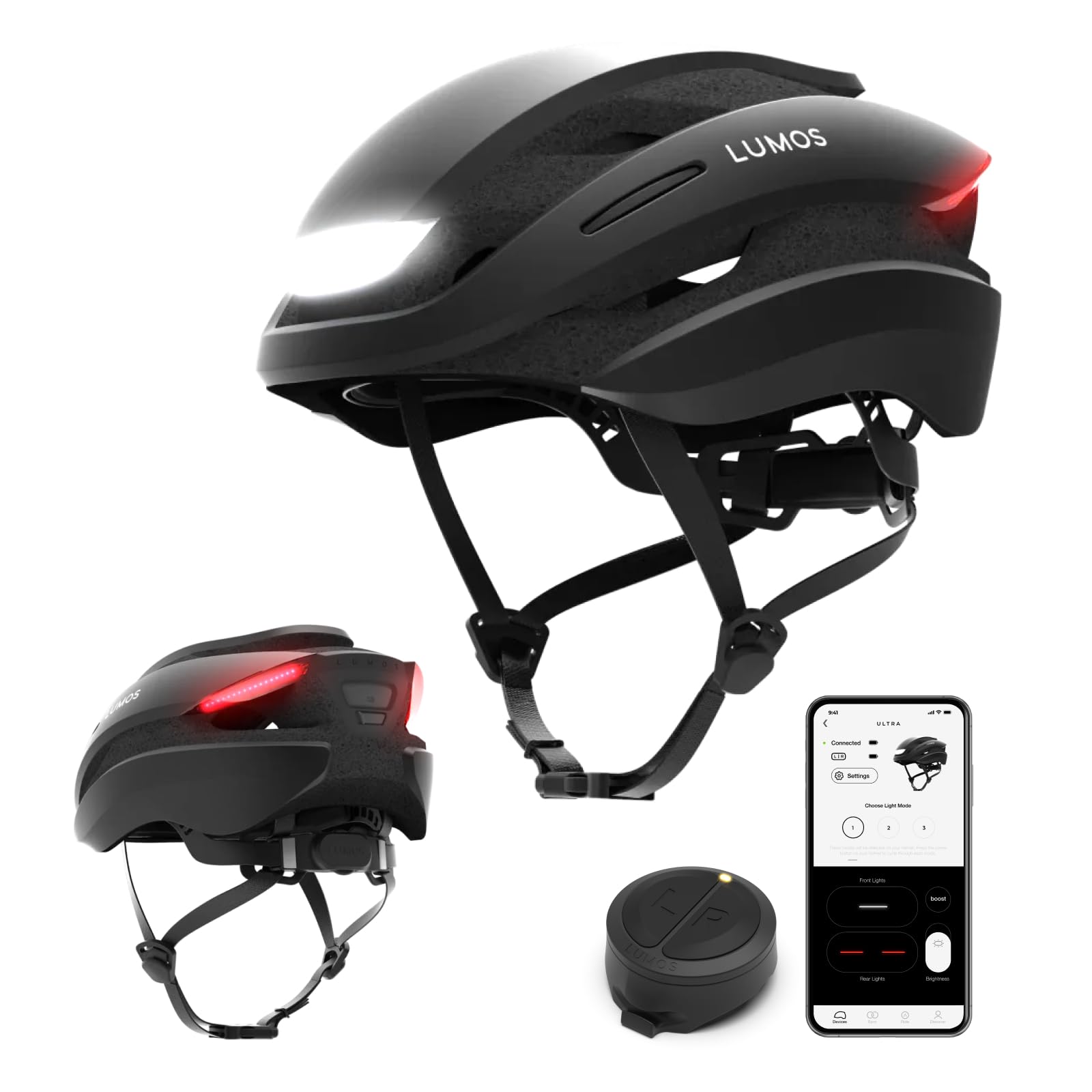
The Lumos Ultra redefines what a commuter helmet can do by building an entire lighting ecosystem directly into the shell. Front and rear LED arrays provide TÜV-certified 360-degree visibility, and the rear turn signals are activated via a wireless Remote Lite that straps to your handlebar. For urban riders navigating heavy traffic, the ability to signal direction without taking a hand off the bar is a genuine safety upgrade over traditional clip-on lights.
At 390 grams, the Ultra is lighter than several non-LED helmets in the same price tier, and the polycarbonate shell with EPS liner meets CPSC standards. The Lumos app allows you to adjust brightness levels and switch between lighting modes, and a compatible Remote (sold separately) enables automatic brake lights and synchronized flashing. The battery life reaches up to 10 hours in lower-output modes, though sustained high brightness cuts that figure significantly.
The fit system is straightforward with a rear dial, and the design accommodates what some users describe as Asian head shapes better than many competitors. The integrated lights are bright enough for daytime visibility but should not be relied upon as a primary headlight for dark trails. The non-MIPS version is lighter and cheaper, but safety-conscious commuters should weigh the added rotational protection of the MIPS variant if available.
Why it’s great
- Built-in turn signals and brake light capability
- USB-C charging with up to 10 hours runtime
- App-controlled light modes and brightness
Good to know
- Base model does not include MIPS
- Not bright enough to replace a standalone trail headlight
3. Smith Persist MIPS Cycling Helmet
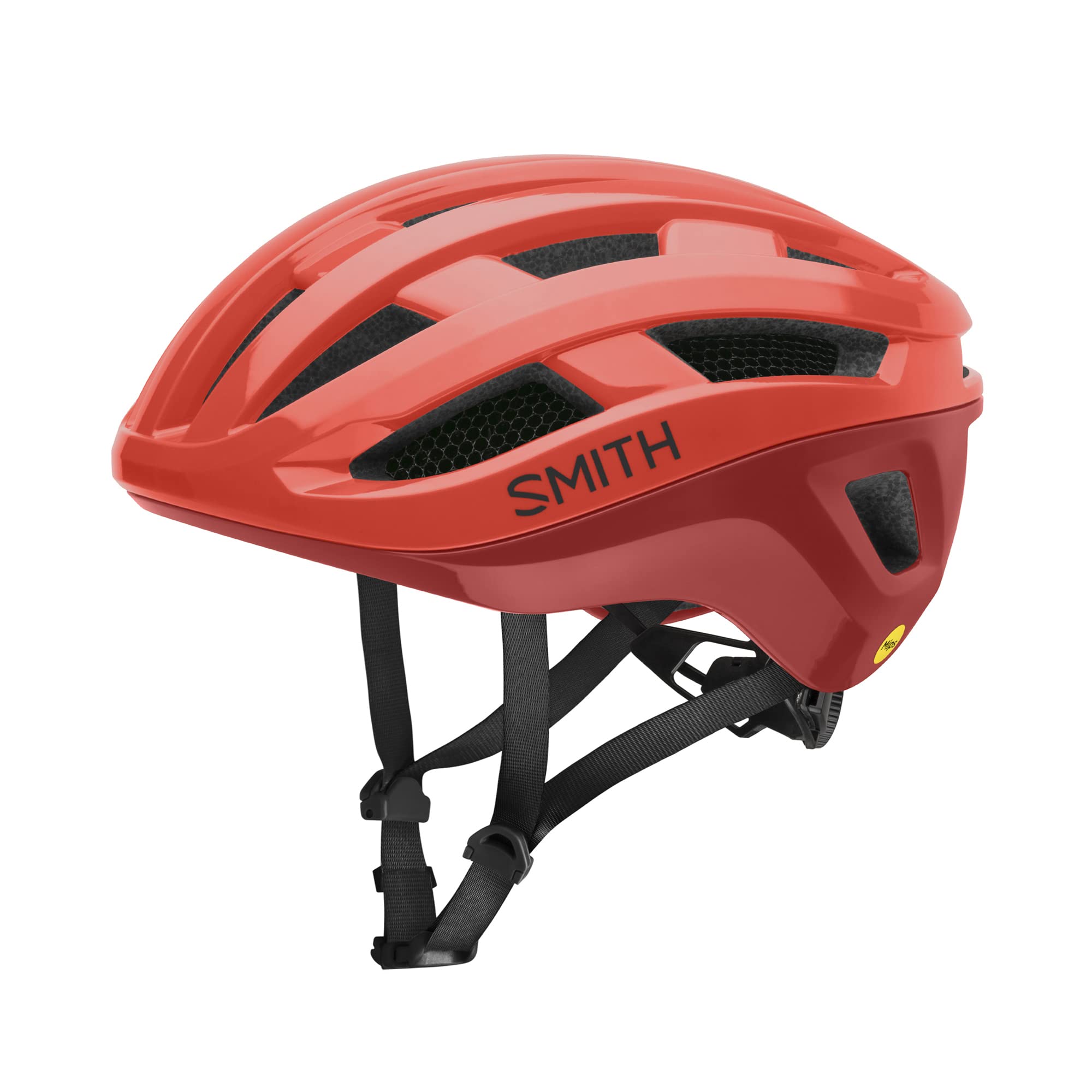
The Persist bridges the gap between budget-conscious road riders and those who want serious protection. It combines MIPS with zonal Koroyd — the same tube-based energy absorber found in Smith’s premium mountain line — in a road-focused shell that weighs only 11 ounces. The 21 vents are arranged in a pattern that creates continuous airflow from brow to exhaust ports, and the internal channeling is deep enough to keep air moving even at slow speeds on steep grades.
The AirEvac system is specifically designed to pull warm air away from eyewear, preventing fogging during humid rides. This is a practical feature that works well with Smith glasses but also helps with generic cycling sunglasses. The rear dial provides smooth micro-adjustment, and the strap splitter keeps webbing flat against the ears without twisting. Riders who survived crashes while wearing this model report that the combined MIPS and Koroyd layers absorbed significant energy without transferring rotational force to the neck.
The main criticism is the slightly mushroom-like silhouette when viewed from above, which may matter to style-conscious riders. There are no dedicated sunglass storage ports, though the vents can accommodate temple arms in a pinch. The gloss finish on some colorways shows scratches more visibly than matte options, but the structural integrity is unaffected.
Why it’s great
- MIPS plus zonal Koroyd in a road-optimized package
- AirEvac system eliminates lens fogging effectively
- Lightweight at 11 ounces without reducing protection zones
Good to know
- Silhouette may appear mushroom-shaped from certain angles
- No dedicated sunglass storage on the shell
4. Thousand Heritage 2.0 Adult Bike Helmet

The Heritage 2.0 prioritizes aesthetics and urban practicality without sacrificing safety. The low-profile silhouette uses a polycarbonate outer shell with an EPS liner, and the patent-pending PopLock channel hidden beneath the logo allows you to thread a U-lock through the helmet so you can leave it locked to your bike without carrying it. This is a genuinely useful feature for daily commuters who want to store their helmet between rides. The leather inner material adds a premium feel but is purely cosmetic — the real comfort comes from the plush padding and the Dial Fit System that provides rear micro-adjustments.
The magnetic buckle is significantly easier to operate one-handed compared to traditional side-release clasps, making it simple to fasten while wearing gloves. The brim design provides shade without obstructing upward peripheral vision, and the interior ventilation channels create a noticeable cooling effect even in 90-degree conditions. Riders with oval-shaped heads report an especially secure fit with no rocking movement at high speeds or while turning the head to check traffic. The included rear reflector slot increases passive visibility, though the helmet lacks MIPS or any rotational impact management system — buyers looking for active rotational protection will need to consider the Thousand Chapter MIPS variant instead.
The inner material is listed as leather but is used primarily as a comfort liner rather than structural padding. The padding is substantial and does not add noticeable bulk, but the helmet runs slightly larger than standard road models, so measuring your head against the included sizing guide is important. The anti-theft guarantee and accident replacement program add long-term value that budget helmets rarely offer.
Why it’s great
- PopLock channel for locking helmet to bike
- Easy-to-use magnetic clasp with one-hand operation
- Stylish low-profile design with brim for sun coverage
Good to know
- No MIPS or rotational impact system
- Runs larger than typical road helmet sizing
5. BELL Avenue MIPS Adult Road Bike Helmet
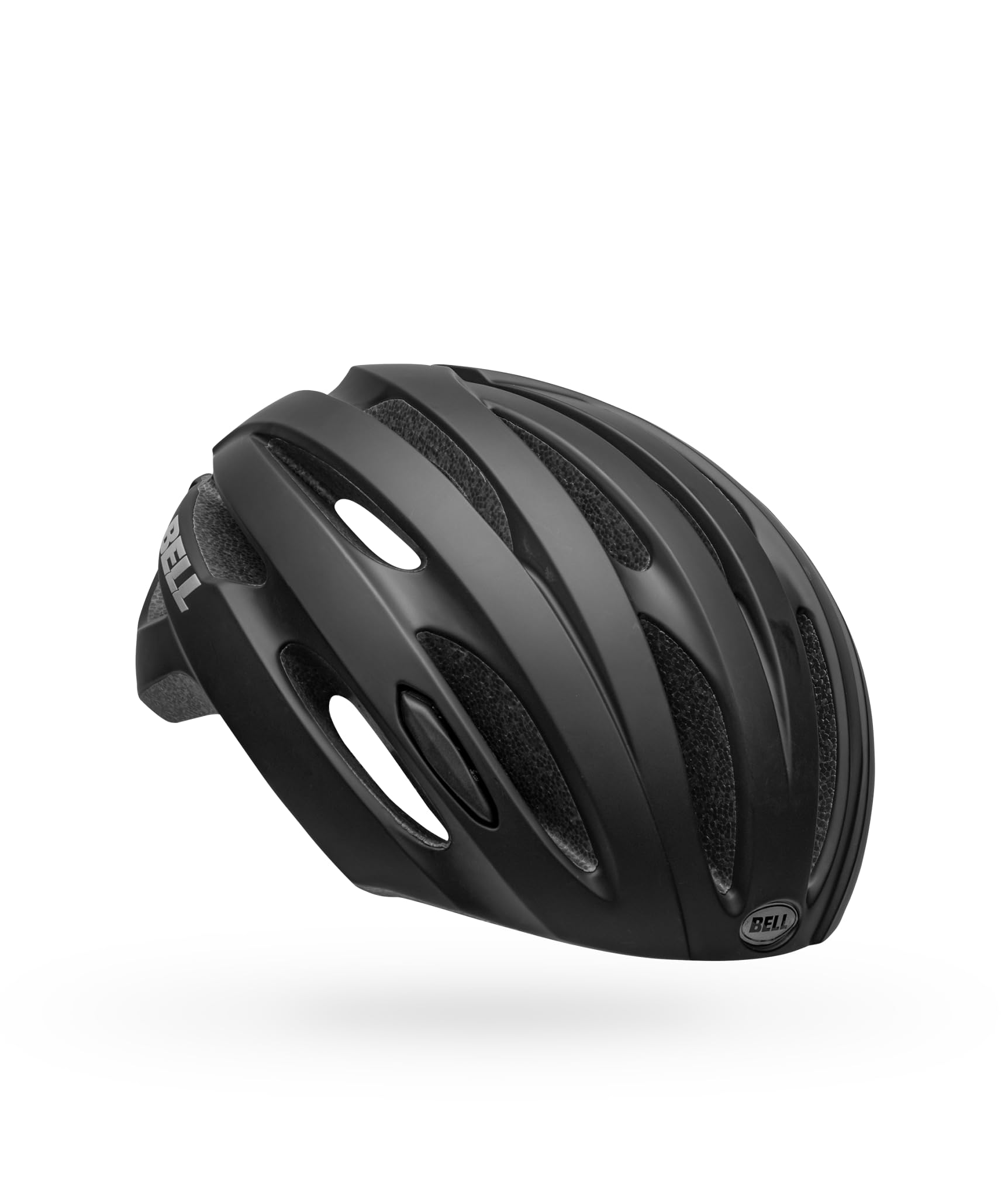
The Avenue MIPS represents BELL’s commitment to making rotational impact protection accessible. The Mips Evolve system is integrated directly into the retention system rather than being a separate slip-plane layer, reducing both complexity and overall weight. This also pushes the sliding layer closer to the head, allowing for external vents to be larger and more numerous than traditional MIPS designs. The lightweight fit system uses a rubber overmolded dial that is easy to grip and turn, even with sweaty or gloved fingers.
The Sweat Guide pad design pulls moisture away from the brow pad and redirects it away from eyewear, solving the common problem of dripping sweat during hot rides. The quick-adjust fasteners on the straps simplify fine-tuning and keep the webbing flat against the face. Riders who have crashed in this helmet report that the EPS inner shell cracked in multiple places as designed, absorbing impact energy without transferring force to the skull. The overall shape is compact and sits close to the head, which reduces aerodynamic drag compared to bulkier commuter models.
The main drawbacks are minor but worth noting. The adjustment knob sits low on the back of the helmet, making it hard to reach without removing gloves, especially winter gloves. The snap connection for the visor is small and can be fiddly to seat properly. Some long-term users note that the padding compresses faster than premium models, though the shell itself remains structurally sound for years.
Why it’s great
- Integrated Mips Evolve reduces weight and complexity
- Sweat Guide system keeps eyewear clear during hot rides
- Proven impact protection in real-world crash scenarios
Good to know
- Adjustment knob is hard to use with thick winter gloves
- Visor snap connection feels small and fragile
6. Giro Register II MIPS
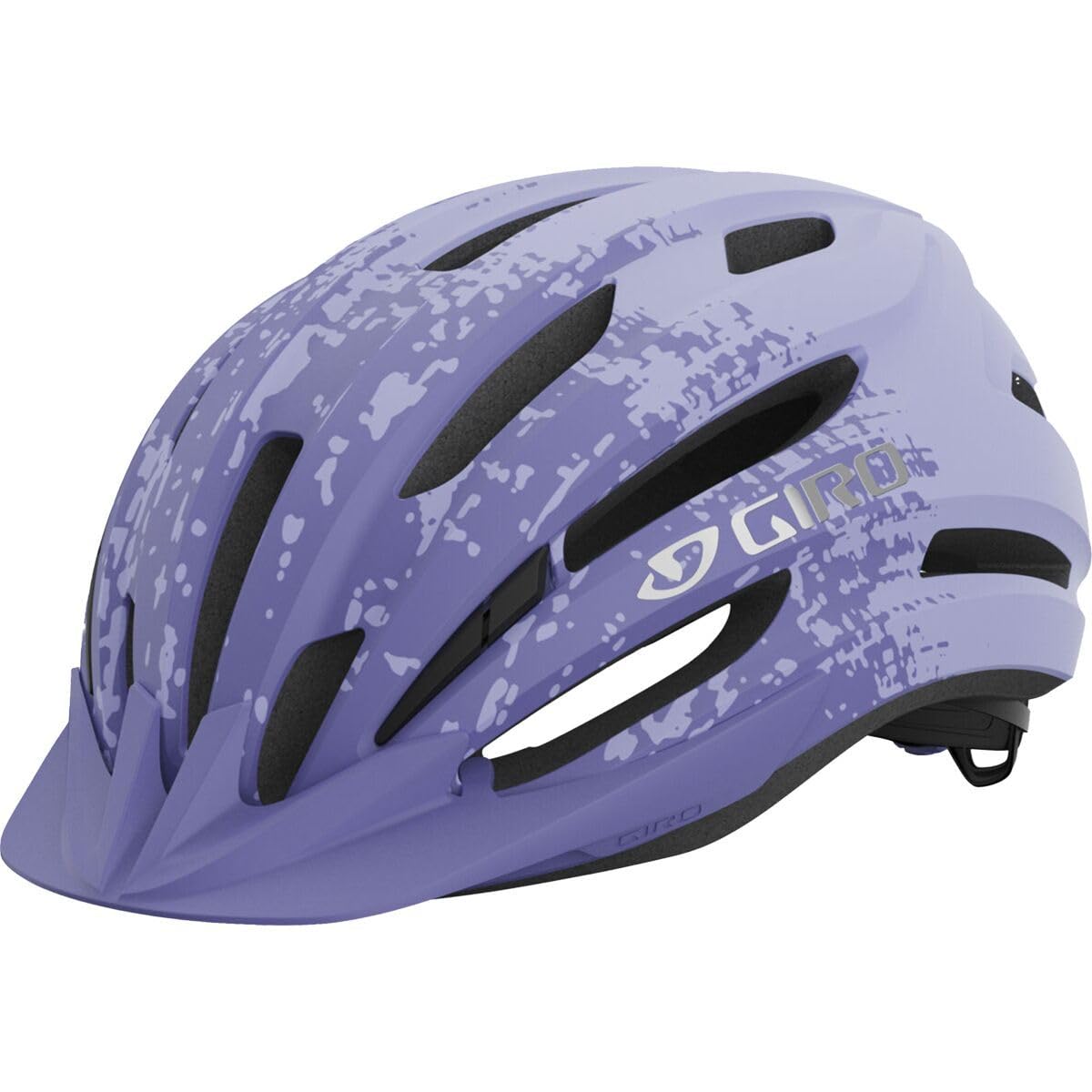
Giro’s Register II MIPS is one of the lightest entry-level MIPS helmets on the market at approximately 280 grams, making it a compelling option for riders who prioritize low weight for long climbs and all-day comfort. The two-piece shell construction uses a tough outer hard shell fused with a polycarbonate lower wrap, providing durability without the bulk of traditional multilayer designs. The integrated MIPS slip-plane is the same technology used in Giro’s higher-end models, offering genuine rotational force reduction at a price point that undercuts most competitors.
The Universal Fit sizing system is designed to accommodate a wide range of head shapes without requiring multiple shell sizes. The rear Roc Loc dial provides snug micro-adjustment, though some users report that the plastic mechanism can become fragile after two years of frequent use — a trade-off for the weight savings. The padding is generous for the price and covers the full interior surface, distributing pressure evenly without creating hot spots. The visor is present but lacks adjustable positions, functioning primarily as a fixed sun shield.
Ventilation is adequate for moderate temperatures, with front-facing intake ports and rear exhaust vents creating a steady airflow channel. In sustained 90-degree conditions, the Register II does not cool as aggressively as helmets with deeper internal channeling, but it remains comfortable for rides under two hours. The strap system is simple and effective, though the lack of quick-adjust fasteners means you may need to spend a minute dialing in the fit initially.
Why it’s great
- Extremely lightweight at 280 grams for a MIPS helmet
- Two-piece Hardbody shell adds durability without extra weight
- Universal Fit sizing works for a wide range of head shapes
Good to know
- Roc Loc dial can become fragile with heavy long-term use
- Ventilation is average compared to deeper-channel designs
7. LAZER Tempo KinetiCore Bike Helmet

The Tempo KinetiCore proves that rotational impact protection does not require a MIPS layer. LAZER’s proprietary KinetiCore technology integrates crumple zones directly into the EPS foam through strategically placed channels that compress and absorb rotational energy during an angled impact. This approach eliminates the need for a separate sliding liner, resulting in a lighter and simpler construction that still addresses the rotational forces standard helmets leave unmanaged. The polycarbonate outer shell covers the foam structure, providing a clean finish and structural rigidity.
The TurnSys dial is a responsive retention system that provides a secure fit with a single spin, and the one-size-fits-all approach works for the majority of adult head sizes, though riders at the extreme ends of the range should measure carefully. The helmet is compatible with LAZER’s Universal LED light, which mounts at the rear and adds active visibility. The ventilation is well-designed for an entry-level unit, with deep intake channels and rear exhaust ports that create consistent airflow. Consumer Reports recommends this model, citing its balance of safety features and value.
The weight of 475 grams is noticeably heavier than premium road helmets but is reasonable for a budget model with integrated rotational protection. The finish is basic with a glossy solid color and minimal branding, which some riders may prefer for its understated look. The strap system uses a standard side-splitter design without quick-adjust fasteners, so achieving a perfect fit may take an extra attempt during initial setup.
Why it’s great
- Integrated KinetiCore provides rotational protection without MIPS layers
- Consumer Reports recommended for safety and value
- Compatible with Universal LED light for night visibility
Good to know
- Heavier than more premium road helmets at 475 grams
- No quick-adjust strap fasteners for easy fit tweaks
FAQ
Does a cyclist helmet with MIPS really make a difference in a crash?
How often should I replace my bicycle helmet?
Is a heavier helmet with more coverage safer than a lightweight one?
Final Thoughts: The Verdict
For most users, the cyclist helmet winner is the Smith Engage MIPS because it combines dual-layer impact protection with excellent ventilation, trail-ready coverage, and a comfortable fit that works for all-day use. If you want integrated lighting for urban visibility, grab the Lumos Ultra — the 360-degree LED system is a genuine safety upgrade for commuters. And for the best balance of rotational protection and weight at an accessible price, nothing beats the Giro Register II MIPS.

Mo Maruf
I created WellFizz to bridge the gap between vague wellness advice and actionable solutions. My mission is simple: to decode the research and give you practical tools you can actually use.
Beyond the data, I am a passionate traveler. I believe that stepping away from the screen to explore new environments is essential for mental clarity and physical vitality.