Our readers keep the lights on and my smoothie glass nicely filled. As an Amazon Associate, I earn from qualifying purchases.
Frozen toes mid-ride can turn a crisp winter training session into a miserable battle against the elements. Standard cycling shoes bleed heat through mesh uppers and thin soles, making sub-freezing miles feel unbearable. Modern winter cycling boots solve this with sealed waterproof membranes, high-loft insulation, and stiff soles that keep power transfer efficient even when the mercury drops — but choosing the wrong pair means sacrificing warmth, pedal feel, or both.
I’m Mohammad Maruf — the founder and writer behind WellFizz. This guide is built on thousands of hours of market research and deep analysis of insulation materials, sole stiffness ratings, bootie constructions, and cleat compatibility to separate true cold-weather performers from fashion-forward also-rans.
After comparing waterproof membranes, thermal linings, closure systems, outsole grip, and temperature ratings across a range of price tiers, this guide breaks down the top contenders so you can confidently pick the best cycling winter boots for your local conditions.
How To Choose The Best Cycling Winter Boots
Winter cycling boots sit at the intersection of insulation science, waterproof engineering, and pedal-specific sole stiffness. The wrong choice leads to cold, wet feet or a numb, disconnected pedaling sensation. Four factors define the difference between a boot that works and one that just looks the part.
Insulation Type and Density
Thinsulate and similar synthetic loft materials trap warm air without the bulk of traditional fleece or wool. Density, measured in grams per square meter, directly correlates with the lowest comfortable temperature. A 200g Thinsulate lining is suitable for temperatures down to around 20°F, while 400g or higher pushes the comfort floor toward 0°F. Be mindful that over-insulating in milder winter conditions (above 35°F) causes sweat buildup, which then chills the foot once the ride intensity drops.
Waterproof Membrane and Seam Construction
Not all waterproofing is equal. A boot with a breathable membrane like Hydroguard or a taped-seam internal bootie keeps wet slush and road spray out while allowing perspiration vapor to escape. Cheaper boots rely on a simple waterproof coating on the outer textile, which degrades after a few wet rides. Full-grain leather uppers with sealed seams offer the best durability for wet winter commutes but require regular conditioning to stay pliable.
Sole Stiffness and Cleat Compatibility
A winter boot must be stiff enough to transfer power efficiently to the pedal, yet flexible enough to allow comfortable walking when dismounted at coffee stops or transitions. Soles are often rated on a 1-15 stiffness scale, with 8-12 being the sweet spot for winter riding — stiff enough for sprint efforts, soft enough for post-ride pavement walking. Confirm the outsole accommodates your specific cleat system (SPD 2-bolt, Look 3-bolt, or Speedplay) before purchasing, as some dedicated winter boots have recessed cleat pockets that only work with mountain pedal systems.
Closure System and Glove-Friendly Adjustability
When fingers are numb from cold, fiddling with traditional laces becomes a recipe for frustration. BOA dials offer micro-adjustability with one hand and can be tightened or loosened even while wearing thick winter gloves. Hook-and-loop straps (Velcro) are a reliable and lower-cost alternative that also works well with gloves. Avoid boots that rely solely on traditional laces for the primary closure — save those for mild-weather riding where dexterity isn’t a concern.
Quick Comparison
On smaller screens, swipe sideways to see the full table.
| Model | Category | Best For | Key Spec | Amazon |
|---|---|---|---|---|
| Lake MXZ304 Winter Cycling Boot | Winter Cycling Boot | Extreme cold road riding | Thinsulate insulation, full-grain leather | Amazon |
| Fly Racing Marker BOA Snow Boot | Snow Boot | Fat bike & snow commute | 600g thermal insulation, -40°F rating | Amazon |
| Giro Regime Road Cycling Shoe | Road Shoe | Cold road & indoor training | Dual BOA L6 dials, carbon composite sole | Amazon |
| Giro Cadet Road Cycling Shoe | Road Shoe | Versatile road & indoor use | Synchwire upper, BOA L6 + strap | Amazon |
| Korkers Neo Arctic Rubber Boot | Rubber Boot | Ice fishing & stationary trainer | Interchangeable sole system, 5mm neoprene | Amazon |
| Helly Hansen V3 Winter Boot | Snow Boot | Casual winter riding & commute | Waterproof leather, lace-up closure | Amazon |
| O’Neal Sierra PRO WP Boot | Moto Boot | Winter motorcycle & e-bike commuting | TPU protection, waterproof membrane | Amazon |
| Sidi Vertigo 2 Street Boot | Moto Boot | Sporty winter motorcycle riding | Adjustable shin plate, sliding calf block | Amazon |
| Giro Stylus Cycling Shoe | Entry Road Shoe | Indoor cycling & mild winter days | Nylon composite sole, hook-and-loop straps | Amazon |
In‑Depth Reviews
1. Lake MXZ304 Winter Cycling Boot
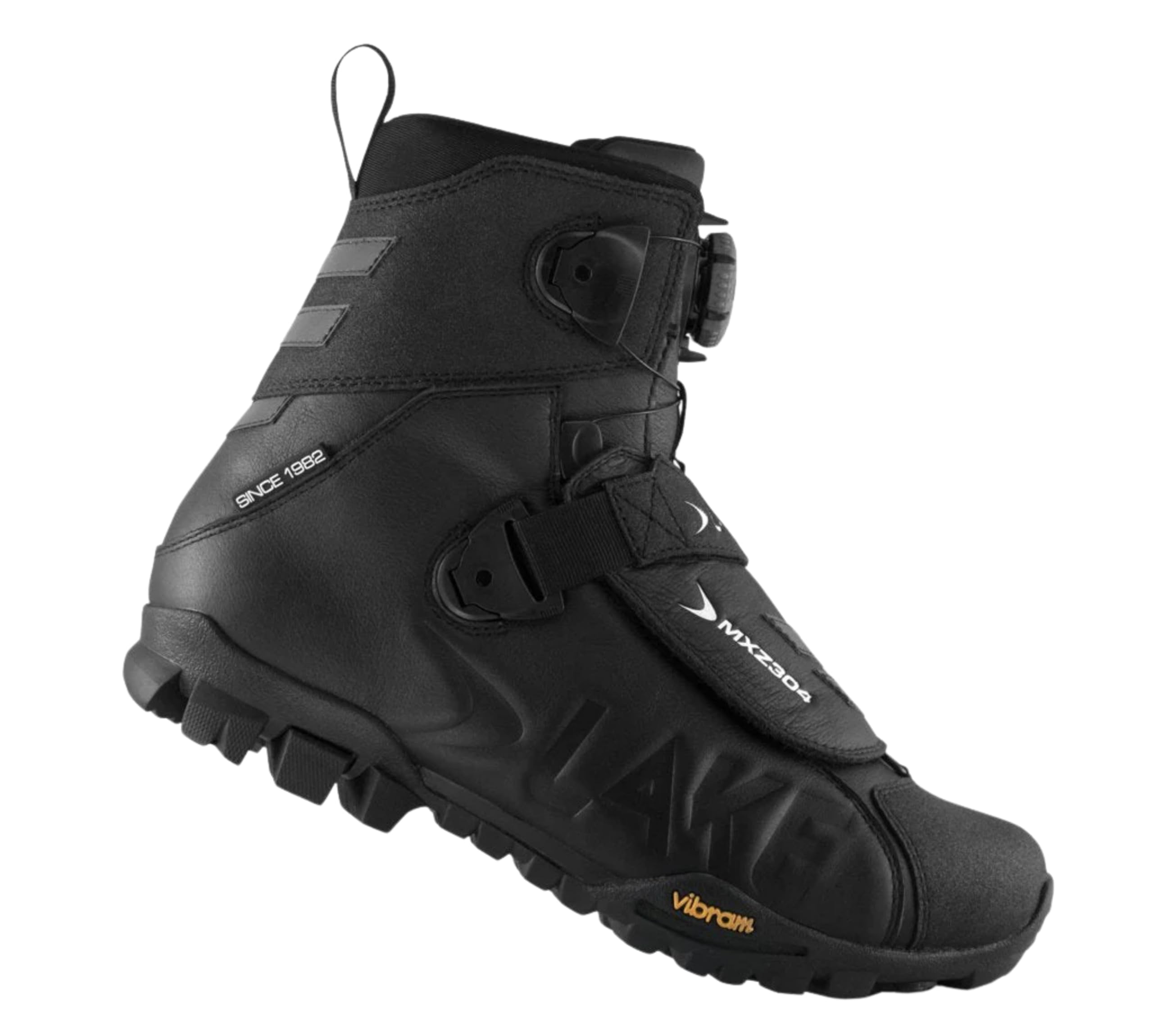
This is the gold standard for winter road cycling, built with a full-grain leather upper and Thinsulate insulation that keeps feet warm down to around 10°F when paired with quality wool socks. The Vibram outsole provides excellent grip on icy pavement and snow, and the stiff sole ensures efficient power transfer for hard efforts. Riders consistently report that after break-in, the boots feel like slippers while still offering substantial protection from wind and moisture.
The BOA L6 dial system allows for precise micro-adjustments even with thick gloves, and the wide version accommodates riders who need extra volume for thermal socks. The leather upper is naturally water-resistant and ages well with proper care, though it lacks a fully taped waterproof membrane — so expect it to handle light snow and spray rather than full submersion. Seam construction is top-tier, and after hundreds of winter miles, buyers note minimal wear with only the BOA requiring occasional re-cinching during long rides.
Sizing is the most critical consideration here: owners consistently need to order 2-3 EU sizes larger than their normal shoe size, and the wide option is strongly recommended for anyone with medium-to-high-volume feet. The boots come with removable toe spike covers, though one buyer noted a missing screw for the cover out of the box. While the price point is premium, the build quality and warmth justify the investment for serious winter cyclists.
Why it’s great
- Proven warmth down to 10°F with wool socks
- Vibram outsole grips ice and snow effectively
- Available in wide sizing for thermal sock accommodation
Good to know
- Must size up 2-3 EU sizes for proper fit
- No fully waterproof membrane; leather needs treatment
- BOA may require re-cinching during long rides
2. Fly Racing Marker BOA Snow Boot

Designed for snowmobiling and adapted for winter cyclists who need extreme cold protection, the Fly Racing Marker features 600g of thermal insulation with a comfort rating down to -40°F. The Hydroguard breathable waterproof membrane keeps slush and road spray out while allowing moisture vapor to escape — a critical feature for high-output winter riding. Riders who have tested these at -5°F with a wind chill of -20°F report no cold issues whatsoever, a testament to the insulation density.
The genuine leather upper combined with double-stitched seams adds longevity and wear protection, while the reinforced toe and heel guard against impacts from shifting pedals or icy terrain. The BOA dial system provides quick tightening and loosening even with thick winter gloves, and the oversized padded boot laces allow for easy adjustment. The slip-resistant rubber sole is designed for exceptional traction on snow and ice, making these ideal for fat biking or winter commuting where dismounting on slippery surfaces is common.
Critical sizing note: these run small and narrow. Owners universally recommend ordering one full size larger than your normal shoe size, and riders with wide feet may need to consider a different option or add a boot stretcher. The 600g insulation is overkill for milder winter days (above 25°F), leading to sweat buildup during moderate efforts. While not a traditional cycling-specific boot, the flat sole works well with flat pedals and the cold rating is unmatched at this price point.
Why it’s great
- -40°F comfort rating handles extreme cold
- Hydroguard membrane is reliably waterproof
- BOA dial works perfectly with heavy gloves
Good to know
- Runs very narrow; order one full size up
- 600g insulation causes sweat above 25°F
- Designed for flat pedals, not clipless systems
3. Giro Men’s Regime Road Cycling Shoes
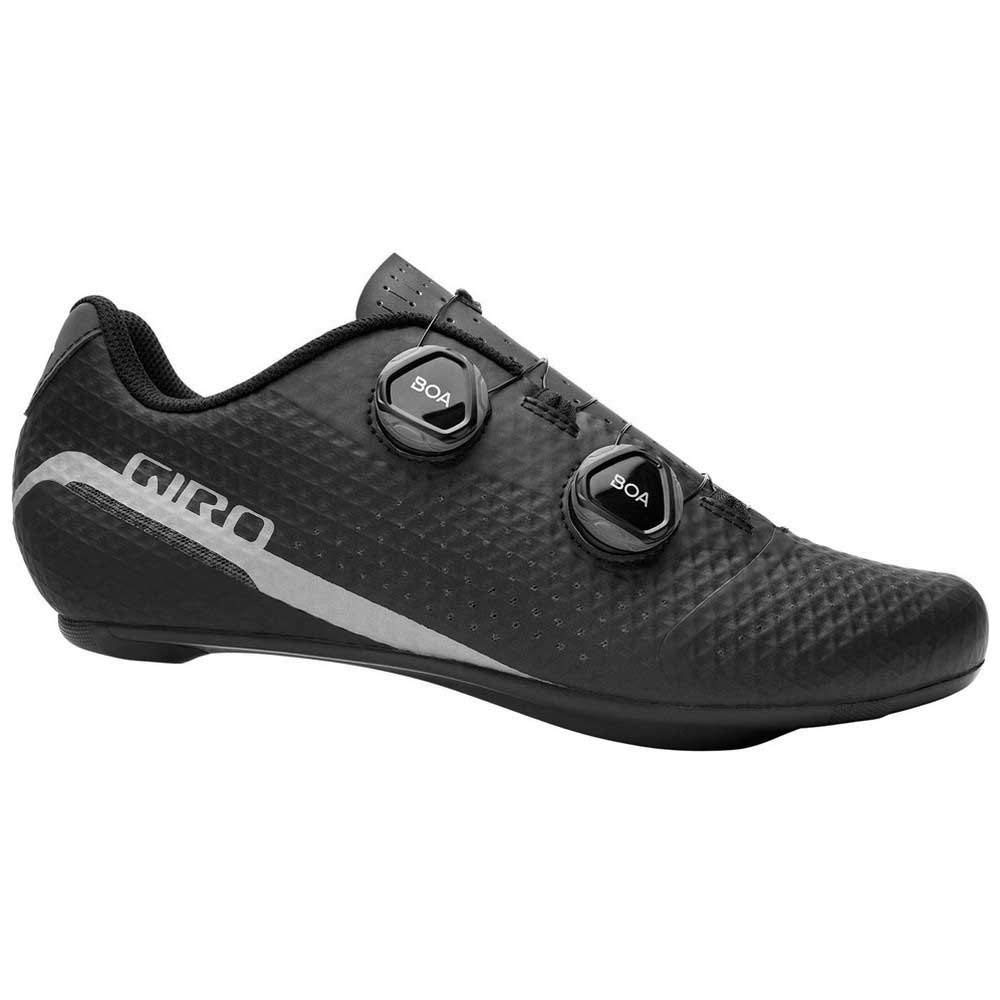
The Giro Regime sits at the high-performance end of the spectrum with a dual BOA L6 dial closure system that offers 1mm micro-adjustments for a dialed-in fit. The advanced carbon composite outsole delivers excellent stiffness (rating of 13 on Giro’s scale) for efficient power transfer during sprint efforts and climbing, while still allowing enough flex for comfortable walking. Riders praise the lightweight feel — notably lighter than dedicated winter boots — making these a strong choice for cold-weather racing or indoor winter training where insulation is less critical than pedal feel.
The Synchwire stitch-less upper combines mono-filament mesh for ventilation with a thermo-bonded film for structural integrity. This construction is breathable enough for indoor sessions on the trainer but lacks the heavy insulation needed for extended sub-freezing road rides. Reflective details enhance visibility in low-light winter conditions, and the shoe accommodates both 2-bolt and 3-bolt cleats, adding to its versatility. The heel cup is well-shaped and prevents slippage during hard pedaling efforts.
Fit is critical here: these run narrow, especially in the toe box, which can be problematic for riders with wide feet. Several buyers with medium-width feet found them comfortable only after sizing up half a size. The thin upper offers no thermal protection on its own, so these are best paired with neoprene booties for true winter commuting. For riders who want a stiff, lightweight shoe for mild winter days (above 35°F) or indoor training, the Regime is a top-tier choice.
Why it’s great
- Dual BOA L6 dials provide precision fit adjustments
- Carbon composite sole delivers high stiffness for power transfer
- Lightweight construction ideal for racing and indoor use
Good to know
- Narrow fit; wide-footed riders need to size up
- No insulation; requires booties for freezing temps
- Ventilated upper reduces cold-weather performance alone
4. Giro Cadet Men’s Indoors and Outdoors Clipless Road Cycling Shoes

Positioned as the accessible entry point into Giro’s performance lineup, the Cadet combines a single BOA L6 dial with one hook-and-loop strap for a secure yet forgiving fit. The Synchwire upper is stitch-less, vented, and reinforced — offering better airflow than fully sealed winter boots, which makes this shoe ideal for indoor cycling sessions and winter commutes in the 30-50°F range when paired with thermal socks. The advanced carbon composite outsole provides a stiffness level that outclasses most shoes in its bracket, giving solid power transfer for club rides and trainer workouts alike.
The BOA L6 dial delivers the same micro-adjustability found on more expensive models, and the instant-release function is a lifesaver when you need to unclip quickly. Reflective details on the rear and side panels improve visibility for low-light morning or evening rides. The shoe fits standard 2-bolt and 3-bolt cleats, which adds to its versatility — one pair can serve duty on both road and indoor trainers. Buyers note that the shoe runs slightly small in both length and width, with many finding a half-size up necessary for a comfortable fit.
Durability holds up well after months of regular use, though the velcro strap shows wear faster than the BOA mechanism. The minimal cushioning in the heel and insole means these are designed for performance rather than comfort walking long distances. For the rider who wants BOA adjustability and carbon-stiff power transfer without the premium price tag, the Cadet hits a sweet spot. It is not a dedicated winter boot — expect to add booties or thick socks for sub-freezing rides.
Why it’s great
- BOA L6 dial with velcro strap for precise adjustment
- Carbon composite sole delivers high value stiffness
- Compatible with both 2-bolt and 3-bolt cleats
Good to know
- Runs slightly small; order half size up
- No insulation; needs booties for freezing temps
- Velcro strap may wear faster than BOA system
5. Korkers Men’s Neo Arctic Rubber Boots

The Korkers Neo Arctic isn’t a traditional cycling shoe, but it excels in a specific winter scenario: stationary trainer rides in unheated garages or ice fishing setups where keeping feet warm for hours trumps pedal feel. The 5mm neoprene upper with rubber shell provides exceptional wind and water resistance, and the 1200g insulation rating makes this one of the warmest boots available for static cold exposure. Riders report that these boots allow them to sit on ice all day (or a trainer for hours) without cold feet, a feat few cycling-specific boots can match.
The standout feature is the interchangeable sole system — the boots come with both all-terrain and studded soles, allowing you to swap based on surface conditions. The studded sole provides superior grip on ice for walking to and from your bike rack or trainer, while the standard sole is better for mixed terrain. The wide opening accommodates heavy wool socks without compression, and the rubber construction is fully waterproof for slushy conditions. The boots are notably heavy at over 10 pounds per pair, making them unsuitable for pedaling efficiency on outdoor rides.
For anyone using these on a flat-pedal stationary trainer in a cold garage, the warmth and waterproofing are unmatched. The price point is mid-range, but the build quality justifies the investment for specialized winter use. Buyers note that the boots are too warm for early fall or late spring use, even in cold conditions, and the bulk makes them impractical for competitive cycling. If you prioritize warmth over mobility, these are a clear winner.
Why it’s great
- Exceptional warmth for stationary cold exposure
- Interchangeable sole system for ice and terrain
- Fully waterproof rubber construction
Good to know
- Heavy and bulky; not for pedaling efficiency
- Too warm for mild winter conditions
- Designed for flat pedals only
6. Helly Hansen V3 Winter Boots
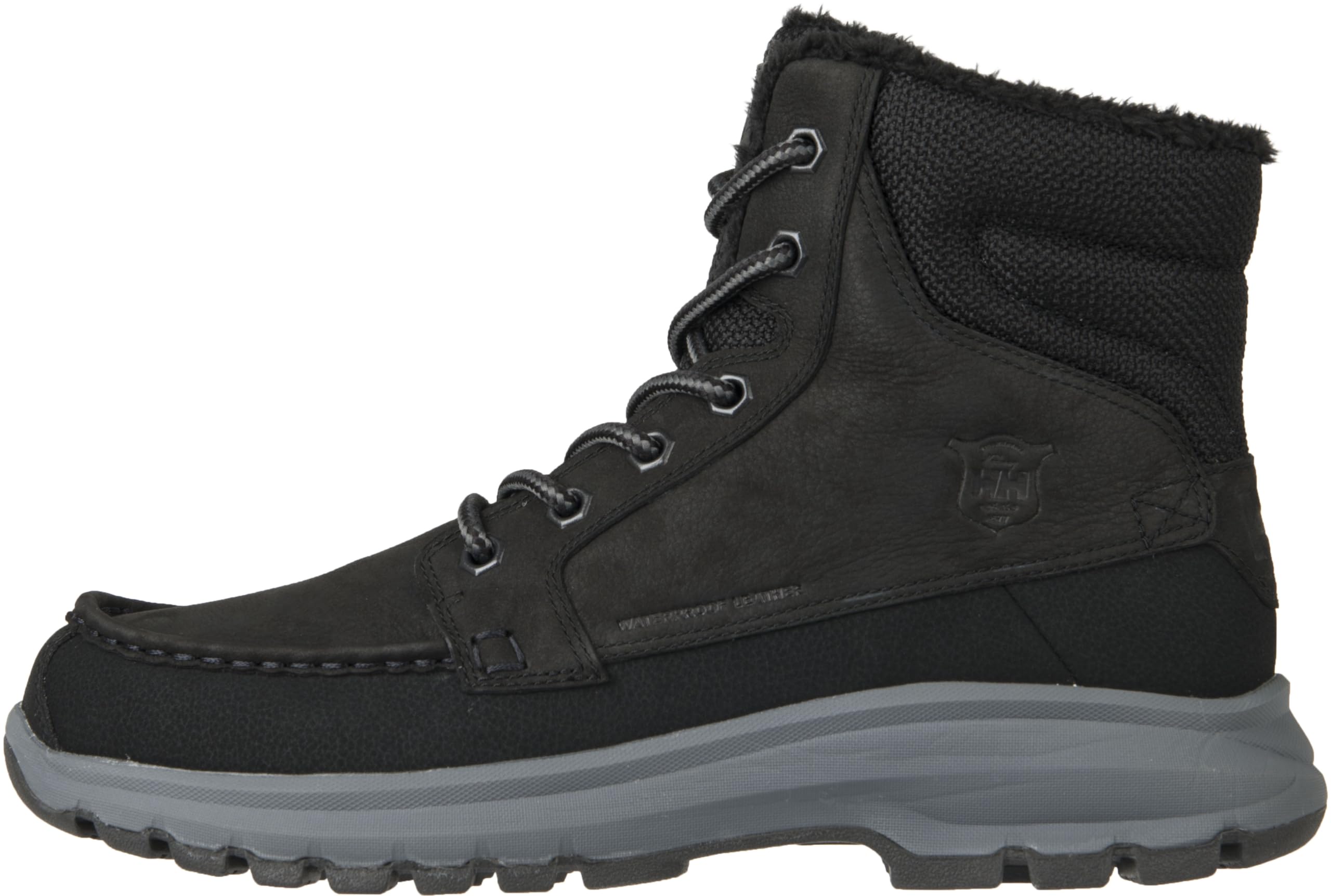
The Helly Hansen V3 is a winter boot built for cold-weather commuting rather than high-performance cycling. The waterproof leather upper combined with a sealed construction keeps feet dry in slush and light snow, while the firm rubber outsole provides reliable traction on icy pavement. The insulation is moderate — warm enough for Northern Michigan winters down to around 10°F according to buyers — but the boot doesn’t feel heavily padded, which helps during casual rides and walks off the bike.
The lace-up closure is straightforward and secure, though it lacks the glove-friendly convenience of a BOA system. The boot runs true to size, and owners report that a standard 11 fits like an 11 with enough room for medium-weight wool socks. The styling is clean and low-profile enough to pass for a casual winter boot when off the bike, making this a versatile footwear option for commuters who want to wear the same boots at the office. The leather upper is durable and easy to clean, and the outsole shows minimal wear after a full winter of use.
Be realistic about the cycling-specific limitations: this is not a clipless-compatible boot, so it works best with flat pedals. The sole stiffness is moderate, good for causal riding but insufficient for high-output efforts where power transfer matters. The lack of a dedicated BOA or velcro closure means getting the fit right initially is important, as micro-adjustments require untying and retying. For the commuter who values warmth and style over cycling performance, the Helly Hansen V3 is a solid pick.
Why it’s great
- Waterproof leather withstands slush and snow
- Firm rubber outsole offers reliable traction on ice
- Clean styling works for off-bike wear
Good to know
- No cleat compatibility; flat pedals only
- Lace closure less convenient with gloves
- Moderate sole stiffness limits power transfer
7. O’Neal Sierra PRO WP Boot

Built for dirt and adventure riding, the O’Neal Sierra PRO translates well to winter e-bike commuting and fat biking thanks to its robust TPU protection panels and full waterproof membrane. The mid-calf height keeps spray and debris out, while the thick sole provides solid insulation from cold footpegs and pedals. Riders with flat, wide feet report these are among the most comfortable protective boots they’ve worn, with enough room in the toe box for thick thermal socks.
The sole is notably more flexible than race-focused motorcycle boots, offering a walking-friendly feel that makes pushing a bike or walking through snow-piled trails manageable. The closure uses a combination of velcro strap over the shin with buckle adjustment, providing good security without the weight of a full race boot. Owners note the break-in period is quick — about a week of casual wear around the house — after which the boots become quite comfortable for full-day rides. The outsole uses a hiking-style tread pattern with deep lugs, giving excellent traction on loose snow and ice.
Fit nuances: riders with small calves may find the upper cuff too large, causing the boot to dig in at the top even with thick socks. The toe box, while accommodating for flat feet, can cause minor mis-shifts during aggressive gear changes on a motorcycle. For bicycle use, the bulk is noticeable but manageable, and the lack of an ankle armor insert means some protection is sacrificed for mobility. These are best suited for riders who need a winter boot that can handle both off-road bicycle rides and light motorcycle commuting in one package.
Why it’s great
- TPU panels provide robust impact protection
- Waterproof membrane keeps feet dry in wet winter
- Walking-friendly sole with deep tread traction
Good to know
- Upper cuff too large for riders with small calves
- Lacks hard ankle armor for extreme protection
- Bulky for bicycle pedaling efficiency
8. Sidi Vertigo 2 Street Motorcycle Boots
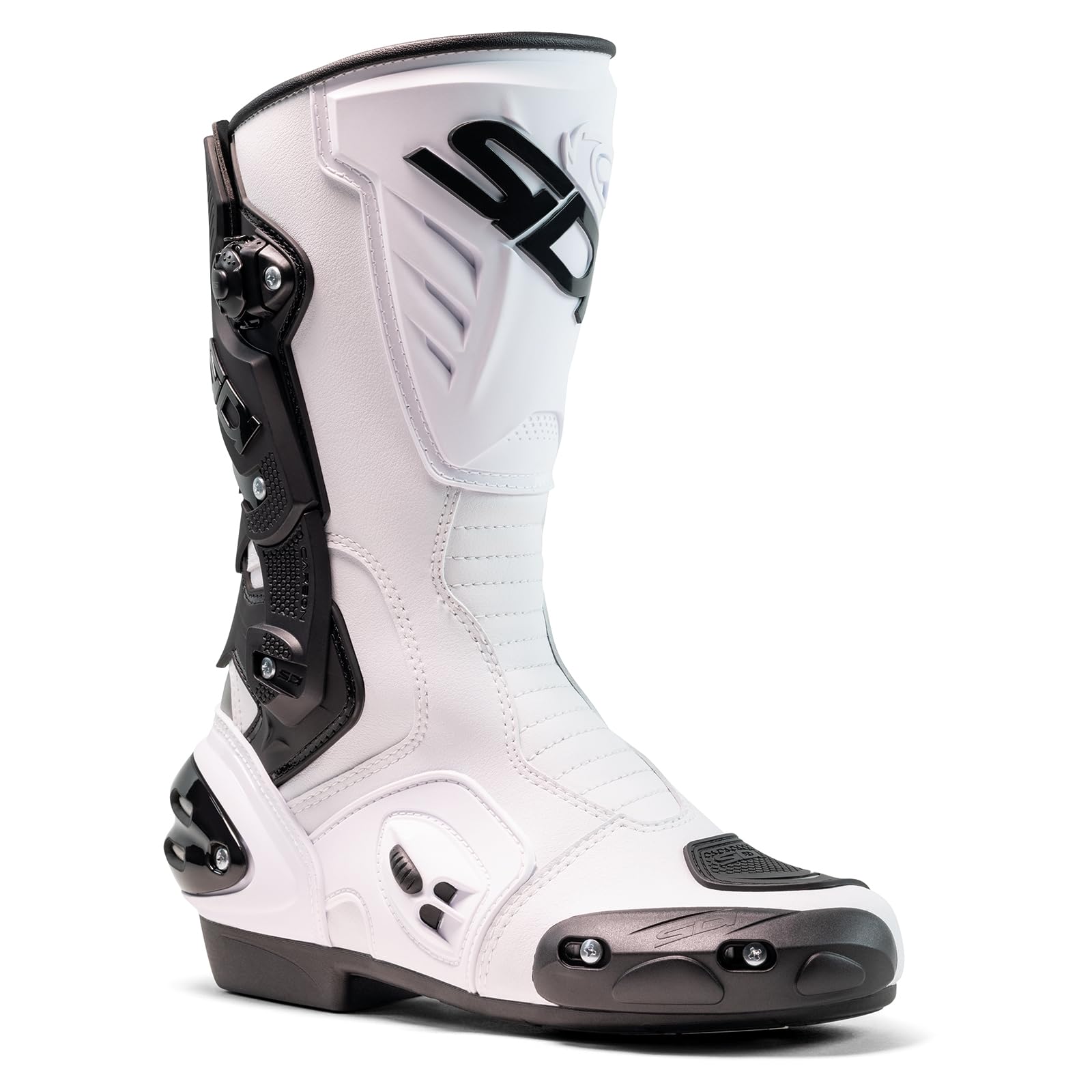
As a premium motorcycle boot, the Sidi Vertigo 2 prioritizes impact protection and abrasion resistance over cold-weather insulation. The adjustable shin plate and sliding calf block system provide a customizable fit for riders with different leg dimensions, and the boots feature a full-length zipper with velcro cover for easy entry. The build quality is exceptional — owners report surviving accidents with minimal boot damage, a testament to the robust materials. For winter motorcycle commuting, these offer good wind resistance and enough volume for a thin thermal sock.
The sole is stiff enough for sport bike riding but flexible enough for walking short distances, and the heel cup is well-molded to prevent slippage during hard braking. The boot fits true to size, with one buyer noting that a US 10.5 fits a size 11 Nike-equivalent foot well. The calf adjuster is a smart feature for accommodating varying lower leg thicknesses, and the overall fit is calf-friendly compared to many sport boots. The 360-degree ankle armor provides confidence in crashes, but the boot lacks the insulation density needed for prolonged sub-freezing exposure.
Insulation is minimal — these are a performance boot, not a winter boot. Riders expecting warmth for hours in below-20°F conditions will be disappointed. The high price tag reflects race-derived protection rather than thermal technology. For winter bicycle use, the lack of a recessed cleat pocket and the stiff sole make these impractical for clipless pedals. These are best viewed as a cold-weather motorcycle boot for riders who prioritize safety over thermal performance.
Why it’s great
- Race-level impact protection with adjustable shin plate
- Sliding calf block system for custom leg fit
- Proven durability in crash scenarios
Good to know
- Minimal insulation; not for sub-freezing exposure
- Not compatible with clipless pedal systems
- High price reflects protection, not warmth
9. Giro Stylus Cycling Shoe – Men’s

The Giro Stylus is a no-frills entry-level road cycling shoe built for indoor cycling and mild-weather outdoor rides. The nylon composite sole offers a stiffness level that works well for spin classes and moderate winter training efforts (above 35°F), and the three hook-and-loop straps provide reliable closure that is adjustable on the fly, though not as convenient as BOA dials in thick gloves. The synthetic upper is durable and easy to clean, with a shape that is slightly narrow but accommodates a range of medium-width feet comfortably.
Buyers appreciate the comfort out of the box — several report zero break-in period and a fit that works well with standard cycling socks. The shoe is lightweight at just over 1.4 pounds per pair, making it easy to pack for indoor sessions. The rubber heel pad provides decent grip for walking around the gym or studio, though the sole is not designed for extended walking. The shoe is compatible with standard 2-bolt cleats, making it a good option for first-time clipless riders or those on Peloton-style bikes with Delta cleat adapters.
There is no insulation, waterproof membrane, or thermal lining in the Stylus — it is purely a warm-weather or indoor shoe. Using these for outdoor winter cycling requires thick socks and neoprene booties to prevent cold feet, and even then, the vented upper will allow wind chill to penetrate. The lack of BOA or lace adjustment means the fit relies entirely on strap positioning, which can be less consistent for high-cadence efforts. For the entry-level rider or indoor cyclist on a budget, the Stylus is a solid foundation — just don’t expect it to perform in true winter conditions.
Why it’s great
- Comfortable right out of the box with minimal break-in
- Lightweight design suitable for indoor training
- Budget-friendly entry into clipless shoes
Good to know
- No insulation or waterproofing for winter use
- Hook-and-loop straps less precise than BOA or laces
- Narrow fit may not suit wide-footed riders
FAQ
How do I properly size winter cycling boots for thick socks?
Can I use neoprene booties over my existing cycling shoes instead of buying winter boots?
What sole stiffness rating is best for winter cycling?
Are motorcycle boots suitable for winter cycling?
Final Thoughts: The Verdict
For most riders, the best cycling winter boots winner is the Lake MXZ304 Winter Cycling Boot because it balances premium full-grain leather build quality with Thinsulate insulation, a Vibram outsole for icy grip, and optional wide sizing for thick sock accommodation. If you need extreme cold protection for fat biking or sub-zero commuting, grab the Fly Racing Marker BOA Snow Boot with 600g insulation and a -40°F rating. And for indoor training or mild winter days where pedal feel and adjustability matter more than insulation, nothing beats the Giro Regime Road Cycling Shoe with its dual BOA dials and carbon-composite sole.

Mo Maruf
I created WellFizz to bridge the gap between vague wellness advice and actionable solutions. My mission is simple: to decode the research and give you practical tools you can actually use.
Beyond the data, I am a passionate traveler. I believe that stepping away from the screen to explore new environments is essential for mental clarity and physical vitality.