Our readers keep the lights on and my smoothie glass nicely filled. As an Amazon Associate, I earn from qualifying purchases.
The moment the thermometer dips below 50°F, your toes become the first casualty of winter cycling. Cold air rushes through the vents of your cycling shoes, numbing your forefoot before you’ve covered ten miles. A thin neoprene barrier — the cycling toe cover — is the single most effective upgrade for extending your riding season without swapping out your entire shoe system.
I’m Mohammad Maruf — the founder and writer behind WellFizz. Over many hours of research, I’ve analyzed the material thickness, closure design, sole durability, and thermal performance of the most popular toe covers on the market to find out which ones actually work when the windchill drops.
This guide breaks down the real-world performance of five top contenders, from budget-friendly neoprene sleeves to premium weatherproof shells, so you can find the best cycling toe covers for your exact riding conditions and budget.
How To Choose The Best Cycling Toe Covers
A toe cover’s job sounds simple — block wind, shed light moisture, and retain heat — but the engineering that accomplishes this varies widely. The wrong choice can leave you with numb toes, a cover that slips off mid-sprint, or a cleat access that prevents clipping in. Here’s what matters most.
Material Thickness & Thermal Performance
Most toe covers use either neoprene (rubber-based foam) or SBR Lycra (a synthetic rubber blend). Thickness is the primary warmth metric: 2.7mm materials handle 35–45°F, while 5mm SBR or premium neoprene pushes comfort into the 20–35°F range. Too thin and the wind cuts through; too thick and your toes feel cramped inside the shoe.
Sole Cut-Out & Cleat Compatibility
The bottom opening must expose your cleat fully for clipping in and walking. Look for a wide enough cut-out that doesn’t bunch under the pedal. Road cleats (Look, SPD-SL, Speedplay) need different clearance than MTB 2-pin cleats. Some covers have a reinforced Kevlar or nylon sole patch around the opening to resist wear from unclipping.
Closure System Security
A toe cover that slips down or rotates off the shoe is worse than no cover at all. Three closure types dominate: elastic rear loops (lightweight, minimal bulk), Velcro straps under the shoe (adjustable, but can fray), and full zipperless cuffs (most secure, hardest to don). Your choice depends on ride frequency and tolerance for fumbling in the cold.
Quick Comparison
On smaller screens, swipe sideways to see the full table.
| Model | Category | Best For | Key Spec | Amazon |
|---|---|---|---|---|
| ROCKBROS 2.7mm Kevlar | Mid-Range | Cold commutes & walking | 2.7mm SBR Lycra + Kevlar sole | Amazon |
| SLS3 Neoprene Toe Covers | Mid-Range | Fall riding & road shoes | 3mm neoprene, windproof | Amazon |
| ROCKBROS 5mm Thermal | Premium | Sub-freezing temperatures | 5mm SBR foam + Kevlar | Amazon |
| Synergy Neoprene Set | Mid-Range | Long road rides | Reversible neoprene, nylon sole | Amazon |
| GripGrab RaceThermo | Premium | Severe wet & cold | Waterproof neoprene, zipperless | Amazon |
In‑Depth Reviews
1. GripGrab RaceThermo Waterproof Winter Overshoes

The GripGrab RaceThermo is the most weather-resistant option in this group, engineered specifically for road cycling shoes with a waterproof neoprene construction and a zipperless cuff that eliminates the typical failure point of zippers and reduces irritation. The material blend — 80% rubber, 17% polyamide, 3% polyurethane — provides a dense, impermeable barrier against rain, road spray, and sub-zero windchill. A rear safety-light loop and reflective elements keep you visible in low-light commutes.
Sizing is the critical factor here: multiple customer reports note that the RaceThermo runs significantly small, often requiring sizing up two or three sizes beyond your normal shoe size. A size 7 Shimano shoe, for example, needed an XL. Once on, the fit is extremely snug and secure, with no flap or movement during hard efforts. The sole opening exposes road cleats (Look, SPD-SL, Speedplay) cleanly, though it is not designed for MTB cleats or winter boots.
The thermal performance is excellent: riders report warm toes in temperatures of 30–40°F, with full waterproof protection in rain. The trade-off is the difficulty of getting them on — plan for a minute of stretching and adjusting before each ride. Over time, the cuff material remains supple and tear-resistant, making them a long-term investment for serious winter road cyclists.
Why it’s great
- Fully waterproof neoprene seals out rain and road spray
- Zipperless cuff eliminates snagging and increases durability
- Safety-light loop and reflective details improve visibility
Good to know
- Sizing is very small — plan to order 2-3 sizes larger
- Difficult to put on, especially with cold hands
- Not compatible with MTB cleats or winter shoes
2. ROCKBROS 5mm Thermal Cycling Shoe Toe Covers

ROCKBROS’s 5mm thermal model is built for serious cold: a thick SBR foam layer encases the forefoot, extending further up the front of the shoe to trap heat in sub-freezing temperatures. The Kevlar fiber reinforcement on the bottom sole resists abrasion from unclipping and walking on pavement. A reflective side logo adds visibility without being garish. Riders consistently report comfortable toes down to 30°F with merino socks, and several used them into the mid-20s without numbness.
The closure system uses a rear elastic loop combined with a bottom non-slip band — no Velcro straps to shorten or wear out. However, the fit is more generous than the ROCKBROS 2.7mm model; some riders with narrower feet noticed slight looseness. The sole opening is large enough to accommodate MTB 2-pin cleats, though road cleats (3-pin) may need a small notch cut in the neoprene for full clearance. The material is not waterproof, but it sheds light rain and road spray well.
Durability is a mixed story: the SBR foam holds up through two seasons of regular use, but the elastic straps are the eventual failure point, with some reports of fraying after a dozen rides. That said, at this price point, the warmth-to-weight ratio is exceptional. They pack down small enough to stash in a jersey pocket for variable temperatures on long rides.
Why it’s great
- 5mm thickness provides superior warmth for sub-freezing rides
- Kevlar sole patch resists wear from unclipping
- Elastic band closure is simple and secure
Good to know
- Not fully waterproof; wet roads may seep through
- Elastic straps may fray over time
- Fit runs slightly loose for narrow feet
3. ROCKBROS 2.7mm Kevlar Toe Covers
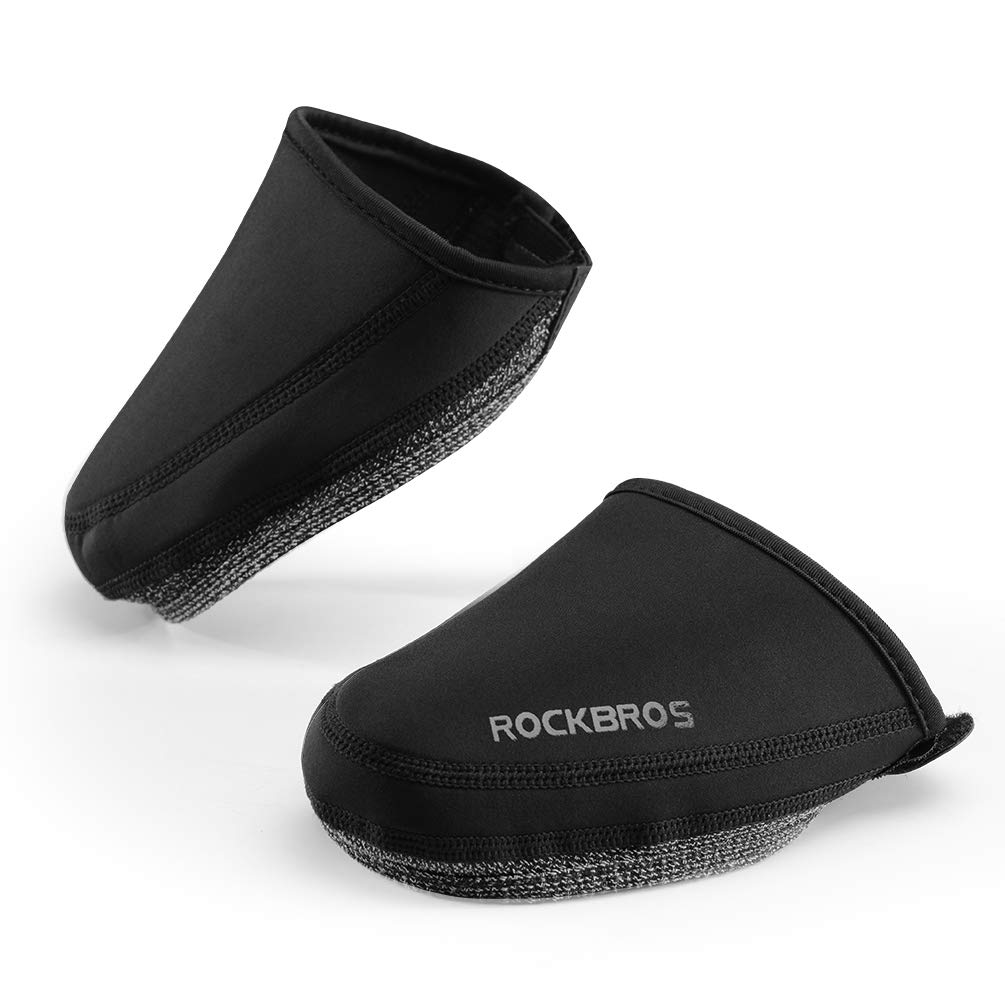
The original ROCKBROS toe cover is a perennial best-seller for good reason: a 2.7mm SBR Lycra upper with a Kevlar-reinforced bottom creates a durable, windproof shell that weighs almost nothing (43 grams per pair). The dual-closure system — a rear elastic band plus an adjustable Velcro strap under the sole — ensures a secure fit on a wide range of shoe shapes. Customer reviews highlight excellent warmth in 10–35°F conditions when paired with mid-weight merino socks.
Where this model excels is walking durability. The large bottom opening and thickened edge are designed specifically to resist tearing from stairs, rock salt, and pavement — a common failure point in thinner covers. Riders with SPD shoes and 2-pin cleats report easy clipping and unclipping without the cover shifting. The fit, however, runs snug: several users with size 11+ shoes found the Velcro strap too short to secure, and a few reported foot pain on rides exceeding 30 miles. Size S fits US 6–8, size L fits US 7–11, but true-to-size ordering is critical.
For riders who need a cover that can handle both the bike and short walking sections (grocery stop, coffee ride), this is the most practical choice in the budget tier. The wind blocking is effective enough for chilly fall mornings, though it won’t match the thermal retention of 5mm neoprene in deep winter.
Why it’s great
- Kevlar bottom is highly durable for walking and stairs
- Windproof SBR Lycra keeps toes warm in 10–35°F
- Lightweight and packs easily in a jersey pocket
Good to know
- Velcro strap may be too short for wide or large shoes
- Snug fit can cause discomfort on long rides (30+ miles)
- Not waterproof; light rain only
4. Synergy Neoprene Cycling Toe Covers Set
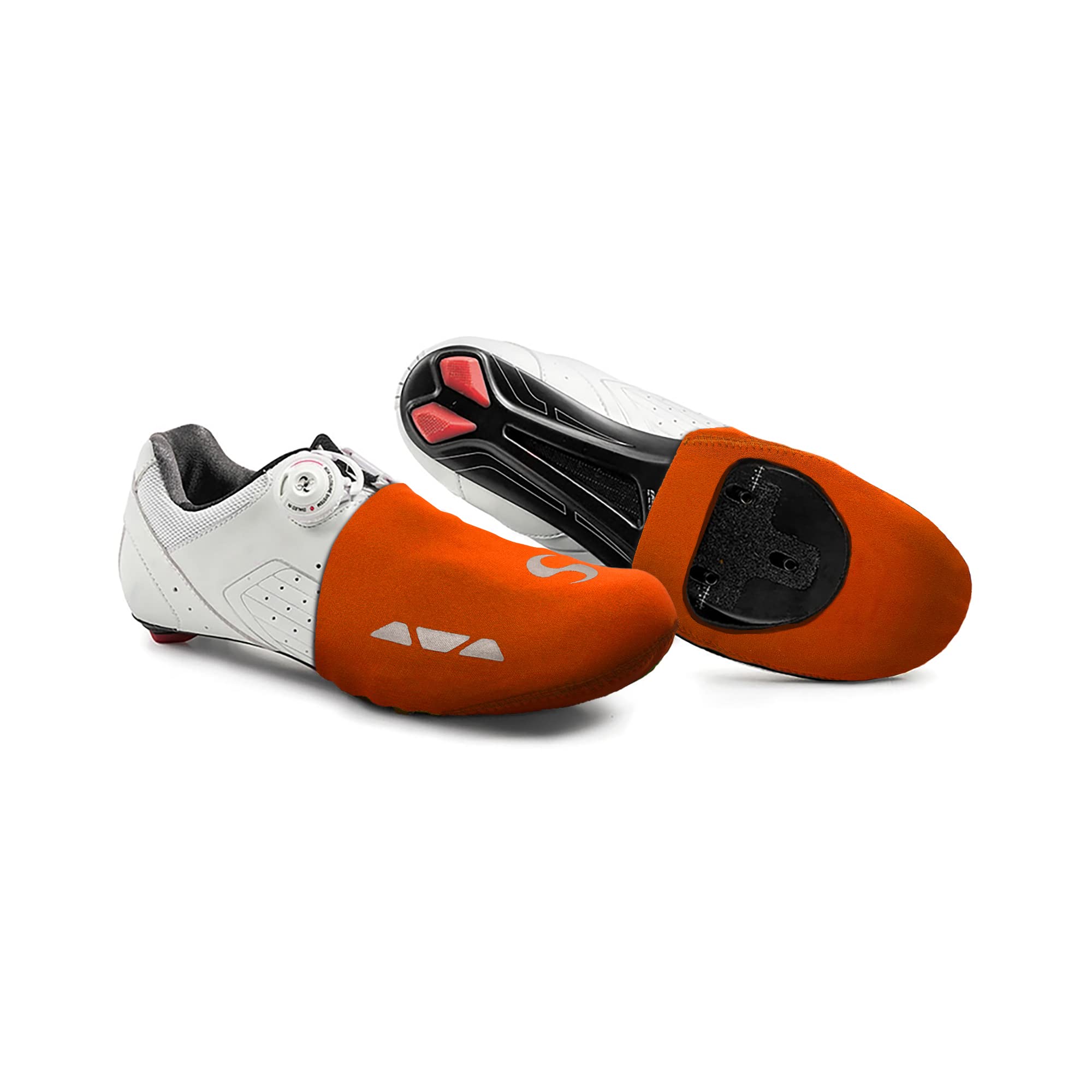
Synergy’s neoprene toe covers stand out with a reversible design — the blue/red color option lets you flip between two looks from one pair, a unique feature in this category. The neoprene material is thick and wind-resistant, and the reinforced nylon sole adds durability for repeated unclipping. Reflective highlights on both sides boost visibility. At this price point, the value proposition is strong, especially for riders who want a second pair for rotation or commuting.
The fit is well-calibrated for road shoes: a woman’s size 9.5 Garneau shoe with Speedplay cleats fit perfectly in size small, with no obstruction to clipping. Riders on longer rides (35–50 miles) reported consistently warm toes down to 30°F. However, the bottom material is not as abrasion-resistant as Kevlar — several users noted wear at the sole after a few months of regular use, especially when walking on concrete. The cover can also slide off the shoe when unclipping and walking, which some reviewers found frustrating enough to abandon entirely.
For casual and commuting cyclists who prioritize style and reversible flexibility over absolute durability, the Synergy set delivers above its weight. Serious winter warriors may want to reinforce the bottom with an adhesive patch or upgrade to a model with a Kevlar sole.
Why it’s great
- Reversible colors for a quick style change
- Thick neoprene blocks wind effectively in 30–50°F
- Reflective details on both sides for low-light safety
Good to know
- Bottom wears out quickly from unclipping and walking
- May slide off shoe when walking in cleats
- Not ideal for MTB cleats without modification
5. SLS3 Cycling Toe Covers – Neoprene Windproof

The SLS3 neoprene toe covers are a straightforward, purpose-built option for road cyclists who want reliable wind blocking without extra weight or complexity. The neoprene is thin enough to fit snugly inside or over the shoe toe box — some users discovered they fit better inside the shoe, where they stay put and warm the toes without any external interference. Others wore them externally with a fully covered toe and lace area, reporting effective warmth down to 37°F.
The fit is designed for Shimano and similar road shoe profiles. The sole cut-out is clean, but it does not accommodate MTB cleats — riders with 2-pin systems found it interfered with clipping in. Sizing is generally accurate, though some with size 11+ shoes noted the toe box was a tight squeeze. The unisex pattern (available in unique prints) helps avoid mix-ups in multi-rider households, a minor but practical bonus.
Where the SLS3 falls short is the “thermal” label — at 50°F, the covers reduce chill but don’t fully eliminate it, indicating they are better suited for fall and mild winter (40–60°F) than deep cold. The neoprene also traps mud and water when walking indoors, and the lack of a reinforced sole means durability is average. For the price, they are a capable, no-fuss entry-level option.
Why it’s great
- Thin neoprene fits easily inside or over the shoe
- Unique prints prevent confusion with other riders’ gear
- Lightweight and easy to pack for variable conditions
Good to know
- Not thermal enough for sub-freezing temperatures
- Cleat cut-out does not work with MTB 2-pin cleats
- Neoprene traps dirt and water when walking
FAQ
Can cycling toe covers be worn inside shoes?
Do toe covers work with MTB cleats?
Final Thoughts: The Verdict
For most riders, the best cycling toe covers winner is the ROCKBROS 5mm Thermal because it delivers the best warmth-to-weight ratio and fits both road and MTB shoes at a reasonable price. If you ride in heavy rain and need full waterproof protection, grab the GripGrab RaceThermo. And for budget-conscious commuters who walk in their cleats, nothing beats the walking durability of the ROCKBROS 2.7mm Kevlar.

Mo Maruf
I created WellFizz to bridge the gap between vague wellness advice and actionable solutions. My mission is simple: to decode the research and give you practical tools you can actually use.
Beyond the data, I am a passionate traveler. I believe that stepping away from the screen to explore new environments is essential for mental clarity and physical vitality.