Our readers keep the lights on and my smoothie glass nicely filled. As an Amazon Associate, I earn from qualifying purchases.
For riders with wide feet, the classic narrow last found on most road and spin shoes creates hot spots, numbness, and a compromised pedal stroke that saps efficiency with every rotation. The difference between a tolerable fit and a truly supportive platform comes down to the shape of the toe box, the material flexibility of the upper, and the adjustability range of the closure system. Choosing wrong means endless fidgeting mid-ride; choosing right unlocks sustained output and genuinely pain-free miles.
I’m Mohammad Maruf — the founder and writer behind WellFizz. For this guide, I analyzed hundreds of customer reviews and spec sheets, zeroing in on width-specific construction metrics such as forefoot volume, cleat track compatibility, and closure-tension distribution to separate the forgiving fits from the merely average.
If you have been settling for a cramped ride, it is time to reset your expectations. The following nine models represent the strongest field of contenders for the title of best cycling shoe for wide feet, each chosen for how well its shape, materials, and adjustability accommodate a broader forefoot without sacrificing pedaling stiffness.
How To Choose The Best Cycling Shoe For Wide Feet
The challenge with standard cycling shoes is that they are built on a D-width last designed for an average male foot. Riders with E or EE width, a high-volume instep, or splayed toes need shoes that offer genuine spatial margin in the forefoot, not just a larger size number. Stretching a standard shoe only lengthens the footbed—the width remains unchanged, causing the foot to slide forward and create new pressure points at the toe. The real solution is a shoe that starts with a wider anatomical last.
Closure System: Your Control Over Tension
Velcro straps provide three discrete zones of adjustment but no micro-correction once you are rolling. Laces give infinite gradation but can loosen during a ride. A BOA dial offers on-the-fly 1-millimeter adjustments and even tension across the midfoot—critical for wide feet because uneven pressure from a buckle or strap can exaggerate the squeeze on the widest part of the foot. For riders with irregular foot shapes, the BOA L6 and similar models are the most forgiving closure option available in this category.
Sole Stiffness and Cleat Compatibility
A nylon-composite sole offers enough flex to absorb road chatter and deliver a more forgiving feel for riders whose wide feet also have a higher arch or metatarsal prominence. Carbon soles maximize power transfer but demand a precise fit; if the shoe is even slightly too narrow, a carbon plate will amplify discomfort rather than improve efficiency. SPD-compatible two-bolt systems are standard for indoor and gravel use, while three-bolt road cleats suit dedicated road riders. Make sure your chosen model’s cleat track allows fore-aft adjustment—wide feet often need the cleat placed farther back to align the ball of the foot correctly over the pedal axle.
Quick Comparison
On smaller screens, swipe sideways to see the full table.
| Model | Category | Best For | Key Spec | Amazon |
|---|---|---|---|---|
| Tommaso Strada Mens SPD | Mid-Range | Home spin class, Peloton | Pre-installed SPD cleats; roomy toe box | Amazon |
| Giro Stylus | Mid-Range | Indoor Peloton, general fitness | Open toe box compared to Nike | Amazon |
| Fizik Tempo Overcurve R5 | Mid-Range | Road riding, pavement | Asymmetrical Overcurve construction; bigger toe box | Amazon |
| Tommaso Indoor Cycling Shoes | Mid-Range | Dual-purpose gym & spin | Recessed SPD cleats for walking | Amazon |
| Giro Cadet | Mid-Range | Indoor/outdoor road, irregular feet | BOA L6 micro-adjust; Synchwire upper | Amazon |
| Giro Chamber II | Mid-Range | Mountain biking, gravel | Tri-molded SPD shank; 10mm setback | Amazon |
| Fizik Vento Omna Wide | Premium | Road cycling, splayed toes | Extra-wide last; single BOA closure | Amazon |
| Fizik Tempo Overcurve R4 Wide | Premium | Long-distance road, wide forefoot | Wide toe box; BOA cable tightening | Amazon |
| SHIMANO SH-RC703 | Premium | Racing, long rides | Carbon sole; dual BOA L6 dials | Amazon |
In‑Depth Reviews
1. Giro Cadet Men’s Road Cycling Shoes

The Giro Cadet strikes a rare balance: a stiff carbon-composite outsole that transfers power efficiently paired with a BOA L6 closure that lets you micro-adjust tension in 1-millimeter increments. For riders with wide or irregular feet (E to EE width without a pronounced arch), the Synchwire upper distributes pressure evenly across the forefoot, eliminating the hot spots that plague buckle- or strap-only designs. Multiple reviewers with wide feet reported zero pressure points after hard indoor sessions on Peloton, attributing the comfort to the dial’s ability to tweak fit mid-ride without stopping.
The outsole accepts both two-bolt and three-bolt cleats, making the Cadet equally at home on spin bikes or outdoor road pedals. The 5-millimeter cleat adjustment range allows you to slide the interface back—critical for wide-footed riders who need to center the ball of the foot correctly over the axle. Several long-term users noted that the BOA lace system remained intact after hundreds of miles, reinforcing the lifetime guarantee attached to the dial and laces.
Some riders reported that the shoe runs slightly small in both length and width. Ordering a half-size up seems to resolve this for most, though a few with very wide feet (above EE) found the toe box still snug even after sizing up. The stiffness of the carbon composite might feel aggressive for pure spin-class beginners, but for riders moving from entry-level shoes, the Cadet represents a clear upgrade in power transfer without sacrificing the adjustability wide feet demand.
Why it’s great
- BOA L6 dial enables micro-adjustable, even tension across the midfoot.
- Carbon-composite outsole offers stiff power transfer with a forgiving ride.
- Dual cleat compatibility (2-bolt and 3-bolt) for indoor and outdoor use.
Good to know
- Runs a half-size small; sizing up is strongly recommended.
- Very wide feet (EE+) may still feel cramped in the toe box.
2. Fizik Tempo Overcurve R4 Wide

The Fizik Tempo Overcurve R4 Wide is explicitly built on a wider last, and the difference is immediately noticeable in the toe box. Riders who have struggled with splayed toes, bunions, or a high-volume forefoot report that the R4 Wide offers genuine wiggle room without making the shoe feel sloppy. The asymmetrical Overcurve construction follows the natural anatomy of the foot, reducing the lateral pressure that standard symmetrical uppers often create on the outside of the widest part of the foot. The BOA cable system provides quick, even tightening across the instep without crushing the forefoot.
Out on the road, the nylon-composite outsole strikes a compromise between comfort and efficiency—flexy enough to absorb vibration over rough pavement but stiff enough for moderate sprints and climbs. One reviewer completed a 75-mile ride with zero hot spots, directly crediting the wide fit. The single BOA dial is less precise than a dual-dial setup, but the cable distribution across the midfoot is even, so riders with wide feet won’t feel pinched at any single point. The shoe is noticeably lightweight, which adds to comfort on long days in the saddle.
The white color option scuffs easily—several owners noted that toe rub against the front tire left marks after a few rides. Sizing can be inconsistent; some users found the wide to be too roomy and sized down, while others with very wide feet felt the standard wide was just right. If you have a narrow heel and a wide forefoot, the BOA allows enough independent tension that the heel remains locked while the forefoot breathes. This is the most generous toe box in this lineup for riders who prioritize wiggle room above all else.
Why it’s great
- Extra-wide last offers genuine toe splay space for bunions and wide forefeet.
- Asymmetrical Overcurve construction follows natural foot anatomy.
- Lightweight build with enough sole flex for all-day comfort.
Good to know
- White upper scuffs easily from front tire rub.
- Single BOA dial slightly less precise than dual-dial alternatives.
3. SHIMANO SH-RC703 Men’s Cycling Shoes
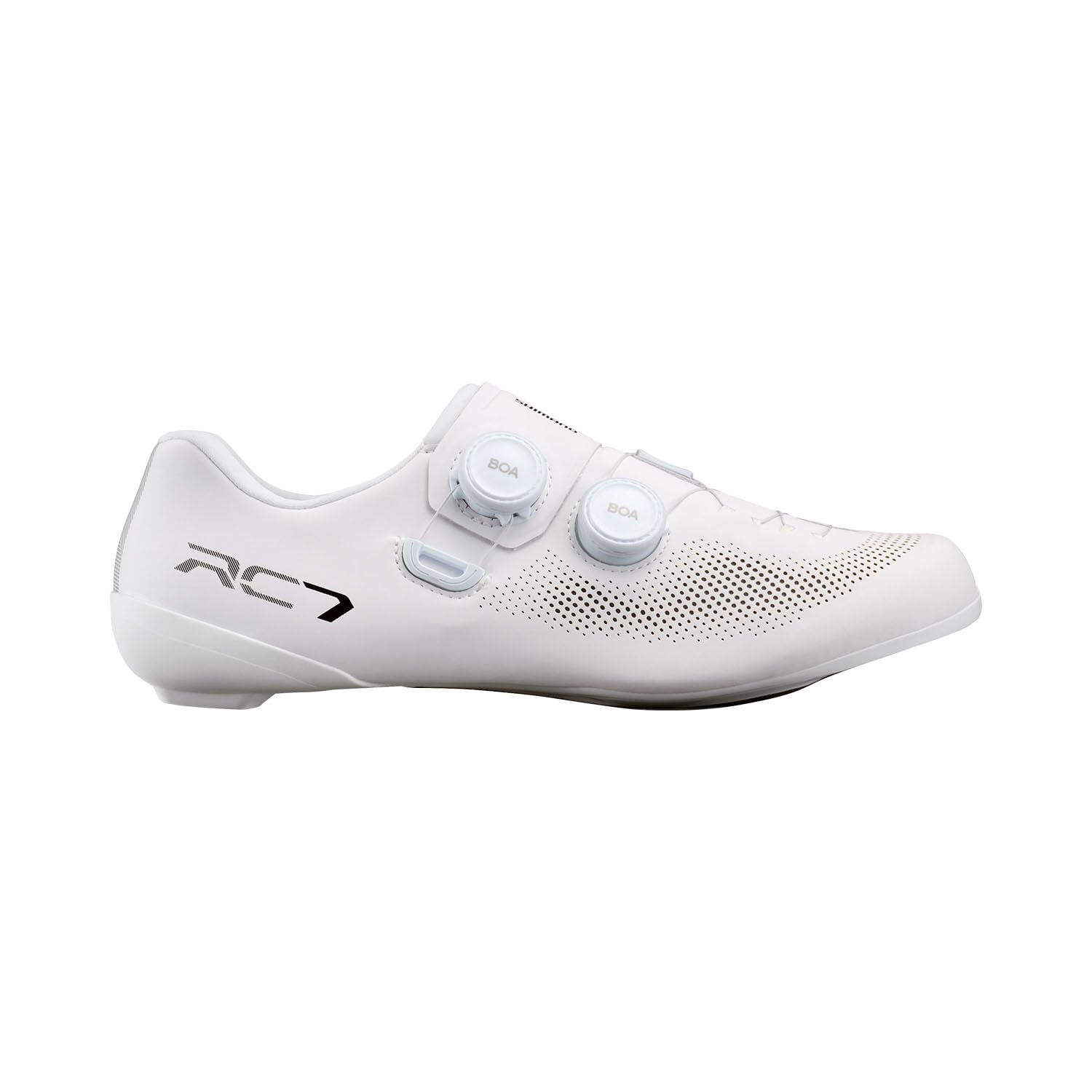
Shimano’s SH-RC703 combines a full carbon-fiber sole with a dual BOA L6 dial system, offering the highest level of adjustability and power transfer in this guide. The wide toe box is a deliberate design choice—several reviewers noted that the shoe runs large specifically because the forefoot is accommodative rather than tapered. For riders with E to EE width, the SH-RC703 provides the stiffness needed for race-day efforts without the crushing feel that narrow carbon shoes impose. The two independent BOA dials let you dial in forefoot and instep tension separately, a feature that is especially valuable for wide-footed riders who need more room in the front but tight lock-in at the heel.
The carbon-composite sole is stiff enough for competitive road riding and long climbs, with a reported stiffness index that rivals Shimano’s top-tier race models. Despite the rigidity, the fit is forgiving enough that riders with slightly wider feet can complete multi-hour rides without numbness. The shoe is also walkable for a carbon-soled model; the heel and toe pads are replaceable, which extends the shoe’s life for riders who dismount frequently. The wide toe box accommodates metatarsal pads or orthotics without compressing the foot.
Sizing is the trickiest aspect. The SH-RC703 runs about a half-size to a full size large compared to standard cycling shoe sizing. Reviewers consistently advise checking the EU size on the shoe tag rather than relying on the US conversion. A 47 EU fits like a typical 48, so riders should plan to size down. The dual BOA system adds weight and complexity, but for riders who value on-the-fly fine-tuning, the extra grams are a worthwhile trade-off for a fit that can be adjusted over the course of a long ride.
Why it’s great
- Full carbon sole provides maximum power transfer for racing and climbing.
- Dual BOA L6 dials allow independent tensioning of forefoot and instep.
- Generous toe box accommodates wide feet and orthotics.
Good to know
- Sizing runs large—check EU tag and consider sizing down.
- Heavier than single-dial or lace-up alternatives.
4. Fizik Vento Omna Wide Road Bike Shoes
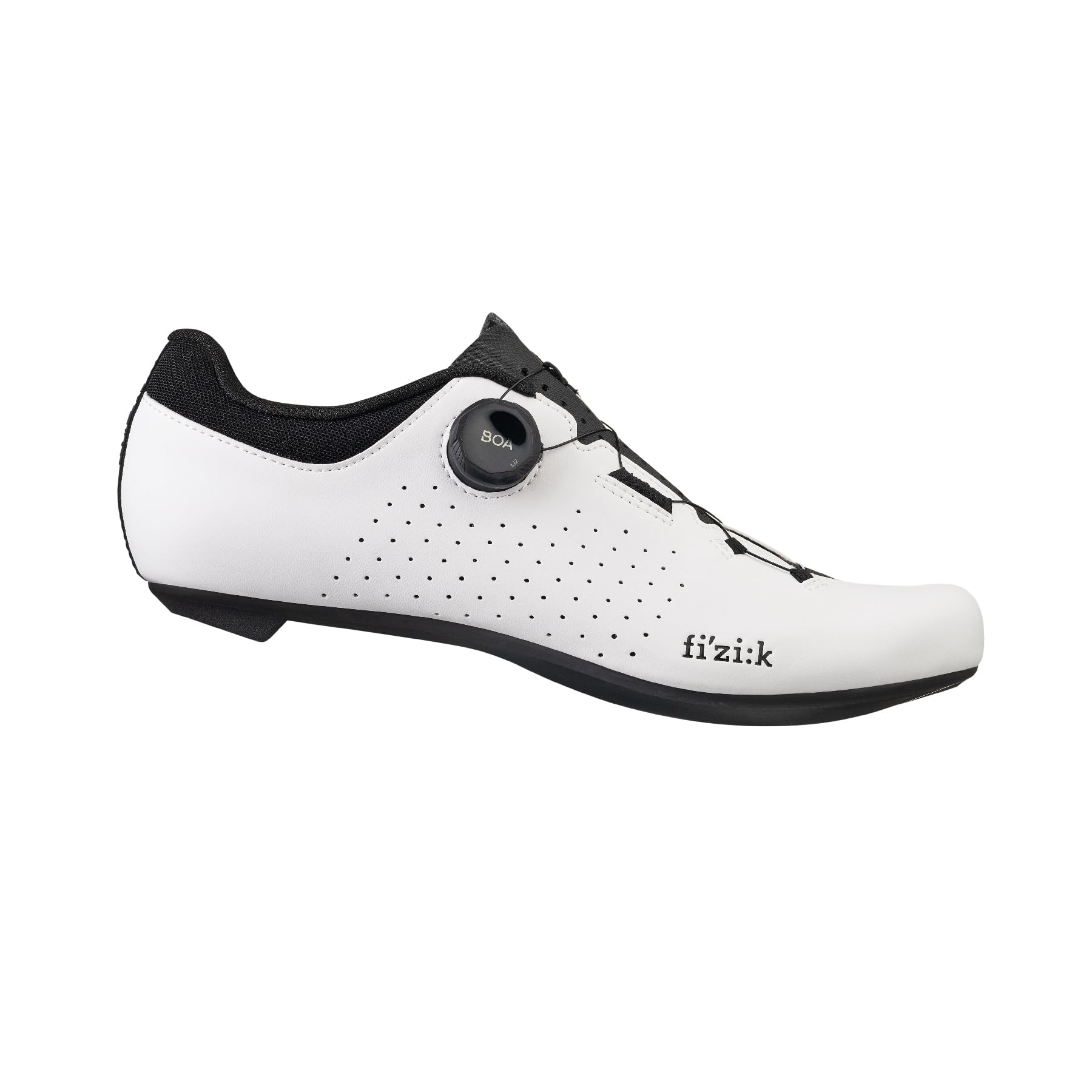
The Vento Omna Wide is Fizik’s purpose-built wide option for road cyclists who need a generous forefoot without resorting to MTB shoes. The single BOA L6 dial delivers a clean, even closure across the midfoot, and the wide last provides enough internal volume that riders with splayed toes or bunions can wear the shoes straight out of the box without a break-in period. One reviewer with size 11.5 feet and a bunion confirmed that the large toe box eliminated the rubbing and pressure they had experienced with every previous road shoe.
The outsole is a nylon-composite blend that offers a moderate stiffness—enough for hour-long group rides and weekend centuries but not as crisp as a full-carbon plate. For riders who prioritize comfort over absolute watt transfer, this is the right trade-off. The shoe holds up well after months of use, with the BOA mechanism and upper showing minimal wear. Several users noted the shoe’s lightweight feel, which adds to the comfort during hot-weather rides where heavy, non-breathable shoes can become unbearable.
The single BOA dial is the most straightforward limitation. While it provides solid tension distribution, the single dial cannot independently adjust the forefoot and instep. Some riders found that tightening enough to secure the heel made the forefoot feel slightly compressed, even with the wide last. If you need separate fine control for two zones, a dual-dial design like the SHIMANO SH-RC703 or Giro Cadet is a better fit. The Vento Omna Wide is ideal for riders whose primary need is a consistently wide, high-volume forefoot with minimal adjustment complexity.
Why it’s great
- Purpose-built wide last with genuine forefoot volume for splayed toes and bunions.
- Lightweight construction with a BOA dial for quick, even tension.
- Moderate sole stiffness that balances comfort and pedaling efficiency.
Good to know
- Single BOA dial lacks independent forefoot vs. instep adjustment.
- Nylon sole less efficient for high-power sprinting than carbon alternatives.
5. Giro Chamber II Men’s Mountain Bike Shoe
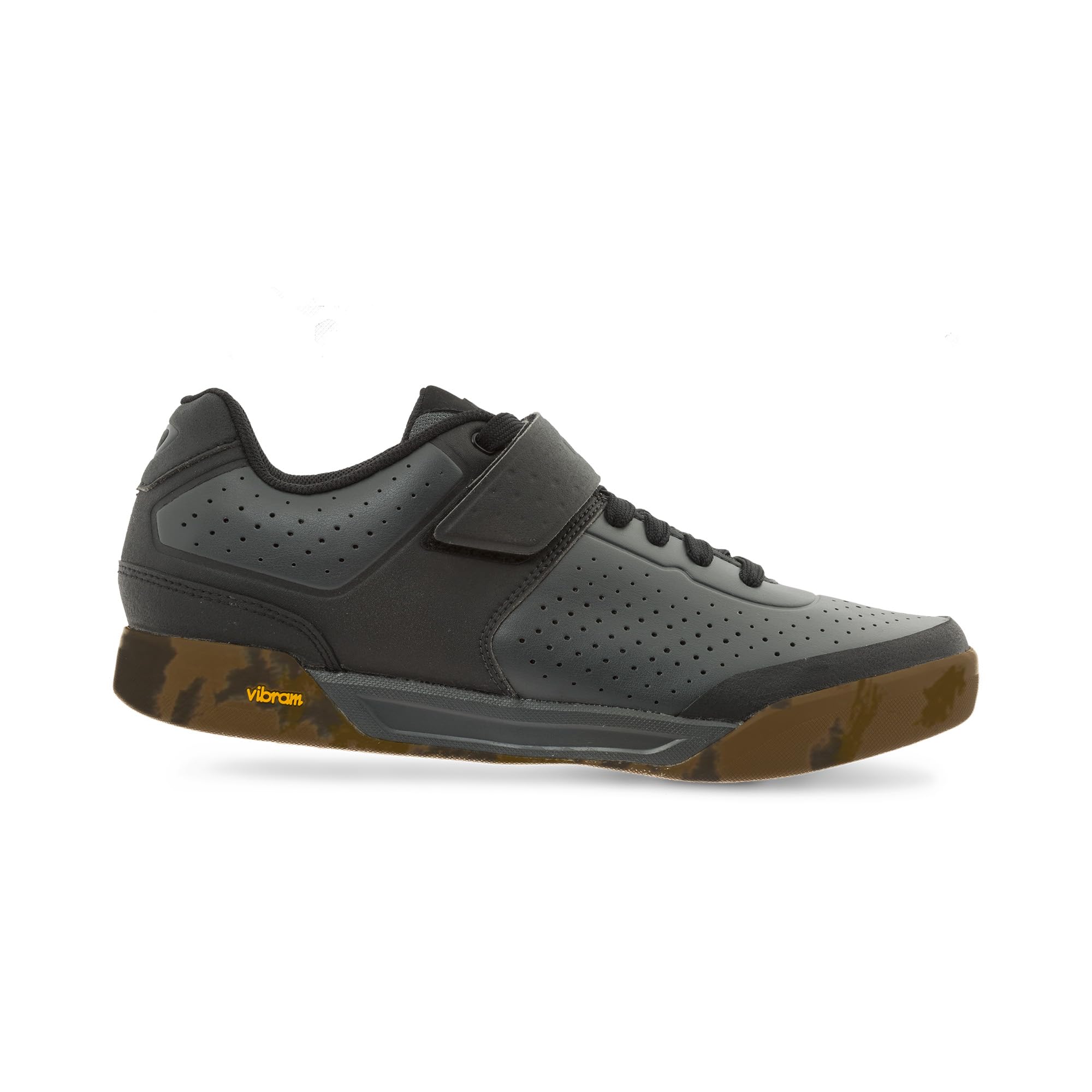
The Giro Chamber II is a mountain bike shoe that doubles as an excellent wide-foot option for gravel and indoor use. The lace-up closure with a top power strap gives you infinite adjustability across the entire forefoot—no dials, no preset positions. Laces distribute pressure more naturally than any mechanical system, which is a distinct advantage for wide feet because you can leave the toe box looser while cinching the instep securely. Multiple reviewers with wide feet specifically noted that the Chamber II fit without pinching and left no painful pressure points after long rides.
The tri-molded SPD-compatible shank includes a 10-millimeter cleat setback, which shifts the rider’s foot back relative to the pedal axle—an ideal geometry for wide-footed riders who typically need cleats positioned farther rearward to align the ball of the foot correctly. The molded EVA footbed with arch support adds a layer of cushioning that reduces fatigue over rough terrain. The shoe is built with a water-resistant microfiber upper that breathes well, and the tubular laces are durable enough to hold a knot without slipping.
The trade-off is weight. The Chamber II is noticeably heavier than road-focused shoes, and the burly construction can feel overbuilt for smooth-road use. Some reviewers found the fit slightly snug and recommended sizing up by half a size, though others with standard-width feet felt true to size. The cleat is recessed, which protects the SPD mechanism when walking and makes the shoe usable for bikepacking or off-bike sections. If you ride primarily indoors or on pavement, a road shoe with a wider last might suit you better; but for mixed-surface riders with wide feet, the Chamber II is a rugged, comfortable choice.
Why it’s great
- Lace closure offers infinite forefoot adjustability without mechanical pinch points.
- 10mm cleat setback accommodates wide-foot positioning preferences.
- Recessed SPD cleat allows comfortable walking off the bike.
Good to know
- Heavy build compared to road shoes; less efficient for pure pavement riding.
- May need to size up for an optimal wide-foot fit.
6. Tommaso Strada Mens SPD Shoes
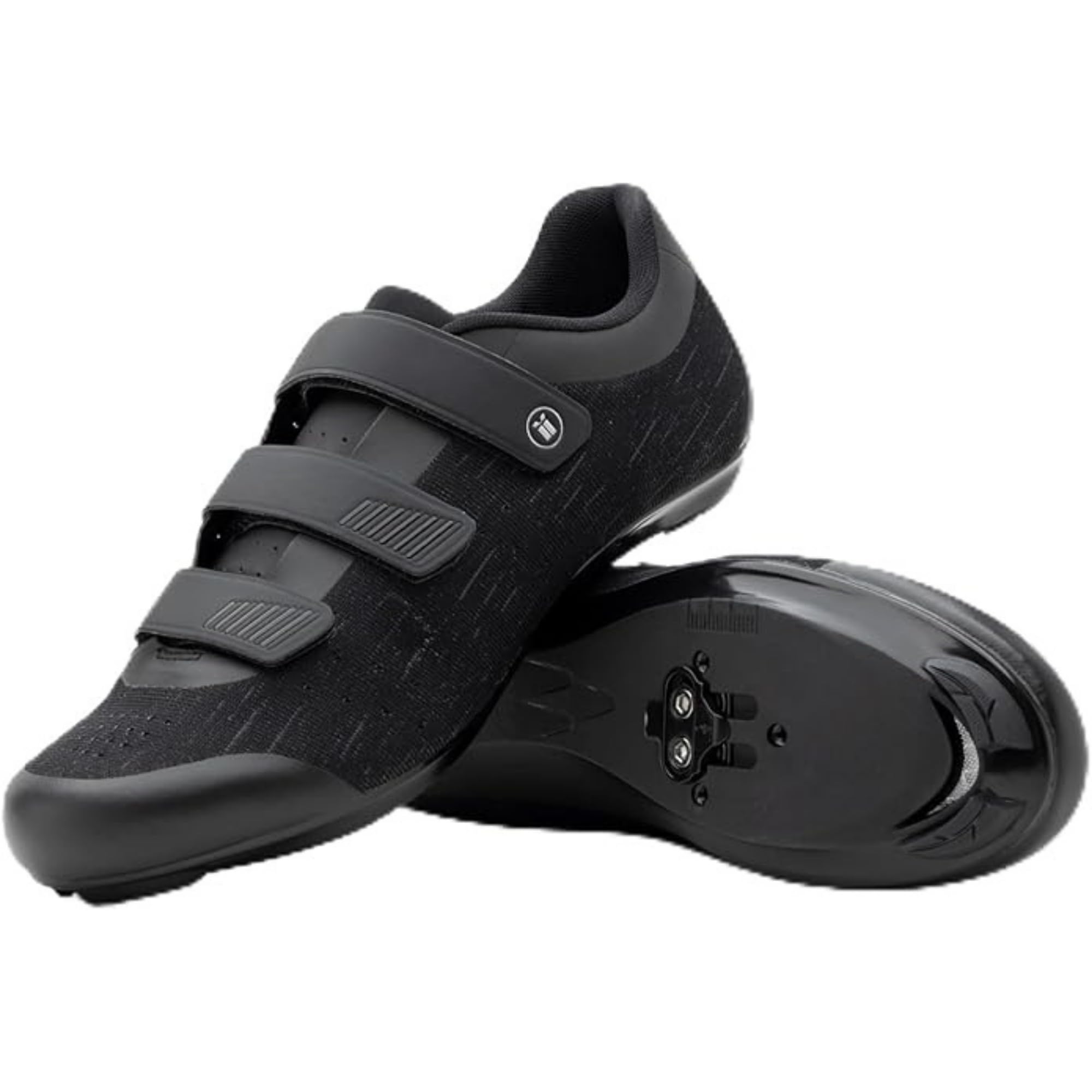
The Tommaso Strada is built with the indoor rider in mind, and its roomy toe box has been specifically called out by reviewers with wide feet as a standout feature. One reviewer who wears a 10.5 wide noted that the shoe fits comfortably with zero pinching—a stark contrast to the tight Peloton-brand shoes they had been using. The pre-installed SPD cleats save the hassle of installation and adjustment for new riders, and the three-strap Velcro closure provides three discrete zones of tension, allowing you to loosen the forefoot strap while keeping the midfoot and ankle secure.
The shoe is lightweight and breathable, with a stiff nylon sole that delivers predictable power transfer for spin classes and moderate outdoor riding. Several users reported that the Strada eliminated the foot numbness they had experienced with other shoes, attributing the improvement to the combination of the wide toe box and adjustable strap positioning. For riders recovering from Achilles injuries, the increased forefoot volume reduces compression on the top of the foot, which can alleviate pain during the pedal stroke.
Sizing is the primary point of confusion. The brand’s sizing chart seems inconsistent with actual fit; some riders needed to go up a full size, while others found the EU sizing to be a better reference than the US number. The Velcro straps, while functional, lack the micro-adjustability of a BOA dial—once you set them, you cannot fine-tune tension without stopping to re-engage the strap. The pre-installed cleats also arrived loose on some units, requiring tightening before first use. For the price point, the Strada delivers solid wide-foot value, especially for riders who primarily spin indoors and want a clip-in shoe that doesn’t squeeze.
Why it’s great
- Roomy toe box confirmed by multiple wide-foot reviewers.
- Pre-installed SPD cleats for immediate use out of the box.
- Lightweight, breathable upper suited for high-intensity indoor sessions.
Good to know
- Inconsistent sizing; use EU chart as primary reference.
- Velcro straps lack fine micro-adjustment mid-ride.
7. Tommaso Indoor Cycling Shoes (Walkable Design)
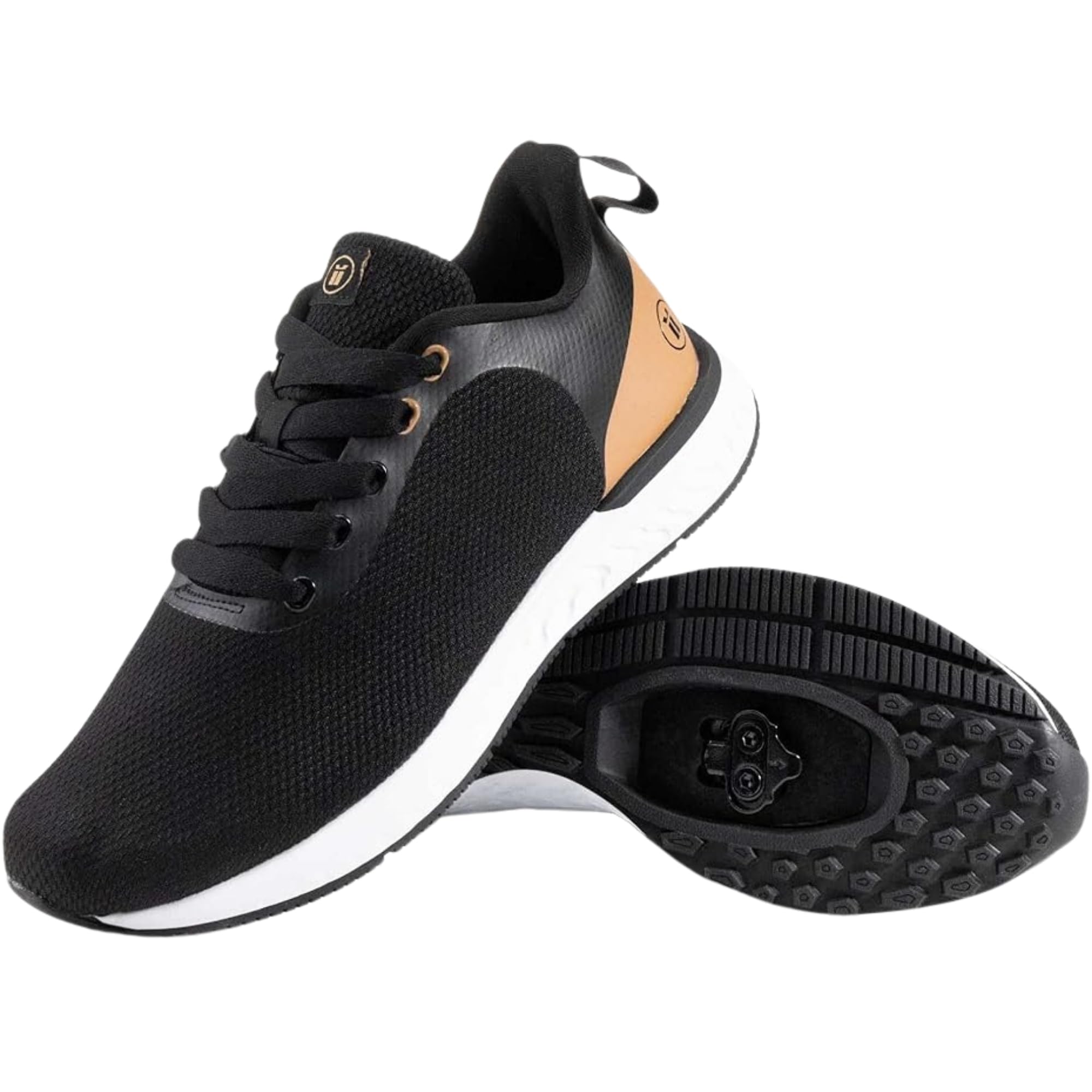
Tommaso’s walkable indoor cycling shoe is designed for riders who clip in at the gym but need to walk between equipment racks or to the locker room. The recessed SPD cleat pocket protects the cleat from ground contact, so you can stride normally without damaging floors or the cleats themselves. The shoe uses a lace closure that allows custom tension across the forefoot—helpful for wide feet because you can simply leave the toe box looser while cinching the laces tighter around the midfoot. One rider used these for a 408-mile ride across Iowa (RAGBRAI) and reported no hot spots despite the distance.
The sole is stiffer than a typical gym shoe for good power transfer during rides but flexible enough to feel natural when walking. The two sets of cleat mounting holes give you fore-aft adjustment, allowing you to position the cleat farther back to accommodate a wider forefoot. Several reviewers noted that the shoes fit well for wide feet when sized up by one to two sizes—a user who normally wears size 13 found that a 14 was still too tight and had to return the shoe, highlighting the importance of ordering based on precise foot measurements rather than assuming standard sizing.
The lace closure requires a conscious effort to tuck excess laces under the crossing straps to prevent them from catching the chainring, a minor annoyance that dial-based systems eliminate. The shoe is heavier than dedicated race models, and the walkable sole flex means slightly less efficient power transfer than a full-stiffness road shoe. For the rider who uses a single shoe for spin classes, gym workouts, and short commutes, the trade-off is worth it—the walkability genuinely enhances everyday practicality without completely sacrificing pedaling performance.
Why it’s great
- Recessed SPD cleats allow natural walking without cleat or floor damage.
- Lace closure enables custom forefoot tension for wide feet.
- Dual cleat mounting positions for optimal fore-aft adjustment.
Good to know
- Sizing runs small; order 1–2 sizes up for wide feet.
- Walkable sole flex reduces peak power transfer vs. stiff road shoes.
8. Fizik Tempo Overcurve R5

The Fizik Tempo Overcurve R5 offers a more forgiving nylon-composite sole than the stiffer R4 Wide, making it an appealing option for wide-footed riders who find carbon plates too unforgiving. The asymmetrical Overcurve construction wraps the foot in a way that mimics natural anatomy, reducing the lateral squeeze that standard symmetrical uppers create. The Microtex upper is supple enough to conform to a wide forefoot without digging in at the edges. Several riders reported that the R5 provides a noticeably bigger toe box than similarly priced road shoes, and the slightly flexy sole absorbs road vibration without sacrificing pedal feel.
The R5 uses a traditional lace-and-Velcro combination rather than a BOA dial, which some riders prefer for its simplicity and lower cost. The laces allow infinite tension gradation across the entire foot, giving wide-footed riders the freedom to loosen the toe section while tightening the instep. The sole stiffness is moderate—fine for endurance rides and group spins but not race-day sharp. One reviewer who switched from the Fizik R1 Infinito () found the R5 more comfortable for non-pro riding exactly because of the softer upper and larger toe box.
The fit runs slightly small; several reviewers recommend ordering a half-size to a full-size up, especially if you plan to wear thicker socks in cooler weather. The Velcro strap across the instep provides solid retention but does not offer the micro-adjustability of a BOA dial. The R5 is not available in a dedicated wide version—the width comes from the softer upper and the Overcurve shape rather than a truly wider last. For riders with moderately wide feet who want a comfortable, affordable road shoe, the R5 delivers high value. For those with very wide feet (EE and above), the dedicated wide models from Fizik (like the R4 Wide) or Shimano will fit more consistently.
Why it’s great
- Overcurve asymmetrical construction reduces lateral squeeze on wide forefeet.
- Softer Microtex upper conforms without creating pressure points.
- Nylon composite sole provides comfort-focused flex for endurance rides.
Good to know
- Not a dedicated wide last; best for moderately wide feet.
- Runs slightly small; order up at least half a size.
9. Giro Stylus Cycling Shoe

The Giro Stylus is a no-frills entry-level cycling shoe that has earned a reputation among indoor riders for its comfortable, open toe box. Multiple reviewers with wide feet noted that the Stylus provides more forefoot room than the Nike and Peloton shoes they had used previously, reducing the numbness and pressure they experienced during spin classes. The shoe uses a three-strap Velcro closure that is simple and durable, with enough independent adjustment to leave the toe area loose while securing the instep. The stiff sole provides adequate power transfer for indoor use and short outdoor rides.
Reviewers consistently praised the value—the Stylus delivers a functional wide-friendly fit at a price point that undercuts most dedicated wide models. The shoe is available in standard sizing, and users reported that the fit is true to size for most foot shapes, though riders with very wide feet (above EE) might need to size up by half. The synthetic upper breathes well enough for sweat-heavy spin sessions, and the heel cup is structured enough to prevent slipping during hard efforts.
Some users noted that the Stylus tends to run narrow, which conflicts with the wide-foot praise in other reviews. The discrepancy likely stems from the shape of the toe box—it is more rounded than many road shoes, which gives the toes room to splay even though the overall width at the midfoot is standard. Riders with wide midfoots may still feel pinched. The Velcro straps, while functional, lack the precision of BOA or lace systems, and the shoe is not designed for heavy outdoor mileage. For the indoor rider on a budget who simply needs a shoe that doesn’t squeeze the toes, the Giro Stylus is a solid starting point.
Why it’s great
- Rounded toe box offers more room than typical road shoes in this price range.
- Durable three-strap Velcro system is simple and reliable.
- Stiff sole provides sufficient power transfer for indoor spinning and short rides.
Good to know
- Midfoot may still feel narrow for riders with EE+ width.
- Velcro lacks micro-adjustment and can loosen during long rides.
FAQ
Can I buy a half-size up instead of a wide-specific cycling shoe?
Are mountain bike (MTB) shoes better for wide feet than road shoes?
Will cycling shoes stretch out over time to accommodate wide feet?
What does “SPD-compatible” mean and why does it matter for wide feet?
Can I use my wide cycling shoes with flat pedals instead of clipless pedals?
Final Thoughts: The Verdict
For most riders, the best cycling shoe for wide feet winner is the Giro Cadet because the BOA L6 micro-adjustment combined with the forgiving carbon-composite sole and dual cleat compatibility covers both indoor and outdoor use without compromise. If you want the roomiest toe box available and prioritize walking comfort, grab the Fizik Tempo Overcurve R4 Wide. And for pure race-day performance with independent forefoot and instep tension control, nothing beats the SHIMANO SH-RC703.

Mo Maruf
I created WellFizz to bridge the gap between vague wellness advice and actionable solutions. My mission is simple: to decode the research and give you practical tools you can actually use.
Beyond the data, I am a passionate traveler. I believe that stepping away from the screen to explore new environments is essential for mental clarity and physical vitality.