Our readers keep the lights on and my smoothie glass nicely filled. As an Amazon Associate, I earn from qualifying purchases.
A soft tire on a cold morning or a puncture five miles from home can turn a great ride into a long walk. Finding a pump that fits your bike, your bag, and your riding style is the difference between a minor delay and a ruined day. From floor-standing shop tools to pocket-sized electronic units, the range of options can be overwhelming, but the right choice comes down to pressure needs, valve compatibility, and your specific cycling routine.
I’m Mohammad Maruf — the founder and writer behind WellFizz. My research for this guide involved cross-referencing over 30 customer reviews and manufacturer specifications to isolate the real-world performance of each pump across road, mountain, and commuter use cases.
Whether you need a high-volume floor pump for your garage or a compact mini pump for your jersey pocket, finding the best cycling pump means matching the tool to your valve type and your typical inflation pressure, not just picking the cheapest option on the shelf.
How To Choose The Best Cycling Pump
Selecting the right cycling pump depends on three factors: the type of bike you ride, the valves on your tubes, and where you plan to store the pump. Making the right call saves you time and elbow grease.
High Pressure vs. High Volume
Road bikes and track bikes need high pressure (100 to 160 PSI) to minimize rolling resistance. These pumps have a smaller barrel diameter, so you generate more force per stroke. Mountain bikes and fat bikes need high volume to fill large casing tires quickly, but they rarely exceed 50 PSI. Floor pumps designed for high volume move more air per stroke but top out at lower pressure. A general-purpose floor pump is a compromise that handles both adequately for casual riders.
Valve Compatibility
Presta valves are narrow, threaded, and require a small nut to open — they are standard on road and higher-end mountain bikes. Schrader valves are wider and identical to car tire valves. Many pumps now feature a dual-head design or a reversible internal gasket that works with both without adapters. Some ultra-compact mini pumps use a screw-on hose that seals directly onto Presta threads, which reduces air loss during connection but can pull out a loose valve core if you are not careful.
Material and Build Quality
For floor pumps, a steel barrel and a wide composite or steel base prevent tipping during use. Aluminum construction saves weight for hand pumps but must be robust enough to handle the stress of high-pressure strokes. CNC-machined aluminum offers the best strength-to-weight ratio for pocket pumps. Reinforced plastics are acceptable for budget electric models but should be paired with a metal valve adapter for long-term reliability.
Quick Comparison
On smaller screens, swipe sideways to see the full table.
| Model | Category | Best For | Key Spec | Amazon |
|---|---|---|---|---|
| LEZYNE Classic Floor Drive 3.5 | Premium Floor Pump | High-Pressure Road Riding | 220 PSI Max | Amazon |
| Topeak JoeBlow Max HP | Mid-Range Floor Pump | Home Garage & Shop Use | 160 PSI Max | Amazon |
| HOTO Mini Bike Tire Pump | Portable Electric | Fast On-Trail Inflation | 150 PSI / 25s Refill | Amazon |
| AUXITO Tire Inflator | Premium Electric | Multi-Vehicle Family Use | 150 PSI / 26 L/min | Amazon |
| Beto Bike Floor Pump | Mid-Range Floor Pump | Universal Valve Compatibility | 160 PSI / 47.2″ Hose | Amazon |
| LEZYNE Pocket Drive HP | Compact Hand Pump | Ultralight Trail Backup | 160 PSI / 75g | Amazon |
| AstroAI AIRUN H | Budget Car Pump | Car & Occasional Bike Use | 12V DC / Auto-Off | Amazon |
In‑Depth Reviews
1. LEZYNE Classic Floor Drive 3.5

The LEZYNE Classic Floor Drive 3.5 is the gold standard for road cyclists who demand precise high-pressure inflation. Its steel barrel and varnished wood handle deliver a solid, fatigue-free pumping experience, and the 3.5-inch analog gauge is legible from standing height. The screw-on ABS-1 Pro chuck seals perfectly onto Presta valves every time, with virtually no air loss during disconnection — a clear advantage over lever-style heads that can pop off under tension.
Reaching 220 PSI is realistic with this pump, though the effort increases noticeably above 100 PSI due to the narrow barrel design. The composite base is wide and stable, and the long hose reaches valve stems even when the bike is on a tall work stand. Several long-term users report consistent performance after five years of regular use, pointing to rebuildable internals that extend the pump’s service life beyond what most competitors offer.
The only real trade-off is weight — at just over three pounds, this is a dedicated garage or shop tool, not something you carry on a ride. Also, the analog gauge can show a slight offset compared to a digital sensor, but the deviation is consistent across readings, so you can calibrate mentally after a few uses.
Why it’s great
- 220 PSI maximum suits track and high-pressure road tires
- Screw-on chuck eliminates air loss and valve core damage
- Durable steel barrel and stable base for daily shop use
Good to know
- Heavy and large — not portable for rides
- Analog gauge may read slightly off from digital references
2. Topeak JoeBlow Max HP

The Topeak JoeBlow Max HP hits the sweet spot for home mechanics who need one pump for road bikes, mountain bikes, and family cruisers. Its Universal TwinHead design flips between Presta, Schrader, and Dunlop valves without any adapter, so you never hunt for the right fitting. The heavy-duty painted steel barrel and composite base have held up in workshops for years, and the oversized padded handle makes high-volume strokes comfortable even when pumping up a fat tire from flat.
The large analog gauge is easy to read from a standing position and includes a movable pressure indicator ring that helps you track your target as you pump. The 160 PSI maximum is sufficient for road tires, though you will exert more effort near the top end compared to the LEZYNE. The included ball and bladder needles store neatly in the handle, and the hose dock keeps everything tidy.
Some users note that the valve lock lever is stiff to operate and has a sharp edge that can catch a hand if you slip. The pump has a strong track record over two-plus years with consistent performance on multiple bike types, although fat bike tires do require more strokes to reach inflation.
Why it’s great
- TwinHead valve works with Presta, Schrader, and Dunlop
- Movable pressure indicator on gauge simplifies tracking
- Sturdy steel barrel and stable base
Good to know
- Valve lock lever is stiff and can be painful
- Fat bike tires require many strokes
3. HOTO Mini Bike Tire Pump

The HOTO Mini Bike Tire Pump proves that small electric pumps can deliver real roadside performance. Inflating a 700x23C road tire from 80 to 100 PSI takes about 25 seconds, and from flat to 80 PSI takes roughly 60 seconds. The brushless motor and 2000 mAh battery handle up to eight flats or eighteen low-pressure refills on a single charge, which is enough for a full weekend of group rides. Its pocket-sized form factor (2.28 x 1.5 x 3.66 inches) slides into a saddle bag or even a large jersey pocket.
The automatic shut-off uses a high-precision sensor with ±1 PSI accuracy, and the LED display shows both real-time and target pressure. The 360-degree rotating hose eliminates awkward angles when connecting to the valve. A memory function remembers your last two pressure settings for quick repeat use. The Presta adapter must be attached securely to the valve first, then the quick-connect chuck locks on, which is a minor extra step compared to dedicated Presta heads.
User reports confirm the pump is effective for road, mountain, and BMX tires, though some units show a gauge offset of about 10 PSI — users recommend setting the target 10 PSI higher to compensate. The pump is noticeably noisy at full power, but that is typical for this class of device.
Why it’s great
- Fast inflation — 25 seconds for a top-off
- Ultra-compact and easy to pack
- Memory presets for repeat use
Good to know
- Gauge can be off by 10 PSI on some units
- Presta adapter adds an extra connection step
4. AUXITO Tire Inflator
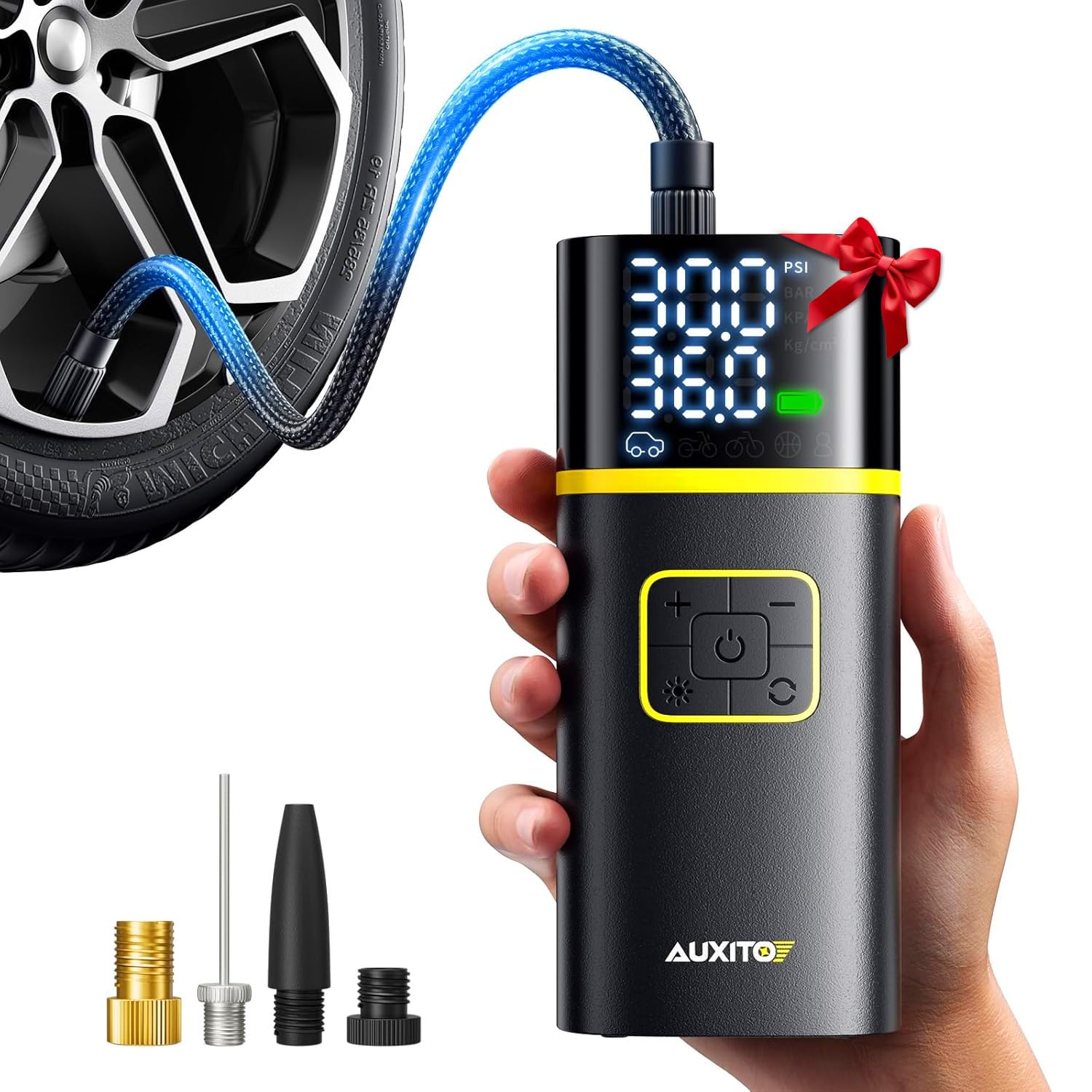
The AUXITO Tire Inflator bridges the gap between a dedicated bike pump and a full-featured car tire inflator. With a 26-liter-per-minute airflow rate, it inflates a compact car tire from 30 to 35 PSI in about one minute, and it handles bike tires even faster. The dual-screen display shows both real-time and preset pressure values with ±1 PSI accuracy, and the sunlight-readable screens make it usable in bright conditions. The 5200 mAh battery lasted several users months between charges while maintaining two vehicles and sports equipment.
Four preset modes (Car, Motorcycle, Bike, Ball) plus a custom mode simplify setup. The auto shut-off function stops inflation precisely at the target, though there is no integrated release valve for bleeding air if you overshoot — users suggest partially unscrewing the hose connection, which is an imperfect workaround. The included LED flashlight with SOS mode adds emergency utility, and the USB port can charge a phone in a pinch.
The physical size is larger than the HOTO, so it fits better in a car glove compartment than a bike jersey pocket. The pump body gets hot after inflating four car tires in sequence, but it has not shown reliability issues under normal use.
Why it’s great
- Fast 26 L/min airflow for car and bike tires
- Long battery life with months of standby
- Sunlight-readable dual screens
Good to know
- No controlled air bleed for overinflation correction
- Too large for bike-specific packability
5. Beto Bike Floor Pump

The Beto Bike Floor Pump stands out for its enormous 2.5-inch top-mounted gauge, a blessing for riders with less-than-perfect eyesight. The gauge numbers are large and the red air bleed button lets you fine-tune pressure if you overshoot the target — a simple but effective feature missing from many pumps at this level. The AH4 auto-head clicks onto Presta, Schrader, and Dunlop valves without any adjustment, and the lever locks securely for a leak-free seal.
The 47.2-inch hose originates near the top of the pump, which makes it easy to reach a tire valve even when the bike is hanging on a repair stand. The steel barrel and wide base keep the pump stable during use, and a ball needle stores cleverly in the handle. Beto is manufactured in Taiwan and supplies pumps for several well-known brands, so the build quality reflects factory expertise rather than pure marketing.
Some users experienced the valve head lever breaking after two years of moderate use, and the plastic piece that clamps the Schrader port can pop out under repeated pressure. The pump delivers excellent value and design for the first couple of years, but long-term durability is a question mark compared to the Topeak or LEZYNE options.
Why it’s great
- Huge, readable top-mounted gauge
- Air bleed button for pressure adjustments
- Long hose works with bike stands
Good to know
- Valve head lever has reported breakage after two years
- Plastic internals on head can fail on Schrader port
6. LEZYNE Pocket Drive HP
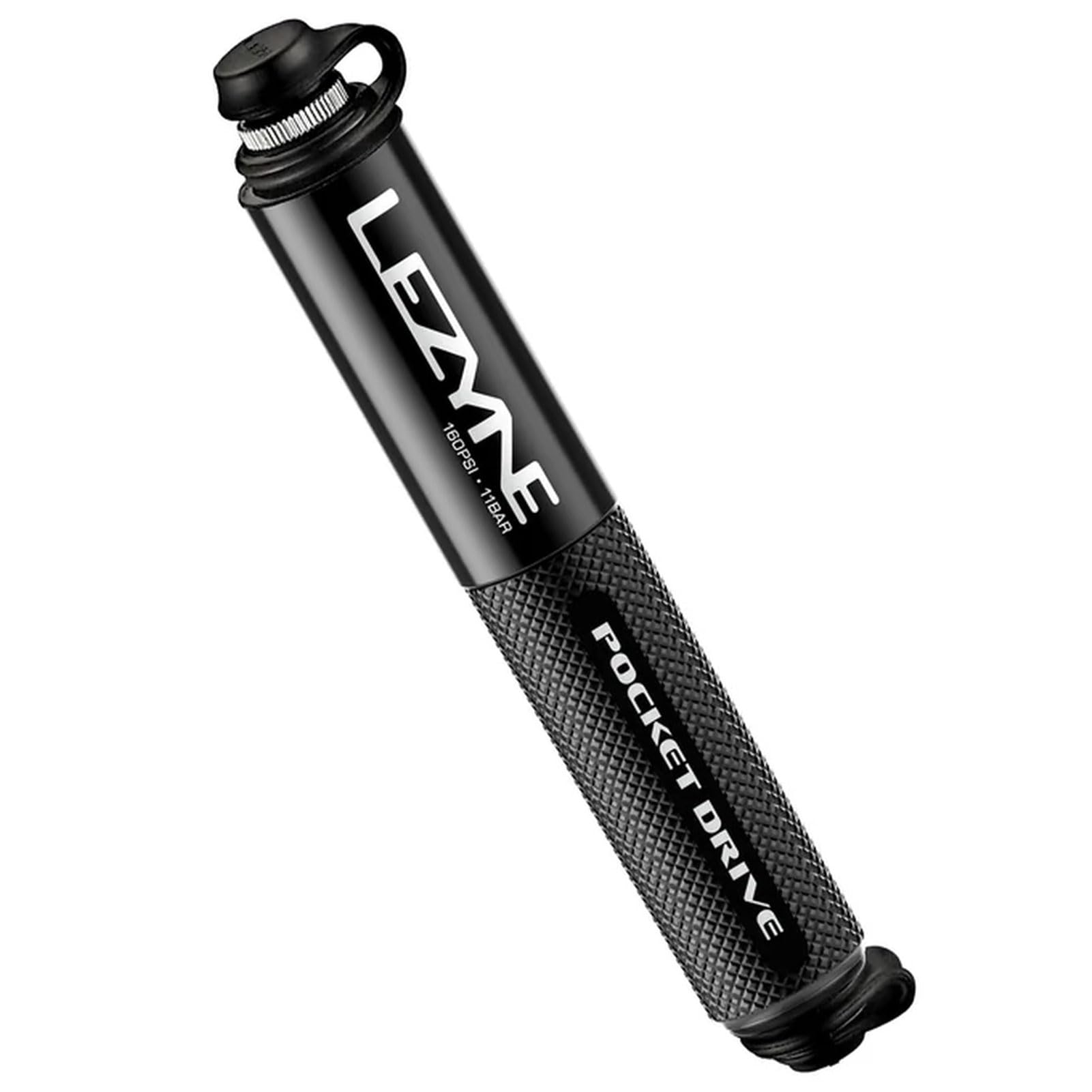
Weighing just 75 grams and measuring 150x23x28.8mm, the LEZYNE Pocket Drive HP is the lightest pump in this lineup by a wide margin. Its CNC-machined aluminum body is tough enough for years of trail abuse, and the knurled handle provides a slip-resistant grip even with sweaty hands. The integrated ABS Flex Hose screws directly onto Presta threads, forming a solid seal that prevents air loss during inflation — a major advantage over push-on designs that can leak.
The maximum rated pressure is 160 PSI, though some units shipped with a 90 PSI limit due to a manufacturing variance, so buyers should verify the spec on arrival. For road tires, it takes about 200 strokes to add 25 PSI to a 700x23C tube, which is manageable as a roadside backup but slower than a CO2 cartridge. Mountain bikers appreciate that the flexible hose reduces valve stress when pumping on uneven terrain.
The serviceable design means you can replace internal seals if performance degrades over time. The included Composite Matrix mount attaches securely to a bottle cage or frame bosses, keeping the pump accessible without taking bag space. If you have loose Presta valve cores, the threaded connection can pull them out when unscrewing, so carrying a valve core tool is recommended.
Why it’s great
- Incredibly light at 75 grams
- Screw-on hose forms a leak-free Presta seal
- Serviceable design extends usable life
Good to know
- Some units shipped with 90 PSI instead of 160 PSI
- Can pull out loose Presta valve cores
7. AstroAI AIRUN H Tire Inflator

The AstroAI AIRUN H is a budget-friendly 12V DC pump designed primarily for car tires, but it works well for bike tires when you have access to a vehicle with a cigarette lighter socket. The 9.8-foot cord reaches all four car tires without repositioning, and the compact body (6.8 x 3.9 x 8.4 inches) stows easily in a trunk or glove compartment. The digital pressure gauge lets you set a target value, and the pump shuts off automatically when it reaches that pressure, preventing overinflation.
Multiple users report reliable performance for four or more years, which is impressive for a pump at this level. The LED flashlight helps with nighttime use, though it is not very bright. Inflation speed is adequate for bike tires and passenger car tires, but the pump runs on vehicle power, so it is useless on a trail away from your car. The ToughUltra technology in the cylinder and motor gears adds durability that explains the long service life reported by many owners.
The included accessories cover Presta and Schrader valves, but the pump is louder than electric models with brushless motors. There is no storage case, so the pump and attachments can get scattered in the trunk. For a dedicated cyclist who needs a trailside solution, this pump is too dependent on a car; for a commuter who parks at home, it is a solid secondary pump.
Why it’s great
- Long 9.8-foot cord reaches all car tires
- Proven reliability over 4+ years of use
- Auto shut-off with programmable target pressure
Good to know
- Requires a running car — not for trail use
- Louder than brushless electric pumps
FAQ
Can I use a car tire inflator on my bike tires?
Why does my Presta valve lose air when I disconnect the pump?
How many strokes does it take to inflate a road tire with a mini hand pump?
Final Thoughts: The Verdict
For most users, the best cycling pump winner is the Topeak JoeBlow Max HP because it combines dual-valve compatibility, durable steel construction, and a reliable 160 PSI maximum at a mid-range price that suits home garages without going overboard. If you want the fastest roadside inflation in a pocketable electric package, grab the HOTO Mini Bike Tire Pump. And for ultralight trail backup where every gram counts, nothing beats the LEZYNE Pocket Drive HP.

Mo Maruf
I created WellFizz to bridge the gap between vague wellness advice and actionable solutions. My mission is simple: to decode the research and give you practical tools you can actually use.
Beyond the data, I am a passionate traveler. I believe that stepping away from the screen to explore new environments is essential for mental clarity and physical vitality.