Our readers keep the lights on and my smoothie glass nicely filled. As an Amazon Associate, I earn from qualifying purchases.
Choosing the right power meter is the single most impactful upgrade a serious cyclist can make, transforming how you train, pace, and measure progress on every ride. But the sheer variety of options — from crank-based spiders to left-side arms and pedal-based systems — makes it easy to overpay for features you don’t need or undershoot on accuracy.
I’m Mohammad Maruf — the founder and writer behind WellFizz. I’ve analyzed hundreds of hours of spec sheets, user feedback, and real-world performance data for the latest cycling power meters to build a guide that cuts through the marketing noise.
This guide breaks down nine distinct models across every mounting style and accuracy tier, helping you confidently choose the best cycling power meter for your exact bike setup, training goals, and budget.
How To Choose The Best Cycling Power Meter
Picking a power meter starts with understanding where your bike’s drivetrain already is. A pedal-based unit works across multiple bikes without tools, while a crank or spider meter must match your bottom bracket standard and chainring bolt pattern. Accuracy claims hover between ±1% and ±2%, but the real differentiator is whether you need left-right balance data or just total wattage for heart rate zone pacing.
Single-Sided vs. Dual-Sided Measurement
A single-sided power meter (left arm or left pedal) assumes both legs produce equal force — a flawed assumption for most riders recovering from injury or with natural imbalances. Dual-sided systems (dual pedals or spider-based) capture each leg independently, giving you left-right balance, torque effectiveness, and pedal smoothness metrics that expose inefficiencies in your stroke.
Mounting Location: Pedal, Crank, or Spider
Pedal-based meters are the most versatile, moving between bikes in seconds and fitting any frame with standard pedal threads. Crank-arm meters are lightweight and vanish visually but require a compatible crankset spline (Hollowtech II, SRAM DUB). Spider meters sit under the chainrings and work only with specific BCD patterns and bolt interfaces — they deliver accurate dual-sided data but lock you into one bike permanently.
Battery Life and Rechargeability
Coin-cell CR2032 units (like the 4iiii Precision 3+ offering 800 hours) let you swap batteries in seconds but create electronic waste and the risk of losing power mid-ride if you forget spares. Rechargeable units (Magene P715 with 120 hours, Favero Assioma with 50 hours) use magnetic USB cables and eliminate consumable batteries entirely — a major convenience for daily trainers who hate unexpected dead sensors.
Quick Comparison
On smaller screens, swipe sideways to see the full table.
| Model | Category | Best For | Key Spec | Amazon |
|---|---|---|---|---|
| Favero Assioma DUO (B089DQZYJH) | Dual Pedal | Dual-sided accuracy for serious training | 50h rechargeable, ±1% accuracy | Amazon |
| Magene PES P505/P515 Crankset | Crank Arm | Lightweight trail-ready crank meter | 380h battery, 625g complete | Amazon |
| Favero Assioma PRO MX-1 | MTB Pedal | SPD pedal power for gravel & MTB | IP67, ±1%, SPD cleats | Amazon |
| SRAM RED/Force AXS Power Spider | Spider | SRAM AXS drivetrain upgrade | ±1.5%, 200h coin cell | Amazon |
| Favero Assioma DUO (B071JRXDKT) | Dual Pedal | Proven dual-sided road pedals | 50h, titanium spindle | Amazon |
| Magene P715 Power Pedals | Dual Pedal | Budget dual-sided pedal meter | 120h battery, 157g each | Amazon |
| Favero Assioma Uno (B07P5DZBCK) | Single Pedal | Entry-level pedal power on a budget | 50h rechargeable, Look Keo | Amazon |
| 4iiii Precision 3+ | Left Crank | Lightweight Shimano 105 upgrade | 800h CR2032, ±1%, 9g add | Amazon |
| Favero Assioma DUO (B07P5J5T8S) | Dual Pedal | All-in-one training bundle | 50h, zero-float cleats incl. | Amazon |
In‑Depth Reviews
1. Favero Assioma DUO Double-Sided Power Meter Pedals (B089DQZYJH)

The Favero Assioma DUO has become the gold standard for pedal-based power meters, and this upgraded variant retains everything that made the original a cult favorite while bundling extra cleats and a multi-tool. The dual-sided sensors capture left and right power independently with ±1% accuracy, giving you L/R balance, torque effectiveness, and pedal smoothness — all critical for correcting stroke imbalances that single-sided meters miss entirely.
Internally, the IAV (Instantaneous Angular Velocity) power system compensates for irregular pedaling like uphill sprints or oval chainrings, a feature that sets it apart from cheaper options that drift under heavy load. The rechargeable battery delivers a genuine 50 hours per charge, and users consistently report 700-plus miles of riding with 60 percent battery remaining. The dual ANT+ and Bluetooth SMART protocol means seamless pairing with Garmin Edge units, Wahoo computers, and Zwift without any compatability headaches.
Build quality is outstanding — the bi-component resin block seals the electronics against water and shock, and the magnetic charging connector is simple to attach. The only real friction is the pre-ride calibration recommendation, which adds a few seconds before every ride, but the consistency it provides makes that trade-off trivial for anyone taking training seriously.
Why it’s great
- True dual-sided data with proven ±1% accuracy across all conditions including oval chainrings
- Rechargeable battery eliminates coin-cell swaps and lasts roughly a month of daily riding
- Easy to swap between bikes in under two minutes with no special tools
Good to know
- Look Keo cleat pattern might require new shoes if you currently ride SPD-SL
- Pre-ride zero offset calibration is recommended for consistent readings
2. Favero Assioma Duo Power Meter Pedal (B071JRXDKT)

This earlier production version of the Favero Assioma Duo shares nearly identical hardware DNA with the upgraded variant but offers a titanium spindle instead of the standard steel, shaving a few grams for weight weenies. Users report over 3,000 trouble-free miles with zero signal dropouts, and the battery consistently lasts about 1,000 miles between charges — better longevity than the official 50-hour rating suggests in real-world mixed-terrain use.
The pedal pods are only slightly wider than standard Look Keo pedals, and the Q-factor remains tight enough that most riders don’t feel any difference in stance width. Data accuracy has been validated by independent reviewers against power meter trainers, pairing flawlessly with Garmin Cycling Dynamics to show Platform Center Offset and left-right distribution. The magnetic charger locks on securely, and the travel mode (requiring the charger to exit) prevents accidental battery drain during flights.
One small nuance: the Wahoo Bolt sometimes underreports kilojoules by roughly 20 percent compared to the pedal’s own total, though DC Rainmaker’s testing suggests this is an edge case related to head unit algorithms rather than pedal drift. Overall, this is the same core power meter as the bundle above at a slightly lower entry point for riders who don’t need extra cleats or cleaning cloths.
Why it’s great
- Extensively field-tested with thousands of miles and consistent dual-sided accuracy
- Titanium spindle reduces overall pedal weight without sacrificing strength
- Long battery life well exceeds 50 hours in conservative riding scenarios
Good to know
- Pedal body is slightly wider than a standard Look Keo, may feel different on smaller feet
- Requires the charging cable to exit travel mode if you plan to fly with your bike
3. Magene PES P505/P515 Power Meter Crankset

The Magene PES P505/P515 is a complete crankset replacement that integrates the power meter into the spider at just 625 grams total (99g for the spider itself). This is one of the lightest crank-based options on the market, built from 7075 aircraft-grade aluminum with a triple hollow crank design that maintains stiffness after 100,000 pedaling cycles. The ±1% accuracy specification is backed by advanced strain gauges and acceleration sensors with intelligent temperature compensation — crucial for maintaining consistency through long climbs on hot pavement.
The rechargeable battery life of 380 hours is exceptional for a crank-based unit, meaning most riders will charge it two to three times per year. The 110BCD four-bolt pattern fits Shimano 105 chainrings directly, and the Bluetooth/ANT+ dual protocol syncs effortlessly with Garmin, Bryton, and Magene computers as well as Zwift and TrainingPeaks. The IPX7 waterproof rating means you can ride through sustained rain without worry, and the pre-assembled 24mm steel spindle simplifies installation on most road frames.
User feedback over nearly a full year of use consistently highlights the battery longevity, stable readings within 100–150W flats and 400W short bursts, and the fact that the left-right balance and torque effectiveness data provide a comprehensive pedaling analysis. The only setup caution is checking your bottom bracket diameter and chainring bolt pattern beforehand — the 110BCD four-bolt spec may require replacing chainrings if your current setup uses a different bolt circle.
Why it’s great
- Ultra-light 625g total weight with proven 100,000-cycle fatigue testing
- 380-hour rechargeable battery means only 2–3 charges per year for most riders
- IPX7 waterproof rating ensures reliable performance in wet conditions
Good to know
- Requires 110BCD four-bolt chainring compatibility — verify before purchase
- Uses a 24mm spindle; does not fit 30mm or proprietary bottom bracket standards without an adapter
4. Favero Assioma PRO MX-1 Power Meter Pedals

The Assioma PRO MX-1 takes the proven Favero electronics and packages them into an SPD-compatible pedal body built for gravel, cyclocross, and mountain bike use. The left pedal contains the power sensor with ±1% accuracy, while the right pedal is a standard non-instrumented unit — making this a single-sided system. The 6061-T6 aluminum body with surface hardness up to 800 HV resists rock strikes and impacts better than any road-focused pedal, and user testimonials include surviving a vehicle collision that smashed through sheet metal without losing function.
IP67 certification means the pedal is fully dust-tight and can be submerged in one meter of water for 30 minutes — overkill for road spray, but reassuring for creek crossings and pressure-washed bikes. The IAV Power System again handles irregular pedaling and oval chainrings, and the rechargeable battery delivers enough runtime for multi-day bikepacking trips. The included MTB cleats (SPD pattern) make this a direct swap for anyone already riding Shimano SPD pedals.
The only significant design concern is the charging port placement — some users have noted it sits in a vulnerable spot where a direct rock strike could damage the connector. One rider solved this with a simple rubber cover. For road cyclists who want SPD compatibility for walkability, or for gravel riders who need power without switching to Look cleats, this is the most robust pedal-based option available.
Why it’s great
- SPD cleat compatibility perfect for gravel, MTB, and commuters who walk off-bike
- Extreme durability with 800 HV surface hardness and real-world impact survival
- Easy transfer between multiple bikes with standard pedal wrench
Good to know
- Single-sided only — no right leg independent power data
- Charging port location is vulnerable to direct rock impacts
5. SRAM RED/Force AXS Power Meter Spider

The SRAM RED/Force AXS Power Meter Spider is a direct replacement spider for SRAM RED and Force AXS cranksets, upgrading any existing carbon or alloy crank to dual-sided power without replacing the entire crank arm. The spider mounts directly via the 8-bolt DUB interface and 107 BCD standard, supporting 1x and 2x chainring setups from 36T to 48T. Accuracy is rated at ±1.5%, which is slightly wider than the ±1% offered by Favero or Magene, but still well within the range needed for structured training and FTP tracking.
The CR2032 coin-cell battery delivers 200 hours of ride time, and the tool-free replacement takes seconds — no cables, no charging, no downtime. The AXS app handles firmware updates and customization, and the unit pairs instantly with SRAM’s ecosystem as well as Garmin and Wahoo head units via ANT+ and Bluetooth Low Energy. Installation takes roughly an hour with basic tools, and users report plug-and-play detection on the first ride with both the SRAM app and Garmin Edge series.
One subtle strength of the Quarq-based spider design is that it measures power at the crank axis rather than at the pedal, meaning the data is unaffected by pedal bearing friction or cleat wear. It also offers a path to upgrade from a single-sided Rival crank to dual-sided data by simply swapping the spider, assuming you retain compatible chainrings. The 107 BCD configuration limits aftermarket ring options compared to the more common 110 BCD, but Wolf Tooth and other manufacturers cover the range.
Why it’s great
- Direct AXS integration with easy firmware updates via SRAM app
- Tool-free coin-cell battery replacement avoids any charging downtime
- Dual-sided crank-based measurement unaffected by pedal bearing wear
Good to know
- 107 BCD limits chainring aftermarket choices compared to 110 BCD standards
- ±1.5% accuracy is wider than the ±1% offered by some pedal-based competitors
6. Magene P715 Power Meter Pedals
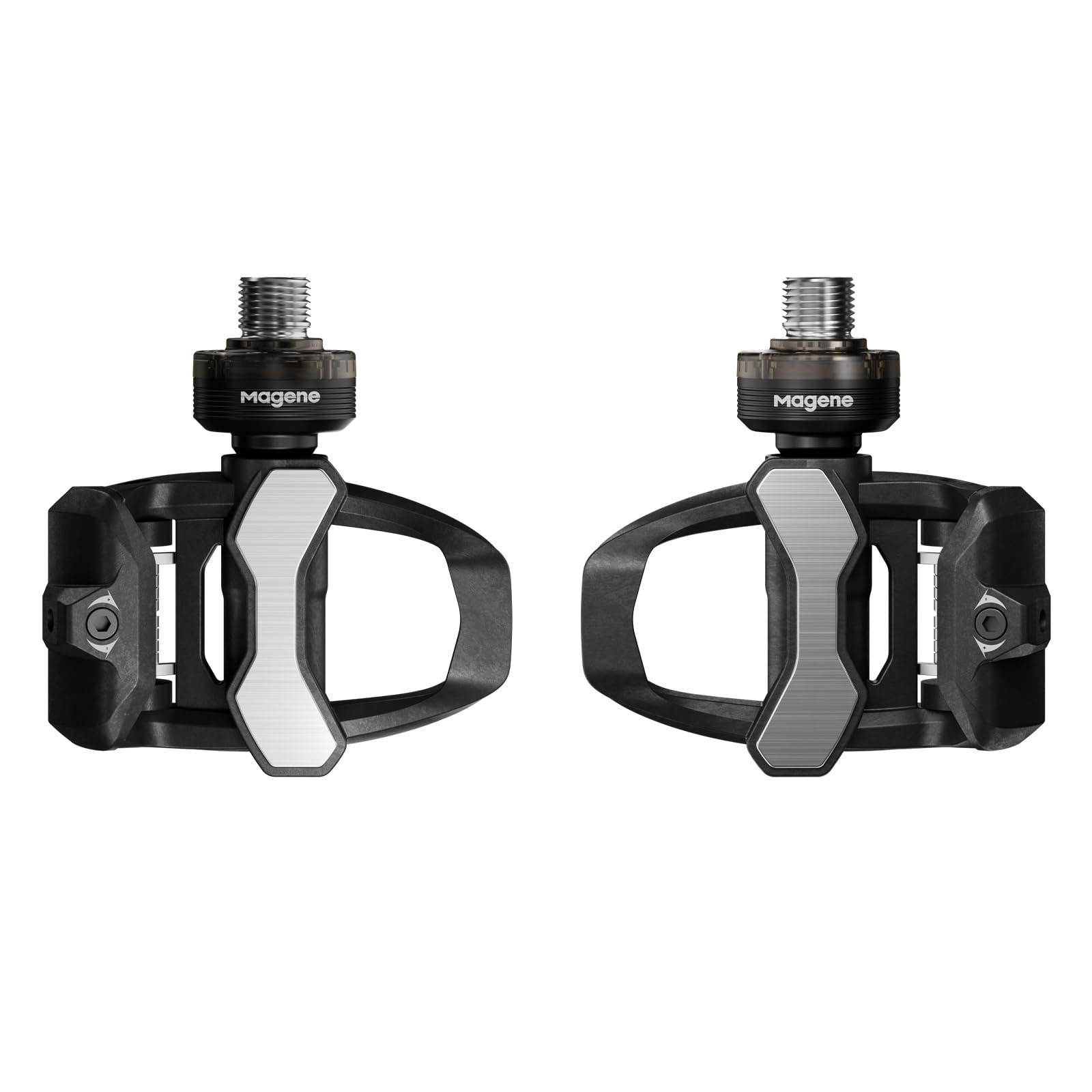
The Magene P715 pedals deliver dual-sided power data at roughly half the price of Garmin Rally pedals while packing several features that rival mid-range competitors. The ±1% accuracy claim comes from the same strain-gauge-plus-temperature-compensation design found in the PES crankset, and the 120-hour battery life outlasts the Favero Assioma by more than double — a major advantage for endurance riders who forget to charge between long weekends. Each pedal weighs just 157 grams, and the Look Keo-compatible body makes clipless engagement consistent and familiar.
Setup takes roughly one minute per the included quick-start guide, and the Bluetooth/ANT+ dual protocol pairs simultaneously with a Garmin watch and a phone app. The seven advanced training functions include power phase analysis showing seated vs. standing time, normalized and average power, left-right efficiency, and torque effectiveness graphs. The IPX7 waterproof rating matches the Magene crankset, so washing the bike after a muddy ride is no concern.
The biggest variable here is quality control — while the majority of users report excellent initial accuracy and solid feel, there are isolated reports of defective units with inverted left-right data and calibration failures right out of the box. Magene’s customer service appears responsive in most cases, but the experience suggests that buying through Amazon with a solid return policy is advisable. For the price-conscious cyclist willing to check unit functionality early, the P715 offers remarkable feature depth.
Why it’s great
- 120-hour battery life drastically reduces charging frequency compared to competitors
- Full power phase analysis with seated/standing distribution and L/R graphs
- Lightweight 157g per pedal with IPX7 water resistance
Good to know
- Quality control variance means some units arrive defective — test immediately after purchase
- Customer service response times can vary, but Magene generally replaces faulty hardware
7. Favero Assioma Duo with Extra Cleats Bundle (B07P5J5T8S)
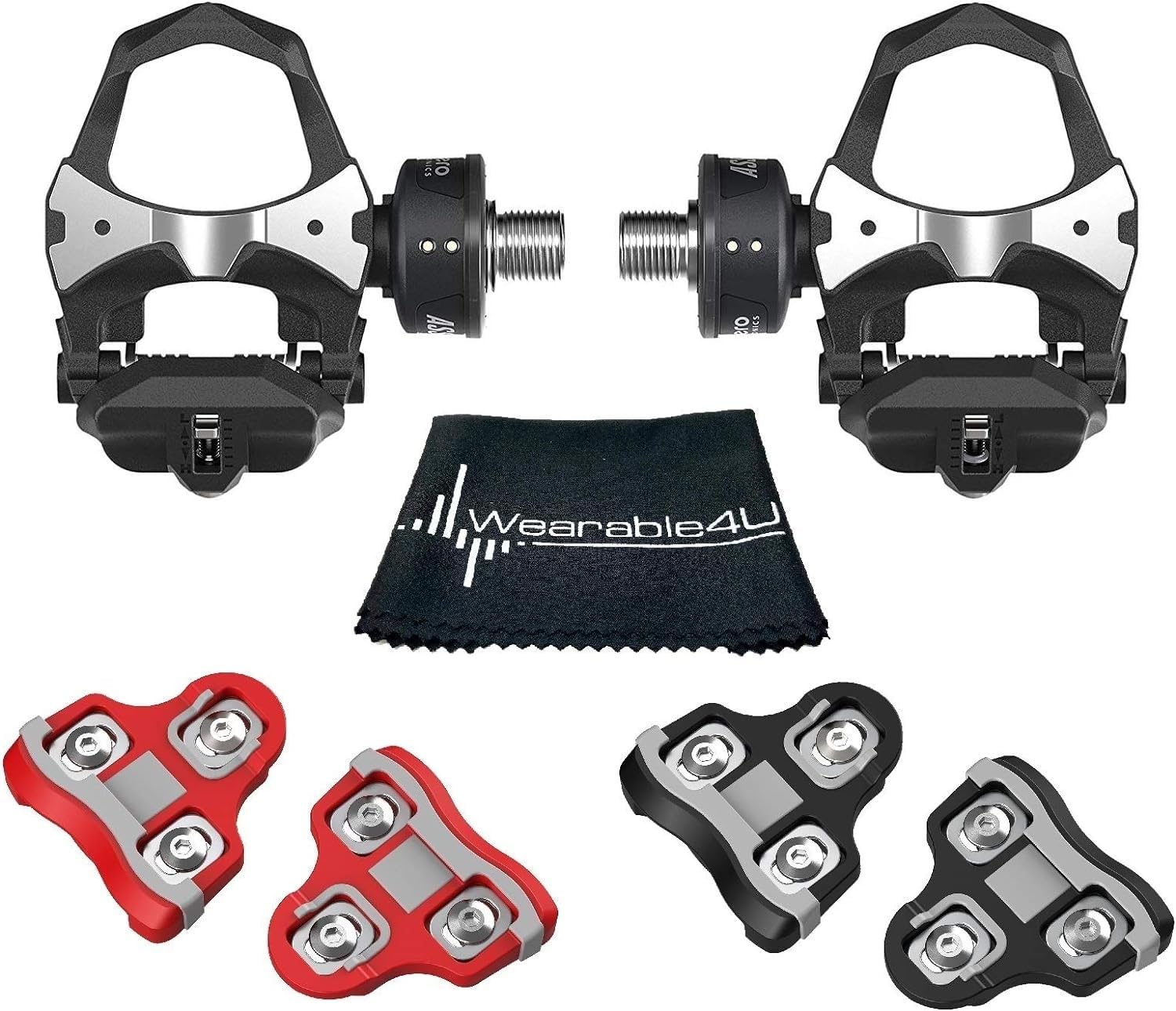
This bundle version of the Favero Assioma DUO includes a pair of zero-float PowerTap black cleats and a cleaning cloth alongside the standard pedal set, making it a turnkey solution for riders transitioning from a different pedal standard. The core hardware is identical to the standalone Duo — dual-sided sensors in each pedal providing left-right power, torque effectiveness, and pedal smoothness with ±1% accuracy. The advantage here is convenience: you get cleats included rather than sourcing them separately, and the zero-float cleats appeal to riders who prefer a locked-in pedal feel with no rotational freedom.
Pedal swap between bikes remains effortless, and the rechargeable battery provides the same 50-hour runtime the Assioma line is known for. The aluminum pedal body is durable enough for daily training, and the automatic stand-by feature engages as soon as you stop pedaling, conserving battery during coffee stops and traffic lights. Compatibility spans ANT+ and Bluetooth, syncing cleanly with Garmin computers, Wahoo units, and indoor training apps like Zwift and TrainerRoad.
The zero-float cleats deserve a specific note: some riders find the lack of float causes knee discomfort, particularly on longer distances. If you’ve never ridden fixed-float cleats, you might prefer the standard red (six-degree float) cleats from the standalone bundle instead. The charging cable’s magnetic clips are functional but can feel fiddly, and the instruction manual recommends zero offset calibration before each ride — a quick process but worth factoring into your pre-ride routine.
Why it’s great
- Complete bundle saves sourcing cleats separately for Look Keo system conversion
- Proven dual-sided accuracy with comprehensive pedaling dynamics metrics
- Automatic stand-by extends battery life during non-riding periods
Good to know
- Zero-float cleats may cause knee discomfort for riders accustomed to rotational float
- Magnetic charging connector clips can be finicky to align initially
8. Favero Assioma Uno Pedal Based Power Meter

The Favero Assioma Uno is the single-sided entry point into the Assioma ecosystem. It contains a power sensor only in the left pedal and assumes both legs produce equal force — an assumption that holds reasonably well for balanced riders but misses the imbalances that can waste watts. What you lose in leg-specific data, you gain in affordability: this is one of the most accessible pedal-based power meters on the market, and it still provides accurate total wattage for pacing, FTP testing, and structured workouts.
The Look Keo cleat interface includes two pairs of red (six-degree float) cleats, and the pedal tension is adjustable with a standard Allen key. Clipping in feels comparable to standard Look Keo pedals, and switching between bikes takes seconds with no tools required. The rechargeable battery delivers up to 50 hours, and the magnetic charging connector is identical to the Duo version. Users consistently report easy pairing with Garmin watches, Edge computers, and Zwift, and the ±1% accuracy holds up well against higher-priced options in side-by-side comparisons.
Data accuracy against a Garmin power meter trainer shows consistent agreement within a few watts. The main limitation is the absence of left-right balance data, which means you won’t know if you’re favoring one leg — a blind spot that dedicated trainers eventually outgrow. But for a first power meter or a budget-conscious build, the Uno delivers Favero’s build quality at a friendlier entry point.
Why it’s great
- Entry-level pricing gives access to proven Favero accuracy and reliability
- Two pairs of float cleats included save on immediate accessory costs
- Easy pedal swap between multiple bikes with no drivetrain compatibility concerns
Good to know
- Single-sided measurement cannot detect left-right imbalances in your pedal stroke
- Assumes equal leg power, which may provide misleading data for injury recovery riders
9. 4iiii Precision 3+ Powermeter
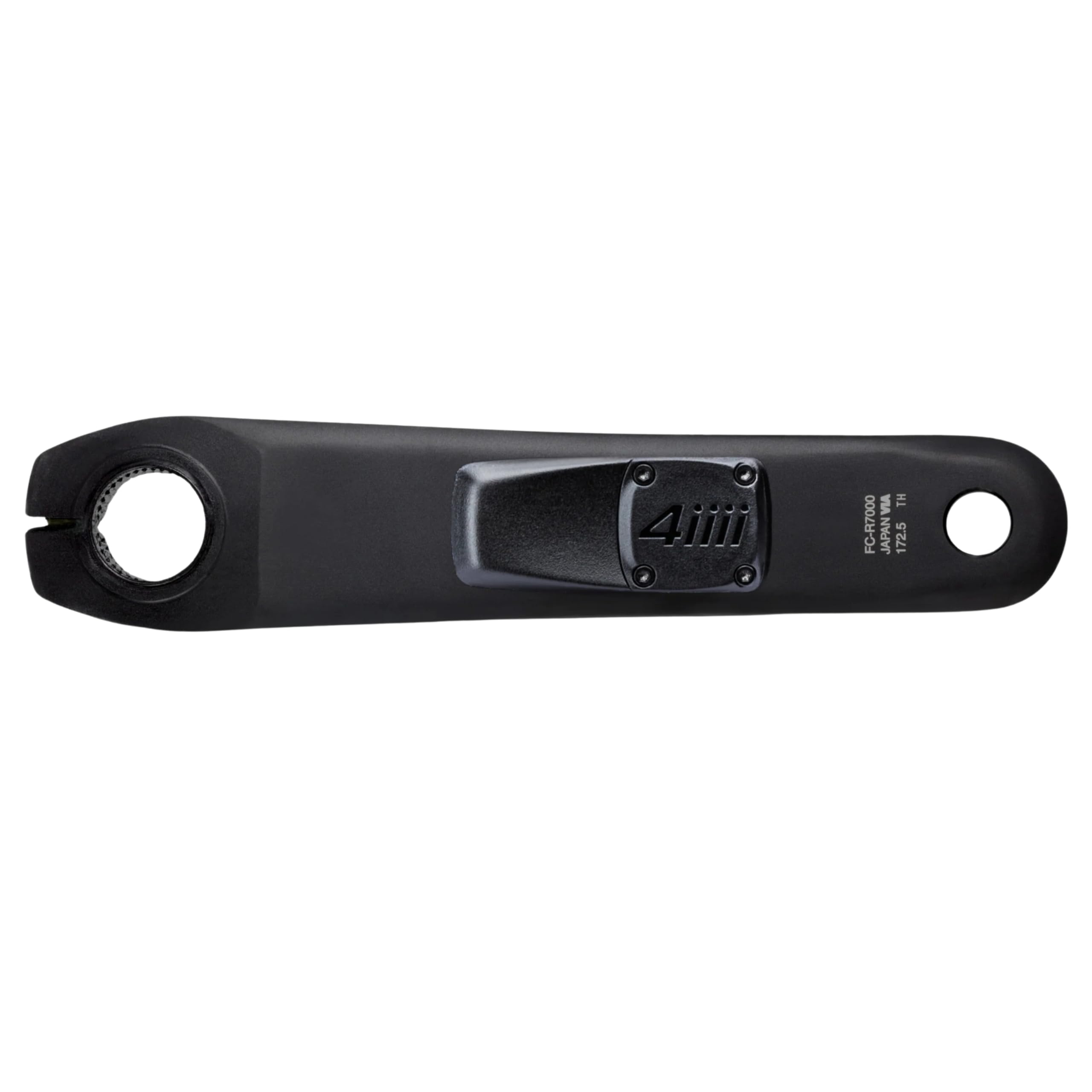
The 4iiii Precision 3+ is a left-side crank arm power meter that replaces your existing non-drive-side arm, adding just 9 grams to the total weight. The ±1% accuracy specification comes from three internal strain gauges and automatic temperature compensation, and the low-profile pod design (roughly 9g weight gain) is aerodynamically unobtrusive during racing. The CR2032 coin cell delivers an astonishing 800 hours of battery life, meaning most riders will change the battery once a season or less.
Compatibility extends to Shimano Hollowtech II splined cranks including the 105 5800 and 7000 series, with a 3-year manufacturer warranty covering defects. The Bluetooth and ANT+ dual connectivity pairs with Garmin Edge series (set as single-sided power meter) and Lezyne GPS units, and the dedicated phone app handles firmware updates and zero offset calibration. The Apple Find My integration is a unique feature — it uses a separate Bluetooth beacon that lets you locate your bike via an iPhone if the power meter is still within range, adding theft recovery potential.
The main drawbacks are the frustrating battery clip design, which some users describe as a “nightmare” that risked finger injury during removal, and the Find My activation process that can require multiple attempts before the device is recognized. Additionally, a small number of units have failed within the first year, though 4iiii’s warranty replacement process is generally responsive. For riders who want a lightweight, single-sided crank upgrade with exceptional battery life and don’t mind the initial setup friction, the Precision 3+ is a strong value.
Why it’s great
- Ultra-light 9g added weight with negligible aerodynamic impact
- 800-hour battery life from a single CR2032 coin cell — practically set-and-forget
- Apple Find My integration adds bike-location capability via iPhone
Good to know
- Battery cover clip design is unnecessarily difficult and risky to open
- Find My activation requires repeated attempts in some cases
FAQ
Can I install a crank-based power meter without a bike shop?
Will a pedal-based power meter fit my gravel or mountain bike?
How often do I need to calibrate my power meter?
What’s the difference between ANT+ and Bluetooth for power meters?
Final Thoughts: The Verdict
For most riders, the best cycling power meter winner is the Favero Assioma DUO because it combines dual-sided accuracy, proven long-term reliability, and the convenience of rechargeable batteries at a price that undercuts Garmin and SRM by hundreds. If you want the lightest crank-based option with 380-hour battery life, grab the Magene PES P505/P515. And for gravel and MTB riders who need SPD-compatible power that can survive rock strikes and creek crossings, nothing beats the Favero Assioma PRO MX-1.

Mo Maruf
I created WellFizz to bridge the gap between vague wellness advice and actionable solutions. My mission is simple: to decode the research and give you practical tools you can actually use.
Beyond the data, I am a passionate traveler. I believe that stepping away from the screen to explore new environments is essential for mental clarity and physical vitality.