Our readers keep the lights on and my smoothie glass nicely filled. As an Amazon Associate, I earn from qualifying purchases.
Your cleat is bolted to a stiff carbon sole, but that rigid platform is useless if your foot is floating on a millimeter of dishrag foam. Stock cycling insoles are an afterthought—they lack the torsional rigidity and arch profiling your pedal stroke demands, turning every watt of force into wasted micro-movement inside your shoe. A purpose-built cycling insole locks your calcaneus, supports your navicular, and creates a stable foundation from which your quads and glutes can actually fire.
I’m Mohammad Maruf — the founder and writer behind WellFizz. I’ve spent hundreds of hours cross-referencing biomechanics studies, dissecting arch profile geometries, and comparing dynamic metatarsal pad placements to build this guide.
Whether you’re chasing a KOM, grinding through a century ride, or just trying to eliminate that burning numbness between mile 30 and 40, this guide to the best cycling insoles breaks down the actual engineering that keeps your feet planted and pain-free.
How To Choose The Best Cycling Insoles
Selecting the right cycling insole is about matching your foot’s natural geometry to the specific demands of the pedal stroke. Here are the critical factors that separate a high-performance insert from a generic one that will leave you sore.
Arch Profile and Support
Your arch height dictates how the insole should cradle your midfoot. Low arches need a supportive profile that prevents the foot from collapsing inward (overpronation) during the downstroke. High arches require a more aggressive lift to fill the void and reduce pressure on the ball of the foot. Many premium cycling insoles offer low, medium, and high arch-specific profiles—buying a one-size-fits-all arch support is a recipe for knee pain.
Heel Cup Depth and Stability
A deep, decoupled heel cup locks the calcaneus in place, eliminating the heel slip that creates friction blisters and robs you of stability during hard efforts. The cup should wrap and lock your heel without pinching the Achilles tendon. This stability directly translates to improved knee tracking, keeping your patella aligned through the entire 360-degree pedal rotation.
Metatarsal Pad Placement
The transverse arch beneath the ball of your foot often gets crushed in stiff cycling shoes, leading to numbness and hot spots. A discrete metatarsal pad lifts the metatarsal heads slightly, preventing compression of the interdigital nerves and maintaining blood flow to your toes. This is a non-negotiable feature for riders who feel tingling after 30 minutes in the saddle.
Quick Comparison
On smaller screens, swipe sideways to see the full table.
| Model | Category | Best For | Key Spec | Amazon |
|---|---|---|---|---|
| CURREX BikePro | Cycling-specific | Power transfer & numbness prevention | 3-profile arch & metatarsal pad | Amazon |
| MOVE Game Day Pro | Performance | Court/field sports & high-impact | X-Frame torsional support | Amazon |
| SOLE Performance Thick | Moldable Orthotic | High-volume boots & firm support | Heat-moldable ReCORK base (4.8mm) | Amazon |
| Move Game Day Performance | Athletic All-rounder | Versatile daily training & walking | Composite heel & reactive stability | Amazon |
| Superfeet Hike Cushion | Hiking/Trail | Heavy rucking & long trails | Adaptive Comfort Technology (thick profile) | Amazon |
| CURREX HikePro | Hiking-specific | Technical trails & stability | SuperGrip anti-slip heel cup | Amazon |
| Superfeet Hockey Performance | Skate-specific | Figure skating & hockey performance | Carbon fiber base & low heel volume | Amazon |
In‑Depth Reviews
1. CURREX BikePro Insoles
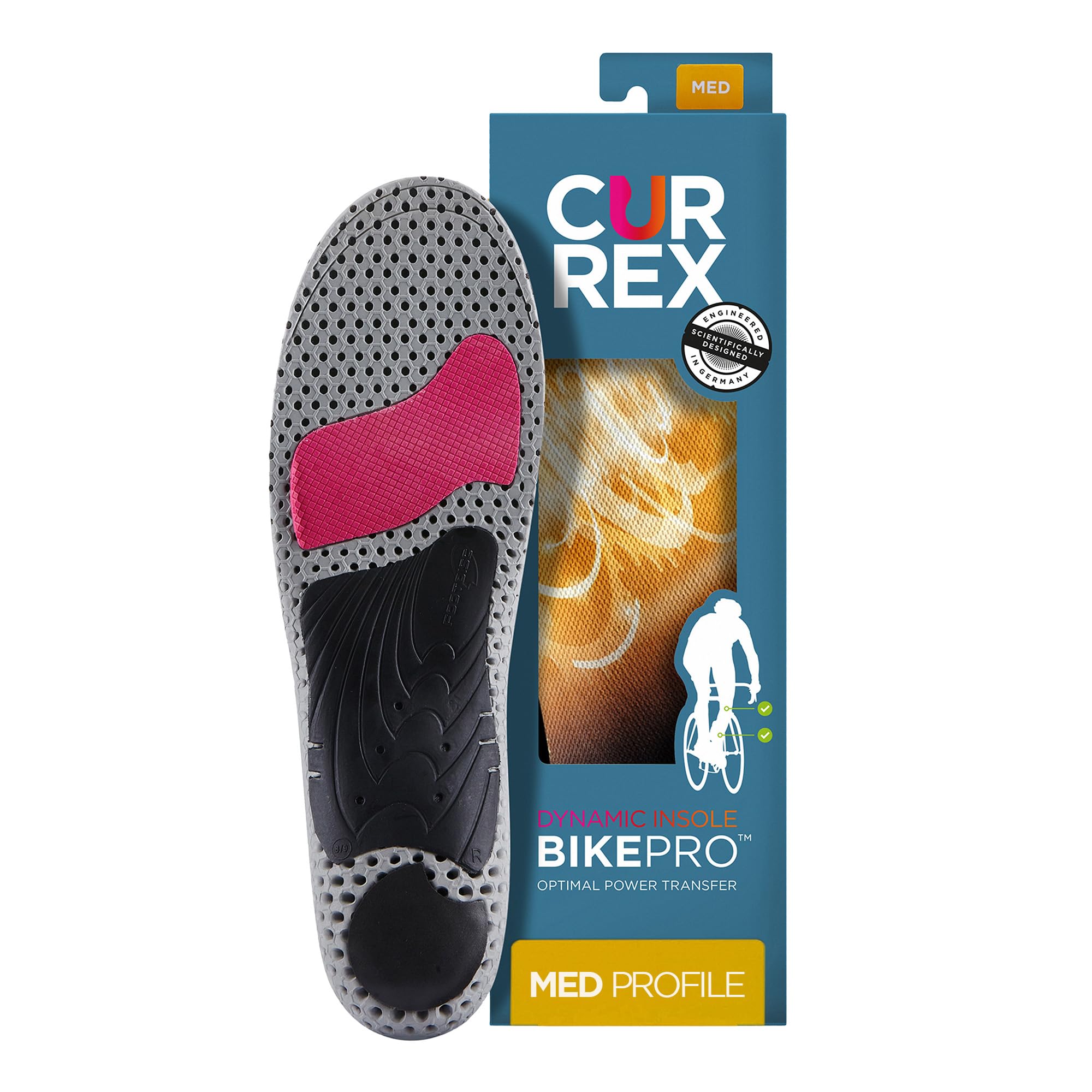
The CURREX BikePro is the only insole on this list designed from the ground up for the pedal stroke. You choose between low, medium, and high arch profiles, so the support matches your foot’s natural geometry instead of forcing a one-shape approach. The deep decoupled heel cup locks your calcaneus in place, eliminating the heel slip that causes friction and power loss in stiff carbon soles.
A discrete metatarsal pad in the forefoot lifts the transverse arch, preventing compression of the interdigital nerves—this is the feature that kills the numbness and hot spots that plague cyclists at mile 40. Riders report a clear improvement in muscle efficiency and a significant reduction in post-ride soreness, with one tester calling it essential for Ironman training. The premium foam delivers shock absorption from the saddle without adding bulk that crowds narrow cycling shoes.
The only real friction comes from fit: the insole works beautifully in Sidi Dominator 7s but can cause alignment issues in boots with cramped toe boxes like Shimano MT5s. Measure your shoe volume carefully. CURREX recommends replacement after 500 miles or 12 months, which is a realistic wear cycle for the active materials involved.
Why it’s great
- Three arch profile options for personalized support
- Metatarsal pad actively prevents nerve compression
- Deep heel cup eliminates slip and stabilizes knee tracking
Good to know
- Fit varies by shoe brand; test in your specific cycling shoe
- 500-mile replacement cycle adds recurring cost
2. MOVE Game Day Pro
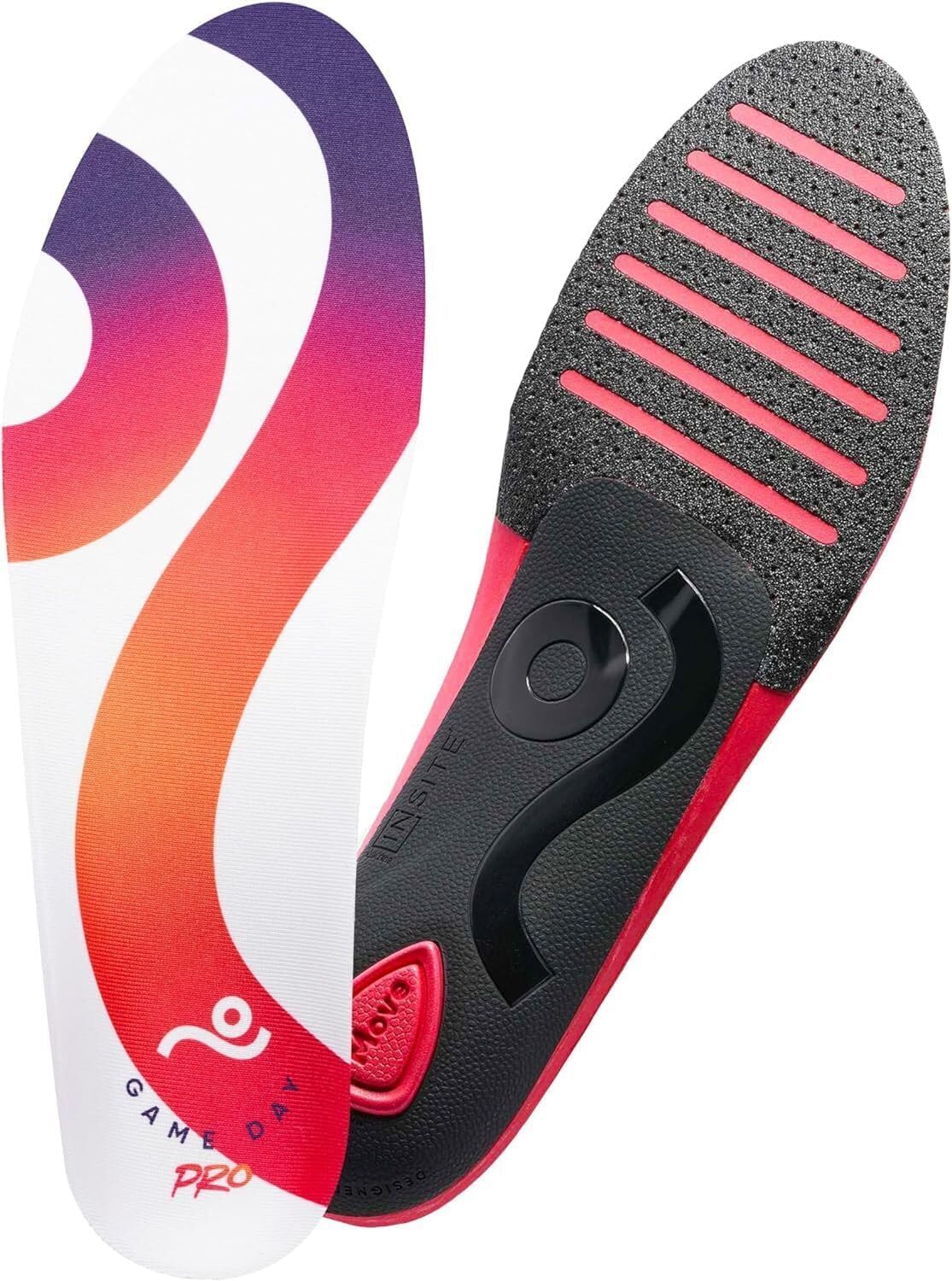
Co-founded by NBA star Damian Lillard, the Move Game Day Pro targets high-impact athletes—basketball, volleyball, tennis—but its X-Frame torsional support translates directly to the explosive demands of sprint cycling and track racing. The rigid midfoot shank prevents torsional flex, ensuring every watt from your downstroke transfers cleanly into the pedal rather than being absorbed by a collapsing arch.
Active Heel Technology disperses pressure across the calcaneal fat pad, reducing the shock that transmits up through the tibia during hard efforts. The forward tilt of the insole creates an aggressive geometry that improves first-step quickness—something that translates to a faster snap off the line in a criterium sprint. Users report zero compression over months of use, with the locked-in feel preventing the blisters that come from foot slide inside a shoe.
The arch support is firm rather than cushy, and the forward pitch may feel aggressive for riders who prefer a neutral foot position. This is a performance insert for riders who want responsiveness over plushness, and the price point delivers exceptional durability for a full season of hard training.
Why it’s great
- X-Frame delivers exceptional torsional stiffness
- Active Heel Technology dissipates impact shock
- Durable construction holds shape through a season
Good to know
- Forward tilt may feel aggressive for neutral-foot riders
- Firm arch support not ideal for riders seeking plush cushioning
3. SOLE Performance Thick Insoles

The SOLE Performance Thick insole uses a heat-moldable ReCORK base that adapts to your specific arch height—low, medium, or high. You heat it in the oven, step into it, and the cork-and-cushion structure conforms to your foot’s unique topography. At 4.8mm total thickness (3.2mm cushioning on a firm cork base), this is a high-volume insole built for boots and shoes with extra interior depth, not slim racing shoes.
The firm cork construction absorbs impact and distributes pressure across the entire sole, reducing strain on the plantar fascia and heel spur discomfort during long days in the saddle or on the trail. Military users report three years of daily use in combat boots without flattening, peeling, or odor buildup—a testament to the material’s longevity. The trim-to-fit edges allow precise customization for different boot widths and toe box shapes.
The main drawback is thickness: if your cycling shoes are already snug, the 4.8mm profile will crowd your toes and may cause heel rub. This insole is ideal for touring cyclists who wear roomy mountain bike shoes or for winter riding boots. The moldable process requires a few minutes of prep, and the firm feel may not suit riders who prefer plush cushioning over structural support.
Why it’s great
- Heat-moldable ReCORK base creates personalized arch support
- Extremely durable; lasts years in demanding conditions
- Excellent impact absorption for long days on hard surfaces
Good to know
- Thick profile may not fit slim or performance cycling shoes
- Requires heat-molding process for best fit
4. Move Game Day Performance Insoles

The Move Game Day Performance insole is the more accessible sibling to the Game Day Pro, offering a composite heel and reactive stability plate without the aggressive forward tilt. The molded forefoot design conforms to your shoe over time, providing a custom fit that replicates the feel of a bespoke orthotic. The patented arch support targets plantar fasciitis and flat feet, making this a strong option for cyclists who also spend long hours on their feet off the bike.
The Active Heel, Ankle, and Foot Protection technology minimizes shock to sensitive areas, which helps reduce foot fatigue during long endurance rides. Real-world testing shows that these insoles completely eliminated five-year shin splints for one user, allowing pain-free running—a good sign for cyclists who also run or hike. The composite heel provides a stable platform without the stiffness of a full carbon plate, so there is some compliance for walking in cycling shoes.
However, the cushioning is rated as average compared to dedicated high-shock insoles; heavier riders (over 200 pounds) report insufficient heel cushion for sprinting or jumping. The insole is best suited for riders under 30 with healthy joints, or for lighter riders who need a versatile insole for both cycling and daily wear.
Why it’s great
- Molded forefoot conforms for a personalized fit
- Patented arch support targets plantar fasciitis pain
- Versatile for cycling, running, and daily wear
Good to know
- Heel cushion lacking for heavier or high-impact athletes
- Best suited for riders under 200 lbs or with healthy joints
5. Superfeet Hike Cushion Insoles

The Superfeet Hike Cushion was originally sold as the ADAPT Hike Max, and it carries forward the same Adaptive Comfort Technology that flexes with your foot for efficient heel-to-toe turnover. This is a thick insole—roughly 1/4 inch at the heel—so it works best in lace-up shoes or boots with generous interior volume. The moisture-wicking top cover helps control odor during hot, sweaty rides or multi-day bikepacking trips.
For cyclists who also ruck or hike with heavy loads, the Hike Cushion delivers an exceptional combination of arch support and heel cushion. Users report that it completely resolved knee injury pain caused by collapsed factory insoles during 30-60 pound rucks over 10-mile distances. The medium-to-high arch profile provides firm but not rigid support, with enough give to handle uneven terrain when you dismount and hike a section of trail.
The thickness is the main issue: the elevated heel and extra padding may cause tightness in snug cycling shoes, especially if your toes are close to the front of the shoe. Some users report heel rubbing in low-cut shoes like Merrell Jungle Mocs. If you have roomy mountain bike shoes or winter boots, these are a fantastic option; if your road shoes are already tight, look elsewhere.
Why it’s great
- Superb for heavy rucking and loaded trail riding
- Moisture-wicking top cover reduces odor
- Adaptive Technology flexes with natural foot movement
Good to know
- Thick profile may crowd tight cycling shoes
- Best suited for lace-up boots or roomy footwear
6. CURREX HikePro Insoles

The CURREX HikePro brings the same 3D Dynamic Arch Technology found in the BikePro but tuned for trail conditions. The SuperGrip anti-slip surface on the deep heel cup prevents your foot from sliding when you’re standing on steep descents or powering up a rocky climb. The shock-absorbing cushioning reduces fatigue on all-day outings, and the recycled EVA base with air vent technology keeps feet dry and blister-free in sweaty conditions.
Riders who enjoy gravel grinding or cyclocross will appreciate the stable platform the HikePro provides when dismounting and running with the bike. The low, medium, and high arch profiles ensure a precise fit, and the trim-to-fit edges allow you to adapt the insole to the unique shape of your trail shoes. Users report excellent results on technical hikes with heavy packs (60-pound loads in various boots), with the anti-slip heel eliminating hot spots caused by foot movement inside the shoe.
The main concern is long-term durability relative to the price. While the immediate comfort and support are outstanding, some users worry about compression after several months of heavy use. The firm arch support may feel too rigid for riders who are accustomed to soft, cushioned insoles, but for trail conditions where stability is paramount, this is a minor trade-off.
Why it’s great
- SuperGrip heel cup eliminates foot slide on descents
- Breathable EVA base with air vent technology
- Available in three arch profiles for personalized fit
Good to know
- Long-term durability concerns with heavy use
- Firm support may not suit riders who prefer plush cushioning
7. Superfeet Hockey Performance Insoles

The Superfeet Hockey Performance insole is built for the unique demands of skating—a motion that shares biomechanical overlap with cycling but demands even more lateral stability and a lower heel volume. The carbon fiber base provides an extremely stiff platform that eliminates energy loss through foot deformation, critical for explosive starts and tight turns on the ice or in a velodrome sprint. The low heel volume is designed for hockey skates, which sit closer to the ice, but this geometry translates well to cycling shoes with aggressive foot positions.
Skaters report instant improvements in edge control and power transfer, with one figure skater noting that the carbon fiber version eliminated heel lift and reduced foot pain during long sessions. The wide forefoot accommodates natural toe splay, which helps with balance and pedal stability. For cyclists who also skate or do ice cross, this is a dual-purpose investment that excels in both disciplines.
The carbon fiber layer adds firmness that can be uncomfortable for casual users, and the arch may feel too hard for those with sensitive feet. The trim-to-fit process requires patience to avoid over-cutting, and the price point is the highest of any insole on this list. This is a niche pick for performance-oriented athletes who prioritize absolute stiffness over comfort.
Why it’s great
- Carbon fiber base delivers maximum stiffness and power transfer
- Low heel volume perfect for aggressive skate/shoe positions
- Wide forefoot accommodates natural toe splay
Good to know
- Carbon layer adds firmness not suitable for casual riders
- Trim-to-fit process requires careful adjustment
FAQ
Can I use hiking insoles in my cycling shoes?
How often should I replace my cycling insoles?
Will cycling insoles help with knee pain?
Should I buy insoles with a rigid carbon base?
Final Thoughts: The Verdict
For most cyclists transitioning from stock foam to real arch support, the winner of the best cycling insoles category is the CURREX BikePro because it delivers purpose-built metatarsal pad protection, three arch profile options, and a deep heel cup that stabilizes the entire pedal stroke. If you want explosive power transfer and a stiff, responsive platform for sprinting, grab the MOVE Game Day Pro. And for heavy-duty touring or bikepacking where volume and moldability matter more than weight, nothing beats the SOLE Performance Thick.

Mo Maruf
I created WellFizz to bridge the gap between vague wellness advice and actionable solutions. My mission is simple: to decode the research and give you practical tools you can actually use.
Beyond the data, I am a passionate traveler. I believe that stepping away from the screen to explore new environments is essential for mental clarity and physical vitality.