Our readers keep the lights on and my smoothie glass nicely filled. As an Amazon Associate, I earn from qualifying purchases.
A helmet is the single most critical piece of gear you’ll ever wear on a bike, yet finding one that balances serious impact protection with all-day comfort often feels like a compromise. The market is flooded with options, but the real difference comes down to specific safety technologies, ventilation architecture, and a fit system that disappears on your head.
I’m Mohammad Maruf — the founder and writer behind WellFizz. I’ve spent hundreds of hours analyzing helmet safety certifications, comparing MIPS and Koroyd impact layers, and parsing through real rider feedback to find the models that actually deliver on their promises.
This guide breaks down the key specs and real-world performance of the best cycling helmets on the market to help you find a model that fits your head, your riding style, and your budget.
How To Choose The Best Cycling Helmet
Choosing a helmet isn’t just about color or brand. It’s about matching safety tech, ventilation, and fit to your specific riding environment — whether that’s a bumpy mountain trail, a fast road ride, or a daily city commute. Here are the three critical factors to weigh.
Impact Protection Systems
The biggest leap in helmet safety in the last decade is rotational impact management. Look for either MIPS (Multi-directional Impact Protection System) or Koroyd, a honeycomb-like material that crumples on impact. Both are designed to reduce rotational forces that can cause brain injury. A mid-range model without either is a compromise you shouldn’t make.
Ventilation vs. Coverage
Vents are measured by count and channel design, not just holes poked in the shell. A helmet with 20+ fixed vents and deep internal channels moves hot air out efficiently. That said, more coverage (like an extended rear shell for mountain biking) usually means fewer vents. Decide where you ride: road cyclists need max airflow, while trail riders benefit from the extra protection at the back and temples.
Fit and Retention System
A helmet’s safety is useless if it shifts during a ride. Look for a micro-adjustable dial at the back (Roc Loc, Boa, or similar) that lets you dial tension without taking the helmet off. The straps should lie flat and form a V around your ears. A universal fit system, like Giro’s, helps avoid the headache of returns by accommodating different head shapes straight out of the box.
Quick Comparison
On smaller screens, swipe sideways to see the full table.
| Model | Category | Best For | Key Spec | Amazon |
|---|---|---|---|---|
| Giro Register II MIPS | Mid-Range | Best Overall Value | MIPS, 280g weight | Amazon |
| Smith Persist | Mid-Range | Road Cycling | MIPS + Koroyd, 21 vents | Amazon |
| Fox Racing Mainframe | Mid-Range | Mountain Biking | MIPS, moisture-wicking liner | Amazon |
| Thousand Heritage 2.0 | Premium | City Commuting | PopLock, magnetic buckle | Amazon |
| Lumos Ultra | Premium | Commuter Safety | LED lights, MIPS, USB-C | Amazon |
| Smith Engage MIPS | Premium | Trail Riding | Koroyd, 20 vents, adjustable visor | Amazon |
| POC Tectal Race MIPS | Premium | All-Mountain/Enduro | Extended coverage, aramid bridges | Amazon |
In‑Depth Reviews
1. Giro Register II MIPS
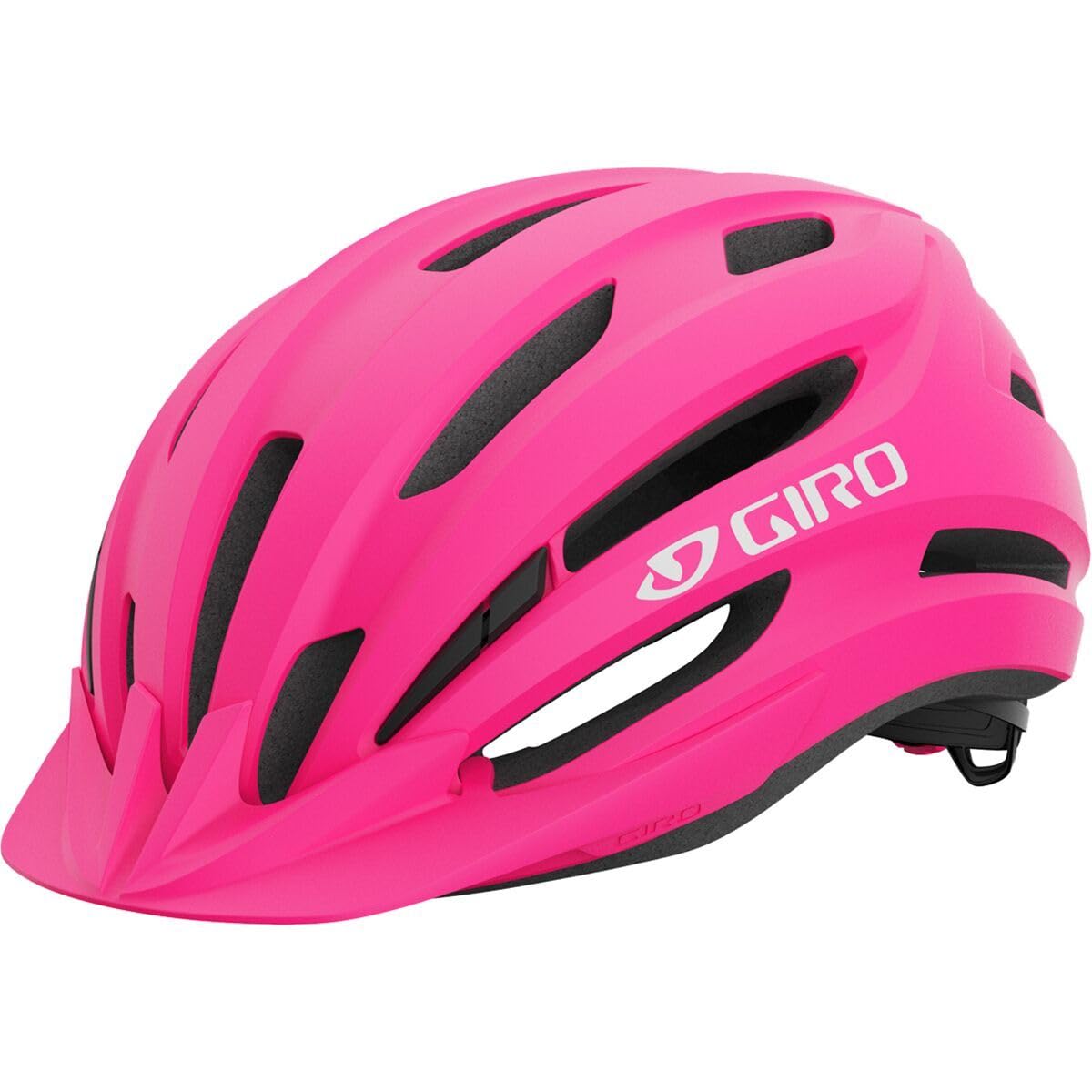
The Giro Register II MIPS is the benchmark for entry-level safety upgrades. Its integrated MIPS brain protection system is layered inside a durable two-piece hardbody shell, fusing a tough outer polycarbonate with an in-molded liner. Weighing just 16 ounces, it stays light enough for road rides without compromising the structural integrity needed for rough commutes.
Ventilation is handled through wide intake ports that channel air across the scalp, though the design isn’t as aggressive as dedicated aero road helmets. The Universal Fit sizing system uses proprietary shell shapes that accommodate different head geometries, and the Roc Loc dial lets you lock tension quickly without overthinking it.
Riders consistently praise the comfortable padding and the bright white color for visibility. The trade-off is that the Roc Loc dial plastic can wear with frequent adjustments, and the visor attachment feels a bit fragile. Best for riders wanting proven MIPS protection at a price that doesn’t sting.
Why it’s great
- Excellent MIPS protection at a very accessible price point
- Lightweight 280g construction keeps fatigue low on long rides
- Universal fit system works for a wide range of head shapes out of the box
Good to know
- Roc Loc adjustment dial plastic may loosen with frequent use
- Visor attachment can feel weak
- Not the best ventilation for extreme heat or fast racing
2. Smith Persist MIPS
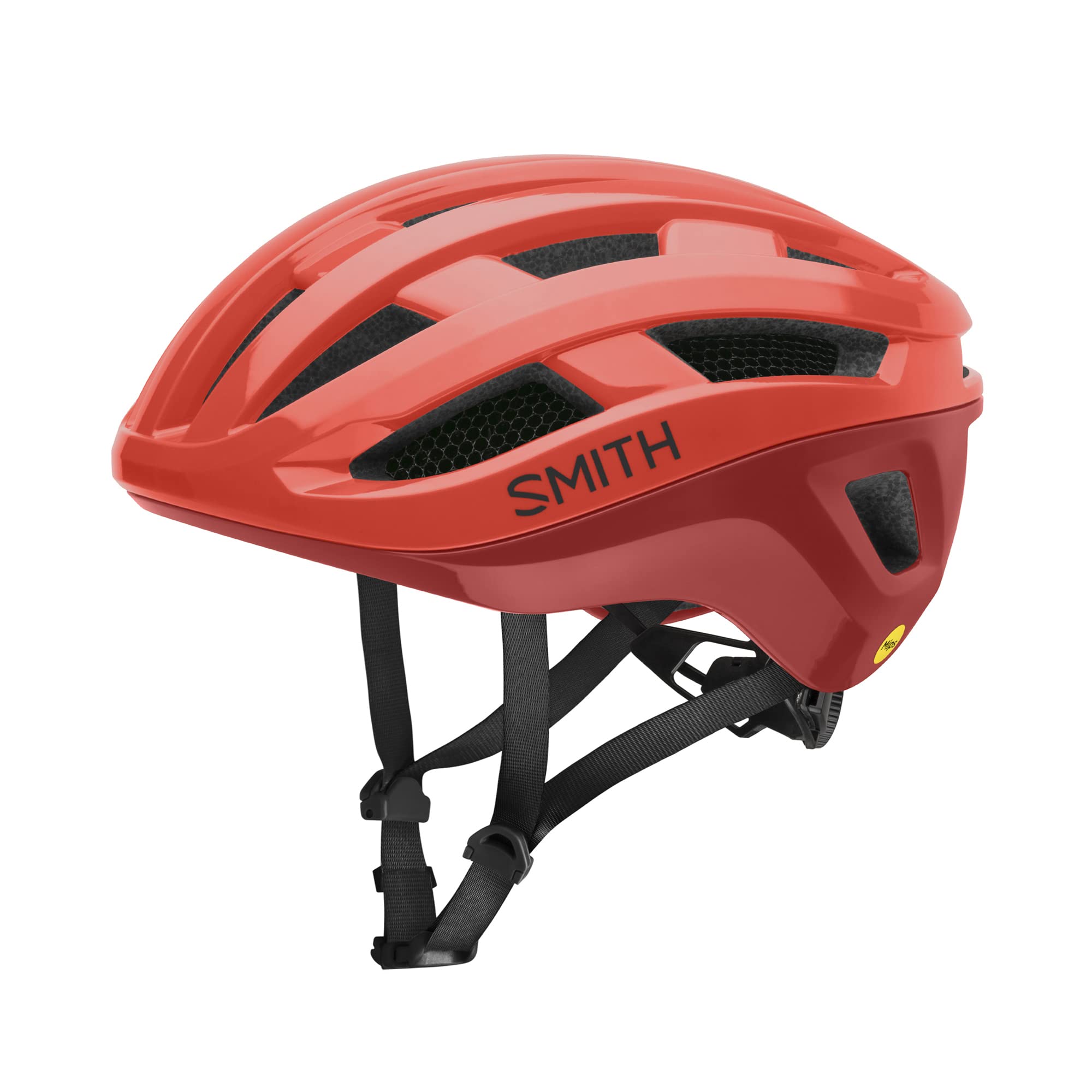
The Smith Persist combines two advanced impact management technologies in one build: MIPS and Zonal Koroyd coverage. The Koroyd honeycomb structure crushes on impact while keeping the helmet light and extremely breathable. With 21 fixed vents and an AirEvac system that integrates with Smith eyewear, fogging is virtually eliminated during intense efforts.
At just 11 ounces, it feels nearly weightless on the head. The rear dial adjustment is intuitive and precise, allowing micro-tightening on the fly. The Poppy/Terra color finish is a bold matte that stands out on the road without looking flashy.
Riders note that the fit feels tailor-made once adjusted, and several reviews credit it with saving lives in serious accidents. The one drawback is the bulbous shape that some describe as a “mushroom effect.” Ideal for road cyclists who want top-tier safety without sacrificing ventilation.
Why it’s great
- Dual MIPS and Koroyd protection layers for added rotational impact defense
- 21 well-placed vents with anti-fog eyewear integration
- Extremely lightweight at 11 ounces for all-day wear
Good to know
- Bulbous shape can feel larger on the head
- No dedicated sunglass storage ports
- Gloss finish shows scratches more than matte
3. Fox Racing Mainframe MIPS
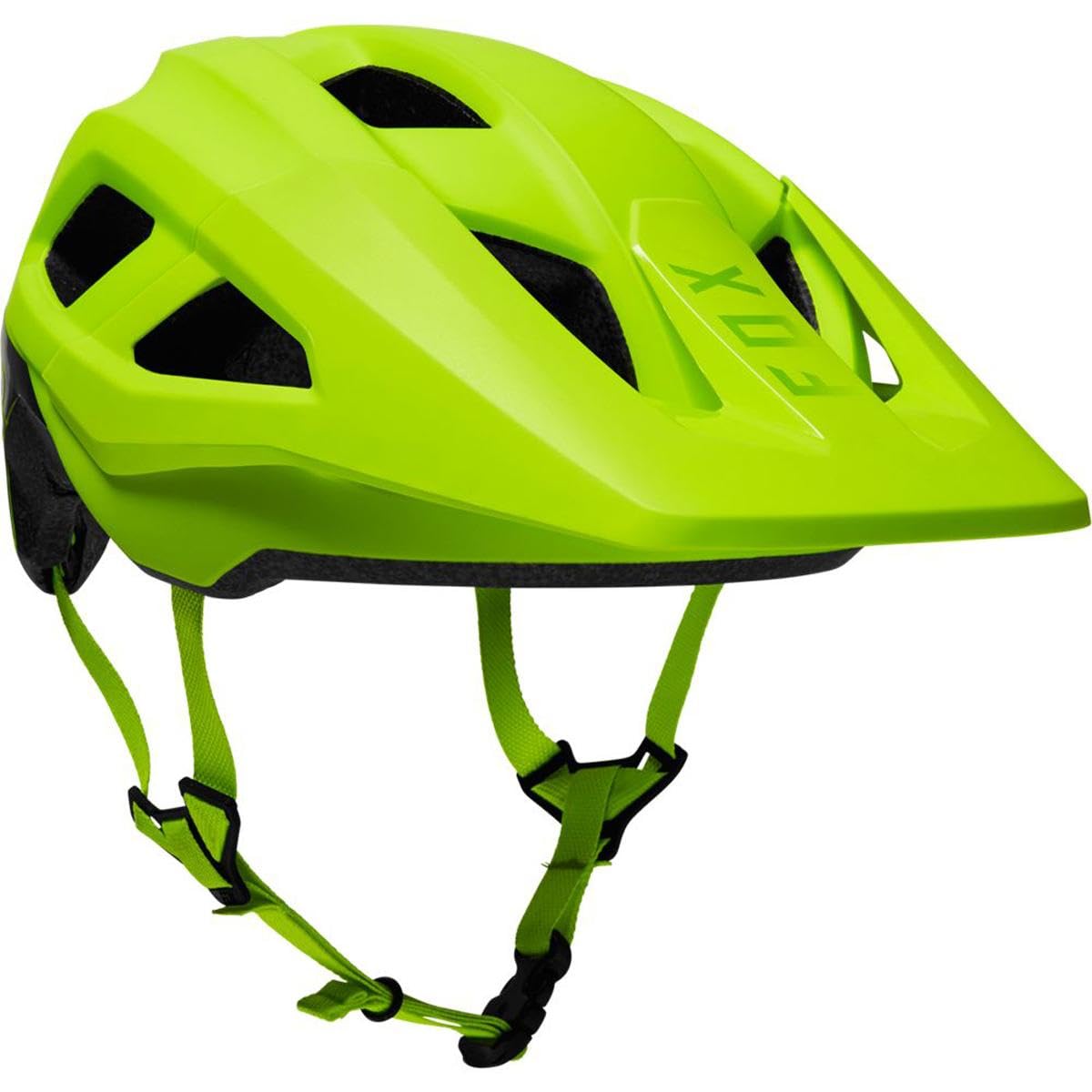
The Fox Racing Mainframe is the quintessential mid-range mountain biking helmet. It pairs a proven MIPS system with extended coverage that wraps around the temples and lower back of the skull — exactly where trail riders need it most. The in-molded EPS foam is channeled for efficient cooling, making it bearable even on uphill slogs.
The moisture-wicking liner is removable and washable, a practical feature for riders who sweat heavily or ride in muddy conditions. The integrated MIPS fit system keeps weight low at 1.5 pounds and doesn’t introduce any wobble when you’re bouncing through rock gardens. The Trvrs Flo Yellow color is incredibly visible on the trail.
Former sponsored riders have called it the industry standard for a reason. The main complaint is the lack of a gap for storing sunglasses on top of the helmet. A solid choice for anyone who spends more time off-road than on pavement.
Why it’s great
- Extended coverage at temples and rear for added trail safety
- Removable, washable liner for easy maintenance after sweaty rides
- Proven MIPS system from a brand trusted by off-road riders
Good to know
- No sunglass storage slot on the shell
- Fit can be snug for wider head shapes
- Not designed for road-specific ventilation needs
4. Thousand Heritage 2.0

The Thousand Heritage 2.0 was designed to solve a very specific problem: people who leave their helmet at home because it’s bulky or doesn’t match their style. It trades aggressive aero shapes for a low-profile retro silhouette that looks more like a vintage cycling cap. The signature PopLock channel hidden behind the front logo lets you thread a U-lock through so you can leave it with your bike.
The magnetic buckle is a one-handed dream — no fumbling with plastic clips. Inside, a thick leather liner adds a premium feel that’s more comfortable than standard foam padding. The Dial Fit System adjusts snugness quickly, and the small brim offers sun blockage that road cyclists will appreciate.
Riders love the “mini air conditioner” ventilation in hot 90°F climates. The biggest caveat is that it’s not designed for high-speed racing or technical trails — it’s a commuter’s helmet through and through. The glossy cream finish scratches easily, but the company’s accident replacement guarantee takes the edge off.
Why it’s great
- Patented PopLock for locking helmet with bike
- Magnetic buckle enables quick one-handed operation
- Stylish low-profile design with genuine leather padding
Good to know
- Glossy finish shows scratches easily
- Limited ventilation compared to sport-oriented helmets
- Not certified or designed for high-speed racing impacts
5. Lumos Ultra
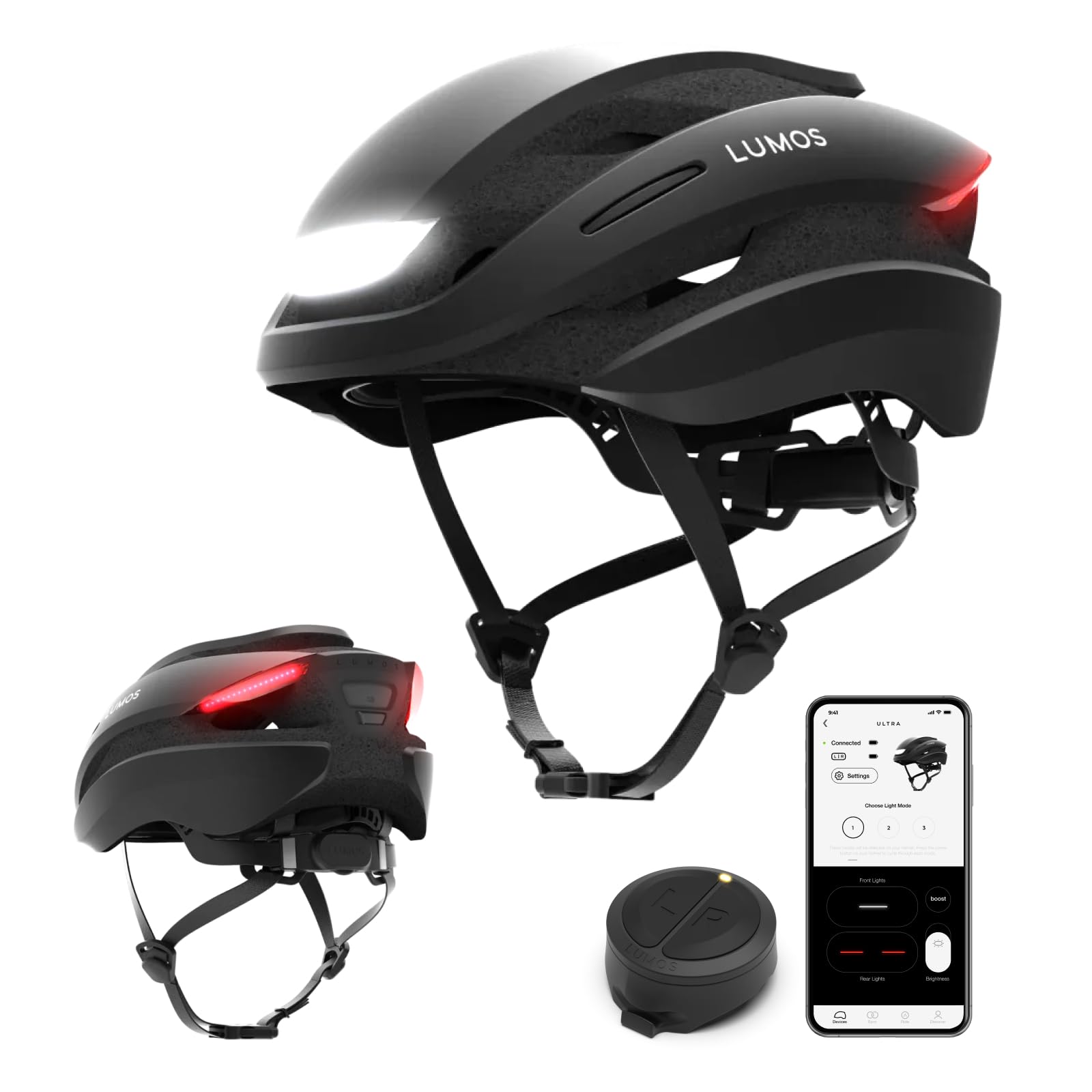
The Lumos Ultra is the smartest helmet on this list, integrating front and rear LED lights with wireless turn signals activated via a handlebar remote. The TÜV-certified 360° visibility system ensures you’re seen from every angle, day or night. The lights are rechargeable via USB-C and offer up to 10 hours of battery life in standard mode.
The helmet body itself is a standard polycarbonate EPS construction, but MIPS is available on select models. Ventilation is solid, with internal channels that prevent overheating even with the electronics. The removable liner is comfortable, and the rear dial system locks securely without wobble.
Commuting reviewers call it a game-changer for confidence on dark roads. The one compromise is weight: at 390 grams, it’s heavier than a standard road helmet. The Lumos Remote (sold separately) unlocks automatic brake lights and synchronized flashing with compatible Lumos rear lights. Perfect for urban riders who prioritize visibility above all else.
Why it’s great
- Integrated 360° LED lighting with turn signals for enhanced visibility
- TÜV-certified safety rating for commuter reliability
- USB-C charging with up to 10 hours of battery life
Good to know
- Heavier than a standard road helmet due to integrated electronics
- MIPS is a separate model option, not standard
- Remote accessory required for brake light feature
6. Smith Engage MIPS

The Smith Engage is purpose-built for unpredictable trail conditions. It integrates Zonal Koroyd coverage that absorbs impact energy while keeping the helmet ridiculously light. The MIPS layer adds rotational protection, and the 20 fixed vents are channeled to push hot air out while drawing cool air in, even during steep climbs.
The adjustable visor has two positions — up for goggles or sunglasses storage, and down for sun and debris protection. The Ionic+ liner provides sweat-activated odor control, which is a genuine benefit after long, wet rides. The retention system uses a low-bulk single-layer webbing that doesn’t dig into the jaw.
Riders consistently say it’s the most comfortable helmet they’ve owned, with excellent rear coverage that avoids the “mushroom head” look. The only real negatives are the hard-to-fasten buckle and a slight tendency to slide forward on very rough descents if you’re not wearing glasses. Worth every cent for dedicated mountain bikers.
Why it’s great
- Zonal Koroyd coverage for lightweight, energy-absorbing protection
- Adjustable two-position visor for storing goggles or blocking sun
- Ionic+ liner keeps sweat odor under control
Good to know
- Buckle can be tricky to fasten without practice
- Tends to slide forward on steep descents without glasses
- Color finishes appear washed out in some options
7. POC Tectal Race MIPS
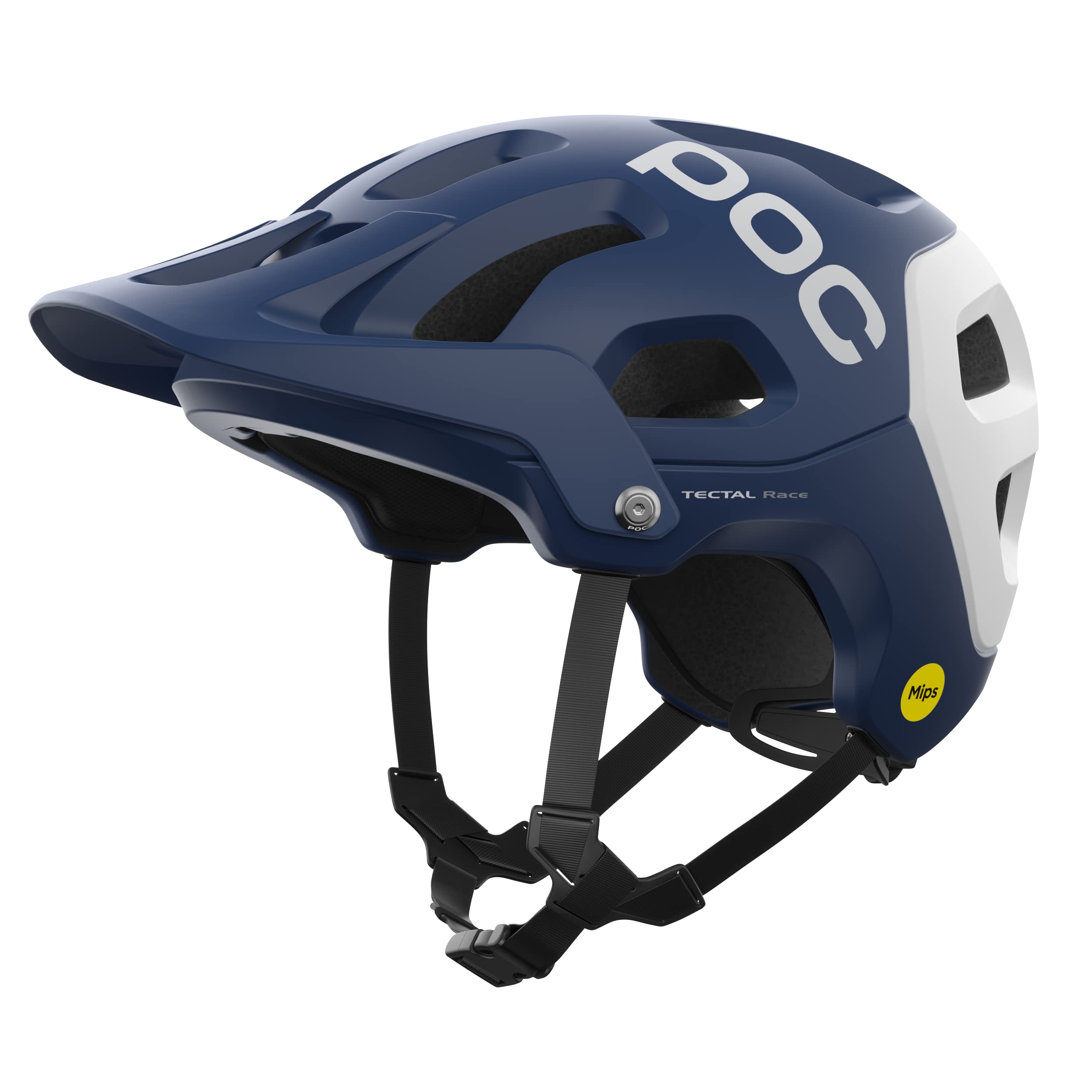
The POC Tectal Race MIPS is the most protective helmet in this roundup, designed for aggressive trail and enduro riding. Its unibody PC shell is fused with a reinforced EPS liner and aramid bridges that improve structural stability without adding significant weight. The extended coverage wraps lower around the temples and back of the head, crucial for rider surfaces where sideways falls are common.
The 360° size adjustment system provides a precise, wobble-free fit that stays put on rough descents. Ventilated airflow channels keep it from turning into a sweatbox despite the larger shell. The adjustable peak lifts up so you can store goggles underneath, then drops back down to block sun and trail debris.
Riders praise it as the most comfortable helmet out of a dozen models tested, with excellent fit for oval head shapes. The snap clasp feels less premium than a magnetic buckle. At 13.39 x 8.66 x 9.45 inches, it’s bulky but the protection is unmatched. The clear choice for anyone riding technical terrain at speed.
Why it’s great
- Extended coverage at temples and rear for enduro-level protection
- Aramid bridges reinforce structural stability without extra weight
- Precise 360° fit adjustment system stays locked on rough terrain
Good to know
- Snap clasp feels less refined than magnetic buckles
- Large profile can feel bulky on shorter rides
- Premium price point limits accessibility
FAQ
How tight should a new cycling helmet feel?
When should I replace a cycling helmet after a crash?
Do I really need MIPS for recreational riding?
Final Thoughts: The Verdict
For most riders, the best cycling helmet winner is the Giro Register II MIPS because it delivers genuine MIPS protection at a weight and price that doesn’t force compromises. If you want integrated lighting for urban safety, grab the Lumos Ultra. And for technical trail riders who need maximum coverage and impact defense, nothing beats the POC Tectal Race MIPS.

Mo Maruf
I created WellFizz to bridge the gap between vague wellness advice and actionable solutions. My mission is simple: to decode the research and give you practical tools you can actually use.
Beyond the data, I am a passionate traveler. I believe that stepping away from the screen to explore new environments is essential for mental clarity and physical vitality.