Our readers keep the lights on and my smoothie glass nicely filled. As an Amazon Associate, I earn from qualifying purchases.
That bonk mid-climb isn’t just mental—it’s a real energy deficit that can only be fixed with quick-digesting carbohydrates. The right gel sits easily in a jersey pocket and delivers a steady glucose stream without the sticky mess or stomach rebellion that ruins a long ride.
I’m Mohammad Maruf — the founder and writer behind WellFizz. I’ve spent hours analyzing the carbohydrate ratios, electrolyte profiles, and ingredient lists of top cycling gels to give you a clear, spec-driven recommendation.
After reviewing dozens of options, the best cycling gels combine real-food ingredients with a specific dual-source carbohydrate blend to keep your engine running cleanly for hours.
How To Choose The Best Cycling Gels
Selecting a cycling gel is about matching the carbohydrate source, texture, and electrolyte content to your ride duration and stomach sensitivity. The wrong choice can cause gas, bloating, or an energy crash mid-ride.
Carbohydrate Source: Maltodextrin vs. Fructose
Gels that use only glucose (maltodextrin) can overload your gut’s transport system. A dual‑source blend of maltodextrin and fructose uses separate absorption pathways, allowing you to take in more carbs per hour with less GI distress. Look for ratios around 2:1 or 0.8:1 for improved efficiency.
Texture, Consistency, and Packet Design
A gel that’s too thick can be hard to swallow while breathing hard; one that’s too watery can spill when you open it with one hand. The best cycling gels have a smooth, even consistency that slides out cleanly and can be consumed in two or three squeezes without dripping onto your frame or gloves.
Electrolytes and Additional Ingredients
Sweat losses add up on long rides, especially in warmer weather. A gel with at least 200–250 mg of sodium and some potassium helps maintain fluid balance and prevent cramping. Real‑food ingredients like chia seeds or fruit purees can be gentler on sensitive stomachs while still providing a steady fuel curve.
Quick Comparison
On smaller screens, swipe sideways to see the full table.
| Model | Category | Best For | Key Spec | Amazon |
|---|---|---|---|---|
| Hüma Plus Chia Energy Gel | Premium | Long rides & sensitive stomachs | 240 mg sodium, 100% real‑food ingredients | Amazon |
| GU Energy Liquid Energy Gel | Mid-Range | Running & high‑intensity cycling | Dual‑source carbs (maltodextrin & fructose) | Amazon |
| MAURTEN Gel 100 | Premium | Racing & stomach‑first athletes | Patented hydrogel, 0.8:1 fructose‑glucose ratio | Amazon |
| GU Energy Chews, Strawberry | Mid-Range | Pre‑ride chewing preference | 400 mg BCAAs, 40 mg sodium per serving | Amazon |
| Transcend Foods Strawberry Gel | Value | Diabetic blood‑sugar management | Fast‑acting glucose, 30‑month shelf life | Amazon |
In‑Depth Reviews
1. Hüma Plus Chia Energy Gel

Hüma Plus hits the sweet spot of real‑food nutrition and endurance performance. The gel uses finely powdered chia seeds, fruit purees, and sea salt to deliver 2x the natural electrolytes of the original formula. Each serving packs 240 mg of sodium plus 50–145 mg of potassium depending on the flavor, making it a standout choice for hot or humid rides where electrolyte loss is high.
Reviewers consistently praise the lack of chemical aftertaste and the smooth texture that slides down even at race pace. With 2,700+ kilometers of use logged by one marathoner, the steady energy curve and zero GI distress are backed by real mileage. The variety pack (12 gels) includes both caffeinated and caffeine-free options so you can dial in your intake without guesswork.
The main trade‑off is the premium price point—these gels cost more per serving than mid‑range competitors. But if you’ve struggled with queasy stomachs from other brands, the all‑natural ingredient list and double electrolytes make every dollar earned back in comfort and performance.
Why it’s great
- Real‑food ingredients eliminate chemical taste and stomach upset
- Double electrolytes provide robust cramp protection on long rides
Good to know
- Higher per‑serving cost compared to maltodextrin‑based gels
- Thicker texture may require a water chaser for some riders
2. GU Energy Liquid Energy Gel
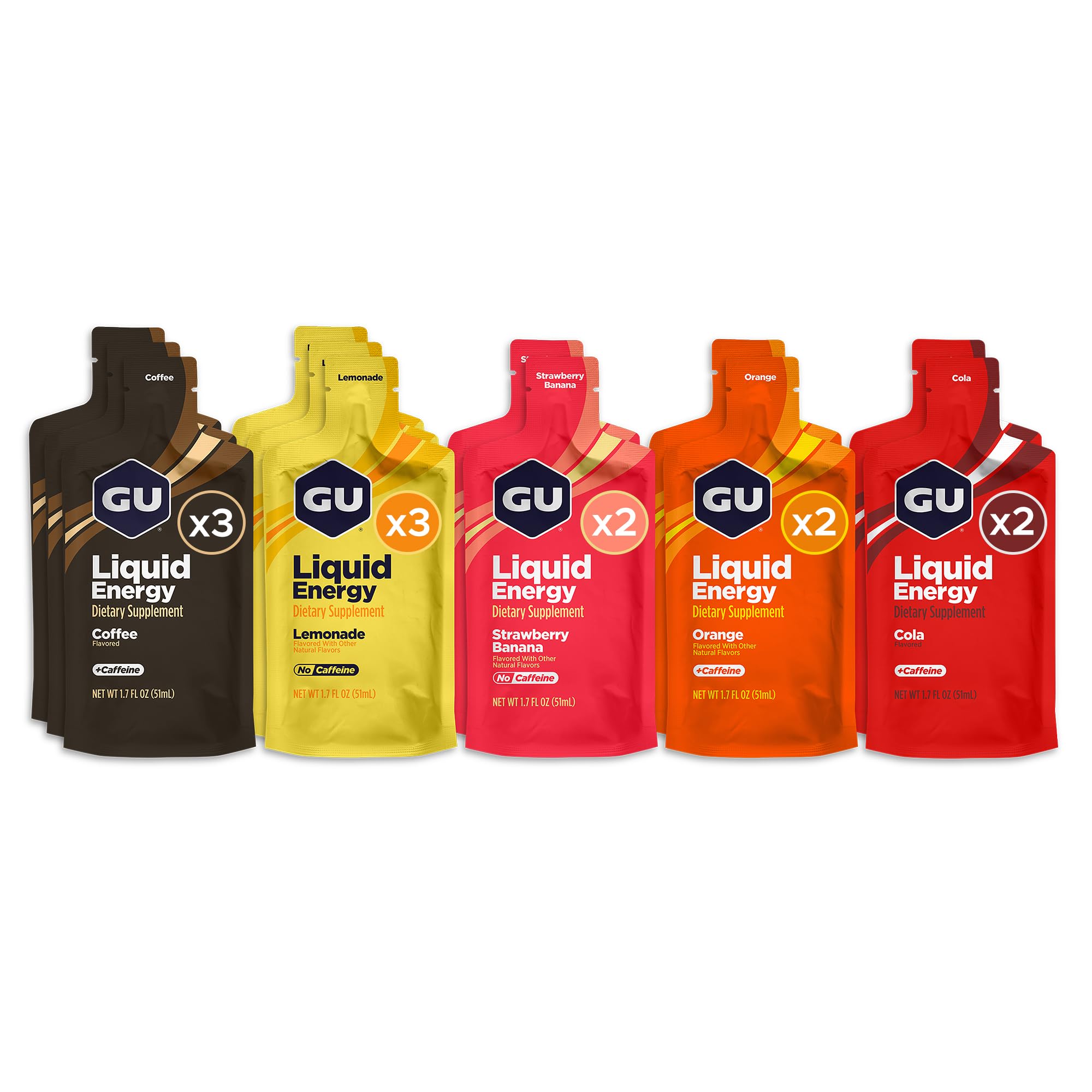
GU’s Liquid Energy Gel shifts the texture from thick paste to a drinkable consistency that many riders find easier to swallow on the move. The dual‑source carbohydrate blend (maltodextrin and fructose) uses separate intestinal transport paths, which helps you absorb carbs faster and reduces the risk of mid‑ride GI issues.
The 12‑count variety pack includes five flavors—Coffee, Lemonade, Orange, Strawberry Banana, and Cola—so you can rotate tastes over the course of a long day in the saddle. Each packet delivers 100 calories and essential electrolytes, plus 400 mg of branched‑chain amino acids to support muscle function during sustained efforts.
Some riders note that the larger, more liquid packet creates stickier hands and can splash if opened carelessly. The thinner mouthfeel also leaves some wanting the more substantial texture of a traditional gel. For riders who prioritize easy swallowing over a clean feed, this is a solid mid‑range pick.
Why it’s great
- Liquid consistency is far easier to swallow at high breathing rates
- Dual‑source carbs improve absorption efficiency per hour
Good to know
- Larger packet size makes storage and one‑handed opening more difficult
- Thin liquid can cause splashing and sticky messes on the bike
3. MAURTEN Gel 100

MAURTEN Gel 100 uses a patented hydrogel technology that turns the gel into a semi‑solid structure in the stomach, then releases carbs directly into the intestine for faster absorption. The 0.8:1 fructose‑to‑glucose ratio is specifically engineered to maximize the amount of carbohydrate your body can process without distress—enabling up to 100 grams of carbs per hour.
The gel has a jelly‑like, flavor‑neutral taste that athletes describe as “marshmallow” or “sugar jelly.” It contains no added colors, preservatives, or artificial flavors, which is why it’s a favorite among cyclists with sensitive stomachs. The 40‑g packet is compact and fits easily into a jersey pocket without bulk.
The premium price is the main friction point. At roughly double the cost of standard gels per serving, MAURTEN is best reserved for race day or key training sessions. Regular riders on a budget may find better value elsewhere, but for stomach‑first athletes, the hydrogel technology justifies the investment.
Why it’s great
- Hydrogel delivery reduces GI distress even at high intake rates
- Neutral flavor and smooth texture are easy to consume at any pace
Good to know
- High per‑serving cost makes it less practical for everyday training
- Gel may be too bland for riders who prefer fruit‑forward flavors
4. GU Energy Chews, Strawberry
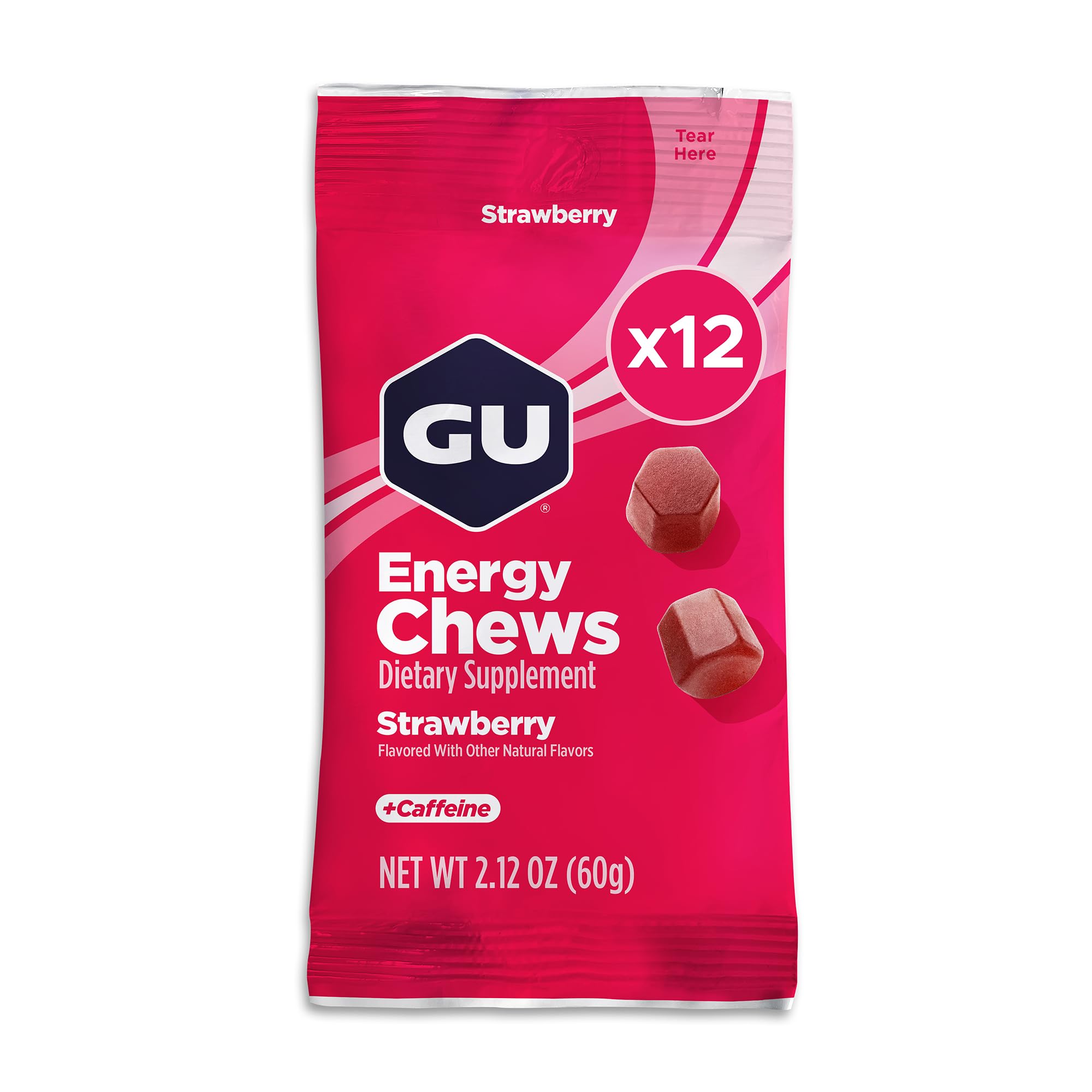
For cyclists who prefer to chew their fuel rather than squeeze a pouch, GU Energy Chews deliver 23–24 grams of carbohydrates per serving from a 2:1 maltodextrin‑fructose blend. Each serving also contains 400 mg of branched‑chain amino acids (L‑Leucine, L‑Valine, L‑Isoleucine) to support muscle performance and recovery during longer efforts.
The strawberry gummies have a pleasant, not‑too‑sweet flavor and require no water to swallow, making them a practical option for rides where you want to stay in the aero position. With 2 servings per bag and 12 bags per order, you get 24 total servings, which provides good value for the mid‑range price point.
Some users find the serving size guidance unclear—figuring out how many chews to take every 20–30 minutes requires a bit of trial and error. Additionally, chews take about 10–15 minutes longer to digest than gels, so they’re better suited for steady‑state rides than for maximum‑effort surge moments.
Why it’s great
- Chewable format eliminates mess and is easy to portion on the go
- BCAAs support muscle recovery during and after the ride
Good to know
- Chews digest slower than gels, making them less ideal for instant energy
- Dosage guidance per session is not clearly communicated on the package
5. Transcend Foods Strawberry Gel

Transcend Foods Strawberry Gel is formulated as a pure glucose‑based carb boost, designed to raise blood sugar rapidly without the slow conversion of maltodextrin. This makes it especially popular among type 1 and type 2 diabetics who need a reliable, fast‑acting source for low‑blood‑sugar events during or after exercise.
Each 1.1‑oz packet is sealed for a 30‑month shelf life, and the compact size fits easily in a jersey pocket, saddle bag, or even taped to the top tube. Reviewers report that the gel raises glucose levels swiftly and steadily with minimal spikes, and the strawberry flavor is palatable enough to use regularly.
The caveat for general cycling use is its single‑source glucose formula—it lacks the dual‑source carbohydrate blend that optimizes long‑distance energy delivery. For a day‑long century ride, you’d still want a maltodextrin‑fructose gel for sustained output. But as a compact emergency backup or a targeted fuel for diabetic riders, it’s an exceptional value pick.
Why it’s great
- Fast‑absorbing glucose ideal for quick blood‑sugar correction
- Compact packaging with long shelf life for emergency storage
Good to know
- Single‑source glucose limits sustained energy for long rides
- Not formulated for endurance performance beyond blood‑sugar management
FAQ
How many cycling gels should I take per hour on a long ride?
Can I use diabetic glucose gels for standard cycling performance?
Do I need gels with caffeine for cycling?
What’s the difference between a gel and a chew for cycling?
Final Thoughts: The Verdict
For most cyclists, the best cycling gels winner is the Hüma Plus Chia Energy Gel because its real‑food ingredients and double electrolyte content keep your stomach happy and your legs moving on any ride length. If you prioritize a high carbohydrate intake rate with zero GI risk, grab the MAURTEN Gel 100. And for a mess‑free, friendly fuel that fits any pace, nothing beats the GU Energy Chews.

Mo Maruf
I created WellFizz to bridge the gap between vague wellness advice and actionable solutions. My mission is simple: to decode the research and give you practical tools you can actually use.
Beyond the data, I am a passionate traveler. I believe that stepping away from the screen to explore new environments is essential for mental clarity and physical vitality.