Our readers keep the lights on and my smoothie glass nicely filled. As an Amazon Associate, I earn from qualifying purchases.
Nothing ruins a winter ride faster than a balaclava that bunches under your helmet, soaks through with freezing sweat, or fogs your glasses the moment you stop pedaling. The difference between a cold, miserable commute and a crisp, comfortable ride often comes down to a single layer of fabric—one that manages moisture, seals out wind, and fits seamlessly below your cycling helmet. With the right cycling balaclava, you stop fighting the elements and start focusing on the road ahead.
I’m Mohammad Maruf — the founder and writer behind WellFizz. I’ve spent countless hours cross-referencing material compositions, rider reviews, and thermal performance claims to separate balaclavas that actually work from those that just look warm on a shelf.
Whether you’re a daily commuter or a weekend endurance rider, this guide cuts through the noise to help you find the best cycling balaclava for your specific winter riding conditions.
How To Choose The Best Cycling Balaclava
A cycling balaclava isn’t just a winter hat—it’s a critical layer that manages breathability, wind protection, and helmet fit simultaneously. Making the wrong choice can mean fogged glasses, a sweaty scalp, or a face still cold after half an hour of riding.
Fabric Layering and Membrane Technology
The most important factor is whether the balaclava uses a windproof membrane like Gore Windstopper or relies solely on thick fleece. A fleece-only balaclava works for mild winter rides (above freezing), but for sustained sub-freezing speeds, a windproof membrane prevents the chill from cutting through your breath layer. Look for fabric that lists a specific membrane or a tight-knit outer face that blocks air penetration.
Helmet Compatibility and Fit
A cycling balaclava must sit flat under a helmet without creating pressure points or folding. Designs that include a thin fabric top (instead of a thick beanie-style crown) reduce bulk. Flatlock seams are critical—raised seams dig into your forehead and temples after an hour. The balaclava should also have a snug, non-slip fit around the neck so it doesn’t slide down when you look up to check traffic.
Breathability and Moisture Management
Cyclists generate a lot of moisture even in freezing temps. A balaclava that traps humidity against your face will feel cold and clammy as soon as you slow down. Moisture-wicking fabrics like polyester or polypropylene blends pull sweat away from the skin. A dedicated breathing vent or a fleece mesh panel over the mouth prevents moisture saturation while still warming the air you inhale.
Quick Comparison
On smaller screens, swipe sideways to see the full table.
| Model | Category | Best For | Key Spec | Amazon |
|---|---|---|---|---|
| Gore Wear Windproof Balaclava | Premium | Sub-freezing rides & wind protection | Gore Windstopper membrane | Amazon |
| ROCKBROS Thermal Fleece Balaclava | Mid-Range | Cold-weather walks & casual rides | Built-in fleece hood with drawstrings | Amazon |
| Under Armour HeatGear Tactical Balaclava | Mid-Range | High-output riding & moisture management | HeatGear moisture-wicking fabric | Amazon |
| Nike Balaclava | Mid-Range | Mild winter & layering | Lightweight stretch polyester | Amazon |
| Winter Cycling Ski Mask Balaclava | Budget | Versatile coverage & multi-wear | Sliding mouth/nose cover | Amazon |
In‑Depth Reviews
1. Gore Wear Unisex Windproof Balaclava

The Gore Wear Windproof Balaclava is the benchmark for serious winter cyclists. It uses Gore Windstopper technology—a thin membrane that blocks wind completely while remaining highly breathable. Riders report using it daily on sub-freezing commutes, with the fabric preventing the face-numbing effect that fleece alone can’t stop. The stretch inserts and flatlock seams allow you to wear it comfortably under a helmet without pressure points or bunching.
Its sizing suits smaller to average heads perfectly; riders with larger craniums note a snug, non-stretch fit that doesn’t loosen over time. The mouth vent is strategically placed for easy breathing during climbs, and the reflective details add critical visibility on dark morning rides. While it’s not a thick thermal—you’ll want a skull cap underneath on the coldest days—the windproof performance more than compensates when riding into a headwind.
The included care instructions make it machine-washable, which is essential for a layer that sees sweat, road grime, and salt. The main downside reported is the tight neck area due to the non-stretch fabric, which can be uncomfortable for riders with a thicker neck. Also, some users note that it does not retain heat if you stop moving—active riders will love it; static users may find it cold.
Why it’s great
- Genuinely windproof at speed, even in single-digit temperatures
- Excellent breathability with well-placed mouth vents
- Flatlock seams prevent helmet chafing
Good to know
- Non-stretch fabric may feel tight around the neck
- Not a thermal layer; requires a fleece cap for extreme cold
2. ROCKBROS Ski Balaclava Thermal Fleece Balaclava

The ROCKBROS Thermal Fleece Balaclava is built for riders who prioritize raw warmth above all else. Its dense fleece construction with a built-in hood provides exceptional thermal retention, making it ideal for cold-weather commuters who don’t mind a bit of bulk. Riders with larger heads report that it fits well without being overly tight, and the fabric stays comfortable even when worn directly against the skin.
The hood adds an extra layer of coverage over the helmet for stationary periods, and the drawstrings allow you to cinch it down when the wind picks up. However, there’s no clamp to lock the drawstrings, so they can loosen during a ride. The fleece interior does a good job filtering frigid air, which helps prevent lung discomfort on very cold mornings.
Moisture management is decent but not exceptional—on high-output rides, the fleece can retain dampness and feel heavy after an hour. It’s best suited for milder winter riding (20-35°F) or for walks and hikes where you’re not generating maximum sweat. The lack of a specific windproof membrane means it won’t perform as well as Gore-type fabrics on windy descents.
Why it’s great
- Extremely warm fleece with a built-in hood for extra coverage
- Fits larger heads comfortably without squeezing
- Drawstrings allow adjustable fit around the face
Good to know
- Drawstrings can loosen under helmet without a locking clamp
- Less breathable than windproof membrane models during hard efforts
3. Under Armour HeatGear Tactical Balaclava
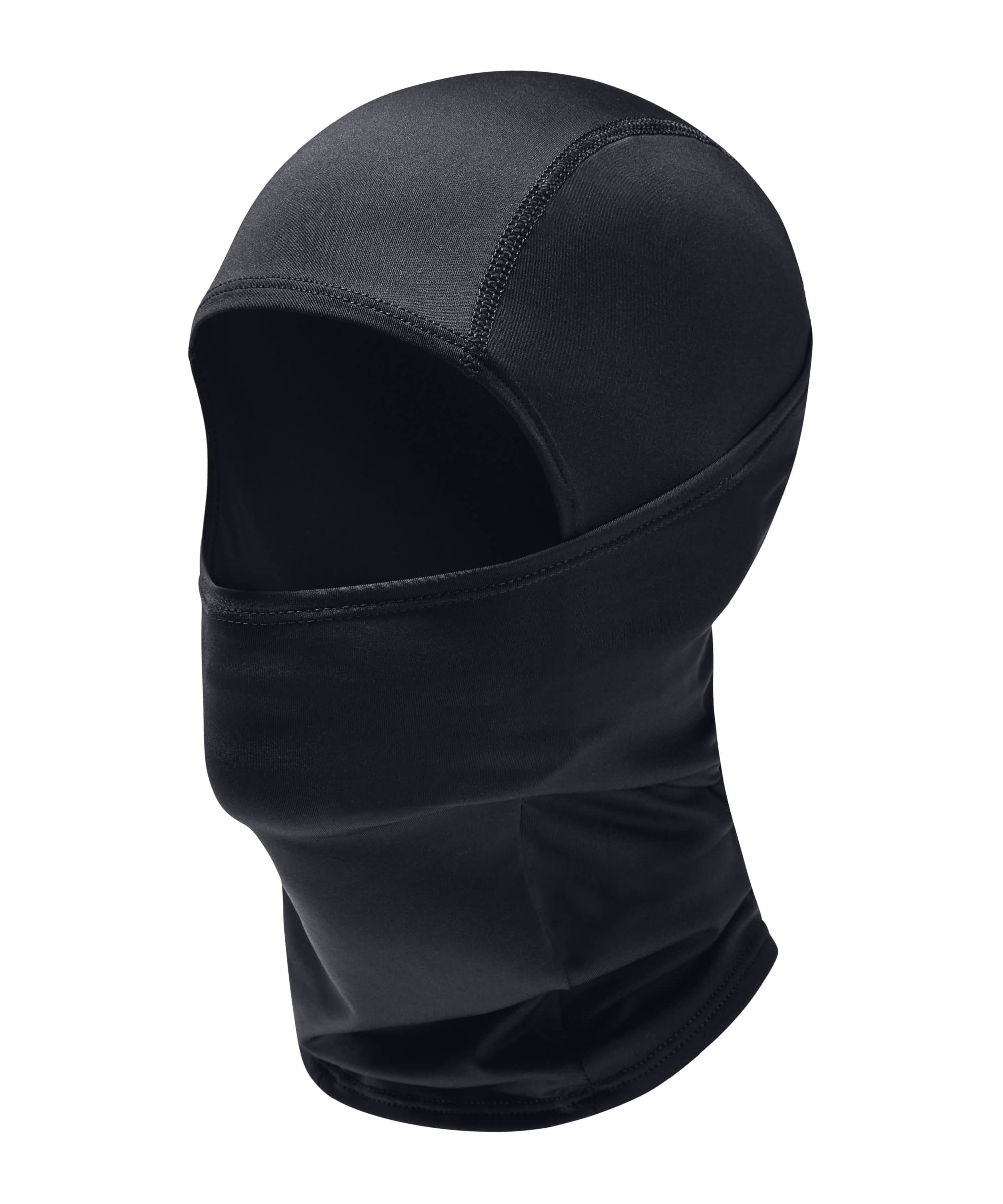
The Under Armour HeatGear Tactical Balaclava is a purpose-built layer for high-sweat activities under a helmet. Unlike fleece balaclavas that trap heat, this one uses HeatGear fabric that actively wicks moisture away from the skin, keeping you dry during high-output rides. Riders love the snug, glove-like fit that stays in place even when turning your head to check traffic. It’s lightweight enough to wear under a full-face helmet without adding bulk.
The fabric is breathable and stretchy, which makes it comfortable for extended wear. It provides decent wind protection for mild winter riding (above freezing) but is not designed for freezing rain or sustained sub-20°F conditions. The lack of a nose vent is a notable omission—riders report that wearing it over the nose causes fogging on sunglasses and glasses. Many riders solve this by tucking the mask below the nose.
Durability is a strong point—the construction holds up well through multiple washes without pilling or losing elasticity. It’s an excellent choice for cyclists who run warm and need a balaclava that keeps them dry rather than hot. If you ride at high intensity or in changing temperatures, this moisture-wicking design beats thermal fleece every time.
Why it’s great
- Superior moisture wicking for high-sweat, high-output riding
- Snug, stretchy fit that stays put under a helmet
- Durable construction that survives frequent washing
Good to know
- No nose vent—can fog glasses when worn over the nose
- Not warm enough for sub-freezing, windy descents
4. Nike Unisex-Adult Balaclava

The Nike Balaclava is a lightweight, stretchy option that works well as a first-layer for mild winter riding or as a sun/UV barrier on brighter days. Riders appreciate the soft, non-itchy interior and the snug but comfortable fit that accommodates a range of head sizes. It’s not a thermal balaclava—the material is thin and designed more for breathability than insulation. For rides in the 35-50°F range, it provides just enough coverage to take the edge off the wind.
The subtle Nike logo keeps the design clean, and the fabric’s stretch allows easy on-and-off without pulling your ears. Riders report that it feels “very thin,” which is a pro for layering under a helmet but a con for anyone expecting substantial warmth. When used as a standalone face covering, it offers decent sun protection and works as a convenient alternative to reapplying sunscreen during long rides.
Breathability is excellent, so you won’t feel suffocated during hard efforts. However, the thinness means it won’t block wind effectively in sub-freezing temperatures. It’s best suited for casual riders, spring/fall commuters, or those looking for a multi-purpose face covering that’s also comfortable for casual wear. The minimal bulk makes it one of the easiest to store in a jersey pocket.
Why it’s great
- Very lightweight and stretchy for easy layering under a helmet
- Soft, non-itchy fabric that’s comfortable against sensitive skin
- High breathability for moderate effort rides
Good to know
- Thin material lacks insulation for cold weather riding
- Not windproof—will not block sub-freezing gusts
5. Winter Cycling Ski Mask Balaclava (Windproof)
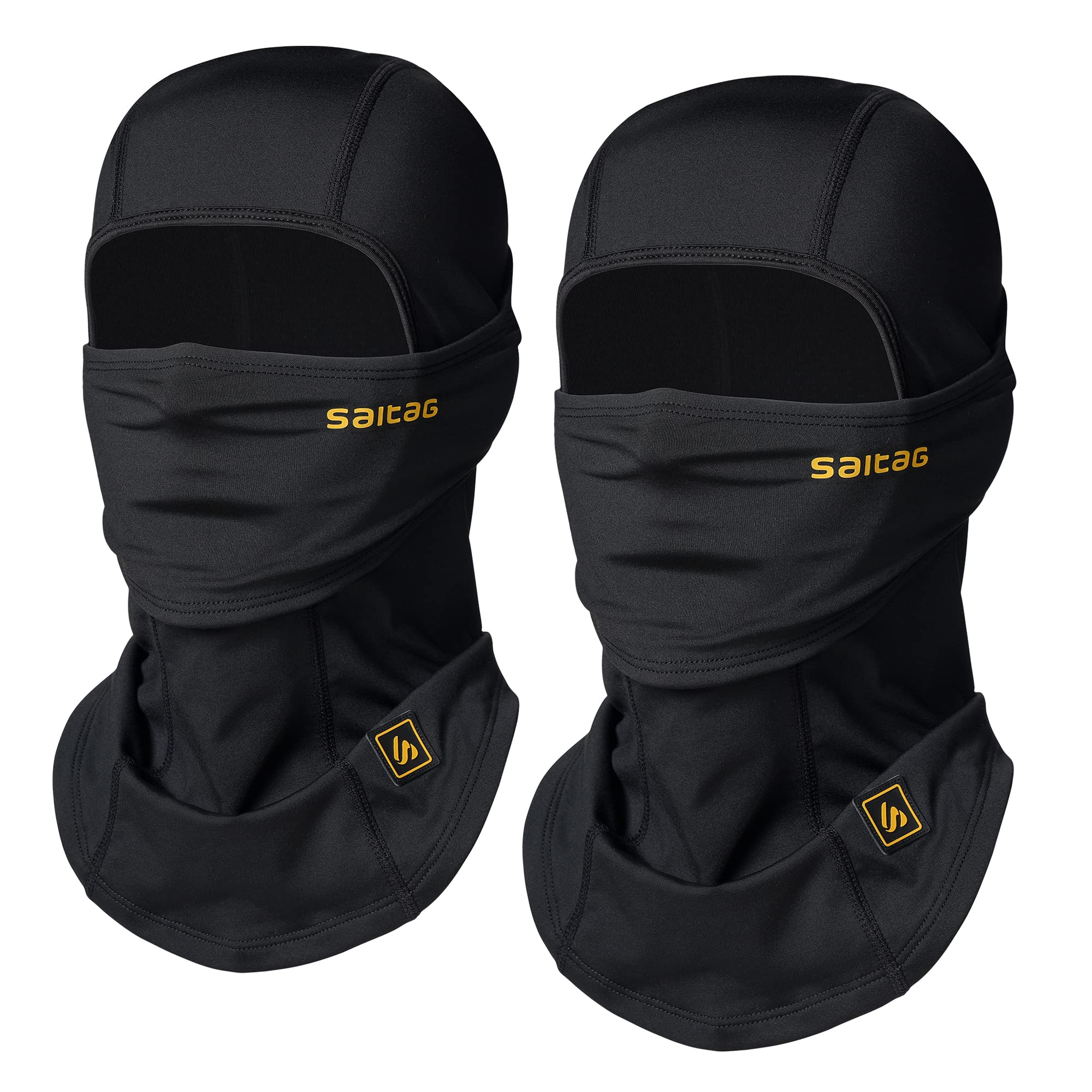
The Winter Cycling Ski Mask Balaclava offers the most wear-configuration options in this list. Its standout feature is a sliding mouth and nose cover that allows you to quickly convert from full-face coverage to an open-face style without removing the mask. Riders working in cold outdoor environments love this—especially those who need to speak clearly without pulling the entire balaclava down. The fit is comfortable and the material is easy to breathe through, even during active use.
The fleece lining provides moderate warmth, making it suitable for temperatures in the 20-40°F range. It’s easy to put on and take off, and riders report that it stays in place during activity. The multi-wear capability means you can use it as a standard balaclava, a half-face mask, or a neck gaiter, which adds flexibility for changing conditions on long rides or multi-day trips.
However, moisture management is average—the sliding mechanism adds a bit of bulk, and the fabric can feel damp after lengthy, high-sweat rides. It also lacks a specific windproof membrane, so it won’t perform as well in sustained, cold winds as the Gore Wear model. For riders who want one piece of gear that adapts to different weather and activity levels, this is a solid budget-friendly choice.
Why it’s great
- Sliding mask allows quick conversion between full and half-face coverage
- Easy to breathe through even during exertion
- Fits comfortably and stays in place during active use
Good to know
- Lacks dedicated windproof membrane for extreme conditions
- Fabric can feel damp during high-sweat, high-output rides
FAQ
Can I wear a cycling balaclava with glasses or goggles?
How do I keep my balaclava from sliding off while riding?
Should I choose a merino wool or synthetic cycling balaclava?
Final Thoughts: The Verdict
For most riders facing real winter wind, the best cycling balaclava winner is the Gore Wear Windproof Balaclava because its Windstopper membrane blocks the biting chill that fleece alone can’t stop, and its flatlock seams keep you comfortable under a helmet for hours. If you want maximum warmth for casual rides and don’t mind a bit of fleece bulk, grab the ROCKBROS Thermal Fleece Balaclava. And for high-sweat and high-output riders who prioritize staying dry over staying insulated, nothing beats the Under Armour HeatGear Tactical Balaclava.

Mo Maruf
I created WellFizz to bridge the gap between vague wellness advice and actionable solutions. My mission is simple: to decode the research and give you practical tools you can actually use.
Beyond the data, I am a passionate traveler. I believe that stepping away from the screen to explore new environments is essential for mental clarity and physical vitality.