Our readers keep the lights on and my smoothie glass nicely filled. As an Amazon Associate, I earn from qualifying purchases.
A cycle helmet that slips forward on a descent or feels like a sauna on a climb turns a good ride into a bad one. The difference between a helmet you wear and one you leave on the shelf comes down to three things: how it grips your head shape, how much air moves through it, and whether the rotational protection system actually fits your riding style without adding unnecessary bulk.
I’m Mohammad Maruf — the founder and writer behind WellFizz. I’ve spent hundreds of hours cross-referencing safety certifications, weighing real-world ventilation feedback against lab-tested construction materials for small-head fitment, and mapping MIPS versus Koroyd versus KinetiCore against the specific riding conditions each technology handles best.
This guide cuts through the marketing noise to focus on what actually keeps you safe and comfortable on pavement, gravel, or singletrack. Whether you are a commuter, a weekend road rider, or a trail enthusiast, these are the best cycle helmets for women that balance real protection with a fit you will forget you are wearing.
How To Choose The Best Cycle Helmets For Women
Fit, safety certification, and ventilation form the three pillars of any good helmet, but women riders face additional considerations around ponytail compatibility, lower-profile retention systems, and narrower head shapes. Understanding how each feature interacts with your specific head geometry and riding environment makes the difference between a helmet that protects and one that annoys.
Head Shape and Retention System Depth
Women’s heads are typically more oval-shaped and slightly smaller in circumference than men’s at the same height. A helmet designed with a universal adult fit may pinch at the temples or sit too high on the brow. Look for models that offer a deep rear cradle — one that wraps below the occipital bone — because that cradle prevents the helmet from tilting backward when you look up, and it keeps the front edge stable when you tuck into a drop. The Roc Loc and TurnSys dials are good indicators of a secure system because they adjust micro-tension across the entire band rather than just pinching one point.
Rotational Protection Technology: MIPS, Koroyd, and KinetiCore
Not all rotational reduction systems work the same way. MIPS adds a low-friction slip plane between the liner and the shell; it performs best in angled impacts but adds a few grams and a slight layer that can affect ventilation if poorly integrated. Koroyd uses a honeycomb of welded tubes that crumple under impact to absorb energy while remaining open for airflow — it is lighter but tends to appear on premium models. KinetiCore is molded directly into the EPS foam, eliminating the extra layer entirely and saving weight, though it is less common on budget-friendly options. Choose MIPS for proven, widely tested protection across price points; choose Koroyd if you prioritize the lightest possible weight with maximum venting; choose KinetiCore for a seamless, minimal-bulk design on road-specific helmets.
Ventilation Design in Real Conditions
Vent count alone is misleading. A helmet with 22 tiny vents can feel stuffier than one with 15 large channels because internal routing determines where hot air exits. Look for deep front-facing intake ports that align with the direction of travel and rear exhaust ports that create negative pressure. Fixed vents are more durable than adjustable ones and weigh less. If you ride in hot, humid climates, prioritize helmets with channeled EPS that directs airflow over the top of the head rather than relying solely on passive holes. If you ride in cooler weather or rain, fewer vents combined with a removable visor keep warmth in and water out.
Weight and Ponytail Compatibility
A helmet that weighs over 350 grams becomes noticeable on long climbs, causing neck fatigue when you check traffic or scan the trail. Sub-300-gram helmets like the Smith Engage with Koroyd or the Lazer Tempo with KinetiCore disappear on your head even after three hours. Ponytail riders should check whether the retention dial sits low enough to clear a high pony without pushing the helmet forward. Some models, like the Giro Verce, include a channel specifically for hair, while others force the ponytail below the dial, which can cause pressure points against the nape of the neck.
Quick Comparison
On smaller screens, swipe sideways to see the full table.
| Model | Category | Best For | Key Spec | Amazon |
|---|---|---|---|---|
| Smith Engage MIPS | Premium MTB | Trail riding with goggles | Koroyd + MIPS, 20 vents, 300g | Amazon |
| Giro Register II MIPS | Premium Road | All-road versatility | MIPS, Hardbody lower wrap, 280g | Amazon |
| Giro Verce MIPS | Women’s Fit | Recreational rides & commute | MIPS, Roc Loc Sport, 50-57cm | Amazon |
| OutdoorMaster Gem II MIPS | Value Plus | Commuting & day rides | MIPS, 21 vents, USB light, 410g | Amazon |
| BELL Trace MIPS | Mid-Range Road | Road cycling & gravel | MIPS Evolve, Ergo Fit, 320g | Amazon |
| LAZER Tempo KinetiCore | Entry-Level Road | Budget-conscious road rider | KinetiCore, TurnSys, 270g | Amazon |
| Wildhorn Corvair | Budget MTB | Entry-level trail riding | Dial fit, adjustable visor, 310g | Amazon |
In‑Depth Reviews
1. Smith Engage MIPS Cycling Helmet

The Smith Engage is the rare helmet that combines two rotational protection systems — MIPS and zonal Koroyd — without turning into a hot, heavy brick. The Koroyd honeycomb covers the crown and temples in crumple zones that stay open for airflow, while the MIPS slip plane handles angled impacts. The result is a sub-300-gram shell that breathes better than most helmets with half the vents. The fixed 20-vent layout pulls air from the front brow and exhausts it out the rear, which keeps your glasses from fogging even during steep, sweaty climbs.
Fit-wise, the Engage uses a deep cradle that cups the occipital bone securely, which prevents the forward-slip issue some riders reported on rough terrain when not wearing glasses. The visor adjusts into two positions — high enough to stow goggles underneath when you stop, or low to block sun glare on exposed sections. The Ionic+ lining manages odor well over multi-day trips, and the single-layer webbing reduces strap bulk around the ears, a detail that makes a difference for women with smaller face profiles.
The premium build shows in the buckle mechanism and the ratchet feel — every adjustment clicks with confidence. On the trail, the Engage stays planted during rock gardens and fast berms, and the extra coverage at the back of the head (common mushroom-head complaint solved) makes it a top pick for women who want serious protection without the aesthetic penalty.
Why it’s great
- Koroyd + MIPS dual protection in a lightweight package (~300g)
- Deep occipital cradle prevents front slip on descents
- Excellent ventilation with anti-fog performance for eyewear
Good to know
- May shift forward slightly on rough terrain if riding without glasses
- Color finishes are muted — limited vibrant options
2. Giro Register II MIPS
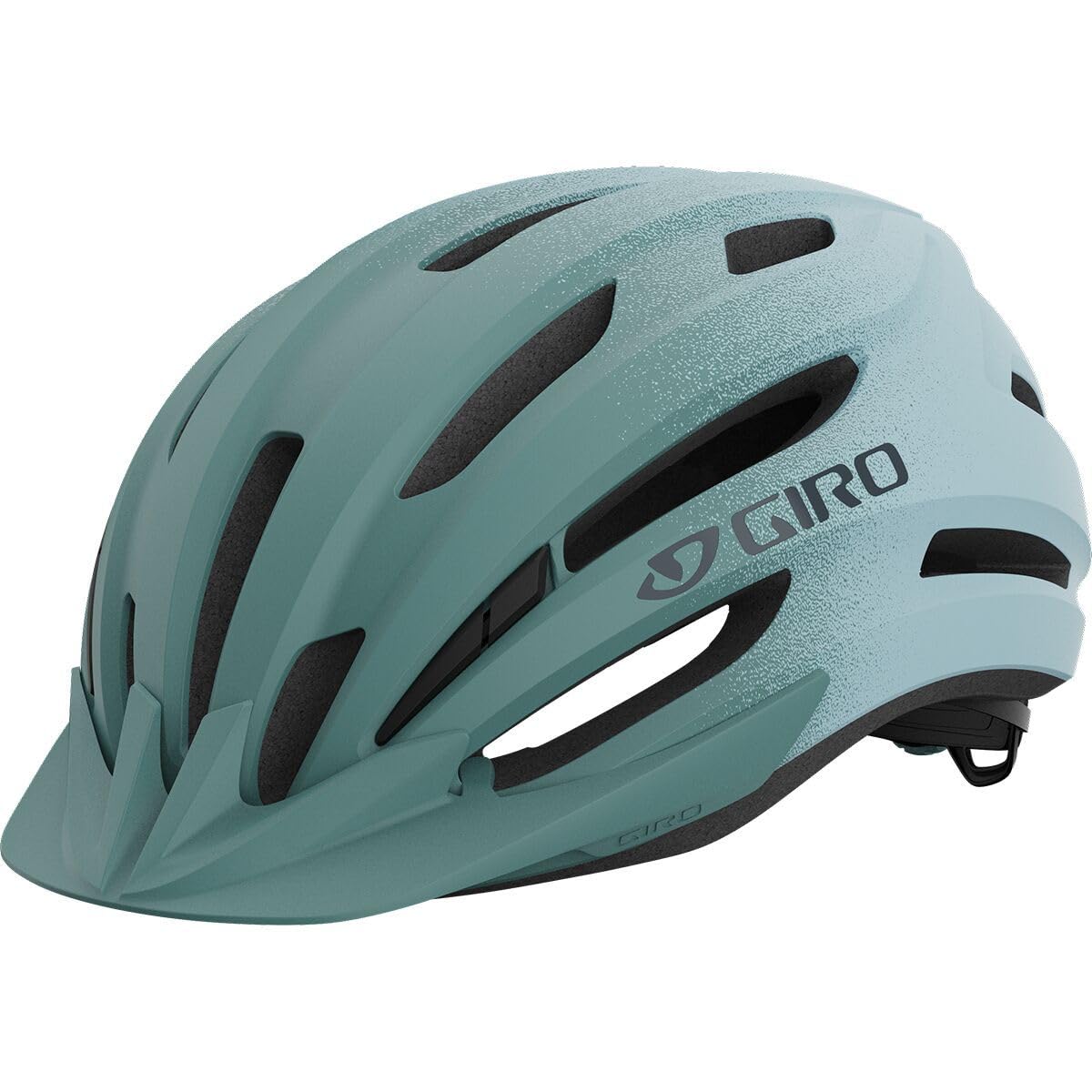
Giro’s Register II is a refined version of a longtime favorite, and the updates matter. The two-piece shell construction — a tough hard shell top fused to a polycarbonate lower wrap — delivers the durability of a traditional hardshell at just 280 grams for the MIPS version. That weight savings comes without cutting corner coverage: the lower wrap extends around the back and sides, reducing the chance of the EPS deforming in a sideways impact. The Roc Loc retention system is here in its latest iteration, offering micro-adjustment via a rubberized dial that turns smoothly even with gloves on.
Ventilation is slightly less aggressive than the Engage, with 15 vents arranged in deep channels that route air over the crown. It works well for road cyclists who spend long hours in a tuck, where the fixed visor — though small and somewhat fragile — cuts glare without rattling. Riders with larger heads (up to XL) report that the universal fit shell accommodates them comfortably, a claim not all brands can back up. The matte mineral fade color option adds a subtle style that pairs with most kit.
One recurring note from long-term owners: the Roc Loc dial can loosen over time if adjusted frequently, so it is best to set it once and leave it. The visor attachment point is the weakest part of the build — fine for occasional use but not for repeated removal. For the weight, safety certification, and clean look, this is a top-tier road helmet for women who want MIPS without the bulk.
Why it’s great
- Very light at 280g with full MIPS integration
- Hardbody lower wrap improves durability and side-impact resistance
- Accommodates larger head sizes comfortably
Good to know
- Roc Loc dial may loosen with frequent re-adjustment
- Visor attachment feels less robust than the rest of the helmet
3. Giro Verce MIPS

This Giro is one of the few helmets explicitly sized for women with a 50-57 cm range, which means it works for smaller head circumferences without forcing pad stacking. The Roc Loc Sport system — Giro’s entry-level dial — is simpler than the Register II’s Roc Loc, but it still provides a full 360-degree tension adjustment that grips the head evenly. The in-mold construction fuses a polycarbonate shell to the EPS liner, keeping weight down while maintaining the structural integrity needed for impact absorption.
Ventilation is handled by 12 vents, which is adequate for recreational rides and moderate-pace commuting but not ideal for high-output summer training. The removable visor is a practical addition for blocking low-angle sun during morning or evening rides, and the matte midnight color hides scratches well from daily handling. Riders with ponytails will appreciate that the cradle sits low enough to accommodate a high bun without the helmet riding up.
Customer feedback consistently highlights the comfort of the plush, quick-dry padding and the “forget you’re wearing it” feel during long rides. The lack of a lower shell wrap means the EPS is partially exposed around the edges, but at a mid-range price point, this is an acceptable trade-off for a helmet that nails the fit for women who struggle with one-size-fits-most models.
Why it’s great
- Women-specific 50-57 cm fit for smaller heads
- Lightweight with comfortable plush padding
- Ponytail-friendly cradle design
Good to know
- 12 vents are moderate — not ideal for very hot climates
- EPS edge is partially exposed without a lower shell wrap
4. OutdoorMaster Gem II MIPS
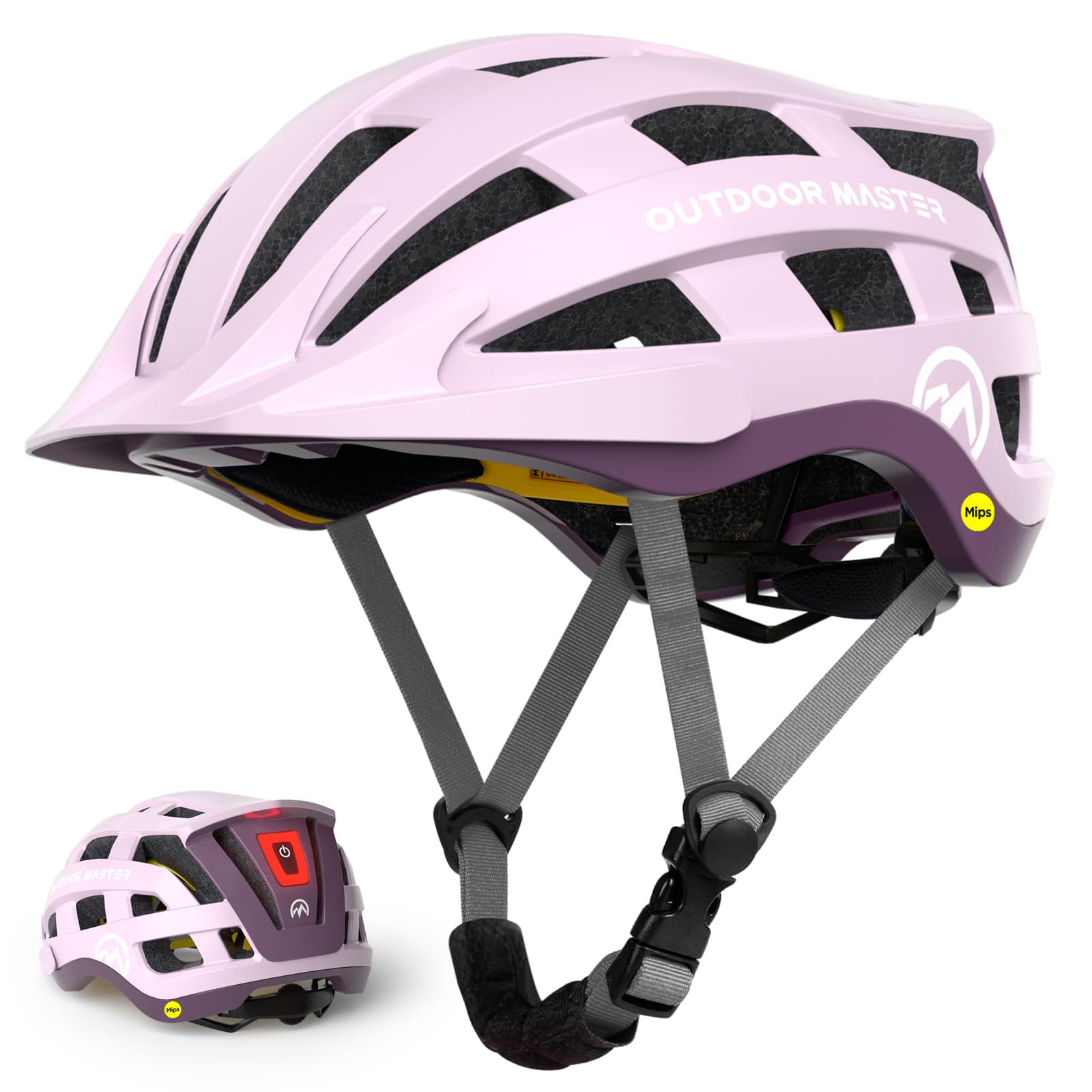
The Gem II packs MIPS protection, a built-in rechargeable LED light, and 21 ventilation vents into a package that undercuts most branded MIPS helmets by a significant margin. The LED light is a genuine safety asset — it has three modes (steady, fast flash, slow flash) and runs for 13 hours on a 60-minute charge, which is enough for a week of commutes. The light plugs into the rear of the helmet with a USB connector, and the housing is integrated cleanly enough that it doesn’t snag on jackets or hair.
Ventilation is genuinely good for this price tier. The 21 vents are connected by internal air channels that move air across the scalp, and the removable padding stays cool even during warm-weather rides. The MIPS system is the standard low-friction liner, and it integrates without the added bulk that cheapens the feel in sub- helmets. Three size options (S, M, L) with a simple dial adjustment allow a precise fit for most women, though the size M ships in a noticeably larger shell than some European brands.
The main concession to cost is packaging — the helmet ships in a thin plastic bag with minimal padding, and a few units have arrived with cosmetic scuffs. The fixed visor is positioned well for road and gravel but lacks the adjustability of pricier models. For commuters and recreational riders who prioritize visibility and protection over weight savings, the Gem II is a compelling pick.
Why it’s great
- Integrated MIPS with a rechargeable rear light (13-hour battery)
- 21 vents with internal channels keep the head cool
- Three size options with easy dial adjustment
Good to know
- Packaging is minimal — risk of cosmetic damage in transit
- Visor is fixed, not adjustable
5. BELL Trace MIPS Cycling Helmet
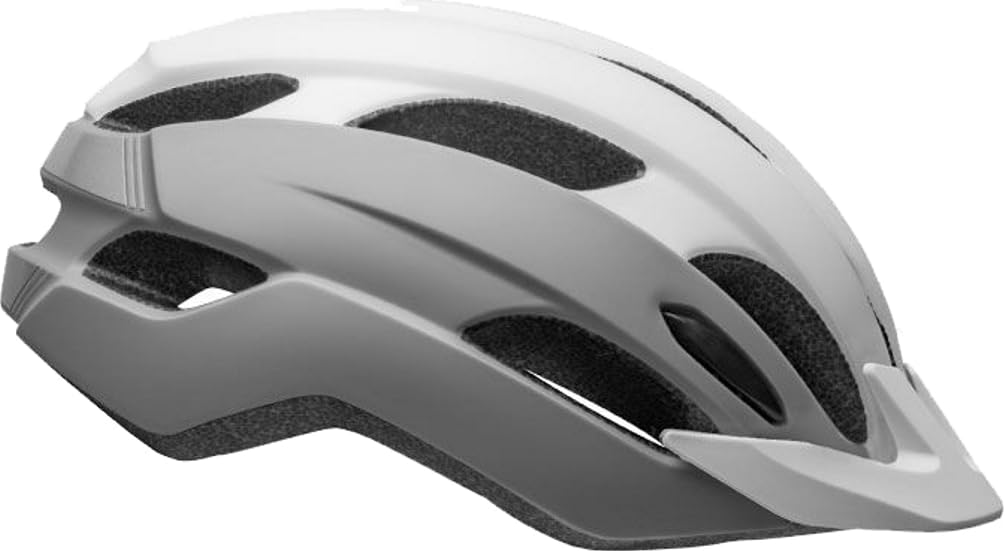
BELL’s Trace MIPS uses the company’s Evolve version of MIPS, which integrates the slip plane directly into the retention system rather than adding a separate liner. That integration reduces weight and allows a closer fit to the head, which translates to a more stable feel during aggressive pedaling out of the saddle. The Ergo Fit dial is rubber-overmolded and easy to turn with one hand, and the No-Twist Tri-Glides keep the straps flat against the cheeks — a small detail that prevents the rubbing some women experience with thicker strap hardware.
The Sweat Guide pad design is a thoughtful touch: it pulls moisture away from the brow pad and away from your eyewear, keeping sunglasses clear during long climbs. Ventilation is adequate with 14 vents, and the removable visor — while slightly short to some riders — blocks glare without obstructing upward vision. The matte white/silver finish is highly visible in low light, a bonus for road riders who share lanes with traffic.
Where the Trace earns its place is in the comfort-to-price ratio. The MIPS integration is seamless enough that it adds no detectable bulk, and the weight (around 320 grams) is competitive for a mid-range helmet. The only common complaint is that the visor could extend a bit further forward for better coverage, and some riders wish the rear coverage wrapped slightly lower on the occiput. For road cyclists who want proven MIPS protection without paying for features they won’t use, the Trace is a solid choice.
Why it’s great
- MIPS Evolve integrates into retention system for closer fit
- Sweat Guide pad keeps eyewear fog-free
- No-Twist Tri-Glides keep straps flat and comfortable
Good to know
- Visor is short and offers limited sun coverage
- Rear coverage could wrap lower on the occiput
6. LAZER Tempo KinetiCore Bike Helmet

The LAZER Tempo is one of the lightest helmets on this list at just 270 grams, and it achieves that weight by using KinetiCore — LAZER’s in-house rotational impact system that is molded directly into the EPS foam rather than added as a separate layer. This eliminates the weight and bulk of a MIPS slip plane or Koroyd inserts, and it also means the helmet can be more compact overall. The one-size-fits-most shell with the TurnSys dial adjusts quickly to head circumferences around 21-24 inches, and the low-profile shape looks clean on smaller heads without looking oversized.
Ventilation is a strong point: the KinetiCore blocks are open-cell, meaning air passes through the crumple zones rather than being blocked by them. On hot days, the airflow is noticeable and helps keep the scalp dry. The helmet is also compatible with LAZER’s Universal LED light, which mounts securely to the rear — a good add-on for low-light riding. The entry-level price makes this an accessible choice for new cyclists or riders upgrading from a basic non-MIPS helmet.
The trade-off is that the KinetiCore system, while certified to the same CPSC and CE standards, does not have the same long-term crash-test pedigree as MIPS (which has been on the market longer and has more independent verification). For casual road riding and commuting, this is not a practical concern, but aggressive trail riders may prefer the wider body of evidence supporting MIPS. The padding is comfortable and the white color is highly visible, though some riders note the fit runs slightly large for very small head circumferences under 52 cm.
Why it’s great
- Ultra-light 270g with integrated KinetiCore rotational protection
- Open-cell design for excellent ventilation on hot days
- One-size-fits-most with quick-turn dial
Good to know
- KinetiCore has less independent crash-test history than MIPS
- Fit runs slightly large for heads under 52 cm
7. Wildhorn Corvair Mountain Bike Helmet
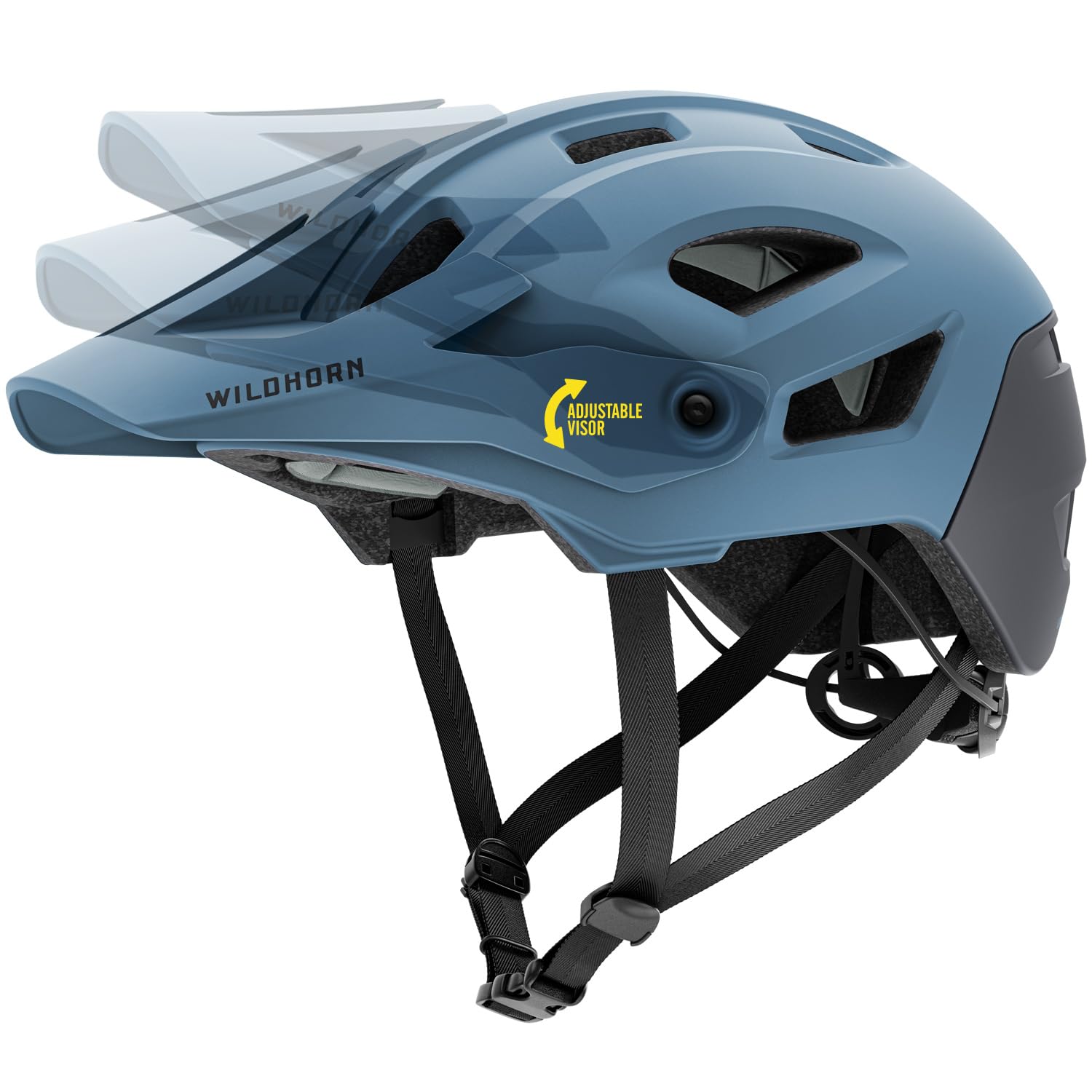
The Wildhorn Corvair is a genuine budget surprise: it delivers an ABS outer shell, a multi-position adjustable visor, and a dial fit system at an entry-level price that often skips those features. At 310 grams, it is competitively light for a budget helmet, and the smoke blue color option is refreshingly stylish compared to the sea of black and white at this price point. The 12 vents are not the most aggressive in the lineup, but they are positioned well to catch airflow during moderate-paced trail rides and gravel outings.
Customer feedback emphasizes the comfortable padding and the easy-to-adjust dial that creates a snug fit around the occiput. The chin strap clasp has been noted as slightly loose-feeling by some reviewers, but it holds securely once clicked into place. The adjustable visor is a standout feature at this tier — it pivots into multiple positions to accommodate goggles or to tilt up when stowed, something typically reserved for helmets costing twice as much.
The main limitations are the lack of MIPS or any rotational protection system, and the ABS shell, while durable, is heavier and less ventilated than the polycarbonate shells on premium models. For casual riders on a tight budget or parents buying a youth-size helmet for growing teens, the Corvair offers solid CPSC-certified protection with a fit that punches above its weight.
Why it’s great
- Multi-position adjustable visor for sun and trail debris
- Easy-to-use dial fit system creates a stable occipital grip
- Stylish smoke blue color at a budget-friendly price
Good to know
- No MIPS or any rotational impact protection
- Chin strap clasp feels slightly loose during initial use
FAQ
How do I know if a cycle helmet fits my head shape properly?
Do I need MIPS or is a standard helmet enough?
How often should I replace a cycle helmet?
Can I wear a ponytail with these helmets?
Final Thoughts: The Verdict
For most riders, the best cycle helmets for women winner is the Smith Engage MIPS because it pairs Koroyd and MIPS dual protection with ventilated comfort that stays cool even on hot climbs, all in a sub-300-gram shell that wraps the occiput securely without pressure points. If you want a premium road helmet that shaves every possible gram while still delivering MIPS, grab the Giro Register II MIPS — its 280-gram weight and Hardbody lower wrap make it a refined choice for long pavement miles. And for budget-conscious riders who need MIPS plus a built-in light for commuting visibility, nothing beats the OutdoorMaster Gem II MIPS.

Mo Maruf
I created WellFizz to bridge the gap between vague wellness advice and actionable solutions. My mission is simple: to decode the research and give you practical tools you can actually use.
Beyond the data, I am a passionate traveler. I believe that stepping away from the screen to explore new environments is essential for mental clarity and physical vitality.