Our readers keep the lights on and my smoothie glass nicely filled. As an Amazon Associate, I earn from qualifying purchases.
Forget strapping your phone to the handlebars — a dedicated cycle computer gives you ride data that’s readable in direct sun, lasts for multi-day tours, and frees your phone’s battery for emergencies. Whether you’re chasing a new PR on a local climb or just want to see your average speed on the morning commute, the right unit changes how you ride.
I’m Mohammad Maruf — the founder and writer behind WellFizz. I’ve spent dozens of hours analyzing GPS acquisition times, battery endurance claims, screen readability in various light conditions, and ANT+/Bluetooth protocol support across the most popular budget and mid-range cycle computers on the market.
This guide breaks down the options to help you find the best cycle computer for your riding style without paying for features you’ll never use.
How To Choose The Best Cycle Computer
A cycle computer is a long-term purchase — it lives on your bars through rain, heat, and gravel chatter. The wrong choice wastes money on features you don’t need or, worse, leaves you without the data you actually want. Here’s what actually matters.
GPS Chipset and Satellite Support
The core of any modern computer is its GNSS receiver. Units that support GPS, GLONASS, Galileo, Beidou, and QZSS lock faster and hold signals better in tree cover or urban canyons. A multi-constellation chipset is worth the incremental cost over a GPS-only model.
Battery Life vs. Your Longest Ride
Manufacturer claims (40h, 100h) are often tested in ideal lab conditions with backlight off and no sensor pairing. For real-world use, assume you’ll get 70–80% of the stated figure. If you do back-to-back century rides or multi-day touring, a unit with 40+ hours of real endurance is non-negotiable.
Screen Technology and Contrast
Not all LCDs are equal. FSTN (Film Compensated Super Twisted Nematic) displays offer higher contrast in direct sunlight than standard segment LCDs — critical if you ride midday. Auto-backlight is a useful feature, but it doesn’t fix a low-contrast screen in bright conditions.
Quick Comparison
On smaller screens, swipe sideways to see the full table.
| Model | Category | Best For | Key Spec | Amazon |
|---|---|---|---|---|
| CYCPLUS M3 | Premium Value | Multi-day touring and endurance riders | 100h battery, 2.8″ FSTN display | Amazon |
| COOSPO BC107 | Mid-Range | Riders needing robust ANT+ sensor support | 2.4″ LCD, IP67, GPS+Beidou | Amazon |
| XOSS G+ Gen2 | Mid-Range | Riders syncing with TrainingPeaks | 28h battery, 2.2″ LCD, TrainingPeaks sync | Amazon |
| iGPSPORT BSC100S | Budget-Plus | Budget-conscious riders wanting GPS and sensors | 40h battery, 2.6″ LCD, IPX7 | Amazon |
| iGPSPORT BSC100S (Alt SKU) | Budget-Plus | Riders wanting similar specs with auto functions | 40h battery, 2.6″ LCD, auto backlight | Amazon |
In‑Depth Reviews
1. CYCPLUS M3

The CYCPLUS M3 stands apart with its 1500mAh battery delivering a genuine 100 hours of runtime — enough for a month of daily commutes or a week-long tour without charging. The 2.8-inch FSTN glass display offers superior contrast in direct sunlight compared to standard segment LCDs, and the auto-backlight adjusts seamlessly as light fades.
It supports five major satellite systems for fast GPS acquisition after the first cold start (typically 3–5 minutes), and the CYCPLUS FIT app allows you to customize up to eight data fields per page. ANT+ connectivity pairs reliably with speed, cadence, heart rate, and power sensors, and data syncs to Strava through the companion app.
The unit is compact enough to mount cleanly on a stem or handlebar with the included rubber-band mount. While the thermometer is inaccurate and the buttons lack tactile feedback, the core tracking — GPS accuracy, sensor pairing, and battery endurance — outclasses everything else in this price tier.
Why it’s great
- Industry-leading 100-hour battery with fast USB-C charging
- High-contrast 2.8-inch FSTN display readable in bright sunlight
- Customizable data fields via the CYCPLUS FIT app
- Reliable ANT+ sensor pairing for power meters and HRMs
Good to know
- Inaccurate onboard temperature sensor — ignore that data field
- Buttons require a firm press and lack tactile feedback
- First-time GPS lock takes 3-5 minutes outdoors
2. COOSPO BC107

The COOSPO BC107 packs a 2.4-inch LCD into a compact, lightweight chassis wrapped in glass-filled ABS and TPU. It uses GPS and Beidou dual-mode positioning, which locks quickly and maintains accuracy even under tree cover. The IP67 rating means it survives heavy downpours and hose-offs without issue.
ANT+ support is the BC107’s strongest feature — it pairs effortlessly with power meters, speed sensors, cadence sensors, and heart rate monitors from Garmin, Polar, and other brands. The CoospoRide app handles setup, firmware updates, and Strava sync, though some users report occasional app-side glitches requiring a manual logout/login to restore auto-sync.
Battery life is excellent in practice: one rider reported 500 miles over 10 days with the battery at 75% remaining. The included handlebar mount with rubber rings is secure, and the unit is small enough to leave on the bike between rides without looking bulky.
Why it’s great
- Excellent real-world battery life — 500+ miles per charge
- Robust ANT+ sensor pairing across multiple brands
- IP67 waterproof rating handles heavy rain
- Compact and lightweight design stays unobtrusive on the bar
Good to know
- Does not support Bluetooth sensors — ANT+ only for external devices
- CoospoRide app can have intermittent Strava sync issues
- No built-in navigation or turn-by-turn directions
3. XOSS G+ Gen2
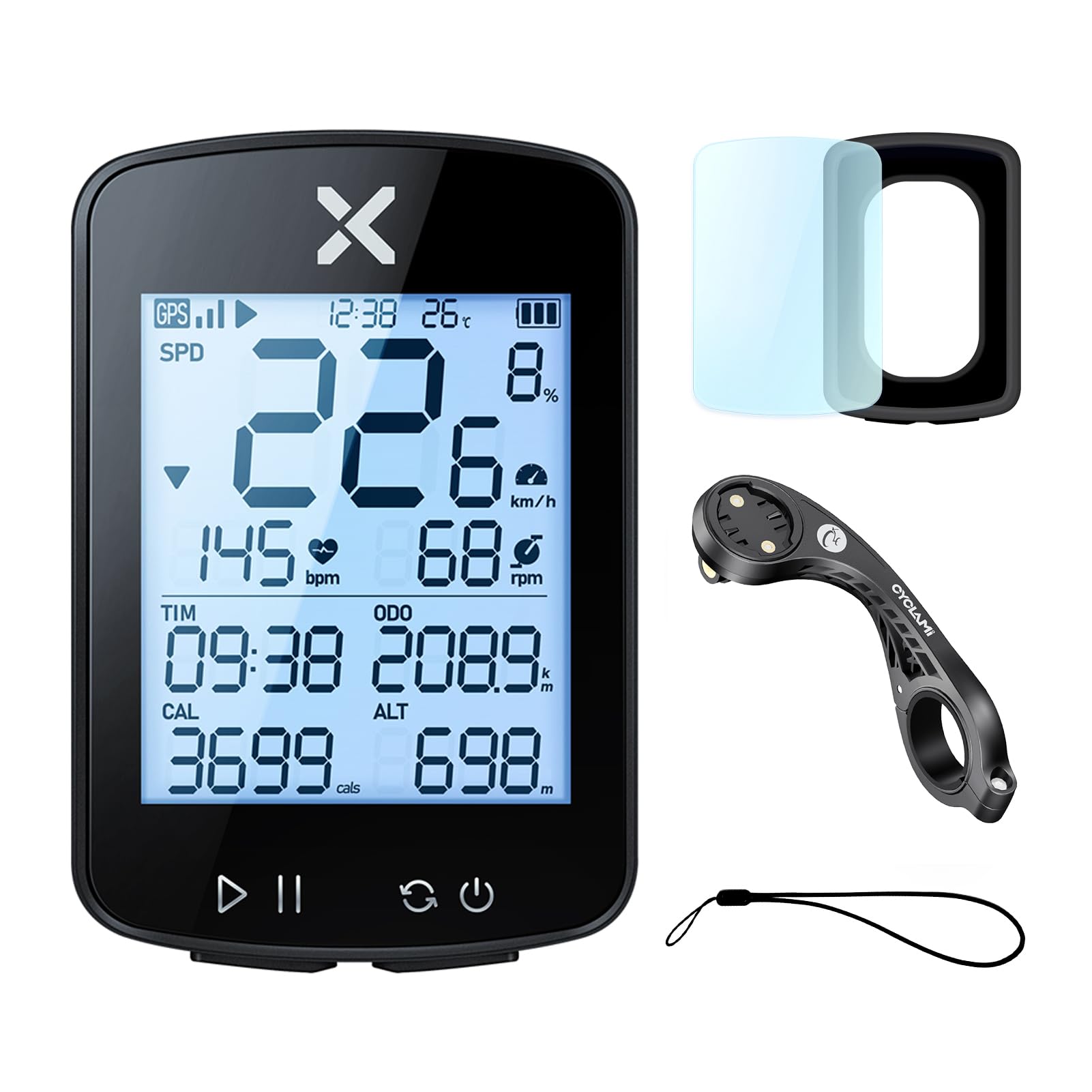
The XOSS G+ Gen2 is a direct competitor to the iGPSPORT line with a unique edge: native TrainingPeaks integration. If your training plan lives in TrainingPeaks, this unit syncs ride data directly without needing a third-party bridge. It supports GPS, Beidou, and QZSS for fast global positioning and automatic time calibration.
The 2.2-inch LCD includes an auto-backlight that adjusts to ambient light, and the display is readable with polarized sunglasses. The XOSS app handles sensor pairing and data configuration, and the unit connects to ANT+ power meters, speed sensors, cadence sensors, and heart rate monitors. The included protective cover and film add a layer of scratch resistance.
Battery life is rated at 28 hours, which is sufficient for most weekend warriors but falls short of the endurance-focused CYCPLUS M3. The handlebar mount uses a rubber insert that may need minor trimming for a snug fit, and the unit has been reported to detach on rough terrain if not properly secured.
Why it’s great
- Direct TrainingPeaks sync for structured training plans
- Auto-backlight adjusts to ambient light conditions
- Compact form factor with protective cover and film
- ANT+ support for power meters and HR sensors
Good to know
- Battery life (28h) is lower than competitors at this price
- Mount can detach on rough terrain if not secured tightly
- Rubber mount insert may need trimming for some handlebars
4. iGPSPORT BSC100S
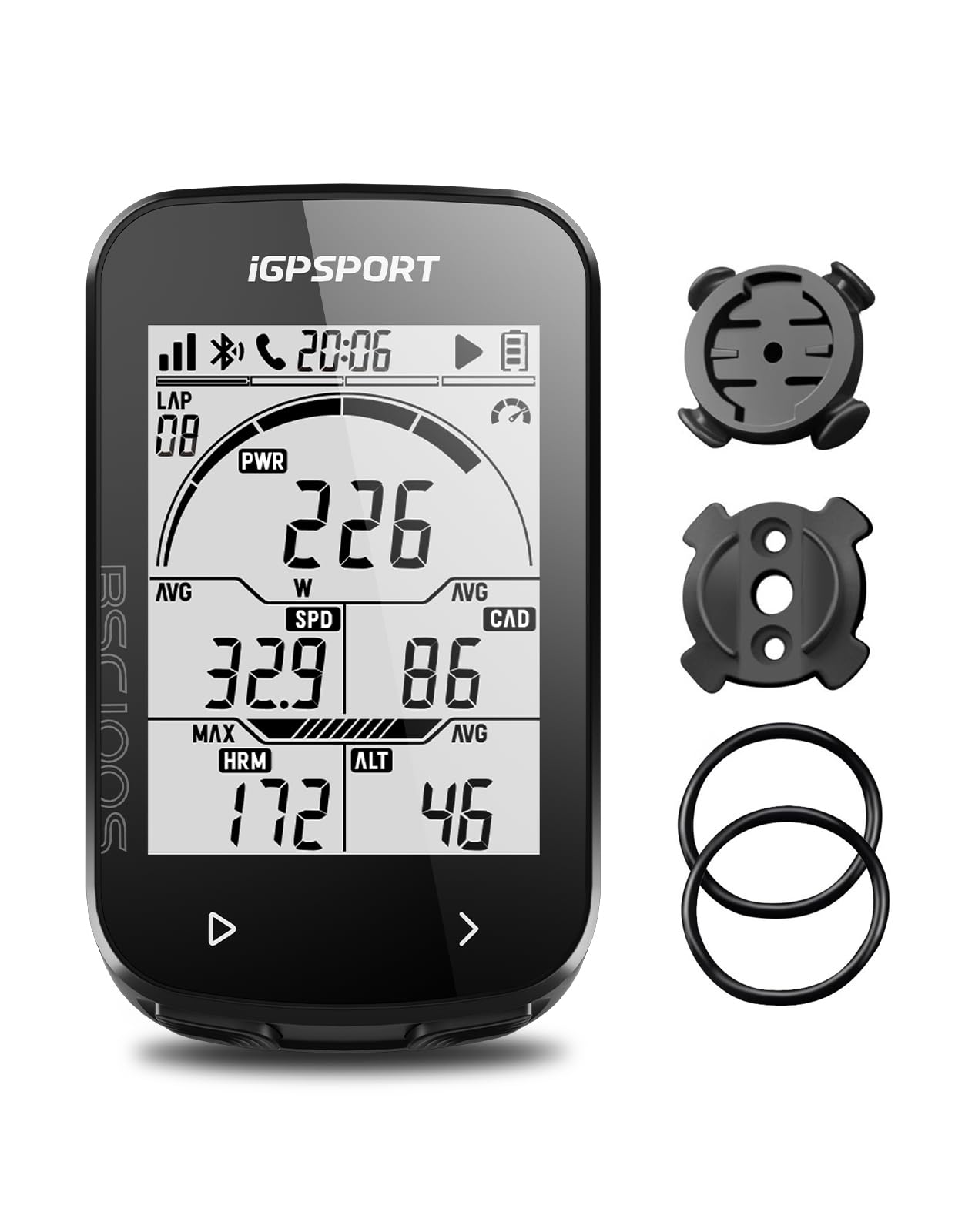
The iGPSPORT BSC100S has become the default recommendation for riders who want GPS tracking and sensor support without spending over the mid-range threshold. Its 2.6-inch anti-glare LCD is one of the largest in this tier, and the 40-hour battery claim holds up reasonably well in real use — expect around 30–35 hours with backlight and sensor pairing.
It supports five satellite constellations (GPS, Beidou, GLONASS, Galileo, QZSS) for rapid lock times and accurate tracking. The dual ANT+ and Bluetooth 5.0 protocol lets you pair with virtually any sensor on the market. Data syncs to Strava and Komoot through the iGPSPORT app, which also offers over 40 ride metrics to customize.
The two-button interface is simple but requires memorizing press sequences to navigate pages. Some units have exhibited freezing mid-ride, though the company offers replacements. The rubber band mount is functional but less secure than a quarter-turn system, and the manual is notoriously unhelpful — use the online version instead.
Why it’s great
- Five-satellite support for fast and accurate GPS lock
- Large 2.6-inch anti-glare LCD readable in direct sun
- Both ANT+ and Bluetooth 5.0 for broad sensor compatibility
- Competitive 40-hour battery life for long rides
Good to know
- Two-button interface requires memorizing sequences
- Mount is rubber band-based — less secure than quarter-turn designs
- Manual is poor; find detailed setup guides online
5. iGPSPORT BSC100S (Alt SKU)

This alternate SKU of the iGPSPORT BSC100S offers the same 2.6-inch screen, 40-hour battery, and five-satellite GPS core as the standard model, with the addition of ten auto-control functions: auto backlight, auto pause, auto sleep, auto lap, auto return to homepage, and auto data upload. These features reduce the need to fiddle with buttons mid-ride.
It pairs with ANT+ sensors including power meters, heart rate monitors, speed sensors, and cadence sensors. The iGPSPORT app provides the same 40+ data metrics and Strava/TrainingPeaks sync. Initial GPS accuracy for ascent and distance may be slightly off during the first few rides, but it self-calibrates after several outings to match phone-based logging.
As a pure tracking computer without navigation, it works well for riders who just want reliable speed, distance, and elevation data. The auto functions genuinely make rides smoother — no manual laps, no forgotten data uploads. However, the identical physical design means the same rubber band mount and potential for unit detachment remain.
Why it’s great
- Ten auto-control functions reduce button interaction during rides
- Same reliable five-satellite GPS and 40-hour battery as standard model
- Syncs easily with Strava and TrainingPeaks via companion app
- ANT+ sensor pairing for power meters, HRMs, and cadence sensors
Good to know
- Initial GPS accuracy for ascent and distance improves after 4-5 rides
- Rubber band mount remains the weak point for security
- No turn-by-turn navigation — data tracking only
FAQ
Can I use a cycle computer without a smartphone?
Do I need ANT+ or Bluetooth for my sensors?
Final Thoughts: The Verdict
For most users, the best cycle computer winner is the CYCPLUS M3 because its 100-hour battery and high-contrast FSTN display eliminate the two biggest pain points for long-distance and daily riders alike. If you want the best ANT+ sensor compatibility and IP67 waterproofing in a compact package, grab the COOSPO BC107. And for riders who train with TrainingPeaks, nothing beats the XOSS G+ Gen2 for direct workout sync without extra steps.

Mo Maruf
I created WellFizz to bridge the gap between vague wellness advice and actionable solutions. My mission is simple: to decode the research and give you practical tools you can actually use.
Beyond the data, I am a passionate traveler. I believe that stepping away from the screen to explore new environments is essential for mental clarity and physical vitality.