Our readers keep the lights on and my smoothie glass nicely filled. As an Amazon Associate, I earn from qualifying purchases.
A cycle computer for road bike use needs to deliver more than just speed and distance. You need reliable GPS tracking that doesn’t drain your phone, a screen readable in direct sunlight, and navigation that keeps you on course through unfamiliar routes. Entry-level units often struggle with slow satellite locks or confusing interfaces, while premium models can overwhelm you with complex training metrics you’ll never use. The right unit balances clear data display, dependable battery life, and seamless route guidance without the steep learning curve.
I’m Mohammad Maruf — the founder and writer behind WellFizz. I’ve spent hundreds of hours analyzing specs across the full spectrum of cycle computers, comparing GPS chipset accuracy, screen technology, battery real-world performance, and navigation feature depth to help you find the right tool for your rides.
After reviewing the market, I’ve narrowed down the top performers to seven units that cover everything from budget-friendly navigation to premium training computers. Here’s the full breakdown of the best cycle computer for road bike riders at every level and budget.
How To Choose The Best Cycle Computer For Road Bike
Picking the right unit is about matching the feature set to your riding style. A weekend group rider has different needs than a solo century chaser or a racer analyzing power data. These are the specs that matter most.
GPS Chipset and Satellite Support
Multi-band GNSS support (GPS, GLONASS, Galileo, BeiDou, QZSS) is the difference between accurate tracking under tree cover or near buildings and constant signal dropouts. Units with AGNSS support lock in 5 seconds, crucial for spontaneous ride starts. Cheaper chipsets often drift on twisty roads, adding phantom distance to your ride file.
Display Readability and Size
Transflective color screens are the gold standard for direct sunlight visibility — they use ambient light to stay bright without needing backlight. Touchscreens add convenience for map zooming and menu navigation, but button-controlled units work better with gloves or in the rain. 2.4-inch screens are the sweet spot for road bike handlebar space, offering enough detail without the bulk of a phone-sized display.
Battery Life Real-World Use
Rated battery life is often misleading. A unit claiming 25 hours of typical use drops to 15 hours with always-on navigation and sensor connections. For century riders or multi-day tourers, look for at least 20 hours of real-world endurance. Battery saver modes that dim the screen and reduce GPS polling can extend range significantly, but you lose visual clarity and tracking frequency during those stretches.
Navigation Depth
Simple point-to-point routing is fine for known roads, but touring and exploring require turn-by-turn prompts with automatic rerouting if you miss a turn. Offline map support is essential for areas without cell service. The best units let you import GPX files from apps like Strava, Komoot, or RideWithGPS and display elevation profiles directly on the device.
Quick Comparison
On smaller screens, swipe sideways to see the full table.
| Model | Category | Best For | Key Spec | Amazon |
|---|---|---|---|---|
| Magene C606 V2 | Premium | Training & race data | 2.8″ color touchscreen | Amazon |
| Garmin Edge 540 | Premium | Button control reliability | 26 hr battery, multi-band GNSS | Amazon |
| Garmin Edge 1050 | Premium | Feature-rich group rides | Vivid touchscreen, built-in speaker | Amazon |
| GEOID CC700 | Mid-Range | Value with color display | 2.8″ color screen, 25 hr battery | Amazon |
| iGPSPORT BSC200S | Mid-Range | Sunlight visibility | Semi-transflective color screen | Amazon |
| Magene C506SE | Mid-Range | GPS accuracy on a budget | Airoha chipset, 5s lock | Amazon |
| Beeline Velo 2 | Mid-Range | Minimalist navigation | Compass mode, 11 hr battery | Amazon |
In‑Depth Reviews
1. Magene C606 V2
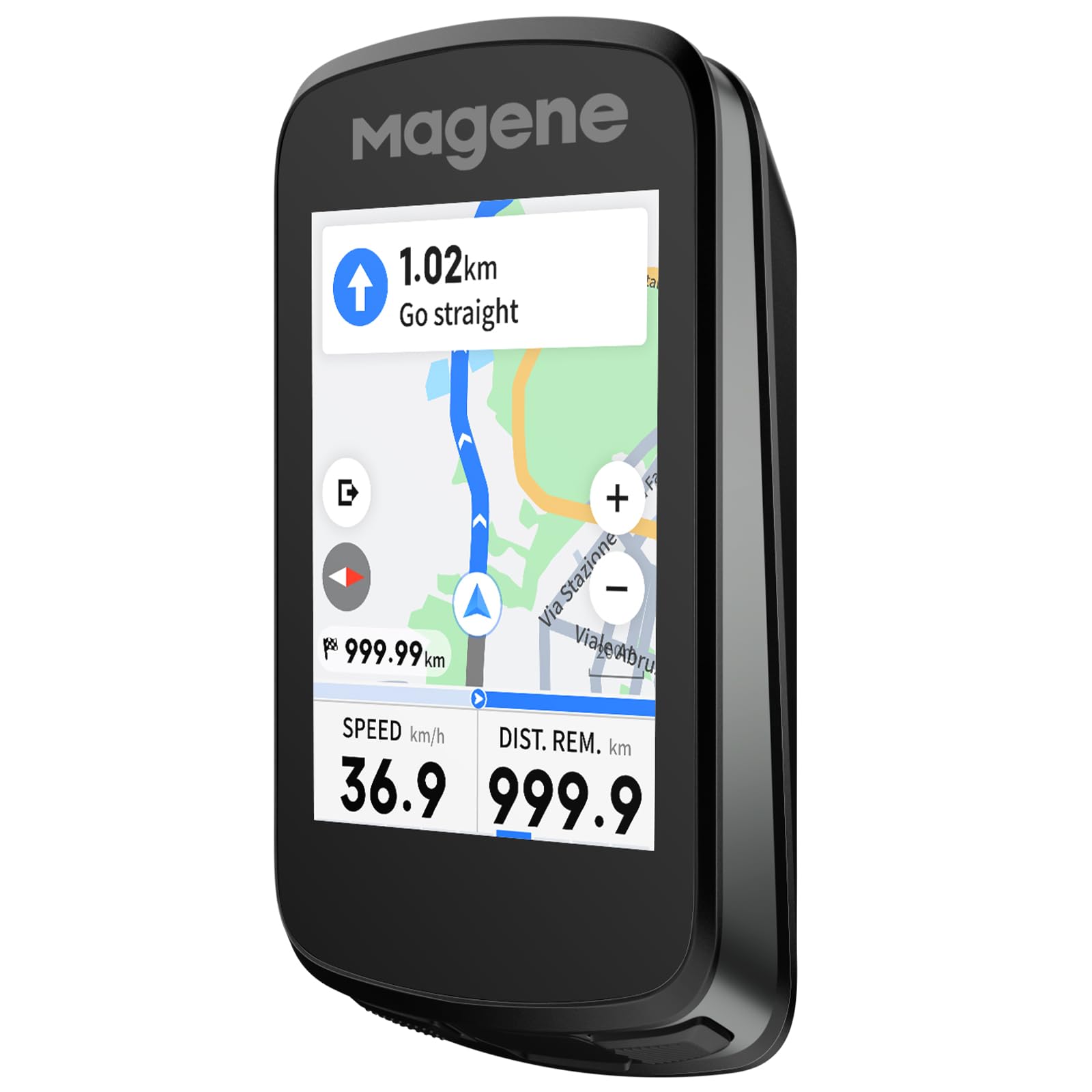
The Magene C606 V2 packs a 2.8-inch color TFT touchscreen and a battery that lasts 25 hours in typical use, making it a strong alternative to units costing twice as much. The responsive touch interface works well in the rain, and the ClimbPro feature provides real-time gradient and remaining elevation data on every ride, with automatic mid-ride detection even without a preset course. Strava Live Segments and wireless smart trainer control give it true training depth for riders who want race-level features.
Cycling dynamics like Power Phase and seated/standing time require a compatible power meter such as the Magene P715, Garmin Rally, or Favero Assioma. The included protective case and tempered glass screen protector are thoughtful additions for a unit that will live on your handlebar through all weather. Users report reliable performance over thousands of miles, with the touchscreen remaining responsive even when wet.
Offline navigation supports GPX imports up to 1,000 km, and automatic rerouting works through the companion app. The ability to control DJI and Insta360 cameras directly from the handlebar is a unique bonus for riders who capture their rides. For road cyclists seeking premium metrics without the Garmin price tag, the C606 V2 delivers exceptional value and performance.
Why it’s great
- 2.8-inch color touchscreen is sharp and responsive even in rain
- 25-hour battery handles multi-day rides without recharging
- ClimbPro and Live Segments rival far more expensive units
Good to know
- Cycling dynamics require a separate compatible power meter
- Screen contrast can be lower in very bright direct sunlight
2. Garmin Edge 540

The Garmin Edge 540 is built for riders who want rock-solid navigation and training features with the tactile confidence of physical buttons. The multi-band GNSS delivers exceptional positioning accuracy even in dense tree cover or urban canyons, and the battery life stretches from 26 hours in demanding use to 42 hours in battery saver mode. ClimbPro now works on every ride without requiring a pre-loaded course, giving you remaining ascent and grade no matter where you wander.
Daily suggested workouts adapt to your actual training load and recovery when paired with a power meter and heart rate monitor. The Power Guide feature recommends targets throughout a course, and stamina insights show how much energy you have left in real time. The button interface is intuitive even with thick winter gloves, a critical detail for cold-weather road riders. USB-C charging is a welcome modern touch.
Navigation supports ride type-specific maps that highlight popular road routes and searchable points of interest. Users consistently praise the ClimbPro and the seamless connection with Garmin sensors. The 540 sits in a sweet spot of the Garmin lineup — it strips out the touchscreen of the 840 but keeps all the critical training and navigation tools. For riders who value simplicity and endurance, this is a top-tier choice.
Why it’s great
- Multi-band GNSS offers outstanding tracking accuracy in difficult terrain
- 42-hour battery saver mode handles week-long tours
- Button control works perfectly with gloves and in rain
Good to know
- Learning curve for initial screen setup and customization
- No touchscreen means map zooming is slower than touch alternatives
3. Garmin Edge 1050

The Garmin Edge 1050 is the flagship model with a vivid color touchscreen, built-in speaker, and an unmatched ecosystem of connected features. The screen is bright, responsive, and customizable with graphical data fields that show heart rate, power, and climbing data at a glance. The built-in speaker can relay turn-by-turn audio prompts and alert pedestrians with a bike bell, a thoughtful touch for mixed-use paths. Battery life reaches 20 hours in demanding use and up to 60 hours in battery saver mode.
Group ride features are a standout unique capability: in-ride messaging, live location sharing, incident detection, and post-ride leaderboards for climbs add social interaction to the ride experience. Road hazard alerts from other cyclists provide real-time safety info when paired with your smartphone. The touchscreen makes on-device course creation easy, and the map shows road surface type — essential for road cyclists avoiding gravel sections. Contactless payments via Garmin Pay work at rest stops without carrying a wallet.
Users praise the seamless sensor network integration with Di2, Varia radar, and HRMs. The software has matured with updates fixing early sync issues, and the LCD graphical data fields are considered best-in-class. The price is high, and some find the audio alerts excessive. For the rider who wants every possible feature in a single device, the Edge 1050 is the ultimate companion.
Why it’s great
- 60-hour battery saver mode is industry-leading for long tours
- In-ride messaging and leaderboards transform group rides
- Built-in speaker for navigation audio and bike bell alert
Good to know
- Premium price may be overkill for casual riders
- Some users find the default alerts (eat, drink, bell) too many
4. GEOID CC700
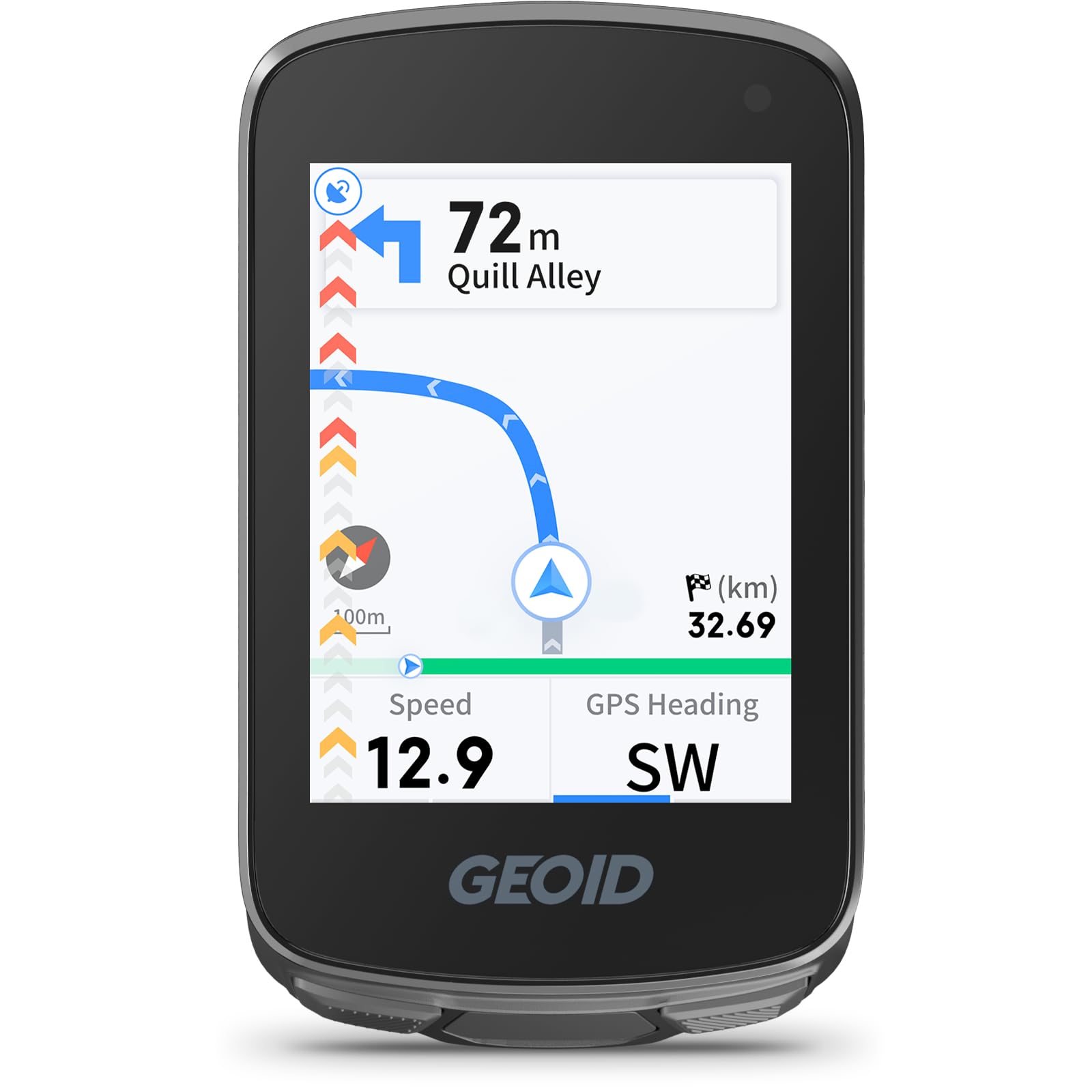
The GEOID CC700 delivers a 2.8-inch color screen, WiFi syncing, and support for 108 data items at a price that undercuts most competitors by half. The five-satellite system with AGNSS support achieves a 5-second GPS lock every ride, which is genuinely impressive at this price level. The IPX7 waterproof rating means it can survive a rain-soaked century without issues, and the 25-hour battery life matches units costing much more. WiFi significantly speeds up data syncs compared to Bluetooth-only alternatives.
The navigation includes turn reminders with zoom-in prompts at intersections and automatic rerouting if you drift off course. GPX file import through the companion app works well for following pre-planned routes. The three-button interface is simple to operate while riding, though some users report the setup process for changing units from kilometers to miles is not the most intuitive. The unit connects with up to nine ANT+ and Bluetooth devices simultaneously, covering speed, cadence, heart rate, and power sensors.
Indoor training mode with smart trainer control adds another dimension for riders who cross-train through winter. The included Asahi glass is more durable than standard polycarbonate screens, reducing scratch risk. For road cyclists who want a large color display, navigation, and sensor support without draining their budget, the CC700 is the top value pick.
Why it’s great
- 2.8-inch color screen at a fraction of premium unit prices
- WiFi sync and 5-second GPS lock save time before every ride
- IPX7 waterproof rating handles heavy rain without worry
Good to know
- Initial setup for imperial vs metric units is not straightforward
- Some users report interface navigation feels clunky at first
5. iGPSPORT BSC200S

The iGPSPORT BSC200S uses a semi-transparent, semi-reflective color screen that stays perfectly readable even under the harshest midday sun without cranking up backlight brightness. The 2.4-inch display is compact but crisp, and the 600mAh battery delivers a true 25 hours of runtime that tracks closely with real-world riding. The companion app is one of the more polished options in the mid-range segment, with easy route creation and one-touch navigation that sends routes from your phone straight to the device.
Turn reminders and yaw guidance work clearly, and the unit supports custom page layouts with over 100 data fields. The ability to connect with iGPSPORT front lights and radar tail lights is a nice ecosystem touch that competitors like Magene and GEOID don’t offer. Riders note that the side-mounted buttons take some getting used to but are perfectly usable with practice. The screen is energetic enough at 0% backlight to keep data visible, which saves battery on long rides.
The BSC200S is an excellent alternative to the Garmin Edge 130 Plus at a lower price point while offering a larger color display. Users consistently highlight the battery life and Strava sync reliability. The only letdown is the lack of RideWithGPS integration — route planning is limited to Strava for third-party syncs. For road cyclists who ride primarily in sunny conditions and want long battery life, this is a smart pick.
Why it’s great
- Transflective screen is the best in class for direct sunlight readability
- 25-hour battery capacity is accurate in real-world rides
- One-touch navigation from app to device is quick and simple
Good to know
- No RideWithGPS route sync — only Strava integration
- Side-mounted buttons feel cramped for larger hands
6. Magene C506SE

The Magene C506SE focuses on what matters most for road cycling: fast and accurate GPS tracking. The Airoha chipset with AGNSS support locks satellites in 5 seconds on average, and the high-precision calibration work over 300 days ensures minimal drift on winding roads. The 2.4-inch color screen presents data clearly with circular dials, line graphs, and bar charts, and the 108 supported data items across 14 categories cover every metric a road rider might track.
Off-course alerts with route re-planning keep you on track when exploring unfamiliar roads, and the unit supports importing GPX files through the OnelapFit app. The 24-hour battery is sufficient for a full day of riding plus some buffer. It supports nine connected device types simultaneously including speed, cadence, heart rate, power meters, smart trainers, and radar tail lights — enough for even a fully sensor-packed road bike. WiFi sync is 28 times faster than Bluetooth, meaning post-ride file transfers happen in seconds.
The IP54 rating means the C506SE can handle splashes and dust but is not fully submersible, so it’s not the best choice for riders who get caught in regular downpours. Some users have reported pairing instability after initial setup, though firmware updates have addressed this. The white color option is a unique aesthetic choice. For riders who prioritize fast GPS lock and accurate tracking over heavy navigation features, the C506SE is a strong contender.
Why it’s great
- Airoha chipset delivers 5-second GPS lock for instant ride starts
- WiFi sync at 28x Bluetooth speed saves time after rides
- 108 data items leaves no gap in ride tracking depth
Good to know
- IP54 rating is splash-resistant, not waterproof for heavy rain
- Occasional sensor pairing issues reported after firmware updates
7. Beeline Velo 2

The Beeline Velo 2 takes a completely different approach to road bike navigation by stripping away complex menus and focusing on a clean, high-contrast monochrome display. The compass mode shows a simple arrow pointing toward your destination, letting you explore any route with total freedom while still knowing you’re heading the right way. The sensor fusion technology improves location accuracy without relying heavily on phone signal, so it performs well even in remote areas. The included strap mount fits any handlebar without extra hardware.
Turn-by-turn navigation works through the free companion app, with Komoot and Strava route imports that sync directly to the device. The physical buttons are glove-friendly and the display is readable in all lighting conditions. Battery life sits at 11 hours, which is sufficient for most day rides but not enough for multi-day tours without a mid-ride charge. Audio cues via the phone app provide turn alerts, though users report they can be too quiet in traffic or wind noise.
The Velo 2 is not a data computer — it does not track 100+ metrics or wirelessly connect to power meters. It is a dedicated navigation device first. Riders who love data-heavy dashboards will find it limiting. For road cyclists who value simplicity, exploration, and not being glued to a screen while riding, the Velo 2 is a refreshing alternative. It earned its reputation as a reliable touring companion on 14-day trips through rainy conditions.
Why it’s great
- Compass mode encourages free exploration without a fixed route
- Clean monochrome display is readable in any light without glare
- Strap mount fits any handlebar instantly without tools
Good to know
- 11-hour battery requires daily charging for multi-day trips
- No ANT+ or power meter support — data tracking is minimal
FAQ
What is the most important feature for a cycle computer on a road bike?
Do I need a touchscreen cycle computer for road biking?
How long should a cycle computer battery last for road cycling?
Can I use a cycle computer without a phone for navigation?
What sensor compatibility do I need for training with a cycle computer?
Final Thoughts: The Verdict
For most users, the best cycle computer for road bike winner is the Magene C606 V2 because it delivers a premium touchscreen experience, 25-hour battery, and ClimbPro navigation at a mid-range price. If you want button reliability and multi-band GPS lock without the touchscreen, grab the Garmin Edge 540. And for the ultimate feature set with in-ride messaging and vivid maps, nothing beats the Garmin Edge 1050.

Mo Maruf
I created WellFizz to bridge the gap between vague wellness advice and actionable solutions. My mission is simple: to decode the research and give you practical tools you can actually use.
Beyond the data, I am a passionate traveler. I believe that stepping away from the screen to explore new environments is essential for mental clarity and physical vitality.