Our readers keep the lights on and my smoothie glass nicely filled. As an Amazon Associate, I earn from qualifying purchases.
A worn-out or poorly chosen cycle chain turns every pedal stroke into a gamble—skipping gears under load, dropping into the cassette at the worst moment, and sapping power you need for the climb ahead. The right chain eliminates that uncertainty, delivering crisp shifts and reliable power transfer mile after mile, whether you’re grinding up a gravel grade or cruising the weekday commute.
I’m Mohammad Maruf — the founder and writer behind WellFizz. For this guide, I’ve analyzed the tensile strength, pin construction, inner plate profiling, and speed-tier compatibility of dozens of models to isolate the handful that actually deliver on their shifting promises.
From budget-friendly replacements to race-ready 12-speed options, this breakdown of the best cycle chain choices on the market will help you match the right drivetrain specs to your bike and riding style without wasting money on mismatched parts.
How To Choose The Best Cycle Chain
Picking a cycle chain is mostly about speed-tier match. A 12-speed chain is narrower than a 6-speed chain, so putting the wrong one on a cassette creates poor engagement, noisy shifting, and accelerated wear on the sprockets. Know your drivetrain speed before you buy.
Speed Tier Compatibility
The number of rear gears determines the chain’s inner width. Six-, seven-, and eight-speed chains are 7.1-7.3mm wide and interchangeable with each other. Nine- and ten-speed chains are about 6.5-6.6mm. Eleven-speed chains are roughly 5.6-5.7mm, and twelve-speed chains drop to about 5.25-5.3mm. Always match the chain speed to your cassette speed—mixing tiers causes rough shifting and chain drop.
Pin Strength and Plate Construction
Chains built with solid rivets or hollow pins hold up better under torque. Solid pins are heavier but tougher for high-stress riding, while hollow pins save weight but can bend under extreme loads. Plate thickness matters too: thicker outer plates resist twisting forces during hard out-of-saddle efforts, especially on e-bikes and trail bikes.
Quick Link vs. Traditional Master Link
A reusable quick link lets you install or remove the chain without tools—useful for regular cleaning and replacement. Some premium chains include single-use PowerLock links that require a chain breaker to remove. If you maintain your own bike, a reusable quick link saves time. If you only change the chain when it’s worn, a single-use link isn’t a hassle.
Quick Comparison
On smaller screens, swipe sideways to see the full table.
| Model | Category | Best For | Key Spec | Amazon |
|---|---|---|---|---|
| Shimano Deore CN-M6100 | 12-Speed | E-bike & enduro | 126 links; Hyperglide+ | Amazon |
| Shimano SLX CN-M7100 | 12-Speed | Trail & all-mountain | 126 links; 299g weight | Amazon |
| SRAM PCX1 11-Speed | 11-Speed | 1×11 MTB & race | 118 links; PowerLock | Amazon |
| KMC Z7 | 6/7/8-Speed | Vintage/hybrid/city | 116 links; 7.3mm roller | Amazon |
| SRAM PC-830 | 6/7/8-Speed | City & MTB workhorse | 114 links; 7.1mm width | Amazon |
In‑Depth Reviews
1. Shimano Deore CN-M6100
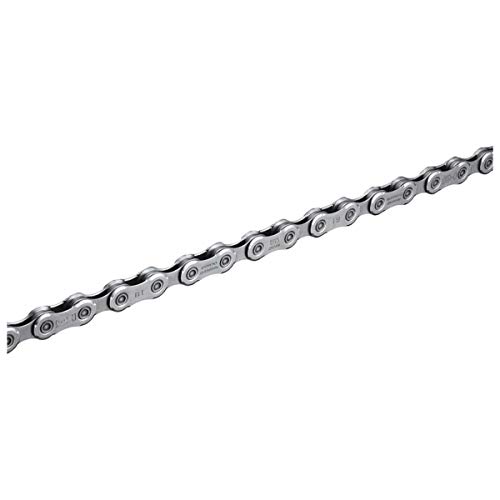
The Shimano Deore CN-M6100 is built for the torque-heavy demands of modern 12-speed drivetrains, especially e-bikes and enduro rigs. Its Hyperglide+ profiling on the inner plates and Dynamic Chain Engagement+ outer link shape work together to lift the chain onto the cassette teeth faster under load, reducing the lag you feel during a steep climb shift. Users report around 2,500 miles of hard trail use before stretch becomes noticeable, and the 126-link length fits most full-suspension frames without needing an extension.
The chain uses a quick link for tool-free installation, and the solid pin construction resists bending even when hammering through rock gardens. It is slightly heavier than a pure race chain like Dura-Ace, but the added material translates directly into durability—ideal for riders who pedal hard and replace chains seasonally rather than weekly.
On a Giant Fathom 2 or a similar stock 12-speed bike, this chain is a direct OEM replacement, so shifting behavior remains identical out of the box. The silver finish shows grime quickly, but a monthly wipe and lube keep it running quietly. If you ride an e-MTB that ramps up chain stress, this is the most cost-effective way to avoid mid-ride breakage.
Why it’s great
- Hyperglide+ design delivers crisp shifts under load
- Solid pin construction withstands e-bike torque
- Tool-free quick link for easy installation
Good to know
- Heavier than race-focused 12-speed chains
- Silver finish shows dirt quickly
2. Shimano SLX CN-M7100

The SLX CN-M7100 sits one tier above the Deore in Shimano’s 12-speed hierarchy, offering the same Hyperglide+ plate geometry but with a marginally lighter overall weight—299 grams for the 126-link version. The reduced mass comes from a more precisely machined inner plate profile, which also reduces friction at the jockey wheels. Riders fitting this chain onto Cannondale Habit and similar trail bikes report that the constant clicking in lower gears disappears immediately after swapping from a factory KMC chain.
The chain requires a chain tool to cut to length, but the included quick link makes final connection tool-free. The alloy steel construction holds up well across varied terrain—cross country, all-mountain, and even e-bike use, though the specified load capacity of 10 kg per the manufacturer suggests it’s optimized for human-powered torque rather than heavy assist motors. For standard trail riding, chain stretch remains under 0.5% past 1,000 miles with consistent monthly lubrication.
One detail that matters for home mechanics: the CN-M7100 uses a slightly different inner plate chamfer than the Deore, which reduces noise during cross-chaining (big ring / big cog combos). If you spend significant time in those gear ratios on rolling terrain, the SLX quieter operation is worth the step up in price.
Why it’s great
- Hyperglide+ plate design for quiet cross-chaining
- Lighter than Deore without sacrificing durability
- Quick link included for final connection
Good to know
- Requires chain tool to size
- Not ideal for high-power e-bike drivetrains
3. SRAM PCX1 11-Speed
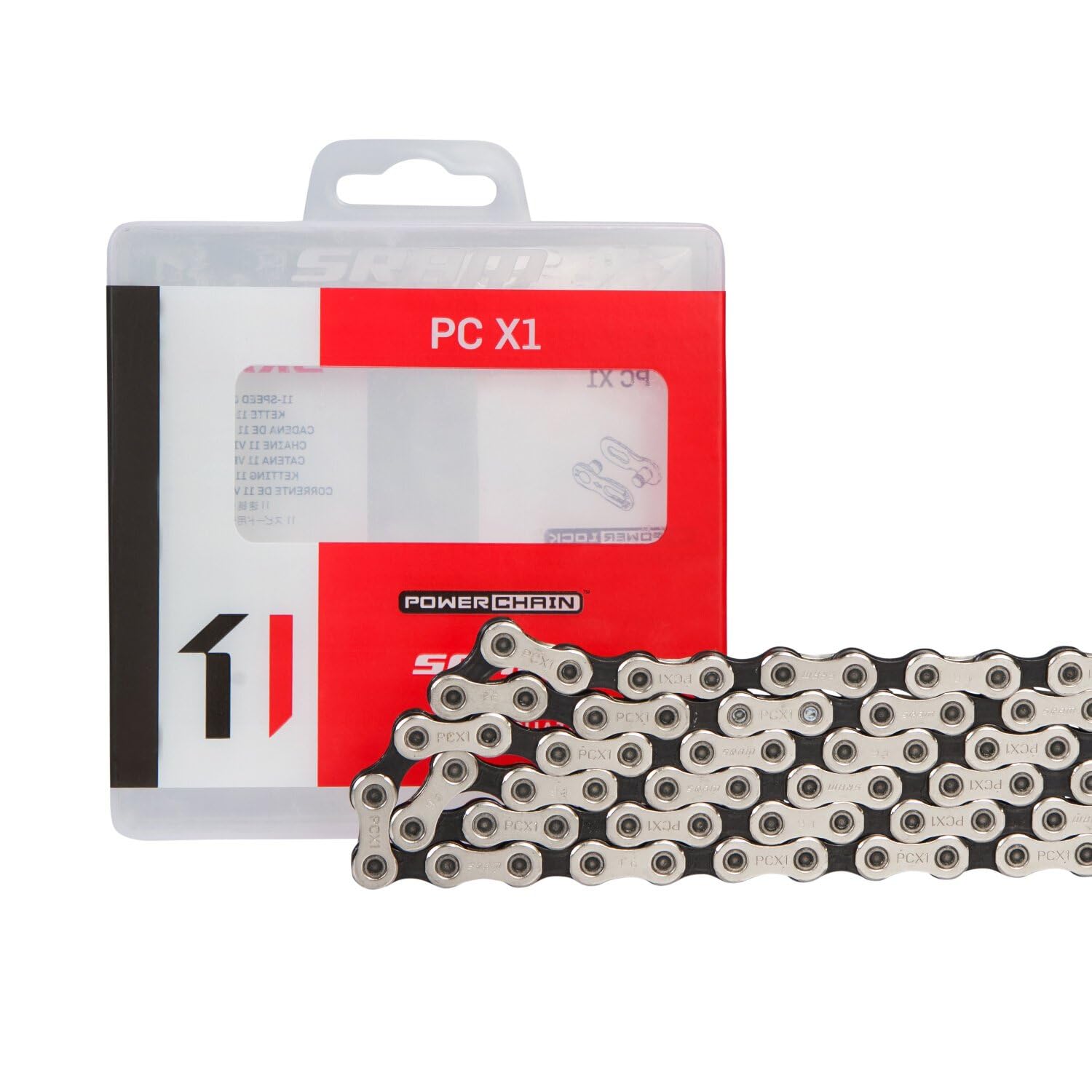
The SRAM PCX1 is the go-to chain for 1×11 drivetrains on mountain and gravel bikes, and it packs a noticeably thicker outer plate than the standard PC-1130, giving it a beefier feel that resists lateral flex during hard sprinting. The working load capacity is rated at 300 Newtons (roughly 67 pounds-force), and real-world reports from a 250-pound commuter show less than 0.5% stretch after 1,000 miles with only monthly wipe-and-lube care. The PowerLock connecting link is single-use, so plan to have a new link on hand if you break the chain mid-season.
At 178 grams for the 118-link version, it sits in the middle weight range—not as light as a dedicated XX1 chain (about 5 grams heavier), but also significantly more affordable. The alloy steel material holds up well to gritty conditions; one user reported surviving multiple rust cycles after snow submersion with no breakage. Shifting with a mix of SRAM and Shimano components stays clean and fast, thanks to the chain’s chamfered inner link edges.
The PCX1 is also a popular replacement for SRAM X01 and X1 drivetrains because it uses identical pin spacing and roller diameter. If you’re upgrading an older 10-speed bike to 11-speed or replacing a stretched XX1 chain at half the price, this is the most sensible drop-in option on the market. The only real downside is the non-reusable PowerLock, which adds to long-term consumable costs if you remove the chain frequently.
Why it’s great
- Thick outer plates resist lateral flex under torque
- Compatible with SRAM 1×11 and Shimano mix drivetrains
- Minimal stretch after 1,000 miles of hard use
Good to know
- PowerLock link is single-use only
- 5 grams heavier than top-tier XX1 chain
4. KMC Z7

The KMC Z7 is the standard replacement chain for older 5-, 6-, and 7-speed bikes, including vintage road and kids’ 20-inch models. Its 7.3mm roller diameter and 0.52-inch pitch match the Shimano Hyperglide and SRAM 7-speed standards exactly, so there’s no indexing confusion—it simply works on any freewheel or cassette from that era. The master quick link is KMC’s signature reusable design, which snaps open and closed with hand pressure alone, making this an excellent choice for a quick roadside swap.
The chain comes in a small plastic case with an instruction sheet, and the 116-link length covers most single chainring and double configurations. Some users have noted that the link pins are thin enough to be damaged by aggressive chain pliers—if you use a tool to open the quick link, the plier tip can punch through the pin. The easy workaround is to use a dedicated quick link tool or simply flex the chain sideways by hand.
For the price, the Z7 is hard to beat for casual city riding, school commuters, and vintage restorations. If you’re bringing a 1980s 15-speed back to life, this chain matches the original equipment and restores smooth shifting without the hassle of chasing NOS parts. Just avoid overtightening the link when snapping it closed—audible click, not a forceful smash.
Why it’s great
- Reusable master link for tool-free installation
- Exact match for vintage 5-7 speed drivetrains
- Extremely affordable for its quality level
Good to know
- Pin heads can fracture under aggressive plier use
- Not compatible with 9-speed or higher cassettes
5. SRAM PC-830
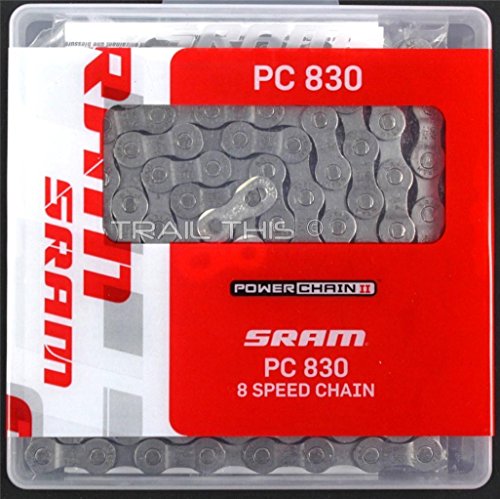
The SRAM PC-830 is a 7.1mm-wide chain designed for 6-, 7-, and 8-speed city, mountain, hybrid, and touring bikes. Its alloy steel construction uses solid rivets that hold up to repeated soaking and mud exposure—one user reported throwing the bike into snow, letting the chain rust, then derusting and repeating the cycle with no breakage. The 114-link length fits most standard frames, and the included PowerLink (SRAM’s name for its reusable master link) allows tool-free installation and removal.
The chain works with both Shimano and SRAM 8-speed drivetrains, so it’s a universal replacement for a broad range of commuter and entry-level MTB setups. After 250 mountain biking miles, users report zero shifting issues, and the chain stays quiet with basic monthly lubrication. The working load capacity is rated at 300 Newtons, which is plenty for standard human power, though not recommended for heavy e-bike conversion kits that exceed 750W.
One practical note: the PC-830 is 114 links, which may be short for some full-suspension mountain bikes with long chainstays. Measure your existing chain before cutting the package. For a rigid city bike or a hardtail, the length is usually spot-on. If you need to add links, this chain does not come with a half-link, so you’ll need a separate purchase for non-standard dropout positions.
Why it’s great
- Solid rivet construction handles wet and muddy conditions
- PowerLink master link for tool-free install
- Universally compatible with 6-8 speed drivetrains
Good to know
- 114 links may be too short for some FS MTB frames
- No half-link included for non-standard dropouts
FAQ
How often should I replace my cycle chain?
Can I use an 11-speed chain on a 12-speed drivetrain?
What does the number of links mean for fit?
Final Thoughts: The Verdict
For most riders, the best cycle chain winner is the Shimano Deore CN-M6100 because it balances Hyperglide+ shifting performance, solid pin durability for e-bike torque, and a 126-link length that fits modern frames without extension. If you want quieter cross-chaining on a trail bike, grab the Shimano SLX CN-M7100. And for a bulletproof 11-speed option that handles snow and mud, nothing beats the SRAM PCX1.

Mo Maruf
I created WellFizz to bridge the gap between vague wellness advice and actionable solutions. My mission is simple: to decode the research and give you practical tools you can actually use.
Beyond the data, I am a passionate traveler. I believe that stepping away from the screen to explore new environments is essential for mental clarity and physical vitality.