Our readers keep the lights on and my smoothie glass nicely filled. As an Amazon Associate, I earn from qualifying purchases.
A dull pair of scissors turns a simple task into a frustrating battle. Whether you are trimming fabric, slicing through cardboard, or prepping ingredients in the kitchen, the tool in your hand determines whether the cut is clean or ragged. The right pair of cutting scissors eliminates frayed edges, prevents hand fatigue, and makes every snip feel effortless.
I’m Mohammad Maruf — the founder and writer behind WellFizz. I’ve spent dozens of hours analyzing blade geometries, steel compositions, handle ergonomics, and real-world user feedback to separate the genuinely sharp shears from the ones that look good on a shelf but fail on the first cut.
After evaluating five distinct pairs across fabric work, precision embroidery, utility tasks, and multi-purpose kitchen use, this guide delivers a clear verdict on the absolute best cutting scissors for every serious home and workshop application.
How To Choose The Best Cutting Scissors
Not every pair of shears is built the same. A scissor that sails through cardboard will snag on silk, and a precision embroidery tool will buckle under thick leather. Understanding the core differences before you buy saves you time and money.
Blade Material & Edge Retention
High-carbon steel blades hold a razor edge far longer than standard stainless steel, but they require occasional oiling to prevent rust. Stainless steel blades resist corrosion naturally and suit wet or humid environments like kitchens, though they may dull faster on abrasive materials. For fabric and tailoring work, prioritize high-carbon steel. For utility and general-purpose use, stainless steel offers better corrosion resistance with acceptable sharpness.
Edge Geometry: Serrated vs Straight
A straight edge delivers the cleanest, most precise cut on fabric, paper, and thread. Serrated blades grip slippery or fibrous materials like rope, carpet, and insulation, preventing the material from sliding out during the cut. Many multi-purpose shears combine one serrated blade with one straight blade to handle both tasks without compromise.
Handle Ergonomics & Hand Fatigue
Scissors with soft rubberized or overmolded grips reduce pressure points during extended use. Oversized handle loops accommodate thick gloves or larger hands, while smaller loops suit detail work and smaller hand sizes. Ambidextrous designs work for both left and right hands, but dedicated left-handed scissors offer superior blade alignment for lefties.
Quick Comparison
On smaller screens, swipe sideways to see the full table.
| Model | Category | Best For | Key Spec | Amazon |
|---|---|---|---|---|
| KNPXSET Professional Tailor Scissors | Fabric Shears | Multi-layer fabric cutting | High-carbon steel blades | Amazon |
| Kai 5135 Embroidery Scissors | Precision Shears | Fine detail & thread snipping | 2.25-inch hardened stainless blades | Amazon |
| Fiskars PowerArc Shop Shears | Utility Shears | Tough construction materials | 8-inch serrated stainless blades | Amazon |
| Stedi Heavy Duty Scissors | Multi-Purpose Shears | Cardboard, carpet & wire | Serrated edge with protective cover | Amazon |
| Kershaw Taskmaster Shears | Multi-Tool Shears | Kitchen prep & utility tasks | 3.5-inch dual-blade design | Amazon |
In‑Depth Reviews
1. KNPXSET Professional Tailor Scissors (10 Inch)
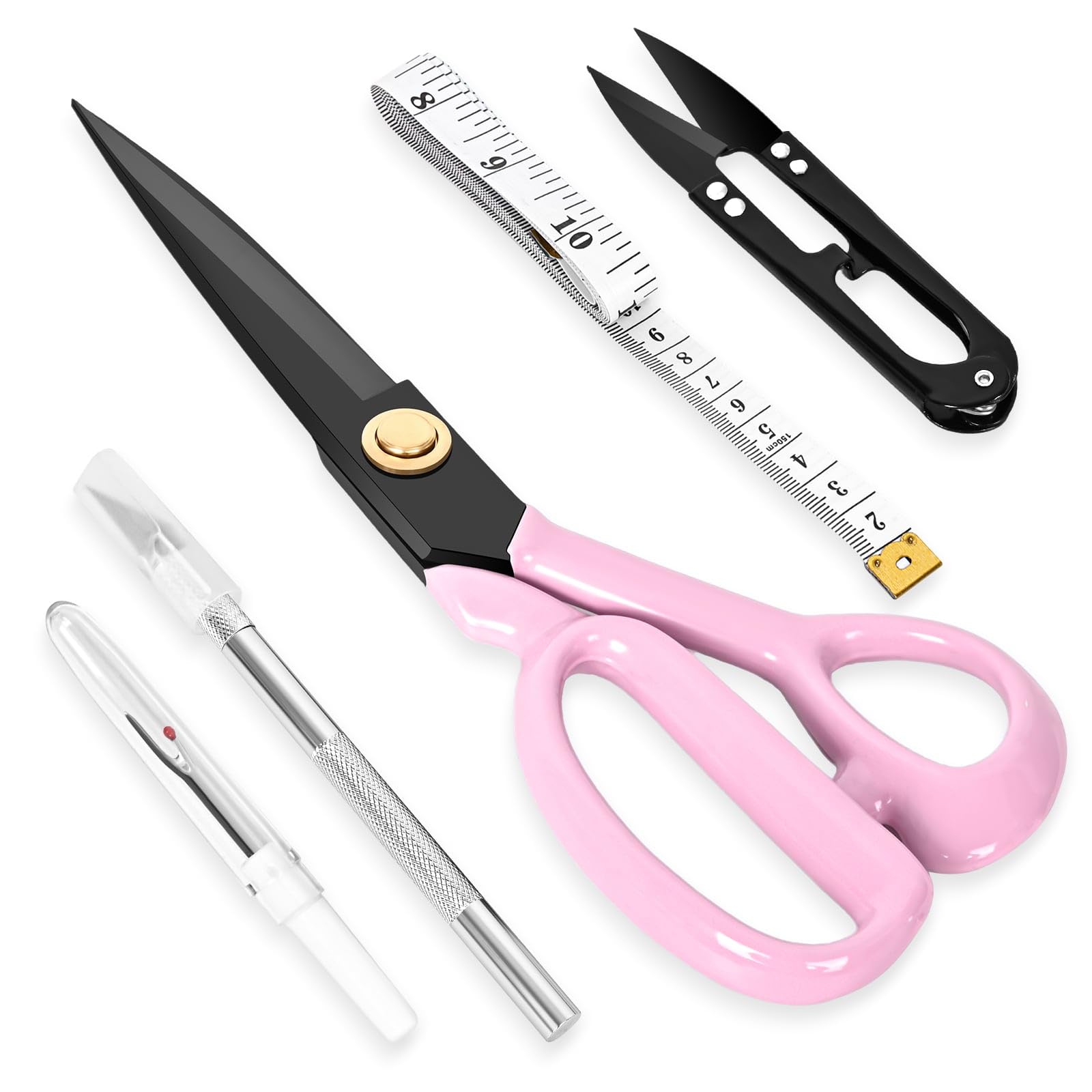
The KNPXSET tailor scissors deliver exactly what serious sewers and quilters demand: razor-sharp high-carbon steel blades that slice through denim, canvas, and multiple layers of cotton without snagging or fraying. The 10-inch blade length provides ample leverage for long straight cuts, while the hardened and tempered steel ensures the edge stays sharp through dozens of projects. Users consistently report that the heft and balance make straight lines feel effortless.
The comfort-grip rubberized handles cushion the hand during extended cutting sessions, which matters when you are trimming pattern pieces for hours. The scissors arrive lightly oiled — a sign of proper manufacturing care — and the included measuring tape is a thoughtful bonus. Several customers noted the solid metal construction inspires confidence that these shears will outlast cheaper alternatives.
One minor knock: the included plastic sheath is somewhat brittle and prone to cracking. That said, the cutting performance is so strong that the storage issue feels secondary. For anyone doing regular fabric work, this pair offers premium-level performance at a mid-range investment point.
Why it’s great
- High-carbon steel blades hold a sharp edge for extended use
- Rubberized ergonomic grip reduces hand strain during long cutting sessions
- Substantial heft and balance for clean cuts through multiple fabric layers
Good to know
- Included plastic blade cover is fragile and may break
- Blades require occasional oiling to prevent rust
2. Kai 5135 5 1/2-inch Embroidery Scissors

Kai is a name that professional sewers trust, and the 5135 embroidery scissors justify that reputation with every snip. The 2.25-inch hardened stainless steel blades cut with surgical precision — thin enough to slip under thread knots yet strong enough to shear through heavier fabrics. Multiple long-term users report that after two years of daily use, the scissors still cut like new, which is extraordinary for a tool this compact.
The rubberized finger grips are soft and comfortable, fitting small hands especially well while still accommodating larger fingers for detail work. The single-bevel edge is optimized for right-handed users, but the ambidextrous handle shape allows lefties to operate them effectively. The polished finish resists adhesive buildup from tape and glue, a common pain point for paper crafters and collage artists.
If you do embroidery, quilting, or any task requiring millimeter-level accuracy, these shears are the obvious choice. The one trade-off is blade length — at 2.25 inches, they are not suited for cutting long fabric runs or heavy cardboard. They are purpose-built for precision, and they excel at it.
Why it’s great
- Exceptional edge retention — stays sharp after years of frequent use
- Thin, precise blades ideal for thread snipping and detail work
- Soft rubberized grips reduce fatigue during fine motor tasks
Good to know
- Short blade length limits use to precision tasks only
- Not designed for heavy-duty cutting or thick materials
3. Fiskars PowerArc 8″ Shop Shears
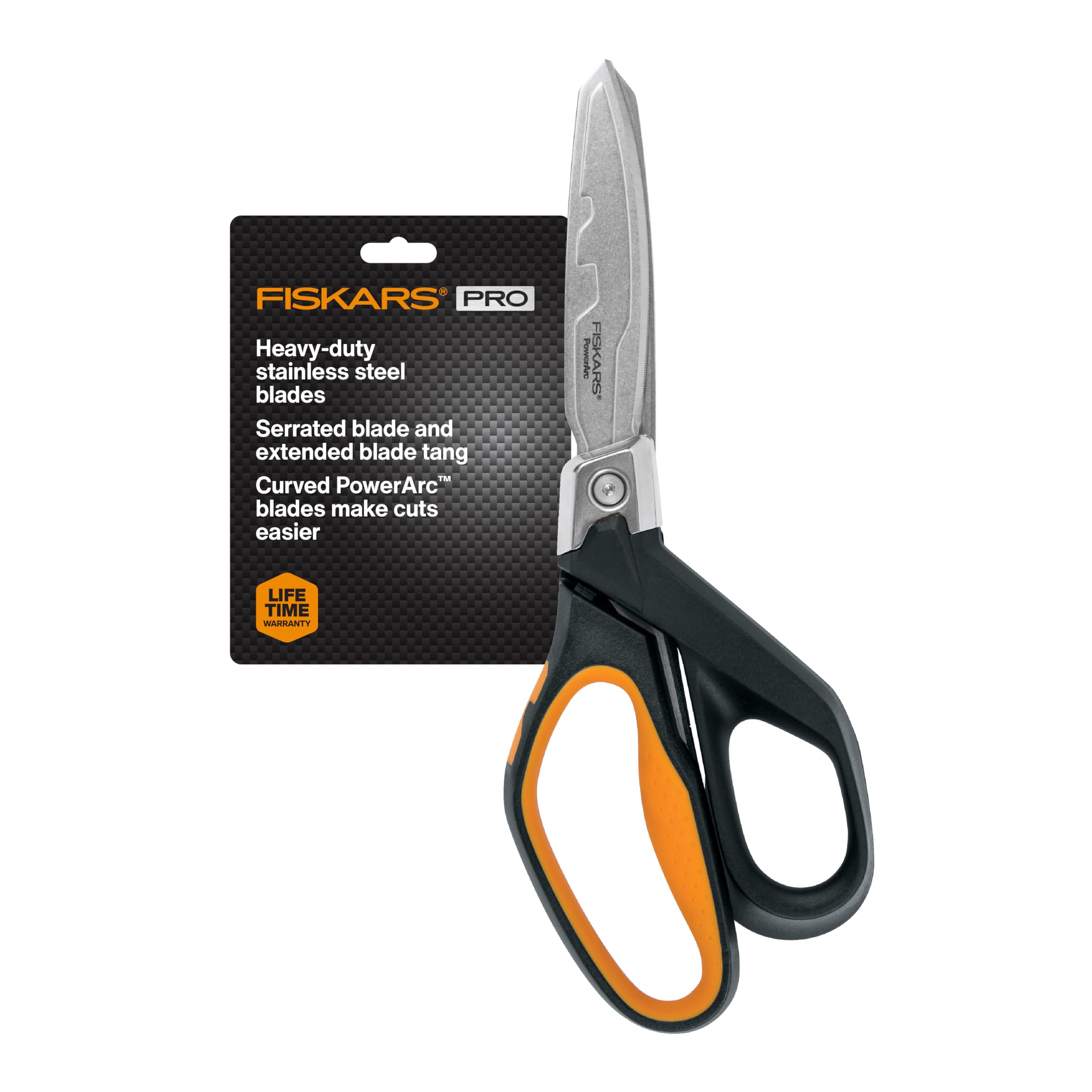
The Fiskars PowerArc shop shears are engineered for the toughest cutting jobs around the workshop and job site. The curved PowerArc blade geometry delivers 30 percent more cutting force compared to standard straight shears, making light work of insulation, Tyvek, duct tape, thick cardboard, and even thin metal zip ties. The serrated edge grips materials aggressively, preventing slip even on smooth surfaces like tar paper.
The comfortable Softgrip handles are generously sized for gloved hands, and the stainless steel blades are rust-proof and wear-resistant. Users consistently praise how smoothly the shears cut through abrasive filter material and how the tip remains accurate enough to snip fine thread when needed. The lifetime warranty from Fiskars adds serious peace of mind for a tool that sees heavy daily abuse.
These are not fabric scissors — the serrated edge will grab and potentially damage delicate cloth. But for construction, hardware, packaging, and any task where brute cutting force is required, the PowerArc shears are the best in class. The only downside is the weight; at 8 inches, they are not compact enough for a pocket or a kitchen drawer.
Why it’s great
- PowerArc curve provides 30 percent more cutting force with less effort
- Serrated blades grip slippery materials securely
- Lifetime warranty backs the build quality
Good to know
- Serrated edge can snag delicate fabrics
- Larger size is less portable for everyday carry
4. Stedi Heavy Duty 8-Inch Multipurpose Scissors

The Stedi heavy duty scissors occupy a sweet spot between utility strength and everyday versatility. The 8-inch stainless steel blades are ground and hardened with a polished finish, and the serrated inner edge provides excellent grip on materials like cardboard, carpet, leather, and thin wires. The oversized handle loops accommodate thick work gloves comfortably, and the ambidextrous design works for both left and right hands.
One standout feature is the integrated bottle opener built into the handle, along with a clip designed for wire cutting. The included snap-on protective cover is robust and stays secure during storage, addressing a common weak point on other models. Users consistently note that the scissors cut through thick materials with no blade separation or binding, and the weight feels substantial without being overly heavy.
The serrated inner edge is excellent for gripping materials, but it can grab and pull fabric if you are not careful to position the cloth at the blade tip. For mixed-use scenarios — opening boxes, cutting carpet, trimming leather — these shears offer strong value. They lack the refined edge of dedicated fabric shears, but their versatility makes them a solid addition to any toolbox.
Why it’s great
- Serrated edge grips tough materials and prevents slip
- Oversized handles fit gloved hands comfortably
- Integrated bottle opener and wire notch add utility
Good to know
- Serrated inner edge can snag delicate fabrics during cloth cutting
- Long-term edge retention on stainless steel is moderate
5. Kershaw Taskmaster Shears

The Kershaw Taskmaster shears redefine what a pair of scissors can do. The dual-blade system pairs one serrated blade for cutting through fibrous materials like poultry bones and herb stems with one plain blade for precision slicing. The blades separate easily for thorough cleaning, which is essential for kitchen use. Built-in tools — including a nutcracker, jar opener, bottle opener, lid lifter, bone notch, and dual screwdriver tips — turn these shears into a full multi-tool that lives in the kitchen drawer.
The glass-filled nylon handles are textured for a non-slip grip, and the stainless steel construction resists rust and staining. Users who trim poultry and meats regularly report that the leverage and sharpness make the Taskmaster safer and faster than using a chef’s knife. The screwdriver tips molded into the handle are a clever addition, though some users find them less comfortable during extended use.
At a higher investment point, the Taskmaster justifies its cost through build quality and versatility that cheaper multi-tools cannot match. The one downside: the large finger loops may feel slightly oversized for smaller hands. If you want one tool that handles kitchen prep, package opening, and light hardware tasks without switching tools, this is the pair to buy.
Why it’s great
- Dual blade design handles both tough fibrous materials and precision cuts
- Separates fully for easy cleaning and maintenance
- Integrated tools replace multiple kitchen gadgets
Good to know
- Large finger holes may feel loose for smaller hands
- Integrated screwdrivers add extra bulk to the handle
FAQ
How often should I sharpen my cutting scissors?
Can I use fabric scissors on paper or cardboard?
What does the Rockwell hardness rating mean for scissors?
Are left-handed scissors really necessary?
Final Thoughts: The Verdict
For most users, the best cutting scissors winner is the KNPXSET Professional Tailor Scissors because they combine high-carbon steel sharpness, ergonomic comfort, and versatile fabric-cutting capability at a mid-range investment point. If you need microscopic precision for embroidery and detail work, grab the Kai 5135 Embroidery Scissors. And for heavy utility tasks from construction to kitchen prep, nothing beats the brute efficiency of the Fiskars PowerArc Shop Shears.

Mo Maruf
I created WellFizz to bridge the gap between vague wellness advice and actionable solutions. My mission is simple: to decode the research and give you practical tools you can actually use.
Beyond the data, I am a passionate traveler. I believe that stepping away from the screen to explore new environments is essential for mental clarity and physical vitality.