Our readers keep the lights on and my smoothie glass nicely filled. As an Amazon Associate, I earn from qualifying purchases.
Pushing a drill bit or tap through stainless steel, titanium, or even mild steel often ends the same way — a snapped tool, a galled thread, or a workpiece ruined by heat. The right fluid changes that equation entirely, reducing friction, carrying away heat, and extending tool life by multiples. Choosing the wrong one, however, can leave you with smoke, stink, and a mess that takes nearly as long to clean as the cut itself.
I’m Mohammad Maruf — the founder and writer behind WellFizz. I’ve spent hundreds of hours analyzing cutting oil formulations, combing through user feedback on tool wear and odor, and cross-referencing viscosity ratings with real-world performance across ferrous and non-ferrous metals.
Whether you are threading pipe, tapping a die, or drilling a clean hole in hardened steel, finding the right lubricant is critical. This guide breaks down five top-tier options to help you pick the best cutting oil for your specific shop needs and material challenges.
How To Choose The Best Cutting Oil
Cutting oils are not one-size-fits-all. The right choice depends on the metal, the operation (drilling vs tapping vs threading), and your tolerance for cleanup. Focus on three areas — form, viscosity, and safety labeling — to avoid smoke, mess, and frequent tool changes.
Form: Oil, Gel, or Water-Based
Traditional oil-based fluids provide the best extreme-pressure lubrication for heavy cuts on tough alloys like stainless and titanium. Gels, often made with beeswax or thickeners, stay put on vertical surfaces and deep holes, reducing drip and waste. Water-based compounds are non-hazardous, smoke-free, and wipe off cleanly, making them ideal for lighter work and environments where fume extraction is limited.
Viscosity and Application Method
Thin oils penetrate tight clearances and flood the cut zone easily, while thicker gels cling to taps and drills for deep-hole work. Squeeze bottles with precision tips offer controlled delivery; aerosol cans provide even coverage on large tools. For operations that generate high heat, a lower-viscosity fluid that flows and cools is better than a thick paste that may burn off.
Health and Regulatory Factors
Chlorinated paraffins boost extreme-pressure performance but complicate disposal and may require special labeling. Many modern formulations are chlorine-free, PCB-free, and low-odor, which simplifies waste management and improves air quality in small shops. Anti-mist formulations further reduce airborne particulate, keeping your breathing zone cleaner.
Quick Comparison
On smaller screens, swipe sideways to see the full table.
| Model | Category | Best For | Key Spec | Amazon |
|---|---|---|---|---|
| TapMagic EP-Xtra | Oil | Multi-metal drilling & tapping | SAE 30 viscosity, 16 oz | Amazon |
| Lubri-Cut Gel | Gel | Deep-hole tapping & vertical work | Beeswax-based, 2 oz tube | Amazon |
| RIDGID Dark Thread Oil | Oil | Pipe threading & heavy cutting | 1 gallon, 10W-30, low-odor | Amazon |
| Relton Rapid Tap | Oil | General shop cutting & threading | 16 oz, anti-mist | Amazon |
| Anchorlube All-Purpose | Water-Based | Non-hazardous, easy-clean projects | 8 oz, water-based, smokeless | Amazon |
In‑Depth Reviews
1. TapMagic EP-Xtra Cutting Fluid
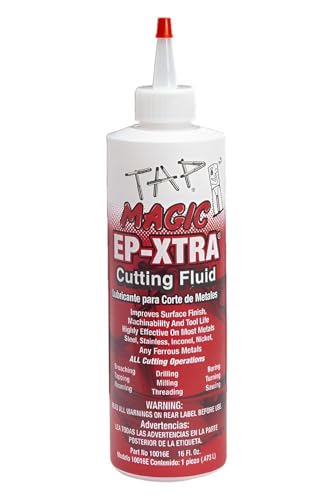
TapMagic has been an industry standard since 1953, and the EP-Xtra formulation justifies that legacy with reliable performance across mild steel, stainless, aluminum, titanium, and even Inconel. The SAE 30 viscosity provides excellent cling without being so thick that it fails to penetrate tight tapping clearances. Users consistently report cleaner threads and noticeably less tool chatter compared to generic fluids.
The 16-ounce squeeze bottle with a precision tip allows controlled application directly to the cut zone, which reduces waste compared to aerosol or brush-on methods. It performs equally well on drilling, tapping, and milling operations, making it a versatile single-bottle solution for job shops and home machinists alike. The fluid stays effective at the cut interface without smoking off prematurely.
While the odor is present during heavy cuts, it is significantly milder than many petroleum-based alternatives. Several long-term reviewers note that a little goes a long way, and the bottle lasts through many projects. For anyone needing one fluid that handles most metals without guesswork, this is the benchmark.
Why it’s great
- Works on all common metals including stainless and titanium
- Precision-tip bottle enables clean, low-waste application
- Decades of proven formulation with consistent results
Good to know
- Not water-based, so cleanup requires solvent or degreaser
- Stronger odor than gel or water-based alternatives
2. Lubri-Cut Drilling and Tapping Gel
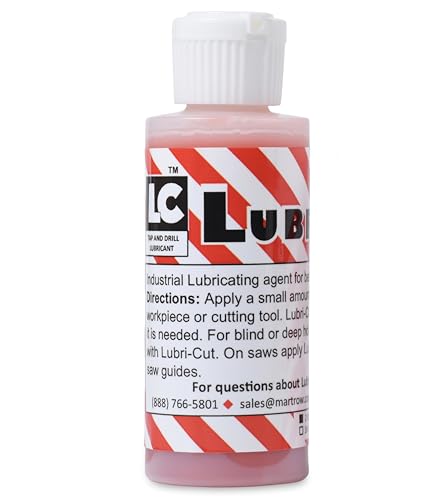
Lubri-Cut takes a different approach by using beeswax as its base, creating a gel that stays exactly where you put it — a major advantage for overhead drilling, deep-hole tapping, and vertical milling operations where thin oil would simply run off. The flip-top tube allows precise placement directly on the tap or drill point without overspray or dripping.
The gel formulation reduces mess significantly compared to traditional liquid cutting oils. It clings to flutes and cutting edges, providing lubrication exactly where friction builds up. Users working on stainless steel and other tough alloys report that the gel stays effective longer because it does not spin away from the cut zone. The low odor and anti-misting characteristics make it shop-friendly.
One caveat: the thick gel may require thinning with a few drops of mineral oil if stored in cooler conditions, as it can become too stiff to dispense easily. The 2-ounce tube is compact, which is handy for a toolbox but means heavy users will repurchase frequently. For precision work where oil dripping is a problem, this gel is a clean solution.
Why it’s great
- Gel stays on vertical surfaces and in deep holes without dripping
- Beeswax base produces very low odor during cutting
- Precise application eliminates waste and overspray
Good to know
- Small 2-ounce tube may not last for large jobs
- Can thicken in cold weather and require thinning to dispense
3. RIDGID 70830 Dark Thread Cutting Oil

RIDGID engineered this oil specifically for pipe threading and heavy cutting operations where heat buildup is the primary enemy of tool life. The 10W-30 viscosity grade is optimized to flow into thread-cutting dies while maintaining a robust lubricating film that reduces torque requirements. Users running threading machines report noticeably cooler dies and cleaner thread forms compared to lighter general-purpose oils.
The formulation is free of chlorine, halogens, PCBs, and heavy metals, which simplifies disposal and eliminates special labeling requirements. The low-odor, anti-mist design keeps the work environment more breathable, which matters in shops where threading operations run continuously. The one-gallon container provides excellent value per ounce for frequent threaders and machine shops.
Because it is a darker oil, it can stain light-colored shop rags and clothing, and cleanup requires a solvent or heavy-duty degreaser. It is not ideal for light drilling or tapping of small parts where a lower-viscosity fluid would penetrate better. For dedicated threading work on steel and iron pipes, however, this oil delivers exactly what the job demands.
Why it’s great
- Specifically formulated for pipe threading with reduced torque
- Anti-mist and low-odor for a healthier shop environment
- Chlorine and heavy-metal free for safer disposal
Good to know
- Dark color can stain tools and work surfaces
- Not ideal for fine drilling or tapping of small parts
4. Relton Rapid Tap Heavy Duty Cutting Fluid

Relton Rapid Tap has earned a loyal following among machinists for its no-nonsense performance on tough materials like stainless steel and cast iron. The thin liquid penetrates quickly into tight clearances, making it especially effective for hand tapping and reaming operations where fluid access is restricted. Users consistently note that a small amount goes a long way toward reducing tool wear.
The anti-mist formulation is a practical addition for shops without dedicated coolant systems — it keeps airborne oil particles low, reducing inhalation risks and keeping the workbench less slippery. The 176 degrees Celsius flash point means it stands up to heavy cutting without smoking or catching fire. It works equally well as a cutting fluid and as a tapping lubricant, covering most manual machining tasks competently.
Because the fluid is thin, it does not cling to vertical surfaces as well as gel or high-viscosity oils. For downward-facing operations on a drill press, this is fine, but for overhead work, expect some drip. The 16-ounce bottle is a practical size that balances cost per ounce against shelf life, making it a solid choice for the home shop or job box.
Why it’s great
- Low viscosity penetrates tight clearances quickly
- Anti-mist formulation improves air quality
- High flash point resists smoking during heavy cuts
Good to know
- Thin fluid does not cling well to vertical surfaces
- Not water-based, requires solvent for cleanup
5. Anchorlube All-Purpose Metalworking Compound

Anchorlube breaks from tradition with a water-based formula that eliminates smoke, hazardous labeling, and messy cleanup. It is non-toxic and wipes off with a damp rag, making it ideal for environments where oil mist and residue are unacceptable — think in-kitchen repairs, electronics-adjacent work, or small hobby shops without proper ventilation. Users report effective performance on stainless steel drilling and even ceramic cutting.
The compound speeds up drilling and keeps bits noticeably sharper than running dry, though it does not match the extreme-pressure performance of heavy oil-based fluids on aggressive threading or deep-hole work. It performs best on lighter cuts, hand tapping, and general drilling where cooling and chip evacuation are the primary needs. The smokeless operation is a genuine advantage for indoor use.
The 8-ounce bottle is compact but sufficient for intermittent use. A few users note that the water base evaporates faster than oil under heavy cutting heat, so reapplication is more frequent. For those prioritizing workplace safety, easy cleanup, and low odor, this is the most practical choice in the lineup, especially for mixed-material work that includes non-metals.
Why it’s great
- Non-hazardous, water-based formula with no smoke
- Wipes off cleanly with water, no solvent needed
- Works on metals and even ceramic materials
Good to know
- Evaporates faster than oil under heavy cutting loads
- Not suited for extreme-pressure threading operations
FAQ
Can I use the same cutting oil for aluminum and stainless steel?
Why would I choose a gel cutting fluid over liquid oil?
Is water-based cutting oil as effective as petroleum-based oil?
Final Thoughts: The Verdict
For most users, the best cutting oil winner is the TapMagic EP-Xtra because it handles the widest range of metals and operations from a single bottle, backed by decades of field trust. If you want a gel that stays put for vertical and deep-hole work, grab the Lubri-Cut Gel. And for dedicated pipe threading with minimal odor and easy disposal, nothing beats the RIDGID Dark Thread Cutting Oil.

Mo Maruf
I created WellFizz to bridge the gap between vague wellness advice and actionable solutions. My mission is simple: to decode the research and give you practical tools you can actually use.
Beyond the data, I am a passionate traveler. I believe that stepping away from the screen to explore new environments is essential for mental clarity and physical vitality.