Our readers keep the lights on and my smoothie glass nicely filled. As an Amazon Associate, I earn from qualifying purchases.
A cutting mat that warps, dulls your blade, or shifts mid-cut turns every quilting session into a battle against imprecision. Between managing fabric yardage, squaring blocks, and trimming half-square triangles, a mat that doesn’t lie flat or heal itself costs you time, material, and accuracy. The right surface makes the difference between fighting a pattern and flowing through it.
I’m Mohammad Maruf — the founder and writer behind WellFizz. This guide is built from weeks of cross-referencing material densities, rotation mechanisms, grid-line precision, and self-healing chemistries across the most popular mats on the market right now.
After comparing surface durability, rotation smoothness, non-slip grip, and grid readability, these recommendations represent the definitive best cutting mat for quilting choices available today for any workspace or budget.
How To Choose The Best Cutting Mat For Quilting
Picking a cutting mat isn’t just about size — it’s about matching the surface material, rotation features, and grid layout to the specific quilting work you do most. Here’s what separates a mat that lasts years from one that curls, slips, or clouds over after a few sessions.
Surface Material & Self-Healing Quality
The core material — either multi-layer PVC or high-density polypropylene — dictates how well the mat reseals after each cut. Higher-density PVC usually offers deeper self-healing, meaning no permanent groove lines that catch your fabric or snag your blade. Polypropylene mats are lighter and often phthalate-free, but may not close as deeply behind a sharp rotary cutter.
Rotation vs. Stationary Design
Rotating mats let you spin the fabric rather than walking around the table, which saves wrist strain and speeds up repetitive cuts like trimming half-square triangles. The critical factor is the locking mechanism — without a lock, the mat may drift during long straight cuts. Stationary mats are simpler, cheaper per square inch, and better for large yardage where you want a static grid reference.
Grid Lines & Measurement Features
Beyond basic inch grids, look for mats that include 30°, 45°, and 60° bias lines if you cut triangles or diamonds regularly. Double-sided printing doubles the usable life of the mat. Anti-glare surfaces (like anthracite gray) reduce eye strain under bright task lighting, while more saturated colors can create visual noise against patterned fabric.
Size, Flatness, and Storage
Large mats (24″ x 36″) let you cut full fabric widths in one pass but require dedicated table space or flat storage — rolling them damages the self-healing layer. Smaller mats (12″ x 12″ or 14″ x 14″) are portable for classes and retreats but may force you to reposition yardage. Always store mats flat, never rolled face-in.
Quick Comparison
On smaller screens, swipe sideways to see the full table.
| Model | Category | Best For | Key Spec | Amazon |
|---|---|---|---|---|
| Omnigrid 2105 Foldaway Station | Portable Station | Travel & small-space pressing | Side-by-side ironing + cutting surfaces | Amazon |
| oliso MultiMat Wool Pad | Pressing Pad | Crisp seam pressing near machine | 0.5″ thick 100% New Zealand wool | Amazon |
| Sue Daley Designs Rotating Mat | Rotating Mat | English paper piecing & small block work | 10″ diameter, 360° smooth rotation | Amazon |
| Idemeet Premium A1 Mat | Large Stationary | Full-yard cutting with professional grids | 24″ x 36″, 5-ply PVC, double-sided | Amazon |
| Madam Sew Rotating Mat | Rotating Mat | Angle cuts & spinning blocks | 12″ x 12″, locking base, bias lines | Amazon |
| Dritz Omnigrid 36WG | Large Stationary | Durable daily cutting in a studio | 24″ x 36″, phthalate-free HDPP | Amazon |
| Fiskars Self-Healing Mat | Large Stationary | Crafting & quilting with bias-angle cutting | 24″ x 36″, lilac, double-sided grid | Amazon |
In‑Depth Reviews
1. Omnigrid 2105 Foldaway Portable Cutting & Pressing Station

This combination unit places an 8.75″ x 11.75″ cutting surface side-by-side with a pressing area, all inside a foldable plastic frame that collapses flat for storage. The cutting side is hard plastic rather than a self-healing PVC mat, so it’s best used with a separate rotary mat on top rather than direct cuts. The pressing side works well for quick block pressing directly at the machine, though the plastic beneath retains heat — users report warping if a hot iron sits too long without a wool or cotton layer.
Customers consistently praise the portability factor, noting it fits inside a standard tote bag for classes and retreats. The size is slightly larger than a sheet of copier paper, making it viable for blocks up to 6.5″ but too small for yardage or larger quilt sections. No chemical odor was reported on opening, and the folding hinge feels robust after repeated use.
This station isn’t a replacement for a full cutting mat — it’s a secondary surface for pressing seams and trimming small pieces when you’re away from your main table. For quilters who teach, travel, or work in tight spaces, the convenience of two dedicated surfaces in one flat unit justifies the small footprint trade-off.
Why it’s great
- Folds compact for travel and storage
- Combines pressing and cutting in one unit
- No odor and sturdy build quality
Good to know
- Cutting surface is hard plastic, not self-healing
- Too small for full fabric yardage
- Pressing surface can warp under high heat
2. oliso MultiMat Wool Pressing Pad – 14″ x 14″

The MultiMat is a 0.5″ thick 100% New Zealand wool pad designed specifically for pressing, not cutting. The dense wool reflects heat back through the fabric, pressing both sides simultaneously for flat, crisp seams. Unlike foam-based ironing pads, this wool construction doesn’t compress over time and maintains a firm surface that holds fabric in place without shifting during pressing. The 14″ x 14″ size is intentionally compact for machine-side use, and the included ProPress silicone links let you connect multiple mats into a larger custom layout.
User feedback highlights the heat reflection as the standout feature — seams set flatter with fewer passes compared to standard ironing boards. The natural wool fiber has no synthetic smell, and the pad lies flat immediately out of the packaging. A few users noted that the surface is not suitable for direct rotary cutting (it’s a pressing pad, not a cutting mat), and the connecting tabs work well but require purchasing additional mats for significant expansion.
This pad is a dedicated pressing solution for quilters who want a stable, portable ironing surface next to their machine. The modularity makes it scalable, but the core value is the wool’s heat-reflective performance that delivers professional seam pressing without a full ironing board.
Why it’s great
- Thick wool presses seams flat from both sides
- Links together for a custom pressing surface
- Firm surface prevents fabric shift
Good to know
- Not designed for cutting — pressing only
- Small size requires multiple pads for large projects
- Higher initial cost per square inch
3. Sue Daley Designs Pink 10″ Rotating Cutting Mat

This 10-inch diameter rotating cutting mat from Sue Daley uses a new 360° rotation mechanism that moves smoothly under fingertip pressure without wobble. The pink self-healing surface includes printed 1″ and 1/4″ grid lines, and the non-slip rubber backing keeps the base locked to the table even when the top is spinning. The material is thicker than typical PVC-based rotating mats, which helps prevent flexing during rotary cuts and supports clean self-healing on small piecework and paper piecing shapes.
Reviews consistently praise the stability — the base doesn’t lift or slide during rotation, and the mat doesn’t warp or develop a wobble even after extensive use. The 10″ size hits a sweet spot: large enough for trimming blocks and hexies, small enough to tuck into a project bag. A few users noted the grid lines are printed on the surface rather than embedded, but the clarity is high and the pink background helps white fabric stand out for precise cutting.
For quilters focused on English paper piecing, small block construction, or any project requiring frequent fabric rotation, this mat provides the smoothest spin-to-lock performance in its size class. The durability of the rotation mechanism and the quality of the self-healing surface make it a long-term investment in cutting accuracy.
Why it’s great
- Smooth, wobble-free 360° rotation
- Thick, durable self-healing surface
- Non-slip base keeps table stable
Good to know
- Limited to 10″ diameter — small projects only
- Grid lines are printed, not embedded
- Pink color may not suit all workspaces
4. Idemeet Premium 24″ x 36″ Self Healing Sewing Mat
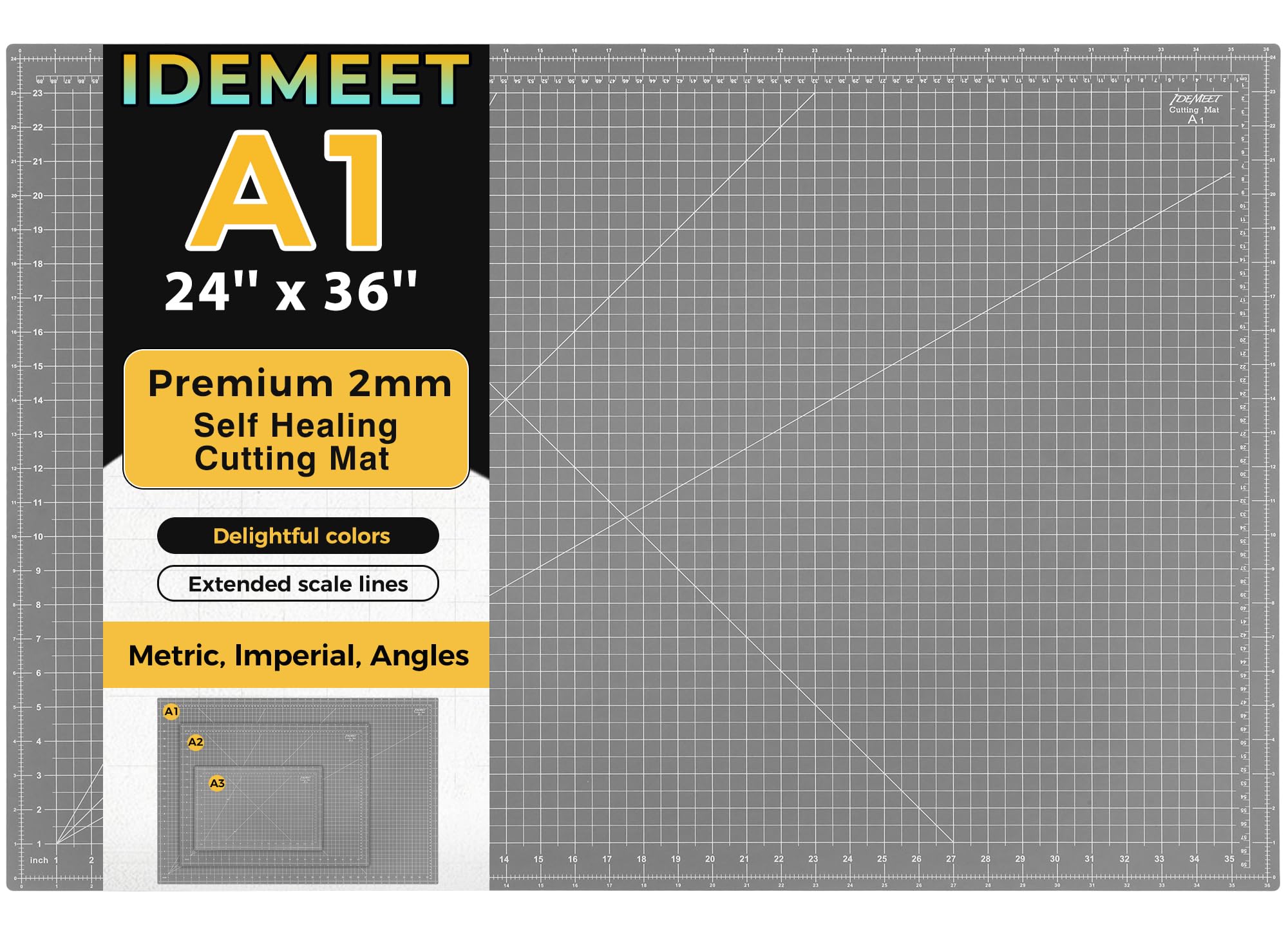
The Idemeet A1 mat delivers 24″ x 36″ of cutting surface in a 5-ply PVC construction that reseals cuts effectively for extended longevity. The anthracite gray color is a deliberate anti-glare design — it absorbs light rather than reflecting it, reducing eye strain during long cutting sessions. Both sides are printed with grids that include inches, metric, angles, diameter, and curve markings, so you can flip the mat when one side shows wear and gain a fresh set of reference lines.
Users report the mat lies flat immediately with no curling at the edges, and the non-slip embossing grips the table surface without allowing fabric to shift during cutting. The chemical smell on first opening is more noticeable than some competitors, but airing the mat flat for 24-48 hours resolves it completely. A few feedback points noted the grid markings are slightly less visible against the gray background under dim task lights, so pairing with a bright LED lamp maximizes readability.
For the price per square inch, this mat offers the most versatile grid system and the thickest PVC layering among budget-friendly large mats. The double-sided printing essentially doubles the mat’s useful life, and the anti-glare surface is a genuine ergonomic benefit for quilters who spend hours at the cutting table.
Why it’s great
- Large A1 surface for full-yard cuts
- Double-sided printing extends lifespan
- Anti-glare gray reduces eye strain
Good to know
- Noticeable chemical smell at first
- Grid lines less visible in low light
- Not designed for rotating
5. Madam Sew 12″×12″ Rotating Self-Healing Cutting Mat

The Madam Sew 12″ square rotating mat features a locking mechanism that holds the cutting surface stationary for straight rotary cuts, then releases with a click for 360° rotation. The PVC top includes a full inch grid plus 30°, 45°, and 60° bias lines printed directly on the surface, eliminating the need for separate angle rulers when trimming half-square triangles or diamond shapes. The non-slip rubber base grips the table, and the self-healing layer closes behind the blade without leaving permanent marks.
Customer reviews consistently praise the locking mechanism as a game-changer — earlier rotating mats without locks tended to drift during long cuts, causing misalignment. The 12″ size accommodates larger blocks than the 10″ rotating mats while still being handheld for repositioning. Some users reported a slight bump or ridge when cutting directly over the center rotation point, though most noted this doesn’t affect the cut since the blade passes across the fabric, not the mechanism. Delivery bending occurred for a few customers, but flattening under weight resolved the issue.
This mat is ideal for quilters who cut a high volume of bias-angle pieces and want the convenience of rotation without sacrificing the stability needed for precise straight cuts. The lock-and-release design bridges the gap between a full-size stationary mat and a small rotating surface.
Why it’s great
- Locking mechanism prevents drift during straight cuts
- Bias angle lines for HSTs and diamonds
- Self-healing surface holds up to heavy use
Good to know
- Slight bump over center rotation point
- May arrive with bent corners in transit
- 12″ limits large fabric yardage
6. Dritz Omnigrid Gridded Mat, 24″ x 36″

The Dritz Omnigrid 36WG is a 24″ x 36″ cutting mat made from phthalate-free high-density polypropylene, manufactured in Japan. Unlike most PVC mats, this HDPP construction doesn’t contain plasticizers that can off-gas over time, making it a cleaner choice for indoor sewing studios. The surface features precise printed grid lines on one side (users wish both sides were printed) and the material’s density provides a smooth cutting feel that doesn’t dull rotary blades as quickly as some softer mats.
Experienced quilters who have tried multiple brands consistently rate Dritz Omnigrid as having superior self-healing characteristics — cuts close cleanly without leaving raised edges or grooves that catch future fabric. The mat lies exceptionally flat without curling, even after months of daily use, and the green color provides good contrast against most fabric colors without causing glare. A few users noted the grid is printed on only one side, so flipping for extended life isn’t an option, but the single-sided durability is high enough that most users replace it only after years of heavy use.
This mat is the benchmark for stationary large-format cutting among quilters who prioritize material purity and long-term flatness over extra features like rotation or double-sided grids. The HDPP material is a genuine differentiator for those concerned about PVC off-gassing in their workspace.
Why it’s great
- Phthalate-free HDPP material is cleaner than PVC
- Superior self-healing with no raised edges
- Stays flat without curling over time
Good to know
- Grid printed on only one side
- Heavier than PVC mats of same size
- Premium price point
7. Fiskars Self Healing Cutting Mat, 24″ x 36″ Lilac
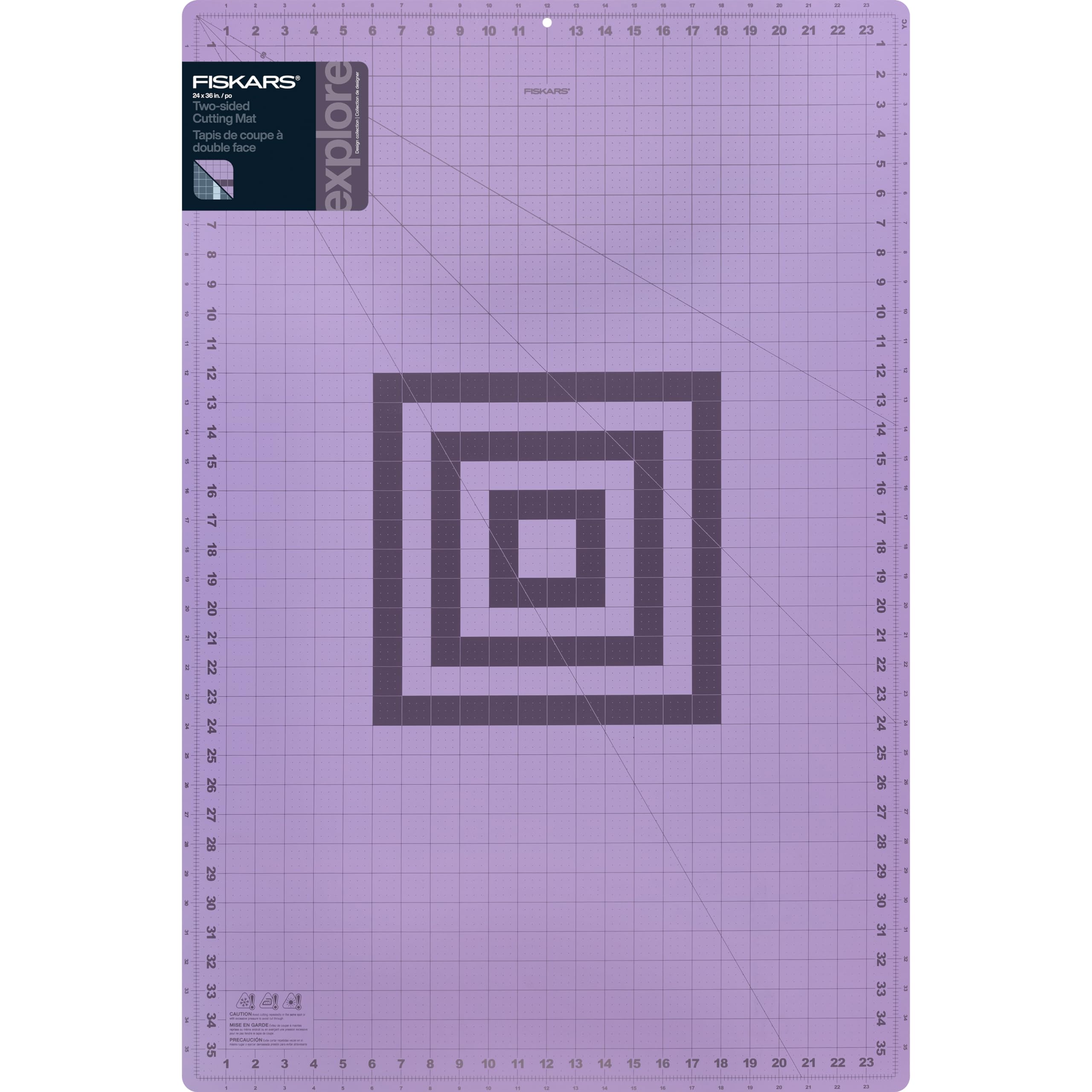
Fiskars brings their brand reputation to a 24″ x 36″ double-sided cutting mat in a distinctive lilac color that avoids the visual monotony of standard gray or green mats. The polypropylene construction is thinner than many PVC mats (approximately 0.06″ thick), which makes it lightweight and easy to hang on a wall for storage — a practical feature for small studios. Both sides feature printed grids with 30°, 45°, and 60° bias lines, and the self-healing surface performs well under regular rotary cutter pressure.
Customers specifically praise the packaging: the mat arrives unrolled and flat in a sturdy box, eliminating the frustration of flattening a curled mat. The double-sided printing is a genuine longevity feature — when one side shows cut marks, flipping reveals a fresh surface. The thin profile means the mat flexes more than thicker PVC alternatives, which some users prefer for portability and others find less stable for heavy-pressure cuts. Chemical odor is minimal compared to many PVC mats, and the soft color doesn’t produce glare under task lighting.
This mat is best suited for quilters who want a lightweight, double-sided surface for general crafting and quilting, particularly those who need to store the mat vertically or move it between workspaces. The Fiskars reliability and user-friendly design make it an accessible entry point into large-format cutting.
Why it’s great
- Double-sided printing for extended life
- Arrives flat in a sturdy box
- Lightweight and easy to store vertically
Good to know
- Thinner profile flexes under heavy cuts
- Polypropylene may not self-heal as deeply as PVC
- Lilac color may show dirt over time
FAQ
What thickness is best for a quilting cutting mat?
Can I use a rotating mat for large fabric yardage?
How do I clean and maintain a self-healing cutting mat?
Is there a difference between PVC and polypropylene cutting mats?
Final Thoughts: The Verdict
For most users, the best cutting mat for quilting winner is the Sue Daley Designs 10″ Rotating Mat because it delivers wobble-free 360° rotation with a durable self-healing surface, making it ideal for the small-block cutting and precision work that defines modern quilting. If you need a large stationary mat for full-yard cuts, grab the Idemeet Premium A1 for its double-sided anti-glare surface and excellent value. And for quilters who want a clean, phthalate-free option that stays flat for years, nothing beats the Dritz Omnigrid 36WG.

Mo Maruf
I created WellFizz to bridge the gap between vague wellness advice and actionable solutions. My mission is simple: to decode the research and give you practical tools you can actually use.
Beyond the data, I am a passionate traveler. I believe that stepping away from the screen to explore new environments is essential for mental clarity and physical vitality.