Our readers keep the lights on and my smoothie glass nicely filled. As an Amazon Associate, I earn from qualifying purchases.
That razor-sharp line between your wall color and ceiling white — the line that screams “professional” — is the single hardest detail for DIY painters to nail. Without the right angled sash brush, most painters rely on blue tape for every edge, doubling their prep time and still risking bleed-through. A dedicated cutting-in brush changes that equation entirely, delivering crisp borders on trim, corners, and ceilings with a single steady hand.
I’m Mohammad Maruf — the founder and writer behind WellFizz. I’ve spent countless hours dissecting brush geometry, bristle blends, and handle ergonomics to separate high-precision tools from the ones that leave jagged edges on your crown molding.
Whether you are a professional painter or a weekend DIYer, the best cutting in paint brush saves hours of tedious taping and produces sharp, clean lines that elevate any room.
How To Choose The Best Cutting In Paint Brush
A cutting-in brush is not just a smaller paintbrush. Its angled ferrule, bristle density, and tip flagging determine whether you paint a crisp line or waste time fixing mistakes. Prioritize these four factors when selecting your next trim brush.
Bristle Material and Flagging
Nylon holds its stiffness and bounces back after each stroke, perfect for water-based latex paints. Polyester is softer and absorbs more paint, ideal for oil-based coatings. A blend of both gives you durability with excellent paint pickup. Flagged bristles — split ends on the tips — fan out microscopically to deposit paint exactly at the edge without bleeding under tape or into the ceiling texture.
Angled Ferrule and Brush Width
An angled sash brush allows you to orient the flat edge parallel to the wall while the handle tilts away, keeping your knuckles clean. For cutting in ceilings and baseboards, a 2 to 2.5-inch width strikes the best balance between coverage and control. Narrower 1-inch brushes excel at window mullions and intricate woodwork.
Handle Ergonomics
A contoured wooden handle with a laser-etched or textured grip prevents slipping during long painting sessions. Some pro-grade brushes feature a beechwood handle shaped like a knife handle, allowing your palm to rest naturally for extended precision work without cramping.
Bristle Density and Shedding Resistance
High-density bristle packs hold more paint in the brush core, reducing the number of dips per pass. They also resist shedding — stray bristles stuck in your finish are a hallmark of cheap brushes. Look for brushes with a reinforced ferrule and synthetic filaments bonded tightly to prevent separation.
Quick Comparison
On smaller screens, swipe sideways to see the full table.
| Model | Category | Best For | Key Spec | Amazon |
|---|---|---|---|---|
| Purdy 3″ Angle Sash Firm | Premium | Sharp lines on textured ceilings | 3″ stiff nylon/polyester blend | Amazon |
| Richard 13400 Elegance Trim | Mid-Range | Tight woodwork and small trim | 3-pack (5/8″, 3/4″, 1″) | Amazon |
| ROLLINGDOG Angled Paint Brush | Mid-Range | Comfort during extended use | 3-pack (1.5″, 2″, 2.5″) | Amazon |
| King Origin 1 Inch Angled | Budget | Detail work and craft projects | 12-pack of 1″ brushes | Amazon |
| Pro Grade 12-Piece Angle | Premium | High-volume professional jobs | 12-pack of 2.5″ brushes | Amazon |
In‑Depth Reviews
1. Purdy 3″ Angle Sash Firm
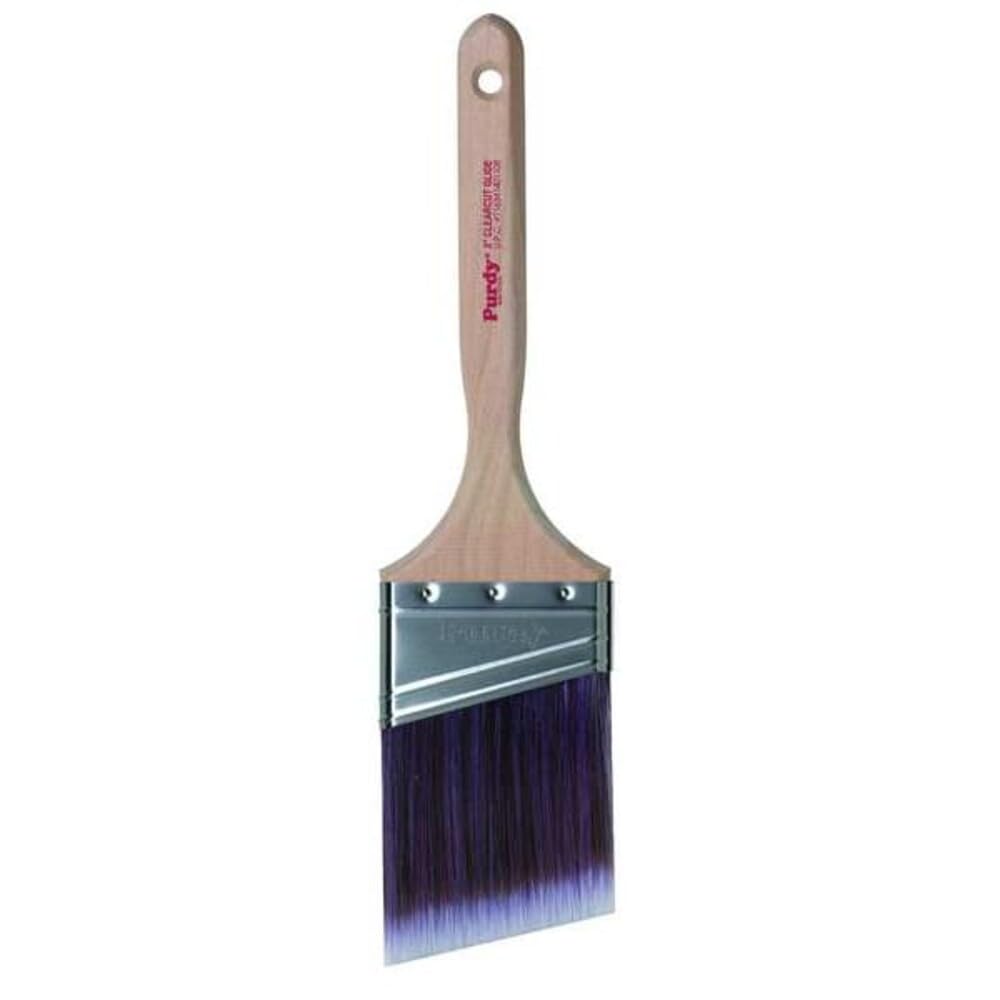
The Purdy 3-inch Angle Sash Firm is the standard that other cutting brushes measure against. Its stiff nylon/polyester blend holds a rigid edge that digs into textured drywall and ceiling popcorn without deflecting, allowing you to produce a cut line within 1/16th of an inch of the surface. Many professionals have relied on this single brush for decades, painting entire house exteriors with just this tool and a roller.
The hardwood fluted handle provides excellent grip feedback — you can feel exactly where the bristle tip contacts the wall. The stiff bristles are particularly effective on rough surfaces, where softer brushes tend to skip and bleed. Users consistently report achieving tapeless results on textured ceilings, a task that frustrates even experienced painters using budget brushes.
This brush is built to last through hundreds of cleanings. The flagged bristles maintain their shape after repeated washes, and the stainless steel ferrule resists rust. It is a premium investment that pays for itself after the first room where you skip the tape roll.
Why it’s great
- Stiff bristles cut razor-sharp lines on textured surfaces without taping
- Long-handled hardwood design offers balanced control for long strokes
- Durable construction survives years of professional use and cleaning
Good to know
- Higher upfront cost compared to multi-pack brushes
- 3-inch width may feel bulky for very narrow window trim
2. Richard 13400 Elegance Trim Paint Brush

The Richard Elegance Trim set comes in a practical 3-pack with 5/8-inch, 3/4-inch, and 1-inch widths, covering every tight spot a full-sized brush cannot reach. The polyester bristles are flagged to a fine taper that excels at cutting in around window mullions, door casings, and crown molding details where millimeter precision matters. The soft grip handle prevents hand cramps during intricate work that requires sustained focus.
Users consistently highlight how these brushes produce clean lines on baseboards and save time compared to taping. The flagged bristles hold a surprising amount of paint for their small size, allowing you to lay down a continuous bead along trim without constant reloading. After cleaning, the bristles return to their original shape with minimal shedding.
One nuance to note: the pack includes a 5/8-inch brush that some experienced painters find too close to the 3/4-inch option. A half-inch brush would add more versatility. Still, the build quality and Hyde manufacturing heritage make this set a reliable choice for detail-oriented painters who value precision over raw coverage speed.
Why it’s great
- Three narrow sizes perfect for intricate woodwork and small edges
- Ergonomic soft grip handle reduces fatigue during detailed trim painting
- No-shed polyester bristles hold shape after repeated use
Good to know
- 5/8-inch brush overlaps significantly with the 3/4-inch size
- Narrow bristle width limits use to detail work only
3. ROLLINGDOG Angled Paint Brush

The ROLLINGDOG set includes 1.5-inch, 2-inch, and 2.5-inch angled brushes, a range that covers most interior cutting scenarios from window trim to ceiling edges. The standout feature is the beechwood handle with laser-etched texture — it absorbs sweat and provides a non-slip contact point even when your hands are tired. The knife-handle contour fits naturally into the palm, reducing the grip strength required for precise strokes.
The bristle blend is 30% PBT and 70% PET, a combination that offers good stiffness for latex paints while maintaining flexibility for smooth release. Users note that these brushes clean up easily and hold their shape after washing, with no noticeable shedding. The angled cutting head aligns naturally with the wall surface, making it intuitive for both experienced painters and DIY newcomers.
A few users mention that the handle length feels shorter than traditional sash brushes, which could be a preference issue for painters who like a longer reach. Additionally, some professionals found it less comfortable than their usual Purdy tool. For the mid-range price, however, the ROLLINGDOG delivers a comfortable, high-performance cutting experience that rivals more expensive brands.
Why it’s great
- Laser-textured beechwood handle provides excellent grip even with sweaty hands
- Three sizes cover most cutting in and trim scenarios
- Easy to clean with minimal bristle loss
Good to know
- Handle length may feel short for users accustomed to long-handled brushes
- Some professionals find it less comfortable than premium competitors
4. Pro Grade 12-Piece 2.5-Inch Angle Brushes

The Pro Grade 12-pack delivers a dozen 2.5-inch angled brushes at a cost that makes them practically disposable for high-volume pros. The thick synthetic filament blend holds a substantial paint load, reducing the number of trips to the paint bucket. The thinner tip profile at the end of each brush provides better precision for touch-up work and cutting in, while still offering the coverage width needed for baseboards and trim runs.
Professional finishers and contractors praise these brushes for their durability. They resist acetone and mineral spirits during cleaning, and the wooden comfort grip handle does not warp or crack after repeated soaking. Users who refinish furniture for a living report that these brushes become their go-to tools because they withstand repeated use better than many premium single-brushes at a fraction of the per-unit cost.
One practical consideration: the 2.5-inch width is ideal for general trim but too wide for narrow window mullions or detailed crown molding work. You will want a smaller brush from the Richard set or a 1-inch trim brush for those tight spaces. For production painters who leave brushes in water between coats, the low replacement cost is a genuine advantage.
Why it’s great
- Exceptional value with 12 brushes for the price of one premium brush
- Thick synthetic filaments hold ample paint for long, even strokes
- Durable enough for repeated professional use and solvent cleaning
Good to know
- 2.5-inch width is not suitable for very narrow trim or fine detail work
- Wooden handle may not feel as refined as ergonomic designed handles
5. King Origin 1 Inch Angled Paint Brushes
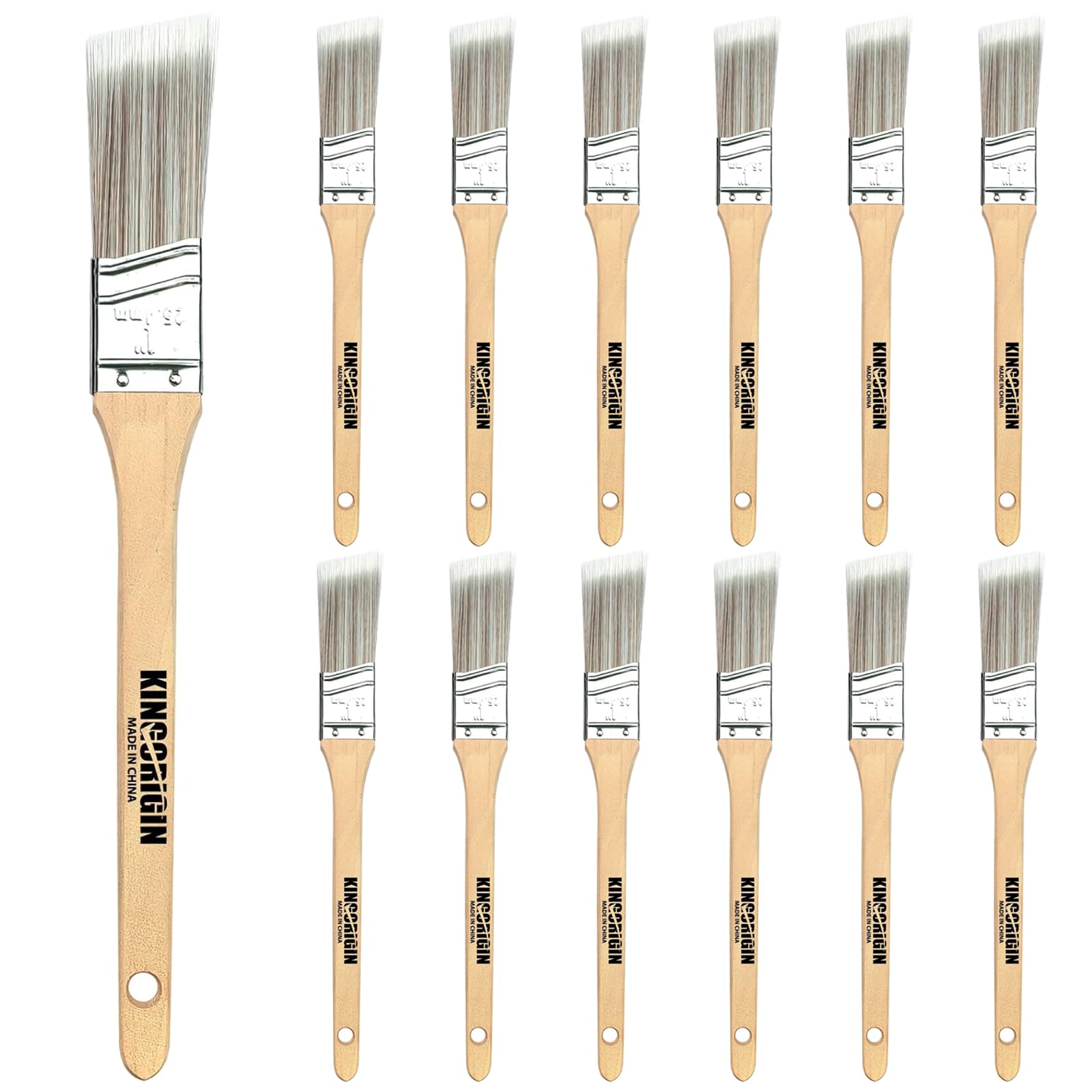
The King Origin set offers twelve 1-inch angled brushes designed primarily for the tightest cutting scenarios: window sash edges, cabinet corners, furniture details, and small craft projects. The ultra-dense soft bristles minimize drips and apply a smooth, even coat on wood, metal, and drywall. The wooden handle provides a secure, non-slip hold suitable for extended sessions where hand fatigue is a concern.
Users have tested these brushes with marine varnish and heavy latex paints, reporting that they perform better than expected given the low per-brush investment. The angled design allows you to work into corners and along edges where a full-size brush would create a mess. The set gives you enough brushes to assign one for each paint type and color without cross-contamination.
The key trade-off is that the 1-inch width limits the brush to detail work only. It is not practical for cutting in a whole ceiling line or painting baseboards across a large room — that requires a 2-inch or wider brush. However, for the price of a single premium brush, you get a dozen dedicated tools that are perfect for intricate edge work and smaller painting tasks.
Why it’s great
- Twelve brushes provide great value and allow color-specific tools
- 1-inch angled size is perfect for tight corners, window frames, and crafts
- Soft dense bristles minimize drips on detailed surfaces
Good to know
- Too narrow for cutting in full ceiling lines or large trim sections
- Bristle quality is comparable to big-box store brands, not premium pro grade
FAQ
What angle is best for cutting in paint brushes?
Can I use a cutting in brush without painter’s tape?
Final Thoughts: The Verdict
For most users, the best cutting in paint brush winner is the Purdy 3″ Angle Sash Firm because its stiff nylon/polyester blend and fluted hardwood handle produce the sharpest, most consistent cut lines on textured ceilings and walls without taping. If you want a precision-focused set for window frames and detailed woodwork, grab the Richard 13400 Elegance Trim. And for high-volume professional jobs where multiple brushes are essential, nothing beats the Pro Grade 12-Piece Angle Brush Set for sheer value and durability on the job site.

Mo Maruf
I created WellFizz to bridge the gap between vague wellness advice and actionable solutions. My mission is simple: to decode the research and give you practical tools you can actually use.
Beyond the data, I am a passionate traveler. I believe that stepping away from the screen to explore new environments is essential for mental clarity and physical vitality.