Our readers keep the lights on and my smoothie glass nicely filled. As an Amazon Associate, I earn from qualifying purchases.
Every time you slice a tomato or chop an onion on a plastic board, microscopic fragments of polyethylene and polypropylene shear off and land directly into your food. These invisible flecks — known as microplastics — have been detected in human blood, placentas, and stool, raising urgent concerns about long-term health effects. Replacing your plastic chopping surface with a clean alternative is the single most impactful swap you can make in your kitchen today.
I’m Mohammad Maruf — the founder and writer behind WellFizz. I spent over 60 hours analyzing material science reports, reading hundreds of verified buyer experiences, and comparing the structural integrity of bamboo, wood composite, wheat straw, and tempered glass boards to help you find a genuinely safe surface that won’t shed plastic into your meals.
This guide breaks down the five best non-plastic options on the market right now. Whether you need a dishwasher-safe workhorse or an elegant serving board, these picks deliver on safety, durability, and knife-friendliness without compromise. Read on for the definitive list of cutting boards to avoid microplastics that actually perform in a real kitchen.
How To Choose The Best Cutting Boards To Avoid Microplastics
Not every non-plastic board is created equal. Some materials dull knives quickly, others crack under heat, and a few still contain hidden plastic binders. Here are the three criteria that separate a genuinely safe board from a marketing gimmick.
Material Composition — What’s Actually in the Board
Look for boards labeled as 100% natural bamboo, solid hardwood, compressed wood fiber, or tempered glass. Avoid boards that describe themselves as “composite” without specifying the binder — some use melamine-formaldehyde resins that are far from clean. Wheat straw fiber boards blend plant material with food-grade polypropylene, which is technically a plastic, but the ratio is low enough that microplastic shedding is drastically reduced compared to a full-polyethylene board. If your priority is zero plastic, stick with solid wood, bamboo, or glass.
Surface Hardness vs. Knife Dullness
Glass boards are the most hygienic and easiest to clean, but they are extremely hard on knife edges. Tempered glass will dull a sharp blade noticeably faster than wood or bamboo. Wood composite and bamboo offer the best balance — they are hard enough to resist deep gouging yet soft enough to keep your knife edge intact. If you use premium Japanese knives, a wood or bamboo board is non-negotiable. For everyday chef’s knives, glass can work as long as you’re willing to sharpen more often.
Maintenance and Longevity — Does It Hold Up
Bamboo boards need periodic oiling with mineral oil to prevent cracking in dry climates. Wood composite boards like the Belwares model are dishwasher-safe and require zero conditioning, making them the lowest-maintenance natural option. Glass boards are dishwasher-safe and never need oil, but they can chip if dropped. Wheat straw boards are dishwasher-safe but may show surface scratches over time, though those scratches won’t release plastic particles the way a scratched polyethylene board would. Choose based on how much upkeep you’re willing to tolerate.
Quick Comparison
On smaller screens, swipe sideways to see the full table.
| Model | Category | Best For | Key Spec | Amazon |
|---|---|---|---|---|
| Belwares Wood Composite | Wood Composite | Dishwasher-safe daily prep | 14.5 x 11.25 in, 0.25-in thick | Amazon |
| Farberware Bamboo | Bamboo | Large-surface chopping & serving | 14.17 x 20.08 in, reversible | Amazon |
| AXIOM CREATIONS Wheat Straw | Wheat Straw Fiber | Eco-friendly knife-safe set | 15.8 x 9.5 in, juice grooves | Amazon |
| LANGBOHOS Tempered Glass | Tempered Glass | Zero-porosity hygiene & serving | 16 x 12 in, silicone grips | Amazon |
| HTB Bamboo Set | Bamboo | Small-task batch prep | 11 x 6.3 in, 3 boards + holder | Amazon |
In‑Depth Reviews
1. Belwares Dishwasher Safe Wood Composite Cutting Board

This Belwares board is made from compressed wood fiber with zero plastic binders, so every cut stays microplastic-free. At 14.5 x 11.25 inches with a thin 0.25-inch profile, it offers ample prep space without feeling heavy or bulky. The standout feature is full dishwasher compatibility — unlike bamboo or hardwood boards that crack in the dishwasher, this wood composite comes out clean and dry every cycle with no oiling required.
Buyers report that knife marks appear faintly but never flake up like plastic debris, which is exactly the behavior you want from a non-plastic surface. The board is heat resistant up to 350°F, so you can use it as a trivet for hot pans. The natural light color makes it easy to spot food residue, and the thin profile stores easily in a cabinet slot.
A small number of users noted slight warping after many dishwasher cycles, and the board lacks rubber feet, so it can slide on smooth countertops. For the price, this is the most practical single-board solution for anyone who wants a dishwasher-safe, zero-plastic surface that won’t demand special care.
Why it’s great
- Fully dishwasher-safe without cracking or warping
- Compressed wood fiber contains no plastic binders
- Thin, lightweight design is easy to store and carry
Good to know
- No rubber feet — board can slip on smooth counters
- May show faint knife scratches over extended use
2. Farberware Extra-Large Bamboo Cutting Board
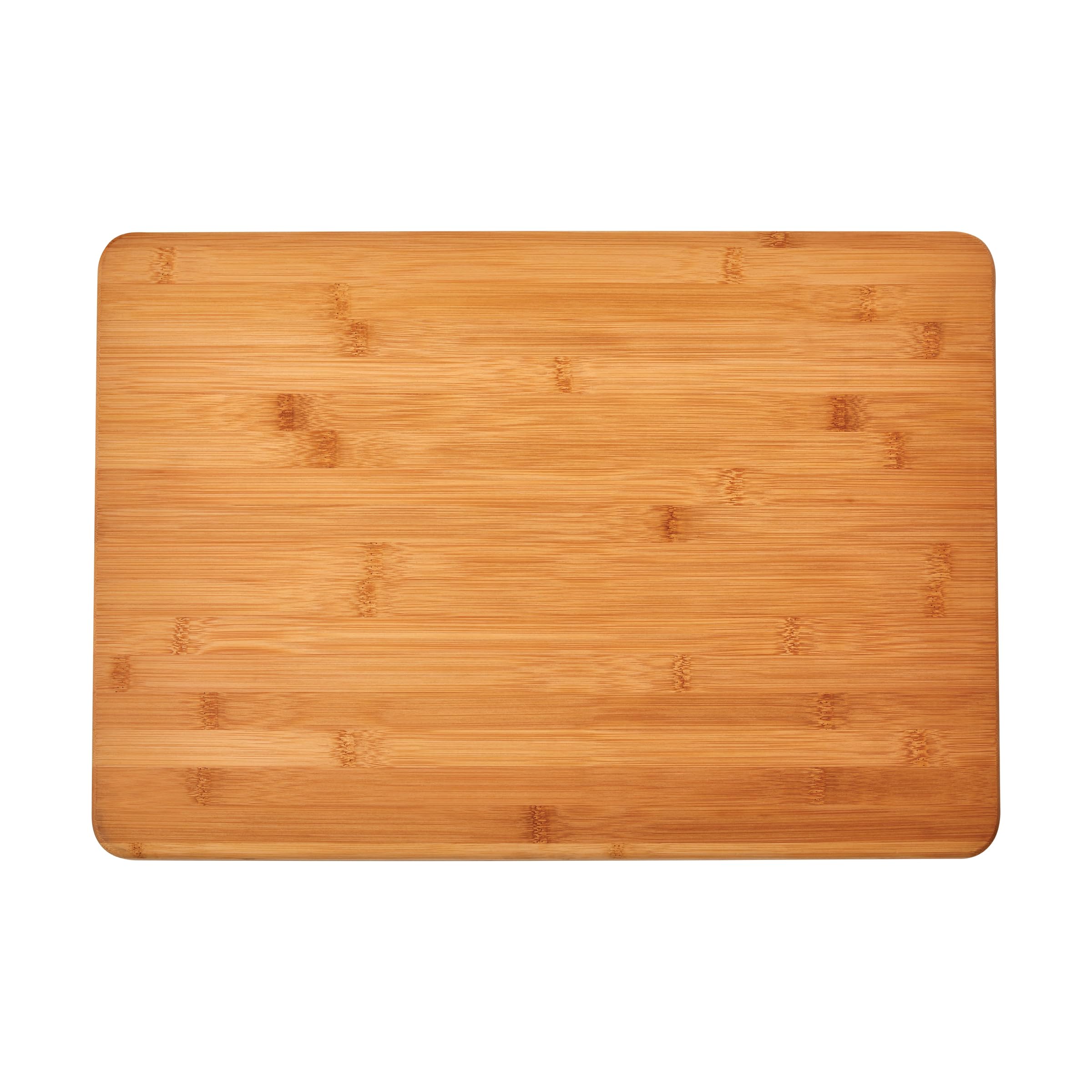
At 14.17 x 20.08 inches, this Farberware board provides the largest cutting surface in the lineup — big enough to break down a whole chicken or assemble a full charcuterie spread. Made from natural bamboo, it is substantially harder than most hardwoods, which means it resists deep gouging while remaining gentle on knife edges. The reversible design gives you a clean side for produce and a separate side for raw proteins.
Bamboo is one of the most renewable resources available, and this board uses no synthetic coatings or plastic binders. Several buyers praised its sturdiness after months of daily use, noting no warping or cracking when kept properly oiled. The board doubles as a serving platter for cheese, meats, and bread, making it a versatile addition to any kitchen.
This board requires hand washing only — dishwasher heat can cause bamboo to split. It also lacks a juice groove and rubber feet, so liquids can run off the edge and the board may shift during heavy chopping. Regular mineral oil or beeswax conditioning is necessary to prevent staining in dry climates.
Why it’s great
- Extra-large surface ideal for big prep jobs and serving
- Natural bamboo is knife-friendly and sustainably sourced
- Reversible design extends useful life and reduces cross-contamination
Good to know
- Hand wash only — not dishwasher safe
- Requires periodic oiling to prevent cracking and staining
3. AXIOM CREATIONS Wheat Straw Fiber Cutting Board Set

This two-piece set from AXIOM CREATIONS blends wheat straw fiber with food-grade polypropylene to create a board that sheds far fewer microplastics than standard polyethylene boards. The large board measures 9.5 x 15.8 inches and the smaller one is 7.8 x 12.5 inches — a practical duo for separating produce from proteins. Both boards feature juice grooves that catch run-off and anti-slip pads that keep the board planted during use.
The material is softer than typical plastic boards, which makes it exceptionally gentle on knife edges. Buyers report that after a week of daily use, visible knife marks were minimal. The boards are dishwasher-safe, BPA-free, and gluten-free, making them a solid choice for households with dietary sensitivities. The reversible design means each board gives you two usable surfaces.
Because the wheat straw blend is softer, deeper cuts may appear over time, though these scratches won’t release microplastic particles the way a pure plastic board would. The boards are relatively thin at 0.6 inches, so they may flex slightly under heavy chopping pressure. For the price of a single premium board, you get two well-designed alternatives to plastic.
Why it’s great
- Two boards in one set for separate prep tasks
- Juice grooves and anti-slip pads improve functionality
- Dishwasher-safe and gentle on knife blades
Good to know
- Surface may show scratches with heavy use over time
- Thin profile can flex slightly during hard chopping
4. LANGBOHOS Tempered Glass Cutting Board Set
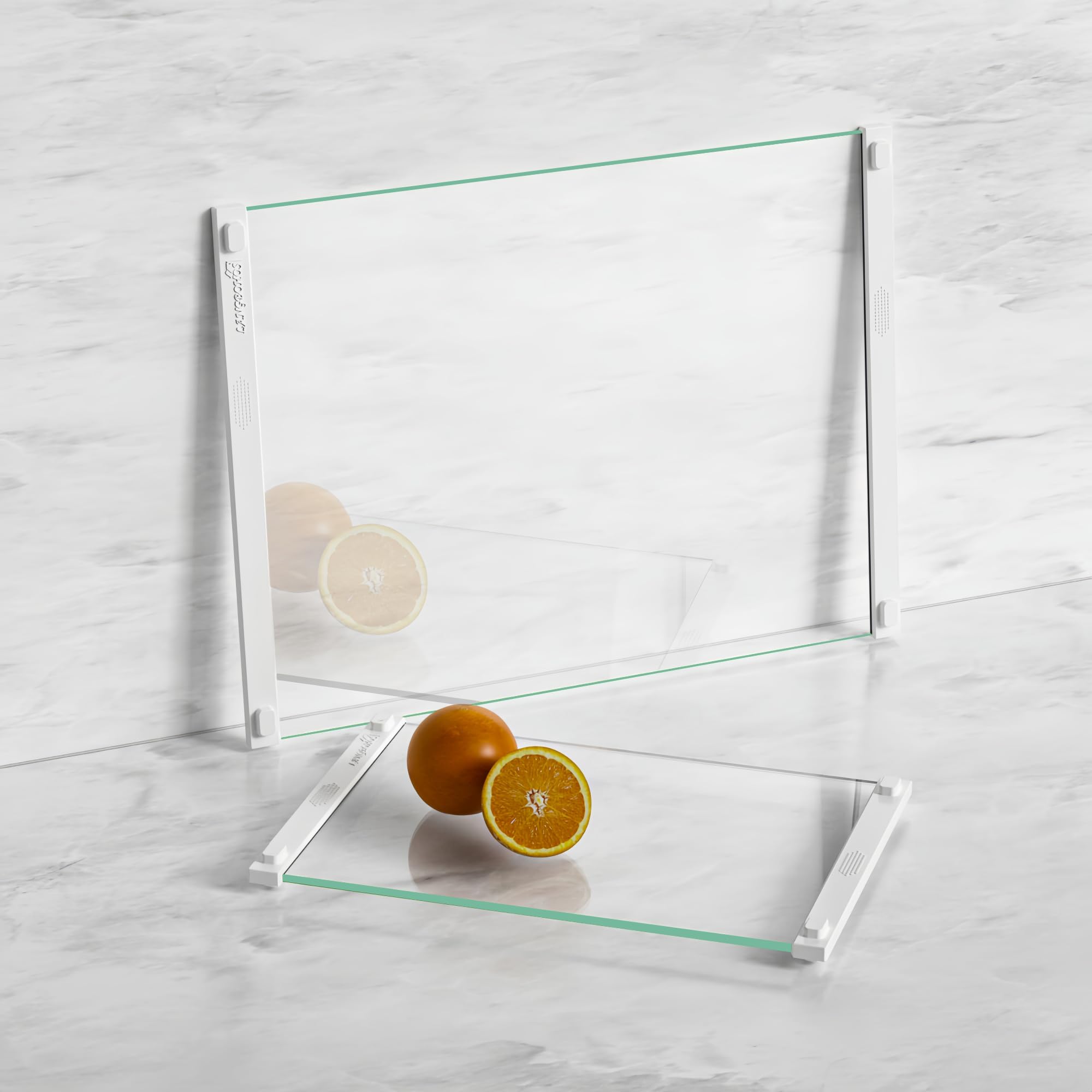
If your top concern is a non-porous surface that can never absorb bacteria or release plastic, tempered glass is the ultimate answer. This LANGBOHOS set includes a 16 x 12-inch board and a 12 x 8-inch board, both made from toughened glass with upgraded silicone grips around the edges that improve slip resistance. The glass surface resists scratches, repels stains, and eliminates odors completely — no amount of garlic or turmeric will leave a trace.
These boards are dishwasher-safe and can withstand continuous heat up to 150°C (302°F), so they double as hot pads or trivets. The silicone grips wrap around the perimeter, preventing the fragile edge chipping that plagues budget glass boards. Buyers consistently praise the sleek appearance and the fact that the boards stay put during use without separate non-slip mats.
The major trade-off is knife wear. Tempered glass is extremely hard and will dull your blades faster than wood or bamboo. The cutting noise is also more noticeable — a slight clatter that some users find unpleasant. If you use high-end knives, you may want to reserve this board for light tasks like slicing cheese or fruit, or for serving charcuterie.
Why it’s great
- Zero porosity — no bacteria, odors, or stains
- Silicone grips prevent slipping and edge chipping
- Two sizes included, both fully dishwasher-safe
Good to know
- Hard surface dulls knives faster than wood or bamboo
- Cutting produces more noise compared to natural materials
5. HTB Bamboo Cutting Board Set with Holder

This HTB set includes three small bamboo boards and a wooden holder that keeps them upright and accessible on your counter. Each board measures 11 x 6.3 inches, which is perfect for small tasks like slicing a lemon, chopping a single shallot, or prepping cheese for a snack. The holder has pegs on both sides that can accommodate up to three boards per side, giving you a total capacity of six boards if you purchase an additional set.
Bamboo is naturally antimicrobial and contains no plastic, so every cut stays free of microplastic contamination. The boards feature a hole for hanging, and the smooth surface won’t dull knives. Buyers appreciate being able to grab a fresh board for each ingredient without washing the same board repeatedly during meal prep. The small footprint is ideal for cramped kitchens or RVs.
These boards require hand washing — dishwasher heat can warp bamboo. Some users reported that the boards can split if dropped from counter height, and the bamboo needs periodic oiling in dry climates to prevent cracking. The set is best suited as a supplement to a larger primary board rather than a stand-alone solution for heavy chopping.
Why it’s great
- Three boards for multi-task prep without cross-contamination
- Space-saving holder keeps counter organized
- Natural bamboo is knife-friendly and microplastic-free
Good to know
- Hand wash only — not dishwasher safe
- Boards can split if dropped; requires periodic oiling
FAQ
Do bamboo cutting boards ever release microplastics?
Can I put a wood composite board in the dishwasher every day?
Is tempered glass safe for Japanese kitchen knives?
How often should I oil a bamboo cutting board?
Do wheat straw boards really contain no plastic?
Final Thoughts: The Verdict
For most users, the cutting boards to avoid microplastics winner is the Belwares Wood Composite Board because it combines zero-plastic construction with effortless dishwasher-safe maintenance and a lightweight, knife-friendly surface. If you want a massive prep area for big cooking sessions, grab the Farberware Bamboo Board. And for a complete, eco-conscious set that separates tasks without breaking the bank, nothing beats the AXIOM CREATIONS Wheat Straw Set.

Mo Maruf
I created WellFizz to bridge the gap between vague wellness advice and actionable solutions. My mission is simple: to decode the research and give you practical tools you can actually use.
Beyond the data, I am a passionate traveler. I believe that stepping away from the screen to explore new environments is essential for mental clarity and physical vitality.