Our readers keep the lights on and my smoothie glass nicely filled. As an Amazon Associate, I earn from qualifying purchases.
A premium chef’s knife loses its bite the moment it meets the wrong surface. Glass, stone, and cheap plastic boards act like abrasives, micro-chipping an edge that took hours to refine. The right wood cutting board does the opposite — it closes around the blade, absorbing impact and preserving geometry so you sharpen less and slice better for years.
I’m Mohammad Maruf — the founder and writer behind WellFizz. I have spent hundreds of hours analyzing wood species, grain orientations, thickness tolerances, and real-world durability reports to identify which boards genuinely protect high-end steel without sacrificing usability or longevity.
Whether you own a single Japanese gyuto or a full set of German-forged blades, the best cutting board for good knives must sit flat, resist gouging, and accept regular oiling without warping. This guide dissects seven contenders by build quality, wood type, and knife-friendliness so you can choose with confidence.
How To Choose The Best Cutting Board For Good Knives
A board that treats your knives well is a board made from wood, assembled with the grain running vertically (end-grain), and thick enough to absorb impact without bouncing. Bamboo is harder than maple and walnut on the Janka scale — it dulls edges faster. Glass, stone, and steel are outright destructive. Stick to hardwoods like maple, walnut, or teak, and prioritize end-grain construction for the self-healing property that keeps cuts from becoming permanent gouges.
Grain Orientation: End-Grain vs. Edge-Grain vs. Face-Grain
End-grain boards are built like a butcher block — wood fibers stand upright so the knife edge slides between them rather than cutting across them. This preserves sharpness and makes superficial cuts close back up over time. Edge-grain boards are more stable and cheaper but leave fibers exposed to blade impact, leading to more visible scarring. Face-grain boards look smooth but dull knives fastest among wood types and warp easily. For daily prep with quality knives, end-grain is the only serious choice.
Thickness and Weight
A board under 1.5 inches thick feels light and tends to rock on uneven countertops. Thicker boards — 1.5 to 2 inches — absorb the downward force of chopping, reduce noise, and stay put without needing a damp towel underneath. Heavier boards also resist sliding as you rock a chef’s knife through herbs or slice through squash. Look for at least 1.5 inches of thickness with a weight over seven pounds for a full-sized board.
Wood Species and Maintenance
Maple (about 1,450 lbf Janka) is dense and neutral, making it a classic choice for knife-friendly durability. Walnut (about 1,010 lbf) is softer on blades, darker, and naturally antimicrobial. Teak (about 1,070 lbf) has high oil content that resists moisture but can be harder on edges if not well-seasoned. All three require hand washing and periodic oiling with food-grade mineral oil or board butter. Boards that arrive pre-seasoned save you the first round of care, but every board needs re-oiling every few weeks depending on climate and use.
Quick Comparison
On smaller screens, swipe sideways to see the full table.
| Model | Category | Best For | Key Spec | Amazon |
|---|---|---|---|---|
| Sonder Los Angeles Alfred | Premium | Serious home cooks who want sorting wells and American black walnut | 17x13x1.5 in walnut end-grain with 3 compartments | Amazon |
| Dalstrong Lionswood End-Grain Teak | Premium | Those who want steel handles and a plate cutout for easy food transfer | 16x12x1.9 in teak end-grain with built-in steel handles | Amazon |
| WoodForChef Medium Maple Board | Mid-Range | Knife-conscious buyers who want FSC-certified North American maple | 16x12x1.5 in edge-grain maple, pre-seasoned | Amazon |
| BABILONIA Black Walnut Board | Mid-Range | Combined use as cutting board and charcuterie serving tray | 15.7×10.2×1.7 in walnut end-grain with plate and oil | Amazon |
| Tramontina Teak Board | Mid-Range | Budget-conscious cooks who want a massive Brazilian teak surface | 17.75×13.5×1.5 in teak end-grain | Amazon |
| Yes4All Large Teak Board | Budget-Friendly | Volume preppers who need a 20×15-inch work surface without spending premium | 20x15x1.5 in teak end-grain with juice groove and handles | Amazon |
| Artistic Chef’s Kitchen 3D Board | Budget-Friendly | Those who want an artistic statement piece with decent knife protection | 15.5×11.5×1.1 in walnut/ebony/beech end-grain, 3D pattern | Amazon |
In‑Depth Reviews
1. Sonder Los Angeles Alfred Cutting Board
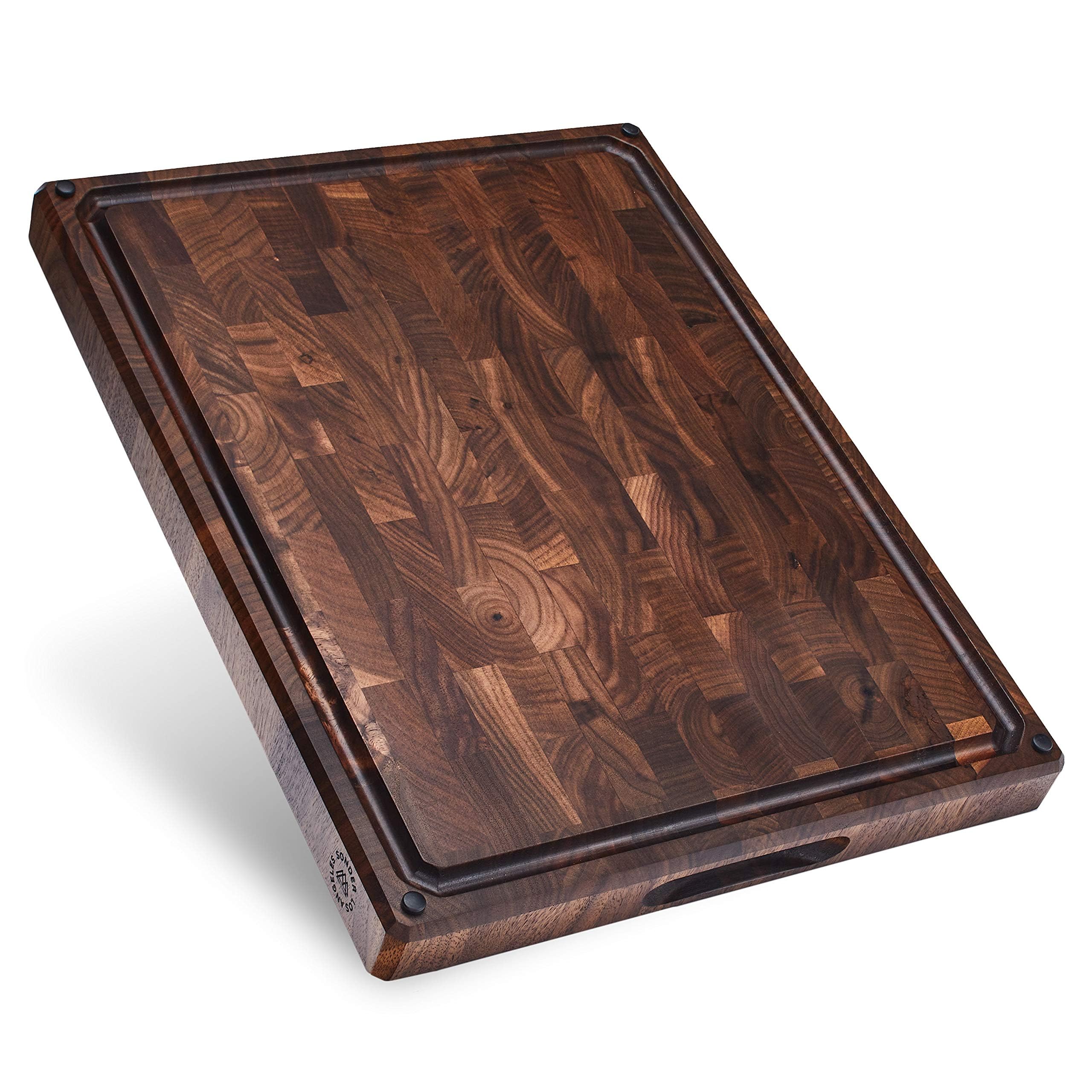
The Sonder Los Angeles Alfred is a 17x13x1.5-inch American black walnut end-grain board that delivers on every front a knife owner cares about. The end-grain fibers close around the blade, preserving sharpness with each cut, and the self-healing property keeps surface marks from becoming permanent grooves. Three built-in sorting wells add chef-level organization — perfect for holding prepped garlic, herbs, or diced onions without crowding the main surface.
At 7.5 pounds, this board stays planted on the counter without slipping. The deep juice groove holds up to 3.5 fluid ounces, making it practical for carving roasted meats or slicing ripe tomatoes. Rubber feet keep it stable, and the reverse side offers a flat workspace when you don’t need the wells. It arrives pre-finished but requires oiling every three weeks to maintain that rich walnut tone and prevent drying.
Crafted from sustainably sourced American black walnut and made in the USA, the Alfred board comes gift-boxed with a warranty against manufacturing defects. Buyers consistently praise its weight, finish, and ability to resist warping even after months of daily use. If you want a single board that combines knife protection, prep efficiency, and countertop beauty, this is the one to beat.
Why it’s great
- End-grain walnut self-heals and protects knife edges
- Three sorting wells streamline multi-ingredient prep
- Deep juice groove (3.5 fl oz) prevents counter mess
- Made in USA from sustainably sourced hardwood
Good to know
- Requires oiling every 3 weeks to maintain finish
- Premium price reflects domestic craftsmanship and walnut cost
2. Dalstrong Lionswood End-Grain Teak Cutting Board

Dalstrong brings its knife-making precision to the cutting board category with a 16x12x1.9-inch end-grain teak board that prioritizes blade protection above all else. The alternating end-grain fibers create a slip-resistant surface that absorbs impact rather than deflecting it, keeping your knife edges sharper between honing sessions. At nearly two inches thick, this board resists warping even in humid kitchen environments.
Integrated steel carrying handles make it easy to lift and serve, while the underside cutout allows you to slide a plate underneath for direct food transfer — a thoughtful detail that eliminates the need to scrape ingredients off the board edge. The teak is pre-filled with moisturizing oils that resist water absorption and discoloration, though some users report the board arrives needing additional conditioning before first use.
Customer feedback highlights the board’s stunning checkered pattern and the visual contrast that emerges after oiling. A small number of units arrived with cracks, but Dalstrong’s replacement service resolved those issues quickly. For cooks who value both knife safety and serving versatility, this board delivers premium performance with an industrial-chic look.
Why it’s great
- Nearly 2-inch thickness resists warping and absorbs knife impact
- Steel handles and plate cutout streamline food transfer
- Pre-oiled teak resists moisture and discoloration
- End-grain construction preserves blade sharpness
Good to know
- Some units arrived needing additional oiling; check on arrival
- Teak is slightly harder than walnut, so maintenance is critical for knife-friendliness
3. WoodForChef Medium Maple Cutting Board

The WoodForChef medium maple board is a 16x12x1.5-inch edge-grain board that strikes a strong balance between knife protection and price. Made from FSC-certified North American hard maple, it arrives pre-seasoned with mineral oil and beeswax so you can start cutting immediately. The surface feels smooth without being slick, and multiple users report that even super-sharp knives barely mark the wood after repeated use.
At 8 pounds, this board is heavy enough to stay put during aggressive chopping. The juice groove runs deep around the perimeter, catching liquids effectively. Edge-grain construction is less forgiving than end-grain — cuts will show more over time — but the hard maple density (around 1,450 lbf Janka) means it won’t gouge as easily as softer woods. Hand washing is mandatory; the board is not dishwasher safe.
Buyers appreciate that the board sits perfectly flat with zero rocking, a common failure point on thinner boards. Some noted that the board felt dry on arrival and benefited from an extra coat of oil before first use. For anyone who wants a responsibly sourced maple board that won’t break the bank, this is a solid, knife-friendly workhorse.
Why it’s great
- FSC-certified North American hard maple is renewable and durable
- Pre-seasoned with mineral oil and beeswax for immediate use
- 8-pound weight provides excellent stability
- Deep juice groove contains mess from juicy foods
Good to know
- Edge-grain shows cut marks more than end-grain over time
- Some units felt dry and needed additional oiling before first use
4. BABILONIA Black Walnut Cutting Board
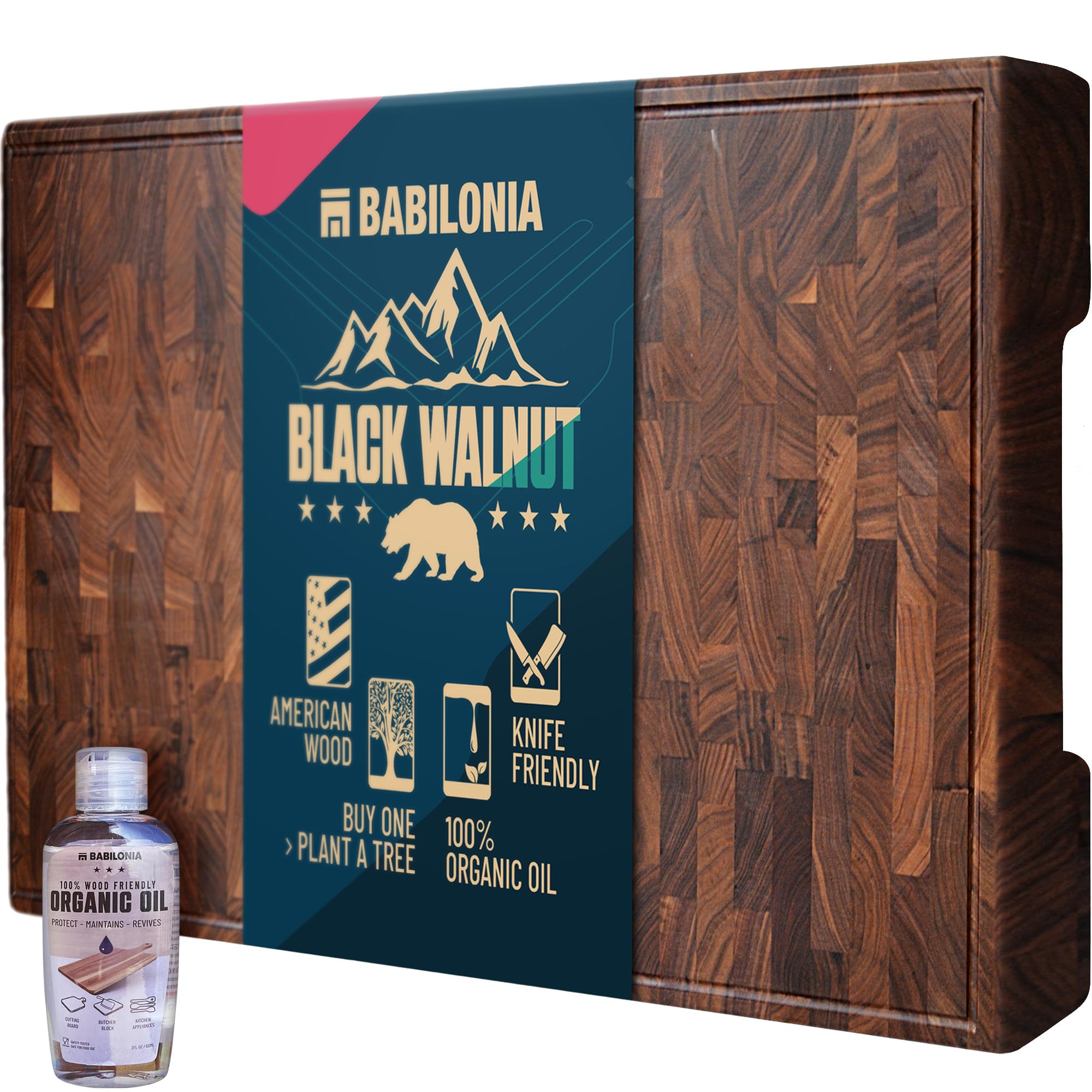
The BABILONIA board measures 15.7×10.2 inches with an impressive 1.7-inch thickness, making it one of the thicker boards in this mid-range group. Crafted from 100% sustainable American black walnut using end-grain technique, it offers the self-healing property that keeps knife edges safe. The included organic oil bottle and serving plate add immediate value — you can season the board and start using it as a charcuterie platter right out of the box.
Design details include a hidden handle, a juice groove, and reversible functionality. The board can be used flat on one side or flipped to reveal a notch and plate cutout that lets you slide chopped produce directly into a pot or bowl — a feature that saves time during meal prep. Rubber feet on the bottom prevent slipping on smooth countertops.
Customer feedback is overwhelmingly positive for aesthetics and initial performance, though a small number of users reported splitting after a few months. BABILONIA’s customer service replaced those units promptly, suggesting good warranty support. For cooks who want a stylish walnut board that doubles as a serving piece, this is a compelling choice that protects knives and looks good doing it.
Why it’s great
- 1.7-inch thick end-grain walnut self-heals and protects blades
- Includes organic oil and serving plate for immediate use
- Hidden handle and plate cutout simplify food transfer
- Rubber feet prevent slipping during prep
Good to know
- Rare reports of splitting; vendor support is responsive for replacements
- Smaller surface area than 20-inch boards; not ideal for large-volume prep
5. Tramontina Chopping Board Teak Wood End-Grain

The Tramontina teak board is a massive 17.75×13.5-inch end-grain board made from authentic Brazilian teak. Its generous surface area makes it ideal for breaking down large cuts of meat, watermelons, or multiple ingredients without feeling cramped. The end-grain construction is genuine — wood fibers stand vertical — which provides the knife protection expected from a proper butcher block.
Buyers report that the surface feels quality and that the board works well once properly oiled. It does not arrive pre-seasoned, so plan to apply multiple coats of food-grade mineral oil and beeswax before first use to prevent the teak from absorbing moisture unevenly.
Customer reviews consistently note the excellent value for the size. A few users mentioned they preferred smaller boards for daily use and reserved this one for large projects. The one-year limited warranty covers manufacturing defects. For cooks on a budget who refuse to compromise on knife-friendly end-grain construction, this Tramontina board is a smart play.
Why it’s great
- Huge 17.75×13.5-inch surface handles large ingredients easily
- Authentic end-grain Brazilian teak protects knife edges
- Competitive price for the size and construction
- Lightweight enough to move and store despite the dimensions
Good to know
- Not pre-seasoned; requires multiple oil coats before use
- Lighter weight may need a damp towel underneath for stability
6. Yes4All Large Teak Cutting Board

The Yes4All teak board is the largest option in this lineup at 20x15x1.5 inches, providing a work surface that rivals restaurant prep tables. Built from teak end-grain blocks, it offers the knife-friendly impact absorption that end-grain is known for. The deep juice groove and built-in handles make handling easy even at 11.2 pounds.
Teak’s natural oil content gives this board inherent moisture resistance, but customers report that it benefits significantly from an initial treatment with board butter (mineral oil + beeswax). Without that first seasoning, the surface can feel dry and may absorb food odors. Once conditioned, the board shows a rich medium-brown tone with consistent color variation across the individual teak blocks.
Some users noted a subtle smoky smell from the charring process used to darken the wood, which faded after a thorough scrub and oiling. The craftsmanship is generally solid, though a few owners reported rough sanding around the juice grooves. For anyone who needs maximum real estate without paying a premium price, this board delivers end-grain performance at a fraction of the cost of boutique brands.
Why it’s great
- Generous 20×15-inch surface handles large prep volumes
- Teak end-grain protects knives and resists moisture naturally
- Deep juice groove and handles improve usability
- Excellent value compared to similarly sized competitors
Good to know
- Arrives dry and needs board butter or mineral oil conditioning
- Minor finishing inconsistencies (rough grooves) reported on some units
7. Artistic Chef’s Kitchen 3D Cutting Board
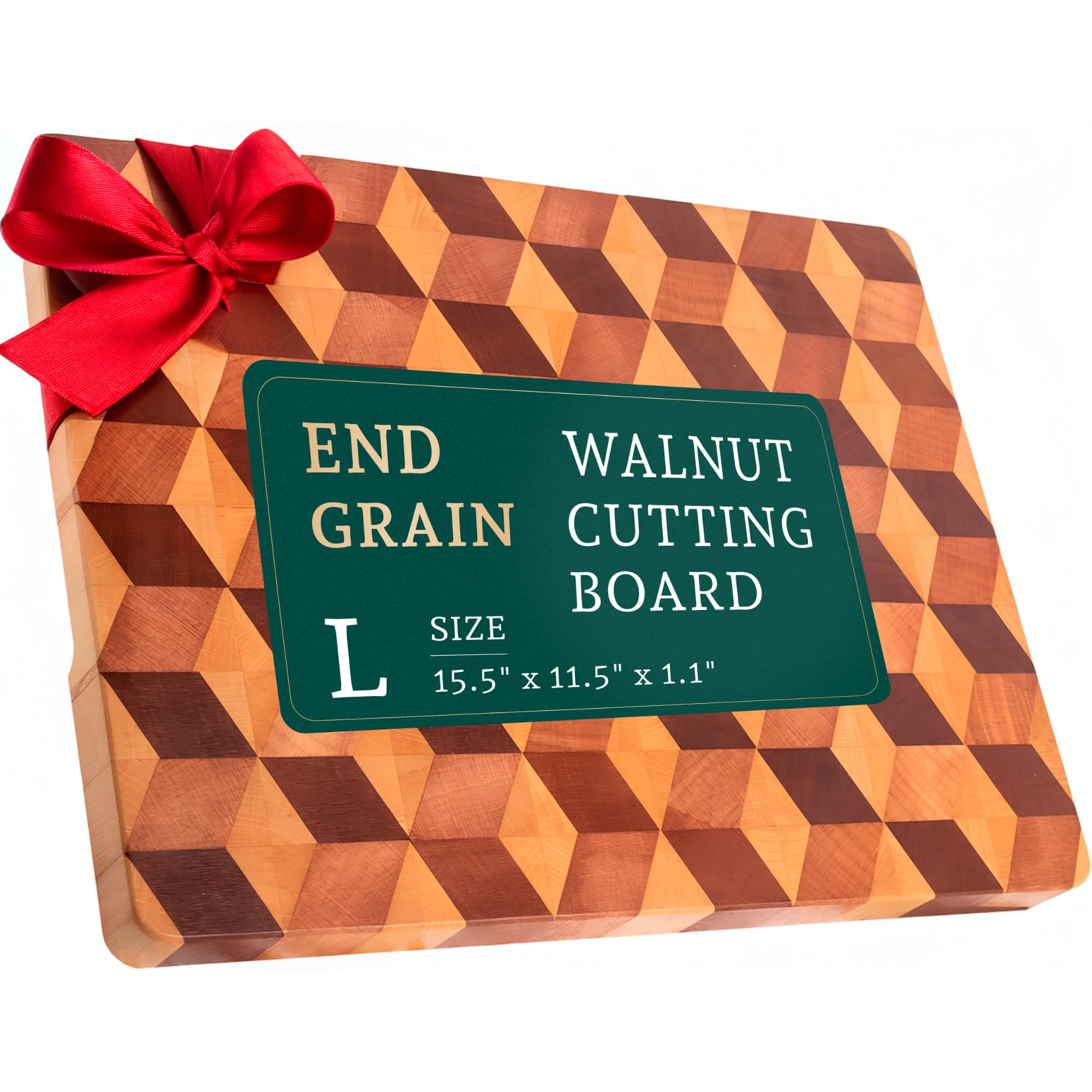
The Artistic Chef’s Kitchen board stands out visually with a handcrafted 3D checkerboard pattern that combines walnut, ebony, and beech woods. At 15.5×11.5×1.1 inches, it is noticeably thinner than most other boards in this guide, which reduces weight but also means less impact absorption for heavy chopping. The end-grain construction is genuine, so it still offers better knife protection than edge-grain or plastic alternatives.
Four non-slip rubber feet keep the board stable during use, and the two side handles make it easy to carry from counter to table. The mixed-wood construction creates slight variation from board to board, adding to the handmade appeal. This board works well as a charcuterie platter or serving piece when not in use for prep — the pattern draws attention on any countertop.
Buyers praise the board’s modern design and solid build quality for the price point. Because it is thinner, it may not suit heavy daily chopping of dense ingredients like butternut squash or bones. Regular oiling is required to maintain the appearance and prevent the different wood species from drying at different rates. For cooks who want a statement board that still treats knives well, this is a stylish entry-level end-grain option.
Why it’s great
- Unique 3D checkerboard pattern from walnut, ebony, and beech
- End-grain construction protects knife edges
- Non-slip feet and side handles improve convenience
- Handmade character gives each board a unique look
Good to know
- Only 1.1 inches thick; less impact absorption for heavy chopping
- Mixed wood species require consistent oiling to prevent uneven drying
FAQ
Can I use a bamboo cutting board with high-end knives?
How often should I oil a wooden cutting board?
Is a thicker cutting board always better for knives?
Final Thoughts: The Verdict
For most users, the best cutting board for good knives winner is the Sonder Los Angeles Alfred because its thick end-grain walnut construction, sorting wells, and deep juice groove deliver both blade protection and prep efficiency. If you want steel handles and a built-in plate cutout for serving, grab the Dalstrong Lionswood Teak. And for the biggest work surface at a budget-friendly price, nothing beats the Yes4All Large Teak Board.

Mo Maruf
I created WellFizz to bridge the gap between vague wellness advice and actionable solutions. My mission is simple: to decode the research and give you practical tools you can actually use.
Beyond the data, I am a passionate traveler. I believe that stepping away from the screen to explore new environments is essential for mental clarity and physical vitality.