Our readers keep the lights on and my smoothie glass nicely filled. As an Amazon Associate, I earn from qualifying purchases.
Breaking down heavy primal cuts, hacking through bone-in roasts, and breaking down whole birds demands a board that absorbs shock without dulling your edge or skidding across the counter. The wrong surface — thin, lightweight, or porous — will warp, harbor bacteria, and turn every cleaver swing into a dangerous slip hazard. The right slab is dense enough to stay planted, thick enough to handle a bone saw, and closed-grain enough to resist deep gouges that trap meat juice and bacteria.
I’m Mohammad Maruf — the founder and writer behind WellFizz. I’ve spent hundreds of hours combing through manufacturer specs, NSF certifications, wood density charts, and real-world user feedback to determine which boards actually hold up under the weight of dedicated butchering work and which ones fold after a few hard sessions.
This guide breaks down the thickest, widest, and most knife-friendly materials available so you can find the best cutting board for butchering that fits your workflow and your workspace.
How To Choose The Best Cutting Board For Butchering
Selecting a board for heavy butchering work requires attention to four key factors that casual home cooks rarely consider. The wrong choice leads to knife damage, unstable cutting surfaces, and boards that split or warp under repeated heavy use.
Material and Grain Orientation
End-grain wood, where the wood fibers run perpendicular to the cutting surface, acts like a self-healing mat. The knife blade passes between the fibers rather than cutting through them, keeping your edge sharp longer. Edge-grain wood is less expensive but will show deeper cut lines over time. Commercial high-density polypropylene (HDPP) is non-porous and NSF-rated for food service, making it ideal for those who prioritize sanitation and dishwasher cleaning over knife feel.
Thickness and Weight for Stability
Butchering generates torque that thin boards cannot absorb. A board under 1.5 inches thick will slide, rock, or bounce when you apply downward pressure on a cleaver. Heavy boards in the 13 to 18 pound range stay planted without needing a damp towel underneath. If you work with whole carcasses or large subprimals, the weight of the board itself is your primary safety anchor.
Size and Juice Management
You need enough surface area to spread a full rib roast or a whole turkey without the edges overhanging the board. An 18-by-24-inch surface is the sweet spot for serious butchery. Deep juice grooves around the perimeter capture blood and moisture so they do not pool on your counter. Some boards also feature a reversible design with a flat side for produce and a grooved side for raw meat.
Quick Comparison
On smaller screens, swipe sideways to see the full table.
| Model | Category | Best For | Key Spec | Amazon |
|---|---|---|---|---|
| BABILONIA Black Walnut | End-Grain Wood | Knife-friendly heavy chopping | 1.7″ thick end-grain walnut | Amazon |
| Winco WCB-1824 | Edge-Grain Rubberwood | Maximum work surface area | 1.75″ thick, 17.8 lbs | Amazon |
| Thirteen Chefs HDPP | Commercial Plastic | Dishwasher-safe butchery | NSF certified, 13 lbs | Amazon |
| GAOMON Bamboo 30×20 | Bamboo | Budget-friendly large surface | 30″ x 20″ x 0.8″ | Amazon |
| Socisen 5-Layer Bamboo | Bamboo | Mid-range heavy duty value | 1″ thick, 5-layer construction | Amazon |
| FANICHI Acacia 20×15 | Acacia Wood | Reversible meat and veggies | 1.5″ thick, 8.6 lbs | Amazon |
| Socisen Teak 20×14 | Teak Wood | Entry-level wood butcher board | 0.8″ thick teak | Amazon |
In‑Depth Reviews
1. BABILONIA American Black Walnut Cutting Board
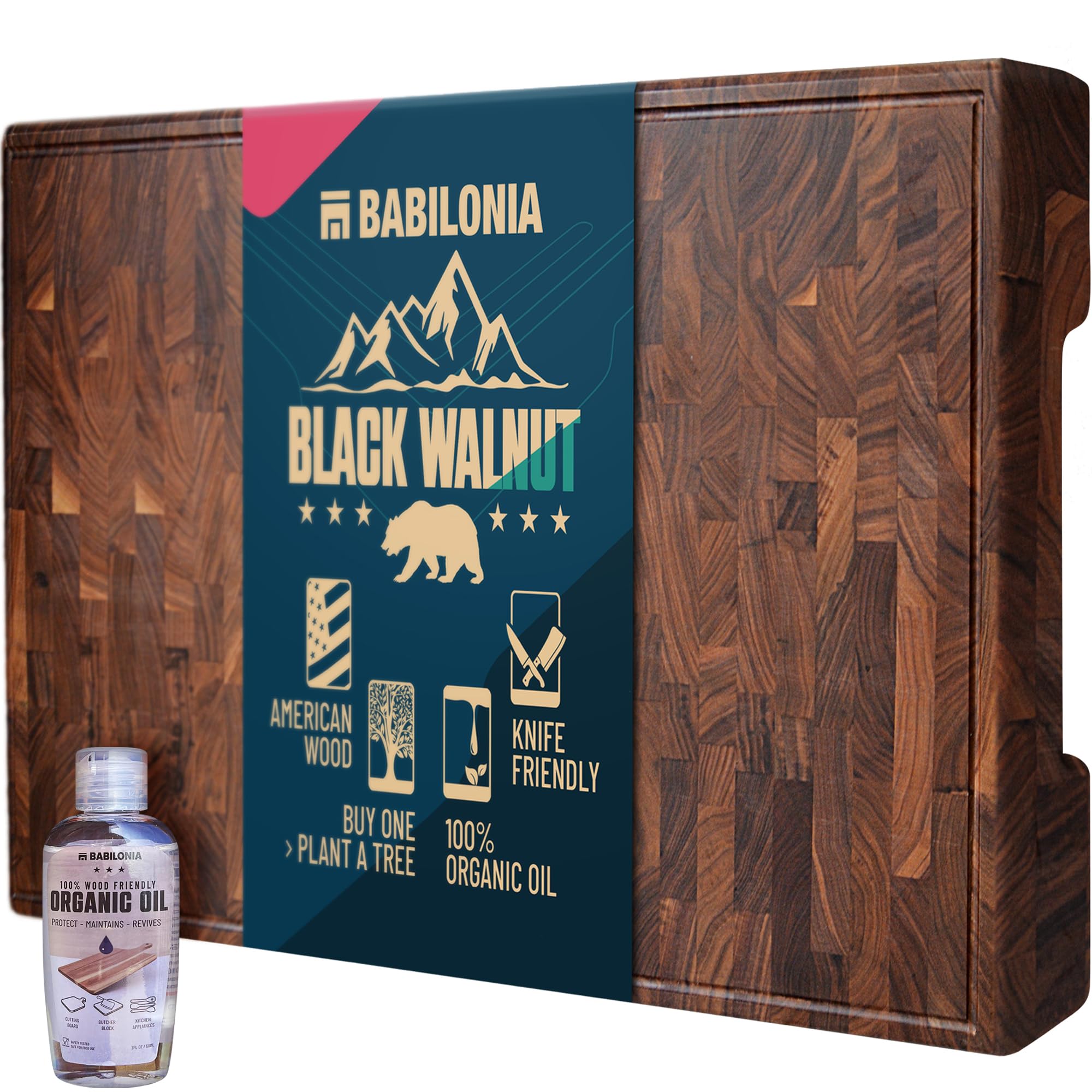
The BABILONIA board uses end-grain American black walnut at a full 1.7-inch thickness, which means every cleaver or chef knife strike lands between the wood fibers instead of cutting through them. This grain orientation is the gold standard for butchery because it self-heals and keeps your edge geometry intact for much longer than any edge-grain or bamboo surface.
The built-in notch and included small plate let you sweep diced aromatics or minced garlic directly into your pan without lifting the board, a small workflow detail that matters when both hands are covered in fat and sinew. The board comes pre-oiled with a free bottle of organic mineral oil, so you can start butchering immediately without an initial treatment step.
Some early production units have shown splitting after a couple of months, though the seller’s customer support has replaced those boards without hassle. The 19.7-inch length is generous but still fits most standard countertops, making it a realistic daily driver for home butchers who want professional-grade knife protection.
Why it’s great
- End-grain construction protects knife edges from rapid dulling
- Includes oil for immediate use and a plate for easy food transfer
- Rubber feet keep the board stable during heavy chopping
Good to know
- Smaller surface area compared to 24-inch boards
- Some users report splitting after extended use
- Must be hand washed and regularly oiled
2. Winco WCB-1824 Wooden Cutting Board

At 24 by 18 inches and nearly 18 pounds, the Winco WCB-1824 provides the largest wooden work surface in this guide. The 1.75-inch edge-grain rubberwood construction is thick enough to absorb cleaver strikes without transferring shock to your countertop, and the sheer mass means it will not slide around even during aggressive bone-in chopping.
Rubberwood is a sustainable hardwood that is dense, food-safe, and more affordable than walnut or teak. The edge-grain surface will show cut marks over time, but the board is thick enough to be resanded years down the line if the surface becomes rough. Several reviewers report using this board for heavy-duty commercial prep work, and it holds up well to repeated hacking without cracking.
The light tan color shows stains more readily than dark walnut, so you will need to scrape and scrub after processing red meat. Some units arrive with minor corner damage from shipping, but the board itself is solid and the warranty covers manufacturing defects for one year.
Why it’s great
- Massive 18-pound slab stays planted without a towel underneath
- Thick enough to survive years of resurfacing
- Industrial-grade durability at a mid-range price
Good to know
- Edge-grain shows visible knife marks over time
- Light wood stains easily from meat juices
- Too large for most residential sinks
3. Thirteen Chefs 30×18 Commercial Plastic Cutting Board
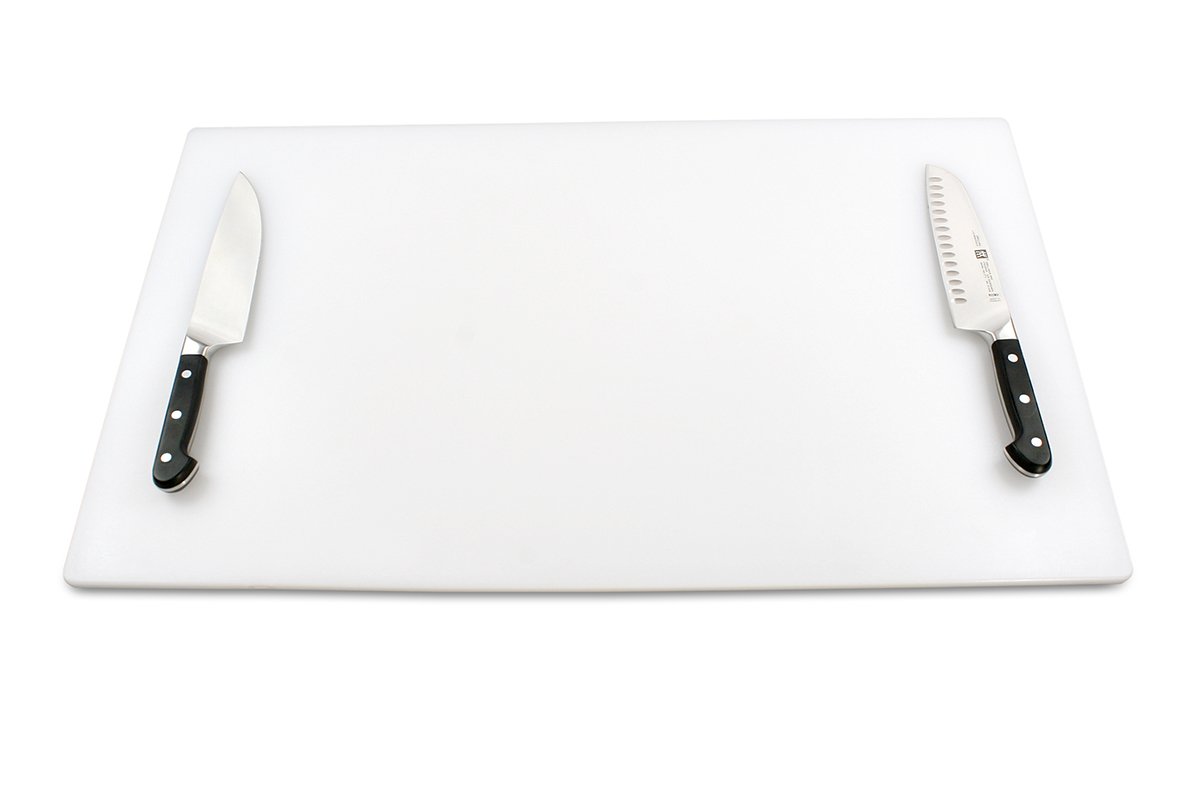
High-density polypropylene is the material of choice in restaurant kitchens because it is non-porous, NSF-certified, and safe for commercial dishwashers that reach 200 degrees. The Thirteen Chefs board is 30 by 18 inches and weighs 13 pounds, giving you an enormous workspace that can be fully sanitized between uses — critical when processing raw poultry or game.
Unlike wood, HDPP will not absorb meat juices, so there is no risk of bacterial growth in hidden grain lines. The textured surface prevents food from sliding and also keeps the board from migrating on smooth countertops. Reviewers consistently note that it does not warp or bow even under heavy daily use in commercial settings.
The board is too large and heavy for standard home sinks, and it requires a spray hose or commercial tub for proper cleaning. Polyethylene surfaces also dull knives faster than wood because the plastic fibers grip the blade edge. If you prioritize sanitation over knife edge retention, this is the correct choice.
Why it’s great
- Non-porous surface prevents bacterial absorption
- NSF certified and dishwasher safe at 200°F
- 13-pound mass provides rock-solid stability
Good to know
- Accelerates knife dulling compared to wood
- Too large for residential sinks
- Serrated knives will damage the surface
4. GAOMON 30×20 Extra Large Bamboo Cutting Board

The GAOMON board is designed to span the width of a standard four-burner stovetop, instantly providing extra counter space in tight kitchens. At 30 by 20 inches, it is the widest board in this lineup, and the reversible design lets you use one side for raw meat and the other for produce to reduce cross-contamination.
Bamboo is harder than most domestic hardwoods, which makes it resistant to deep gouging, but that same hardness can micro-chip knife edges faster than end-grain walnut or teak. The 0.8-inch thickness is adequate for general prep but noticeably thin for heavy cleaver work — you will feel the board flex if you apply serious downward force on a large roast.
Owners report that the board holds up well for daily use without splintering, and the deep juice grooves around all four edges effectively contain liquids. The board works best as a large prep surface rather than a dedicated butcher block, especially if you need to cover your range or sink for additional workspace.
Why it’s great
- Fits over standard stoves and sinks for extra counter space
- Reversible surface for separating raw and cooked foods
- Deep perimeter grooves contain juices effectively
Good to know
- Only 0.8 inches thick — flexes under heavy pressure
- Hard bamboo surface can dull knives faster than wood
- Heavy enough to be awkward to move and store
5. Socisen 5-Layer Thickened Bamboo Cutting Board
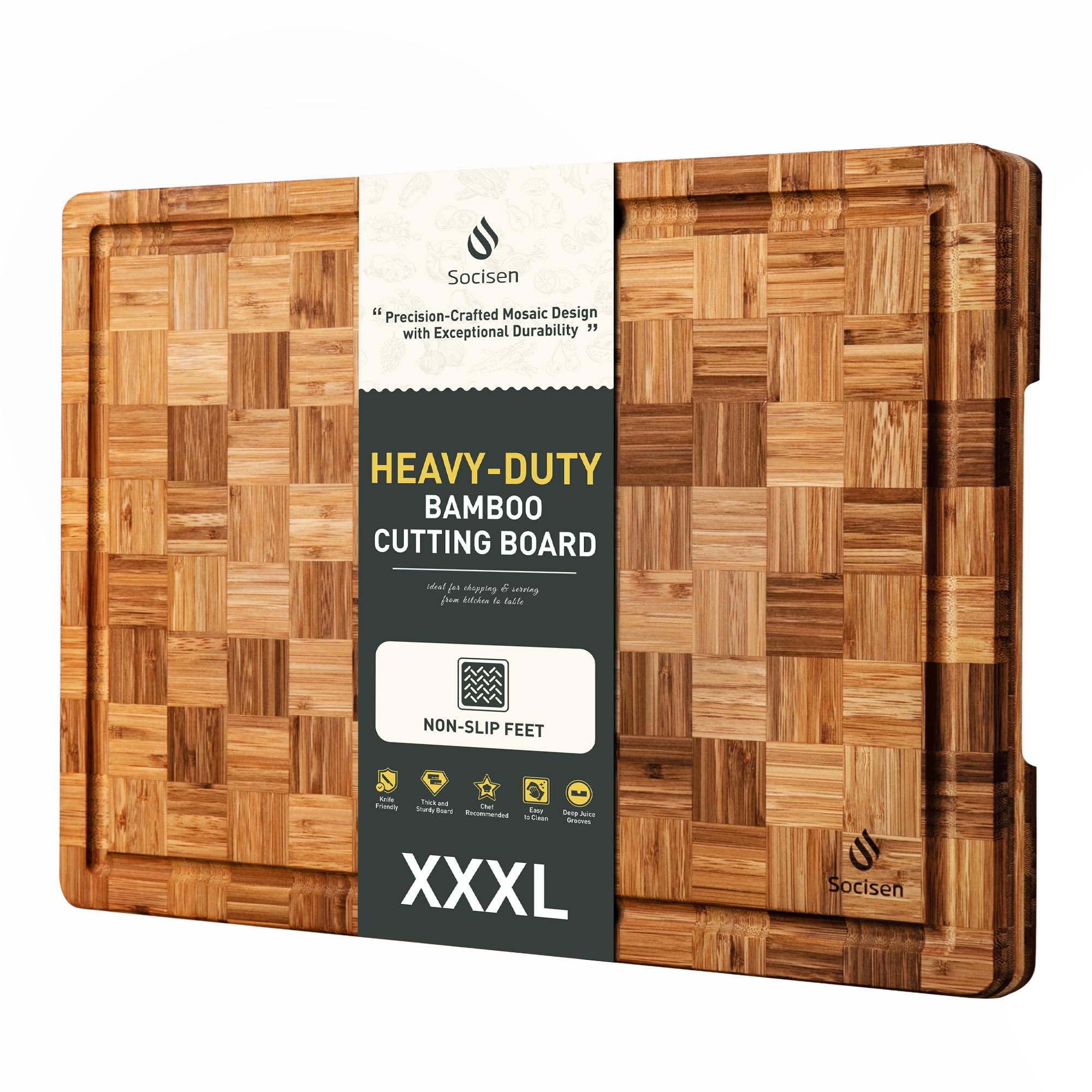
The Socisen board uses a five-layer bamboo splicing technique to reach a full 1-inch thickness without the cost of solid hardwood. This construction resists the warping and cracking that plagues single-piece bamboo boards, and the FSC-certified material is ethically sourced. The 24-by-18-inch surface is large enough for whole briskets and large subprimals.
Non-slip rubber feet keep the board locked in place during hard chopping, and the juice groove runs around the entire perimeter. Hand-sanded edges and a food-grade mineral oil finish mean the board is ready out of the box. Reviewers highlight the value proposition — you get a thick, stable board at a fraction of the cost of walnut end-grain alternatives.
Like all bamboo boards, the surface is harder than traditional hardwoods, which will accelerate knife dulling compared to teak or end-grain walnut. The juice groove is relatively shallow, and some users report overflow when resting large, medium-rare roasts that release significant moisture into the channel.
Why it’s great
- Five-layer laminated construction resists warping
- Generous 24-by-18-inch surface for large cuts
- Non-slip feet provide stable cutting platform
Good to know
- Hard bamboo surface dulls knives faster
- Juice groove can overflow with high-moisture meats
- Requires hand washing and periodic oiling
6. FANICHI XL Acacia Wood Cutting Board
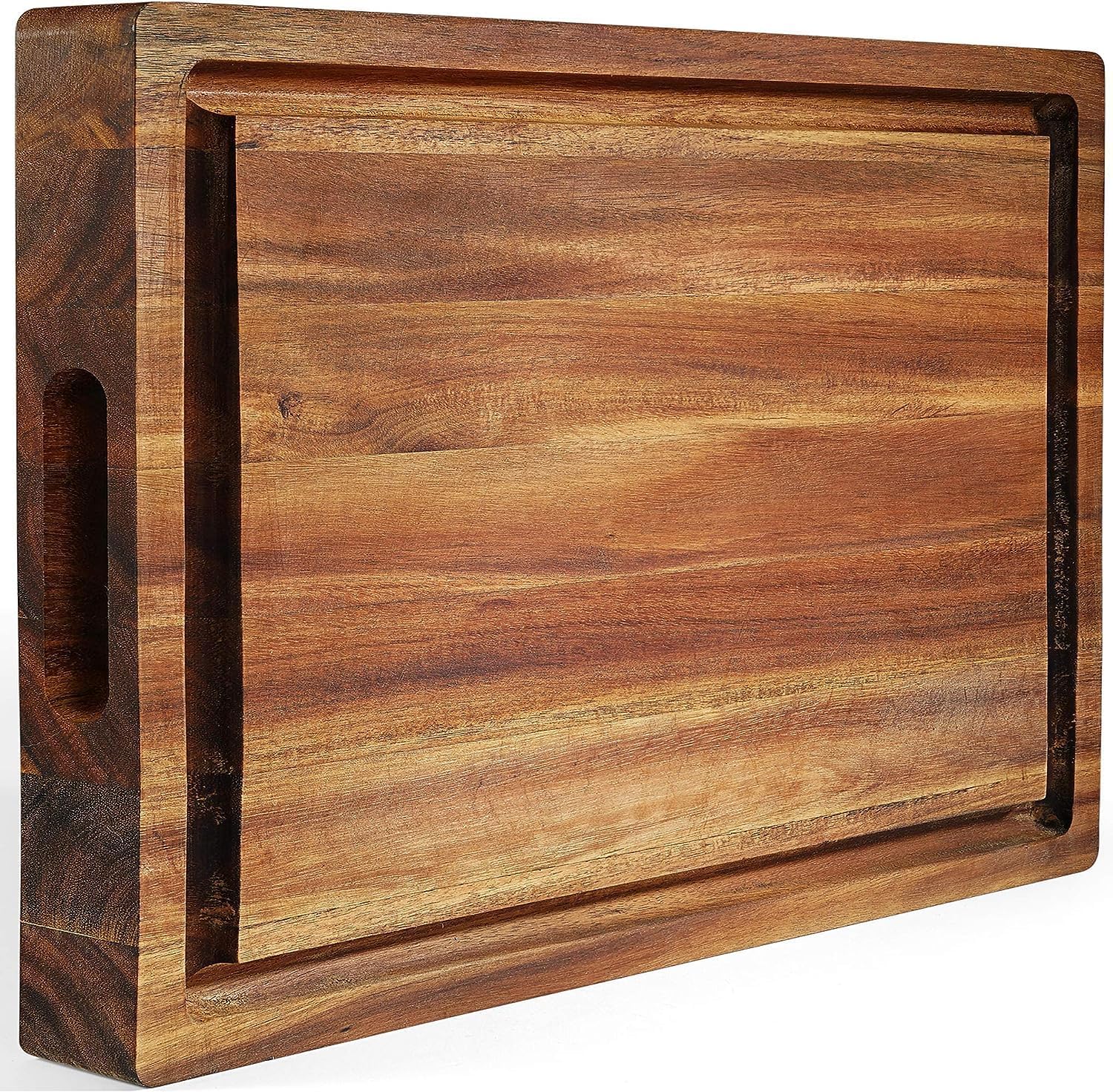
Acacia wood is naturally dense, water-resistant, and harder than oak, making it a strong mid-range option for butchering. The FANICHI board is 1.5 inches thick — substantially more substantial than entry-level boards — and the 20-by-15-inch surface is reversible: one side has a juice groove for raw meat, and the other side has a long cracker holder for cheese and bread service.
The board arrives pre-oiled and is ready for immediate use. Natural acacia grain varies board to board, so each piece has a unique pattern. Reviewers praise the heavy weight (8.6 pounds) for staying put during cutting, though a few note that the board is slightly unbalanced — it may teeter if placed on an uneven surface, requiring a towel underneath for full stability.
Acacia does not stain as easily as lighter woods, and the food-safe finish helps resist moisture absorption. The board is not dishwasher safe, and owners report that it shows light cut marks over time, but the marks do not affect function. The 1.5-inch thickness provides enough mass for most home butchery tasks without being overly heavy to lift and store.
Why it’s great
- Dense acacia wood resists moisture and staining
- Reversible with juice groove and cracker holder
- Pre-oiled and ready to use immediately
Good to know
- May teeter slightly on uneven countertops
- Shows cut marks over time
- Not dishwasher safe
7. Socisen Extra Large Teak Wood Cutting Board
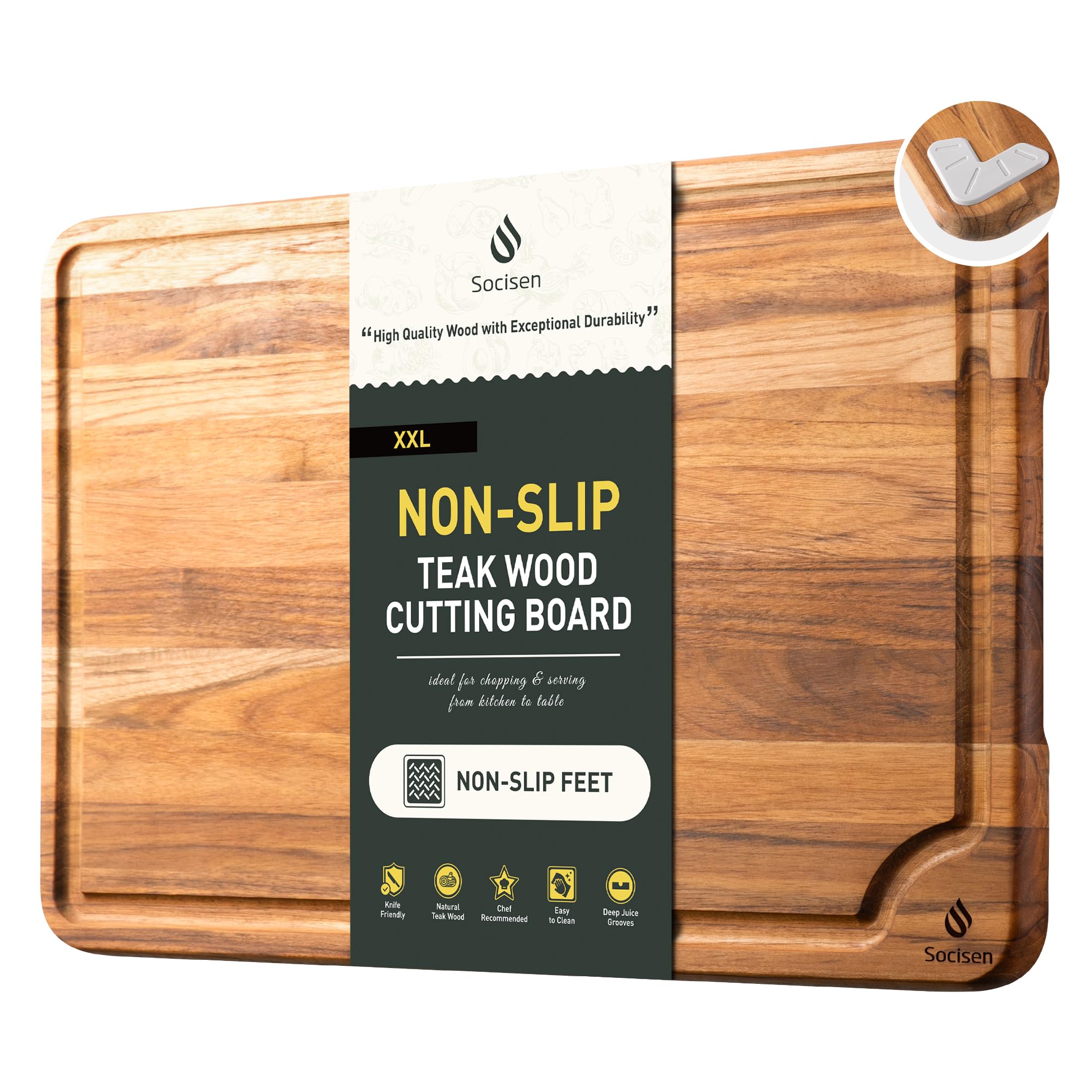
Teak is one of the most moisture-resistant hardwoods available, making it naturally resistant to the warping and bacterial growth that plague less dense woods. The Socisen teak board is FSC-certified and measures 20 by 14 inches with a 0.8-inch thickness. The non-slip rubber feet and built-in juice groove provide the basic features required for clean processing of raw meat.
At 0.8 inches, this board is the thinnest wood option in the lineup. It is well-suited for light to moderate butchering — breaking down chickens, portioning steaks, or trimming fat — but it will not absorb the same abuse as a 1.5-inch slab. The teak surface is gentle on knife edges, and the natural oils in the wood mean it requires less frequent oiling than bamboo or acacia.
Reviewers consistently note the build quality and attractive grain pattern, and the board holds up well without warping after several months of daily use. The 20-inch length is adequate for most home tasks, but larger roasts or whole turkeys may overhang the edges. If you are entering the world of home butchery without wanting to invest in a premium slab, this is a solid starting point.
Why it’s great
- Teak is naturally moisture-resistant and gentle on knives
- FSC-certified sustainable wood with non-slip feet
- Attractive grain and smooth finish out of the box
Good to know
- Only 0.8 inches thick — flexes under heavy cleaver work
- 20-inch length is tight for large roasts and turkeys
- Not dishwasher safe
FAQ
Is bamboo or wood better for butchering?
How thick should a butchering board be?
Can I put a wooden butcher board in the dishwasher?
Final Thoughts: The Verdict
For most users, the best cutting board for butchering winner is the BABILONIA Black Walnut because its 1.7-inch end-grain construction protects your knife edges while providing ample weight for stable chopping. If you want the largest possible work surface, grab the Winco WCB-1824 for its 18-pound, 24-by-18-inch rubberwood slab. And for commercial-grade sanitation and dishwasher convenience, nothing beats the Thirteen Chefs HDPP board.

Mo Maruf
I created WellFizz to bridge the gap between vague wellness advice and actionable solutions. My mission is simple: to decode the research and give you practical tools you can actually use.
Beyond the data, I am a passionate traveler. I believe that stepping away from the screen to explore new environments is essential for mental clarity and physical vitality.