Our readers keep the lights on and my smoothie glass nicely filled. As an Amazon Associate, I earn from qualifying purchases.
The difference between a tolerable walk and a day spent hobbling often comes down to a single curve—the arch of your foot. Most insoles treat it as an afterthought, offering a static bump that never truly matches your unique foot shape, leaving pressure points and misalignment to cause pain from your heels up to your lower back.
I’m Mohammad Maruf — the founder and writer behind WellFizz. After analyzing dozens of orthotic designs, heat-moldable bases, and cork formulations, this guide focuses on the measurable metrics of arch geometry, material density, and customization depth that separate real support from generic foam.
Whether you need relief from plantar fasciitis, stable footing for long standing shifts, or better alignment during runs, finding the right pair comes down to understanding how they conform to your foot’s unique profile. The best custom arch supports use heat activation, gradual cork molding, or targeted 3D shaping to deliver a fit that factory foam can’t match.
How To Choose The Best Custom Arch Supports
Choosing custom arch supports is less about brand names and more about matching your foot’s unique needs to the right material and customization method. A static insole will never adapt to your arch height or gait cycle the way a moldable one will. Focus on these factors to narrow down your options.
Material and Molding Method
The core differentiator is how the insole conforms to your foot. Heat-moldable bases, typically made from cork or high-density EVA foam, soften in a home oven and then harden to the exact shape of your arch as you stand on them. Cork bases, like those from Fulton, require a longer break-in period of 5 to 10 hours but offer a firm, natural cradle that absorbs shock more effectively than standard foam. Foam-only options rely on body heat over time and provide less structural correction for severe pronation.
Arch Type and Gait Pattern
High arches, flat feet, and neutral arches require different levels of support. For supination (underpronation), look for a deep heel cup and a pronounced medial arch post, such as the FootScientific Type 3 design. For flat feet that overpronate, a rigid rearfoot varus angle built into the insole—common on Vasyli models—can realign the foot and prevent knee and lower back pain. If you have a neutral or flexible arch, a medium-density, heat-moldable insole like the PowerStep Archmolds provides structure without overcorrection.
Length and Shoe Compatibility
Full-length orthotics distribute support across the entire foot and prevent slippage in boots and athletic shoes. The 3/4-length design, as seen in the Dr. Scholl’s offering, fits in shoes where the original insole can’t be removed—like dress shoes and loafers—but they offer less toe support. If you wear high-volume hiking boots or work boots, a thick profile (4.8mm) like the SOLE Performance Thick insoles provides the necessary cushioning without crowding the toe box.
Quick Comparison
On smaller screens, swipe sideways to see the full table.
| Model | Category | Best For | Key Spec | Amazon |
|---|---|---|---|---|
| Maximum Support Plantar Fasciitis Insoles | Heat-Moldable Foam | Active relief for heel pain | 6mm thick foam with comfort-shaped arch | Amazon |
| Dr. Scholl’s Custom Fit Orthotics 3/4 Length | Slip-In Orthotic | Shoes with non-removable insoles | 3/4 length, triple-layer cushioning | Amazon |
| Fulton Cork Orthotic Insoles | Cork Natural Mold | Long-term natural arch adaptation | 70% more impact absorption than foam | Amazon |
| Vasyli Custom Full Length Insoles | Biomechanical Control | Pronation and body alignment correction | Built-in rearfoot varus angle | Amazon |
| SOLE Performance Thick Insoles | Premium High-Volume | Hiking boots and heavy work shoes | 4.8mm thick cork-cushion base | Amazon |
| PowerStep Archmolds Insoles | Heat Moldable | Over-pronation and full foot support | Custom contour from home oven heating | Amazon |
| FootScientific Arches Type 3 | High Arch Specialist | Supination (underpronation) correction | Designed for supination gait correction | Amazon |
In‑Depth Reviews
1. Maximum Support Plantar Fasciitis Insoles – FORM

The FORM Maximum Support insoles use a heat-moldable foam that softens in a warm oven and then forms a precise cradle around your arch. Users report immediate relief from plantar fasciitis, with one athlete resuming 5k runs pain-free after years of heel pain. The comfort-shaped arch is 6mm thick, providing a balance of cushioning and structural support that suits both combat boots and athletic shoes.
The TemperWeave top sheet fabric actively manages moisture and odor, which matters for all-day wear or intense activity. Several reviewers noted a slight size discrepancy—size 10 women’s feet barely fit athletic shoes, requiring minor toe trimming. Sizing down may misplace the arch support, so measure your current insole length carefully.
For heavy users, particularly those over 300 pounds standing on concrete for 60-hour weeks, the high density may cause numbness in the ball of the foot. The manufacturer responded by sending free memory foam replacements, showing strong customer service. This is a solid mid-range choice for active people who want a custom fit without the podiatrist cost.
Why it’s great
- Heat-moldable foam provides a truly custom fit for various arch types
- Excellent shock absorption and odor control for active use
Good to know
- Runs slightly long; may require toe trimming for size 10 and under
- Very high density may cause numbness for very heavy users on hard floors
2. Dr. Scholl’s Custom Fit Orthotics 3/4 Length

Dr. Scholl’s Custom Fit Orthotics are designed around a foot-type kiosk test that determines your arch height, body weight, and shoe size, then selects the correct model. The 3/4 length profile slips into shoes where the factory insole can’t be removed—loafers, dress shoes, and cycling shoes—without any trimming required. The triple-layer cushioning system combines shock-absorbing foam, adaptive 3D arch support, and a soft top cloth.
Users with high arches and associated knee pain report that these are the only inserts that work for them long-term, with some relying on them for years. The 3/4 design does mean less toe support, though, and denser shoes may require loosening the laces to avoid tightness. The materials are firm enough to feel corrective but flexible enough to bend with the shoe’s natural motion.
If you follow the foot test correctly, the fit is transformative for lower body pain. Frequent users note that the cushioning compresses after several months of daily wear, but the price point makes replacements manageable. This is a smart entry-level custom option for people who want a professional-style orthotic without the waiting room.
Why it’s great
- Clinically proven 5-in-1 lower body pain relief for feet, knees, and back
- Slips easily into shoes without removable insoles
Good to know
- Requires the foot-type kiosk test for proper selection
- 3/4 length offers no toe support, which some users miss
3. Fulton Cork Orthotic Insoles

Fulton’s cork insoles are built from three plant-based layers: a shock-absorbing cork base, cushioning natural foam, and a vegan cactus leather top sheet. Instead of heat molding, the cork gradually molds to your arch over 5 to 10 hours of normal wear, creating a personalized fit without an oven. The cork base absorbs 70% more impact than foam alone, which is critical for joint health during long shifts or walks.
Users with high arches and plantar fasciitis find the deep heel cup and full-length cork arch support stabilize the foot and align the body from the ground up. The break-in period is real—the cork feels very firm initially, and some users experienced flare-ups in the first week. Sizing is a common issue: half-size users should size up, and the insoles are designed for shoes with removable factory insoles only.
While the natural material makes this a strong choice for eco-conscious buyers, the firmness may not suit those accustomed to soft gel inserts. The 90-day guarantee from Fulton provides a safety net, and the brand’s direct website often has better sizing options than Amazon, which had reported order errors. This is a premium-feel, slow-mold orthotic for patient buyers.
Why it’s great
- Natural cork molds perfectly to arch after short break-in period
- 70% more impact absorption than standard foam insoles
Good to know
- Very firm feel initially; requires patience during break-in
- Size issues reported, especially for half sizes on Amazon
4. Vasyli Custom Full Length Insoles
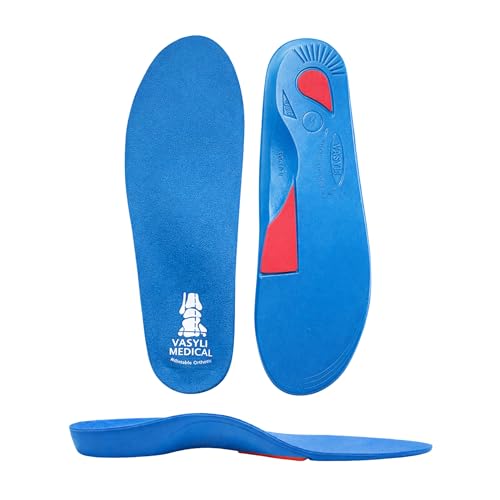
Vasyli’s full-length insoles come from the podiatry world—their custom heat-moldable base includes a built-in rearfoot varus angle that actively corrects overpronation. The blue medium-density version is designed for general orthotic needs, providing biomechanical alignment that reduces knee and lower back pain. Users report significant improvement in stability for conditions like multiple sclerosis, as recommended by physical therapists.
The deep heel cup stabilizes the heel position and maximizes control during gait. Full-length design means the insole does not slip inside the shoe, a common complaint with 3/4-length orthotics. A few users noticed a squeaking noise during walking, though this appears related to friction with certain shoe liners rather than the insole itself.
If you have been prescribed orthotics by a chiropractor or podiatrist, the Vasyli can replicate that support at a fraction of the cost. The heat molding process requires either an oven or a heat gun, and the insole holds its custom shape reliably over time. This is the best option for those who need biomechanical correction rather than just cushioned comfort.
Why it’s great
- Built-in rearfoot varus angle corrects pronation and realigns gait
- Full-length design prevents slippage inside the shoe
Good to know
- May produce a squeaking noise with certain shoe materials
- Requires careful heat molding to avoid damaging the base
5. SOLE Performance Thick Insoles

SOLE’s Thick profile measures 4.8mm total with 3.2mm of cushioning on a ReCORK base, making it the ideal choice for high-volume boots and work shoes. The heat-moldable cork adapts to low, medium, or high arches after a simple home oven process, providing firm arch support that factory insoles cannot match. Military personnel and hikers report three years of daily use without flattening or peeling—a remarkable durability mark.
The stiffness is a feature, not a bug. Users say the support controls plantar fasciitis during extended standing and rucking, with some noting their foot and ankle alignment improved immediately even without heat molding. The trim-to-fit edges allow precise width customization for different toe box shapes, which is essential for boots.
For smaller shoe sizes, the sizing can be tricky—mens size 3/womens size 5 is the smallest option, and the insole is thick enough that it may crowd shallow toe boxes. If your boots have factory insoles that feel too thin, this is the premium upgrade that adds structural integrity and pressure distribution for long hours on hard surfaces.
Why it’s great
- Extremely durable; holds shape for years in military-grade footwear
- Firm cork base absorbs impact and corrects pronation without feeling soft
Good to know
- Thick profile may not fit in low-profile or narrow shoes
- Sizing scale is unusual; measure factory insole before ordering
6. PowerStep Archmolds Insoles
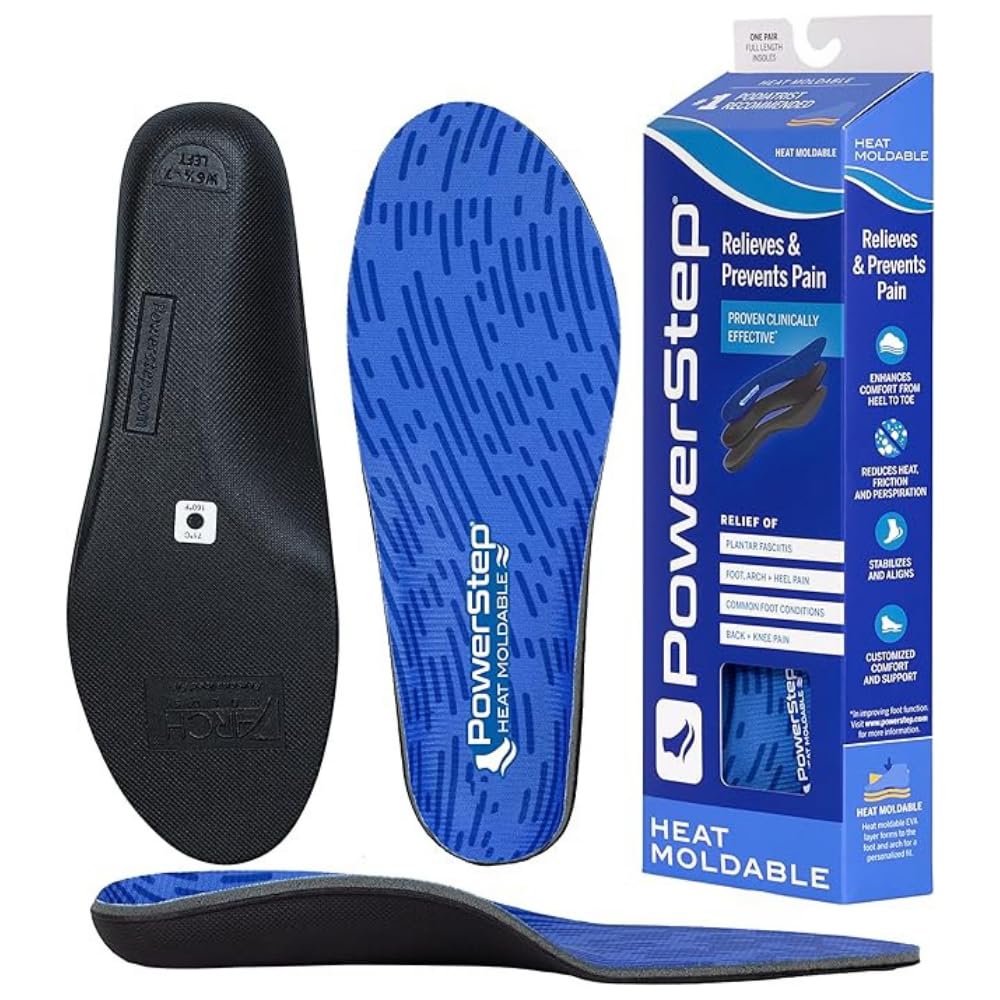
PowerStep Archmolds are heat-moldable insoles that you warm in a home oven and then step into to create a perfect contour for your arch. Designed for over-pronation, they support the foot’s natural structure and help relieve plantar fasciitis, Morton’s neuroma, and Achilles tendonitis. Users who have been using these for years note they stabilize the foot and provide reliable comfort across different shoe types.
The instant fit after molding is a highlight—many users report a super comfortable fit after the first heat cycle. However, the insole is built for low-to-medium arches. Users with fallen arches or very high support needs found the Archmolds caused stress fracture-like pain after two days of use. The insole material also hardens after several months of daily wear on concrete floors, which can cause symptoms to return.
The customer service and return policy are strong, making this a fair gamble for people who want a custom fit without the premium price. If you have a neutral or slightly flat arch and spend time on mixed surfaces, the Archmolds offer excellent base support and a forgiving break-in period.
Why it’s great
- Heat-moldable design provides instant customized arch contour
- Effective for over-pronation and common foot pain conditions
Good to know
- Not suitable for severe fallen arches needing high support
- Material hardens over months of heavy use on hard floors
7. FootScientific Arches Type 3 (High Arch)

The FootScientific Type 3 insoles are specifically designed for high arches and supination, the underpronation gait pattern where weight rolls to the outside of the foot. Unlike generic orthotics, these have a pronounced lateral support structure that encourages correct foot alignment. Users describe them as life-changing for supination issues, helping them walk correctly for the first time.
The mesh material is highly breathable, making these a comfortable choice for all-day wear in casual and athletic shoes. The two-pair pack offers good value, though users frequently note they wish the durability matched the price point—comfort lasts for months, but the structural integrity compresses sooner than expected under heavy use. Sizing is true to foot measurement, so no guessing needed.
If you walk on the outside of your feet or suffer from supination-related ankle and knee pain, these are a targeted solution that general arch supports don’t address. The firm support is not recommended for 8-hour standing shifts without a break-in period, but once adjusted, they provide the corrective alignment that supinators desperately need.
Why it’s great
- Specifically engineered for supination correction and high arches
- Breathable mesh top layer enhances all-day comfort
Good to know
- Durability is moderate; compression occurs after months of heavy use
- May require break-in period before wearing for full shifts
FAQ
Can I use custom arch supports in all my shoes?
How do I heat mold my arch supports at home?
Will custom arch supports help with supination?
Final Thoughts: The Verdict
For most users, the best custom arch supports winner is the Maximum Support Plantar Fasciitis Insoles by FORM because they combine instant heat-moldable customization with excellent shock absorption and odor control at a mid-range price. If you want natural cork that molds gradually with eco-friendly materials, grab the Fulton Cork Orthotic Insoles. And for supination correction or biomechanical issues, nothing beats the FootScientific Arches Type 3.

Mo Maruf
I created WellFizz to bridge the gap between vague wellness advice and actionable solutions. My mission is simple: to decode the research and give you practical tools you can actually use.
Beyond the data, I am a passionate traveler. I believe that stepping away from the screen to explore new environments is essential for mental clarity and physical vitality.