Our readers keep the lights on and my smoothie glass nicely filled. As an Amazon Associate, I earn from qualifying purchases.
A hard floor turns every downward dog, every kneeling lunge, and every seated fold into a point of pressure on your spine, hips, knees, and wrists. Thin mats that worked for studio hopping fail the moment your practice moves home onto tile, concrete, or hardwood. That is the exact gap a high-quality cushioned mat fills — not just padding, but targeted density that absorbs impact without destabilizing your balance.
I’m Mohammad Maruf — the founder and writer behind WellFizz. I’ve spent countless hours comparing thickness ratings, foam chemistries, density numbers, and real-user durability reports so you don’t have to gamble your joint comfort on a guess.
After filtering through dozens of models on density, surface texture, and actual joint protection, I’ve narrowed the field to the seven mats that genuinely deliver on their cushioning promise. This guide covers the best cushioned yoga mat options across every budget and practice style.
How To Choose The Best Cushioned Yoga Mat
Buying a cushioned mat is not about simply grabbing the thickest foam you see. Thickness matters, but density, material composition, surface grip, and intended use case dictate whether a mat protects your joints or sabotages your stability. Here are the key factors to weigh before adding one to your cart.
Foam Density Over Raw Thickness
A thick mat made from low-density foam compresses under your weight, causing your knees and hips to bottom out on the floor within weeks. High-density NBR or TPE foam holds its shape and distributes pressure evenly. Look for mats described as “high-density” or “extra-dense” — that language signals the foam resists permanent compression far better than soft, budget alternatives.
Surface Grip and Material Type
Thick mats face a specific engineering challenge: the softer the foam, the harder it is to maintain a non-slip surface. NBR foam offers plush cushioning but can feel tacky or sticky against bare skin during hot flows. TPE mats strike a denser, more stable middle ground with textured grip patterns. PVC mats, especially closed-cell variants like the Manduka PRO, deliver excellent grip once broken in but require a deliberate salt-scrub phase to remove manufacturing residue that causes initial slipperiness.
Width and Length for Real Body Movement
Standard mats measure 24 inches wide and 68 to 72 inches long. That width forces your hands and feet off the mat during wide-stance poses, lunges, or lateral movements. If you practice dynamic flows, HIIT, or pilates, consider a wider mat (32 inches) so your transitions stay on the cushioned surface. Taller practitioners above six feet should prioritize a mat length of at least 72 inches to keep the head and feet supported.
Portability and Storage Realities
Thick mats weigh more. A 1-inch NBR mat can hit seven to eight pounds, making it a commitment to carry to a studio. Some models include carry straps or bags, but the bulk is unavoidable. If you travel frequently or attend classes away from home, a 6mm high-density mat offers a better balance of cushion and portability. For home-only use, weight becomes irrelevant, and you can prioritize maximum thickness.
Quick Comparison
On smaller screens, swipe sideways to see the full table.
| Model | Category | Best For | Key Spec | Amazon |
|---|---|---|---|---|
| Manduka PRO | Premium PVC | Serious lifelong practice | 6mm / 7.5 lbs / 26″ wide | Amazon |
| Karma Fitness Large Mat | TPE Double Layer | Wide dynamic movement | 10mm / 32″ wide / 72″ long | Amazon |
| BalanceFrom with Knee Pad | NBR Foam + Accessory | Targeted knee & joint relief | 1-inch / includes knee pad | Amazon |
| Gaiam Premium Print Reversible | 6P Free PVC | Stylish reversible practice | 6mm / 68″ x 24″ / textured | Amazon |
| Amazon Basics Extra Thick | Memory Foam NBR | Plush home workout comfort | 1-inch / 74″ long / phthalate-free | Amazon |
| Tone Fitness 1-Inch | NBR Foam | Budget-friendly dense cushion | 1-inch / latex-free / textured | Amazon |
| Fitvids 1/2-Inch Extra Thick | High-Density Foam | Entry-level joint protection | 1-inch / 72″ x 24″ / anti-tear | Amazon |
In‑Depth Reviews
1. Manduka PRO Yoga Mat

The Manduka PRO is the definitive long-term investment for practitioners who have worn through multiple mats. Its 6mm closed-cell PVC construction is far denser than typical foam mats, providing a stable platform that does not compress under body weight. The closed-cell surface prevents sweat and moisture from absorbing into the mat, making it far more hygienic over years of daily use. At 7.5 pounds and 71 by 26 inches, it is heavy and wide — built for home studios or dedicated practitioners who do not need to carry it daily.
Owners consistently report that the PRO requires a break-in period. The manufacturing residue on the surface can feel slippery at first. A scrub with coarse salt and a damp cloth removes that layer and reveals the natural grip that makes this mat a studio favorite. Once broken in, the grip improves with use rather than degrading. The dot-pattern bottom layer locks the mat to the floor without sliding during active flows or heated sequences.
The lifetime guarantee separates the PRO from every other mat on this list. Manduka backs its construction unconditionally, which justifies the premium placement for anyone practicing five or more times per week. The 26-inch width also gives broader frames more room without stepping off the edge during wide-legged poses. It is not the mat for travelers, but for home practitioners seeking one final purchase, it is unmatched.
Why it’s great
- Lifetime durability backed by unconditional guarantee
- 26-inch width supports wider stances and larger frames
- Closed-cell surface resists sweat, bacteria, and odors
Good to know
- Requires deliberate salt break-in for full grip
- Heavy at 7.5 pounds — not ideal for carrying to class
- Higher upfront cost than other cushioned options
2. Large Exercise Mat – Karma Fitness 10mm TPE

The Karma Fitness mat addresses one of the biggest frustrations with standard cushioned mats: width. At 32 inches across, it is 33 percent wider than the typical 24-inch mat, giving your hands and feet room to stay on the cushioned surface during lateral lunges, wide-leg squats, and dynamic flows. The 10mm thickness sits in a sweet spot — thicker than standard 4mm or 6mm mats but not so plush that you lose ground feel for balance poses.
The double-layered TPE material is denser than NBR foam, which means it resists permanent compression better and does not develop permanent indentations from your knees and elbows. The diamond-textured grip on both sides provides traction in all directions, which matters during high-intensity intervals and sweaty sessions. Owners note that the grip holds up even when the mat gets wet, unlike some NBR mats that become slippery with moisture.
A free carry bag with an over-the-shoulder strap makes transport easier, though the mat’s larger folded size means it is still bulkier than a standard roll. The 72-inch length fits taller users without their feet hanging off the end. TPE is also 100 percent recyclable and produces less off-gassing than traditional PVC or NBR mats, making this a solid choice for anyone sensitive to chemical odors during the first few uses.
Why it’s great
- 32-inch width supports wide dynamic movements without stepping off
- Double-layered TPE offers dense, durable cushion without bottoming out
- Diamond texture grip holds traction during sweaty high-intensity workouts
Good to know
- Bulky folded size makes it less portable than standard mats
- Some units arrived with minor cosmetic defects per customer reports
- Width may feel excessive for practitioners who prefer a narrow practice surface
3. BalanceFrom Yoga Mat with Knee Pad and Optional Blocks

BalanceFrom packages more than just a mat. The set includes a 71 by 24-inch, 1-inch thick high-density foam mat and a separate knee pad measuring 24 by 10 inches with a 0.63-inch thickness. This combination directly addresses the most common pain point for cushioned mat buyers: knee discomfort during kneeling poses, lunges, and tabletop positions. The knee pad adds targeted cushion exactly where the mat’s foam compresses most under concentrated body weight.
The main mat uses high-density foam with double-sided textured surfaces that grip the floor and resist sliding on hardwood and tile. The anti-tear surface layer handles daily use without flaking or peeling, though owners note that the included carry straps tend to loosen and unravel after a few weeks of regular rolling and unrolling. This is a minor inconvenience for home users who do not transport the mat daily.
Beyond the knee pad, the set offers optional yoga blocks (depending on the bundle variant), giving beginners a complete starter kit in one purchase. The foam density is noticeably firmer than budget NBR mats, striking a balance between plush comfort and the stability required for balance-focused poses. For anyone rehabbing an injury or dealing with chronic knee sensitivity, the included knee pad alone makes this package worth considering over standalone mats at a similar price point.
Why it’s great
- Includes dedicated knee pad for targeted joint relief during kneeling poses
- High-density foam resists compression better than standard NBR mats
- Double-sided textured surface stays put on hardwood and tile flooring
Good to know
- Carry strap durability is inconsistent — may loosen over repeated use
- Main mat width is standard 24 inches, not ideal for wide lateral moves
- Blocks not included in all bundle variants — verify before purchase
4. Gaiam Yoga Mat – Premium Print Reversible Extra Thick

The Gaiam Premium Print Reversible mat offers a texture that bridges the gap between sticky mats and thick cushions. At 6mm, it is denser and more resilient than standard 4mm mats but still provides noticeable joint relief for knees and wrists on hard floors. The rope-weave texture on both sides gives excellent traction without feeling tacky or sticky against bare skin, and it allows props like blocks to slide easily across the surface during practice.
This mat is 6P-free PVC, meaning it excludes DEHP, DBP, BBP, DINP, DIDP, and DNOP phthalates. That makes it a healthier choice for indoor use, though the material still produces a noticeable chemical odor when first unrolled. Gaiam recommends airing the mat out for two to three days before practice. Owners confirm the smell dissipates completely within about a week of ventilation, leaving no residual odor during use.
The reversible design means you get two color options in one mat, which helps match your practice space or mood without buying a second roll. At 3.08 pounds and 68 inches long, it is lighter and shorter than most 6mm mats, making it a strong option for smaller practitioners or those who carry their mat to a studio regularly. The lifetime warranty adds long-term confidence for a mat in the mid-range price tier.
Why it’s great
- Rope-weave texture provides reliable grip without sticky tackiness
- 6P-free PVC formulation avoids common harmful phthalates
- Reversible design offers two color options in a single mat
Good to know
- Initial chemical odor requires 2-3 days of airing out
- 68-inch length may be too short for practitioners over 5’10”
- 6mm thickness offers moderate cushion — less plush than 1-inch NBR mats
5. Amazon Basics Extra Thick Exercise Yoga Mat
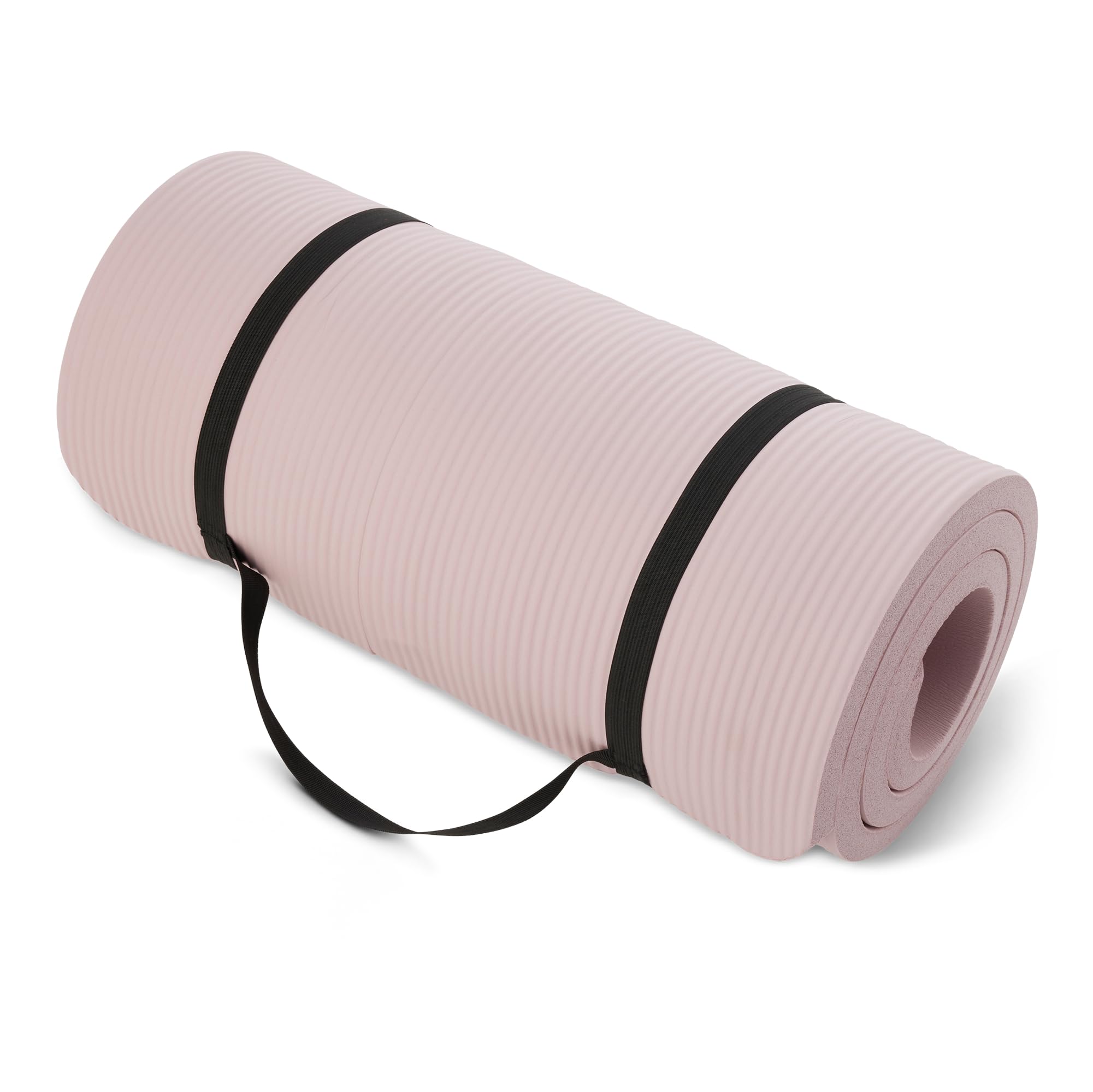
Amazon Basics brings its no-frills value proposition to the cushioned mat category with a 1-inch thick memory foam construction at a competitive price point. The mat measures 74 inches long and 24 inches wide, giving taller users extra length without stepping up to a specialty size. The memory foam formulation offers plush cushioning that excels for floor-based stretching, restorative poses, and floor exercises where joint comfort is the priority.
The surface uses a non-slip textured pattern that provides adequate grip for yoga and pilates, though it performs best on carpet or concrete rather than smooth tile, where some owners report slight sliding during active transitions. The foam is noticeably softer than high-density NBR mats, which means it compresses more under concentrated pressure points like knees and elbows. For gentle flows and seated stretches, this softness feels luxurious. For standing balance poses, the give in the foam makes grounding feel less stable compared to denser options.
The eco-friendly construction excludes phthalates (BBP, DBP, DEHP, DIBP, DNOP, DINP, DIDP, DNHP), heavy metals, and latex, making it a safe choice for sensitive users. Amazon recommends a 48-hour air-out period before first use to dissipate the new-product smell. The included carry strap supports easy transport, and at roughly 4.6 pounds, it is lighter than many other 1-inch NBR mats, improving its portability without sacrificing thickness.
Why it’s great
- Memory foam offers soft, plush cushioning for floor-based stretches
- 74-inch length accommodates taller users comfortably
- Phthalate-free, heavy-metal-free, and latex-free construction
Good to know
- Soft foam compresses noticeably under knees and elbows during kneeling poses
- Surface grip is moderate — may slide on smooth tile during active flows
- Plush feel reduces stability for standing balance poses compared to denser mats
6. Tone Fitness 1-Inch Thick Yoga Mat
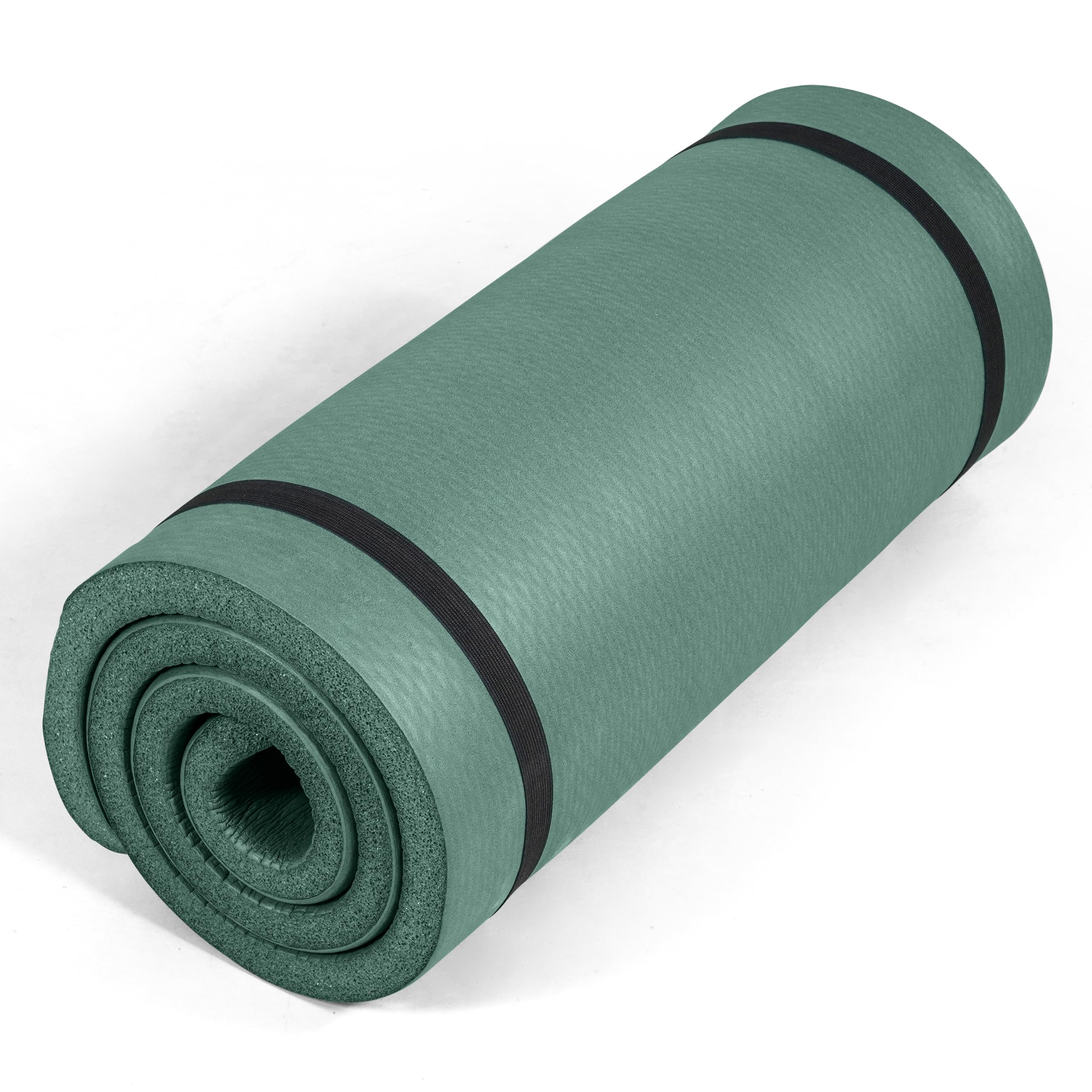
Tone Fitness delivers a 1-inch thick NBR foam mat that feels noticeably denser than entry-level options at a similar thickness. The foam formulation uses a textured surface that provides non-slip performance during hot yoga and pilates sessions, and owners consistently praise the dense cushioning for protecting aging joints — knees, wrists, and hips all benefit from the 1-inch profile. The 72 by 24-inch dimensions match standard studio sizes while adding the extra thickness that thin mats lack.
The NBR material is latex-free, which avoids the allergic reactions some practitioners experience with natural rubber mats. Owners note that the mat produces virtually no chemical smell out of the box, a significant advantage over many PVC and NBR mats that require days of airing out. The surface texture holds up well during sweaty sessions, though like most thick NBR mats, it is better suited for yoga and stretching than for high-intensity interval training where lateral grip matters more.
Portability is a mixed bag. The included elastic strap makes rolling and carrying straightforward, but the bulk of a 1-inch mat means it is not a grab-and-go option for daily studio visits. Owners find it works best as a dedicated home mat that stays unrolled in a practice space. The foam maintains its shape well over months of use, with no reports of permanent compression or cracking along the edges, which is a common failure point on cheaper thick mats.
Why it’s great
- Dense NBR foam offers excellent joint protection without excessive softness
- Latex-free construction safe for users with rubber allergies
- Minimal out-of-box odor — no extended airing period required
Good to know
- Standard 24-inch width feels restrictive during wide lateral movements
- Bulk of 1-inch foam makes it less convenient for daily transport
- Surface grip adequate for yoga but less reliable for HIIT or dynamic agility work
7. Fitvids 1/2-Inch Extra Thick High Density Anti-Tear Exercise Yoga Mat
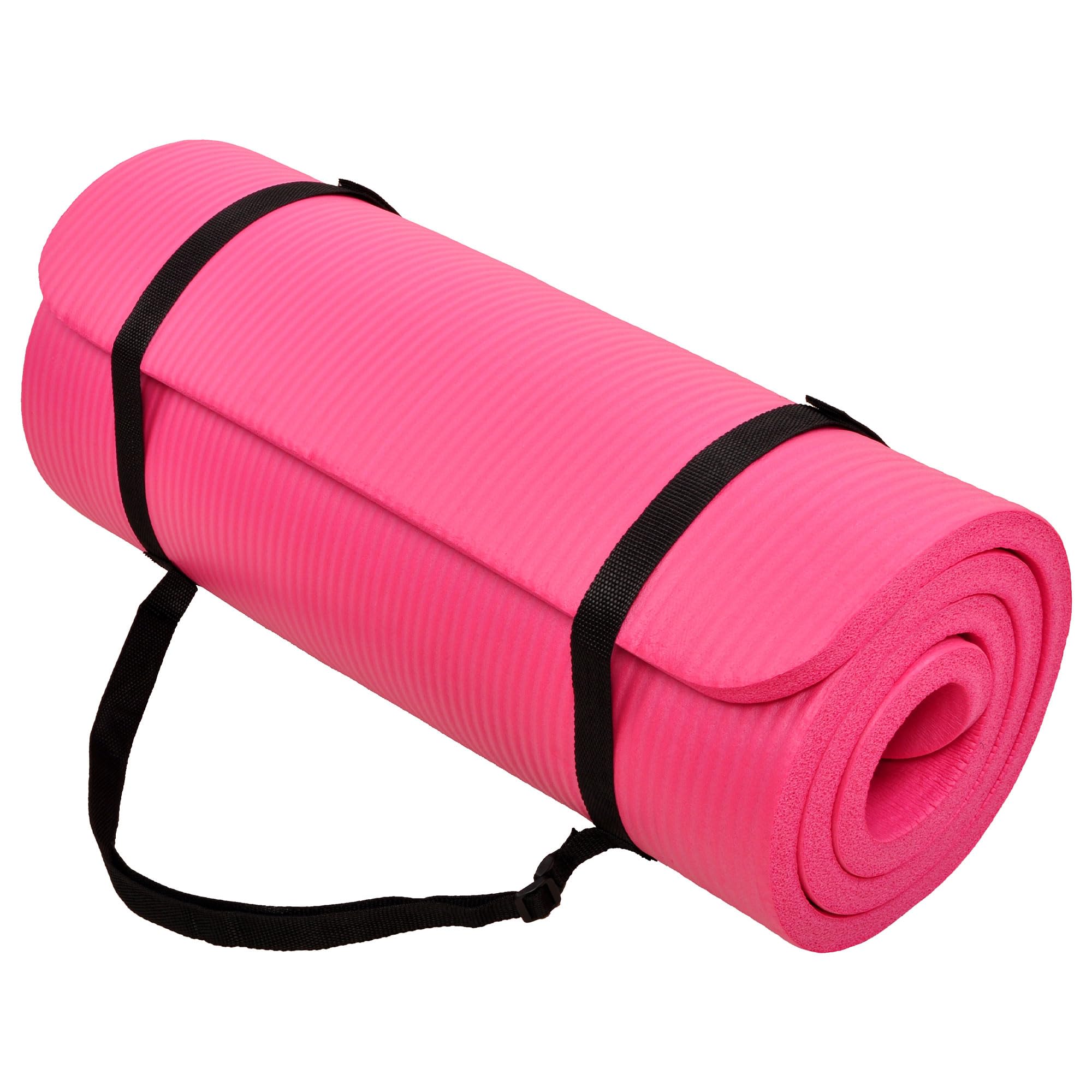
Fitvids offers a 1-inch thick high-density foam mat that serves as a solid entry point for practitioners transitioning from thin rental mats or bare floors. The 72 by 24-inch surface provides standard coverage, and the foam delivers noticeable cushioning for the spine, hips, knees, and elbows — the most commonly reported pressure points. Owners with existing back problems specifically note that the padding reduces discomfort during floor-based exercises and seated stretches.
The double-sided non-slip surface works well on concrete, garage floors, and carpet, but multiple owner reports indicate it becomes slippery on smooth tile surfaces. This limits its versatility for home practitioners with tile or hardwood flooring. The anti-tear construction prevents surface flaking during normal use, though pet owners warn that claws from cats or dogs can puncture the foam surface easily, so it requires careful storage away from pets.
The integrated carry strap and lightweight design make transport manageable, though the foam’s spongey texture means it does not compress as tightly when rolled as denser mats. Owners note that the mat flattens out quickly after unrolling and does not develop permanent curl marks along the edges. For the price, it delivers functional cushion that protects joints without demanding a significant investment, making it a practical choice for casual practitioners or those testing whether a thick mat suits their practice style.
Why it’s great
- 1-inch high-density foam cushions spine, hips, and knees effectively
- Anti-tear surface resists flaking during regular use
- Lightweight with carry strap for easy transport and storage
Good to know
- Surface becomes slippery on smooth tile flooring — best on carpet or concrete
- Soft foam vulnerable to punctures from pet claws
- Spongey texture reduces stability during standing balance poses
FAQ
How thick should a cushioned yoga mat be for knee pain?
Are thick yoga mats bad for balance poses?
How do I clean a thick cushioned yoga mat?
Can I use a thick cushioned mat for hot yoga?
Final Thoughts: The Verdict
For most users, the best cushioned yoga mat winner is the Manduka PRO because its ultra-dense 6mm construction provides long-term joint protection without sacrificing balance stability, and the lifetime guarantee makes it a single purchase for serious practitioners. If you want extra width for dynamic movement, grab the Karma Fitness Large Mat with its 32-inch surface and double-layered TPE cushioning. And for targeted knee relief on a budget, nothing beats the BalanceFrom set that includes a dedicated knee pad for the exact pressure points that standard thick mats miss.

Mo Maruf
I created WellFizz to bridge the gap between vague wellness advice and actionable solutions. My mission is simple: to decode the research and give you practical tools you can actually use.
Beyond the data, I am a passionate traveler. I believe that stepping away from the screen to explore new environments is essential for mental clarity and physical vitality.