Our readers keep the lights on and my smoothie glass nicely filled. As an Amazon Associate, I earn from qualifying purchases.
Hard court surfaces transmit shock directly through your feet, ankles, knees, and lower back with every sprint, stop, and lateral cut. The right pair of cushioned tennis shoes turns that punishing impact into a soft, controlled landing—letting you play longer and recover faster without nursing sore joints the next morning.
I’m Mohammad Maruf — the founder and writer behind WellFizz. I’ve spent hundreds of hours combing through material science data, midsole foam formulations, outsole wear patterns, and real user feedback to isolate the exact cushioning compounds and chassis designs that actually absorb court shock.
This guide breaks down the seven most effective models for players who prioritize impact protection over flash. Whether you’re logging four hours of singles or playing pickleball twice a week, the best cushioned tennis shoes keep each step comfortable and each joint supported.
How To Choose The Best Cushioned Tennis Shoes
Buying cushioned tennis shoes is a search for a specific balance: enough foam to absorb hard-court shock, but enough structure to keep your foot locked in place during lateral pushes. Three factors separate a successful pair from one that leaves you sliding inside the shoe.
Midsole Foam Type and Stack Height
Cushioning starts in the midsole. Traditional EVA foam is lightweight but compresses quickly over time. Higher-end compounds like ASICS FlyteFoam, Mizuno’s Wave Plate combined with U4ic foam, or Hoka’s compression-molded EVA retain their resilience longer. Stack height—the distance from your foot to the ground—directly correlates with impact absorption. Models with 20 mm or more of heel stack provide noticeably softer landings, but too much height can compromise court feel and stability.
Lateral Support and Chassis Rigidity
A plush sole is useless if your foot rolls over the edge during a hard cut. Look for external heel counters, midfoot shanks, or wraparound support systems like the 4D Support Chassis found in Wilson’s Rush Pro line. The shoe must bend at the forefoot but resist twisting through the arch. That rigidity prevents the ankle from collapsing when you push off laterally.
Outsole Rubber Compound and Tread Pattern
Cushioned midsoles sit on top of the outsole, which takes the actual abrasion. Softer gum rubber delivers superior grip on hard courts but wears faster. Tougher carbon rubber extends sole life at the cost of some traction. Herringbone tread patterns give you the ability to slide and stop predictably, while dot-pattern soles offer better rotational grip for quick direction changes. Match the compound to your primary court surface—clay, hard, or artificial grass.
Quick Comparison
On smaller screens, swipe sideways to see the full table.
| Model | Category | Best For | Key Spec | Amazon |
|---|---|---|---|---|
| Wilson Rush Pro 4.5 | Premium | All-court lateral stability | 4D Support Chassis + 33 mm heel stack | Amazon |
| Mizuno Wave Enforce Court | Premium | Knee-friendly impact damping | Wave Plate + U4ic foam midsole | Amazon |
| Hoka Bondi 9 | Premium | Maximum plushness for walking | Compression-molded EVA + 2E width option | Amazon |
| Wilson Rush Pro Ace | Mid-Range | Budget-friendly cushioned court shoe | Padded interior + 4D Support Chassis | Amazon |
| ASICS Game FlyteFoam | Mid-Range | Lightweight all-court training | FlyteFoam midsole + 10 oz weight | Amazon |
| Brooks Anthem 8 (Women’s) | Mid-Range | Wide toe box for long walks | BioMoGo DNA cushioning + 12 mm drop | Amazon |
| Brooks Anthem 8 (Men’s) | Mid-Range | Daily walking on hard pavement | BioMoGo DNA cushioning + 12 mm drop | Amazon |
In‑Depth Reviews
1. Wilson Men’s Rush Pro 4.5 Tennis Shoes
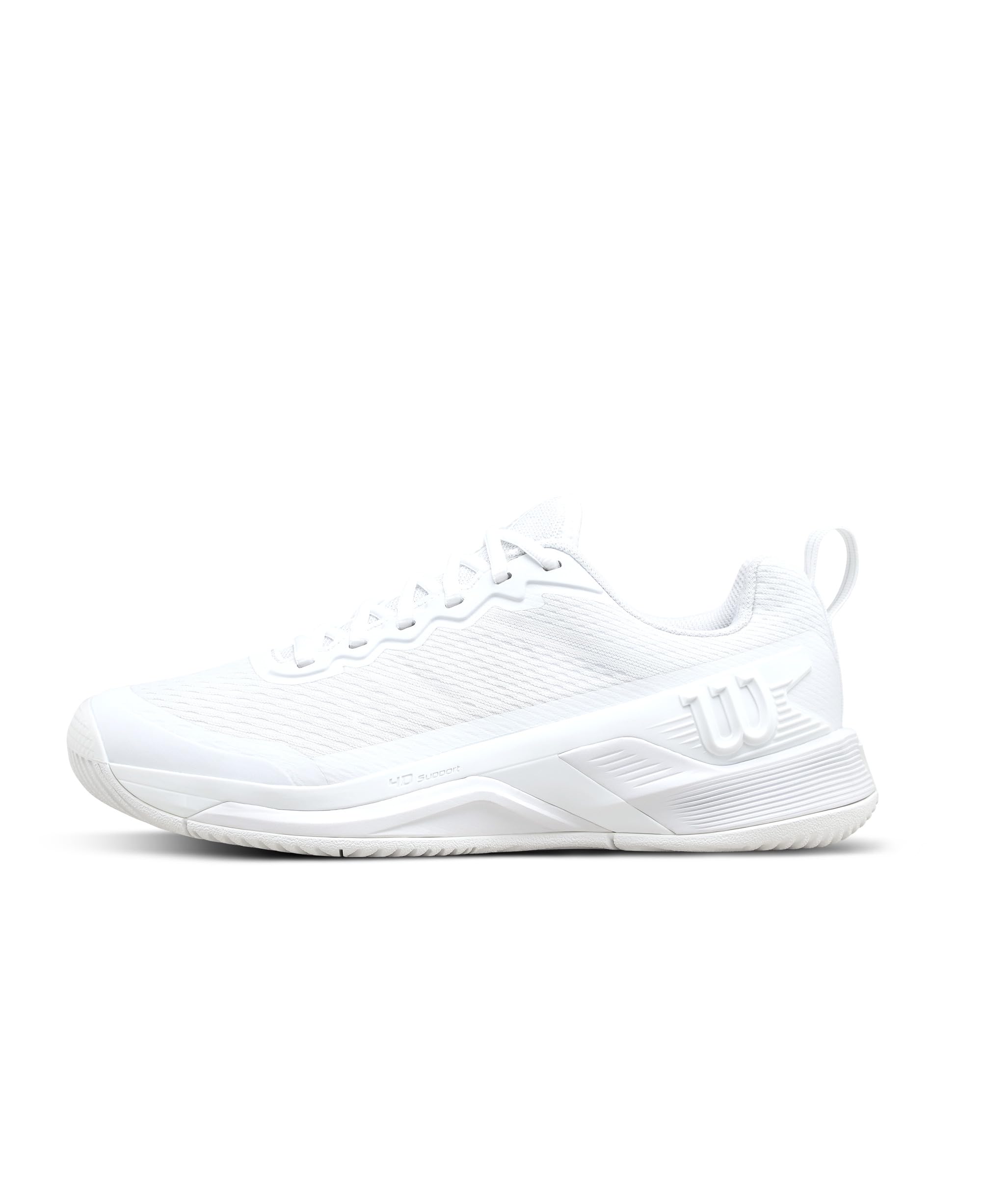
The Rush Pro 4.5 is Wilson’s most balanced court shoe, pairing a responsive 33 mm heel stack with the 4D Support Chassis that locks the heel and midfoot without adding bulk. Reviewers consistently note zero break-in period — you can step straight from the box into a three-set match. The full-length rubber outsole uses a modified herringbone pattern that grips hard courts aggressively while still allowing controlled slides.
After roughly 150 hours of use—3 to 4 hours per week over a year—players report the midsole retains its shape with minimal compression. Several users switching from the previous Rush Pro 4.0 say this version improves both heel lockdown and forefoot flexibility.
The fit runs true to size for most foot shapes, though players with very wide feet may prefer a half-size up. The colorway options are understated but sharp — a bonus for those who care about looking good on the baseline. For a cushioned shoe that handles lateral bursts and hard-court impact in equal measure, this is the standard.
Why it’s great
- Plug-and-play comfort with almost no break-in needed
- 4D Support Chassis delivers premium lateral stability for hard cuts
- Long-lasting midsole retains cushion after 150 hours of court time
Good to know
- May feel snug for players with wider forefeet
- Outsole durability shows wear before the foam collapses
2. Mizuno Men’s Wave Enforce Court Shoe
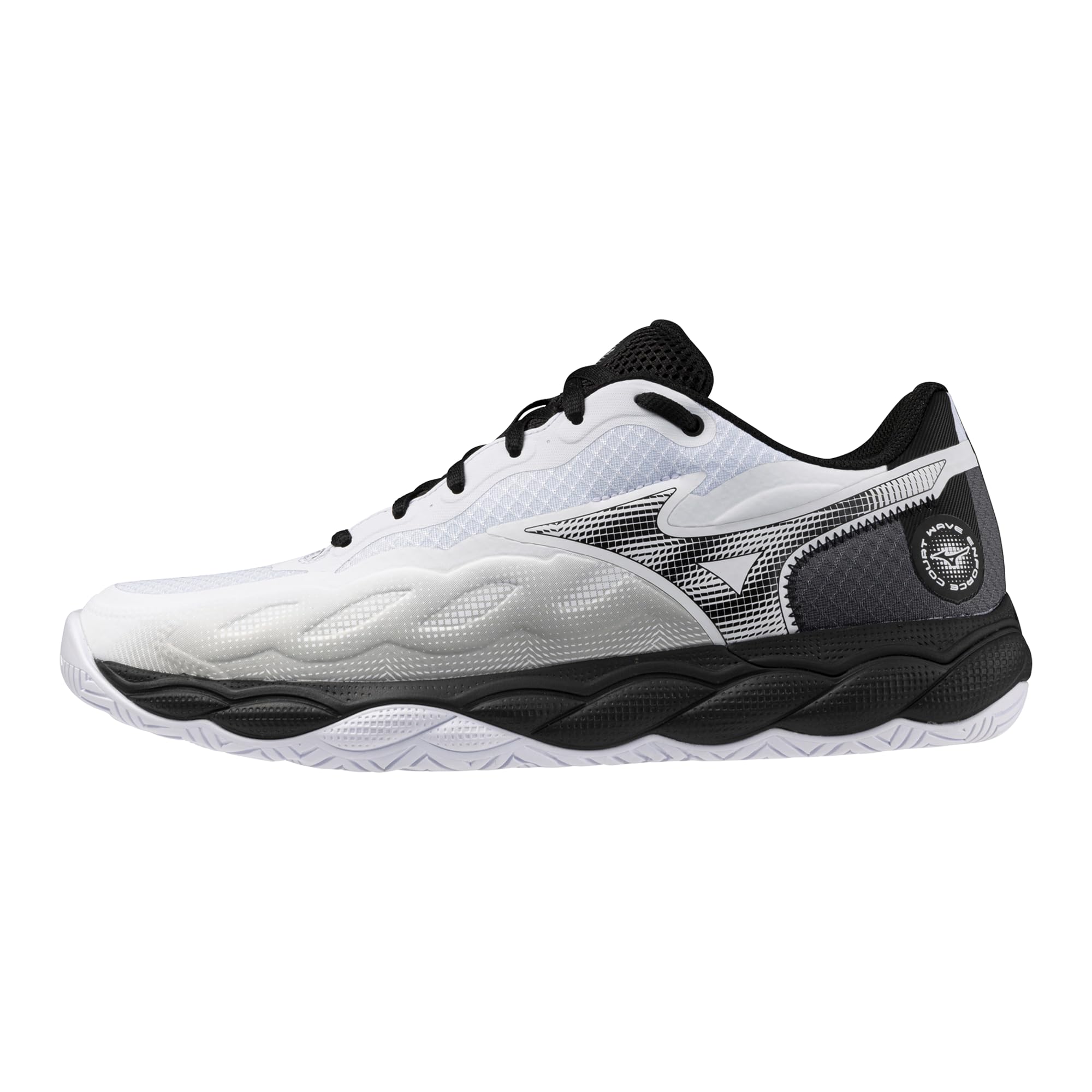
Mizuno’s Wave Enforce Court takes a different approach to cushioning: instead of a thick slab of foam, it uses a corrugated Wave Plate embedded in the midsole that simultaneously absorbs shock and disperses impact across the entire footbed. The U4ic foam layer sits between the plate and the foot, creating a sensation that users describe as “squishy but not mushy” — the shoe gives under load but returns energy during toe-off.
Pickleball and padel players have adopted this model heavily, praising the soft rubber outsole composition that gives excellent grip on both indoor and outdoor courts. The shoe requires a runner’s knot to lock the heel properly for some foot shapes, but once dialed in, the ankle and arch support feel secure. Reviewers note that the midsole remains comfortable even during four-hour sessions, with no mid-foot fatigue or hot spots.
Build quality matches ASICS and Nike at the same premium tier, and the outsole tends to outlast competitors like K-Swiss by about a month under four-times-per-week play. The fit leans slightly narrow out of the box, though the upper does stretch and widen slightly after the first few wears. For players dealing with knee pain from hard courts, the Wave plate’s impact dispersion makes this a notable option.
Why it’s great
- Wave Plate technology redistributes impact away from knees
- Soft rubber outsole provides superior grip for quick pivots
- Very light and speedy feel despite substantial cushion
Good to know
- Heel slip may occur without a runner’s knot
- Narrow fit requires a break-in period for wider feet
3. Hoka Womens Bondi 9

The Bondi 9 is Hoka’s max-cushion flagship, built around a compression-molded EVA midsole that delivers the softest landing in this lineup. With a stack height that approaches 30 mm in the heel, the shoe absorbs pavement impact so effectively that multiple users report being able to stand or walk all day without foot pain. The 2E wide width option is a rare find in cushioned footwear, accommodating bunions or wide forefeet without pinching.
While designed primarily as a walking or recovery shoe, the Bondi 9 has found a following among players who use it for court-adjacent activities or casual wear after matches. The breathable mesh upper and plush collar lining reduce irritation during long wear, and the outsole rubber offers reliable traction on dry surfaces. Users coming from the Bondi 8 or the Clifton 10 notice a firmer lacing system that holds the midfoot more securely.
The trade-off is weight — the Bondi 9 is noticeably heavier than court-specific models, which can feel sluggish during fast lateral movements. The sole is also quite thick, reducing ground feel and making quick direction changes feel slightly disconnected. It is the best cushioned option for walking, recovery, and all-day comfort, but it is not designed for competitive court play.
Why it’s great
- Maximum EVA cushion absorbs heavy pavement impact
- Available in 2E extra wide for wider feet
- Excellent arch support for standing all day
Good to know
- Heavier construction limits agility on the court
- Thick sole reduces ground feel for lateral movements
4. Wilson Men’s Rush Pro Ace Tennis Shoes
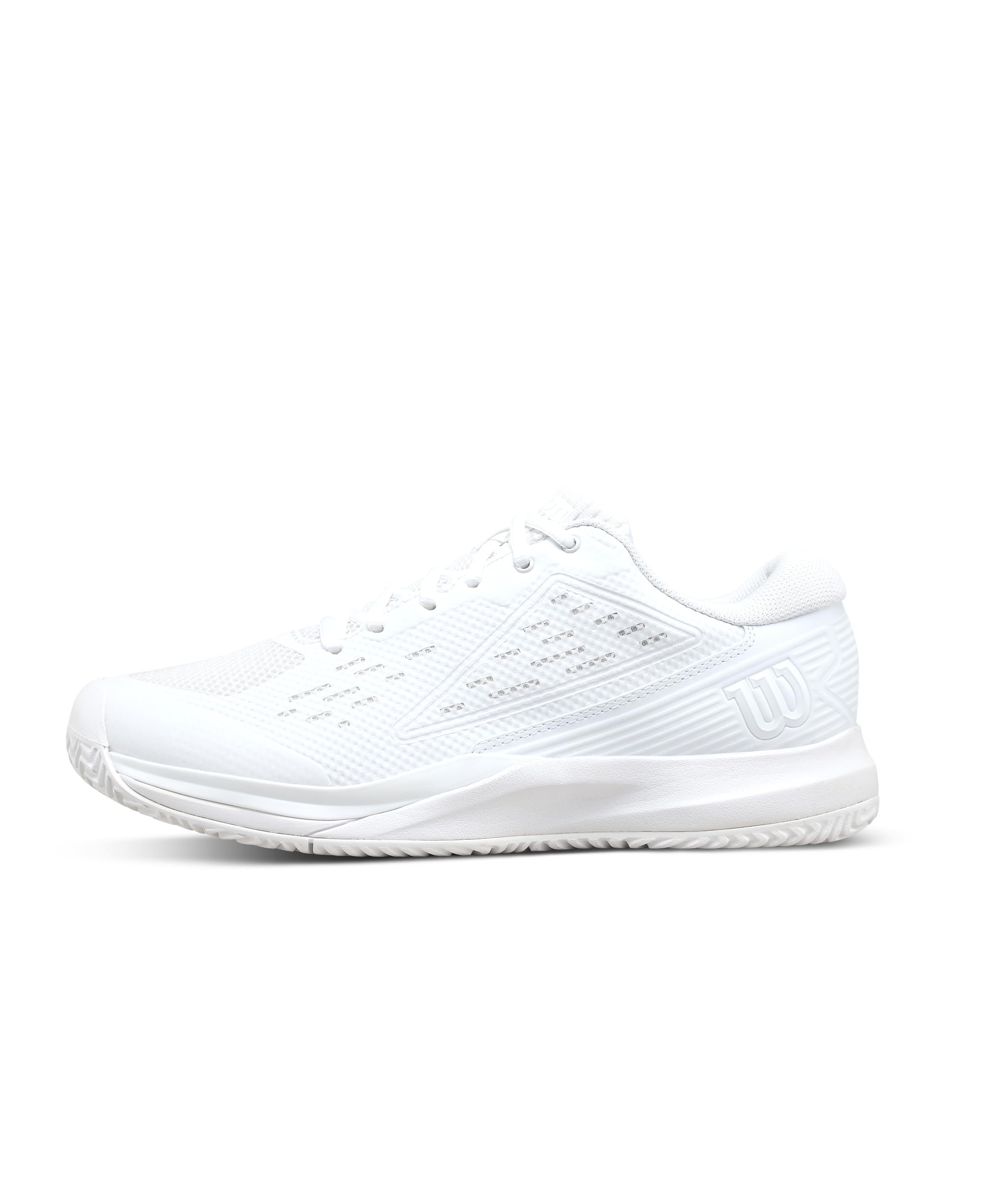
The Rush Pro Ace brings Wilson’s 4D Support Chassis down to a more accessible price point, offering many of the same lateral stability features as the 4.5. The padded interior and slightly wider fit make it a strong choice for players with medium-to-wide feet who want cushioning without squeezing into a narrow toe box. Reviewers praise the impact protection during hard-court play and the balanced grip that handles both cuts and controlled slides.
Players using the shoe for pickleball 2 to 3 times per week report the midsole breaks in quickly and maintains its plush feel through several months of use. The fit runs true to size, and several users noted that the heel area felt wider than the ASICS Gel Resolution 10, which can be a relief for those who experience heel pinching in other court shoes. The outsole rubber compound provides reliable traction on both indoor and outdoor surfaces.
Durability is the main compromise at this tier. Hard-playing teenagers and heavy singles players report the outsole wearing thin before the cushioning foam gives out — the shoe may not survive a full season of aggressive court movement. For recreational players logging 6 to 8 hours per week, the balance of comfort, stability, and value is hard to beat in this segment.
Why it’s great
- 4D Support Chassis provides sturdy lateral containment
- Wider heel and toe box accommodate broader feet comfortably
- Padded interior delivers good impact protection at a lower cost
Good to know
- Outsole wears faster under heavy singles play
- May not last a full season for aggressive movers
5. ASICS Men’s Game FlyteFoam Tennis Shoes
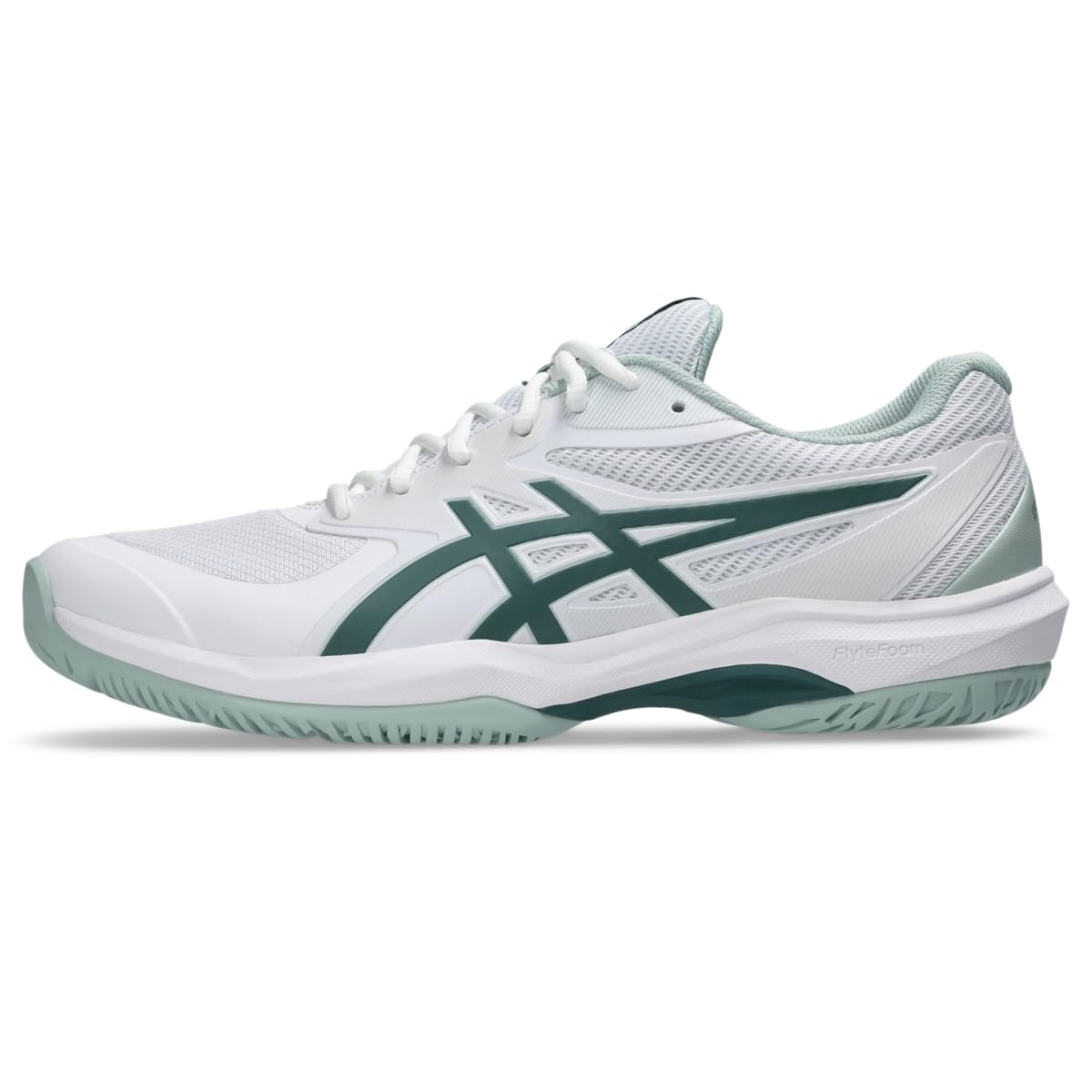
ASICS builds the Game FlyteFoam around their proprietary FlyteFoam midsole compound, which is lighter than standard EVA while providing responsive cushioning that doesn’t pack out quickly. The shoe weighs in around 10 ounces — noticeably lighter than most cushioned court shoes — making it popular for players who move a lot and value a quick feel. The herringbone outsole pattern delivers excellent traction on indoor and outdoor hard courts.
Reviewers using the shoe for pickleball or table tennis report pain-free feet even after hours of lateral movement, and the midsole provides enough responsiveness for explosive starts. The upper is a breathable mesh that keeps feet cool during long sessions, and the fit runs true to size with good ankle and arch support. Several users bought a second pair immediately after trying the first, citing the combination of low weight and sufficient cushion as rare in this price range.
The FlyteFoam midsole, while durable, is not as plush as higher-stack options from Mizuno or Hoka. Players seeking a very soft, pillowy landing may find the Game FlyteFoam a bit firm underfoot. The outsole shows moderate wear after about 10 hours per week of heavy use, though the support structure holds up well through the life of the shoe. It strikes an excellent balance for the player who wants light weight without sacrificing all cushioning.
Why it’s great
- FlyteFoam midsole is lightweight and responsive
- Herringbone outsole provides strong grip on hard courts
- True-to-size fit with good ankle and arch support
Good to know
- Midsole cushioning is firmer than max-cushion competitors
- Outsole wears down faster under heavy weekly use
6. Brooks Women’s Anthem 8 Neutral Running Shoe
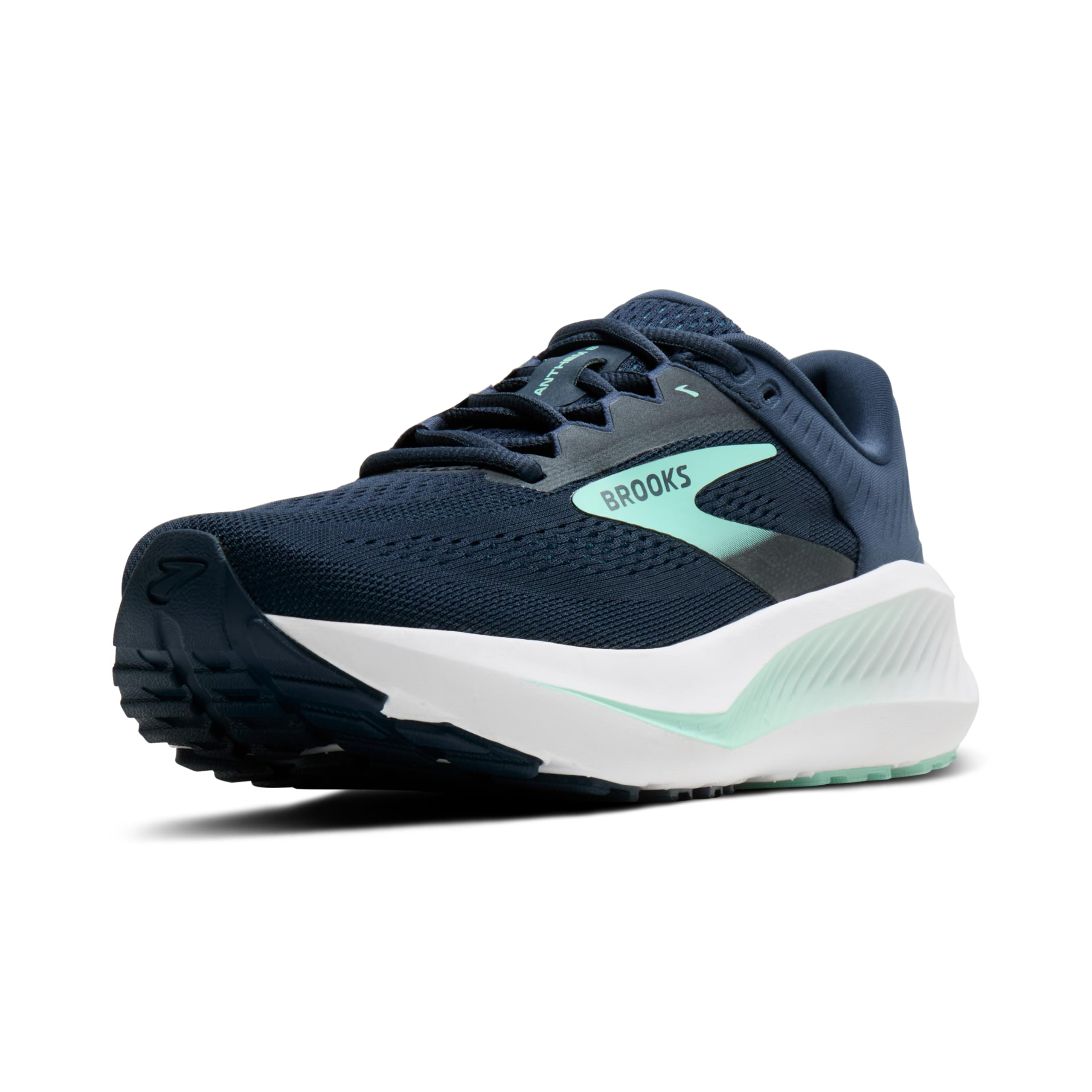
The Brooks Anthem 8 uses BioMoGo DNA cushioning — a compound that adapts its firmness based on the runner’s stride weight and speed. The result is a ride that feels soft for lighter impacts and supportive during heavier landings. The shoe features a wide toe box that allows toes to splay naturally, which walkers and standers consistently praise for eliminating cramped feeling after long hours.
Users who walk 2 miles daily on a treadmill incline or stand for 12-hour shifts report that the Anthem 8 eliminates foot pain and arch fatigue. The 12 mm heel-to-toe drop encourages a heel-strike gait that many casual walkers find natural, and the breathable mesh upper keeps the foot ventilated. The color options are vibrant and accurate to product photos, adding a visual appeal that reviewers frequently mention.
Brooks designed the Anthem 8 as a neutral running shoe, so it lacks the lateral support features of a court shoe. Players attempting lateral cuts on a tennis court may feel the foot roll over the edge of the midsole. The outsole is built for pavement and treadmill belts, not for hard-court abrasion. It is a comfortable walking and standing shoe, but not a replacement for a court-specific model.
Why it’s great
- BioMoGo DNA cushioning adapts to your stride for personalized comfort
- Wide toe box allows natural toe splay during walking
- Breathable mesh upper keeps feet cool during long wear
Good to know
- Not designed for lateral court movements — stability is limited
- Outsole is optimized for pavement, not hard-court abrasion
7. Brooks Men’s Anthem 8 Neutral Running Shoe
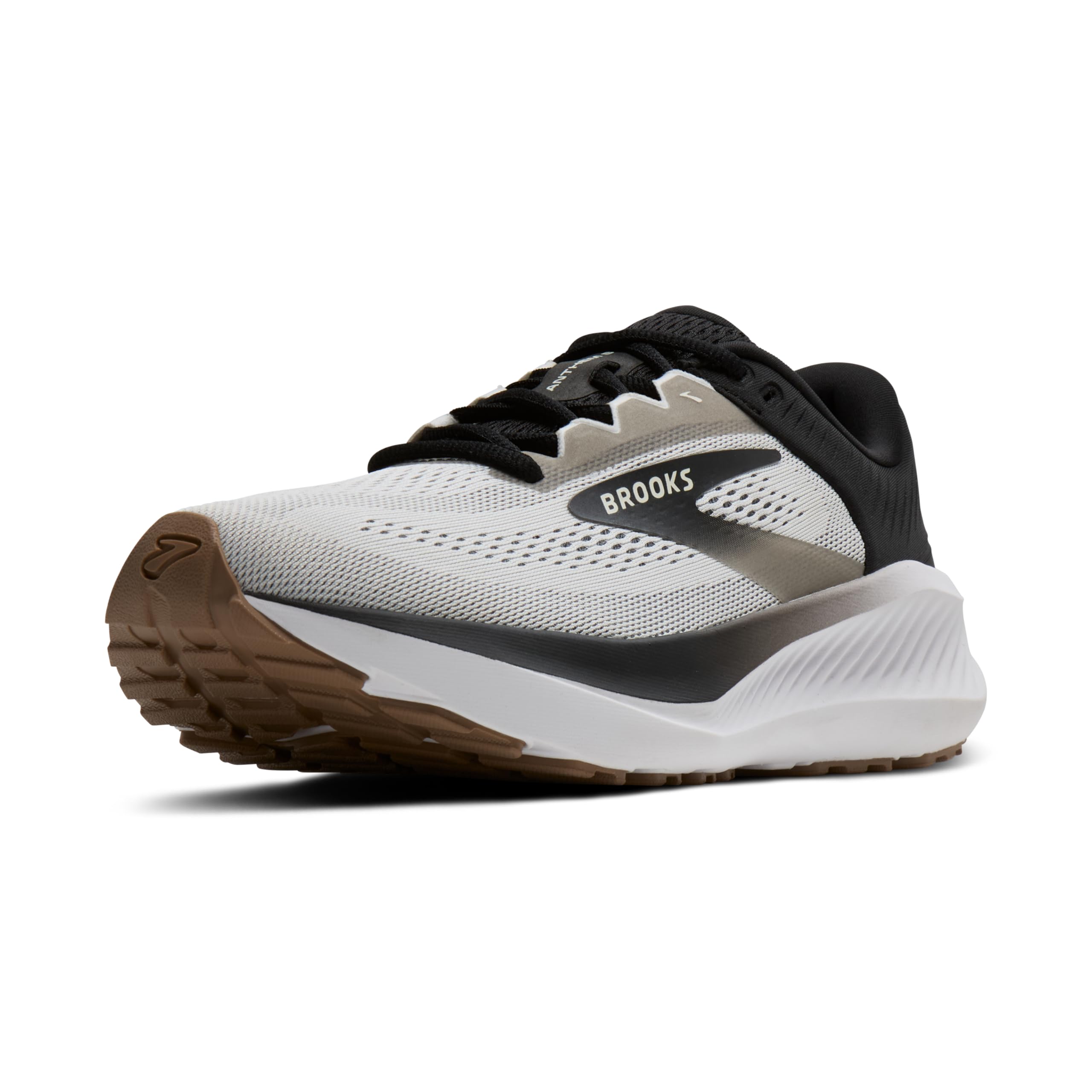
The men’s version of the Anthem 8 shares the same BioMoGo DNA midsole and wide toe box as the women’s model, offering the same adaptive cushioning that softens under light load and firms up during harder impacts. Users report that the shoe feels like “walking on padded pillows” and that it has noticeably reduced knee pain for those with prior joint issues. The toe-friendly design prevents black toenails even after long walks.
One reviewer wore the shoes on a trip to Europe, logging 22 miles of walking without any foot discomfort. Another bought them for their 78-year-old father who walks 3 miles daily, and the father found the fit and feel immediately comfortable. The laces stay tied through the day and are long enough for double knotting, a small detail that walkers appreciate when covering long distances.
Like the women’s model, the men’s Anthem 8 is a neutral running shoe. It provides excellent walking and standing cushioning but lacks the chassis rigidity and lateral outsole grip required for court sports. The outsole is designed for road and treadmill use, and the midsole foam will wear faster under the abrasive forces of hard-court play. It is a strong cushioned walking shoe but not a court shoe.
Why it’s great
- Extremely comfortable for walking and standing — reduces knee pain
- Toe-friendly design prevents black toenails on long walks
- Laces stay tied and are long enough for double knotting
Good to know
- Lacks lateral support for court sports like tennis or pickleball
- Outsole is optimized for pavement, not hard-court abrasion
FAQ
Can I run in cushioned tennis shoes?
How often should I replace cushioned tennis shoes?
Do cushioned tennis shoes reduce knee pain?
Final Thoughts: The Verdict
For most players, the best cushioned tennis shoes winner is the Wilson Rush Pro 4.5 because it delivers the ideal balance of plush impact absorption and lateral stability for hard-court play without requiring a break-in period. If you need maximum knee-friendly cushioning from a mechanical Wave plate, grab the Mizuno Wave Enforce Court. And for all-day walking comfort with a wide toe box, nothing beats the Hoka Bondi 9.

Mo Maruf
I created WellFizz to bridge the gap between vague wellness advice and actionable solutions. My mission is simple: to decode the research and give you practical tools you can actually use.
Beyond the data, I am a passionate traveler. I believe that stepping away from the screen to explore new environments is essential for mental clarity and physical vitality.