Our readers keep the lights on and my smoothie glass nicely filled. As an Amazon Associate, I earn from qualifying purchases.
The search for the best cushioned athletic shoes for flat feet pits two competing needs against each other: the soft, shock-absorbing foam you crave for comfort versus the rigid arch support your collapsing arches demand to prevent overpronation. Dense cushioning, if not engineered correctly, can actually destabilize a flat foot, making the wrong choice actively harmful for your knees, hips, and lower back.
I’m Mohammad Maruf — the founder and writer behind WellFizz. I’ve spent hundreds of hours researching biomechanics, reading peer-reviewed podiatry studies on footwear and gait, and cross-referencing thousands of user reviews for this specific category of stability runners and neutral shoes with built-in arch support.
This process identifies the models that deliver genuine pronation control without sacrificing the plush step-in feel your feet need. This is your complete guide to finding the right cushioned athletic shoes for flat feet.
How To Choose The Best Cushioned Athletic Shoes For Flat Feet
Flat feet, or fallen arches, cause the foot to roll inward excessively (overpronation). The right shoe must pair a stable platform with a resilient midsole that doesn’t bottom out. Here are the three critical factors to evaluate.
Stability Technology: Guide Rails vs. Medial Posts vs. J-Frame
This is the single most important differentiator. Traditional stability shoes use a firm medial post — a hard piece of foam packed into the arch side — to stop the foot from rolling. Modern systems like Brooks’ GuideRails and Saucony’s J-Frame create a raised, supportive cradle around the heel without the harsh, blocky feeling. For flat feet, a dynamic stability system is usually more comfortable than a rigid post.
Midsole Density and Stack Height
High-stack, plush midsoles (like those used by Hoka and ASICS Nimbus) feel great, but pure squish can destabilize a flat foot. Look for dual-density foams where a softer top layer cushions the foot strike and a firmer bottom layer provides the platform stability. A stack height between 25mm and 40mm is the sweet spot for cushioning without sacrificing ground feel and control.
Heel-to-Toe Drop and Toe Box Volume
Flat-footed runners often prefer a moderate drop (8mm to 12mm) because it takes pressure off the Achilles and encourages a heel-first strike that the shoe’s stability elements can control. A roomy toe box is also crucial — cramped toes worsen overpronation because the foot can’t splay naturally on impact.
Quick Comparison
On smaller screens, swipe sideways to see the full table.
| Model | Category | Best For | Key Spec | Amazon |
|---|---|---|---|---|
| Hoka Arahi 7 (Men’s) | Stability | Daily training & long walks | J-Frame stability technology | Amazon |
| Brooks Glycerin GTS 23 (Men’s) | Supportive Neutral | Maximum cushioning + support | GuideRails holistic support system | Amazon |
| Brooks Glycerin GTS 23 (Women’s) | Supportive Neutral | Plush long-distance runs | GuideRails + DNA LOFT v3 cushioning | Amazon |
| ASICS Gel-Nimbus 28 | Premium Neutral | Plush, smooth heel-to-toe transitions | PureGEL + FF BLAST PLUS ECO foam | Amazon |
| Saucony Hurricane 24 (Women’s) | Premium Stability | Overpronation & injury recovery | PWRRUN PB + J-Frame support frame | Amazon |
| Brooks Ghost Max (Women’s) | Neutral Cushion | Plantar fasciitis relief | GlideRoll Rocker sole geometry | Amazon |
| ASICS Gel-Cumulus 27 (Men’s) | Mid-Range Neutral | Versatile daily training & walking | Rearfoot PureGEL + FF BLAST foam | Amazon |
| Saucony Ride 18 (Women’s) | Neutral Daily Trainer | All-day comfort & joint pain relief | PWRRUN+ midsole with anti-shock | Amazon |
| Hoka Arahi 7 (Men’s 2nd Listing) | Stability | High-weight support & durability | J-Frame stability technology | Amazon |
In‑Depth Reviews
1. Hoka Mens Arahi 7
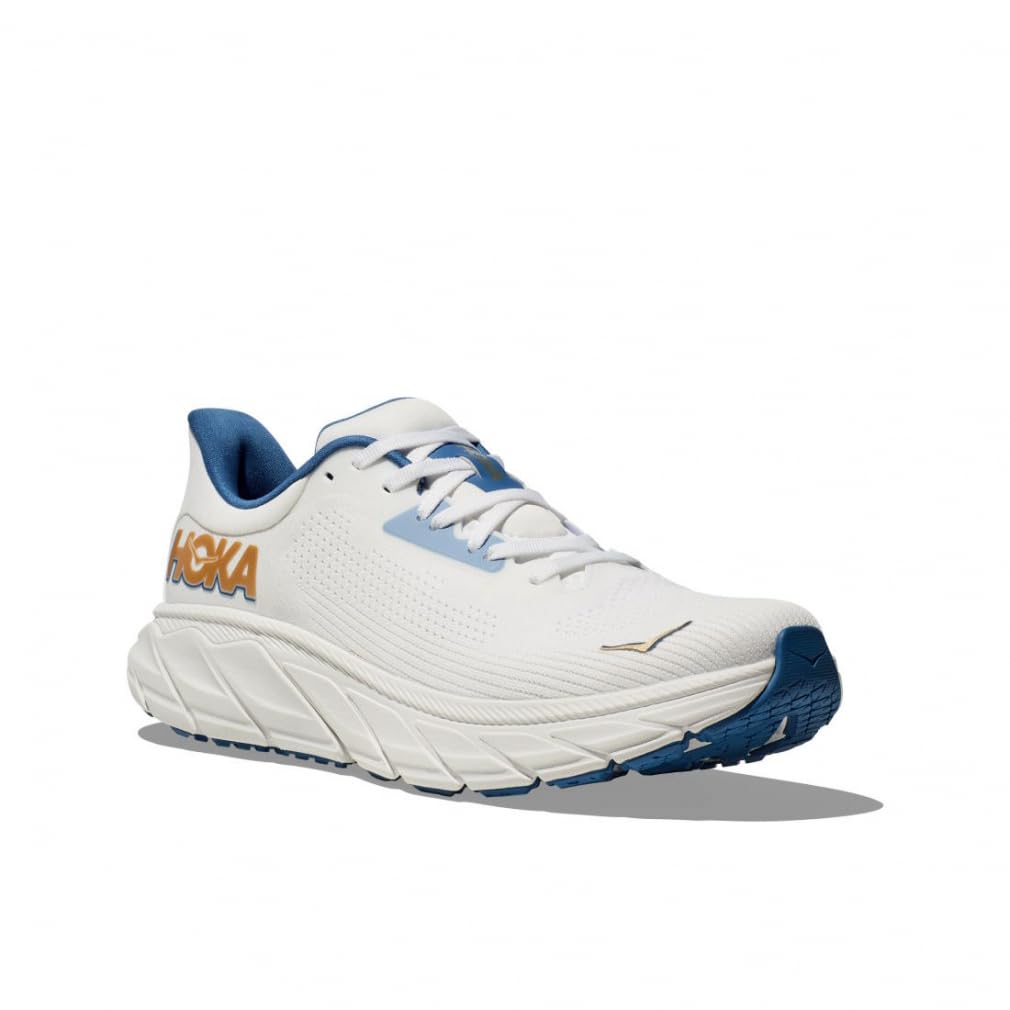
The Hoka Arahi 7 uses a J-Frame stability system — a firmer, high-density foam that wraps from the heel through the arch — instead of a medial post. This creates a smooth, stable platform that flat-footed runners describe as “noticeable but not intrusive.” The plush cushioned midsole delivers the signature Hoka softness without letting your foot collapse inward, making it a standout choice for those new to stability shoes who dislike traditional harsh support.
User reviews consistently highlight the zero break-in period and the drastic reduction in foot fatigue. One walker who logs over 10K steps daily reported no lingering foot pain after switching to the Arahi 7. The shoe fits true to size, though multiple buyers with narrow feet noted the heel counter has a firm internal backing that can feel uncomfortable when resting with legs elevated. The outsole also struggles for traction on wet or oily surfaces, so steer clear of slick floors.
Overall, this is the most balanced cushioned stability shoe on the market for flat feet. It provides enough structure to support overpronation while retaining a soft, pillowy step-in feel that rivals premium neutral trainers.
Why it’s great
- J-Frame provides non-intrusive support that feels natural
- Zero break-in required, true to size
- Excellent for high-mileage walking and daily training
Good to know
- Heel counter has a hard internal backing
- Poor grip on wet or oily surfaces
2. Brooks Men’s Glycerin GTS 23 Supportive Running Shoe
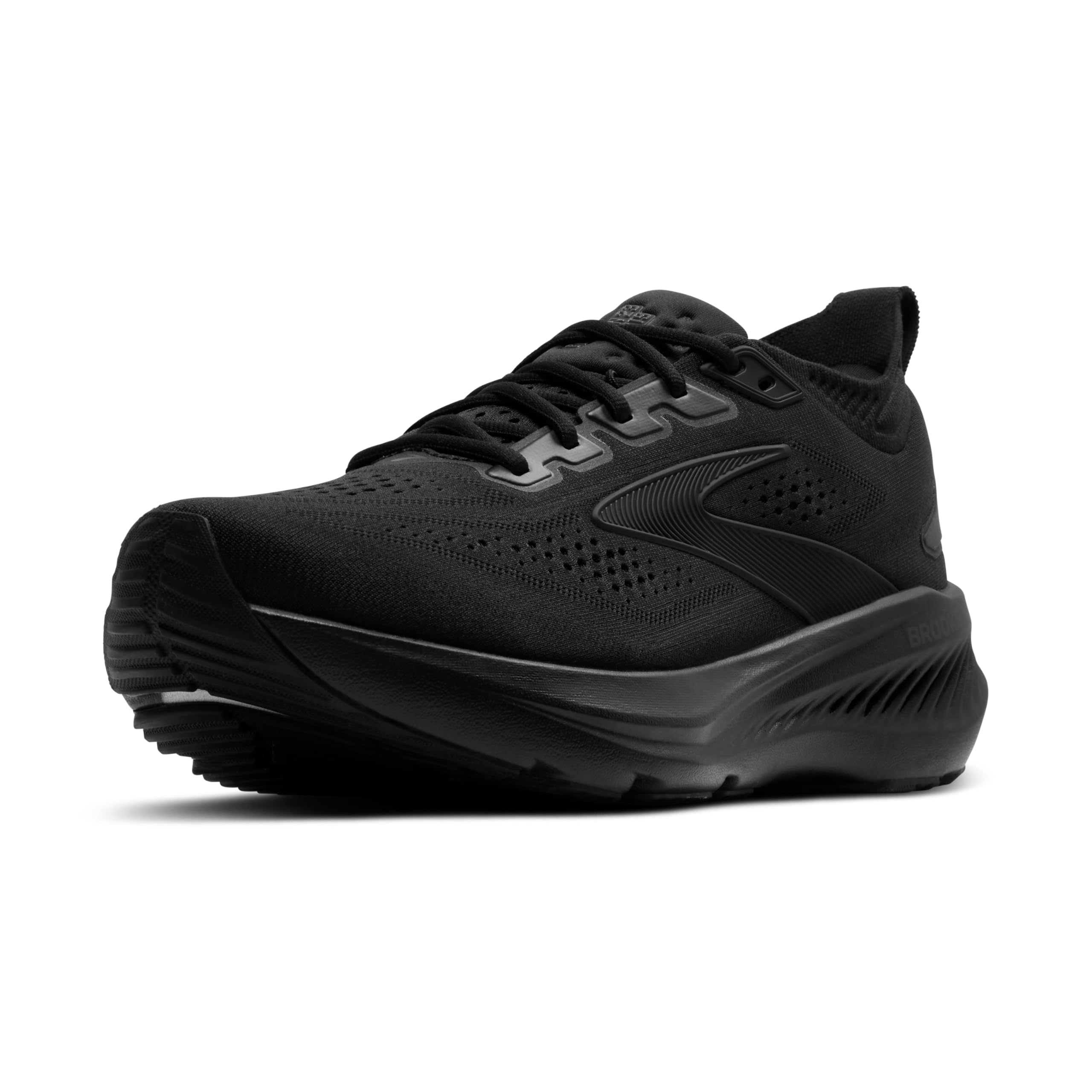
The Brooks Glycerin GTS 23 represents the pinnacle of the “supportive neutral” category — a shoe that offers luxurious, plush cushioning without sacrificing the structural integrity flat feet require. The GuideRails holistic support system cradles the heel and gently guides the foot into a natural gait cycle, reducing excessive knee and hip rotation that overpronation causes. Runners report that its lower heel-to-toe drop compared to older versions actually relieved minor foot pain.
User feedback is overwhelmingly positive, with one long-term Brooks wearer calling it “by far the best” update in the series for its superior spring and deeper cushioning. Several reviews note that the shoe eliminated chronic lower back pain within the first half-hour of wear. However, wide-foot buyers should be careful: the standard wide is described as a bit snug, while the extra-wide runs slightly too loose, making sizing a bit tricky for those in between.
This is a premium, durable choice for runners who need a responsive stability frame combined with a cloud-like midsole. It’s a serious investment, but the quality of the materials and the long-lasting GuideRails system justify the cost for daily runners.
Why it’s great
- GuideRails reduce knee and hip rotation effectively
- Plush DNA LOFT v3 cushioning with great energy return
- Highly effective for relieving lower back pain
Good to know
- Wide sizing is inconsistent; try before you buy
- Premium price point; value is high but initial cost is steep
3. Brooks Women’s Glycerin GTS 23 Supportive Running Shoe
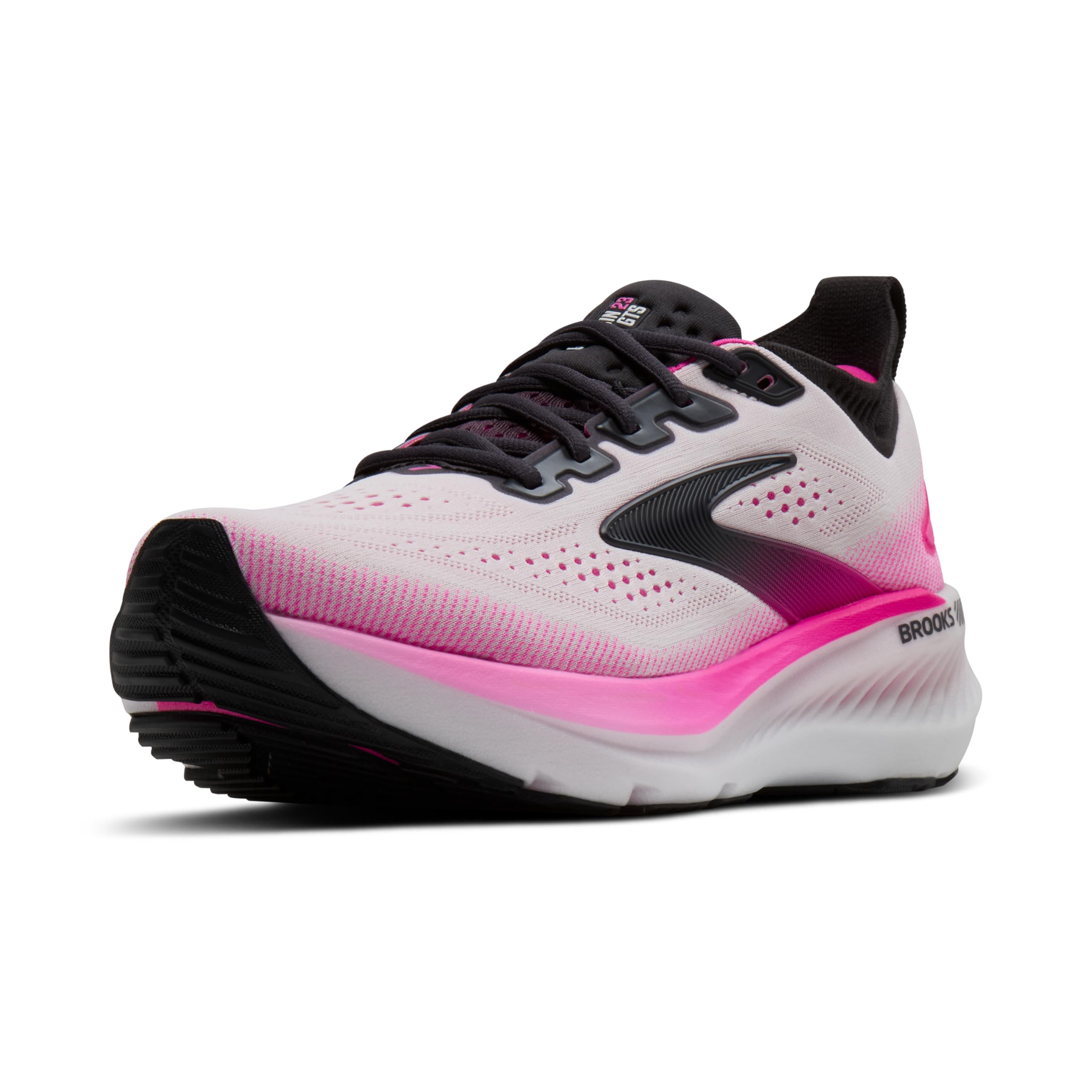
The women’s version of the Brooks Glycerin GTS 23 shares the same revolutionary GuideRails system and DNA LOFT v3 cushioning as the men’s, making it one of the safest bets for female runners with flat feet. Reviewers emphasize how the roomy toe box prevents blisters and sore toenails during marathon training, while the GuideRails provide subtle but effective pronation control. The platform is wide enough to accommodate plus-size runners, offering a solid foundation without sacrificing the soft step-in feel.
Most reviews are stellar, with especially high marks for durability — one runner retired a pair to everyday wear after two half-marathons, and the cushioning remained intact. However, a small number of users reported significant heel and toe rubbing when walking more than 9,000 steps in a day, making it less ideal for long Disney-style trips. The GTS line also has one consistent complaint: the color options for the GTS (supportive) version are perceived as more limited and boring than the neutral version.
For women who need a supportive, cushioned shoe that handles weekly mileage and daily errands without stiffness, this is the top mid-range-to-premium choice. The arch support is substantial without biting into the arch, a common complaint with rigid orthotic-friendly shoes.
Why it’s great
- Excellent arch support without feeling stiff
- Roomy toe-box prevents blisters on long runs
- Highly durable through high weekly mileage
Good to know
- Heel/toe rubbing reported on very long walking days
- Limited color options in the GTS version
4. ASICS Men’s Gel-Nimbus 28 Running Shoes
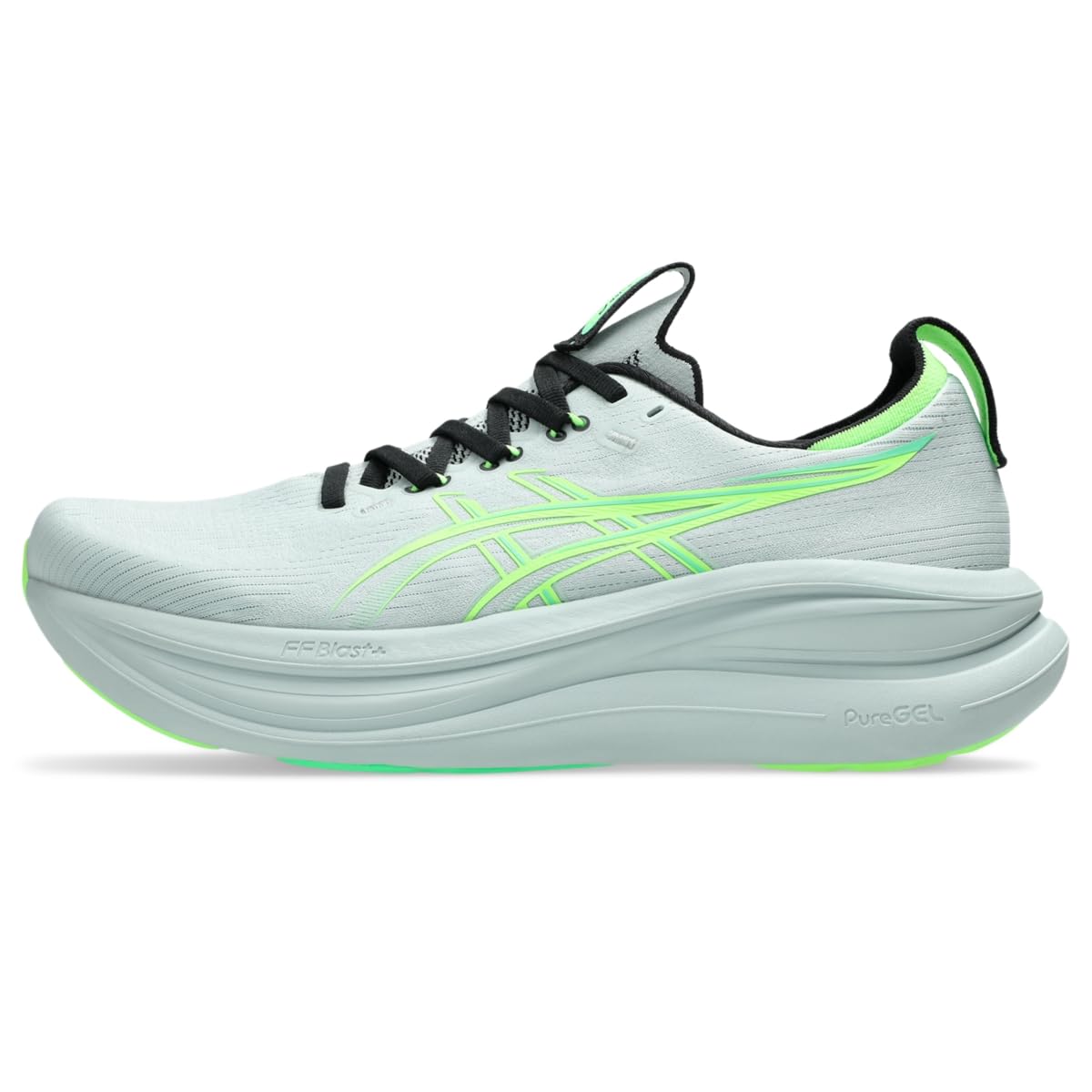
The ASICS Gel-Nimbus 28 is the softest, most pillowy shoe in this review, making it a top choice for flat-footed users who prioritize maximum deceleration under the heel. Its rearfoot PureGEL unit absorbs impact on every heel strike, while the FF BLAST PLUS ECO foam provides a lightweight, responsive ride. This shoe is technically a neutral trainer, so it lacks built-in pronation posts, but the wide base and high-density foam structure provide enough natural stability for mild overpronators.
Customers rave about its superior wet-surface grip and the quality of materials that feel high-end out of the box. However, multiple reviews warn that sizing runs smaller and narrower than previous Nimbus versions — several buyers needed to go up half a size or switch to extra-wide. The arch support, while comfortable for most, is not aggressive enough for severe flat feet that need a control shoe; users with significant overpronation may require an aftermarket insert.
This is the choice for runners who want the most luxurious cushioning experience in the premium tier. For flat feet that are mild, this shoe will feel incredible. For severe overpronation, it will need an insert to reach the needed support level.
Why it’s great
- Exceptionally soft PureGEL heel cushioning
- Excellent traction on wet surfaces
- Very lightweight for a high-stack shoe
Good to know
- Runs small and narrow; order up or extra-wide
- Not enough arch support for severe pronation
5. Saucony Women’s Hurricane 24 Sneaker
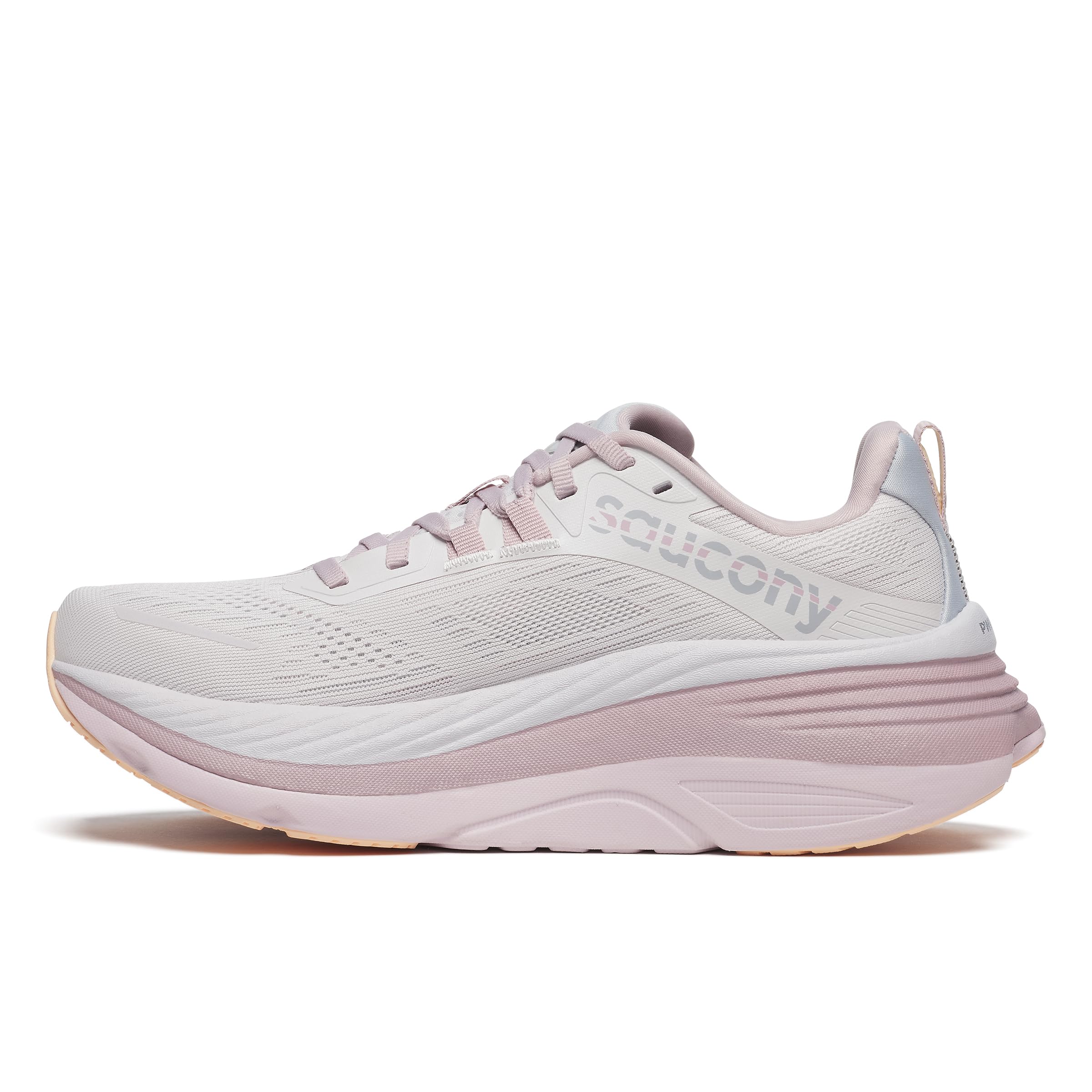
The Saucony Hurricane 24 is the most supportive shoe in this lineup — purpose-built for moderate to severe overpronation. It combines a PWRRUN PB foam core (the same pebax-based foam used in Saucony’s racing shoes) with a J-Frame support structure that wraps the medial side. The result is a ride that feels aggressively stable yet surprisingly cushioned. Reviewers with plantar fasciitis and hammer toe report this shoe resolved their foot pain after daily wear and toddler chasing.
The wide platform with a narrow heel canal creates a locked-in fit that many users compare to a “chunky stable shoe” ideal for ankle instability and injury recovery. The aggressive toe rocker also helps with smoother heel-to-toe transitions. On the downside, the shoe is heavy — one runner who reviewed it for running found the 9.8 oz weight caused leg fatigue after a mile and switched to a lighter New Balance. A separate review highlighted poor fabric quality, where the inner insole’s color bled onto the shoe upper and reflective strips began detaching after a few weeks.
This is the pick for runners and walkers who need maximum overpronation control and can trade a bit of weight and durability for superior stabilizing support. It is a premium stability shoe that does not compromise on cushioning.
Why it’s great
- Excellent support for severe overpronation
- Aggressive toe rocker aids smooth transitions
- Resolved hammer toe and tendon pain for users
Good to know
- Heavy compared to other stability shoes
- Some reports of insole bleeding and trim detachment
6. Brooks Women’s Ghost Max Suede/Leather Neutral Running & Walking Shoe

The Brooks Ghost Max brings a unique selling point for flat feet: the GlideRoll rocker sole geometry. This curved forefoot and heel design mechanically reduces the force absorbed by the arch as you transition through your stride, offloading tension from the plantar fascia. It sits in the neutral support category, but the rocker naturally compensates for collapsing arches by encouraging a smoother, less pronated gait cycle. A significant number of reviews confirm it provided immediate relief from Plantar Fasciitis and Achilles Tendonitis.
The midsole is extremely cushy, with users describing it as comfortable without any break-in period. However, this specific model runs about half a size small — multiple buyers who are loyal to Brooks in other lines needed to size up for the Ghost Max. The leather/suede upper also makes it less breathable than standard mesh trainers, though it passes as a work-appropriate shoe.
For women with flat feet who also suffer from heel-specific pain like plantar fasciitis, the Ghost Max is a category-specific solution. The rocker doesn’t support the arch directly, but it substantially offloads the arch, providing a different but effective path to pain-free walking.
Why it’s great
- GlideRoll rocker reduces plantar fascia tension
- Immediate pain relief for Plantar Fasciitis
- Very cushy out of the box with no break-in
Good to know
- Runs half a size small; must order up
- Leather upper is less breathable than mesh
7. ASICS Men’s Gel-Cumulus 27 Running Shoes
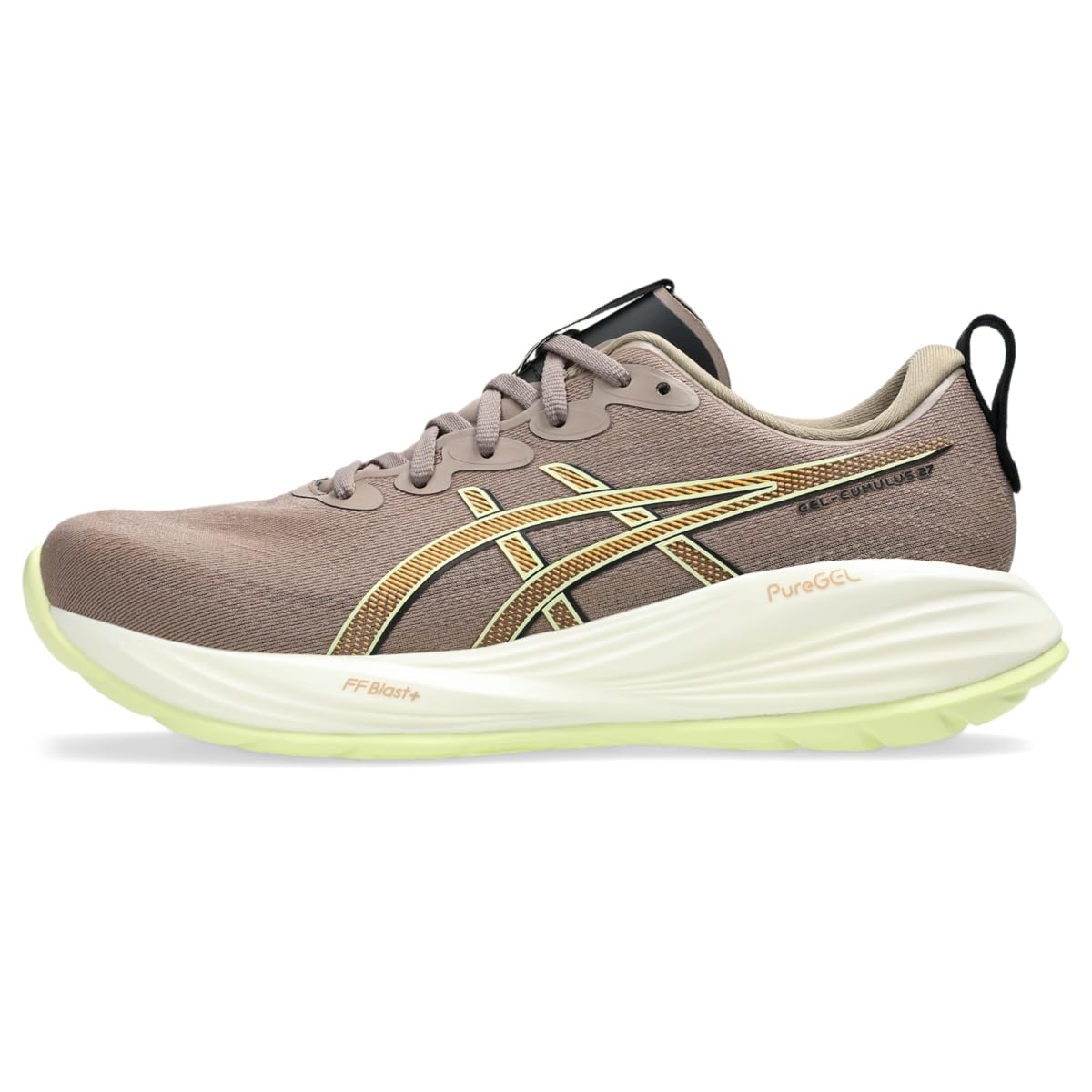
The ASICS Gel-Cumulus 27 is a mid-range neutral daily trainer that punches well above its tier for flat-footed runners on a budget. It uses a rearfoot PureGEL unit for impact absorption and an FF BLAST foam midsole that strikes a balance between softness and responsiveness — it’s not as plush as the Nimbus, but its denser feel provides more inherent stability for flat arches. Reviewers rave about its true-to-size fit and how it cured knee pain recommended by an ultra-marathoner.
The upper is breathable and the toe box is slightly larger than expected, which prevents toe mashing during long runs. Dunability is solid, with multiple users buying a second pair for exclusive training use. The key trade-off is arch support: like the Nimbus, this is a neutral shoe, so it lacks medial posts or GuideRails. It works best for flat feet with low to moderate pronation or as a comfortable walking shoe for daily use.
For the price, this is the best value-of-entry into the cushioned flat-foot category. It offers 80% of the cushioning performance of premium models at a mid-range price point.
Why it’s great
- Excellent value for the cushioning quality
- Lightweight with a slightly roomy toe box
- Great for relieving knee pain during running
Good to know
- Neutral shoe; lacks active pronation support
- Not as plush as premium ASICS Nimbus line
8. Saucony Women’s Ride 18
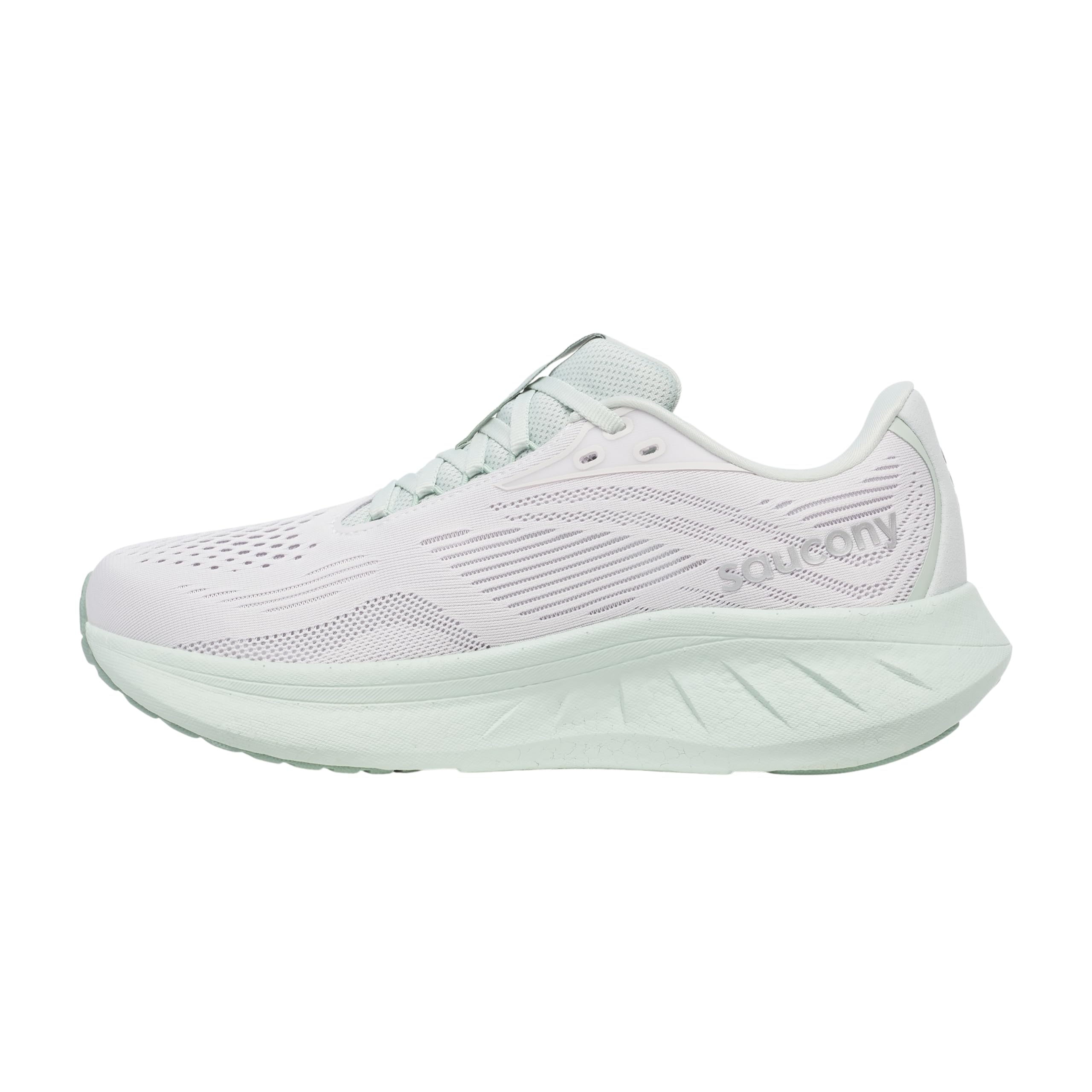
The Saucony Ride 18 is a neutral daily trainer that excels in delivering ground feel and a smooth, anti-shock sole that cushions joints without the mushy instability that some max-cushion shoes cause. For flat feet specifically, the stabilizing construction and firm heel counter provide a secure cradle that reduces lateral ankle roll. Reviewers report that it effectively cured their plantar fasciitis and eliminated back pain during all-day wear.
The sizing is true, with one user with an uneven toe (due to a past accident) needing only a half-size up to accommodate the asymmetry. The breathability and weight are better than the Hurricane, making the Ride a more versatile option. However, the white mesh upper is notoriously difficult to clean once it gets dirty — even manufacturer-recommended cleaning methods won’t fully restore it. That said, the durability of the PWRRUN+ cushioning is excellent, lasting several months without losing its bounce.
This is a solid mid-range choice for users who need a comfortable, supportive daily walker or runner but don’t need aggressive pronation control. It is a great middle ground between the firmness of stability shoes and the softness of max-cushion models.
Why it’s great
- Anti-shock sole effectively reduces joint pain
- Stable platform with a firm heel counter
- True to size with good breathability
Good to know
- White upper is extremely difficult to clean
- Not for severe overpronation — neutral design
9. HOKA ONE ONE Mens Arahi 7 (2nd Listing)

This premium-priced Hoka Arahi 7 (an older generation or alternate listing) is identical in core technology to the first product but is often found at a lower price point. The J-Frame system is a proven winner for large-framed athletes and those above 250 lbs. Multiple reviews confirm that the shoe’s dense foam structure does not pack out or lose its spring after a month of heavy daily use, a common failure point in softer budget trainers.
The lightweight, breathable upper is highly valued by users with unstable walking patterns, including those weighing 350 lbs who report much better stability and less fatigue. Downsides are consistent with the model: poor grip on water or oily surfaces is the most common complaint, and the heel counter backing can be hard on the ankle if you sit with your legs crossed. This version is often delivered as a brand-new, unboxed shoe from older stock, which some buyers specifically seek out for the fresh-out-of-box feel.
For bigger runners and walkers who need a stability shoe that doesn’t collapse under pressure, this version of the Arahi 7 is the heavyweight champion. It delivers the plush cushioning flat feet need without sacrificing the structural integrity required for heavier loads.
Why it’s great
- Durable structure that supports high body weight well
- Breathable, lightweight upper
- Consistent, reliable J-Frame stability
Good to know
- Very poor traction on slick or wet floors
- Heel counter can be uncomfortable during seated rest
FAQ
Can I wear neutral cushioned shoes if I have flat feet?
How does heel-to-toe drop affect flat feet?
Should I get a wide width for flat feet?
Final Thoughts: The Verdict
For most users, the cushioned athletic shoes for flat feet winner is the Hoka Arahi 7 because it delivers the perfect blend of J-Frame stability and pillowy softness without requiring a break-in period. If you want maximum plush with robust GuideRails support, grab the Brooks Glycerin GTS 23 (Men’s) or the Women’s version for their premium DNA LOFT v3 cushioning. And for severe overpronation or high-body-weight durability, nothing beats the Saucony Hurricane 24 and the heavy-duty Hoka Arahi 7 workhorse.

Mo Maruf
I created WellFizz to bridge the gap between vague wellness advice and actionable solutions. My mission is simple: to decode the research and give you practical tools you can actually use.
Beyond the data, I am a passionate traveler. I believe that stepping away from the screen to explore new environments is essential for mental clarity and physical vitality.