Our readers keep the lights on and my smoothie glass nicely filled. As an Amazon Associate, I earn from qualifying purchases.
That sharp, pinpoint ache deep in your sit bones after just thirty minutes in a chair isn’t something you have to live with. Ischial tuberosity pain — the medical term for soreness where your pelvic bones meet a hard surface — turns every meeting, commute, or meal into a countdown to discomfort. The right cushion doesn’t just pad the surface; it re-distributes your weight away from those bony prominences, letting soft tissue carry the load instead.
I’m Mohammad Maruf — the founder and writer behind WellFizz. I’ve spent countless hours analyzing orthopedic cushion designs, foam densities, and pressure-mapping science to find the specific products that genuinely offload the ischial tuberosities rather than just compressing flat under your weight.
Whether you’re recovering from a pelvic fracture, managing chronic sit-bone bursitis, or simply tired of squirming in your office chair, this guide cuts through the confusion to help you find the best cushion for ischial tuberosity pain that matches your specific sitting environment and body type.
How To Choose The Best Cushion For Ischial Tuberosity Pain
Not every cushion that claims to relieve tailbone pain actually works for the sit bones. The ischial tuberosities are located forward and lateral compared to the coccyx, so a cushion designed purely for a coccyx cutout may miss the mark entirely. You need to consider the cutout geometry, the foam’s ability to resist bottoming out, and how the cushion interacts with your specific chair surface.
Cutout Design: Channel vs. Full Donut
A U-shaped or horseshoe channel leaves the tailbone and the space between the sit bones free while supporting the thighs and rear. A full donut (or ring) cushion places a hole directly under the anus and coccyx, which can actually concentrate pressure on the ischial tuberosities that rest on the ring’s edge. For ischial-specific pain, a channel or a cutout with two distinct relief zones (one under each sit bone) is generally more effective than a simple donut.
Foam Density and Firmness
Memory foam that is too soft will compress completely under your pelvic bones, transferring pressure straight to the chair. Look for medium-firm to firm density foam — typically 50-60 kg/m³ for high-resilience polyurethane — that holds its shape under sustained load. Gel overlays help dissipate heat, but they add minimal pressure relief if the base foam is too thin or too soft.
Thickness and Bottoming Out
A cushion should be thick enough that your sit bones never contact the chair seat through the foam. For most adults, a minimum thickness of 2.5 to 3 inches of uncompressed foam is required. Thinner cushions (under 2 inches) often bottom out within weeks, especially on firm office chairs or car seats.
Non-Slip Base and Portability
A cushion that slides forward as you shift weight causes you to constantly re-adjust, which can aggravate ischial pain by creating shear forces on the pelvis. Look for a rubberized or silicone-dotted bottom. If you move between multiple chairs (office, car, home), a built-in carry handle and lightweight construction matter more than aesthetic features.
Quick Comparison
On smaller screens, swipe sideways to see the full table.
| Model | Category | Best For | Key Spec | Amazon |
|---|---|---|---|---|
| ComfiLife Gel & Memory Foam | Mid-Range | All-day office sitting + sciatica | 3-inch gel-infused memory foam | Amazon |
| Ergonomic Innovations Wedge | Premium | Car driving + hip bursitis | 3.5-inch wedge, medium-firm PU foam | Amazon |
| GSeat Elite Orthopedic | Premium | Hard bleachers + prostate comfort | Gel + foam hybrid, 2.5-inch profile | Amazon |
| Janemiri Ischial Support | Budget-Friendly | Sit bone bursitis + car booster | 5.5-inch thick, dual-hole cutout | Amazon |
| anzhixiu Donut Pillow | Budget-Friendly | Portability + postpartum use | Slow-rebound memory foam, 2-inch | Amazon |
In‑Depth Reviews
1. ComfiLife Premium Gel & Memory Foam Seat Cushion

The ComfiLife hits the sweet spot between pressure-relief engineering and everyday usability. Its 3-inch thick memory foam core is topped with a cooling gel layer that prevents the heat buildup common with pure foam cushions, and the U-shaped cutout creates a clear channel that suspends both the tailbone and the ischial tuberosities. At 17.5 x 13.7 inches, it fits comfortably on standard office chairs without overhang, and the non-slip rubber bottom keeps it planted during long workdays.
The medium-firm feel is deliberate: it compresses just enough to contour to your pelvic anatomy without bottoming out. Customer feedback consistently highlights that the initial softness gives way to stable support over hours of use, which is exactly what you need for ischial bursitis or sciatica. The built-in carry handle and machine-washable velour cover add practical value for anyone moving between home and office.
One trade-off is the 2.8-inch uncompressed height — on some car seats with deep bucket bolsters, the cushion may raise your hips slightly more than expected. However, for the vast majority of desk workers and drivers managing sit-bone pain, this is the most balanced option available at a mid-range investment.
Why it’s great
- Gel layer actively dissipates heat during extended sitting
- U-shaped cutout relieves both tailbone and sit bone pressure simultaneously
- Non-slip rubber base and carry handle for easy transport
Good to know
- May add noticeable height in deep-bucket car seats
- Gel layer can feel cool initially but equalizes after 20 minutes
2. Ergonomic Innovations Premium Wedge Car Seat Cushion

The wedge shape of this cushion is a fundamentally different approach to ischial pain. Instead of a cutout, it uses a forward tilt of 3.5 inches at the front tapering to the rear, which rotates the pelvis anteriorly and shifts body weight from the sit bones onto the posterior thighs. This is particularly effective for drivers whose ischial pain flares during long periods with knees at the same height as the hips — the wedge opens the hip angle and reduces direct pressure on the tuberosities.
The dual-layer construction pairs a medium-firm polyurethane core with a memory foam top layer, giving you the support of a structured base with the comfort of a conforming surface. The breathable mesh cover and perforated design prevent moisture buildup, a genuine concern during summer drives. Adjustable straps secure the cushion to the seat, and at just 1.85 pounds, it’s easy to move between vehicles.
Some users report that the straps loosen over extended trips and require re-tightening. The wedge tilt also isn’t ideal for recliners or soft sofas where the forward pitch can feel unstable. But for anyone whose primary ischial pain happens during driving or at dining tables, this premium cushion delivers targeted relief that flat cushions cannot match.
Why it’s great
- Wedge tilt rotates pelvis forward to offload ischial tuberosities
- Breathable mesh and perforated design prevent heat and moisture
- Lightweight with adjustable straps for secure car seat fit
Good to know
- Straps can loosen on long drives and need re-tightening
- Wedge shape is not suitable for soft couches or recliners
3. GSeat Elite Orthopedic Gel and Foam Seat Cushion

The GSeat Elite uses a different philosophy: rather than a thick cushion that compresses, it uses a gel-and-foam hybrid with multiple relief zones that allow the soft tissues of the perineum and ischial region to “float” without direct pressure. This makes it exceptionally effective on hard, unforgiving surfaces like bleachers, wooden benches, stadium seats, and rigid office chairs. The 2.5-inch profile is thinner than the competition, but the dual-density construction prevents complete compression.
Customer feedback points to excellent results for complex pelvic pain conditions including pudendal neuralgia and post-surgical coccydynia, where even light pressure triggers discomfort. The machine-washable cover and discreet black finish make it suitable for professional settings. Users consistently note that the cushion works best when they follow the manufacturer’s setup video — orientation and placement matter more with this design than with a simple foam pad.
The main limitation is the narrow sweet spot: on cushioned furniture or deeply padded car seats, the GSeat can feel overly firm. Some early units had a foam deformation defect, though the manufacturer’s customer service reportedly handles replacements promptly. For its specific use case — hard surfaces and complex pelvic pain — it’s a unique solution that standard donut cushions cannot replicate.
Why it’s great
- Gel-and-foam design allows ischial soft tissues to float without compression
- Effective for complex conditions like pudendal neuralgia and post-surgical pain
- Discreet and portable for stadiums, benches, and rigid chairs
Good to know
- Too firm for cushioned car seats or plush sofas
- Requires careful orientation and setup for best results
4. Janemiri Seat Cushion for Sit Bone and Back Pain Relief

The Janemiri cushion stands out for its generous 5.5-inch thickness and dual-hole cutout design that provides two distinct relief zones — one under each ischial tuberosity. This is a better anatomical match for sit-bone pain than a single central hole, as it prevents the bony prominences from bearing weight on the cushion’s edge. The high-density memory foam returns to shape slowly, which provides a sinking-in feel that many users with ischial bursitis find soothing.
At 19 x 15.4 inches, it’s one of the larger cushions in this guide, offering full coverage for wide office chairs and larger body frames. The adjustable straps work well to keep the cushion anchored on slippery car seats, and the breathable mesh cover improves airflow compared to solid fabric covers. Several customers specifically note that it eliminated their sit-bone pain after other cushions failed, and the price point makes it an accessible trial for those unsure about investing in a premium option.
The trade-off is consistency: some units arrive very firm out of the box and require a break-in period of several days. A minority of users report that the cushion softens too much over time, eventually losing its supportive character. The 5.5-inch height also raises your seating position significantly, which may be an issue for shorter individuals who already struggle to reach pedals or desk height.
Why it’s great
- Dual-hole cutout specifically targets each ischial tuberosity individually
- Exceptional 5.5-inch thickness prevents bottoming out on any surface
- Generous dimensions suit larger chairs and body frames
Good to know
- Foam may be very firm initially and require break-in
- Some units soften excessively after extended use
5. anzhixiu Concave U Surface Donut Pillow
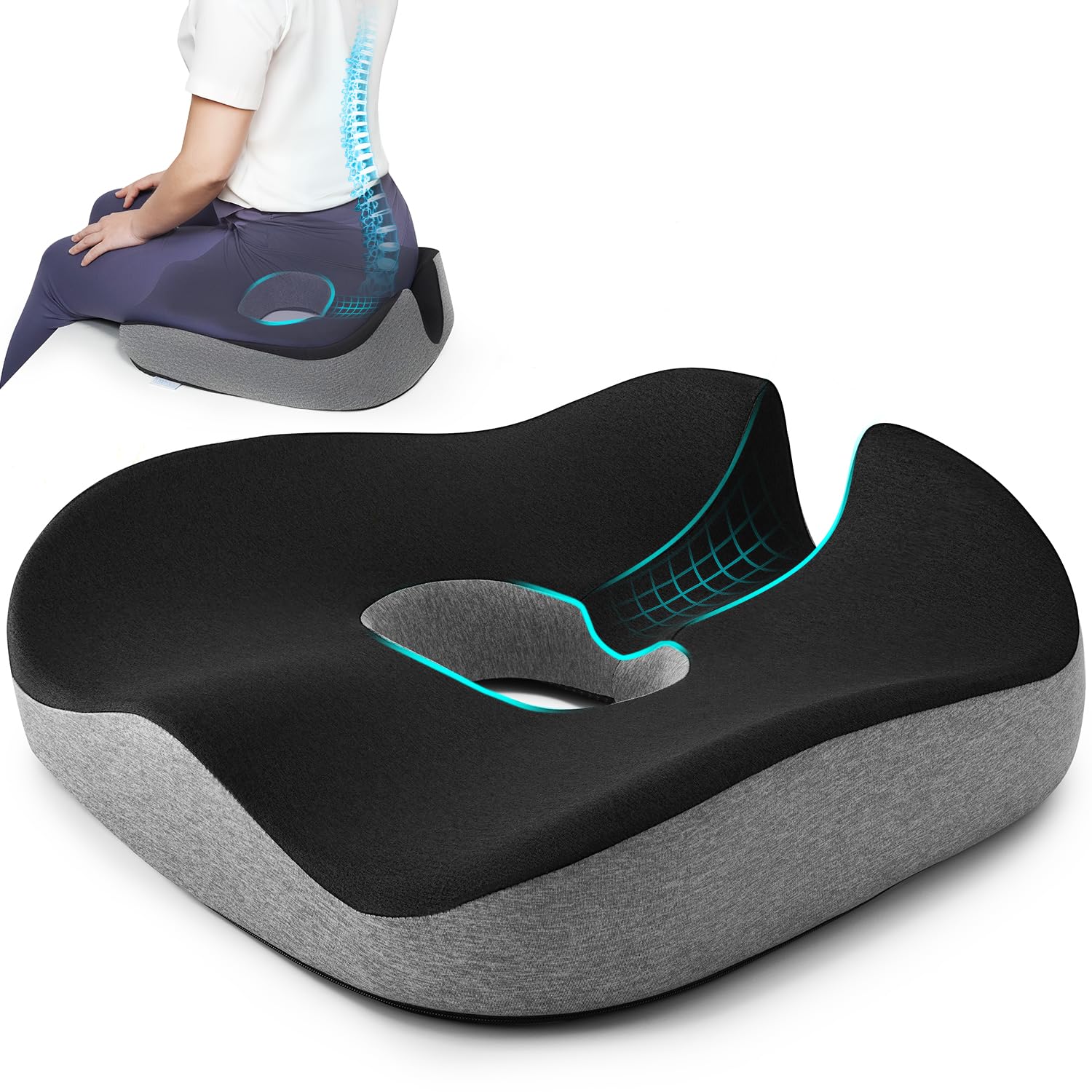
The anzhixiu is a classic donut-style cushion with a concave U surface that creates a channel for the tailbone while leaving a solid ring of memory foam around the perimeter. Its 18 x 18 inch dimensions and slow-rebound memory foam make it one of the more portable options in this guide, fitting easily into a backpack for use on airplanes, trains, or hard restaurant chairs. The silicone-dotted anti-slip bottom is effective on both fabric and leather seats.
For ischial tuberosity pain specifically, the donut geometry has a mixed track record. Users with pain concentrated at the tailbone or hemorrhoids report excellent relief, while those whose primary pain is under the sit bones sometimes find that the ring edge creates a new pressure point. The memory foam is softer than the medium-firm options above, which means it compresses more under heavier individuals and may bottom out on very firm chairs over extended sessions.
Where this cushion shines is versatility and value. It’s lightweight enough to carry everywhere, the cover is durable and resists pilling, and the price makes it a low-risk entry point. If your ischial pain is mild or intermittent, or if you need a secondary cushion for travel, the anzhixiu is a sensible addition. For severe, chronic sit-bone pain, a cutout-specific design from the options above will likely deliver more consistent relief.
Why it’s great
- Highly portable at 18 inches and lightweight memory foam
- Effective for tailbone pain and hemorrhoid pressure relief
- Anti-slip silicone dots keep cushion secure on most seats
Good to know
- Donut ring may concentrate pressure on sit bones for some users
- Softer foam can bottom out under heavier body weights
FAQ
How is ischial tuberosity pain different from tailbone pain?
Can a wedge cushion help with ischial bursitis?
How thick should a cushion be to prevent bottoming out?
Why does my donut pillow make my sit bones hurt more?
Final Thoughts: The Verdict
For most users, the cushion for ischial tuberosity pain winner is the ComfiLife Gel & Memory Foam because its U-shaped cutout, 3-inch gel-infused foam, and non-slip base deliver reliable all-day relief across office chairs and car seats. If you need a forward pelvis tilt for driving relief, grab the Ergonomic Innovations Wedge. And for hard surfaces like stadium bleachers or rigid dining chairs, nothing beats the GSeat Elite for targeted floating support.

Mo Maruf
I created WellFizz to bridge the gap between vague wellness advice and actionable solutions. My mission is simple: to decode the research and give you practical tools you can actually use.
Beyond the data, I am a passionate traveler. I believe that stepping away from the screen to explore new environments is essential for mental clarity and physical vitality.